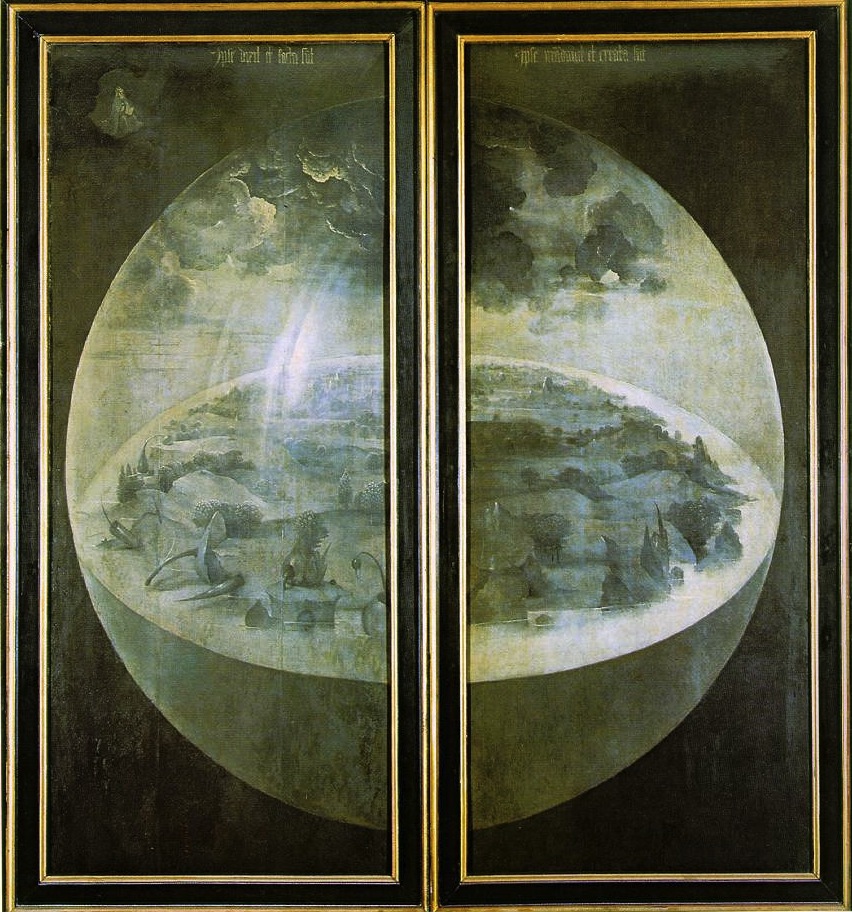
This is why Genesis was written (and Ken Ham doesn’t see it)


Bosch-Garden-Earthly-Delights-Outer-Wings-Creation-WorldIf my Facebook feed is representative of the general population at all, then I can confidently say that most of you have heard about the debate between Ken Ham and Bill Nye about creationism and evolution.

On this blog, I try not to get too much into issues of great contention in the church family when I don’t think it’s necessary, especially when I think it would unnecessarily prevent someone from reading this blog with a free conscience, or just mess with their head too much. But this is the one issue that I have felt the freedom to be blunt, bold, consistent, and loud about my opinion. So, I don’t have too much to add to everyone else out there that was more or less lamenting this debate more than celebrating it. Maybe I’ll have some thoughts next week coming at it from a different angle, but we’ll see.

Today, I wanted to share with you a video from the in-person portion of my Hebrew class a couple of weeks ago. To get an A in the class I have to translate, memorize, and recite a section of the Genesis 1 in the Hebrew. To help us with that, my professor made a video of him reciting it and acting out the recitation in front of us.
Continue reading
Abraham almost loses his son & he worships?! | Genesis 22.13-14


 And Abraham looked up and saw a ram, caught in a thicket by its horns. Abraham went and took the ram and offered it up as a burnt offering instead of his son. So Abraham called that place “The LORD will provide”; as it is said to this day, “On the mount of the LORD it shall be provided.”
Genesis 22.13-14

This is right after the whole “sacrifice Isaac” thing. To me, this such an odd response. Not only does Abraham worship God after this, which is crazy enough as it is, but he also sets up a memorial to remember this by! If I were him, I’d need some space from this God for a bit and I’d want to forget this incident as soon as possible.

I’ve always thought it odd that the book of Hebrews puts such an emphasis on Abraham and calling him the “father of faith” and extols his faith so much. Whenever I read that I think about how he had Ishmael with Hagar, due to a lack faith, and (twice) gave his wife up to be the wife of someone else because he was scared they’d kill him–another example of a lack of faith!

But then I read things like this and I think to myself, “Oh yeah, now I get it.”

See other Marginalia here. Read more about the series here.

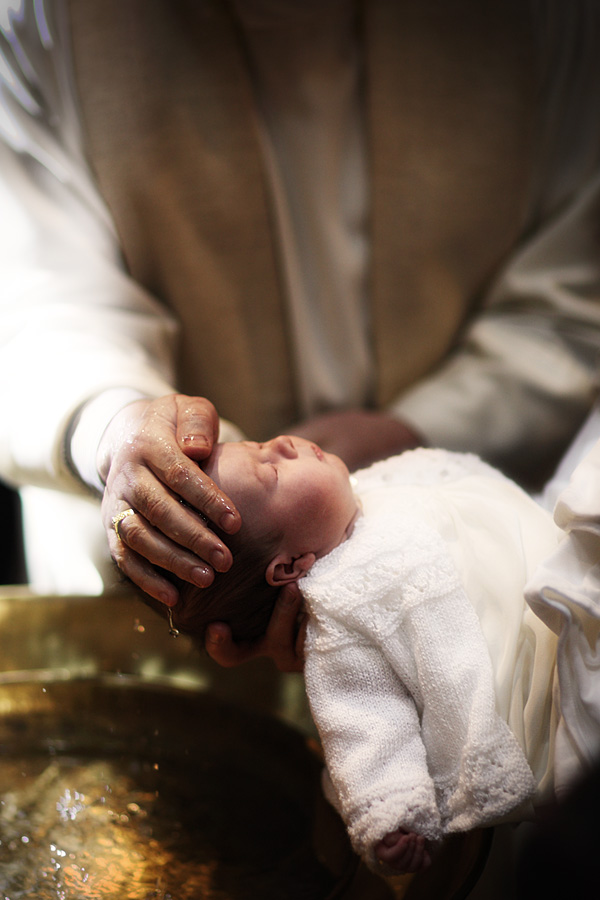
A Sacrament Primer (and some questions I still have)


infant-baptism-water-7

For my worship and liturgy class, we had to write up a little thing explaining how we would explain the Sacraments to an everyday person. We were also supposed to throw up some questions that we might still have about them. Here are is mine.

In the beginning of the Bible, we see God create what amounts to a “temple-world”. He wants to dwell in this temple, with his people, and make it his home. He ordains priests to care for it but they fail. So God puts in motion a plan and story to rebuild this world and re-prepare it for his dwelling.

The focal point of this story and our entire faith is Jesus Christ. He is God among us having come dressed in humanity. The Gospel of John says he literally “templed” among us, using our created humanity as something he was pleased to dwell in.

This is the Gospel; it is our life and strength as Christians.
Continue reading

That elusive Rest of all rests…


oldrich-kulhanek-untitled2At my job, I have this client (nowadays they’re called “participants”) who’s unlike any other I’ve known. He’s got some sort of complicated cocktail of mental health issues going on. Whatever they are, they’ve come together to create the most agitated, anxious, hyper, manic, rapid-thinking individual I’ve ever seen.

He’s the kind of guy whose own thoughts race a million miles an hour in addition to the other voices in his head doing so as well. He craves attention and simply has to be the center of it at all times; the more people around, the more dramatic and performative he becomes. He acts out like a child in any way to get the attention he craves, all while his inside hums and buzzes with a constant anxiety.

He can easily talk non-stop for hours with random things setting off new associations and new lines of thought and one topic flowing into another topic that seems unrelated, save for a color, a location, or even a word in common with the prior one. The first time I met him, his thoughts became so fast and so loud, he started screaming and clawing at his head just to get them to quiet down.

He evokes little sympathy from those around him, including myself. He seems to thrive on the fact that he can so affect people–even if it’s in a negative, irritating way.

Continue reading

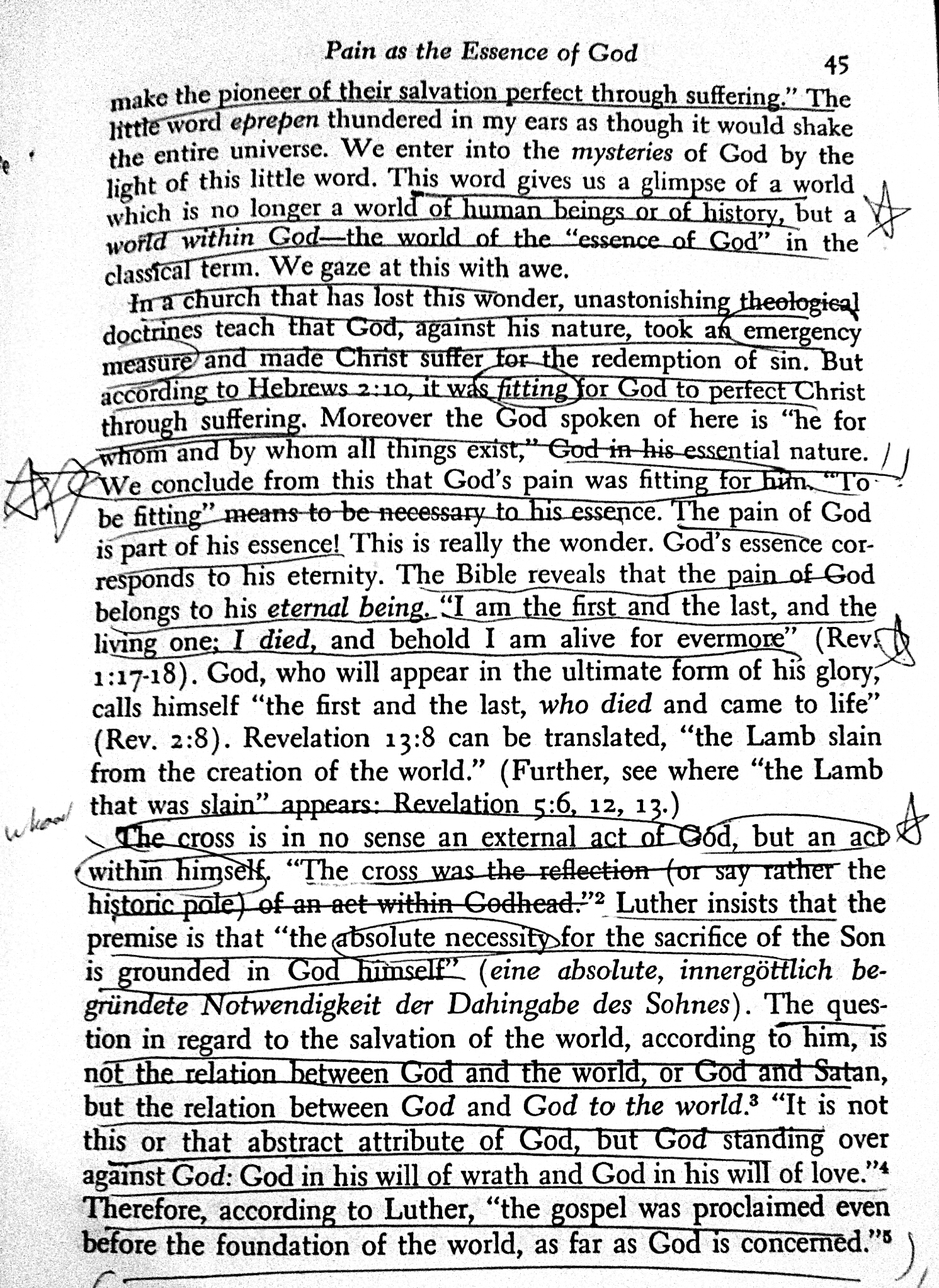
Crazy thought of the day: God Died. [QUOTE]


“The task of witnessing to the gospel is to vitalize the astonishing fact of the gospel. The message “the Son of God has died” is indeed most astonishing…. God has died! If this does not startle us, what will? The church must keep this astonishment alive. The church ceases to exist when she loses this astonishment. Theology, the precise understanding of the gospel, must be seized by this astonishment more than anyone else. It is said that philosophy begins with wonder; so theology begins with wonder. The wonder of philosophy pales before the wonder of theology. The person astonished by the tidings “God has died” can no longer be astonished at anything else.”

Kazoh Kitamori, Theology of the Pain of God

What Draws Out Jesus’ Compassion? | Matthew 15.32


Then Jesus called his disciples to him and said, “I have compassion for the crowd, because they have been with me now for three days and have nothing to eat; and I do not want to send them away hungry, for they might faint on the way.”

Matthew 15.32

What evokes Jesus’ compassionate response and provision? Faithfulness, neediness, and weakness. That’s it. Not performance, not even belief. Just walking with him while being needy.

Further, we can be confident that he knows our need and knows we will “faint on the way” without him responding. And respond he will.

See other Marginalia here. Read more about the series here.

Who Sent Whom? | Acts 13.2-4


While they were worshiping the Lord and fasting, the Holy Spirit said, “Set apart for me Barnabas and Saul for the work to which I have called them.” Then after fasting and praying they laid their hands on them and sent them off.

So, being sent out by the Holy Spirit, they went down to Seleucia; and from there they sailed to Cyprus.
Acts 13.2-4

Nice. I love that.

See other Marginalia here. Read more about the series here.

Christians, Contraceptives, & Civil Disobedience (iii): conclusions


sit-inOver the past couple of posts, we’ve been looking at Acts 4, to see if it has any lessons to teach us about how Christian engage with the political realm when they disagree with what the government is doing.

So far, we’ve talked about three things: (in Part 1) how Christians should engage with a political realm that comes in conflict with their faith; what is worth Christians disobeying the civil authorities over; and (in Part 2) the cultural and societal work we are called to that facilitates our Christian living and possible disobedience.

Today, we’ll finish this up with some principles and applications for moving forward.

Some Personal Contraceptive Conclusions
Continue reading

Christians, Contraceptives, & Civil Disobedience (ii)


Nicolas-Poussin-peter-john-healing-lame-manOkay, I lied. This will be three posts, not just two.

Last week, in light of Catholic institutions moving more towards Civil Disobedience in light of certain provisions in the Affordable Care Act, we looked at Acts 4 to see if there was any guidance we could get in this. We talked about how (1) Civil Disobedience is not warfare against the laws of your geographic home, but simply living in light of your spiritual home–the Kingdom of God. We also pointed out (2) that the State is not around to comply with our every theological preference and whim, and therefore some discretion needs to be used to evaluate what’s “worth” Civil Disobedience.

Today we keep going. I want to offer some summary conclusions, but first let’s point out the last thing the Acts 4 passage helps us see: the work we do in society prior to our Civil Disobedience.
Continue reading

Christians, Contraceptives, & Civil Disobedience (i)


laureti-triumph-christianity-pagan-statueWith the Affordable Care Act kicking in, it has certainly stirred up its fair share of controversies. It’s regulations are pretty far-reaching and have started to encroach on some territory held pretty sacred by some major parts of our Christian family. The biggest friction has been with the ACA’s requirement that non-church and ecclesial organizations still have to cover contraception coverage for their employees. Catholics who run non-ecclesial organizations have not taken too kindly to this. NPR recently had an interesting profile about this intersection of faith and politics.

Catholic leaders have vowed Civil Disobedience in response to these regulations, insisting on a religious exemption, even for private companies. In the past, religious organizations have done similar things in response to abortion regulations as well as gay marriage statutes.

Reading through Acts 4 the other day, I read again the account of Peter and John being arrested in Jerusalem and thought it had some powerful things to say about this and how Christians in America have been acting towards their government recently. So, I thought we’d walk through that passage over a post today and on Monday, and discuss some principles behind when and how Christians should fight their government tooth-and-nail for their convictions.
Continue reading

My concern with Obama’s NSA surveillance reforms


obama-flagIn case you haven’t heard, President Obama laid out new reforms on surveillance at the NSA today (more helpful coverage HERE and HERE). These were a direct response to the concerns raised by the leaks of Edward Snowden (can we please we start acknowledging that he has helped us more than hurt us now?).

The reforms are already getting mixed responses among privacy advocates, some praising it as a “major milestone” while other still think it to simply be “reconfigured unconstitutional program”. I am inclined to be mostly happy about these reforms (and this issue has been a big issue for me), but I just have a couple of concerns apart from the reforms themselves I wanted to throw out there. If I’m wrong on any of this, please let me know.
Continue reading

Why my soul is glad to have feminists around me


wwii-woman-we-can-do-it-feminismThis is a post in our on-going series on Women in the Church.

As I wrote last week, I was at my in-person seminary intensive the past two weeks. While there, I met a woman who is about to be ordained a minister in my denomination. We were all sharing our stories and I told her I was raised a Southern Baptist. Having been raised in area where they have little to no foothold, she had only had one experience with a Southern Baptist.

She was working a table at a conference where an older gentleman carrying a large briefcase approached, telling her how excited he was about the next speaker–a “fellow Southern Baptist”. Not being familiar with the speaker’s work, this woman asked the gentleman what the work was on. He put his briefcase on the table, opened it up and pulled out a large tome, saying “this is his book, and it is wonderful.” He almost began to summarize its contents, but stopped short, instead pulling out a much smaller paperback, saying “but that book may be too hard for you to understand. Here, look at this one. It’s much simpler.”

He then realized he had no idea why a woman would be at this conference in the first place. He asked, “and so what do you do?”

She told him that she was at seminary studying for her Masters of Divinity.

This gentleman quietly put the books back in his suitcase, shut it, locked the clasps, looked at her, and solemnly said, “you know you’re going to burn for that, right?” And he walked away.

Continue reading