So, some women were ordained last week and…it wasn’t that exciting.


female-woman-bishop-anglican-communion

This is a post in our on-going series on Women in the Church.

The past week of my life was filled pretty heavily with church stuff. First, my church hosted our denominational meeting for those churches in our church family that are in cities. They talked about new developments in my seminary program, gave updates on the health of current church plants, adopted the 2014 budget, and ordained and commissioned new pastors to serve in churches across the country. It was a day and half filled with theology jokes, family talks, overdue introductions, and post-meeting sessions of cocktails and cigars on the front steps of the church.

Second, as I mentioned last week, my church spent yesterday celebrating it’s maturation from a “church plant” (a church that still relies on other churches for most of its support and leadership) to a full-blown self-sustaining, self-leading church. My parents came in town, the music was loud, the sermon was great, and we had a large block party after the service with a moon bounce, chili cook-off, and homebrew contest (the bourbon barrel stout won, by the way. It was called “The Nord’s Wrath”).

It was great, and it will be a block of days I will not soon forget.

Continue reading

This weekend, I’m being ordained as a Deacon. And I can’t wait.


paul-philly-skyline-2

I noticed that I could see the slowly turning fan blades above us in the reflection of his freshly shaven head. His blue eyes and silver goatee turned up to me quickly, recovering from almost choking on his salad.

“What did you say?”

I had just told him that I felt I had a sense of where God wanted my spiritual life to go next. I was a 20 year-old college student, the president of my campus ministry, and I hung out with my pastors all the time. More importantly, though, was the fact that I was crushing really hard on this girl that wouldn’t date me. Only later would I realize that this was a bigger factor in what I said than anything God had said.

“I want to become an elder at our church.”

Continue reading

On Not Following the Christian Blogosphere (a plea)


paul-blog-coffee

I pride myself on thinking that a large percentage of the readers of this blog have no idea of this odd subculture/alternate universe that is the “Christian blogosphere”. So for those that don’t know: there is a very large labyrinth of (largely evangelical) blogs and conferences and podcasts and websites that are dedicated to talking about “the” “Christian view” on any manner of things that (1) really don’t affect much of people’s real lives or (2) seem kind of weird to have a “Christian view” of.

It’s not simply talking about things from a Christian perspective (like this blog), but rather doing so with a particular reactive, evangelical, tribal “flavor”. I’m sure I fall into that at times here, but I’m not proud of it and I try to act against it.

the dangers of the Christian blogosphere

There are two primary things about the nature of these sites that more easily lend themselves to human weakness, I feel.
Continue reading

The Best Communion Prayer my Church has ever had


eucharist-bw-waferFather, your table proclaims to us your undying love for us. This table tells us that you do not simply endure our presence. This table tells us that you delight in being with us. You have invited us to feast in your presence.

So we have come to eat and drink deeply of your love for us. May we interpret our lives through this table. May we understand that we are a people with whom you are well pleased. May this reality energize us as we move into our world. May we live out our lives as your deeply loved, anointed children. Fill us with joy as’we labor for you in this world. Amen.

Liberti Church, 10/20/13

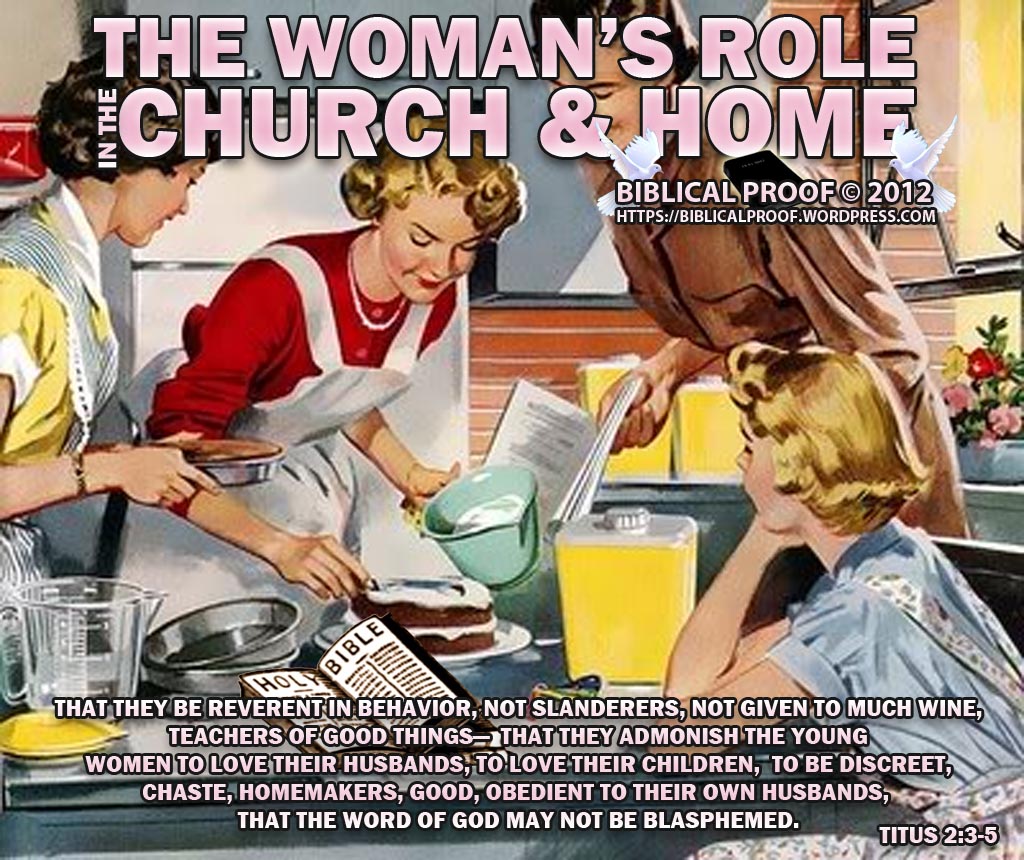
The Woman’s Role: What’s Wrong With This Picture? [casual fri]


biblicalproof-womansroleinchurchandhome

In my research for this on-going series on Women and the Church, I ran across this picture above. And for this Friday, I wanted to throw it out there to get people’s reactions.

If you agree with the overall point, do you appreciate the representation? Do you think this is a helpful representation? How would you present your perspective differently, in visual form?

If you don’t agree with it, what would you say to the designers of this picture? How would you counter this use of this verse? What bothers you the most about the picture? Is there any core of truth to this picture?

Discuss.

(image source)

Are you cool enough to raise kids in the city?


Halloween-RittenhouseFor my “Urban Christian” class, we’ve been looking into family life in urban areas. I was asked to comment on the challenges and benefits to raising kids in the city. Because it’s almost Halloween, I decided to use this incredibly cute picture as well.

Let’s face it, if you’re not already raising kids in the city (and probably even if you are), the idea of doing so can be terrifying. But, thinking about it, I wonder if this has less to do with the nature of cities themselves, and more to do with the lack of precedent many of us have when thinking through raising kids in the city.

This leads to two dynamics: fear of the unknown, and so concerns about safety, money, education, and child “corruption” by the wider culture arise because of the limited exposure most of us have to anyone that has done this before and come out the other side. This leads us to have to rely on stereotypes and caricatures of the city to inform our fears and concerns.
Continue reading

Karl Barth: Our Freedom, Our Home, & God’s Directing [AMAZING QUOTES]


karl_barth crop

I’m writing this long paper on the ancient Christian Practice of Discernment. In my research, I pulled out some Karl Barth, my favorite theologian (hands down), and got to soak in the beauty of these words, and I wanted to share them. Now, for people that don’t read “real” and “proper” theology, this is it. It’s circular, it repeats itself, and it’s unnecessarily complicated and unclear. I know. I get that. But I promise, if you can spend a few minutes, quiet yourself, and focus, I promise the pay-off is huge. This guy stands as a tower over all of modern theology and deserves more attention than he gets. I’ve done slight edits to some of the wording and paragraph breaks for clarity. Enjoy.

* * * * * * * *

God’s direction is an all-powerful decision, His own divine act of lordship. By this means, too, God vindicates His honor and maintains His glory. By this means, too, He exercises authority….

God’s direction is the directing of humans into the freedom of His children. It is this which has taken place in Jesus Christ no less uniquely than the once-for-all fulfillment of the divine sentence on all humanity. In suffering in our stead the death of the old nature, and bringing in by His resurrection the life of the new, He has made room for the being of all humanity to be at peace with God.

On the basis of what we are and is not by virtue of the divine sentence passed and revealed in Jesus Christ… we have no other place but this—the kingdom in which God can be at peace with us and us at peace with God. Jesus Christ…is the all-powerful direction of God to us to occupy this place, to live in this kingdom. If we are told in Him who we are and are not, we are also told in Him where we belong, where we have to be and live.

Continue reading

Sex & the City: Christianity edition.


Delaunay-City-ParisI’m taking a class on “The Urban Christian”, and this past week we focused on what happens when the Christian sexual ethic collides with the urban, secular one. We had three excellent readings to which we were to respond. I’d encourage you to read them:

* * * * * * *

Good lord, growing up in the Bible Belt, I can honestly say, I heard more breathless, obsessive talk of sex, boundaries, and frustration in singleness in Bible Belt suburbia than I ever have in my current urban setting. This is for a few reasons, I think:

1. Most everyone I encounter is no longer a virgin, and so the mysteriousness and over-idealization of the unknown, for most people, is not…uh….unknown. The magic is gone for many and they don’t spend all their energies trying to get what they can’t have. But, the same contradictory human mind will say that sex isn’t a big enough deal to focus any energy on not doing, but it is a big enough deal that nobody better try to put any limits on that sexuality.
Continue reading

Good Morning (prayer)! [photo sermon]


ultimo-coffee-cortado

Each week, WordPress has a Weekly Photo Challenge, where they give a theme and invite people to highlight photography representing that theme, accompanied by a few meditations on it. OccasionallyI try and write a “photo sermon” or meditation based on those themes, accompanied by a photo of mine . This week’s theme is “Good Morning“.

* * * * *

In one of those oddities of tire human condition, I love sleep, and yet I avoid it like the plague. I have a terrible sleep schedule. My sleep pattern is a microcosm of my lack of discipline in many parts of life, and maybe even an extremely low level of self-harm, where my body and heart wouldn’t really know what to do if it were consistently well-rested. There’s something about a constant weight of tiredness that—maybe—makes one feel “productive”, even as it steals productivity away from you.

This is a lie. I know. I’m working on it in therapy.

In some Christian circles, people claim “life verses” for themselves; bits of the Bible that they feel speak to them so deeply that the words amount to a blanket summary, call, encouragement, guiding principle, or telos to their life. People usually pick a “life verse” that speaks to what they want their life to be or how they want God to work in their lives.

Continue reading

I wrote a paper on the ending of the Gospel of Mark. And here it is.


Lindisfarne Gospels -- MarkI usually never post items like this on the blog. But hey, it’s Friday. Below you’ll find a brief academic paper I wrote exploring different scholarly views on the ending to the Gospel of Mark. I’ve written devotionally on that ending before, but this gave me a chance to explore more of the scholarship behind it.

As a general rule, I don’t think people should put up blog posts that have a Works Cited page attached (haha). Such posts usually go against everything the blog medium stands for: brevity, clarity, and accessibility.

But as I researched this topic, I found it difficult to find similar, short, web-accessible writings and bibliographies like this so, in the interest of academic exploration, I’m putting the paper up here for all the future Googlers that might be able to use this, and for those of you that might care about some of the scholarly opinion concerning Marks’ incredibly odd ending. Enjoy. (You can also find this document on Scribd.)

___________________________

BL537 Paper #1: The Ending of Mark

For centuries, the Gospel of Mark more or less sat dormant, gathering the dust of Church interest. It was a broken Gospel, after all. It was a crude, geographically confused, narratively-challenged, more-or-less bastardized version of The Gospel of Matthew. And what of that ending?
Continue reading

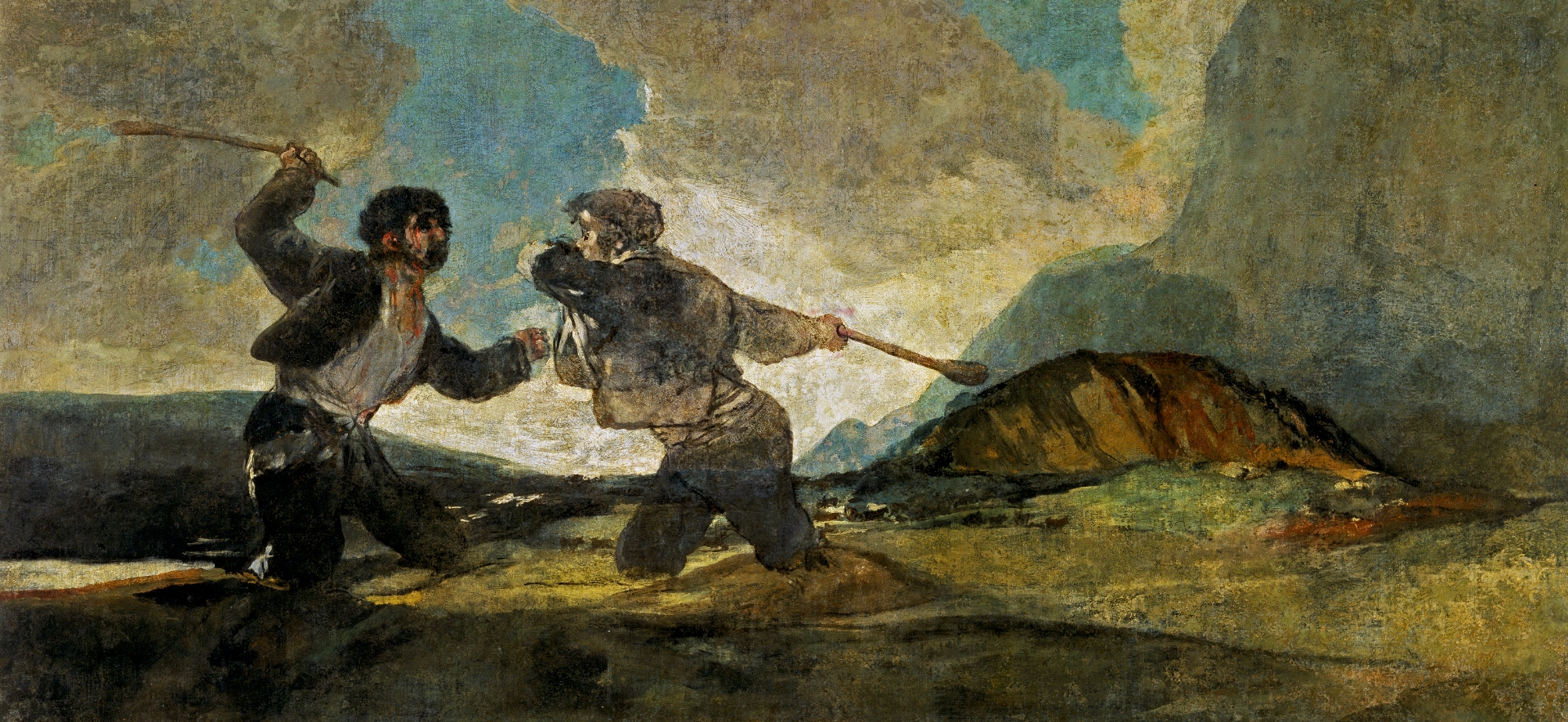
How to wear your theological offensiveness (conservative, liberal, & atheist)


Francisco_de_Goya_y_Lucientes_-_Duelo_a_garrotazos-small

Reading through Luke, I was struck by a dimension to Luke’s portrayal of Jesus I hadn’t noticed before. I also think, in these times where more people are able to have more platforms to speak their mind on issues, it’s an important dimension to take into account.

In Luke chapter 4, we see Jesus officially kick off his public ministry. He does this by standing up at his hometown synagogue, reading some verses from Isaiah and saying that these words are fulfilled in his arrival. He then adds commentary on this, highlighting how Israel has fallen out of God’s favor and so this fulfillment won’t come to them. This enrages the people and they try and kill him right there by throwing him off a cliff (yeah, it’s kind of funny). But he gets away.

Jesus offended these people deeply. He spoke what he believed to be true about God and the world, and they didn’t like it. And yet, people spoke offensive words in the ancient world all the time. There were many Messianic figures, and yet their words didn’t “stick” like Jesus’ did. His words ended up not simply gathering people that agreed with him, but actually changing minds, even while offending those that would be offended.

How did he do this? How can we do this with our own theological (or a-theological) beliefs? How should we wear our beliefs that might be very offensive to others?
Continue reading

How’d We Get Here?: An open letter to my Republican friends (gov’t shutdown, day 2)


kilroyart-Im-just-a-BillHey, Republican friend.

Yeah, I’m writing to you. Not to the pundits or the politicians (not that they’d read this anyway), but you: the everyday Joe (or Jane) that considers themselves a Republican, who reads these headlines about the government shutting down and wonders how it got here and whether or not the people you most agree with are actually at fault here. This post is a long one, but hopefully it’s a helpful one.

But first let me say that, on a grand scale, I’m with you politically. I consider myself a center-right pragmatist. I think the government should be dedicated to very few things, the private sector should be utilized whenever possible, and that States–rather than the federal government–are the greatest laboratories for democracy and the greatest vehicles of government to their people.

But there’s a bigger context to this showdown that I fear is getting lost in all the noise. Everyone seems to be focusing on a series of events in the past month or so that led to this, but it actually goes back a little further than that.

Continue reading

“Coffee Crucifix” (a sonnet for National Coffee Day)


Coffee Crucifix

Crescent ring under porcelain smooth
___stain the wood-stained finish.
______(It is finished.)
___Marked with muddy water;
___mark the merry day; to
___marry the murdered man.

Floral notes in blackened waves
___crash the shore of trembled lips.
Choral bright, in darkest night,
___wake the tone of trebled kiss.

Younger tastes left open-wide; older eyes made
satisfied.

Mark the wood: complex simplicity.
Pierce my heart: storied infinity.

[read my other Holy Week poetry here]

all writings licensed: Creative Commons License

I have found the Holy Grail against women in leadership, and I am ruined


Countering-the-Claims-of-Evangelical-Feminism-Grudem-Wayne-9781590525180This is a post in an on-going series on Women in the Church.

A while ago, I stumbled on a clearance copy of the book Countering the Claims of Evangelical Feminism by Wayne Grudem. Now, for those that don’t know, Grudem is one of those super-influential evangelical theologians that doesn’t get a lot of play in the wider culture. He’s not going to make any headlines like Mark Driscoll, and he’s not going say anything too outside the conservative box, like Rob Bell. He’s a quiet intellectual who writes and influences a lot.

Through college, I had a bunch of friends obsessed with his “Big Blue Book”, Systematic Theology, which is an accessible, clear introduction to what became the “New Calvinism” fad. In short, he’s sort of a Calvinistic Baptist that believes the Holy Spirit is still doing more outlandish sorts of things.

And yet, if you look at all of his publications, the vast majority of them are simply various versions and editions of just these two books (well, admittedly, the book I’m writing about today is an abbreviated version of this book). It’s quite easy to see that Grudem has devoted his life primarily to two things: Systematic Theology and Gender Roles in the Church. A lot of the arguments you’ll hear from complementarians–those that do not think Women should be allowed to exercise authority in Church or Home contexts–come straight from Grudem.

And so, in the interest of being fair in my Women and the Church series, I picked this book up to hear “the other side”. The book goes through 45 of (what Grudem feels are) the absolute best Egalitarian arguments. He lays out the individual argument, usually printing a paragraph-length quote from someone who has expressed that opinion. And then he offers responses (usually about 1 to 4) for each of these points. Each chapter is 2 to 5 pages long.

I went into the book with only minor curiosity, because I was raised with his perspective, was completely inundated with it in college, and pretty much felt I knew most of the arguments he would throw out there.

Well I was wrong.
Continue reading