A Brief History of Liturgy (for those interested)


emergent-tree-house-churchYesterday, I posted some brief thoughts on liturgy and how it shapes us.  Those words were primarily taken from a document I wrote up a few years ago to train those leading liturgy. Today, I wanted to post another little section from that piece, going through an extremely brief history of liturgy in the Bible and how it developed in the early church.

Liturgy in the Bible

We see fairly early on that God intends for there to be a definite pattern or shape to worship among his people. He spends chapter after chapter talking about both the space and structure of the worship of the Israelite people in both the Tabernacle and the Temple. This continues in the Jewish community even today.

But at this point in the story of the Bible, the fullness of all that God will do to bring about our worship is incomplete, and so this worship is merely anticipatory of something that is to come. But throughout the Bible we get glimpses of a definite pattern to how God relates to his people–to how this story will eventually look in it fullness. This story–this pattern–is what forms the structure of our liturgy even today.

Throughout the Bible, repetition of form and phrases is used to shape the people of God. In the Psalms, the same phrases are used over and over again in the music. In the Old Testament, verses from other parts of it are meditated upon and repeated for worship.
Continue reading

How Liturgy Shapes & Makes Us


schrott-cross-church-office-apartment

UPDATE: I posted a brief history of liturgy and its movements.

A couple of nights ago, those that help lead and facilitate the worship service at my church met to discuss how we should continue to grow and remain faithful to our mission in the city of Philadelphia through our liturgy and music. It reminded me once more of how much I love being a part of this church and its tradition, and how excited I am to live life with these people.

Meditating on these discussions about our liturgy, I was reminded of the myriad of ways that the structure of one’s worship service forms the people that sit there each Sunday. I thought of how liturgy functions. If you go to a church, it has a liturgy: some structure that proclaims a certain story and shape of existence, and it changes people to fit into that shape and story.

And this got me thinking of a document I wrote up a couple of years ago to help train and encourage those leading liturgy at our church. In it, I wrote about six “facets” of the diamond that is liturgy. And that’s what I wanted to post here today.

These are some ways that liturgy acts to shape us. After each thing, I’ve given a sample topic and tried to show how liturgy functioning in that way can speak to and shape someone in that area. This was originally meant as a guide for people that introduce the service and try to acclimate people to the liturgy.

I hope this reminds us that liturgy matters, and being intentional about your liturgy is such an important part of leading and ministering within your church context. If you don’t serve as a leader in this aspect of your church’s life, and don’t really speak to liturgy formation, I hope this helps you recognize the formative nature of your church’s liturgy, and that it helps you connect to and engage with your church in a deeper, more intentional way. For more on this, I could not suggest more highly James K.A. Smith’s book Desiring the Kingdom.

Continue reading

Why was Obamacare necessary? Christians, it seems.


nyt-flowers-medicine-bw{abstract: My point in this post is pretty simple. Christians seek radical end-of-life care dramatically more than non-religious people, and this accounts for a huge portion of American Health Care cost. In this piece, I ask if this drove prices up, therefore creating the situation where, ironically, Obamacare (a policy Evangelicals widely despise) was necessary.}

I wrote a while ago about my own current preoccupation with my fear of death. It caused me to read several related things, including the amazing book, The Art of Dying. In it, Rob Moll carefully helps guide Christians back toward embracing death for what it is: our greatest enemy, yes, but an enemy whose sting has been turned into a doorway to Glory Itself.

And so, as the horror-turned-beauty that Death is, the book encourages us to spend our energy preparing for Death more than avoiding it. He encourages Christians to recapture the doctrine of the “good death”.

And yet, it seems that American Christians are prone to do everything but that.

Moll talks of a study published in the Journal of the American Medical Association that found that Christians were three times more likely than those without religious faith to pursue aggressive end-of-life care, even though they fully understood they were dying and that the treatments would most likely not add any time to their lives.

One researcher told Moll, “patients who received outside clergy visits had worse quality of death scores than those who did not.” And if you have problems with this particular study, know that the book is full of research, studies, and interviews that lay out the pretty clear case that American Evangelicalism widely avoids preparing for death.

Now, we can talk about why this is and whether or not this is a sound Christianly posture another day (I happen to think it is not). Hopefully I’ll write a full review of the book in the weeks ahead. Today, though, I wanted to point out a huge irony this made me think of.
Continue reading

Postscript: J. I. Packer’s Helpful Evaluation of Praying in Tongues [QUOTE]


ji-packerI just have one more thing to post in this little series on my charismatic sensibilities. Yesterday, when writing about praying in tongues, I quoted from this long piece that J. I. Packer (the spry man to the left) wrote evaluating the charismatic movement as a whole. It’s a heavy article, but if you get to his conclusions, they are very interesting.

Packer is a Reformed Anglican, and believes that the “sign” gifts (the “extra-crazy” works of the Holy Spirit) have now ceased and were only used for a time to “get the church going” as it were. (If it weren’t clear, I think this designation of “sign gifts” is incredibly arbitrary and I think you have to twist the Bible backwards to prove that these things simply stopped at some point in time. I think they are still very much with us, however neglected they may be.)

But still, he is incredibly gracious to the charismatic movement and sees it as a legitimate expression of God’s people seeking a greater communion with him, and even believes that they need to teach the old Reformed fuddy-duddies (is that how you spell that?) a thing or two. I found his comments particularly on tongues especially delightful, and I thought it would be a fitting post-script to these posts I’ve been writing on my own charismatic side. The paragraph breaks in this quote are my own, for ease of reading. Continue reading

Charismatic Confessions, pt. 3: Praying in Tongues for Everyone!


flickr-sculpture-worship-kiss

{abstract: “Praying in tongues” is not really a “gift”, but rather a way in which God makes Himself known, and we commune with Him. Therefore, I believe it’s open to all of us, not just those with a “gift”. It is a sacramental, physical participation in the “real presence” of God praying within you. It may very well be random and not a “real heavenly language”, but nevertheless, God is sacramentally mediated to us in it. I conclude by offering some brief practical encouragements.}

Last week, I started writing some posts in response to a New York Times piece about research concerning the practice of talking in tongues. I wrote about how this piece reminded me of my own charismatic side and how I’ve been neglecting it. I then talked about my views concerning the use of tongues in a corporate Sunday church context. Today, I want to give people a realistic and (hopefully) sensible framework for understanding the private use of praying in tongues.

Continue reading

Good News! I have a new & improved Twitter user name!


twitter-home-paulLast week, I put up a post asking for some help. For the past few years, I’ve had a terrible Twitter user name. I told the story of this previous name, and asked for some feedback on getting a new one. Well, that was a real help, because most people confirmed that using my full name (or some mixture thereof) was certainly the best, and I had totally forgotten than Twitter accepts underscores (“_”) (thanks, Jake Belder). So here is my new Twitter handle:

http://twitter.com/PaulBurkhart_

Profound, I know.

Anyway, for some reason, i end up posting more on Twitter than I do other places (and being a little bit more honest and blunt than in other venues). So let’s follow each other and become best friends, 160 characters at a time.

Oh, and if you notice any of my other sites that I haven’t updated to this new user name, please let me know. Thanks!

Weekend Wine Tasting: Cool Ranch Doritos & Pinot Noir [casual fri]


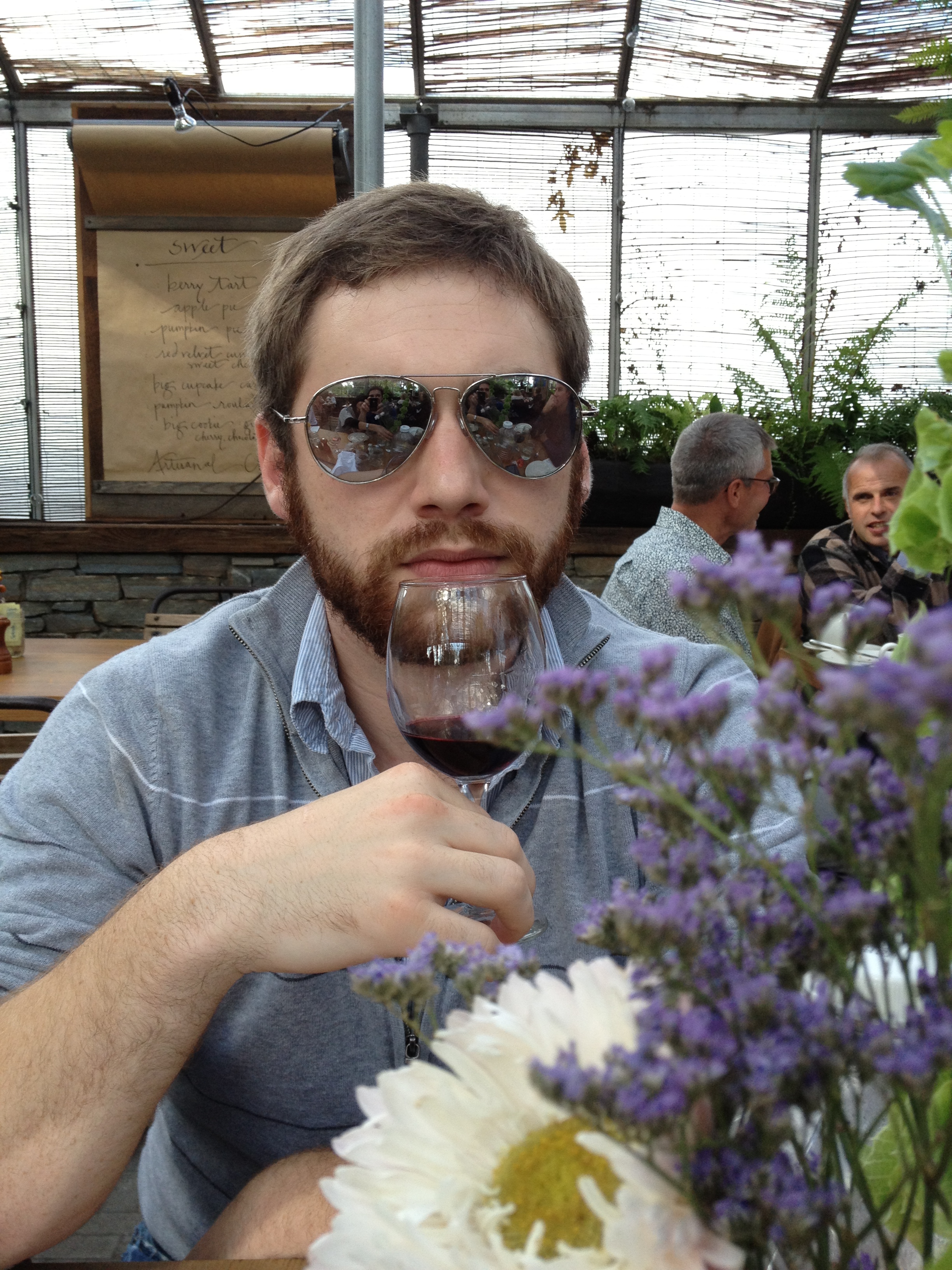
paul-terrain-flowers-wine-12-07The other night, my church small group held our second annual Wine Tasting party. It was such a beautiful evening of great wine and great food (there was even Chardonnay paired with Chicken and Waffles–and it worked really well!).

But, also just like last year, I couldn’t just do a nice, casual, brief tasting. If you’ll remember, I paired Port Wine with Fluffernutter sandwiches (you can see the video here).

Similarly, this year, my inner nerd-dom drove me to come up with a whole presentation around my attempt at another odd pairing. I wrote up some notes to guide me, and I thought I’d post them here to guide you on your own wine experiments this weekend, especially if you want a great pairing on a budget.

_________________________________

This is a different kind of tasting. It’s not so much about bringing out certain flavors as it is experiencing an unexpected reaction between the two items. It’s going to take some focus, so prepare your taste buds. But first, a story.

Continue reading

Charismatic Confessions, pt. 2: Tongues Don’t Have to be Weird


peter-preaching-statue{abstract: The Bible talks about two types of tongues that take place among the Church: speaking in human languages that get translated, and speaking a “heavenly language” that sounds like non-sense and an interpretation is given. The apostle Paul encouraged people to prefer speaking in regular human words rather than tongues, and this practice turned into the later historical practice of rooting authoritative Church speaking in Bible-based sermon preaching. Paul then encourages, and I have embraced, that we move speaking in tongues away from a corporate church usage and a private, prayer one. The next post will talk about praying in tongues.}

UPDATE: Part 3 is up, where I talk about the what, why, and how of individual praying in tongues.

Yesterday, I got thinking about my charismatic past. I mentioned an Op-Ed piece in the New York Times about recent research on the phenomenon of speaking in tongues. This got me thinking about my own charismatic past and experience of these sort of things, and reflecting on how little a part of my life those things are now. Except, that is, for personal praying in tongues.

A couple of nights ago, I raided my bookshelf and pulled down every theologian that may have said anything about this phenomenon and looked through all of them. Every person said something different. There are so many different opinions about tongues. I don’t write this post to sort out this issue or give a definitive account or defense of where I land. I just want to introduce some people to this idea who might otherwise be weirded out, strongly against it, or don’t really know what to think about it.

Continue reading

Confessions of a Lapsed Charismatic, pt. 1


Grace-words-mouth-poetry-psalms

{summary: Though rooted in a Reformed tradition that usually spurns this, I am very much a theological charismatic. I believe in the full, contemporary exercise of the Holy Spirit through his Church, including all of the manifestations this has had throughout Church History. And yet, though I “believe” these things, over the past few years, they’ve played a smaller and smaller part in my life. In this piece, I reflect on that.}

UPDATES: Part 2 is up, where I go through a brief history of tongues in a corporate church context. I’ve also posted Part 3, where I focus in on the why and how of individual praying in tongues.

Several days ago, the New York Times had a wonderful Op-Ed piece called “Why We Talk in Tongues“, by a researcher who is exploring this phenomenon. (It was also appropriate, as it is still sort-of, but not really, still Pentecost.) The piece seems to have been pretty popular. Playing around with Google Trends a bit, it seems that this article made the topic of talking in tongues more popular than it has been since “Speaking in Tongues” by Justin Bieber popped up on YouTube a few years ago. This article made the topic more popular than even Megan Fox’s revelation that she speaks in tongues (and is still a practicing Pentecostal).

It got some play all over my Facebook feed, and a couple of friends asked for some of my thoughts. That they asked for my opinion was both flattering and dismaying; it reminded me of how little I talk about this part of my spirituality among my church community.

I remember years ago, when I first found my church in Richmond, Virginia, right at the end of my first semester in college. I walked into this special evening service and I immediately knew this was where God wanted me. I joined the church and was exposed to a beautiful display of charismatic theology.

Continue reading

My Walk to Church: One Shot, Two Ways (a photo sermon)


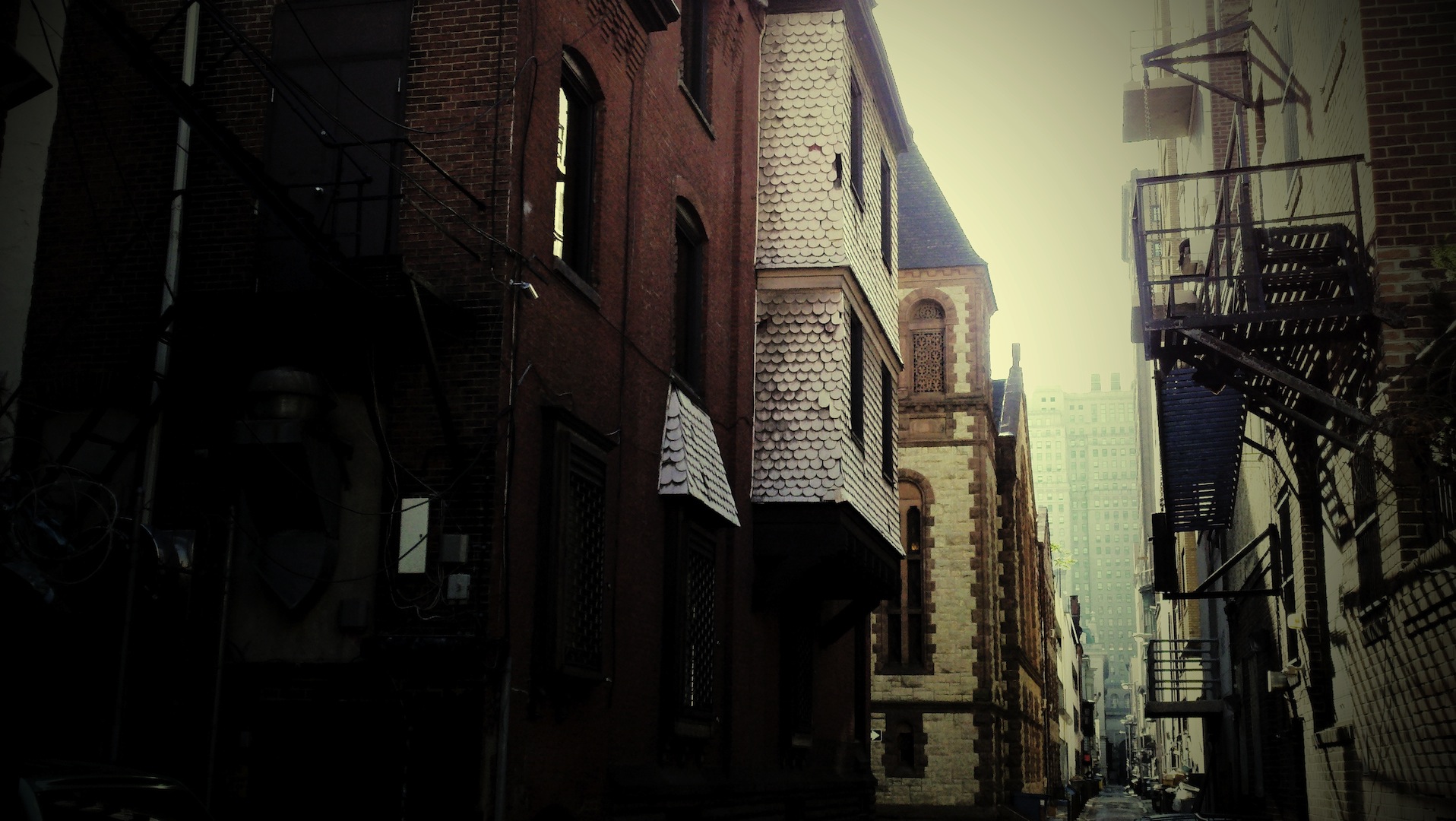
rittenhouse-alley-church-hor

For those new to  the blog: each week, I try and write a “photo sermon” based on the themes of the WordPress Weekly Photo Challenge. This week’s theme is “One Shot, Two Ways“, which is a silly title to describe taking two shots, from the same place, at the same time, but trying to make them very different.

* * * * *

Whenever I walk to my church, it’s one of the strangest experiences for me. I grew up in the South, when Sunday morning was a time of slow traffic, long lines at Donut shops, and lots of people milling around as they meander their way to their respective churches.

Not so, in Philadelphia.

As I walk down the few neighborhood blocks that stand between my house and the city center, I’m quite often by myself. I occasionally have my heart sink when I see a woman making the “walk of shame”, where she’s walking home in the same dress and heels from the night before, trying to fix tussled hair and making sure all of her personals are still in her purse as she walks. It could just be the time of morning and a potential hangover, but she never looks happy.

I usually see runners. They enjoy being able to run on the city streets in the cool of the morning with no annoying pedestrians to dodge. I also see a fair share of dog owners, still in pajamas, annoyed that their pet couldn’t hold it for a few more hours and give them more sleep.

Continue reading

Some random, contradictory thoughts on Hell. Discuss.


Rothko-untitled-2Below, you’ll find a random assortment of 30 completely disjointed musings on Hell. Each paragraph is its own statement, in no particular order. This is not meant to be a discussion of where I currently land on this issue. I’d love to just get your thoughts. Respond as you like, below.

(1) In the past 10 to 15 years, the American Church saw a new emphasis on Idolatry as the foundation of sinfulness, rather than “Law-breaking”. I’m starting to see a new re-emphasis on Law-Breaking and Hell as punishment for this. And yet, the “Law” is always connected to God’s Image and Character, and so Law-Breaking is living by a wrong law, or image, and therefore is idolatry. We have an analogy for how a Judge responds to breaking the law, and this leads to the popular view of Hell since Medieval times. But what is the analogy for the response to transgressing an image?

(2) Can any Universalist tell me what the point of missions or Evangelism is in this life, if their perspective is true?
Continue reading

My problem with “quiet times” (some rest for the journey?)


prayer-hands-bible

If you’ve spent any real time in the Church, you probably are well-aware that there are some practical things that “mature Christians” end up doing (or so we hear) to “pursue Christ” and intimacy with God on days other than Sunday. Usually, this is some set of practices, disciplines, and rituals that surround two key things: the Bible and Prayer.

In the Bible Belt, where I’m from, the common term to describe this is the “quiet time”. This can be a devotional that includes a snippet of Bible verses with some meditations and prayers. It could be reading a passage and then journaling about it. It can even be going through an established liturgy of prayer with rotations of Scripture found throughout (here’s my favorite).

Whatever form it takes, it’s usually a subjective engagement (prayer) with the “objective” revealing of God (the Bible). It is usually rooted in the Bible, and even the prayer or journaling is seen as a response to how God reveals Himself in the Scripture. “Quiet times” are, fundamentally speaking, time spent with God in the Bible.

I’m sure the experience is very different in other branches of the Christian family tree, but at least in Evangelicalism (my bread-and-butter), “quiet times” become the go-to litmus test for one’s own spiritual health. If people are going through difficult times, we nudge them towards the Bible more. If we are to feel spiritually vital, healthy and mature, we gain the impression, over time, that it must flow from regular, disciplined quiet times.

But as I have lived through my own pursuit of the elusive “consistent quiet time”, dealt with decades of feelings of spiritual inadequacy, and seemingly had every time of requesting prayer on my behalf be about trying to get the grace to have these quiet times, I have slowly realized there are problems with how we have conceived of the “quiet time”. Come walk with me a little bit.

Continue reading

Regarding Obama’s Surveillance Views


Listening to President Obama’s press conference today, as he outlined “reforms” to the intelligence-gathering if the N.S.A., I had this thought:

He’s missing that people aren’t simply worried that abuse might be happening in the N.S.A. programs. Rather, people think the programs themselves are the abuse. People want the programs changed and limited, not simply to be more awareness of them.

What do you all think?

I need a new Twitter name, and I’m at a loss. Help? (casual friday)


twitter-Good-BadHey, if you don’t care about the rest of this post, feel free to skip it and just follow me and Twitter!

Yeah, I feel a little narcissistic writing this post (that’s why I save posts like this for Fridays!), but I’ve finally reached the point of annoyance that something has to happen.

When I first went to seminary, I went to Westminster Theological Seminary, which is a Presbyterian school. I had a really good (who is recently engaged) friend from Lancaster, Pennsylvania that I had met in Richmond. He moved back to Lancaster around the same time I came up to Pennsylvania myself to go to school. And so, naturally, I made some visits to Lancaster to see him and meet his friends.

And so naturally, he had to give his friends a heads up as to who I was, and naturally, he said I was going to a Presbyterian seminary. And so, they just started calling me “The Presbyterian”. And then it became “Presbyterian Paul”. And then “Presby”. And then “PresbyPaul”. There was just one problem:

I have never been, am not, and will never be a Presbyterian. And that’s what made this funny.
Continue reading