The Suffering of The Holy Spirit


Anselm Kiefer-Landscape with a WingIf you’re like me, and were raised in the most previous generation of the American Church, the more painful parts of human existence didn’t really make an appearance in the course of religious conversations. There was talk about doctrine, and piety, and all “those people” that were sinners, but the only real insight that could be given to those that were hurting was that they needed to read their Bible more, trust Jesus more, sin less, so on and so forth.

Suffering was unconsciously assumed to be something outside of the everyday experience of the “victorious” and “justified and sanctified” Christian. People responded to the suffering of others with a cautious distance, thinking something had gone horribly wrong with their life, God’s providence, or their souls.

And then I had the privilege of sitting under amazing teaching in college that really brought suffering to the fore. I was encouraged that suffering was not “supposed” to be an aberration in life, but rather the expectation of how things are. We didn’t pursue it, but we certainly didn’t need to, because it would find us.

Continue reading

Evangelicals on Immigration: finally doing something right.


barbed-liberty-flag-wallLast Thursday, after so much grueling debate and a tough amendments process, the Senate passed a comprehensive Immigration Reform bill. Now the bill moves from the grown-ups to the children in the Legislature, the House of Representatives, where Republicans are already playing politics with the issue, most likely thinking it will just magically “go away” like other reform attempts have.

But, the New York Times published a great article about how the pressures on the House are different this time. It was really encouraging.

The encouragement did not just come from Immigration Reform’s potential, but where Evangelicals have found themselves in the debate. In the article, there were these amazing lines:

Asked why he thought the overhaul had a fighting chance in the House, Ali Noorani, a veteran of many immigration wars, pointed to a big green mobile billboard that had circled Capitol Hill every day this week.

Its flashing message was “Praying for immigrants. Praying for Congress.” Groups of evangelical Christians prayed on the Capitol lawn for the Senate to pass its bill. Mr. Noorani’s group, the National Immigration Forum, has worked with Southern Baptists and other large evangelical denominations to coordinate prayer campaigns and run pro-overhaul spots on Christian radio stations in states where lawmakers might be persuaded to change their views.

“In 2007, we weren’t even on the radar,” said the Rev. Samuel Rodríguez, the president of the National Hispanic Christian Leadership Conference, an evangelical group. Mr. Rodríguez said he had been on the road continuously, addressing primarily non-Hispanic Christian conferences to spread the message on the overhaul.

Now, you may be an Evangelical and may be thinking “hey, I don’t agree with that bill!”. That’s not really my point. Evangelicalism has never been as monolithic or homogenous as many of its leaders have wanted it to be. I am under no illusion that all (or even most) Evangelicals find themselves actually agreeing with the Senate reform plan.

What’s more astonishing to me is that regardless of the nuances and complexities of thought among Evangelicals on this issue, this is the reputation Evangelicals are having in this discussionThis is what the wider world sees. This is what has been noted in America’s paper of record as the primary takeaway that the world needs to have when fitting in the force of Evangelicalism and Christianity into the broader narrative of this story.

Of the many forces this article talks about that push this discussion forward (religious, electoral, business, labour, etc.), I love that American Christians have the pride of place here as the first “force” listed.

For once, Evangelicals are being known for taking the lead in actual cultural change and not stalwart reactiveness to the force around them.

Yes, I know there are other potential factors: many Evangelicals might be more concerned with maintaining Republican dominance by “winning Hispanic votes” through this effort. Some may be reacting to their own demographic changes in the South, instead of their own heart and theological changes.

But still, it’s telling that none of these alternative narratives are offered in this piece.

I am certainly not one of those Christian twentysomethings that think that theological convictions have no place in one’s political beliefs, nor do I think that “laws” are inherently morally-neutral. All politics and legislation reflects one’s morality (just look at a nation’s wallet to see where their heart is) and, ultimately, their theological convictions. For once, I’m proud of American Christians as they interact politically on this issue.

As Christians, we are called to love Neighbor before Nation. Whatever “damage” you think these poor, marginalized people do to America economically, politically, or demographically, we are called to have more concern for their welfare than the welfare of the abstract idea of “our country”.

That’s not to say that illegal immigrants are not “breaking laws”, but as Christians we are not called to primarily relate to others based how obedient they have been to civil authorities or not. The main thing that dictates how we relate to them is the image of God in which they are made. And this has been sorely lacking in the Evangelical presence in this discussion.

There are few–if any–illegal immigrants that come to this nation with any malice in their heart or hostility in their intentions. At the very least, they deserve compassion before condemnation–especially from Christians. Even if you ultimately think they should legally be carted away, should not the first concern of Christians be to love them? Or at least not demonize them?

Illegal immigrants in America are some of the closest we’ll ever get to a single group that fits almost every criteria for those to whom Christian should offer support, deference, protection, and resources: the outcast, foreigner, poor, needy, alien, outsider, downtrodden, despised, and poor in spirit.

Supporting immigration reform is the easiest way that I can think of, in our current political situation, for Christians to follow-through with this oft-neglected dynamic of Christian faith. It’s one of the clearest ways that Christians can act “Christianly” in a direct, political way.

So learn about the bill, contact your representatives, and then pray for our leaders and those who will be most affected by their actions. And then go out and try love your neighbor some.

What do you think about the immigration bill? How does your faith guide this decision? How do you feel about Christians being known for this advocacy?

[image: “Barbed Liberty” by myself]

Two of my best friends got engaged this weekend. This is a very good thing.


david-ej

[Appropriately, this week’s WordPress Weekly Photo Challenge is the topic “Companionable“. I could think of no better picture to post and story to tell than this.]

That there is a picture of David and Elizabeth Jane. (They’re in the process of converting to the Orthodox family of the Church, where the ring is on the right hand.)

David here is my oldest friend. Being bad at keeping friends that don’t live near me, this means that our friendship is about five-and-a-half years old. Not a crazy long time, I know. But for what we lack on the front-end duration of our friendship, we definitely make up for it in our desire to stay friends for decades to come.

We’ve seen each other through spiritual darkness, relational pain, and dramatic theological changes. He’s an amazing drywaller, photographer, writer, farmer (as of recently), and general human being.

And he got engaged to an incredible woman this weekend.
Continue reading

Trash Spotify, get Google Music (discount ends 6/30) [casual fri]


k-bigpic

A few years ago, I wrote about my own personal, internal struggle over online music services. Well now, I have a winner.

I’ve told several friends about Google Music. For the past couple of years it’s been my go-to mobile music manager. Long story short, this is how it has worked: Google uploads your entire library of music to their own servers (a.k.a. “the cloud”) and then you can listen to it on any device with a browser (including iOS devices). This is absolutely free.

And it’s been amazing. I can stream my own music over my phone, I can go to work and play my entire library in any web browser on my work computer, and it syncs up with my iTunes for continued integration with all my offline music listening. And again, all this is free.

And now it’s even better (even though the name is ridiculous). A month ago, Google announced an expansion of this service, and it’s called (take a deep breath): Google Play Music All Access. Basically, what it is is the above Google Music thing that I described (now called “Google Music Standard”), plus a Spotify-like element built-in.
Continue reading

When easy & simplistic proof-texting trumps the nuance & complexity of wrestling pastorally with the text


On Tumblr, a very, very dear friend posted this earlier, in support of the Doctrine of Double Predestination, which says that in eternity past, God predestined not only who would be saved (apart from their own works), but also those who would not be saved (apart from their own works):

“They stumble because they disobey the word, as they were destined to do.” 1 Peter 2:8

Double predestination

#it’s biblical

In one of the most widely used Bible commentaries in existence, I found these words written about this verse, starting with commenting on the word “also” (which isn’t found in my friend’s translation of the verse). I’ve changed some formatting and some grammar to make it easier to understand. Enjoy:

“also” [as in “as they were also destined to do”;  this is in the Greek, though Revelation 19’s translation doesn’t have this]—[this is] an additional thought; God’s ordination; not that God ordains or appoints them to sin, but they are given up to “the fruit of their own ways” according to the eternal counsel of God. The moral ordering of the world is altogether of God. God appoints the ungodly to be given up unto sin, and a reprobate mind, and its necessary penalty.

The phrase “Were appointed,” (Greek, “set,”) is an answer to the “I lay,” (Greek, “set,”) found in 1Pe 2:6.

God, in the active, is said to appoint Christ and the elect (directly). Unbelievers, in the passive, are said to be appointed (God acting less directly in the appointment of the sinner’s awful course) [Bengel]. God ordains the wicked to punishment, not to crime [J. Cappel].

“Appointed” or “set” (not here “FORE-ordained”) refers, not to the eternal counsel so directly, as to the penal justice of God. Through the same Christ whom sinners rejected, they shall be rejected; unlike believers, they are by God appointed unto wrath as fitted for it.

***The lost shall lay all the blame of their ruin on their own sinful perversity, not on God’s decree; the saved shall ascribe all the merit of their salvation to God’s electing love and grace.***

(from the “Commentary Critical and Explanatory on the Whole Bible)

What are your thoughts on this issue? How important do you think it is in the grand scheme of the Gospel?

Some random scribblings & musings on NSA surveillance


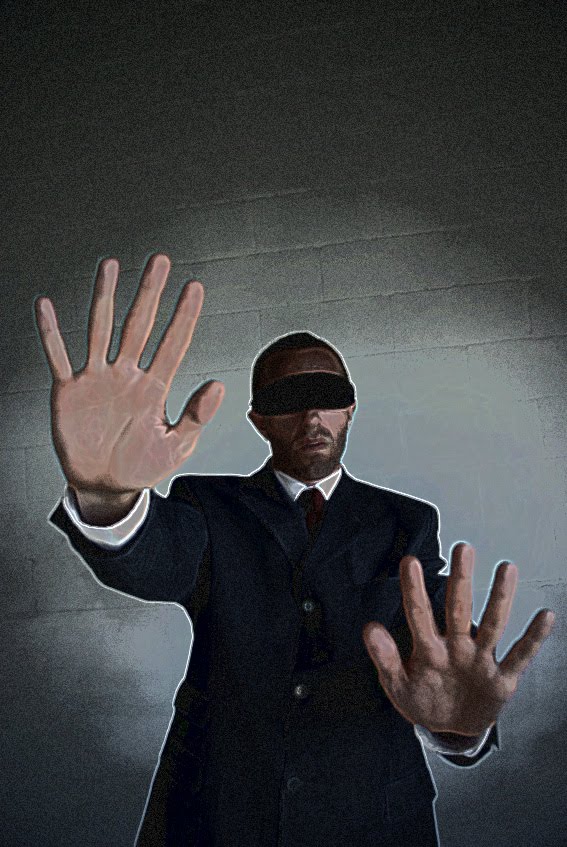
Blindfolded-ManIt seems that every few days, the basic understanding of the NSA surveillance leaks changes. At first, it was just phone records, but really, how many of us use our phones to call all that much any more? Then, it included nearly all internet traffic, but we were assured there were “meaningful safeguards in place”. And then, last week (to far too little fanfare) we found out just how meaningless these “safeguards” really are.

And still, the journalists at The Guardian say they are preparing their “next round” of articles, and so who knows where we’ll be, come next week.

To a large extent, this prevents truly meaningful and lasting commentary that can sustain a discussion for more than a few days. And so, instead of trying to do that, I will just put up some random, disjointed nuggets of thought on this issue; things that, hopefully, can offer us some food for thought. Respond as you like in the comments below.

_________________________

I realized I’m a racist. I realized in the course of these leaks that I have some latent racism. The US government kept assuring us that these spy capabilities were not ever turned on Americans (this is false), but were only turned on “foreign entities”. It wasn’t until a day or so went by that I realized that whenever I saw that assurance, I automatically had an image in my head of Middle-Eastern “foreign entities”. This isn’t at all true.

We spy on our allies. Most of the spying powers are used on our allies, not on the “big bad terrorists” that we use to justify this surveillance.

Germany is awesome, but the NSA is suspicious. A new friend of mine who lives in Germany told me this past weekend that, in Germany, an employer is not allowed to see or know about any email that an employee sends, even if it is sent using the company’s own software, email addresses, computers, or servers. That’s crazy. I couldn’t imagine that here.

And yet, Germany is the European country that America spies on the most, conspicuously more than everyone else. Perhaps it’s precisely because they don’t make their data so easily accessible to America that we just have to go in and take it?

And so, it’s America’s fault that no one sympathizes with their Snowden woes. Edward Snowden, the leaker of all this stuff, is globe-hopping, trying to find asylum, and no nation is willing to arrest him and extradite him to America. American authorities, meanwhile, are flabbergasted that this could happen. If you’re a bully in the rest of the world, spying on everyone without their knowledge or consent, you’re not going to have too many friends. Do you, reader, feel America has a “right” to spy on everyone else? How does telling our allies that America is spying on them fall in line with “espionage” as Snowden has been charged?

Civil liberties vs. security: It’s not a compromise. Two parts of this one. Obama said over and over again that we need to find a “balance” to our liberties and our security. That’s not how the Constitution lays out our rights. Our civil liberties are absolute. They are the boundaries within which the government must play to “keep us safe”. They are the lines on the field on which the game is played. A sport is not a “compromise” between the rules and your winning. You are given the rules and boundaries and then given free reign to work within those to win the game, not try and change the lines and rules as you go.

Secondly, there is no compromise here. The NSA begins this “compromise” with everything, sacrificing nothing. And then tells us to “deal with it, we’re compromising”.

You’re 14 times more likely to be killed by fireworks than by a terrorist attack. Look at these stats. You’re also 9 times more likely, as an American, to be killed by a police officer than a terrorist. So where’s our “War on Law Enforcement” or “War on Fireworks”? Really. All this surveillance stuff was put in place to save us from terrorism which, in 2011, killed 17 non-military Americans. Is it because it’s working so well, then? Maybe, but even before the “War on Terror” there weren’t many American fatalities from terrorism. Far more from poverty, cancer, and other things that could really use the money that is otherwise being spent on this “war”.

Imagine this in the hands of the politician you fear the most. Even if you’re inclined to be in favor of these policies, you have to imagine this apparatus in the hands of whatever politician you fear the most. Maybe you trust Obama. Do you trust Michelle Bachmann with these powers? Lindsey Graham? Hillary Clinton? Nancy Pelosi? Whatever system you put in place has to be “leader-neutral” so as to be safe no matter who’s in power. That’s why we have the Constitution.

I’m actually impressed with Obama. I’ll admit it. I’m really impressed with the safeguards he attempted to put in place here. In a sense, Congress was the one that gave him these powers and told him “use this to keep us safe”. And you know what? It really seems like he tried to put safeguards on these programs. I completely disagree with where he drew those lines, but at least he drew some.

Lindsey Graham is the most vile, morally bankrupt and twisted individual with any semblance of power in this nation. I just needed to say that.

We prefer Daddies to Mommies in our Government. It seems to me that there is a sort weird metaphor here. Republicans rail against the “nanny” or “mommy” state that lets its citizens “suckle at the federal breast”. So the government can’t do those “maternal” things like support, offer security, educate, care, feed, and clothe. But then those same Republicans (and many Democrats) feel like the government must be as big and intrusive as possible to do those “paternal” things like protect, punish, admonish, assert influence and control, and bestow authority upon. It seems like many of our leaders think America should be a “Daddy State” rather than a “Mommy State”. That explains a lot.

There really aren’t meaningful safeguards here. Read this excellent and readable summary of what we know so far about these program.

You really should care about this. All of you. This stink about all this isn’t about people “not having anything to hide”. It’s about a fundamental shift in how laws are enforced in this country. The burden of finding crimes has always fallen on the authorities. They were the ones that had to search out and prove wrongdoing, and no one could incriminate themselves. In a sense, the system has been this: everyone is going to be assumed innocent; if you do something wrong and we don’t find you, then it’s our fault–you’re still presumed innocent until we prove you otherwise.

With these NSA programs, however, that changes. It’s no longer “we consider you innocent until we prove you otherwise”, nor is it even “we think you’re guilty until we prove you innocent”. Rather, it’s a weird ambiguous, unprecedented middle space where we are all considered potentially guilty and kind of stay there until declaring us one way or the other becomes relevant.

You do have something to hide. This is sort of a lame argument, I know. But still, it could be important. Plenty of studies have shown that as more and more laws are made, there’s more of a chance that we break them without knowing. One book even estimates that the average American breaks at least three federal laws a day. The way these NSA programs are structured is that if at any point in the future that there is a reason to suspect you of anything (whether you’ve legitimately committed a crime, you are part of some marginalized group, or even if you’re running for office!), the NSA can–literally–“rewind” your entire communications and online history and find something–anything–that might actually break a law.

History, History, History. It’s well-known now that Martin Luther King, Jr. was the subject of surveillance like this, and tapes of him and his mistresses were used to try and get him to stay quiet. J. Edgar Hoover constantly did this to political enemies. Occupy Wall Street had these powers turned on them, and I’m sure the Tea Party has. You simply can’t assume that you will never find yourself in solidarity (or at least agreement) with a group that this apparatus would never be turned upon. History shows that governments can’t be trusted with powers like this.

Living Room Toilets: The best metaphor I’ve heard about all of this. I was listening to a radio show and one of the interviewers referenced this, and so I don’t know the exact source (please let me know if you do), but it was about how the whole “I have nothing to hide” reasoning is silly. I’ll end with this.

No one has a toilet in the open in their living room. Why? Not because people have anything to hide in their bathroom. But simply because some things inherently deserve to stay private.

[image credit]08

Proud to be an American: a blow to Voter ID Laws


spanish-voter-stickerToday, the Supreme Court found unconstitutional Arizona’s law requiring extra ID when registering to vote, saying that States can’t regulate federal elections to that degree, because that is under the authority of Congress, not the States.

Admittedly, I wish the legal reasoning was more specifically on the principal of extra voting requirements rather than just a Federal vs. State’s rights issue. Technically, the basis of this decision would still allow for federal election committees to create a national Voter ID requirement for registration, the prospect of which I’m not excited about.

And, it also need to be pointed out that this case was not about the state laws requiring people to present Voter ID on election day, but rather just when they register to vote. But either way, this is a small win for America today.
Continue reading

POLL: What do YOU think about the NSA Surveillance stuff?


i-voted-stickerI promised earlier this week to write up some of my own thoughts on the whole NSA Surveillance leaks. And of course, as usual, I started thinking through it and writing about it, and saw that I need to break it up into two or three posts. So that’s next week.

Earlier today, I posted the best things I’ve encountered on these leaks. I hope you were able to partake in any of those. But, until I can post some of my thoughts next week, I thought I’d do the first poll this blog has ever had and get your thoughts on this issue.

Yes, there are a lot of options below; you can pick more than one option. They range from most freaked out by this stuff to least worried. I’m really interested in where you all stand on this. If you feel like there are any answers I missed, or if you have any comments and what to add what and why you voted like you did, feel free to share in the comments below. Continue reading

The best, most entertaining resources on the NSA leaks


When it comes to the political news this week, I’ve felt a large range of emotions. I’ve felt just a little bit of “I told you so” vindication, joy over the attention the media is giving to it, anger at the government, pride in some brave politicians, and frustration over the fact that no one else in my life seems to be paying attention to this or even care.

I’ve also felt a certain futility in grasping all off this and being able to distill it in a concise, communicable way. I’m going to do my best next week on this blog, but in the end, I don’t think I could do better than these three shows in doing so.

First, nothing helps ease the shock of learning that your government is storing your entire digital life than a little laughter. And to that end, there’s no place better for that than The Daily Show. Jon Stewart is gone for the summer, but he is being ably covered by John Oliver. This clip below is Oliver’s first night hosting:

Full episode: [Daily Show] [Hulu]

Continue reading

Crying Over Spilt Rilke [Re-Blog]


Ran across this quote and post. They are both so good. I am all the more persuaded I need to open up the copy of Letters that I have sitting on my shelf right now. It gets cut off in the excerpt above, but here’s the whole Rilke quote:

You are so young, so before all beginning, and I want to beg you, as much as I can, dear sir, to be patient toward all that is unsolved in your heart and to try to love the questions themselves like locked rooms and like books that are written in a very foreign tongue. Do not now seek the answers, which cannot be given you because you would not be able to live them. And the point is, to live everything. Live the questions now. Perhaps you will then gradually, without noticing it, live along some distant day into the answer.

Adam Lauver's avatarThe Narratician

“You are so young, so before all beginning, and I want to beg you, as much as I can, dear sir, to be patient toward all that is unsolved in your heart and to try to love the questions themselves like locked rooms and like books that are written in a very foreign tongue. Do not now seek the answers, which cannot be given you because you would not be able to live them. And the point is, to live everything. Live the questions now. Perhaps you will then gradually, without noticing it, live along some distant day into the answer.” – Rainer Maria Rilke, Letters to a Young Poet

I recently came across a used copy of Letters to a Young Poet, which I’ve been meaning to read for a long time now. As I was leafing through it in the book store, I noticed that there was…

View original post 537 more words

The Lord is Fleeting [photo sermon]


train-knitting-fleeting

For those new to  the blog: each week, I try and write a “photo sermon” based on the themes of WordPress’ Weekly Photo Challenge. This week’s theme is “Fleeting“.

* * * * *

A garden cool. A God at leisure. Lovers conspire. Nectar tasted.

The God is gone.

He appears in visitors and shapes and shadows, and as a voice to an ancient Babylonian:

“I will make you…”

The Babylonian’s faith is counted as righteousness, and deservedly so, for this man doesn’t hear the voice of God in any way for decades. (And I get mad when his voice leaves me for months.)

This God lets his people sit in slavery for hundreds of years. When his Chosen asks to see his Glory, He offers only the briefest glimpse of his back. When His People stray at Sinai, He still offers to give them every benefit that He promised–the land, the victory, and their identity. The only difference: He would send his angels with them and withdraw his own Presence.

They freak out.
Continue reading

a brief Prodigal Paul doctrinal statement


paul-phoenix-1

As I am currently registering for my seminary classes, I thought I’d post this “theological statement” I had to write as part of my application materials. Some friends of mine had thought it would be interesting to read what I wrote, so here it is.

Seeing as I was writing to a seminary staff audience, there might be some references that aren’t commonly understood. I’ll link to times I’ve written about some items, but otherwise, any terminology or ideas that aren’t explained are a simple Wikipedia (or Theopedia–yes, it’s a real thing) search away. Continue reading

Fleeting: our Societal Anger; our National Substance


This week’s WordPress Weekly Photo Challenge theme is “Fleeting“. I’ll be posting a more meaningful “photo sermon” based on this theme later in the week, but I saw something last night I wanted to share.

This blog has not shied away from its concern over the civil liberties and privacy issues that have been exposed this week. I hope to post some more in-depth thoughts on these specific revelations later today or tomorrow. For this photo post, though, I ran across a couple of images that show just how fleeting any American societal anger, attention, or protest really is.

Continue reading

Weekly Photo Post: The Sign Says [casual fri]


This week’s WordPress Weekly Photo Challenge theme is “The Sign Says” (okay, as of today, this technically last week’s theme). Anyway, the prompt was to post pictures of signs that we’ve taken and why we picked them. So here a few signs I’ve taken pictures of over the years. This post is just a fun one. Nothing profound here. Enjoy.

sucks-coffee

Now, even in spite of my coffee snobbery, I really do love Starbucks coffee and (some of) their espresso drinks. So this isn’t a knock on them–I just thought this sign was hilarious.
Continue reading

Ordinary Time: It’s still Pentecost….but not really (but sort of)


angie-iver-woman-hands-watercolorThe wisdom and beauty of the Church Calendar never ceases to amaze me.

After the Holy Day of Pentecost happened a few Sundays ago, I turned to my favorite daily prayer site, MorningPrayer.isThis site always has a banner along the top displaying the current church calendar season. I was surprised to see, days after Pentecost, the words “Ordinary Time” splayed across the site.

Isn’t it the season of Pentecost?

So, I googled it, and I found out that there’s no such thing as Pentecost Season.

Pentecost is just a single, holy day in the Christian Church Calendar. It’s when we celebrate the falling and indwelling of the Holy Spirit upon Christian believers, 50 days after the Resurrection (Easter). Kind of a big deal, right? Might it deserve a season?

And though it’s not a season, it’s actually far more beautiful than that.
Continue reading