readings & reflections for Holy Week (2013)


scripture readings for the week.
as the week progresses, check back here and click on the appropriate day for Prayer and Scripture text for that day

(from the liberti Lent & Easter 2013 prayerbook & the Book of Common Prayer)
Continue reading

Palm Sunday: Future-Tense [photo sermon]


church-easter-tree

Continuing WordPress’ uncanny timing of photo challenges with the Christian Church calendar, this week’s theme is “Future-Tense“. In essence, they’re wanting pictures that anticipate something to come; something that’s being waited for; some future thing who’s presence is felt in the picture, even in its absence.

This is most appropriate today, as it’s Palm Sunday of 2013.

It takes some real significance for an event from the Bible to find itself as a major Church Holiday. Considering that, it can be odd that Palm Sunday is one of these: there’s nothing really unprecedented or special about it in and of itself.

There are other places in the gospels where Jesus is proclaimed king, proclaimed Messiah, prophecies are fulfilled, large groups believe in him, and even several times he enters Jerusalem. So what’s so special about this moment?

The future.
Continue reading

{palm sunday} | prayer & readings for Holy Week (2013)


For Holy Week: reading schedule/reflections.
{More on the why and how of Lent here.}

prayer.

Almighty and everliving God, in your tender love for the human race you sent your Son our Savior Jesus Christ to take upon him our nature, and to suffer death upon the cross, giving us the example of his great humility: Mercifully grant that we may walk in the way of his suffering, and also share in his resurrection; through Jesus Christ our Lord, who lives and reigns with you and the Holy Spirit, one God, for ever and ever. Amen.
(from the liberti Lent & Easter 2013 prayerbook & the Book of Common Prayer)
Continue reading

Guatemala Bloggers Trip Profile: Tim & Katie Høiland


tk4

In preparation for our Blogger’s Trip to Guatemala in April, Lemonade International is spending each week leading up to the trip profiling each of the bloggers that will be participating. This week, they profiled Tim and Katie Høiland.

I take personal responsibility for hooking Tim and Katie up over Twitter. They were married a couple of years ago in Phoenix in one of the best weddings I’ve ever been to, and it was here that I first heard of Lemonade International. In lieu of wedding gifts, they requested we give to LI.

And that is the heart they have. The Twitter hashtag they led them together was the #socialjustice tag. They have such a heart for all that’s represented by this Guatemala trip, I’m so glad to be spending this time with them. In fact, it was Tim’s recommendation that gave me the opportunity to do this.

And so, today, I offer you the chance to get to know this amazing couple. Check out their LI profile, Tim’s blog, and Katie’s blog. Click the banner below for more info in the trip.

lemonade-guatemala-2 BloggersDate

The Martyrdom of Perpetua: read the earliest Christian writing by a female


Perpetua-21In my last post in our series on Women and the Church, I mentioned a young girl named Perpetua, who was martyred in Carthage in about 202 or 203 CE. Her prison diary, written in the days leading to her public and violent death, is still the earliest known piece of Christian writing we have by a female. She was 22-years old when she died.

And so, as we head into Palm Sunday weekend, I thought I’d share this work of hers with you. It is a stunning, beautiful, and passionate work.

The bulk of her diary consists of her father trying to convince her to abandon Christianity, as well as her visions and dreams she has to encourage the other prisoners around her. As she is sent off to die, she entrusts the diary to an unnamed individual who picks up the story from there and describes her dramatic death. This individual also added a brief introductory paragraph.

I hope and pray that the example and visions of Perpetua will speak deeply to us, in the midst of our own pain, weakness, and sorrow.

Continue reading

Reflections on Psalm 51: the People & their Fallen King [intro]


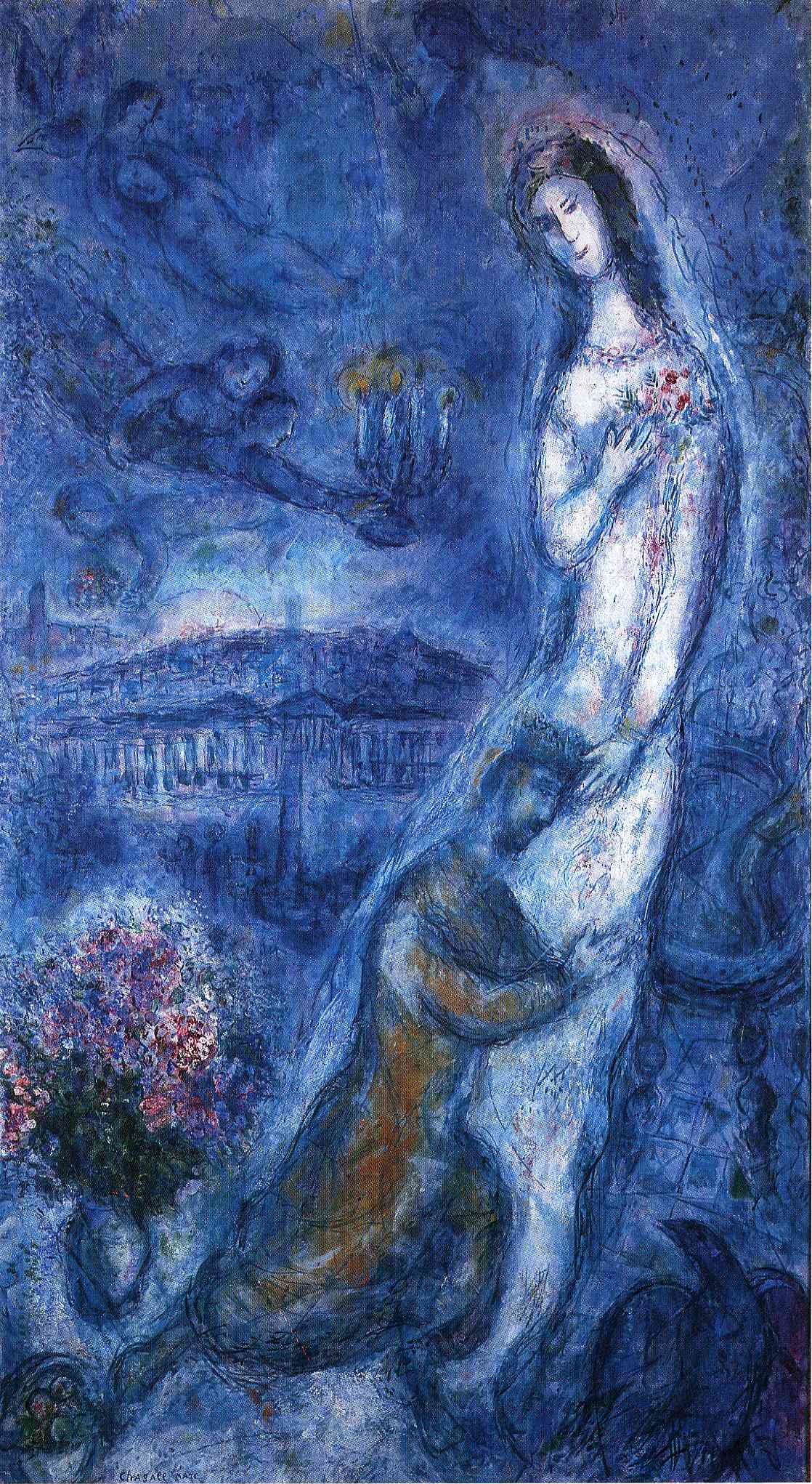
bathsheba-marc-chagallWhen it comes to talking about Repentance, there are few favorite passages to study than Psalm 51. As part of this year’s Lent series on Repentance, I’d like to spend the rest of this series exploring this Psalm verse-by-verse.

So today we begin. But not with verse 1. Instead we begin with that superscription found above it:

To the choirmaster. A Psalm of David, when Nathan the prophet went to him, after he had gone in to Bathsheba.

This is actually an important place to start. Most of the Hebrew writings we have outside of the Old Testament are pieces that were written to fill in gaps left in the biblical account. It seems the people of God have always had difficulties living with what God did not tell them.

Continue reading

Women & Church History: The Bad Reformation & the Good News {pt.3}


Silencing-Women-duct-tapeThis is a post in an on-going series on Women in the Church.

The past couple of days, we’ve been talking about the historical development of this whole “Women in Church Leadership” idea. in the first post, we talked about why this is so important, and in the second post, we discussed where this change in ideas concerning ordained female leadership happened. Today, let’s talk Reformation and concluding thoughts.

Continue reading

Women & Church History: the century we’re still recovering from {pt.2}


Dubay-lizglass-eyeThis is a post in an on-going series on Women in the Church.

Yesterday, I began talking about the history of Women in the early Church. Up front, I gave my primary source for information, this issue of Christian History Institute Magazine on “Women in the Early Church”, which I will quote from in this post. If you need more information, you can go there.

I also gave a brief sketch of my view: women were quite active in leadership in the first two-centuries of the Church, but come the 200s, some radical things began to change in the Church–things that still effect us today, especially as it pertains to women in ministry.

(Most of this material is comes from the excellent article “The Early Controversies Over Female Leadership” by Dr. Karen J. Torjesen.)
Continue reading

Church History: Where have the female leaders been? {pt1}


sandorfi-quo-vadis[This is a continuation of our on-going series on Women in the Church]

Update: Part 2 is now up.

First off, one of the main limitations of writing is the necessity of producing summary titles for what you write. This post should, more precisely, have the title “Where have all of the ordained, teaching, preaching, and leading female leaders in Church History been?” But I can only put so much in the title before it becomes absurd.

I say that because even complementarians (who don’t think women should be ordained) will freely acknowledge the valuable place women (in general) have had in the Church over the years. They simply think that, in spite of gifting or value, God has placed limits on who should lead his church in ordained, official ways. So…sorry for any confusion.

When it comes to the Bible and the contemporary benefits women in Church leadership could offer, I’m pretty comfortable, confident, and secure in my egalitarianism. I think it is a faithful, consistent, practical, and edifying view to hold, and I see evidence for it written and displayed all over the place.

And yet, I’m in the extreme minority, relative to Church History.
Continue reading

The Silence of the Reformed [Re-Blog]


Powerful and moving words, especially for those that idolize the Neo-Reformed. Take note. Speak up. Defer to the powerless. Critique the powerful.

matt b redmond's avatarEchoes and Stars

Just silence.

There has been no leader in the Reformed community who has spoke up for the victims of sexual abuse in SGM. Not one. No Reformed leader has nailed their horror or concern to the door. The heirs of Luther who railed against the abuse of indulgences are silent on the abuse of women and children. Those who would die on the hill of complimentarianism have ceded the moral ground to the ladies of The Wartburg Watch and Julie Ann Smith. Those who decry the power of the Roman church wield its echo.

Is there no man with a ready hammer and nail willing to heave his weight and influence into the silence? All of the gospel-hyphenated books may become millstones before all is said and done.

What if it was you?

Or worse. Your child.

They will not list away from Orthodoxy because of Rob Bell so…

View original post 11 more words

Women & Church History: The Bad Reformation & the Good News {pt.3}


I put the wrong date on this post. It has been relocated here.Silencing-Women-duct-tape

This is a post in an on-going series on Women in the Church.

The past couple of days, we’ve been talking about the historical development of this whole “Women in Church Leadership” idea. in the first post, we talked about why this is so important, and in the second post, we discussed where this change in ideas concerning ordained female leadership happened. Today, let’s talk Reformation and concluding thoughts.

Continue Reading —>


And….We All Have a New Pope! (Catholics Aren’t Crazy)


pope-funny-bigMere minutes ago, a new Pope emerged from the conclave in Rome after Pope Benedict’s surprising resignation several weeks ago. The new Pope is the cardinal formerly-known as Jorge Mario Bergoglio.

But now, he is Pope Francis.

Now, I am fully and securely a Protestant, as most of the readers of this blog are. But for those of us that find ourselves in that Protestant tradition, we often forget a little detail of that name: Protestant.

It means, literally, “the protesting ones”. We are “protest-ant” about many of the practices and teachings of the Catholic Church. But to “protest” something does not necessarily mean you are no longer a part of it.

This is why I describe myself, denominationally, as a “Protesting Catholic”. (Okay, I stole that from Austin Ricketts.)

And you should to.
Continue reading

The Story of Repentance: believing vs. achieving


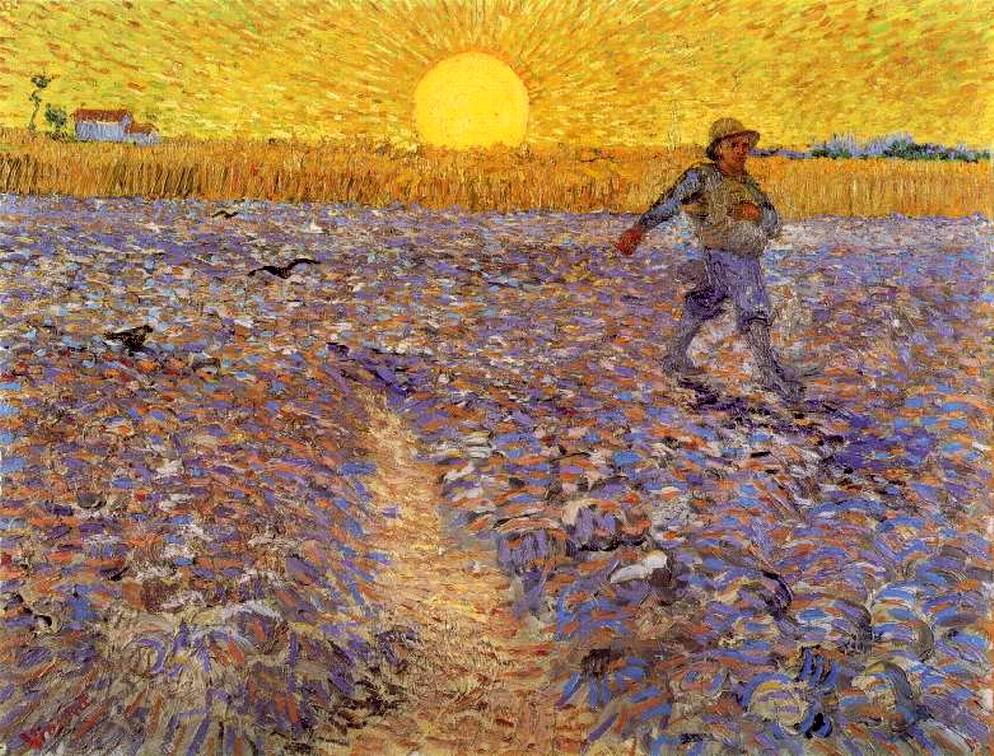
Van Gogh-Sower with Setting SunThis post is part of my 2013 Lent series: Reflections on Repentance.

I almost titled this post “theology in the service of real-life”.

The last time I wrote about repentance, I talked about the difficulties I have with some of the ways people in the Church talk about repentance. I then started researching the topic. And as I did, I found some amazingly helpful realizations about this in the Bible.

So today, I just wanted to take some time and explore this topic throughout the entire story of the scriptures. Hopefully, we can come to some conclusions about what repentance means for us today, and perhaps even some answers to our previous concerns in the last post.
Continue reading

Resurrection Gives Us Joy in Lent & Death


La-Pieta-IYes, as cliché as it is, I’m watching the new Bible mini-series on the History Channel. I’m actually enjoying it. A few things are odd (the ninja angel, for one), and they made some interesting choices on what to leave out (was the extended Sodom sequence really worth cutting out the entire Exodus story, Wilderness wandering, and golden calf rebellion?). But there is still a sense of ownership, that this is our story.

(Side note: for those of us that study the Bible and don’t necessarily think historicity is the highest purpose for which it was written, it’s encouraging to still feel that feeling of identity-formation when encountering our story–even when it’s seen as “just” a story.)

Anyway, a review of the show is not why I’m writing today. I just had a brief thought I wanted to share.

In Episode 1 of the mini-series, we see Pharaoh’s son die at the end of the plague sequence. Watching him carry the pale, lifeless body of his son, it reminded me of Michelangelo’s la Pieta (a version of which you can see above). It was actually quite moving, and I was surprised that I only realized now the sadness of this part of the story. Continue reading

Barth: to Repent & Pray is to Die [QUOTE]


This post is part of my 2013 Lent series: Reflections on Repentance.

In the first book of Karl Barth’s Church Dogmatics, as he is reflecting on God as Creator, Barth begins meditating on the fact that this Creating God is also our Father. He begins talking about what “Fatherly Lordship” might look like, and what impact this “Fatherly” dimension might have on how we look at his “Lord-ly” commands on us–like the command to “repent”. And so, as he is focusing on God’s Fatherhood in the Gospels, he writes these beautiful words on repentance:

Metanoien [the Greek verb for “repent”], to reverse one’s thinking, to think afresh, to think through to God and His kingdom, really means in the rest of the New Testament too, and here in the Gospels especially, to consider the fact that we must die. But it does not just mean this, but whatever else it might mean, it can mean only that if first and decisively it means this.

Further, note that “Thy name”, “Thy kingdom”, and “Thy will” are the objects of the first three petitions of the prayer directed to “our Father, which art in heaven” (Mt. 6:9f), and it is on these that the three which follow rest. In the context of the New Testament, then, the Thy makes these petitions absolutely equivalent to the saying : “Teach us to reflect that we must die.”