Top 10 Reasons Why Men Shouldn’t Be Ordained [casual fri]


In this on-going series on women in the ministry of the church, I’ve certainly tried very hard to not be snarky, sarcastic, or ungracious to those that disagree with me on these issues. Nevertheless, this was a bit of fun I could not resist. It’s from a post on the (now defunct, it seems) blog Christian Feminism (of course). It was originally a comment left on one of their posts. I loved this list so much, I decided to post a few of my favorites from the list. Enjoy.

Top 10 Reasons Why Men Shouldn’t Be Ordained

10. A man’s place is in the army.

9. For men who have children, their duties might distract them from the responsibilities of being a parent.

8. Their physical build indicates that men are more suited to tasks such as chopping down trees and wrestling mountain lions. It would be “unnatural” for them to do other forms of work.

7. Man was created before woman. It is therefore obvious that man was a prototype. Thus, they represent an experiment, rather than the crowning achievement of creation.

6. Men are too emotional to be priests or pastors. This is easily demonstrated by their conduct at football games and watching basketball tournaments.

5. Some men are handsome; they will distract women worshipers.

4. To be ordained pastor is to nurture the congregation. But this is not a traditional male role. Rather, throughout history, women have been considered to be not only more skilled than men at nurturing, but also more frequently attracted to it. This makes them the obvious choice for ordination.

3. Men are overly prone to violence. No really manly man wants to settle disputes by any means other than by fighting about it. Thus, they would be poor role models, as well as being dangerously unstable in positions of leadership.

2. Men can still be involved in church activities, even without being ordained. They can sweep paths, repair the church roof, change the oil in the church vans, and maybe even lead the singing on Father’s Day. By confining themselves to such traditional male roles, they can still be vitally important in the life of the Church.

1. In the New Testament account, the person who betrayed Jesus was a man. Thus, his lack of faith and ensuing punishment stands as a symbol of the subordinated position that all men should take.
A Prayer for Thanksgiving


Father in Heaven, Creator of all and source of all goodness and love, please look kindly upon us on this Thanksgiving and receive our heartfelt gratitude in this time of giving thanks:

We thank you for the splendor of the whole creation, for the beauty of this world, for the wonder of life, and for the mystery of love.

We thank you for the blessing of family and friends, and for the loving care which surrounds us on every side.

We thank you for setting us at tasks which demand our best efforts, and for leading us to accomplishments which satisfy and delight us.

We thank you also for those disappointments and failures that lead us to acknowledge our dependence on you alone.

We thank you for all the graces and blessings you have bestowed upon us, both spiritual and temporal: our faith and religious heritage, our food and shelter, our health, the loves we have for one another, our family and friends.

Above all, we thank you for your Son Jesus Christ; for the truth of his Word and the example of his life; for his steadfast obedience, by which he overcame temptation; for his dying, through which he overcame death; and for his rising to life again, in which we are raised to the life of your kingdom.

Grant us the gift of your Spirit, that we may know him and make him known; and through him, at all times and in all places, may give thanks to you in all things.

Dear Father, in Your infinite generosity, please grant us continued graces and blessing throughout the coming year.

Amen.

(modified from The Book of Common Prayer)

The Pain & Substance of Gratitude. Happy Thanksgiving. [REPOST]


Yesterday, the annual meal referenced in this post occurred at my work, so I thought I’d re-post this today on this Thanksgiving Eve.

Sorry that this isn’t your typical feel-good Thanksgiving post.

On Tuesday, my job had a large Thanksgiving lunch for all the staff and clients we serve. I got my food and sat down next to some of my coworkers and across from a client I had never seen before. She was very friendly. She didn’t ask me my name or anything; she just began asking me questions about what I was doing for the holiday, where I was going, if my parents were still alive/together, if I had any siblings, so on and so forth.

As she kept firing one question about my Thanksgiving week after another, I started to feel the awkward tension developing because I wasn’t returning any of these questions back at her. I wondered if my coworkers thought this was odd of me to do, but it was very intentional.

Continue reading –>

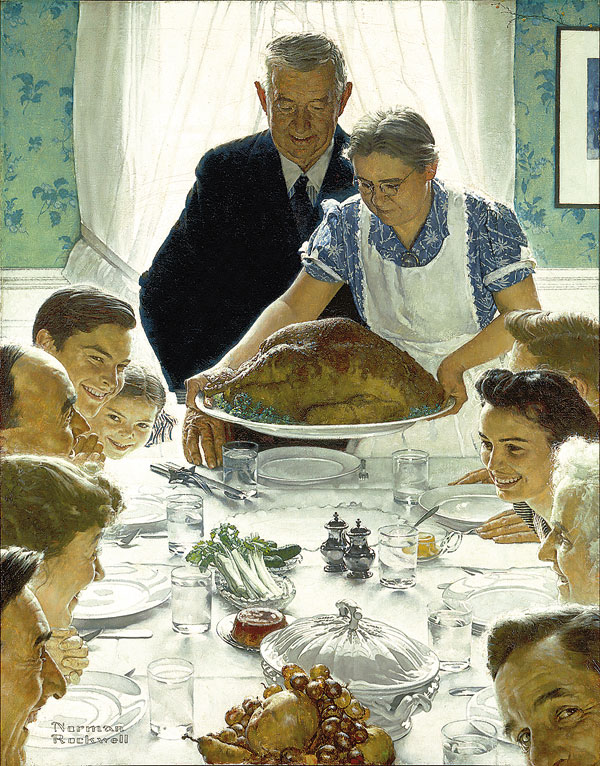
[art credit: “Freedom From Want” by Norman Rockwell]

Two quick questions for all you complementarians out there….


I’m still in the process of writing my first post on a specific text (1 Timothy 2:8-15). It’s not done yet (I chose to have an amazing of night full of wings and really good friends instead of writing it).

Because of the impending holiday weekend and the travel days that it entails, I’ll probably be putting that one up on Monday (sorry to get everyone fired up just to drop you for almost a week), but in the meantime, I wanted to solicit some help from my more conservative friends out there (also usually called “complementarians“) on a couple of questions I’ve had during this on-going series on Women in the Church. First:

Under a complementarian view, what would the traits of a failed husband in this respect look like? In other words, what does a “feminine” husband look like? Does that look anything like the way you think women are supposed to act in the home?

What I’m getting at is this: when I think of these answers (on both extremes), I think of terms like “weak, passive, indecisive, silent, not-present, abusive, exploitative, manipulative, and aggressive”.
Continue reading

Women & the Church: 2 things that began changing my mind


the journey

If it’s not obvious so far, I wanted to make something clear before we begin: these posts in this series on Women the Church are walking through the same path my own journey took get to where I am.

In my last post, there was a concern that a friend brought up that I didn’t get to talking about the biblical texts enough. Well, this is because both egalitarians and complementarians are looking at the same biblical texts. In my own shifts on this issue, the key changes were not “new” Bible verses I found.
Continue reading

My Rothko, My Rothko (I’m in an art rage)


I’ve mentioned before on this blog (though admittedly in passing) that my favorite artist is Mark Rothko, the 20th century abstract expressionist. He’s often made fun of because his pieces are, usually, blocks of color on canvas. So many people (and I was one of them) look at his pieces and say “Where’s the skill in that? Anyone could do that! How is this art?”

The big turn for me happened several years ago when studying for the lecture/series I did on Beauty. As I spent nearly a year immersing myself in the philosophy, theory, and theology of aesthetics, I came to finally “get” abstract art. And with it, I realized how to connect with Rothko; and my art sensibilities have been the same since. For more, read my post on the beauty of  art.

Still don’t get it? Here’s a quick exercise. Look at the two pieces below. The one on the right is the genuine Rothko. The one on the left is one of those reproductions where someone paints it inch for inch as close to the original as possible.
Continue reading

Women & the Church: we’re ALMOST to the Bible, but first…


Well, we’ve gone through some of my own journey and some of the ways this discussion goes, but the real meat of this discussion centers around a few key biblical texts. Various refutes and refutations’ refutes can be found with any easy Google search. I don’t necessarily want to re-hash the more widely-publicized textual minutiae of the issue, though some of that will be necessary.

In this post, I could easily just list the three primary offending texts and then talk about how my view differs from others’ views. But those other people’s views don’t come out of thin air. They are based in many more (and, epistemologically more important) assumptions and bigger issues that usually never get touched on.

And so, as I continue this series, today I just want to touch on the ways people go about using the Bible in this, and then defending how I feel like we should use the Bible here. After this post, beginning next week, I promise we’ll start getting into actual biblical texts. But we need to do this first.

Because, as anyone that has studied theology begins to realize, everything comes back to your chosen interpretive method and filters–what’s usually referred to as a “hermeneutic”.

Continue reading

Christian egalitarians: authority-fearing, culture-worshipping, Bible-hating, puppy-kicking liberals (and other truths)


I hate pontificating.

Now, don’t get me wrong. Often, we can only hate most deeply that which we know most truly. Going through the annals of this very blog and my own conversations (especially during college), pontification makes frequent guest appearances.

By “pontification” I mean saying something authoritatively more for the sake of emphasizing the authority with which you say it than the point for which you did. It’s speaking to your base and those who agree with you, and it often says more about you than it does for the topic at hand. And generally, especially for issues where there is deep disagreement, it accomplishes absolutely nothing more than entrenching each side.

Continuing this series on gender relationships in the church, I don’t want to do that. I really don’t. But too often, this is the case.

Continue reading

On women leading & teaching stuff in churches: a story


Women, and their role in shaping society’s power structures, are at the fore-front of our nation’s consciousness and cultural discussion right now–Evangelical and otherwise.

Socio-politically: Maureen Dowd wrote about it this past week. Hanna Rosin wrote a book about this happening. Sandra Fluke got Rush Limbaugh into a tizzy and then spoke at the Democratic National Convention. Republican leaders, for some reason, could simply not stop talking about rape. Mitt Romney bragged about his binders full of them. Last week, Americans elected the largest number of females to Congress than it ever has.

In Evangelicalism: Rachel Held Evans brought attention to misogyny and patriarchalism at one of the bastions of the Neo-Reformed. Her new book, which already carried some controversy, has been criticized and patronized by conservative evangelicals, including one of the top female thinkers of that flock (Evans’ response, a scholar’s rebuttal). Concerning said bastion, after a rough search and count for the phrase “Complementarianism”, it seems that over half of the results appeared this year alone. At the time of this writing, a different bastion of the Neo-Reformed, upon visit to their site has as the featured video: “Complementarianism: Essential or Expendable?”. The Church of England just announced their new Archbishop of Canterbury, Justin Welby, and one of the main issues being talked about is his views on women’s ordination.

And so, I’m starting a series of posts (as I usually do) to offer up some of my thoughts on the Christianity side of this discussion–thoughts which I hope are helpful to us all. But first, I find it only fair to tell you all my journey into this and where I stand. I’ve hinted at it before, but a fuller treatment might be in order.

Continue reading

Weekly Photo Challenge: Renewal


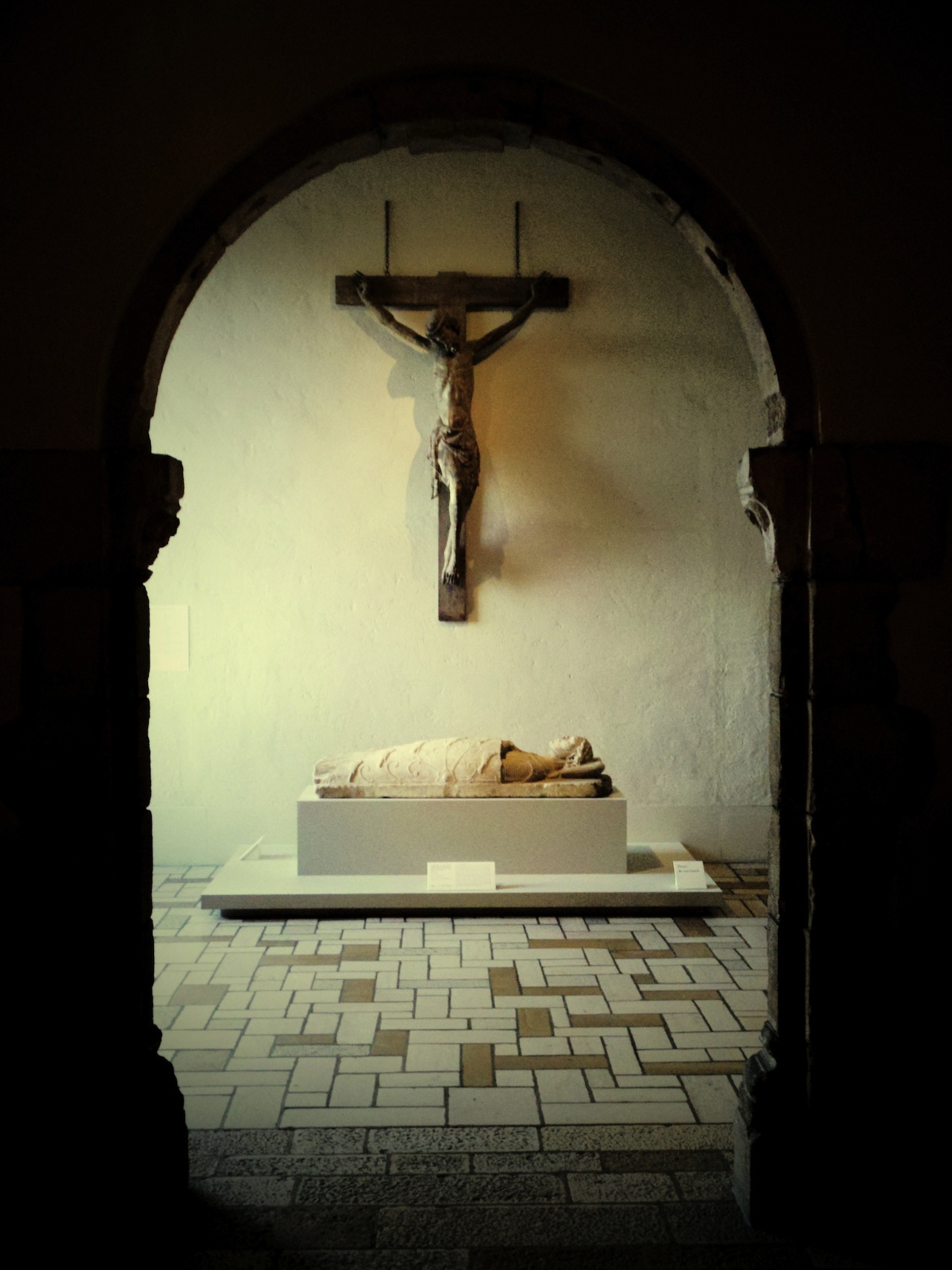
This week’s WordPress Weekly Photo Challenge theme is “Renewal“.  This here is a picture of one of my favorite rooms in the Philadelphia Museum of Art. It’s in the medieval art section (a section which, as I’ve written before, carries much significance to my soul).

I still remember the first time I turned the corner and saw this crucifix on the wall. It’s crude, yet so beautiful. It faces another, dimly-lit room in which there is a medieval-era altar on which there was taken countless pieces of Eucharist.

The last time I was at the museum, though, I noticed a bit of symbolism I’d never noticed (and I have no idea why). This crucifix is positioned above a 13th-century knight’s tomb effigy. After spending some time in reflection near the aforementioned altar, I looked back through the arch and for the first time noticed that the gaze of the dying Christ seemed to be settling not on the museum passer-bys, but on the effigy of the dead knight before him.

The Christ’s gaze of sadness and pity no longer seemed to be for his own sufferings, but for the death and suffering of this one that lay before him. This gaze seemed to carry with it not only sadness, but also a stoic confidence that through this act, he would bring an end to this knight’s sleep.

Through this act of loss and sadness, here is a picture now of rebirth and renewal, made all the more meaningful as I took this picture from the steps of that altar, bathed in darkness, on which was consecrated and served Christ’s body, broken for our renewal and light–then, and today.

See my past Weekly Photo Challenges here.

___________________________

Continue reading

Okay, election: done. Time to get this blog back on track. [casual fri]


Well, on this blog we’ve contemplated electing Romney, electing Obama, each of the election debates, laughing at the election, the election foreign policy, the election domestic policy, reminded ourselves it’s all going to be okay, votedlaughed on voting day, partied on election nightprayed for the election, and we prayed for the elected officials.

Now we’re all election’d out.

It has now become almost as cliche as election-season Facebook politics posts, to complain about those election season Facebook politics posts. In fact, I think my Facebook feed was filled with more complaining about political posting than actual political posts. (This is not to discount the very real experience that many of us had, to be sure, with those one or two people ib our feeds that would put 12 to 15 posts up a day and carry on endless vitriolic arguments in the comment section.)

I wonder if our malaise wasn’t even as much about other people posting as much as it was the campaign itself. With all the politicking having already wearied us, seeing anything more on Facebook surely just put many of us over-the-top. For any ways that I may have been “that guy”, please forgive me. I had hoped I would be a more clear-headed voice in the political wilderness.
Continue reading

Hope of the Earth: a political eschatology (we can all breathe) [REPOST]


In light of the election, I wanted to re-post this article from a couple of weeks ago. I hope it’s encouraging.

November 7th, we will wake up to front pages declaring with finality the results of the American Presidential Election. Most of us will see these headlines and have some sort of emotional reaction (especially those of us that stayed up as late as we could to know the results early).

Depression? Fear? Anger? Injustice? Sadness? Joy? Elation? Ecstasy? Worship? Peace?

I remember after the 2004 election when Bush beat Kerry. Going to a large, urban University dominated by idealistic and passionate liberal youth, the campus was in mourning for the rest of that week. People walked in silence, hugged one another, and I saw a good number of people crying as they resigned themselves to what they felt would be the end of every good thing they’d ever thought about this country.

This election cycle, I was certainly active–probably more so than ever before (especially on this blog, at least). I’m almost certain that I have been blocked from my fair share of Facebook feeds and removed from some feed readers in the past six months or so. I’ve been quite passionate on those few issues that have guided so much of my writing and reading.

But I haven’t lost a bit of sleep over any of that stuff. I’ve been able to enjoy good books and beers, and pipes and peers, without any discussion of politics or debates or elections.

Continue Reading –>

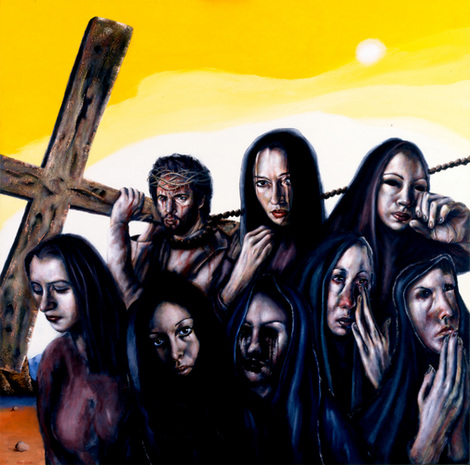
[image credit: Untitled piece by Arielle Passenti. Read my review of this piece.]