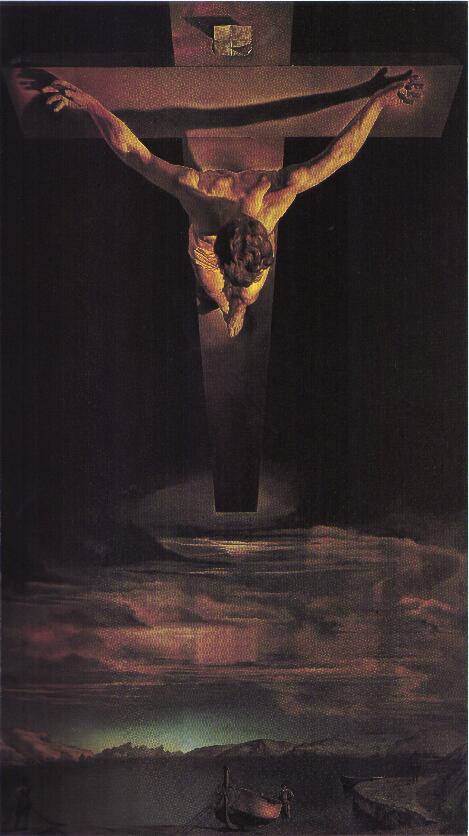
The Slain God of Evolution | Lent {6}


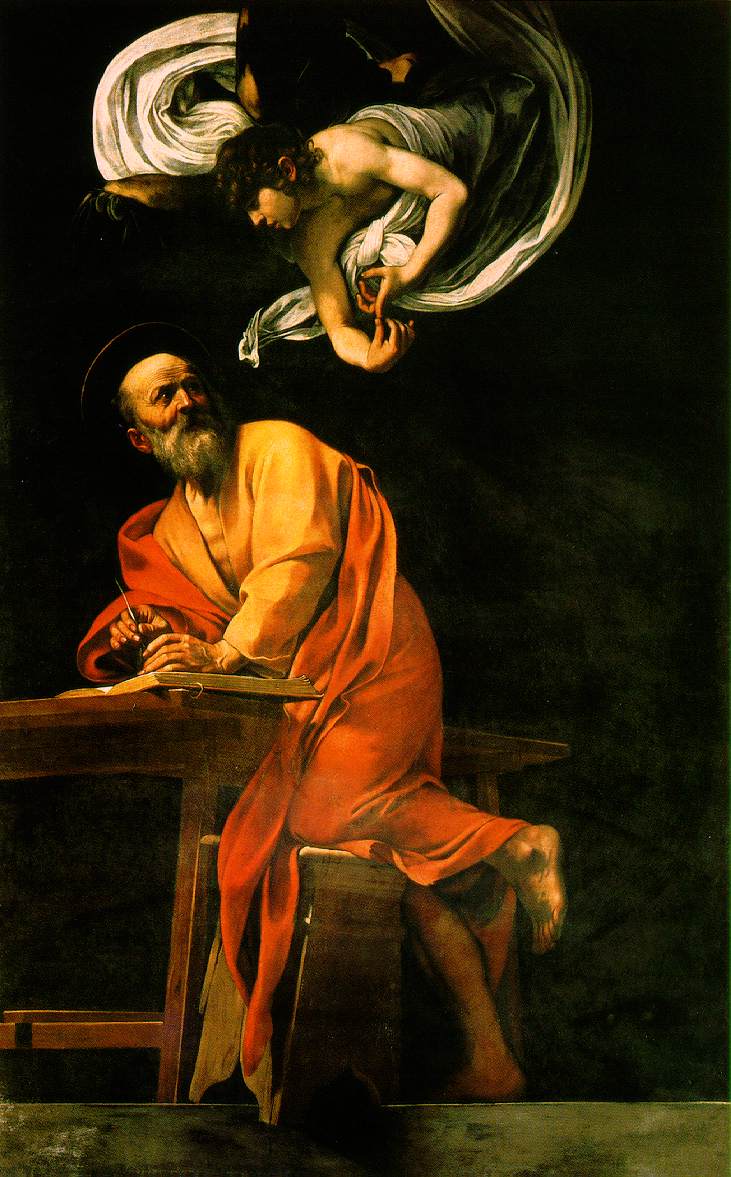
This Lent, we’ve been going through a series meditating on some of the implications of the fact that we worship a God who was “slain before the foundations of the world”–in eternity past–and therefore has some aspect of “slain-ness” to his very nature.

In the last couple of posts, we’ve been focusing on what this means for the many references in which the Bible says that the world was created “through Jesus”. What might it mean that the world came into being through a suffering and slain Lord? What might it mean for our own suffering?

This got me thinking about Evolution.

Obviously, the main vehicle driving Natural Selection is death and dying. This is one of the biggest hindrances that Christians have to the idea of Evolution. If our usual categories are correct of a “good” creation “falling”, and only then ushering “death” into the world, how does the thoughtful Christian deal with the realities of Evolution?

I think this Lenten idea of God’s “slain-ness” can help.
Continue reading

David Brooks on “Centralization” [REBLOG]


Great post by this philosophy professor in New York whose blog I follow. He points out the hyperbole and absurdity of a recent David Brooks article. I like a lot of the things Brooks usually says, but this is a little ridiculous.

I like the sound of Brooks’ eventual conclusion of “centralizing goals” but “decentralizing processes”, but how he describes what this might look like in health care ends up looking awhole lot like the Affordable Care Act.

Samir Chopra's avatarSamir Chopra

On May 23-24, 1865, the victorious Union armies marched through Washington. The columns of troops stretched back 25 miles. They marched as a single mass, clad in blue, their bayonets pointing skyward.

Those lines, dear reader, are the openers of a David Brooks article about the “centralization” of power in Washington via the “Obama health care law” (whose official moniker is “The Patient Protection and Affordable Care Act”). “Obama health care law,” then, in the next sentence or so, becomes just plain “Obamacare.” Another sentence or so later, as Brooks commences a four-step listing of how “Obamacare” has “centralized” Washington’s authority, we are told about how “Obamacare centralizes Medicare decisions — and the power of life and death — within an unelected Independent Payment Advisory Board.”

At this stage, I am eight paragraphs through this seventeen-paragraph missive, and thus far, I’ve been exposed to civil war imagery, Obamacare, and the…

View original post 383 more words

a question from a straight white christian male without a voice…


To date, this is the post I am most ashamed of ever having written on this blog. It perpetuates power dynamics and long-held ways of thinking that add to problems and ignore their structures. This post participates in a system of injustice and “not listening”. It’s a profound exercise in missing the point in these issues. I keep it up as a reminder to myself and others of how wrong-headed and dumb I can be. I’m sorry for these words, and I’m grateful for your grace.

________________________

I find myself in an awkward time in our current news cycle. As part of the most talked-about news items of late, we have birth-control (and by extension, abortion), racial tensions over the death of Trayvon Martin, gay marriage being approved and some states and vetoed in others, the health care law going before the Supreme Court, and a Philadelphia ban on the public feeding of the homeless.

Is it possible for me, as a (relatively) middle-class white Protestant male, to communicate opinions about these topics if I don’t share the same sentiments as most others?
Continue reading

prayer & reflections for Lent, wk5 (3.25-31.2012)


prayer for the day.

Almighty God, you alone can bring into order the unruly wills and affections of sinners: Grant us grace to love what you command and desire what you promise; that, among the swift and varied changes of the world, our hearts may surely there be fixed where true joys are to be found; through Jesus Christ our Lord, who lives and reigns with you and the Holy Spirit, one God, now and forever. Amen.
(from the liberti Lent & Easter 2012 prayerbook & the Book of Common Prayer)

Continue reading

if you’re a church-going, coffee shop-visiting Philadelphian, watch your phone [casual friday]


Lookout Mobile Security recently released a study in which it analyzed where people most often lost their cell phones. Lookout has a suite of resources that you can activate if you think you’ve lost your phone. They took this data and analyzed it to see where people most often activate this feature.

  • The number one American city where people lost their phones? Philadelphia
  • The number one place people lose them? Coffee shops
  • The third most likely place Philadelphians lose them? Church

In other words, I’m screwed.

P.S. I’m fully aware that it is Saturday. Shut it.

[Story found via Mashable]

a word on the effect of Corbett’s budget on Philly social services…


The Philadelphia Inquirer had this front page article today on Governor Tom Corbett’s drastic proposed Pennsylvania budget cuts and their particular effect on social services.

I work for one of the main social service agencies in Philadelphia. I can tell you that these effects will be real, not exaggerated, and felt by everyone (and perhaps even illegal). Is there really no more balanced, thoughtful, or nuanced approach to this?

In a notable quote from the article, executive director of NHS Human Services, Paul Sachs, told the Council committee about how the changes would eventually cost us more, not less:


We will see an increase in medical hospitalizations for the types of problems that frequently coexist with behavioral-health problems, such as diabetes, pulmonary, and cardiac conditions, not to mention sensitivity to extremes of cold or hot weather. And, I am sorry to say, we will see more people die whose deaths could have been avoided…. The governor’s budget cuts will not save money. Rather, it is an elaborate cost shift to emergency medical care and criminal justice systems, neither of which is designed to address the core problems facing these vulnerable individuals.

Please contact your local representative and let them know that you want this Commonwealth known for fighting for the vulnerable, and to at least show a little restraint, creativity, and nuance in how it maintains fiscal responsibility.

Posted from WordPress for Android on my Droid X

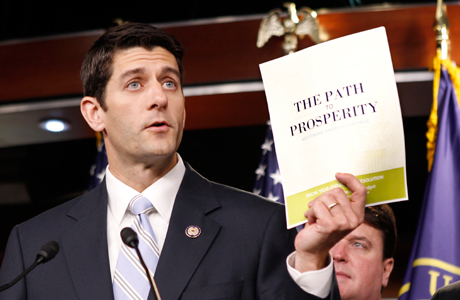
Catholics Aren’t Crazy: Paul Ryan & the 2013 House Budget


Yesterday, House Republicans unveiled their own 2013 budget to counter President Obama’s proposed budget.


Now, neither of these have (or will) become law. These annual budgets are merely proposals and are often political statements of priority. Both the President and the House write their budgets, not realistically, but extremely, hoping that once negotiation begins, they’ll walk away with more of what they want.

But still, like I said, these proposals are expressions of priority and direction to which a party will try and “bend” the nation’s spending. The House Budget Committee Chairman, Paul Ryan, said as much when he unveiled the plan (upon which he bears the final word), calling it “a choice between two futures” (others called it “careless”).

Continue reading

Christ’s Heart Breaking in Us | Lent {5}


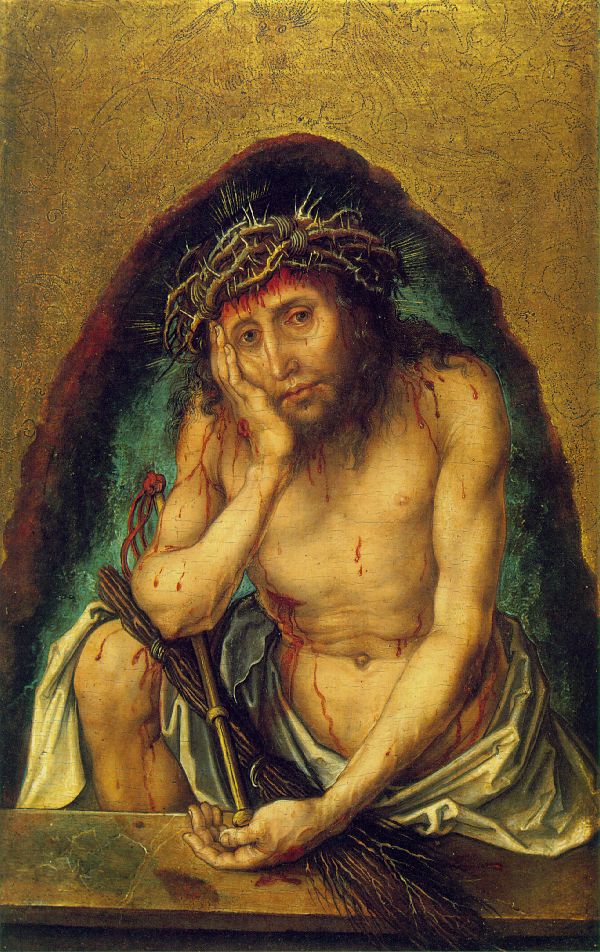
Lent is a season in which God’s people meditate on the slaying of Jesus on the Cross and all that is within them (and outside of them) that made that Cross necessary. So to that end, we’ve been doing a series meditating on the fact that Christ is the Lamb who was “slain before the foundations of the world”. We’ve been thinking through what it might mean that Jesus, in some sense, has been suffering for all time.

[suffering]

We’ve said that the Cross was an in-breaking of the suffering essence of God into our world. Think of it as a volcano that emerges after a millennia of quiet tectonic plate shifts. Eternity and infinity–past, present and future–break into the world at the Cross; eternity is the backdrop against which the death of Christ occurs.

We’ve also said that the world has a certain “slain-ness” to it as well, due to being created “through” a slain and suffering Christ.

Today I want to ask: What might that mean for our own suffering and death?
Continue reading

prayer & reflections for Lent, wk4 (3.18-24.2012)


prayer for the day.

Gracious Father, whose blessed Son Jesus Christ came down from heaven to be the true bread which gives life to the world: Evermore give us this bread, that he may live in us, and we in him; who lives and reigns with you and the Holy Spirit, one God, now and forever. Amen.
(from the liberti Lent & Easter 2012 prayerbook & the Book of Common Prayer)

Continue reading

“What if George W. Bush had done that?” (Opposites Coming Together) [Casual Friday]


Firstly, let me formally introduce “Casual Friday” posts. After all the seriousness in my posts on theology, politics, and such through the week, one could get the impression I can’t have any fun. Well, not so. Whenever I’m able, I hope to take Fridays to write up shorter, casual, and generally more light-hearted posts to talk about news, technology, entertainment, food, or whatever. Probably, it’ll mostly be me sharing some of my favorite things with all of you. Enjoy.

I subscribe to a great service called Summify. It analyzes my social feeds and gives me a reading list each day of the articles that my social graph has most-shared (don’t get too excited. It just got bought by Twitter and they will be shutting down the service shortly).

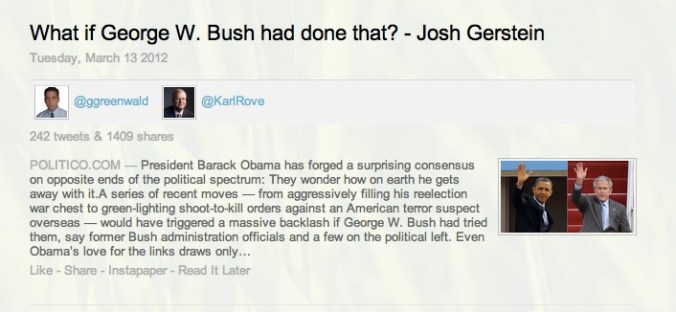
Anyway, in my email a couple of days ago, there was a link to this great article by Josh Gerstein showing both the (negative) similarities between Bush and Obama, and the blatant and (at times) comical hypocrisy of those that have hated/loved those respective men.

And what do you know? According to the screenshot above, this article was recommended by both Uber-Progressive Glenn Greenwald and Uber-NeoConservative Karl Rove (this was confirmed by each of their tweets). There could not be two more different men coming together to promote the same political article.

But anyway, the article is great, and if it was good enough for both of these guys to recommend it, then it should be worth all of our time and consideration. And as you do, remember all the things I’ve been saying. Like I said then: I promise, I’m not crazy. Other people are saying these things too.

Too Big Not To Fail [2]: the limits of Big-Gov


A couple of days ago, I started this little “mini-series” on some of the more structural problems that seem to be messing the country up. I used the Obama Health Care law as an example of the limits of “Big-Corp”, and today I turn to the other behemoth in the room, Big Government.

The Shortfalls of Big-Government

Is the answer, then, in light of the breakdown of free market forces at the huge “macro” level, to bring in more Government?  I don’t really know, but I don’t think so.

Big-Gov, it seems, suffers from the same shortfalls as Big-Corp.  Our government, in a way, is structured to work on the same principles that are supposed to make Capitalism work well, and, in the end, suffers the same disadvantages as it increases in size.
Continue reading

Creation: a suffering world through a suffering Lord | Lent {4}


Lent is a season in which God’s people meditate on the slaying of Jesus on the Cross and all that is within them (and the world) that made that Cross necessary. To that end, we’ve been meditating on the fact that Christ is the Lamb who was “slain before the foundations of the world”. We’ve been thinking through what it might mean that Jesus, in some sense, has been suffering for all time (and some theological issues along the way).

So far, we’ve talked about how this is a reflection of an eternal attribute of Jesus. There has been an aspect of suffering and death woven into the depths of his nature and character since before time began.

But at some point, time began.
Continue reading

Too Big Not To Fail [1]: the limits of Big-Corp


[A little while ago, I wrote a little essay I never put out there on the virtues and troubles of sheer “size” when it comes to the entities that seem to govern most of our lives. I’ve decided to split it up into a couple of posts to get everyone else’s thoughts. Our nation was meant to be a nation of discourse and was built on the idea that with friction between ideas, something beautiful might happen. Let the friction begin…]

The Shortfalls of Big-Corporate

To begin, let’s use Obama’s health care law as a little case-study. A while ago, I was sent an 8-part series by Ann Coulter entitled “Liberal Lies About Health Care”.  The first article opened with these lines:

[Liberal Lie #](1) National health care will punish the insurance companies.  You want to punish insurance companies? Make them compete.  As Adam Smith observed, whenever two businessmen meet, “the conversation ends in a conspiracy against the public, or in some contrivance to raise prices.” That’s why we need a third, fourth and 45th competing insurance company that will undercut them by offering better service at a lower price.”

Continue reading

Lent-erpretative Musings {a theological interlude} {3b}


This is the second part of a post in which I’m talking about some of my guttural objections to some of the ways I’m treating the Bible for my ongoing Lent series, and then my responses to my own doubts. [Part 1]

_____________

This would not at all have been in the minds of the original writers. The original writers, at most, it seems, would have seen themselves talking about how God simply “ordained” Jesus’ death since eternity past. They probably were not thinking about making a statement about a “slain” and suffering aspect to the nature of God.

My responses: There is no mainstream view of the Bible that I know of that holds that each of the biblical writers had the fullness of theological knowledge at their disposal. They were still human (and poor, uneducated humans at that!).
Continue reading

Lent-erpretative Musings {a theological interlude} {3a}


WARNING: this post gets into some theological discussion that, for most everyone out there, will be neither helpful nor interesting. And it’s way too long (which is why I’ve broken it up into two separate posts). Forgive me and please be gracious.

_____________

Anyone that follows the blog knows that I’m currently thinking through and writing a Lent series on the theological idea that Jesus was slain “before the foundations of the world” (Part 1, Part 2). Even though no one has said anything to this effect, I have felt like somewhat of a hypocrite. As I’ve been doing this, I’ve been haunted by a little voice reminding me that it seems like I’m employing many of the same techniques of interpretation and viewing the Bible that I’ve criticized in others before. This post is my attempt at reconciling this in my own head (in front of all of you).

As J.R.D. Kirk (and others) has often talked about, many of our theological disagreements in the church boil down to a simple question “what is the Bible?”. At the end of the day, we can argue about any number of things appealing to the Bible, but if we believe fundamentally different things about what the Bible is–and how it is that–we will never get anywhere.

And here’s where I’m getting into problems with this series: there are ways of viewing the Bible that, in others, I have criticized as reductionistic, simplistic, and frankly, abusive to the text itself, and I fear that I’m employing many of those same techniques in my thinking through this series. Here are two of those ways (two more later):
Continue reading