
Weekly Must-Reads {05.24.11} | theology & politics edition


As promised, this week’s weekly must-reads tend towards the theological. We do have some political “leftovers” from last week that you all should find interesting. So, as usual, read to your heart’s content and please comment and let me know what you think about these! 

__________

More Like Prayer 5 | Jesus Creed

Fascinating and oh-so-brief introduction to a whole new way of looking at the gospel, politics, and the church. Wow.

Mercifully Forsaken | Christianity Today | A Magazine of Evangelical Conviction

Wow. Simply wow. Such a beautiful and powerful piece of writing on the mercy of God in his forsaking of us. Did not expect this from Christianity Today (front page, no less!).

Continue reading

Weekly Must-Reads {05.17.11} | politics & writing edition


This week’s weekly must-reads are focused on the pressing political matters of the day: Obama, Osama, the budget “crisis”, etc. I’ve thrown in some fun articles on writing at the end. And for my more “theologically-inclined” friends: don’t worry, I’ll throw you some stuff next week. But in the meantime, check these things out and let me know your thoughts in the comment box below.

Running in the red: How the U.S., on the road to surplus, detoured to massive debt | The Washington Post

As we hit the federal debt-ceiling this week, I wanted to send this article everyone’s way. It is such an enlightening read on how our economic surplus became our deficit–and it’s a reasoned, insightful, factual, calm, and immensely helpful article. (SPOILER ALERT: it was BOTH Bush and Obama’s faults, but mostly Bush’s).

News Desk: Don’t Release the Photos | The New Yorker

This article convinced me that Obama’s decision to not release the photos of dead bin Laden was the right call.

Jon Stewart wants release of bin Laden photos | Salon.com

This video changed my mind back to its opinion that Obama should release the photos of dead bin Laden.

Continue reading

The Practice of His Presence


Well it’s that time again. Anyone that has followed this blog for a while knows that I go through “blog angst” from time to time and now and again. I get into a “funk” and question the direction and content of my blog-writing. By now the script for my whining and pining is well-formed and well-documented, but it always seems to end up at the same place: I need to make this blog more personal; it’s not the right venue for in-depth theological engagement; I need not be scared of putting myself in this thing (as I’ve written before).

And this angst could not come at a stranger time for me to try and talk about my personal spirituality rather than using the theological stuff to keep myself at a distance.

Continue reading

The Scandal of Holy Week {v}: conclusion & benediction


As I said in Part 1, this series was originally given as a sermon to a group of prisoners attending my church’s prison ministry. This is the conclusion and benediction I gave them at the end. This post picks up right after the end of Part 4, where we listed out practical ways that Jesus prepares his disciples for them forsaking him and the ways he reveals himself to already-wayward disciples, thereby calling them back to Him. I encourage you to read the other parts of this message: Part 1: the forsaking of GodPart 2: the Grace of JesusPart 3: the limits of Grace?Part 4: the restoration of disciplesPart 5: conclusion & benediction]

Conclusion

These are not guarantees: all these different practical things I’ve mentioned are not the “magic formula” for how to restore your faith if you feel you’ve lost or forsaken it. Sometimes none of these things are necessary; the Centurion did not seem to have any of these things. Sometimes, you’ll do all of these things for years–decades, even–and nothing will change.

All I can tell you is that He is worth it. The God of Holy Week is a God worthy to be wrestled against for years and years and years and years until he finally meets you, even if it is for the briefest of moments before slipping away back into frustration, doubt and sin.
Continue reading

The Scandal of Holy Week {iv}: the restoration of disciples


[Update: this series has been completed. Part 1: the forsaking of GodPart 2: the Grace of JesusPart 3: the limits of Grace?Part 4: the restoration of disciplesPart 5: conclusion & benediction]
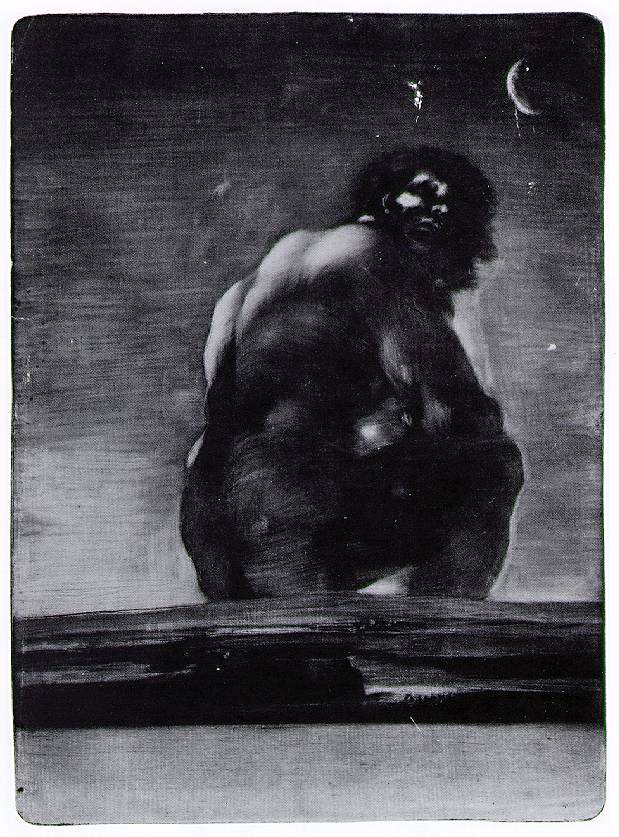
In Part 1 of this series, we saw that we will all forsake Jesus many times in our lives, just as the disciples did on the Thursday night of Holy Week. In Part 2, we saw that in light of this abandonment, Jesus responds to those that forsake him by being unconditionally and unlimitedly gracious towards them in their forsaking of him. In Part 3, we looked at just how scandalous and beautiful this grace is and how and why we often try and limit it. Today, we give practical ways that we can prepare ourselves to come back to our Lord, even after we have forsaken him in our own “Thursday” seasons.

As we saw in Part 1, Holy Week was a week-long process in which everything–creation, creatures, and God Himself–all forsook Jesus, turning their back on him. We’ve said several times now that true disciples of Jesus are not those that never forsake Jesus, but they are those that after forsaking him, turn back. And so, to help us see how we do this, let’s look at the first person in this story to turn back.

Continue reading

The Scandal of Holy Week {iii}: the limits of Grace?


[Update: this series has been completed. Part 1: the forsaking of GodPart 2: the Grace of JesusPart 3: the limits of Grace?Part 4: the restoration of disciplesPart 5: conclusion & benediction]

In part 1 of this series, we looked at the original Holy Week and saw how everything and everyone has and will forsake Jesus. We said that “Thursday”–the day when the disciples forsook Jesus–will come for every disciple. In part 2, we saw that Jesus, as he relates to those that have forsaken him and those that will do so, responds and relates to them on the basis of pure, unfettered grace. Today we look at why this matters and what it looks like in our lives.

We’ve seen that every disciple will forsake Jesus, but the true disciples of God are the ones that come back after they have left him. And further, it is my contention that what brings people back is not fear, not Law, but the unbounded and free Grace of Jesus.

But let’s be honest–this process can be a long one. It can be months, years, or even decades before these true disciples of God return to Him. People can go very far down the path of sin’s temptations, and still be Christians. In fact, any of us can go very far down the path of sin’s temptations and still absolutely be beloved, regenerated, Christian children of God.
Continue reading

The Scandal of Holy Week {ii}: the Grace of Jesus


[Update: this series has been completed. Part 1: the forsaking of GodPart 2: the Grace of JesusPart 3: the limits of Grace?Part 4: the restoration of disciplesPart 5: conclusion & benediction]

Last week, we saw how Holy Week, kicked off by Jesus’ “Triumphal Entry” into Jerusalem, was merely the beginning of a series of events that led to everything around Jesus forsaking him. We went on to ask how disciples of Christ might avoid their own version of “Thursday”–the night the disciples betrayed and forsook Jesus. The reality is, though, that every disciple of Christ has, does, and will forsake Jesus many times over. And so, the proper question to bring to Holy Week is not “how might I keep myself from forsaking Jesus”, but rather “how does Jesus respond to those–including myself–that will end up forsaking him?” I went on to say

“The answer I want to fight for? Jesus responds to all of our forsaking him with pure, unadulterated, offensive, and scandalous Grace. My main point in this message is this: A disciple is not someone who never forsakes Jesus; it’s someone who, after forsaking him, comes back.

Today we will look back at Holy Week to see the ways that Jesus demonstrates this scandalous Grace to those that have and will turn their backs and abandon him.
Continue reading

On Easter: “Adam Killed a Bird, But Jesus Brought Him Back” (a poem)


_____________________________________________________

Adam Killed a Bird, But Jesus Brought Him Back

Now looking through the glass not dim, Coltrane all around;
he sets a tone of dissonance, rightly now it seems.
For as the beauty clothes me in, a tragedy is found:
woodchips below – a resting place – long for love supreme.

For there he lies with outstretched span, stricken by a car;
afflicted by our fallenness, and smitten by our thorns.
He struggles with the weight of pain, not getting very far.
To stop, release his spirit’s breath – give way to Death’s dark door.

I prayed a prayer, and thought some thoughts, and something in me burned.
Oh I see my Savior, the pains he took! For me: protect,
for prone to wander, weak I am, to that which I once yearned.
Until you did in me and Him- my soul: You resurrect.

And thus to show He heard my prayer and strengthen my weak frame,
up pops the bird, into the air; and now my soul shall do the same.

[read my other Holy Week poetry here]

all writings licensed: Creative Commons License

Prayer and an N.T. Wright Quote on Easter Sunday


Easter ought to be an eight-day festival, with champagne served after morning prayer or even before, with lots of alleluias and extra hymns and spectacular anthems. It is any wonder people find hard to believe in the resurrection of Jesus if we don’t throw our hats in the air? Is it any wonder we find it hard to live the resurrection if we don’t do it exuberantly in our liturgies? It is any wonder the world doesn’t take much notice if Easter is celebrated as simply the one-day happy ending tacked on to forty days of fasting and gloom? It’s long over due that we took a hard look at how we keep Easter in church, at home, in our personal lives, right through the system.

Bishop N.T. Wright (thanks to Dano for the quote)

O God, who hath made this most holy night to shine with the glory of the Lord’s resurrection: Stir up in thy Church that Spirit of adoption which is given to us in Baptism, that we, being renewed both in body and mind, may worship thee in security and truth; through Jesus Christ our Lord, who liveth and reigneth with thee, in the unity of the Holy Spirit, one God, now and for ever.  Amen.

— from the Book of Common Prayer

you can also participate in Holy Week by joining Christians all over the world each day in morning prayer and evening prayer.

On Holy Saturday: “Better Your Arms Around Me (Penelope’s Window)” (a poem)


_____________________________________________________

Better Your Arms Around Me (Penelope’s Window)

You know why I’m standing here.
You know what I’m going to say.
The look behind your eyes betrays you.
Your sleeping head goes away.

Dreams lie as you do;
Dreams lie all night;
like you do.

Pacing back and forth on Friday,
Before you lay these words in my head.
Hoping my closed mouth mined gold
to give you, to give you.
Continue reading

On Good Friday: “Scotchful Thoughts on Treason & War” (a poem)


_____________________________________________________

Scotchful Thoughts on Treason & War

You’re stronger than Scotch, though that’s not what my throat urgently screams at the moment. Ah, the struggles of an artist, a mystic, one whose deep cries out for yours – to express the inexpressible.  To package in words that which can’t be contained.  You’ve caringly — lovingly, even — taken me, torn open my chest, pulled out my heart, and have affectionately run my broken body into your knee such that I am torn in two
_____– one spirit, one flesh:

All of reality stands at this heralding moment:
_____Wide-eyed, eager – youthful
_____anticipation abounds.
Hands on knees looking forward, rocking back
_____so on and so forth they watch:
_____smiles ear to ear.
Continue reading

The Scandal of Holy Week {i}: the forsaking of God


[Update: this series has been completed. Part 1: the forsaking of GodPart 2: the Grace of JesusPart 3: the limits of Grace?Part 4: the restoration of disciplesPart 5: conclusion & benediction]

This Palm Sunday I had the honor to preach at the prison ministry that my church does. It was amazing. I love those guys so much. My message was scrawled in my journal in outline form, so this will be only a rough and condensed manuscript of what was said. I hope you find it beneficial as you navigate these murky waters of life and spirituality.

“As they approached Jerusalem and came to Bethphage and Bethany at the Mount of Olives, Jesus sent two of his disciples… When they brought the donkey to Jesus and threw their cloaks over it, he sat on it. Many people spread their cloaks on the road, while others spread branches they had cut in the fields. Those who went ahead and those who followed shouted, ‘Hosanna! Blessed is he who comes in the name of the Lord! Blessed is the coming kingdom of our father David! Hosanna in the highest heaven!’” —Mark 11:1,7-9

This event is traditionally called the “Triumphal Entry”. It is when Jesus enters into the city of his people in such a way that confirms the suspicions of those around him: he is Messiah; he is King; he is Lord. But we also see that this Palm Sunday begins a week-long process of everything around Jesus forsaking and turning their backs on him, making this a very strange “triumphal” entry.

Continue reading

On Palm Sunday (or, “Oh, the Glory, the Beauty, & the Tragedy of Being Human!”) [REPOST]


This past Sunday was Palm Sunday, the Christian holiday that ushers in Holy Week. It celebrates the “triumphal entry” of Jesus into Jerusalem (Mk 11:1-11). Seen with the insight of hindsight, though, this is one of the oddest “triumphal entries” one could imagine. It is the triumphal kick-off for what will be the death of the Son of God.

Lately, I’ve been thinking about the common “courtroom” analogy for the Gospel. You’ve surely heard it: You are standing before a judge. You are guilty. The punishment is death. It is a right and just penalty for your crimes. But then Jesus comes in and freely offers to take your punishment for you on your behalf so you can be set free. Will you accept this gracious offer?

Many an atheist has pointed out the logical flaws in this analogy, but I think there are even bigger issues I have with it. Really, it only works if the parties involved in this switch are seen as equals. A pure man for a guilty man — seems like an even trade, right? But how then does the death of this one man absolve the sins of a multitude? How is this even just?

Continue reading

Why do we hate our bodies so much?


Originally, I was going to entitle this post, Worship, Bodies, and the Economics of Self-Loathing. But, in the interest of readability and trying to seem less intense (and douche-baggy), I’ve changed this to the above title. But still, as that original title implies, there’s a lot here on this topic that I have to say–and may, at some point. But for now, I just wanted to give some musings and thoughts I’ve been having.

I went to a conference a couple of weeks ago put on by a group of artists called Bifrost Arts, and it was on “Liturgy, Music, and Space”. While there, I attended a workshop on the use of our bodies in worship. I was struck at the immense beauty that the Bible offers as it pertains to our embodiment. Our bodies are essential instruments in the worship and life of God. Heck, it’s essential to our very redemption as God Himself took on a body to save us.

And yet, very few of us engage our bodies in those most meaningful of spheres of life, especially when it comes to our spiritual existence. That blasted dualism of our world that elevates the “spiritual” above the “physical” pervades even those most passionate and dedicated of believers in Jesus. We often see our worship merely as a process of dropping immaterial ideas into our immaterial selves to help stir up immaterial emotional responses. And then we wonder why our embodied actions and obedience don’t follow. Could it be that we need to preach the Gospel to our bodies as well?

As I was thinking about this, I was forced to ask: Why do we hate our bodies so much?
Continue reading