
“Yes
it is time
to think about Christ
again.
I keep putting it off.”
Longing and lusting
Raging and seizing
Continue reading
“Yes
it is time
to think about Christ
again.
I keep putting it off.”
Longing and lusting
Raging and seizing
Continue reading

I feel far, Lord.
But I know you’re here. I know it.
(Do I?)
(Can I?)
It’s the nature of the matter; a matter of nature, I suppose.
Perhaps only now I feel at the deepest existential depths:
“I believe! Help my unbelief!”
Continue reading
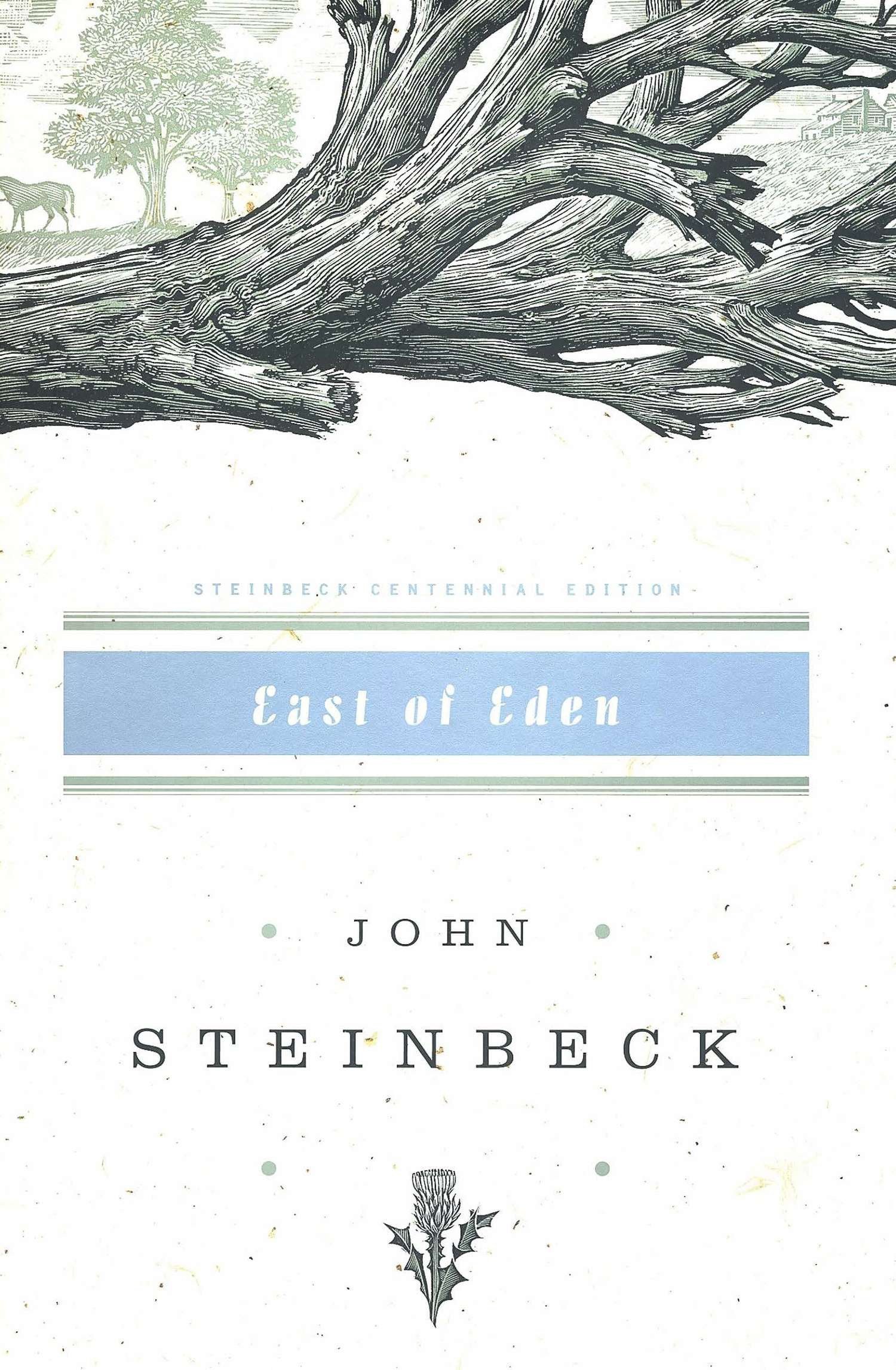 We all have those pieces of art–be they movies, books, music, what have you–that upon first exposure we fall in love. We turn the last page or exit the theater or concert hall certain that this will surely be added to our list of favorites and long-held companions. Yet, how many times do we say this and a year or two down the road someone mentions that very piece of art and we find ourselves thinking, “oh yeah, I did read that, didn’t I?” or “I had forgotten how much I loved that album!”
So often we get swept away in the immediate experience of something skipping upon the waters of our soul, leaving little ripples and echoes dancing in its wake. But these dimples and dapples merely play on the surface for a time, returning once more to their source, leaving the waters ultimately undisturbed–the liquid plane unbroken; the deepest depths untouched.
There are other times, however, that we encounter a piece of art–or rather, it encounters us–and we are changed. It transcends mere rankings of “favorites” and “Top 10s” and weaves itself into our fibers. We do not critique and assess it, so much as it sizes and weighs us. The surface tension is broken and we are plunged beneath, staring humanity’s unvarnished truths in the face. And in so doing our own humanity is enlarged, a spaciousness expands in our souls, and we feel more human–even as our foundations are shaken.
John Steinbeck’s 1952 magnum opus, East of Eden, is just this kind of piece of art. It’s the kind of book people say they will read “someday”, only to read it and wish “someday” had come a lot sooner. So if you haven’t read it. Do so. Start today.
–Lorenzo,
William Shakespeare’s The Merchant of Venice, V.1
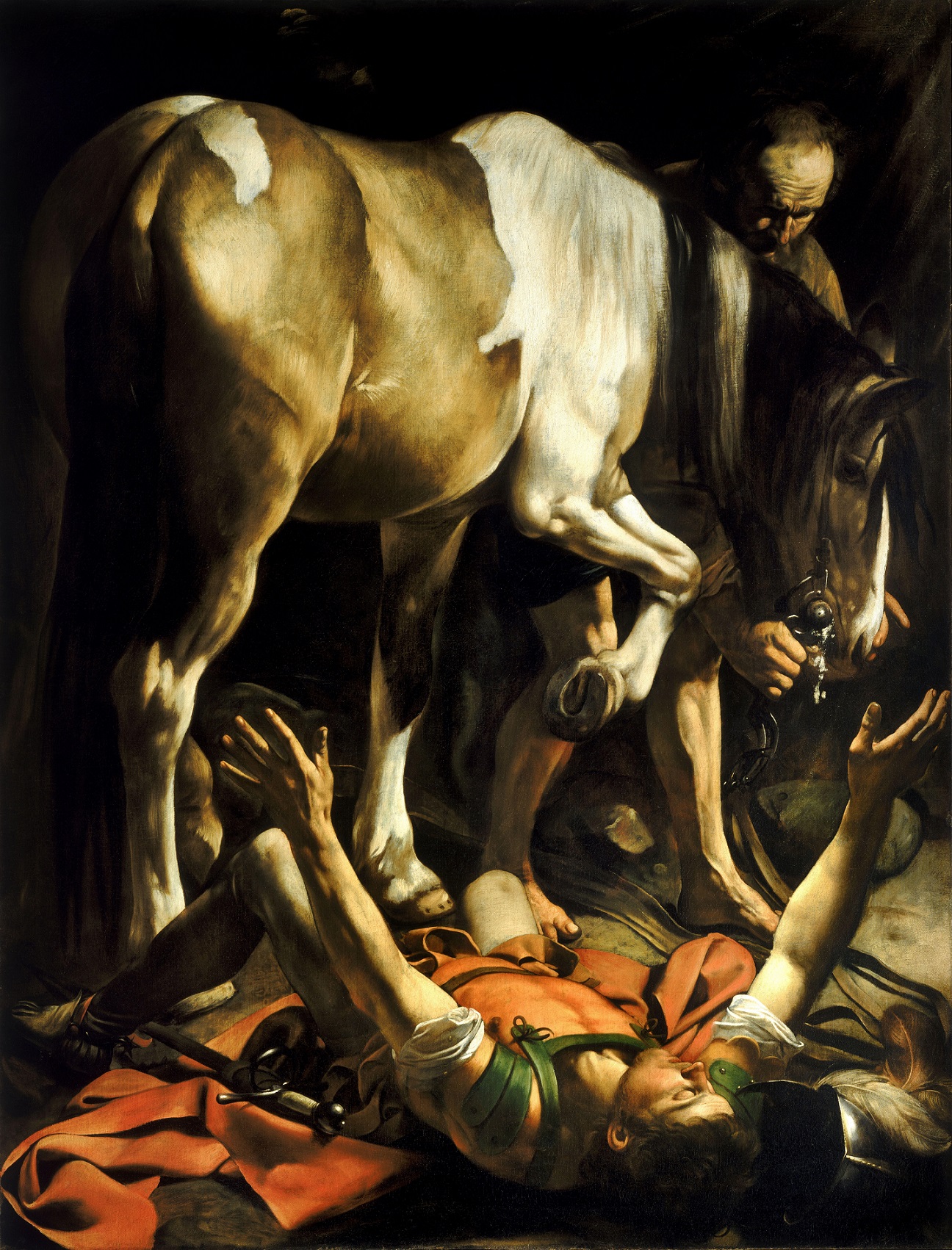
A troubled heart troubled still as I walk in the valley of the shadow of death but Im the shadow of that valley as I strike them with one rod while another comforts them why wont they die as I strike them with My Left as your right upholds them all Ill kill them inhale Ill kill them exhale Ill kill them inhale so on and so forth I walk as the dust of My sandals covers their face while Mine is clean Mine is pristine following none but MySelf on this dusty Damascus road and
then—
Continue reading

This is from the Advent portion of W. H. Auden’s Christmas Oratorio, For the Time Being. The full text is under copyright, but it’s in this book, if you’re interested.
[T]ime never moves and nothing can ever happen:
I mean that although there’s a person we know all about
Still bearing our name and loving himself as before,
That person has become a fiction; our true existence
Is decided by no one and has no importance to love.
That is why we despair; that is why we would welcome
The nursery bogey or the winecellar ghost, why even
The violent howling of winter and war has become
Like a juke-box tune that we dare not stop. We are afraid
Of pain but more afraid of silence; for no nightmare
Of hostile objects could be as terrible as this Void.
This is the Abomination. This is the wrath of God.
Alone, alone, about a dreadful wood
Of conscious evil runs a lost mankind,
Dreading to find its Father lest it find
The Goodness it has dreaded is not good:
Alone, alone, about our dreadful wood.
Where is that Law for which we broke our own,
Where now that Justice for which Flesh resigned
Her hereditary right to passion, Mind
His will to absolute power? Gone. Gone.
Where is that Law for which we broke our own?
The Pilgrim Way has led to the Abyss.
Was it to meet such grinning evidence
We left our richly odoured ignorance?
Was the triumphant answer to be this?
The Pilgrim Way has led to the Abyss.
We who must die demand a miracle.
How could the Eternal do a temporal act,
The Infinite become a finite fact?
Nothing can save us that is possible:
We who must die demand a miracle.
I’ll be honest, one of the reasons why I love Lent and the Church Calendar is because it is a helpful corrective for my own personal lack of personal discipline. I’m not especially skilled at putting together my own structure, and so I really flourish when structure and pattern is placed on me from the outside.
This is especially true with spiritual practices. To engage with a Church season like Lent, I often need to give myself a blog series to keep me thinking on a theme for the season (see above, under “Lenten Posts“). I really do well with reading plans, prayerbooks, music albums, etc. If you find yourself in the same boat, here are some resources for this year’s Lent that some of you may find helpful.
Continue reading
For my Hebrew class last year, I was asked to write up a super literal translation of Psalm 23 (below), and then build off of that to create a much more dynamic, creative, contemporary translation. This was the result.
psalm23
A Psalm in the spirit of David.
The LORD is tending to me
I want for nothing
He has me lie down in pastures of fresh, new grass
Beside the waters of rest
He gently guides me
He brings the life back to my soul
He leads me into the grooves of life well-lived because of who he is.
And yet—
Though I truly die in the depth of darkness,
there is no evil that I fear,
You are truly there with me
Your staff and your support: they comfort me
You host before my face a table opposite all that stands against me.
You clean me with oil over top of my head.
Overflowing abundance is my cup.
Surely, goodness and steadfast faithfulness will chase me down
for the whole of my life’s days
This will be my story:
I will return into the dwelling place of the Lord and stay—
for lifetimes upon lifetimes.
______________________________________
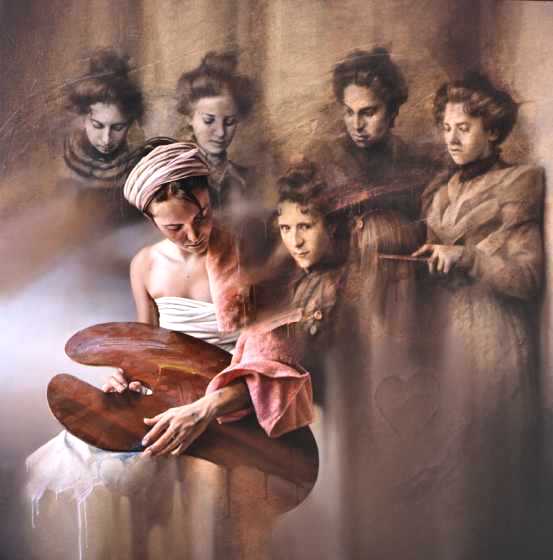 Today is International Women’s Day, and to honor it, National Geographic has a powerful photo spread of women from around the world, called “Portraits of Strength”. While looking through some of the comments, I saw this beautiful poem posted by the poet herself. Read the poem, see the pictures, and listen to the stories of a woman today.
I am a tree
Helen Bar-Lev
Did you think I was a woman?
Oh no, I am a tree
rooted and immovable
impossible to conceive
the scenes
that I have seenNow gnarled and warped
weathered and aged
wrinkled and withered
bent to the ends of recognition
too rigid to give in
to the whim of man
I stand true to the tune
of the wind echoing
my own inner rhythm
persistent, consistent, constantPerhaps every tree
was once a woman –
only a woman could stand so strong
fall so proud
when the axe of age claims her
and earth sets a bed for her© 10.2006 Helen Bar-Lev

[image credit: “Kalfonarium” by Istvan Sandorfi]
 On the 1st Day: God created Palm Trees and Donkeys
On the 2nd Day: He created Fig Trees and Temples
On the 3rd Day: He created Scribes and Pharisees
On the 4th Day: He created Silver and Kisses
On the 5th Day: He created Bread, Wine, and Gardens
On the 6th Day: He created a Tree, Nails, and Thorns
And on the 7th Day: God rested from His labor.
And there was evening
And there was mourning…
___________________________
[read my other Holy Day poetry here]
all writings licensed: 

Body.
Soul.
Mind.
Flesh.
Meditations
In the watches of the night
From embattled city walls
Around embattled towns
You will be known like no one’s been known before
___________________________
[read my other Holy Day poetry here]
all writings licensed:
I feel far, Lord.
But I know you’re here. I know it.
(Do I?)
(Can I?)
It’s the nature of the matter; a matter of nature, I suppose.
Perhaps only now I feel at the deepest existential depths:
“I believe! Help my unbelief!”
Or in a word: Hosanna
That cry. That plea.
The certainty of uncertainty.
The pregnancy of a pause.
The pondering of a moment.
That moment. The moment.
The moment that dressed my doubt in assurance.
But that emperor has no clothes
(or so everything says).
So where does my assurance lie?
Where do my feet stand?
My body pelted with rain, snow, and hail;
I pray my heart rests beside a fire,
drinking tea,
rocking in a chair,
my shoulders draped in that most costly of quilts –
my Rest.
Clothe me–
with the coat I lay on your path–
for this emperor is naked
and needs his King.
[read my other Holy Day poetry here]
all writings licensed:
If writers write not just with paper and ink or a word processor but with their own life’s blood, then I think something like [our own words being just as much to us as from us] is perhaps always the case. A book you write out of the depths of who you are, like a dream you dream out of those same depths, is entirely your own creation. All the words your characters speak are words that you alone have put into their mouths, just as every situation they become involved in is one that you alone have concocted for them. But it seems to me nonetheless that a book you write, like a dream you dream, can have more healing and truth and wisdom in it at least for yourself than you feel in any way responsible for.
–Frederick Buechner,Telling Secrets
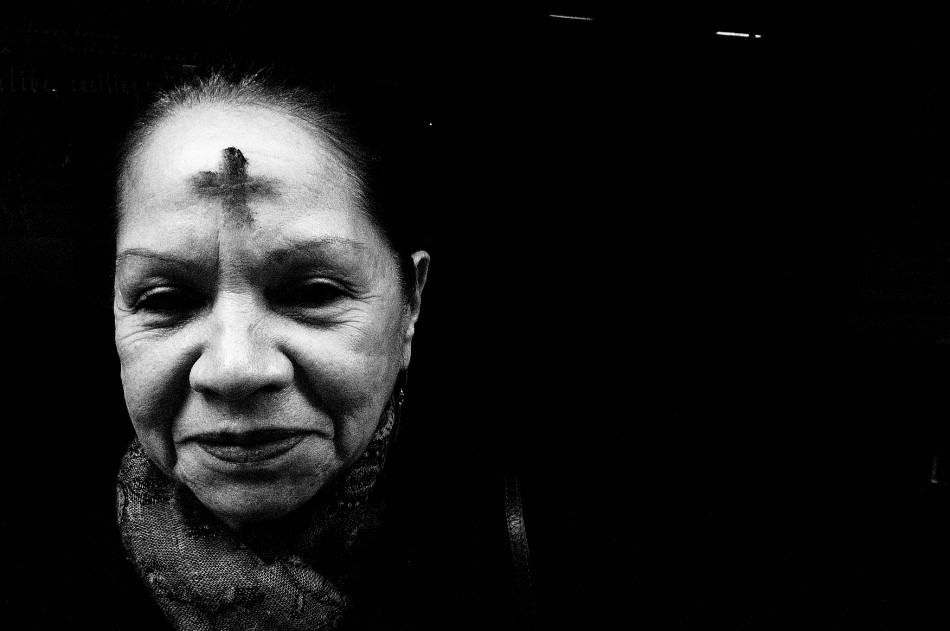
The shape of the promise is death
Say the word, feel the space, build the coffin in your mouth
Climb inside and make it yours
For it is
That tomb washed white, emerges in life,
enslaves in death, watches the end
agape
Expiration exorcism, cast the spirit, cast it low;
Cast your eyes and feel the blow
Cast the lots
Carve the promise into your bones, your forehead
Let your face shine with Moses glory: that of the immortal God
–that suffering, dying, ashen glory-story
May your face shine with Ash
As you wear the world’s judgment embedded in your skin, in your body,
May you feel the world’s death in your face, may you hold it before your eyes
May the flame that licked the palm find its end in you.
Bear the flame the world shall never know, precisely so it never will
Take their judgment and rub it on our faces and cast it to proclaim
Lift up your eyes
Wear it loud
The shape of the promise is death
[read my other Holy Day poetry here]
all writings licensed:
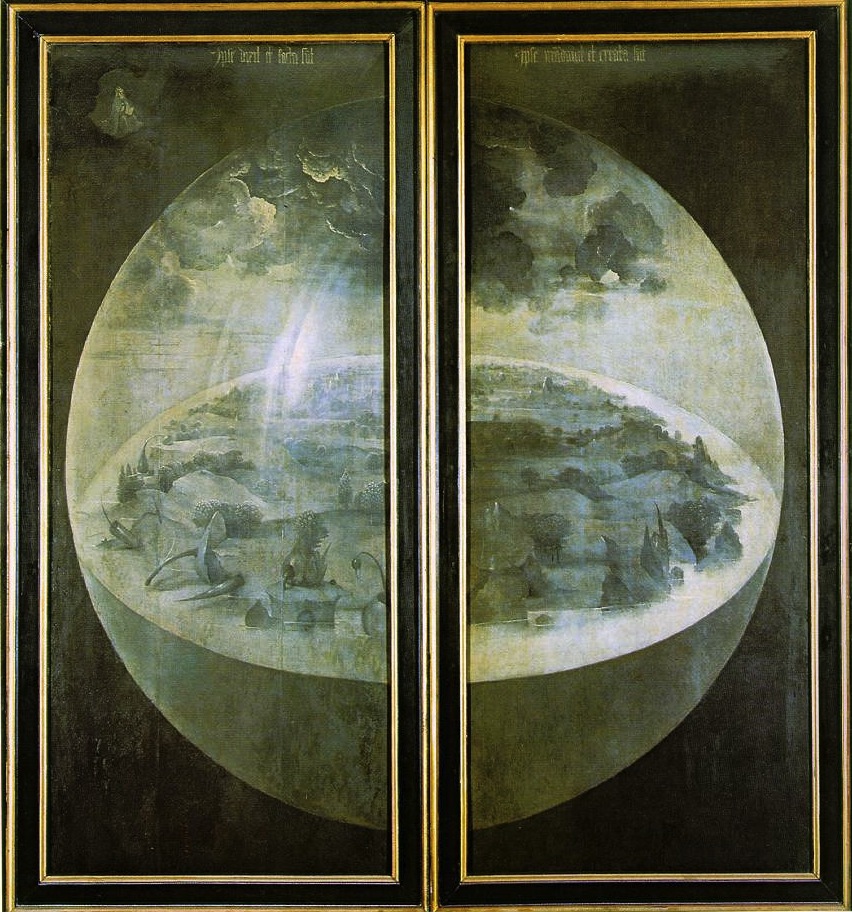 If my Facebook feed is representative of the general population at all, then I can confidently say that most of you have heard about the debate between Ken Ham and Bill Nye about creationism and evolution.
On this blog, I try not to get too much into issues of great contention in the church family when I don’t think it’s necessary, especially when I think it would unnecessarily prevent someone from reading this blog with a free conscience, or just mess with their head too much. But this is the one issue that I have felt the freedom to be blunt, bold, consistent, and loud about my opinion. So, I don’t have too much to add to everyone else out there that was more or less lamenting this debate more than celebrating it. Maybe I’ll have some thoughts next week coming at it from a different angle, but we’ll see.
Today, I wanted to share with you a video from the in-person portion of my Hebrew class a couple of weeks ago. To get an A in the class I have to translate, memorize, and recite a section of the Genesis 1 in the Hebrew. To help us with that, my professor made a video of him reciting it and acting out the recitation in front of us.
Continue reading
 the long way home