Beauty: The Complete Series


screen-captureIn 2009 I did a seminar at my old church, Epiphany Fellowship, on the topic of Beauty. I spent about nine months doing research, reading, talking, and thinking before offering it to the community. I then separated my overall talk into the series of blog posts you’ll see below. A year later, I updated the main manuscript with some expanded thoughts. Those blog posts represent the material before the update.

On this page you’ll find the audio from the talk and the updated manuscript,, as well as a special appendix I put together offering a complete breakdown of every word in both Greek and Hebrew that the English Standard Version of the Bible translates as “beauty” or “beautiful”, broken down by frequency.  Along with those words (and all their forms), I’ve offered the most literal definition of each so you can easily see the huge range of meanings that the Biblical words for “beauty” carry. I hope it’s helpful. You don’t need any knowledge of Greek or Hebrew to understand it or get something from it.

Series Table of Contents

Resources for this series:

[photo by David Schrott]

The Outline for the Entire Series:

Resources for this series:

[photo by David Schrott]

Proclaiming & Producing Beauty{11}


Sandorfi - KalfonariumThe next post after this will be the last in this series.  But today, we are finishing up the section on how we respond to Beauty.  As I stated earlier, there are two fundamental ways we respond to Beauty: we contemplate it, and we enjoy it.  But, within the enjoyment piece, I think there are four main ways to to that: we praise, participate in, proclaim, and produce Beauty.  Once more, our working definition is Beauty is the attribute of something that expresses complexity, simply.  It takes the loose strands in reality and weaves them together into a tapestry that out senses are able to perceive.

Now, let’s pick up right where we left off:

Proclaim

But the process is still not over. First we praise the thing as beautiful, then we participate in its beauty on its own terms. Thirdly, we proclaim it as beautiful. Proclamation is not the same as praise. I believe it was C.S. Lewis that something along the lines of this: joy in something is not complete until it is shared with someone else. Proclamation is the telling of the Beauty of this thing to someone else. It is sharing in this affection with someone else. Here we start seeing something about Beauty that will lead into our final response: Beauty longs to be known and spread – almost like a virus. It wants to inspire you to tell others about it, so that those people might participate in it as well. For creational Beauty this is done in many obvious ways like reviews and just telling someone else about it. For divine Beauty, this is typically referred to as preaching. Speaking of this God should be the natural response to someone who has praised and participated in the Beauty of God. It is out of the overflow of this in someone’s heart that they should speak. Not out of begrudging compulsion or sheer white-knuckled obedience. We tell others about the things we find most beautiful. Should this not also apply to the highest of all beautiful people – God?

Produce

This brings us to our last part in the process of responding to beauty. It’s very much tied to the previous one and has to do with Beauty replicating itself. God, in His love for us, calls us to respond to beauty not only by proclaiming beauty in word, but also producing beauty in deed. Produce is the last way we respond to Beauty. We are built in the Image of a God who doesn’t just desire, delight in, and display Beauty, but a God who also does Beauty. We, likewise, all have abilities to produce beauty. Not only that, our response to beauty is not complete until it has inspired us to likewise create beauty. Every musician in here knows what it’s like to be at a show or concert, seeing someone play the instrument that you play and suddenly having your mind swirling with musical ideas you want to try out when you get home. There’s an entire field of art history that tries and find the obscure pieces that inspired some of the greatest pieces of art we adore today. It works off the assumption that nothing that beautiful exists without inspiration before it. The longer I live, the more I am convinced that everyone has some creative ability in them. I don’t care how “uncreative” you think you are. You are built in the image of a Creator God! You have not only the ability, but I fully believe the responsibility as well to bring forth more beauty in this world and further participate in God’s “re-knitting” of the universe. Now this “creative” ability in all will look different in everyone, so don’t think you have to stick to conventional forms of “creativity”. Really, anything that makes beauty does this. It can be gardening, serving, counseling, or raising your kids, even. I would argue all those take a certain type of “artistic eye” to do them well. We all have it. Find it. Do it well. Do it often. And do it as a response to the Beauty that is around you in both God and Creation.

This also shows itself in the Christina life (and in our text) as holiness, or “doing good” as the author of Ecclesiastes puts it. Seeing the Beauty of God should inspire us to holy living and loving of others. Serving those around us in order to share with them and replicate the Beauty of God that we have seen.

Click for Manuscript Pdf

Manucscript

Click here for sermon audio

Audio

Baptized in Beauty{10} (Enjoy, Pt. II)


Schrott1

photo credit: David Schrott

For those that have followed this series on Beauty, you will know that we have hit three major sections so far: “Why do we long for Beauty?“, “What is Beauty?“, “What things are Beautiful?“, and now we’re in the “How do we respond to this Beauty” section. I am in the process of laying out four “stages” of an appropriate and full response to Beauty. The first stage of this response is a contemplation of the Beauty.  The second is our enjoyment of it.  The first step in that process is Praising Beauty, which we talked about last time. In this post, we talk about the next step. This also happens to be my favorite part of the process of responding to Beauty. It’s when we are joined to Beauty and are swept up in its complexity and nuances. I love this feeling, I love this experience, and I loved writing and talking about it. I hope you enjoy reading it. Once again, the full manuscript and audio of the lecture I gave on this is below. We pick up right where we left off, saying that we must praise Beauty.

______________

Bur praising is not enough. Seeing something beautiful and calling it such does not complete the purpose for which that beauty exists. Beauty has an attractive quality. It draws you toward it at a very deep level. The next step, after acknowledging this beauty is to allow it to suck you in. I call this “Participating” with the Beauty of that thing or person.

Practically, this looks lots of different ways. With other people, it’s a drawing near to that person. Conversing with them. Viewing more of the nuances of the Image of God in them that makes them beautiful. For art, it looks like accepting the art on its own grounds and letting it draw you in in whatever way it’s asking of you. For plays and films it’s that idea of “suspension of disbelief”, where you allow yourself to forget that you technically “know” this isn’t real, and you let yourself get sucked into this beauty. Other forms of art tend to ask us to get lost in the object itself and explore its nuances. Closing your eyes during a musical piece and hearing every note; letting the words of a poem get inside of you and change the vocabulary you use to describe its own beauty or the world around you; letting distractions fade as you stare at a painting and see every stroke, every color (anyone who has seen a piece in real-life by John Singer-Sargent or Vincent VanGogh knows this feeling most definitely). Have you ever cried because of Beauty? This is participating with it. In the contemplation stage of this process you ask yourself “what is the beauty of this thing asking of me? It’s drawing me to itself, but to what end?”

But what about God? What about Divine Beauty?  This is where His Beauty shows especially brilliantly. All other forms of beauty can only draw you near to itself. God can and does actually draw you into Himself and Himself in you. We can participate with Him in a way that every other form of beauty only faintly strives for. How? Well, He takes the first step upon changing someone by actually sending his very Spirit to dwell within His people.

But God not only let’s us participate in His Beauty spiritually, but also physically.  After He draws near to us, we do what the Bible calls “abiding” in Him, where we draw near to Him through various things the Bible calls “means of grace”. These are traditionally called sacraments.  They are physical things that we participate in and by faith He meets us there. One of the clearest examples is Baptism.  It is where we are brought into union and participation with Christ in response to his faithfulness and action toward us.  Another is Communion. Just think of the word: “Co-mmunion”. It’s where we “commune” with God. That bread and wine is a symbol, but not just that. It is in those elements that we His people are actually drawn further into God to “commune” and participate with Him in His beauty. This is why Communion is such a big deal in the Bible. God kills people – even Christians – because they misuse this beautiful thing. He will let no one lightly and trivially participate and be drawn into His Beauty.

This should lead us to a “sacramental” view of life, where God is using all things to communicate Himself to us and communicate His Grace to us. Let everything: every good-tasting piece of food, every sunset, every cool breeze, every joyful moment all be moments where God communicates Himself and His grace to you so you might participate and be joined to Him in His Beauty and we further praise Him even more. Historically, the Christians that do this well have been referred to as “mystics”. They are the ones that say seemingly crazy things. Brother Lawrence was a 17th century monk and he said: “I have at times had such delicious thoughts on the Lord I am ashamed to mention them.” John Owen, my favorite Puritan, says

O to behold the glory of Christ…Herein would I live; herein would I die; herein would I dwell in my thoughts and affections…until all things below become unto me a dead and deformed thing, no way suitable for affectionate embraces.

Oh that we longed in that way for God. There is a participation in the Glory, Beauty, Majesty, Goodness, and Love of God that is at hand for those who believe and far for those who don’t. Please, I beg of you, if you are not a believer, seek the Beauty of God, for it’s only suitable response is to be drawn into into and know his intimacy in this way. He, the fountain of all good things, the One for Whom your soul was made, does not disappoint those who seek to know Him. Participate in Beauty.

Click for Manuscript Pdf

Manucscript

Click here for sermon audio

Audio

Ah, the Beauty{6} of Art


Caravaggio - NarcissusThis is the next installment in the Beauty series (for the complete series, click here).  This is based on the manuscript I wrote for a message I gave at Epiphany Fellowship in Philadelphia (links to both the manuscript and the audio are at the bottom).  We’ve gone through a lot so far, including a discussion of why we long for Beauty, a definition of Beauty, and how science and nature are beautiful.  This series has received great feedback from people (and it’s only about half done!).  So feel free to jump in and comment and keep the discussion going.  Today’s post is on the beauty of Art.

_______________

Humanity’s creations are beautiful.This is where we get to talk about art.

For some reason (I have no idea why) this was actually the very last section I worked on.Whether that means it’s a lot better or a lot worse, I don’t know.Anyway, art is a really tough thing to talk about.Its a huge topic that everyone has an opinion on, and as time has gone on, the conventions of art and what it is have broken down and definitions have broadened almost to the point of not really being definitions at all.Not only this, but you also seem to have people forgetting some very important things that we all must be reminded of.

First off, we are too quick to call God the “Supreme Artist”.That’s taking a description of humans and describing God with it.We’re right in starting with him in trying to understand art, but seeing Him as the “Supreme Artist” generally makes us picture in our minds the type of artistry we like best, and then begin thinking that God values that kind the most.This ends up being a bottom-up kind of description of art rather than top-down.Before God is Artist, He is a Creator, so we must start thinking of art creative-ly.This means that the way God is an artist is by making things that are not him and weren’t around before.So when I refer to God as Artist, that’s what I have in mind.

Secondly, we must keep in mind that God Himself was the first abstract artist.I kept reading all these books and articles written by Christians about art and so many of them seemed to not have room in their “theologies of art” for the abstract.The opposite of “abstract” art is “representational” art – art that “re-presents” something we know exists.When God did His artistry, it was all abstract.There was nothing to “re-present”So that being the case, I can’t think that God isn’t glorified in even the most abstract of art.There may even be an argument that abstract art is closer to the heart of God than representational.I’m not making that argument, but someone could.

Thirdly, as most Christians recognize, we create things because God does.In the first passage in the Bible that talks about people being made in the “Image of God” in Genesis 1:27, the logical question that follows is: what exactly does that mean?Now, theologians and philosophers have argued about this for thousands of years, and I’m not going to try and finish that fight right now, but I will say that it’s interesting that at this particular time in Scripture that this verse shows up, there’s only one thing we know about this God that humans are apparently in the “image of”: that He has the desire and ability to make things.I imagine that’s where we get our desire and ability.As G.K. Chesterton points out in his book “The Everlasting Man”, whatever role evolution may have played in the development of this world, it can’t by itself explain art.You don’t see monkeys in caves making bad art and humans now making good art.There’s something about art that reflects what makes us unique among all created things.

So when we do create and we do make, what does this have to do with beauty?Everything.I really do believe that art, like science, is a necessary endeavor in furthering God’s plan in History.God’s creation merely points to God’s Beauty.It doesn’t make beauty itself.Humans, on the other hand, actually make beauty and play an integral part in God “making all things beautiful in their time“.Let’s go back to our definition of “Beauty”:Complexity expressed simply – many complex strands woven into a sensually perceived simple tapestry.  The more complexity of “strands” that are represented in a piece of art, the more beautiful it is.And remember- different people, due to many factors, will find and feel different “strands” running through different pieces of art, leading to different personal aesthetic standards for each of us.

So imagine every strand in the universe is there before an artist preparing to do a piece.You have suffering over here, hope here, joy here, God, evil, life, humanity, death, birth, redemption, pain – all there before the artist.In art, the artist grabs as many of those strands as they can and crams and weaves them into the piece.And the more there are, the more beautiful it is.That’s why many people don’t like Postmodern art.There’s no complexity.It’s too simple and says nothing.There are not enough strands in it to strike the heart of a person so they can actually call it beautiful.A complexity of ideas makes art beautiful.In the Preface to The Picture of Dorian Gray, Oscar Wilde writes out his thoughts on Beauty and art.He writes: “It is the spectator, and not life, that art really mirrors.Diversity of opinion about a work of art shows that the work is new, complex, and vital.When critics disagree, the artist is in accord with himself.”Though I disagree with Wilde on some of what he’s saying, nevertheless he is noticing that different strands in any piece should resonate with different people.Some people will be offended.Others will praise it.It’s just the way beautiful things are. After all, it’s how God and the Gospel are.

I’ll end this oh-too-brief section on art with a few comments on the distinction between “Christian” art and “secular” art.As Phil Ryken, just down the street at Tenth Pres writes in his book Art for God’s Sake: Bad Christian art “ultimately dishonors God because it is not in keeping with the truth and beauty of His character.It also undermines the church’s gospel message of salvation in Christ.”How? Well, the kind of modern art that most Christians scoff at is art that is completely void of goodness, light, and truth.But Christian art tends to do the same thing by being void of other very real things in this world: depravity, pain, and sin.When our art shies away from these things, in effect, we’re avoiding showing the world what they need salvation from.Jesus didn’t come to save some cute coffee mug or bumper sticker kind of world.He came and suffered, bled, and died an ugly death that we celebrate as the most beautiful event in all of history.We must make room in our art to explore the darkness and pain of this world so we can show them that Christ can and does engage and enter into brokenness to see it redeemed.

To conclude, recall what I said a couple of posts ago on the structure and nature of history and time?  History is not the story of the present hurtling through time towards some future endpoint we call “heaven”.  Rather, it is the beauty of that future world invading the present, even as we sit and read this.  If “Beauty” is the end goal for which God is making all things in their time (Ecclesiastes 3:11), then whatever floods the world with Beauty is actually furthering this process of redemption.  Artists, both saved and secular, are actually missionaries of sorts, as they help reweave the fabric of the universe with the beauty of their creations.

Are you all starting to see why we need artists?Good artists doing good and beautiful work; and not trite, kitschy, cute things that keep us away from the real world out of fear that we might “catch it” or something?A creation always reveals something about its creator.If you are a Christian reading this right now, may I urge you to show the world through your creations that you have been saved by a Gospel that makes you care about excellence engaging darkness, beauty engaging filth, order engaging chaos, and redemption conquering sin?Let our art, our creations, speak of a beautiful work that a beautiful God has done in us, whether or not it is an explicitly “religious” piece.

Art is beautiful, and necessary for the redemption of this world.

Resources for this series:

Eternity in Our Hearts: The God of Beauty, the Beauty of God


Sargent - Madame Errazuriz-smallThis message was seven months in the making, and this past Friday I finally delivered it.  So, as promised, I’m posting both the audio and the manuscript here.  You can also find a general outline on my Sermon site, and you can also find it at my Podcast.

Click here for sermon audio

Click for Audio

Click for Manuscript Pdf

Click for FULL Manuscript

This is the message I gave at Epiphany Fellowship. The topic was Beauty. The attached manuscript is the full manuscript. It is 43 pages long and contains far more information than I was able to give in a 40 minute message. It includes an appendix where every form of every word in the Greek and Hebrew translated as “Beauty” or “Beautiful” in the English Standard Version of the Bible is ordered by frequency and includes the literal meanings and lexical range of each word.

I really cannot stress how much more is in the manuscript than was preached.  Every section has huge amounts of thought and prayer in it that was not able to be included in the final message.  That’s why throughout the next week or more, I’ll be blogging about every section of this manuscript.  Each post will focus and discuss the fuller version of each section.  If it gets to be too much I’ll spread it out as need be, but we’ll see.  This is where your thoughts and insights will be so helpful and needed, but if you have a question now, don’t feel like you have to wait for that blog post to come to ask.  Engage with any and everything now.

I hope this blesses all of you as much as it did me.  The feedback that evening was more than I knew how to handle and perhaps I’m still processing it.  Thank you all for your grace and affirmation.  For those that came out, I thank you. I very much enjoyed both preparing and delivering this message, and I look forward to further chances to do so.  If you’re interested in giving me such a chance, feel free to use the contact email on the sidebar to the right (or just click here).

Enjoy, and feel free to let me know what you think, and please at least look through some of the manuscript.  Until next time . . .

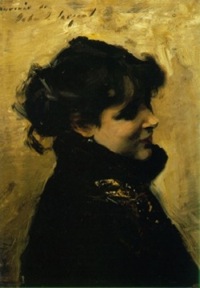
One small final note: on most every site and post I’ve used to discuss this message I’ve used the attached piece of art.  It is a piece called “Madame Erraruriz” and it is by my favorite American painter John Singer Sargent.  I got to see this painting in an exhibit of his at the Virginia Museum of Fine Arts and ever since seeing the brushstrokes in this simple painting and seeing the nuances and the subtleties that don’t quite come across from this digital shot, I have long found it to be one of the most beautiful paintings I’ve ever seen.  It is for that reason I have chosen it as the picture that has constantly been up for all these posts.  A few years back I even wrote a poem based on the piece called “Extended Engagement”.  I ended up writing two versions, one less structured than the other to better mirror the feel of the piece, but on this blog you can read both Version 1 and Version 2.  Let me know which you prefer.

“bright as yellow” by David Schrott | Reform & Revive


One of my best friends and favorite writers (and photographers), David Schrott has finally broken his writer’s block to write another gem for the magazine.  So head on over to Reform & Revive and enjoy his prose and honesty.
Here’s the link to the article:

http://reformandrevive.com/2009/08/04/bright-as-yellow/

Remember to leave comments and send this link along to others!  Also remember that we’re always looking for submissions to the site so feel free to get in touch with me if you have any ideas.

From the iMonk: Mary Consoles Eve


I found this at the site of Michael Spencer (a.k.a. The Internet Monk).  This guy is having an increasing amount of influence and inspiration on my thinking as a Christian in this world.  You find him at The Internet Monk. Anyway, I love this piece of art and the poem.

Crayon & pencil drawing by Sr. Grace Remington, OCSO. Copyright 2005, Sisters of the Mississippi Abbey

_______________

O Eve!

My mother, my daughter, life-giving Eve,

Do not be ashamed, do not grieve.

The former things have passed away,

Our God has brought us to a New Day.

See, I am with Child,

Through whom all will be reconciled.

O Eve! My sister, my friend,

We will rejoice together

Forever

Life without end.

Sr. Columba Guare copyright© 2005 Sisters of the Mississippi Abbey

_______________

This was found by Michael Spencer at Inside Catholic.

Speak your mind: What is Beauty? (A Survey)


Sargent - Madame Errazuriz-small

For those that might run across this post in the future, the message mentioned in this post was written, given, and walked through part-by-part on this blog.  You can see all these posts by clicking here.

So . . . I’m giving a talk in a few weeks on the topic of Beauty.  The first section of the talk will be a discussion attempting to answer the question “What is Beauty?”  To aid me in this I’d like to extend this question to the world at large.  So, I’m asking all of you out there: what do you think beauty is?

Feel free to take your time or just give me the first thing that pops into your head, or even give me more than one idea if you want. This is totally open.  Leave a comment.  Email me.  Facebook me.  Whatever you want.

Or, leave a joke if you want – but only if it’s a good one.  Here’s the dictionary definition for “Beauty” to get you started thinking:

the quality present in a thing or person that gives intense pleasure or deep satisfaction to the mind, whether arising from sensory manifestations (as shape, color, sound, etc.), a meaningful design or pattern, or something else (as a personality in which high spiritual qualities are manifest).

So, that’s what Dictionary.com thinks.  What do you think Beauty is?

(art: “Madame Errazuriz” by John Singer Sargent)

“For your life – Flee!” by Sean Brendan Stewart – Reform & Revive | a Plugfest


sorry, no y-axis this time

sorry, no y-axis this time

[Thank you to spectacular photographer and friend David Schrott for inspiring this post]

Okay, due to a few recent articles I’ve written, the number of people visiting my blog has increased by over 4000% in the past week.  It’s pretty nuts.  That’s why everything has seemed to be about Derek Webb and his new album, Stockholm Syndrome.  So, I just wanted to take this chance to put in a few plugs for some of my other projects.

I have web magazine called Reform & Revive.  It looks at the intersection between faith and culture, politics, art, the church, and just life in general.  These Derek Webb posts would perhaps have been more appropriate on that site, but the readership here jumped up so fast (I’m actually on the first page of most Google searches having to do with the album).

Anyway, friend, brother, and fellow impassioned writer, Sean Brendan Stewart, just put up a special article that seems to have a similar message as the new Webb album.  It’s some commentary from him, then a very brief manuscript of some audio from a Carter Conlon message.  After that, feel free to look at our more regular full articles from our Contributors.

Lastly, I have my own personal site, Prodigal Paul, that acts as a hub for organizing other blogs, Bible studies, sermons, and such that I have produced over the years.

That is all.

Regina Spektor’s upcoming album “Far”


First off, I really want to do more cultural critique on this blog.  I feel like I have had my head in the ether for far too long.  Now, I don’t want to talk any less about theology and Christianity, I just want to talk a whole lot more about television, music, movies, politics, technology and the like.  Secondly, I was in the process of ignoring this desire of mine and was almost done putting the finishing touches on an upcoming three(?) part series on philosophy and theology, when @NPRnews popped on my twitter feed with a link to where they are currently streaming the new Regina Spektor album (due out June 23rd).

Let’s just say the philsophy series got put on hold for a day or two.

This album is spectacular.

I’ve never listened to Regina Spektor.  I regret that now.  This album (according to NPR) was produced by four different people in four different places at four different times.  For those circumstances to produce this record is astonishing.  Admittedly, I was really enjoying just the music, vocals, and melodies.  Until I heard the song below.  I really had no idea how wonderful of a lyricist she is.  Good gracious.  And no, I don’t just like the song because it talks about God (in fact, she’s a practicing Jew, apparently).  The lyrics are so thoughtful and smart, the music is so beautiful, and the melodies are those of a very experienced artist.

There are so many beautiful nuances in this record.  I will spend the next week or so plumbing their depths.  Current favorites tracks are: The Calculation, Blue Lips, Laughing With, Human of the Year, Dance Anthem of the 80’s, Genius Next Door, Man of a Thousand Faces.

So, listen to the album, put it on repeat, pre-order it, watch this video (below), and read/love the lyrics.

I can’t let this not be shared


On my new favorite website, Patrol Magazine, I stumbled upon this amazing interview with poet and professor of Creative Writing at State University of New York, Joe Weil.  He talk to Patrol magazine about poetry, his relationship with God, art, and his other variosu thoughts on life.  As I’ve read the article, I keep finding more and mroe quotes that I am throwing all over my facebook profile, blogs, and such.  Well, it got to be so many, I’m just going to put them all here.  This man is amazing, and I intend to buy as many of his books of poetry as I can.  I resonate so much with all that he says.  Please read the entire interview if you can.  Finally, also bookmark Patrol Magazine.  It really is incredible.  Here are my favorite highlights:

Art is self-indulgence that, if done well, with a good grasp of the craft, and with a sense of constructive dread, ends up serving others. Of course, you can’t predict how it will serve them. . . A poet must be faithful to his or her obsessions. . . The wrong kind of self indulgence is that which puts the artist or his cause ahead of the work. Poets must be both supremely arrogant and humble. Arrogant enough to commit an act of creation. Humble enough to get out of the way of their own work, and let it be whatever it really is.

I once described faith as something I got on my shoe and can’t kick or wash off. I’m stuck with it. My poems are the trespasses and blasphemies of a malpracticing Christian, one who can’t stop ogling an attractive leg, or wanting to be first, who is venial, foolish, seldom at peace, horny and lonely, and so far from the kingdom of God that his whole life becomes the theme of that distance, someone knowing he is in deep shit. It’s the perfect place to be, where you can’t fool yourself into thinking you’re on the right track

I love God, not the idea of God. I hate the idea of God. Ideas are pretty, and neat, and well-formed, and my poems insist that I love God only by my pratfalls and mistakes. The only thing I have to offer God is my sins. I am interested in mercy when it appears in places where you would never expect it. I am interested in love that shovels shit against the tide. I am interested in grace.

I am wrestling with God because I consider God a worthy opponent. . . We have to remember God has the gravitas. God is the dignity. We’re the comic relief. Piety must be challenged. Purity must be tested, or it becomes smugness, and we start to think we have it all figured out. It’s like a marriage where you know exactly how the weekly sex is going to start. It both comforts and kills love in the worst way. My faith informs my confusions. My confusions lead to discoveries in poems my certainties could never find. Faith is not certainty. Certainty is the death of thought.

It is better to be annihilated and crushed by God, if you are in love with God, then it is to have no relationship at all. Better God smite you then merely be absent. God does not “tolerate” me. God loves me. . . A man may call God out and test all purity because it is better than the ultimate hell of complete disengagement.

God allows us to kick and scream in our tantrums and pains until we fall exhausted at the foot of our cross. And then God picks us up and we realize this was all we wanted to begin with, to be held by, and bound fast to him: “Bind me Lord, lest I resist. We resist because we are bound. Our resistance becomes the first sign of our birth pain. . . The peace of a Christian must be a sort of ongoing ferocity—a refusal to let go until the birthright has been truly won, until the blessing has been given. Brokeness is the first condition for receiving grace. Light can’t penetrate an unbroken surface. God enters through the broken heart, not the smug one.

A poem that can be reduced to its ideas is probably not a very good poem. It must be uttered fully. It must be lived on its own terms, the language must be forgiven for being language, then it must be language with all its might. Meaning, content are not the aim but the reward, the grace of a poem being faithful to its own organic process.

Thank you for reading all this (if you have) and I hope it has benefited you.

Severe Mercy


This song has been my obsession this past couple of weeks as I round out my first semester in seminary.  I hope it stirs you as well.

The Cut by Jason Gray

My heart is laid
Under Your blade
As you carve out Your image in me
You cut to the core
But still you want more
As you carefully, tenderly ravage me

And You peel back the bark
And tear me apart
To get to the heart
Of what matters most
I’m cold and I’m scared
As your love lays me bare
But in the shaping of my soul
They say the cut makes me whole

Mingling here
Your blood and my tears
As You whittle my kingdom away
But I see that you suffer, too
In making me new
For the blade of Love, it cuts both ways

And You peel back the bark
And tear me apart
To get to the heart
Of what matters most
I’m cold and I’m scared
As your love lays me bare
But in the shaping of my soul
They say the cut makes me whole

Hidden inside the grain
Beneath the pride and pain
Is the shape of the man
You meant me to be
Who with every cut now you try to set free

CHORUS…
…With everyday
You strip more away
And You peel back the bark
And tear me apart
To get to the heart
Of what matters most
I’m cold and I’m scared
As your love lays me bare
But in the shaping of my soul
The blade must take it’s toll
So God give me strength to know
That the cut makes me whole

“Do I?” (a poem)


[Audio for “Do I?” from upcoming book of poetry “Of Clefts and Gardens”]

Just because I’m joined to One above
does this mean I am in want of desire for
one below,
one beneath,
one under?

Do I not dream the same as you?
A joyful consummation at the end of the day
of rising and falling
rising and falling?

Of breaths and sighs
of whimpers and cries
and half taken breaths whispered in my ear
under the weight of knowing

knowing
that which was good before we Fell,
before we fell away from Him-
fell away from one another.

Let me fall back into Him, into you:
fall for you as I rise into Thy love
and thine
and mine.

Restored –
a picture thereof as my soul is known
and I know this union once more.

So can I want?  Can I dream?
Can I read the words of wisdom old
and long for your fingers to drip with myrrh
as I reach into your garden latch

and seek the rose I long to taste?

May I?

Sex (Of Clefts and Gardens)


Yes, that title was mainly to catch your eye and get you reading, though it isn’t completely off topic.  I’ve been criticized recently for this blog becoming too theological and not really very personal as it used to be, so the past few posts have been my attempt at getting back to that.  Don’t worry, there’s more theology to come, I’m just taking a breather.  Anyway, as many people know, I’ve spent the past six months or so writing an album entitled “So Tearful Apologies.”  Recently I “finished” it (as any musician knows, are you ever really “finished” with your music?).  Technically, it’s not completely done, but it’s done enough for me to feel free to work on my next project, which I wanted to write this post about.

So, I’ve been on a concept album kick.  That’s where you write an album with a unified theme or story as opposed to the typical random assortment of songs.  My next project is about sex.  The working title for it is “Of Clefts and Gardens.”  Using Song of Solomon as one of my inspirations, I was wondering if a Christian in 21st century Evangelical America could write and sing art that is explicitly sexual, but both God-glorfying and beautiful.  As I’ve jokingly said, my goal is to write stuff that is completely God-glorifying but that no Christian bookstore would carry.

With this project, I want to try something different.  I’m writing it as a book of poetry and also recording performances of that poetry and writing music to go along with it in a CD.  Some will be songs, some will just have background music for the poems, but I really want to try and publish this.  I have a lot of poetry already.  I might as well start trying to get it out there.  A little bit about the book/album:

I really do want to explore sexuality in all it’s different facets in this project.  It will be broken up into four sections, each dealing with a certain part of sexuality:
(1) Purpose: exploring the symbolism and design of sexuality
(2) Passion: looking into that drive that makes us sexual
(3) Perversion: exploring the sexual brokenness in this fallen world
(4) Purity: a celebration of sex in its purest and most God-glorifying forms.

As a treat to those who made it through this whole post and apparently care, I’ve included the audio to the first track/poem from the album/book.  It’s called “Do I?” and it sets the tone for the project, asking if I, as a Christian, have as much a right to talk about these things as secular minds do (as a contrast, the last track/poem will be called “I Do” and it will be a celebration of marriage).  Feel free to leave comments, criticisms, ideas for poems/songs, or witty insults.  Here’s the poem/track.  Just click on the title for the audio:

“Do I?” from “Of Clefts and Gardens”

Just because I’m joined to One above
does this mean I am in want of desire for
one below,
one beneath,
one under?

Do I not dream the same as you?
A joyful consummation at the end of the day
of rising and falling
rising and falling?

Of breaths and sighs
of whimpers and cries
and half taken breaths whispered in my ear
under the weight of knowing

knowing
that which was good before we Fell,
before we fell away from Him-
fell away from one another.

Let me fall back into Him, into you:
fall for you as I rise into Thy love
and thine
and mine.

Restored –
a picture thereof as my soul is known
and I know this union once more.

So can I want?  Can I dream?
Can I read the words of wisdom old
and long for your fingers to drip with myrrh
as I reach into your garden latch

and seek the rose I long to taste?

May I?