Arts
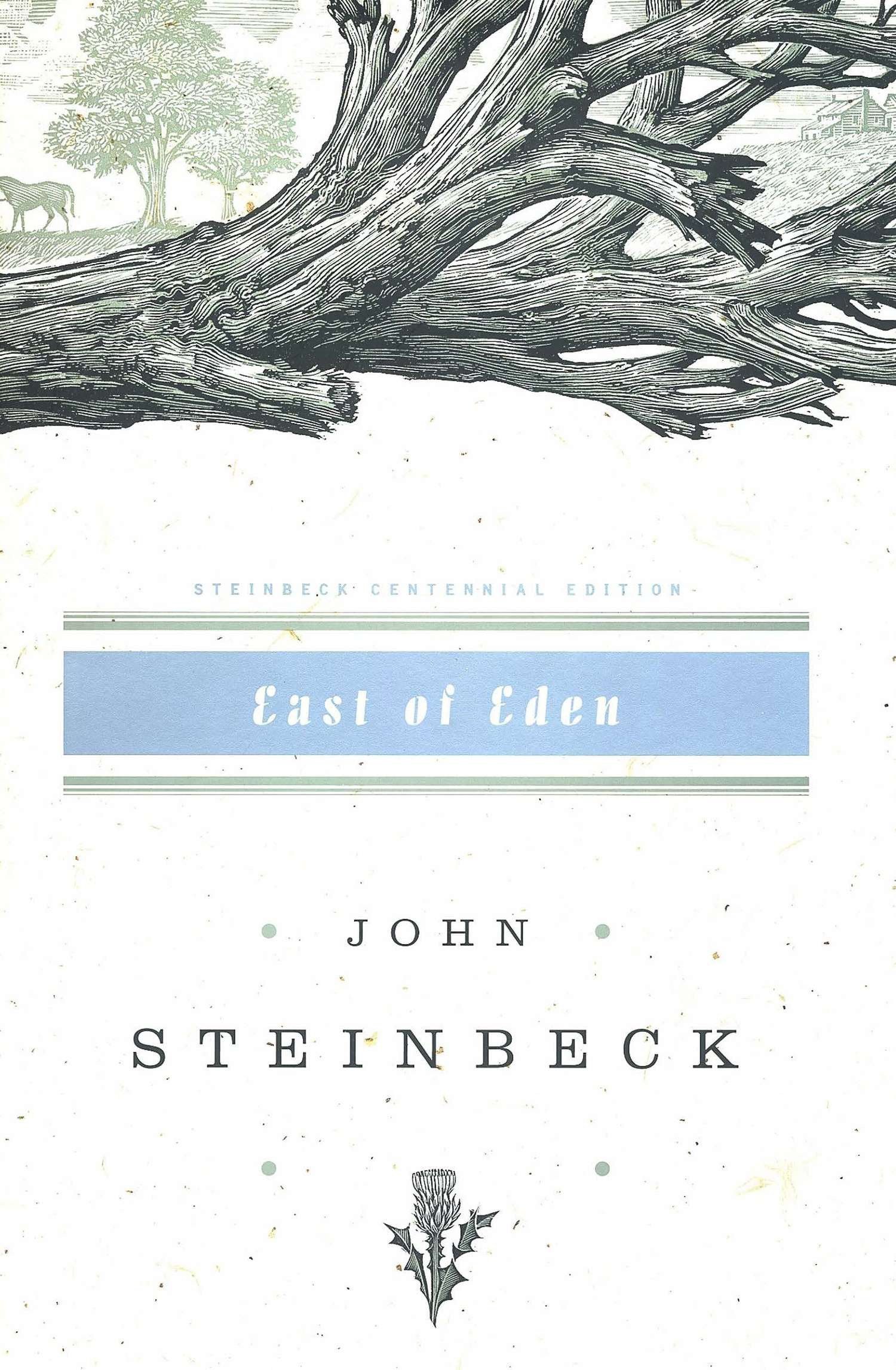
Because We’re Not Good: “East of Eden”, a Book Review
 We all have those pieces of art–be they movies, books, music, what have you–that upon first exposure we fall in love. We turn the last page or exit the theater or concert hall certain that this will surely be added to our list of favorites and long-held companions. Yet, how many times do we say this and a year or two down the road someone mentions that very piece of art and we find ourselves thinking, “oh yeah, I did read that, didn’t I?” or “I had forgotten how much I loved that album!”
So often we get swept away in the immediate experience of something skipping upon the waters of our soul, leaving little ripples and echoes dancing in its wake. But these dimples and dapples merely play on the surface for a time, returning once more to their source, leaving the waters ultimately undisturbed–the liquid plane unbroken; the deepest depths untouched.
There are other times, however, that we encounter a piece of art–or rather, it encounters us–and we are changed. It transcends mere rankings of “favorites” and “Top 10s” and weaves itself into our fibers. We do not critique and assess it, so much as it sizes and weighs us. The surface tension is broken and we are plunged beneath, staring humanity’s unvarnished truths in the face. And in so doing our own humanity is enlarged, a spaciousness expands in our souls, and we feel more human–even as our foundations are shaken.
John Steinbeck’s 1952 magnum opus, East of Eden, is just this kind of piece of art. It’s the kind of book people say they will read “someday”, only to read it and wish “someday” had come a lot sooner. So if you haven’t read it. Do so. Start today.
Philly Fireworks Fail
I know you’re jealous of our amazing view for the Philly 4th of July Fireworks.

Womp womp.
Continue reading
Mark the Music [QUOTE]
But music does change a man’s nature.
The man that hath no music in himself,
Nor is not moved with concord of sweet sounds,
Is fit for treasons, stratagems and spoils;
The motions of his spirit are dull as night
And his affections dark as blackness:
Let no such man be trusted.
Mark the music.
–Lorenzo,
William Shakespeare’s The Merchant of Venice, V.1
“Damascus” (a poem for the Feast of Paul’s Conversion)
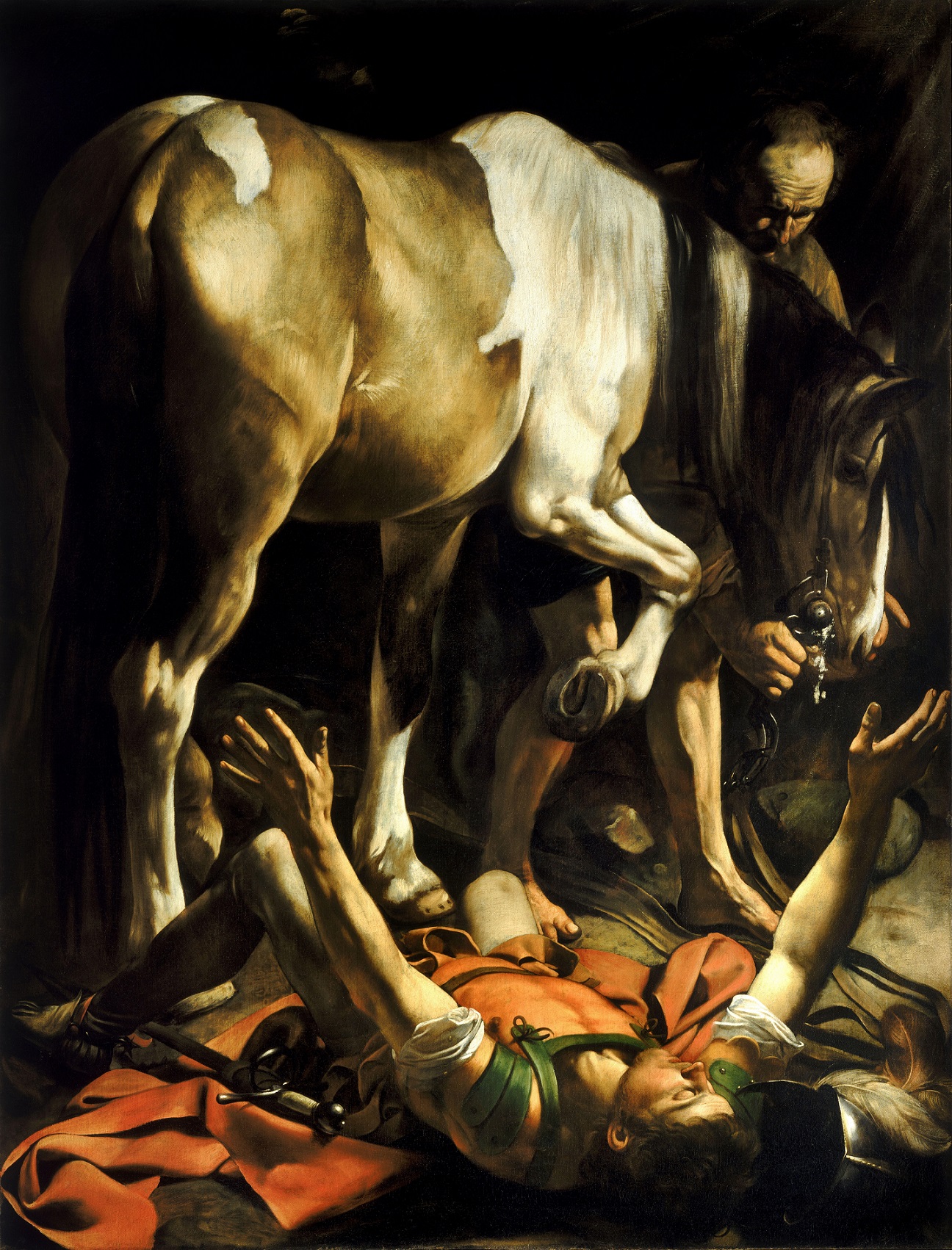
A troubled heart troubled still as I walk in the valley of the shadow of death but Im the shadow of that valley as I strike them with one rod while another comforts them why wont they die as I strike them with My Left as your right upholds them all Ill kill them inhale Ill kill them exhale Ill kill them inhale so on and so forth I walk as the dust of My sandals covers their face while Mine is clean Mine is pristine following none but MySelf on this dusty Damascus road and
then—
Continue reading
Demand a Miracle (Merry Christmas) [from W.H. Auden’s “For the Time Being”]

This is from the Advent portion of W. H. Auden’s Christmas Oratorio, For the Time Being. The full text is under copyright, but it’s in this book, if you’re interested.
From Part I:
[T]ime never moves and nothing can ever happen:
I mean that although there’s a person we know all about
Still bearing our name and loving himself as before,
That person has become a fiction; our true existence
Is decided by no one and has no importance to love.
That is why we despair; that is why we would welcome
The nursery bogey or the winecellar ghost, why even
The violent howling of winter and war has become
Like a juke-box tune that we dare not stop. We are afraid
Of pain but more afraid of silence; for no nightmare
Of hostile objects could be as terrible as this Void.
This is the Abomination. This is the wrath of God.
Part II, Chorus:
Alone, alone, about a dreadful wood
Of conscious evil runs a lost mankind,
Dreading to find its Father lest it find
The Goodness it has dreaded is not good:
Alone, alone, about our dreadful wood.
Where is that Law for which we broke our own,
Where now that Justice for which Flesh resigned
Her hereditary right to passion, Mind
His will to absolute power? Gone. Gone.
Where is that Law for which we broke our own?
The Pilgrim Way has led to the Abyss.
Was it to meet such grinning evidence
We left our richly odoured ignorance?
Was the triumphant answer to be this?
The Pilgrim Way has led to the Abyss.
We who must die demand a miracle.
How could the Eternal do a temporal act,
The Infinite become a finite fact?
Nothing can save us that is possible:
We who must die demand a miracle.
For Lent: Free Music, Readings, & Devotionals
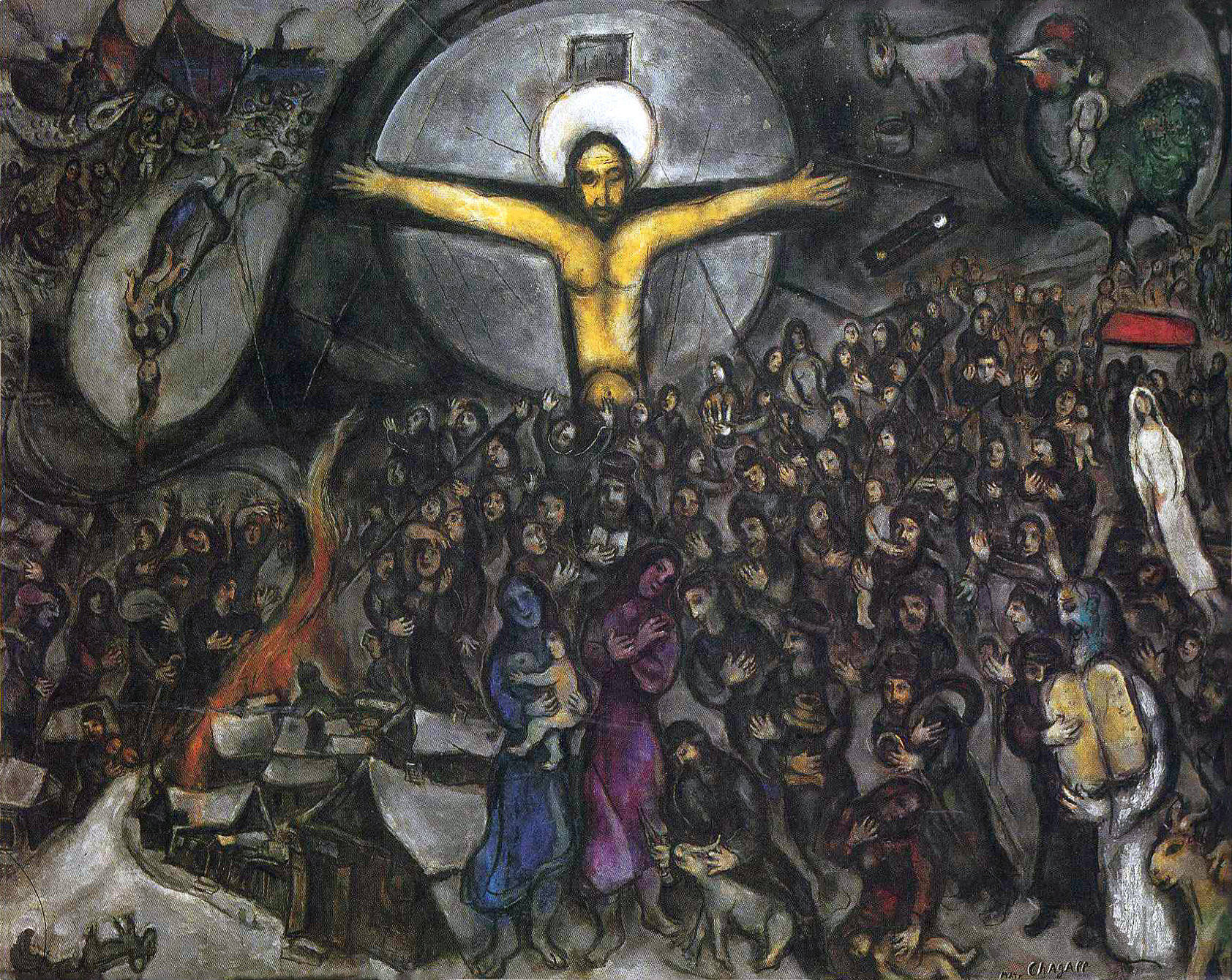
I’ll be honest, one of the reasons why I love Lent and the Church Calendar is because it is a helpful corrective for my own personal lack of personal discipline. I’m not especially skilled at putting together my own structure, and so I really flourish when structure and pattern is placed on me from the outside.
This is especially true with spiritual practices. To engage with a Church season like Lent, I often need to give myself a blog series to keep me thinking on a theme for the season (see above, under “Lenten Posts“). I really do well with reading plans, prayerbooks, music albums, etc. If you find yourself in the same boat, here are some resources for this year’s Lent that some of you may find helpful.
Continue reading
Advent and… (the series)
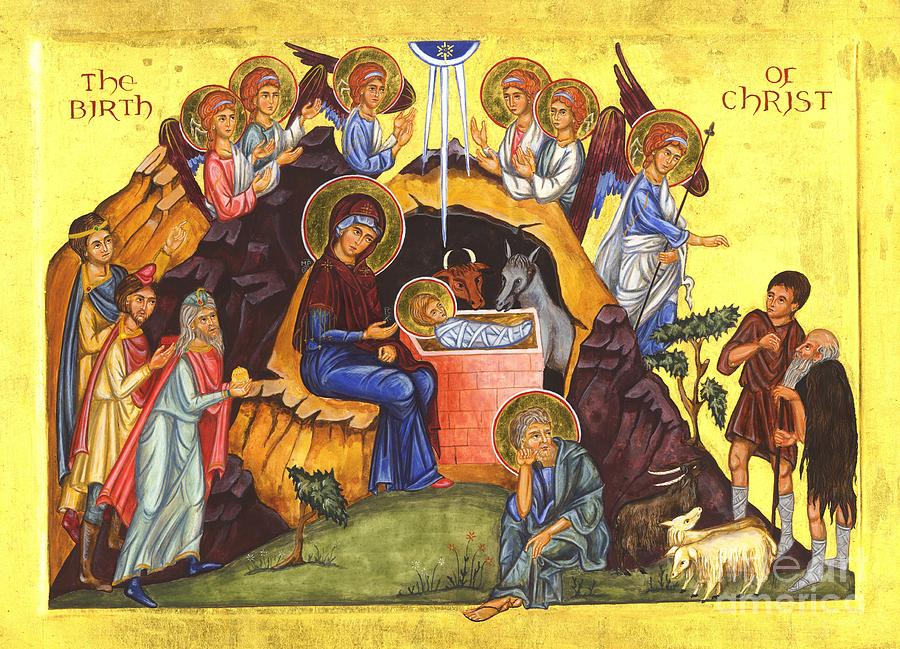
This is the dedicated post page for the Advent series “Advent and…”. In it, we looked at the various ways Advent connects to seemingly unrelated parts of our life and existence.
Welcome to Advent, 2012.
This was the series introduction. I looked at how Advent speaks to our whole selves, including a whole host of “un-Christmas-y” kinds of things.
Advent & Sex: we are holy ground
When you think of Christmas time, you don’t often think about sex. This post talks about the implication of Christ’s arrival for our sex lives.
Advent & Sex-lessness: here’s to singleness & celibacy!
The Advent story is a notably sex-less affair. What this means for us is huge. This was by far the most widely read post of this series, and in the top five most widely read posts in this blog’s history. Continue reading
Psalm 23: My Translation

For my Hebrew class last year, I was asked to write up a super literal translation of Psalm 23 (below), and then build off of that to create a much more dynamic, creative, contemporary translation. This was the result.
psalm23
A Psalm in the spirit of David.
The LORD is tending to me
I want for nothing
He has me lie down in pastures of fresh, new grass
Beside the waters of rest
He gently guides me
He brings the life back to my soul
He leads me into the grooves of life well-lived because of who he is.
And yet—
Though I truly die in the depth of darkness,
there is no evil that I fear,
You are truly there with me
Your staff and your support: they comfort me
You host before my face a table opposite all that stands against me.
You clean me with oil over top of my head.
Overflowing abundance is my cup.
Surely, goodness and steadfast faithfulness will chase me down
for the whole of my life’s days
This will be my story:
I will return into the dwelling place of the Lord and stay—
for lifetimes upon lifetimes.
______________________________________
Batman:The Animated Series & Mental Health (Podcast Suggestion)

Here’s a little casual Friday post for y’all.
As a child, my favorite show was Batman: The Animated Series. Likely, if you were born in the 80s, this show was part of your youth. Surprisingly, can you believe it was only on for 3 years?! Only 85 episodes were ever made.
But I loved it, and I watched it over and over again. It was dark and gritty (or as much as it could have been), had compelling stories, and (in hindsight) was full of complex characters. So complex, in fact, you could actually create an entire podcast psychologically analyzing them!
Continue reading
The Unintentional Idolatry of “10,000 Reasons (Bless the Lord)”
I like to think I listen to really good music–and I do. My most recent listens have been Sufjan’s Carrie & Lowell, Mozart’s Requiem, Miles Davis’ A Kind of Blue, Fugees’ The Score, and Taylor Swift’s 1989. But I also have a secret, closeted (until now) habit of listening to Christian Praise music on my own.
One of my favorite more recent songs is called “10,000 Reasons (Bless the Lord)” by the Australian artist Matt Redman (video below). We sing it at my church, and I listen to it on my own. It’s one of the better contemporary worship songs out there, but there is a grave grammatical error in the song that, for at least me, colors my experience of this song in a distracting way. Here’s the chorus of the song:
Bless the Lord oh my soul, Oh my soul
Worship his holy name
Sing like never before, Oh my soul
I’ll worship your holy name
Do you see it? Yes, there is an odd tense change from present imperative verbs to a future verb in the last line, but that’s not what I’m talking about.
Rather, it’s that the first three lines are speaking to one’s soul about God, and then it says “I’ll worship your holy name”. Who is being spoken to? Throughout the chorus, the singer is speaking to their own soul, telling their soul to worship God, and then it jumps to second person.
I know, I know, the song’s intention is to turn to worshipping God, but grammatically, it is offering this worship to one’s own soul. And I think this matters for several reasons.
Continue reading
“Selma”: A Post-Christian Treatment of Christianity
 I recently re-watched Selma, the movie about the Civil Rights Marches in Selma, Alabama led by Martin Luther King, Jr. I really, really love this movie. Watching it again, I couldn’t help but notice some powerful dynamics in how faith is represented in the film.
It was directed by Ava Duvernay, who, with this movie, became the first black female director to ever be nominated for an Academy Award. I don’t like artist analysis in approaching a work, as I think a piece of art should stand on its own regardless of its creator. But at times, after the fact, it can illuminate some aspects. And indeed, in looking into Duvernay’s background, I found that she is a very helpful symbol for the spiritual place many in our society find themselves.
She grew up in Compton, in the midst of many of the structural, generational, and long-standing effects of political and economic segregation, disempowerment, and white privilege. She went to an all-girls Catholic high school where, no doubt, she received a very robust religious education.
And yet, now, as she made this film about a man whose legacy is built on acts flowing from his religious convictions, when Rolling Stone asked her, “Are you religious yourself?”, she responded with, “No, not religious. But I love God.”
This, I think, captures well the dynamic of a film like Selma in our day-and-age, when it comes to the relationship between faith and culture. Let me be clear: the film is not in the least hostile to faith. This is not some Christian cultural martyrdom post. The film powerfully depicts the religious tenor and foundation of King’s movement.
Continue reading
National Geographic (& a poem) on International Women’s Day
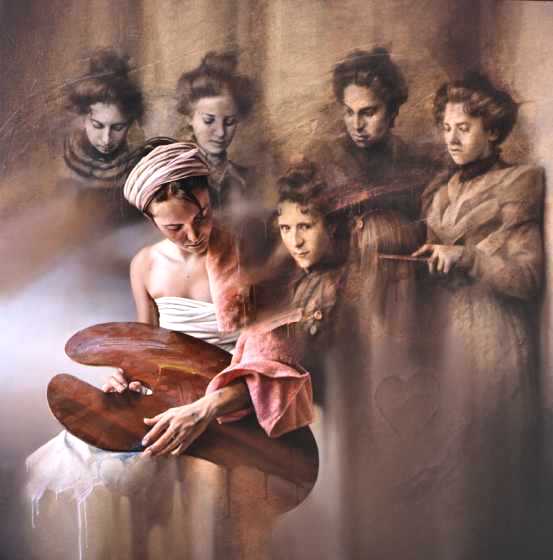 Today is International Women’s Day, and to honor it, National Geographic has a powerful photo spread of women from around the world, called “Portraits of Strength”. While looking through some of the comments, I saw this beautiful poem posted by the poet herself. Read the poem, see the pictures, and listen to the stories of a woman today.
I am a tree
Helen Bar-Lev
Did you think I was a woman?
Oh no, I am a tree
rooted and immovable
impossible to conceive
the scenes
that I have seenNow gnarled and warped
weathered and aged
wrinkled and withered
bent to the ends of recognition
too rigid to give in
to the whim of man
I stand true to the tune
of the wind echoing
my own inner rhythm
persistent, consistent, constantPerhaps every tree
was once a woman –
only a woman could stand so strong
fall so proud
when the axe of age claims her
and earth sets a bed for her© 10.2006 Helen Bar-Lev

[image credit: “Kalfonarium” by Istvan Sandorfi]
Quick Christian Feminism Quiz: What do you think of this image?

From Lynn Japinga’s excellent Feminism & Christianity: An Essential Guide (p.93):
Artist Edwina Sandys created a sculpture of a female form, arms outstretched as if hanging from a cross. The sculpture, entitled Christa, has created controversy wherever she is displayed. Critics say the statue defies the historical fact that Jesus was a man. Some viewers feel that the symbol of the cross is degraded or even blasphemed by a Christ in female form. Others are disturbed by the sexual overtones of the naked woman. Some people are troubled by yet another violent image of female suffering. A few people see in the sculpture the message that the death of Jesus symbolizes the pain of all human suffering.
The response to [this image] reveals various theological assumptions. Some people dismiss…the sculpture because they are literally false. Jesus was a man. End of discussion. Other people consider these images offensive and uncomfortable. It insults Jesus, and them as well, to think of him as a woman. These imaginative reconstructions of important events in the life of Jesus pose an important theological question: What difference does it make that Jesus was male?
Have at it. What do YOU think about this piece? What’s your first gut reaction? Why? What difference does it make that Jesus was male?
Lent: Poems, Mixtapes, Prayerbooks – Oh My!
I’ll be honest, one of the reasons why I love Lent and the Church Calendar is because it is a helpful corrective for my own personal lack of personal discipline. I’m not especially skilled at putting together my own structure, and so I really flourish when structure and pattern is placed on me from the outside.
This is especially true with spiritual practices. To engage with a Church season like Lent, I often need to give myself a blog series to keep me thinking on a theme for the season (see above, under “Lent Posts“, and also check out this year’s series). I really do well with reading plans, prayerbooks, music albums, etc. If you find yourself in the same boat, here are some resources for this year’s Lent that some of you may find helpful.
Continue reading
 the long way home