We are descendants of the Covenant| Acts 3.24-26


And all the prophets, as many as have spoken, from Samuel and those after him, also predicted these days. You are the descendants of the prophets and of the covenant that God gave to your ancestors, saying to Abraham, ‘And in your descendants all the families of the earth shall be blessed.’ When God raised up his servant, he sent him first to you, to bless you by turning each of you from your wicked ways.”
Acts 28.23-31

In this, we see that we, the New Covenant People of God, are still members of the covenant that’s been in effect the whole time: the Abrahamic Covenant. It is not done away with; only brought under a new administration: that of Christ.

See other Marginalia here. Read more about the series here.

The Saving Call of Christ: you’re already saved | Matthew 9.13


Go and learn what this means, ‘I desire mercy, not sacrifice.’ For I have come to call not the righteous but sinners.” —Matthew 9.13

 Notice here the emphasis. Evangelicals tend to stress how Jesus came to “save” (which he did, for sure). But Jesus here doesn’t day he came to “save” sinners. But rather to “call” them. I wonder if this speaks to the thought that salvation is everyone’s, and “evangelism” is more the process of calling people to be the saved people they are rather than to “get” or somehow “acquire” salvation. It’s a call to be something, not a call to get something.

See other Marginalia here. Read more about the series here.

Esther & Political Advocacy by God’s People| Es4.3,8 [DOUBLE-HEADER]


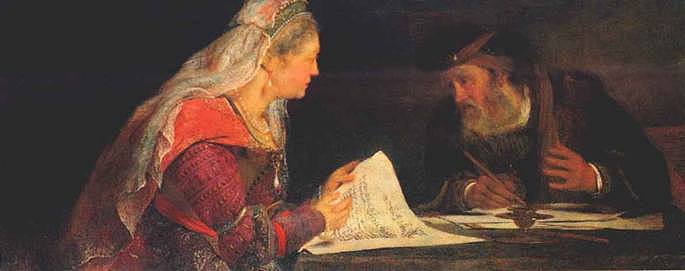
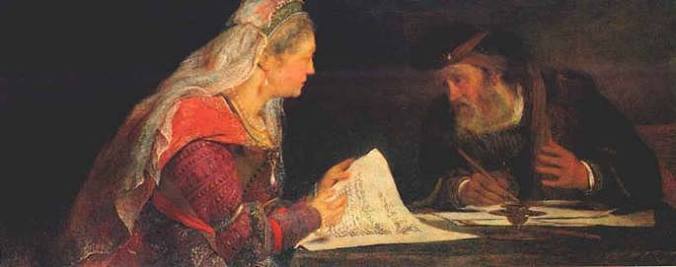
esther_mordechai-arent-de-gelderUpdate (3/8): This little seemingly inconsequential post caused quite the comment thread on Facebook and represented every reason I’ve started this series. I got challenged and my view of the book of Esther got broadened more than I ever could have imagine. I’ve reproduced those comments below.

In every province, wherever the king’s command and his decree came, there was great mourning among the Jews, with fasting and weeping and lamenting, and most of them lay in sackcloth and ashes. —Esther 4.3

Notice here that when the Jews are faced with political persecution, and an actual existential threat from the political authority, their response is not activism,  nor violence, nor lobbying, it is instead to pray, weep, lament, fast, and cry out to God, their true king and political leader.

Mordecai also gave him a copy of the written decree issued in Susa for their destruction, that he might show it to Esther, explain it to her, and charge her to go to the king to make supplication to him and entreat him for her people. —Esther 4.8

Well…Okay, okay. I see that only a few versus later, Mordecai does try to appeal to Esther, the political insider, to lobby on behalf of her people. So, that sort of goes against what I just said above.

But, notice that they still did not use violence or mass political demonstrations or mobilization. They peacefully engaged those from their community who were specifically equipped to engage politically. They didn’t see themselves as primarily political creatures,  nor their problems primarily as political problems,  nor the answers primarily as political solutions. The political piece was merely one facet in the kaleidoscope of human experience through which God works his will,  and not even the main one.

My not-so-subtle point: the Evangelical obsession with political activism and using politics to accomplish (what they view as) the goals of the Kingdom are anti-biblical and find no basis in Scripture.

See other Marginalia here. Read more about the series here.

[image credit: “Esther and Mordechai write the Second Letter of Purim” by Arent de Gelder]

The most succinct defense of infant baptism I’ve ever read.


“It might be argued that there is not one explicit reference in the New Testament to a child being baptized. Have we any warrant then for doing it? If we require explicit texts for our practice, then there would be no warrant for women to come to the Lord’s Table. There is no single explicit reference to that in the New Testament. Our warrant is not in isolated texts or precedents, but in the Gospel itself. Christ died for men and women, adults and infants, and we acknowledge that in faith in baptism…”

— from James B. Torrance’s beautiful book Worship, Communion, and the Triune God of Grace 

Paul’s ministry thesis & maybe Theophilus’ identity? | Acts 28.23-31


After they had set a day to meet with him, they came to him at his lodgings in great numbers. From morning until evening he explained the matter to them, testifying to the kingdom of God and trying to convince them about Jesus both from the law of Moses and from the prophets. Some were convinced by what he had said, while others refused to believe. So they disagreed with each other; and as they were leaving, Paul made one further statement: “The Holy Spirit was right in saying to your ancestors through the prophet Isaiah,

‘Go to this people and say,
You will indeed listen, but never understand,
and you will indeed look, but never perceive.
For this people’s heart has grown dull,
and their ears are hard of hearing,
and they have shut their eyes;
so that they might not look with their eyes,
and listen with their ears,
and understand with their heart and turn—
and I would heal them.’

Let it be known to you then that this salvation of God has been sent to the Gentiles; they will listen.”

He lived there two whole years at his own expense and welcomed all who came to him,31 proclaiming the kingdom of God and teaching about the Lord Jesus Christ with all boldness and without hindrance.
Acts 28.23-31

What a thesis statement for all of Paul’s ministry and the books of Luke: the hard-heartedness of the Jews and the inclusion of the Gentiles. Perhaps this was a main reason why Luke wrote both of these books to the mysterious Theophilus. Maybe he wrote these to offer assurance to this Gentile man (as evidenced by his Roman name) of his inclusion in the mission and salvation of God.

On a side note, it’s odd that this statement of the Gentile inclusion in the family of God (throughout Paul’s preaching) rests primarily on the a story of the preaching ministry of Paul. It’s well-known that Luke draws literary parallels between Jesus in the Gospel of Luke and Paul in Acts. But since this was being written to Theophilus, and these writings about Paul seem to rest on an implied authority and trust that it seems Theophilus would have had in Paul (if he said it, then it must be true), then could this be a hint that Theophilus met Paul at some point or even that Paul was the one that converted him?

Just a thought. A pure, conjectural thought.

See other Marginalia here. Read more about the series here.

Love your neighbor…even other denominations | Matthew 22:34-40


When the Pharisees heard that he had silenced the Sadducees, they gathered together, and one of them, a lawyer, asked him a question to test him. “Teacher, which commandment in the law is the greatest?” He said to him, “‘You shall love the Lord your God with all your heart, and with all your soul, and with all your mind.’ This is the greatest and first commandment. And a second is like it: ‘You shall love your neighbor as yourself.’ On these two commandments hang all the law and the prophets.”

Matthew 22:34:40

I find it fascinating that this opens with the fact that the Pharisees were only respecting Jesus and calling him Teacher because he had smacked down their fellow Jews who happened to be in a different “denomination”. How often do we do this? How often do we latch on to a teacher not because God meets us in their  proclamation, but because they reaffirm our beliefs and/or put down those we disagree with? Fellow family members in the people of God, no less! How dare we?

This is why I find it brilliant that Jesus stresses the vertical in the greatest commandment, but he also throws in the necessity of loving our neighbors as well. Don’t miss this. He essentially adds a human-relational dimension to the Shema, one of the most beloved of Jewish texts! And so he incorporates how we treat others as just as essential as how we love God. When we don’t love those around us-especially the fellow people of God that we disagree with-we break the most important of commandments and fall short in loving our God.

See other Marginalia here. Read more about the series here.

The Holy Spirit exorcizes, no matter who you are | Matthew 12:24-28


But when the Pharisees heard it, they said, “It is only by Beelzebul, the ruler of the demons, that this fellow casts out the demons.” He knew what they were thinking and said to them, “Every kingdom divided against itself is laid waste, and no city or house divided against itself will stand. If Satan casts out Satan, he is divided against himself; how then will his kingdom stand? If I cast out demons by Beelzebul, by whom do your own exorcists cast them out? Therefore they will be your judges. But if it is by the Spirit of God that I cast out demons, then the kingdom of God has come to you.

Matthew 12.24-28

Even those that are not the people of God exorcise by the Holy Spirit. Don’t be so quick to discount the healing just because you disagree with the person or even if they’re not Christian! God is the Gospel of healing. However shalom happens, it is the Spirit that brings it.

See other Marginalia here. Read more about the series here.

Noah, Prophecy, & the Comfort of the Earth | Genesis 5.28-29


When Lamech had lived one hundred eighty-two years, he became the father of a son; he named him Noah, saying, “Out of the ground that the Lord has cursed this one shall bring us relief from our work and from the toil of our hands.”
Genesis 5.28-29

Noah’s name means “comfort” or “rest”. This is an interesting prophetic statement concerning Noah. Hebrew irony at its best. The same Hebrew word for “earth” is used here as “ground”. Same word as in “God created the heavens and the earth”. So, how Noah will bring “relief” from the toil is by playing a part in the undoing of God’s creation of “the heavens and the ground”. In other words, he comes out of the ground to bring comfort to that ground by undoing the ground. Oh, Hebrew.

See other Marginalia here. Read more about the series here.

Universal Intimacy: The Beautiful Transition | Matthew 11:25-39


At that time Jesus said, “I thank you, Father, Lord of heaven and earth, because you have hidden these things from the wise and the intelligent and have revealed them to infants; yes, Father, for such was your gracious will. All things have been handed over to me by my Father; and no one knows the Son except the Father, and no one knows the Father except the Son and anyone to whom the Son chooses to reveal him.

“Come to me, all you that are weary and are carrying heavy burdens, and I will give you rest. Take my yoke upon you, and learn from me; for I am gentle and humble in heart, and you will find rest for your souls. For my yoke is easy, and my burden is light.”
Matthew 11:25-39

What a beautiful transition; from words of exclusivity to words of rest and invitation. It is precisely into the intensely exclusive intimacy between the Son and the Father into which we are invited to come and find rest. This is true Christian “Universalism”: the whole cosmos is brought into the exclusive, fiery love of the Trinity.

See other Marginalia here. Read more about the series here.

Male Headship & Societal Injustice | Esther 1:17-22


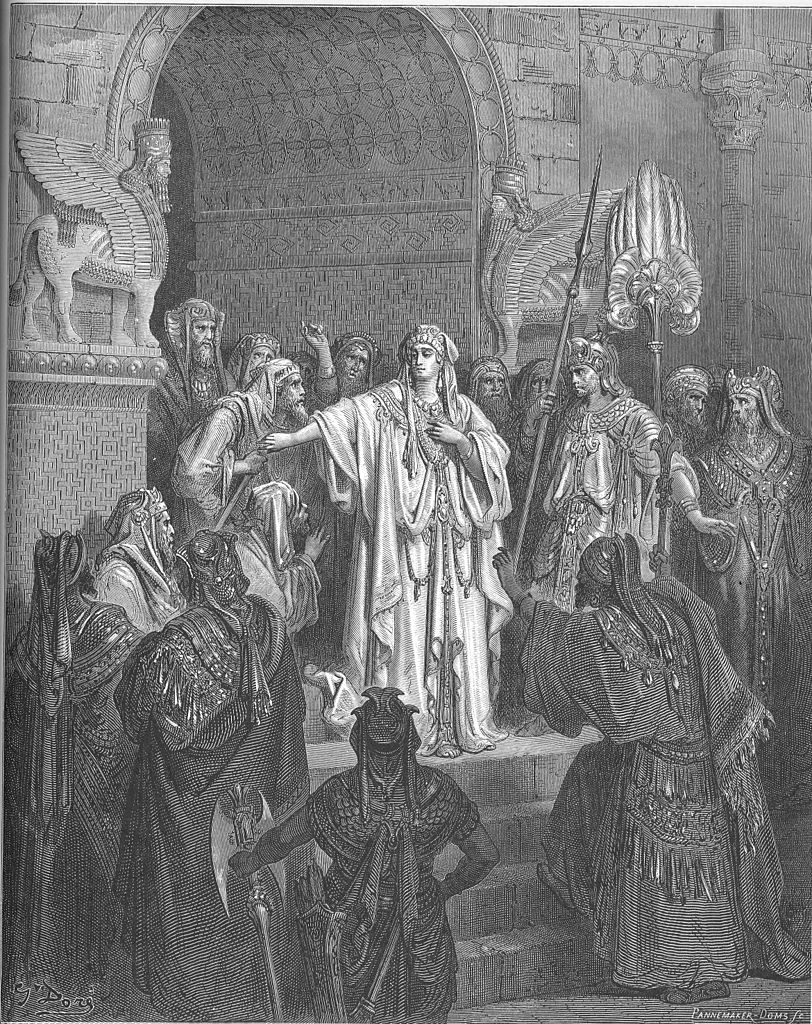
Queen_Vashti_Refuses_to_Obey_Ahasuerus_CommandToday’s post falls into both our new section of the site called Marginalia and our on-going series on Women in the Church.

For this deed of the queen will be made known to all women, causing them to look with contempt on their husbands, since they will say, ‘King Ahasuerus commanded Queen Vashti to be brought before him, and she did not come.’ This very day the noble ladies of Persia and Media who have heard of the queen’s behavior will rebel against the king’s officials, and there will be no end of contempt and wrath! If it pleases the king, let a royal order go out from him, and let it be written among the laws of the Persians and the Medes so that it may not be altered, that Vashti is never again to come before King Ahasuerus; and let the king give her royal position to another who is better than she. So when the decree made by the king is proclaimed throughout all his kingdom, vast as it is, all women will give honor to their husbands, high and low alike.”

This advice pleased the king and the officials, and the king did as Memucan proposed; he sent letters to all the royal provinces, to every province in its own script and to every people in its own language, declaring that every man should be master in his own house.
Esther 1.17–22

I can imagine a conservative evangelical looking at this and saying to themselves, “Now, the king’s court is recognizing a natural order in the way God has made a marital relationship to work, even though they go about reinforcing this biblically-supported picture in the wrong way–through force and not love”. I hope that’s a fair representation.

But either way, (1) they would not want us to pull from this text any lessons about how male headship itself is wrong, just how it’s done badly here, and (2) they would still think the concern of these males is justified (and perhaps even right), as we’ve seen similar dynamics play out in our culture in the aftermath of feminism.

Continue reading

Women at the Cross | Matthew 27:55-56


Now when the centurion and those with him, who were keeping watch over Jesus, saw the earthquake and what took place, they were terrified and said, “Truly this man was God’s Son!”

Many women were also there, looking on from a distance; they had followed Jesus from Galilee and had provided for him. Among them were Mary Magdalene, and Mary the mother of James and Joseph, and the mother of the sons of Zebedee.
Matthew 27:55-54

It’s really interesting to me that Matthew adds this little addendum to the end of the account. Why point out the women that were there? Is the assumption that all the men have scattered, and so Matthew had to show his sources for this story?

See other Marginalia here. Read more about the series here.

Introducing Marginalia: a new part of this blog


schrott-bibles-paul-coffee

I’ll be honest. It’s been years since I’ve been able to find a way to regularly read the Bible that sticks and works for me. To be frank, readings plans usually don’t work for me because I get bored. Depending on the plan, you’re either stuck in the same book for long stretches of time or you’re jumping around so much that you lose the sense of the whole.
This year, I think I’ve started a regimen that is clicking: the M’Cheyne Bible reading plan. At any given time, I’m going through four completely different part of Scripture and for me, this is keeping me really engaged. As I’ve gone on through the plan these past couple of months, I started highlighting and writing up little notes on random verses here and there. Lots of themAnd I’d like to share them with you.

So today, I’m introducing a new little part of this blog called Marginalia, where I’ll be posting these short little meditations on Scripture as I go through this plan.
Continue reading

Abraham’s son Ishmael was part of Covenant! | Genesis 17.23-27


This is my covenant, which you shall keep, between me and you and your offspring after you: Every male among you shall be circumcised… and it shall be a sign of the covenant between me and you…. Both the slave born in your house and the one bought with your money must be circumcised. So shall my covenant be in your flesh an everlasting covenant. Any uncircumcised male who is not circumcised in the flesh of his foreskin shall be cut off from his people; he has broken my covenant.”… As for Ishmael, I have heard you; I will bless him and make him fruitful and exceedingly numerous; he shall be the father of twelve princes, and I will make him a great nation. But my covenant I will establish with Isaac, whom Sarah shall bear to you at this season next year.”…. Then Abraham took his son Ishmael and all the slaves born in his house or bought with his money, every male among the men of Abraham’s house, and he circumcised the flesh of their foreskins that very day, as God had said to him…. And his son Ishmael was thirteen years old when he was circumcised in the flesh of his foreskin. That very day Abraham and his son Ishmael were circumcised; and all the men of his house, slaves born in the house and those bought with money from a foreigner, were circumcised with him.
Genesis 17.23-27

Yes, God said that Ishmael would not be the primary bearer and “administrator” of the covenant, but he still bears its marks. Reminds me of a reading from Lesslie Newbigin where he talks about how through our election and Covenantal relationship with God, Salvation is extended to all the nations. “Election” isn’t about blessing; it’s about responsibility to extend the Blessing to others.

Other peoples (even those not in the elect people of God) participate in and receive the full benefits of being part of the Covenant. To be elect is to extend these Covenantal blessings to all nations (as we see here with Abraham). To be marked as God’s is to be placed on mission.

Ishmael was still joined to the covenant! Praise God for his gratuitous grace!

See other Marginalia here. Read more about the series here.

I think we all need a reminder: Ken Ham is on our team.


ken-ham-banner

Okay, this one is a tough one to write.

Most all of us know by now about the Great Debate that happened a couple of weeks ago between Bill Nye and Ken Ham on whether or not Creationism is a viable model for human origins. If you’ve followed this blog for an real period of time, you know it’s no secret that I do not think it’s a viable model, and I’ve been quite vocal about that in this space.

So I felt the frustration when Ken Ham was treated like the stand-in for every Christian that wants to take the Bible seriously. I felt better when smart Christians responded well. I chuckled at those that poked fun of him and other Creationists, debunked their logic, or discredited the historical stream in which he finds himself. I gave into the private mocking.

I was then really encouraged when I read this report in Christianity Today that shows that Americans are not as divided on this issue as some polls make it seem. I was overjoyed with knowing that more Christians than ever were leaving the Ken Hams of the world in the dust of irrelevance, their budgets and voices shrinking in the distance.

As the discourse went on, I began to thinking to myself: I think we’re winning! But then yesterday, I felt like I woke from a fog and thought: Wait. Who are we fighting?
Continue reading

This is why Genesis was written (and Ken Ham doesn’t see it)


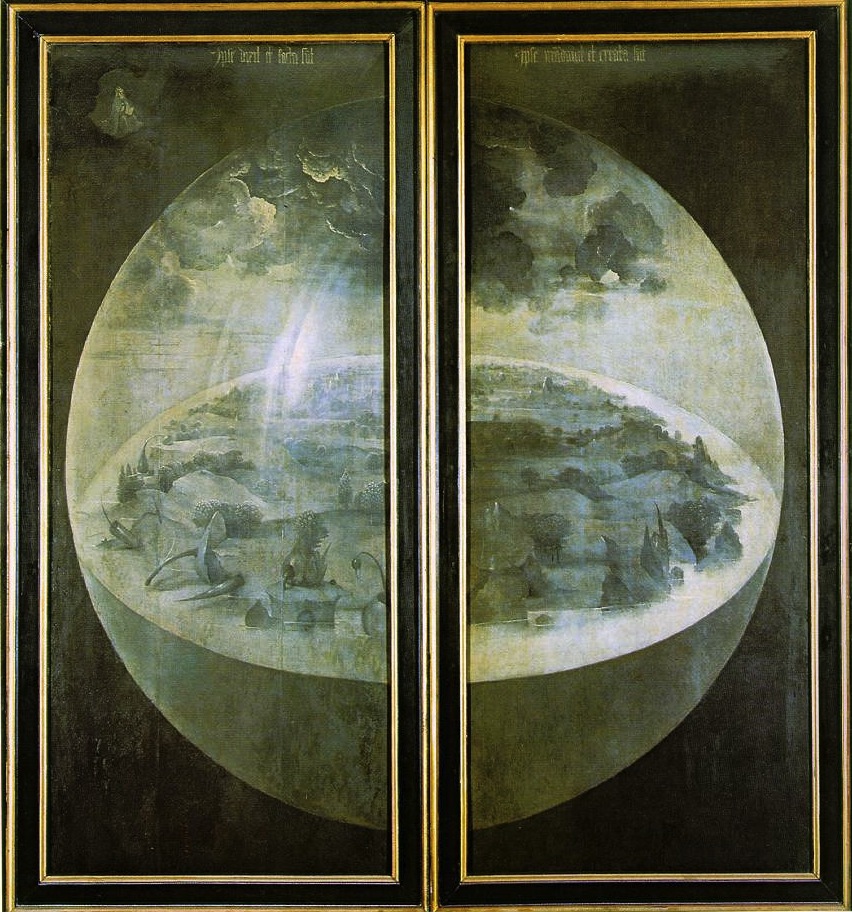
Bosch-Garden-Earthly-Delights-Outer-Wings-Creation-WorldIf my Facebook feed is representative of the general population at all, then I can confidently say that most of you have heard about the debate between Ken Ham and Bill Nye about creationism and evolution.

On this blog, I try not to get too much into issues of great contention in the church family when I don’t think it’s necessary, especially when I think it would unnecessarily prevent someone from reading this blog with a free conscience, or just mess with their head too much. But this is the one issue that I have felt the freedom to be blunt, bold, consistent, and loud about my opinion. So, I don’t have too much to add to everyone else out there that was more or less lamenting this debate more than celebrating it. Maybe I’ll have some thoughts next week coming at it from a different angle, but we’ll see.

Today, I wanted to share with you a video from the in-person portion of my Hebrew class a couple of weeks ago. To get an A in the class I have to translate, memorize, and recite a section of the Genesis 1 in the Hebrew. To help us with that, my professor made a video of him reciting it and acting out the recitation in front of us.
Continue reading