Simplistic Atheism {4}: What could make me an Atheist?


paul-schrott-painting-11-11

(Note: These exchanges are now complete. There is a Table of Contents to the discussion now available.)

In this series of exchanges with my friend Daniel, I’ve tried to argue that his Facebook post on why he is an Atheist expressed an overall view of the world that is too small and too simplistic. I think this is because of his empiricist method and materialist conclusion about reality–that all there is is what we can see, touch, feel, etc.

Some concluding remarks

My whole point has not simply been that Daniel’s facts or even his method is wrong. But rather, it finds its proper place, meaning, fullness, and possibility within the Christian view of reality. I have argued in each of my posts that Christianity does not “refute” reason, science, history, skepticism, textual messiness, historical difficulty, or even doubt. Instead, the Gospel encompasses it all, and each of those things find a greater fulfillment in their use, cohesion in the whole of the world, and reality within that place.

Continue reading

New Testament & History: Christians can be confident [a retort]


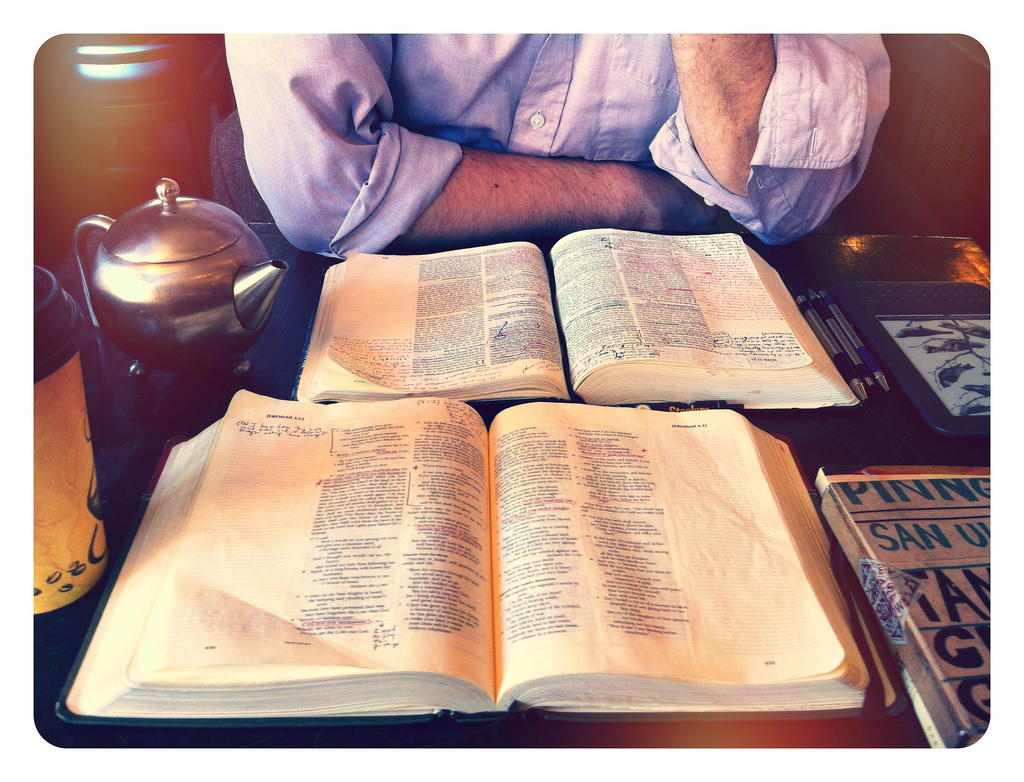
bible-schrott-coffee-paul

(Note: These exchanges are now complete. There is a Table of Contents to the discussion now available.)

Update: Daniel has posted a reply below.

When I have these kinds of exchanges on the blog, I really try to let the other person have the last word. After all, I have home field advantage here. I was absolutely ready to move on to my last part of this ongoing exchange with my friend Daniel Bastian in response to his Facebook post about his Atheism.

Last week, I wrote a post trying to give a cursory response to some of his claims about the Bible and miracles. Daniel wrote a response, posted a couple of days ago. I offered a brief response to his critique of my view of miracles. I was really eager to get back to writing about other things.

But it seems I can’t. Not yet.

I’m starting seminary back up this Fall, not simply because I’m interested in all the “knowledge” about the Bible, but because I feel I actually have a (pastoral?) concern for the spiritual well-being of people. I care a lot about what people might see on this blog, and I care that they are able to receive these things in ways that will be ultimately helpful to them.

And I fear that his post, at least for Christians not well-read in these issues, will cloud the waters more than clear them. Don’t get me wrong. Christians should wrestle with what Daniel has written in earlier posts, especially when it comes to the more abstract philosophical concerns of God’s existence and work in this world. These are things that don’t have easy or even clear responses by Christians. I’m not worried about Christians having restless nights or days as they wrestle with legitimate difficulties in the seeming difference between what they believe about God and the way the world seems to be.

But, when it comes to the Bible and the Resurrection, I don’t think we are on as shaky ground as Daniel makes it seem. Let’s discuss.

Continue reading

“New Testament Historicity: A Response” by Daniel Bastian [GUEST POST]


run-down-Bible

(Note: These exchanges are now complete. There is a Table of Contents to the discussion now available.)

Today continues an on-going exchange between myself and a friend of mine, Daniel Bastian. These were inspired by a Facebook post he wrote about why he is Atheist (in this current post, whenever he says “OP”, he means “original post” and is referencing that). Last week, I wrote a post about the trustworthiness of the Scriptures and miracles. Here is his response.

Update: I have some responses posted for his section on miracles in this post. And, honestly, I feel he gets so many things wrong int his post, I’ll have to write another response to this tomorrow. 

More important update: I have a full response to this article now posted.

Paul,

Thank you for the thoughtful post. I think this is your most cohesive piece yet and, better yet, even dives below the surface of a few of my arguments. And allow me to just say up front that it is truly a breath of fresh air to commune with a non-fundamentalist on matters of faith. Rarely do I find a Christian with a sophisticated understanding of the faith’s foundational texts and the underlying nuance operative in these discussions. It is truly refreshing.

In my response I’d like to first address the broader themes of your post and then drill into a few of the more specific items you have noted. Along the way, I will correct some errors, highlight some omitted details, and point out some oversights and oversimplifications that obscure the analysis of New Testament historicity.

At the first, it seems that you still resist recognizing the non-Christian-centric applications of my arguments. Yes, some of my arguments did single out Christianity, as that is the religion I retired from at age 25 and is thus the one in which I am most conversant. However, if you were to step outside the hermetically sealed Christian bubble for just a moment, their broader implications should become apparent. Let’s try again.
Continue reading

Simplistic Atheism {3}: The Bible, Miracles, & History


schrott-bibles-paul-coffee

(Note: These exchanges are now complete. There is a Table of Contents to the discussion now available.)

We continue our response to Daniel Bastian’s blistering critique of religious belief. Part 1 tried to respond to what seems to be Daniel’s basic understanding of the world, reason, and spirituality. Part 2 focused entirely on his use of scientific claims and findings to discredit (at least the need for) religiosity. Yesterday, Daniel responded to Part 2 (here was my response). Today, we narrow in on his views of the Bible, miracles, and history.

A Simplistic Bible

(Disclosure: a lot of this is cut-and-paste from various comments here and on Facebook. Also, I’ve taught a few classes that have a more detailed discussion of a theology of Scripture. Those can be found here, here, and here.)

The points about the Bible in Daniel’s post were especially difficult to read. In fact, they were my inspiration for my post last week talking about how Christianity can shape the types of Atheistic beliefs people come to. My frustration came from the fact that, since Daniel originally wrote this (a while ago), I’ve watched him engage with and express respect for others that offer substantive critiques to what he ended up re-posting last week.

In his points, he expresses a view of the Bible that is mechanical, wooden, systematic, simplistic, and puts expectations on the text that it doesn’t even place on itself. It seems like he is only responding to the modernist, fundamentalist view of the Bible (what I called a “Straw Bible”), and I know his thinking is far more nuanced than that–I couldn’t understand why he still perpetuated this. But nevertheless, he did, so I’ll address it as it’s posted.
Continue reading

Simplistic Atheism {2}: Science “versus” Theology


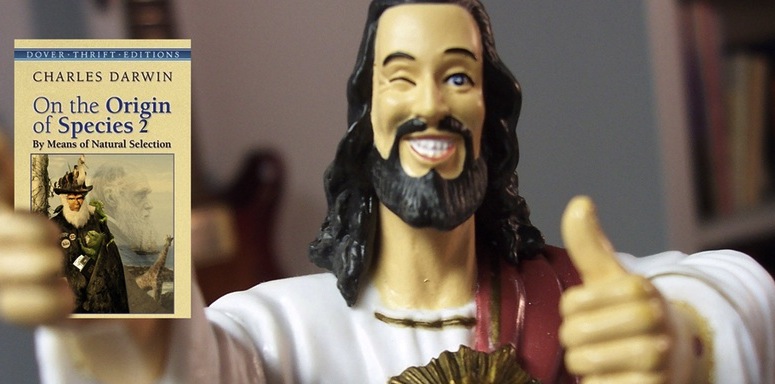
darwin-buddy-jesus-humor

(Note: These exchanges are now complete. There is a Table of Contents to the discussion now available.)

I’m doing a little series this week responding to a Facebook post by a friend of mine named Daniel Bastian. He outlined twenty things that would make him change his mind about Atheism. The piece is well-organized and thought out, I encourage everyone to read it and wrestle through it themselves.

In line with my belief that these sorts of discussions always seem to end up at differences in hermeneutics (interpretive filters) rather than facts, I wrote a post talking about what appeared to be Daniel’s bigger commitments and understandings of the world, human reason, and assumptions about spirituality (also read the Facebook comments).

I was, of course, accused of still not engaging with his specific points, even as I sought to talk about principles behind the points. And so, I’m excited to say that with today and tomorrow, we will be hitting many of Daniel’s specific points
Continue reading

Simplistic Atheism {1}: a Reason & Spirituality that’s too small


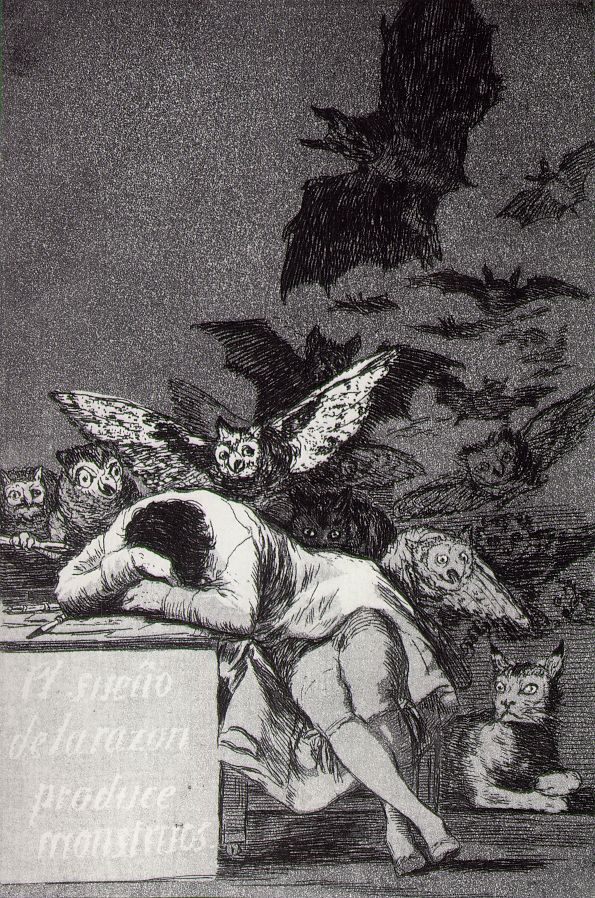
de-Goya-Sleep-Reason-produces-monsters

(Note: These exchanges are now complete. There is a Table of Contents to the discussion now available.)

Last week a friend of mine named Daniel Bastian posted a well thought-out catalog of the reasons why he is an Atheist (let me know if the link doesn’t work). This list includes items that don’t usually pop up in similar offerings, and I encourage every Christian to read this list and wrestle through the realities of what he says.

As I thought about it, though, and thought through how I would respond to some of these things, I found a consistent theme to what I would critique to each of his points: over-simplicity. In this series of posts, rather than going through each of the writer’s twenty points, I’d like to go through some broader ideas he touches on, and offer my thoughts.

By the time I was done writing everything up, I had at least four parts to this response. Today, we’ll briefly talk about how Daniel’s post represents an over-simplifying of human reason and spirituality..
Continue reading

When easy & simplistic proof-texting trumps the nuance & complexity of wrestling pastorally with the text


On Tumblr, a very, very dear friend posted this earlier, in support of the Doctrine of Double Predestination, which says that in eternity past, God predestined not only who would be saved (apart from their own works), but also those who would not be saved (apart from their own works):

“They stumble because they disobey the word, as they were destined to do.” 1 Peter 2:8

Double predestination

#it’s biblical

In one of the most widely used Bible commentaries in existence, I found these words written about this verse, starting with commenting on the word “also” (which isn’t found in my friend’s translation of the verse). I’ve changed some formatting and some grammar to make it easier to understand. Enjoy:

“also” [as in “as they were also destined to do”;  this is in the Greek, though Revelation 19’s translation doesn’t have this]—[this is] an additional thought; God’s ordination; not that God ordains or appoints them to sin, but they are given up to “the fruit of their own ways” according to the eternal counsel of God. The moral ordering of the world is altogether of God. God appoints the ungodly to be given up unto sin, and a reprobate mind, and its necessary penalty.

The phrase “Were appointed,” (Greek, “set,”) is an answer to the “I lay,” (Greek, “set,”) found in 1Pe 2:6.

God, in the active, is said to appoint Christ and the elect (directly). Unbelievers, in the passive, are said to be appointed (God acting less directly in the appointment of the sinner’s awful course) [Bengel]. God ordains the wicked to punishment, not to crime [J. Cappel].

“Appointed” or “set” (not here “FORE-ordained”) refers, not to the eternal counsel so directly, as to the penal justice of God. Through the same Christ whom sinners rejected, they shall be rejected; unlike believers, they are by God appointed unto wrath as fitted for it.

***The lost shall lay all the blame of their ruin on their own sinful perversity, not on God’s decree; the saved shall ascribe all the merit of their salvation to God’s electing love and grace.***

(from the “Commentary Critical and Explanatory on the Whole Bible)

What are your thoughts on this issue? How important do you think it is in the grand scheme of the Gospel?

a brief Prodigal Paul doctrinal statement


paul-phoenix-1

As I am currently registering for my seminary classes, I thought I’d post this “theological statement” I had to write as part of my application materials. Some friends of mine had thought it would be interesting to read what I wrote, so here it is.

Seeing as I was writing to a seminary staff audience, there might be some references that aren’t commonly understood. I’ll link to times I’ve written about some items, but otherwise, any terminology or ideas that aren’t explained are a simple Wikipedia (or Theopedia–yes, it’s a real thing) search away. Continue reading

Trusting in our theology vs. Trusting in Jesus {guest post}


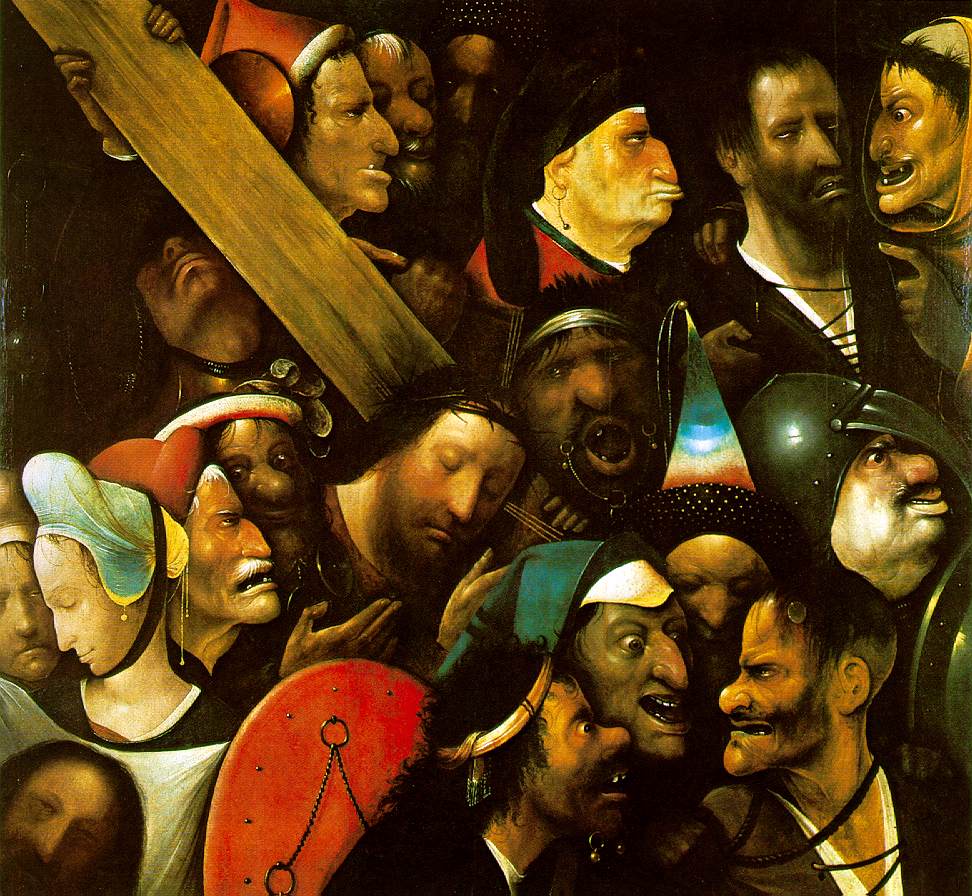
bosch-christ-carrying-the-crossToday’s post is by one of my oldest and best friends, Whit Wilson. He is currently in his first year in a master’s in counseling program at Biblical Seminary, just outside Philadelphia. I hope you get to hear more from him as he continues his education.

In the first year of my current program, three classes are required relating to the use of the Scriptures in counseling. Class 1 focuses on an overall interpretational approach to Scripture, class 2 is on the Old Testament, and class 3 is on the New Testament.

This semester my cohort and I are in the New Testament class with an eccentric and somewhat unorthodox professor who enjoys challenging various long-held theological assumptions and beliefs with the goal of helping us freshly think through these issues (everything from gender roles to homosexuality to the afterlife). I can’t say that I agree with him on everything (or most things for that matter), but I have enjoyed his fresh approach and the way he encourages us to think critically about how we use and interpret the Bible.
Continue reading

The Cross vs. The Resurrection


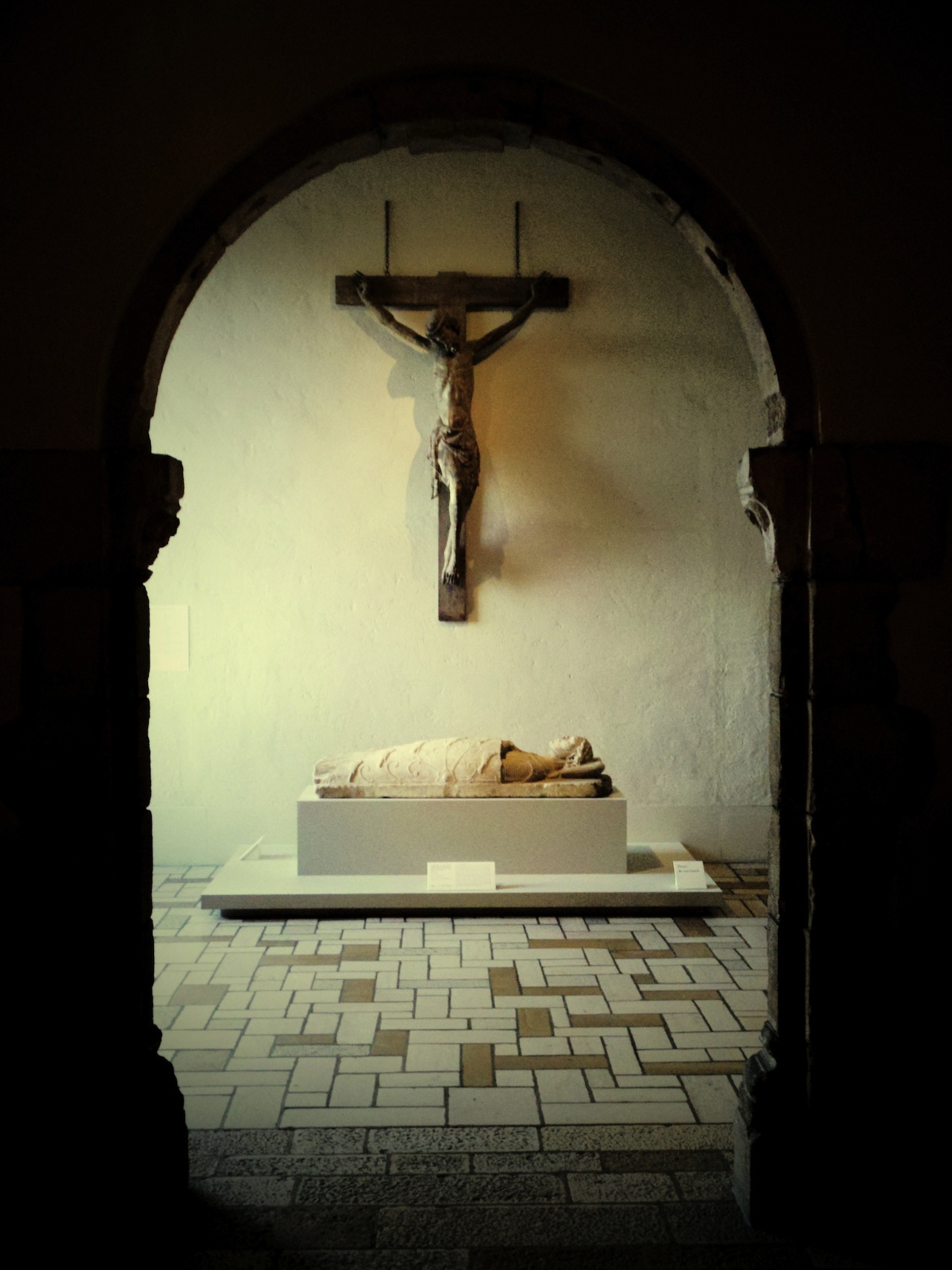
art-museum-crucifix-death-pmaIn Christian theology, there is a seemingly small thing that really influences so much of one’s theological outlook and even how they think they should live as a Christian.

Are you “Team Cross” or “Team Resurrection”?

Yeah, yeah, I know that the right answer is “both”, but really, most people tend to emphasize one more than the other.

What got me thinking about this was a Facebook post I saw on Easter evening. The poster said that the Resurrection was not when Jesus conquered sin and death. Instead, Jesus did that on the Cross, and the Resurrection was “simply” the “validation” of what Jesus did.

In other words, all that Jesus came to accomplish was done on Good Friday. God the Father saw it, thought it was awesome, so he went ahead and raised Jesus on Sunday.

In other other words, if the Resurrection never happened, nothing “essential” to salvation would be lost, merely the “proof” that it had been accomplished.

It really stuck with me, and no matter how much I tried to re-articulate it in my mind, give him the benefit of the doubt, or pick apart my own presuppositions, I really couldn’t shake how strongly I disagreed with this statement.

Continue reading

Palm Sunday: Future-Tense [photo sermon]


church-easter-tree

Continuing WordPress’ uncanny timing of photo challenges with the Christian Church calendar, this week’s theme is “Future-Tense“. In essence, they’re wanting pictures that anticipate something to come; something that’s being waited for; some future thing who’s presence is felt in the picture, even in its absence.

This is most appropriate today, as it’s Palm Sunday of 2013.

It takes some real significance for an event from the Bible to find itself as a major Church Holiday. Considering that, it can be odd that Palm Sunday is one of these: there’s nothing really unprecedented or special about it in and of itself.

There are other places in the gospels where Jesus is proclaimed king, proclaimed Messiah, prophecies are fulfilled, large groups believe in him, and even several times he enters Jerusalem. So what’s so special about this moment?

The future.
Continue reading

Reflections on Psalm 51: the People & their Fallen King [intro]


bathsheba-marc-chagallWhen it comes to talking about Repentance, there are few favorite passages to study than Psalm 51. As part of this year’s Lent series on Repentance, I’d like to spend the rest of this series exploring this Psalm verse-by-verse.

So today we begin. But not with verse 1. Instead we begin with that superscription found above it:

To the choirmaster. A Psalm of David, when Nathan the prophet went to him, after he had gone in to Bathsheba.

This is actually an important place to start. Most of the Hebrew writings we have outside of the Old Testament are pieces that were written to fill in gaps left in the biblical account. It seems the people of God have always had difficulties living with what God did not tell them.

Continue reading

Women & Church History: The Bad Reformation & the Good News {pt.3}


Silencing-Women-duct-tapeThis is a post in an on-going series on Women in the Church.

The past couple of days, we’ve been talking about the historical development of this whole “Women in Church Leadership” idea. in the first post, we talked about why this is so important, and in the second post, we discussed where this change in ideas concerning ordained female leadership happened. Today, let’s talk Reformation and concluding thoughts.

Continue reading

Women & Church History: the century we’re still recovering from {pt.2}


Dubay-lizglass-eyeThis is a post in an on-going series on Women in the Church.

Yesterday, I began talking about the history of Women in the early Church. Up front, I gave my primary source for information, this issue of Christian History Institute Magazine on “Women in the Early Church”, which I will quote from in this post. If you need more information, you can go there.

I also gave a brief sketch of my view: women were quite active in leadership in the first two-centuries of the Church, but come the 200s, some radical things began to change in the Church–things that still effect us today, especially as it pertains to women in ministry.

(Most of this material is comes from the excellent article “The Early Controversies Over Female Leadership” by Dr. Karen J. Torjesen.)
Continue reading

Church History: Where have the female leaders been? {pt1}


sandorfi-quo-vadis[This is a continuation of our on-going series on Women in the Church]

Update: Part 2 is now up.

First off, one of the main limitations of writing is the necessity of producing summary titles for what you write. This post should, more precisely, have the title “Where have all of the ordained, teaching, preaching, and leading female leaders in Church History been?” But I can only put so much in the title before it becomes absurd.

I say that because even complementarians (who don’t think women should be ordained) will freely acknowledge the valuable place women (in general) have had in the Church over the years. They simply think that, in spite of gifting or value, God has placed limits on who should lead his church in ordained, official ways. So…sorry for any confusion.

When it comes to the Bible and the contemporary benefits women in Church leadership could offer, I’m pretty comfortable, confident, and secure in my egalitarianism. I think it is a faithful, consistent, practical, and edifying view to hold, and I see evidence for it written and displayed all over the place.

And yet, I’m in the extreme minority, relative to Church History.
Continue reading