And….We All Have a New Pope! (Catholics Aren’t Crazy)


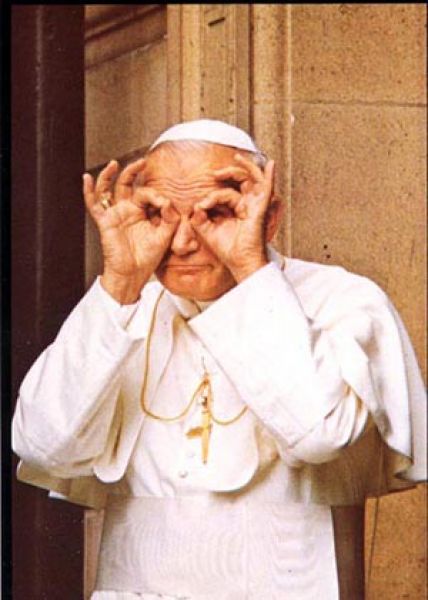
pope-funny-bigMere minutes ago, a new Pope emerged from the conclave in Rome after Pope Benedict’s surprising resignation several weeks ago. The new Pope is the cardinal formerly-known as Jorge Mario Bergoglio.

But now, he is Pope Francis.

Now, I am fully and securely a Protestant, as most of the readers of this blog are. But for those of us that find ourselves in that Protestant tradition, we often forget a little detail of that name: Protestant.

It means, literally, “the protesting ones”. We are “protest-ant” about many of the practices and teachings of the Catholic Church. But to “protest” something does not necessarily mean you are no longer a part of it.

This is why I describe myself, denominationally, as a “Protesting Catholic”. (Okay, I stole that from Austin Ricketts.)

And you should to.
Continue reading
The Story of Repentance: believing vs. achieving


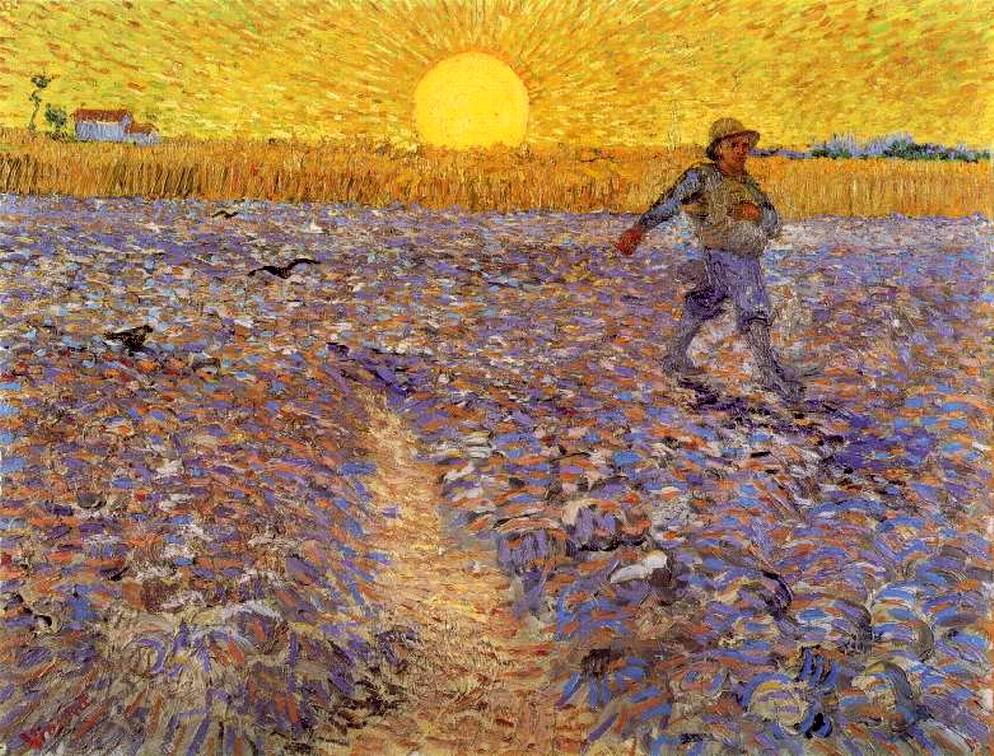
Van Gogh-Sower with Setting SunThis post is part of my 2013 Lent series: Reflections on Repentance.

I almost titled this post “theology in the service of real-life”.

The last time I wrote about repentance, I talked about the difficulties I have with some of the ways people in the Church talk about repentance. I then started researching the topic. And as I did, I found some amazingly helpful realizations about this in the Bible.

So today, I just wanted to take some time and explore this topic throughout the entire story of the scriptures. Hopefully, we can come to some conclusions about what repentance means for us today, and perhaps even some answers to our previous concerns in the last post.
Continue reading

Resurrection Gives Us Joy in Lent & Death


La-Pieta-IYes, as cliché as it is, I’m watching the new Bible mini-series on the History Channel. I’m actually enjoying it. A few things are odd (the ninja angel, for one), and they made some interesting choices on what to leave out (was the extended Sodom sequence really worth cutting out the entire Exodus story, Wilderness wandering, and golden calf rebellion?). But there is still a sense of ownership, that this is our story.

(Side note: for those of us that study the Bible and don’t necessarily think historicity is the highest purpose for which it was written, it’s encouraging to still feel that feeling of identity-formation when encountering our story–even when it’s seen as “just” a story.)

Anyway, a review of the show is not why I’m writing today. I just had a brief thought I wanted to share.

In Episode 1 of the mini-series, we see Pharaoh’s son die at the end of the plague sequence. Watching him carry the pale, lifeless body of his son, it reminded me of Michelangelo’s la Pieta (a version of which you can see above). It was actually quite moving, and I was surprised that I only realized now the sadness of this part of the story. Continue reading

Marveling in the Cross: Lost in the Details [photo sermon]


pma-cross-skull-pma

For several months now I’ve been doing the WordPress Weekly Photo Challenge. Honestly, I’ve gotten a little tired of that, so I’m going to start mixing it up with some weekly “photo sermons”, taking the weekly theme, picking an appropriate photo, and writing up a short meditation on the theme. We’ll see how it goes. This week’s theme is “Lost in the Details“.

One of my best (and oldest) friends is named David Schrott. He’s an incredible photographer, and an even more incredible man of God. He’s currently been spending an extended period of time back in his hometown of Lancaster, PA, recovering from surgery.

In this time of recovery, he’s only grown in his intimacy with God, his love as a friend, and the depth of his experience of spirituality. Recently, when I asked how he’s seemingly unlocked this door to the depths of the spirit and, as he puts it “longing for the resurrection in ways I never have”, he simply said this:

“Suffering! Without it, it is hard to long for anything but immediate pleasure.”

I love that guy.

Continue reading

Let the Female Pastor Reformation begin!


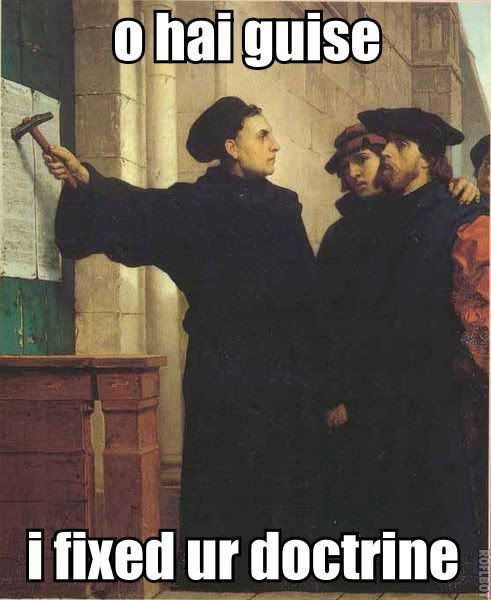
luther-95theses-humor-memeOn this blog, I currently have two running series I’m doing: “Reflections on Repentance” and “Women & the Church“. For these series, I’ve been doing a lot of reading and research on those topics.

For the Women in Ministry series, I’ve been researching what, for me, is the biggest thing that gives me pause in my own egalitarian view in support of female pastors: the complete dearth of women leaders throughout the history of the whole Christian church. With a couple thousand years now of godly men (and women) looking at the same Scriptures I am, why have the vast majority of them come to the same view limiting women’s role?

Well, that’s another post for another time, but rest assured, as I’ve been researching this, I feel I’ve satisfied my concerns in this area. But that’s not what this (mostly tongue-in-cheek) post is about.

For my research for the repentance series, I keep ending up at the Reformation and its leaders. This got me thinking, and doing some math…

Continue reading

Women’s Ordination is indeed the end of the world


Delaunay-City-Paris
We’ve spent a few weeks focusing on Genesis—the beginning of our story as Christians—and seeing what cues we can draw from it regarding our continuing discussion of women’s roles in churches. Having done that, I thought it might now be helpful to check out what implications the end of our story might hold for us.

After a few generations of bad (or incomplete) teaching, Western churches are, I think, reconnecting with the accurate Christian doctrine of heaven. The sense I get is that more and more of us are regaining the belief that the final heaven is not some abstract, ethereal, disembodied existence, but rather this material earth and these physical bodies renewed and re-imagined.
Continue reading

Male-Only Church Leadership: Blessing or Curse?


michaelangelo-adam-eve-eden-fall

In these discussions on women’s roles in church leadership, a favorite little one-off argument by Egalitarians (and a pretty darn good sound bite) is that the very idea of exclusive male headship is part of the curse laid upon humans in the Genesis Eden story. In Genesis 3, this is what God speaks over the woman as a curse in response to her sin:

“I will greatly increase your pangs in childbearing; in pain you shall bring forth children, yet your desire shall be for your husband, and he shall rule over you.”

I’ll be honest with you. I haven’t done the research on the Hebrew or scholarship on those lines to know exactly what these lines really might mean.

Honestly, both sides could use them. Conservatives could say that the curse is that women will desire the authority that God rightfully gave men. Egalitarians would say that man’s “rule” over women is the curse.
Continue reading

Women & the Church: What’s Adam & Eve got to do with it? [2]


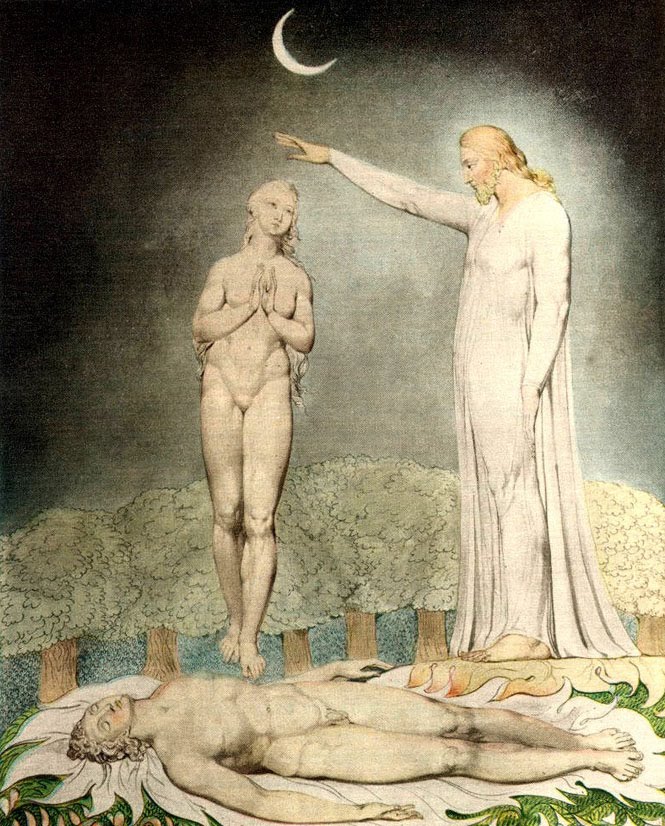
blake-creation-eveYesterday, in our on-going series on women in leadership roles in the church, we began looking at an argument often given by conservative complementarians when presented with the cultural context behind 1 Timothy, some of the most seemingly clear verses in scripture that limit a woman’s role in the church. Oftentimes, egalitarians offer the cultural context to show that these woman-limiting verses are in fact speaking to specific things going on at the time (as I did), rather than some eternal prohibition for all churches at all times.

The conservative response that we began looking at is when they say that the cultural context is all well and fine, but Paul’s foundation for what he says does not appear to be the immediate context at the time, but rather the very structure of creation itself. We looked at those verses to try and argue that this is not at all what Paul is doing in the text.
Continue reading

Women & the Church: What’s Adam & Eve got to do with it? [1]


durer-bw-adam-eve

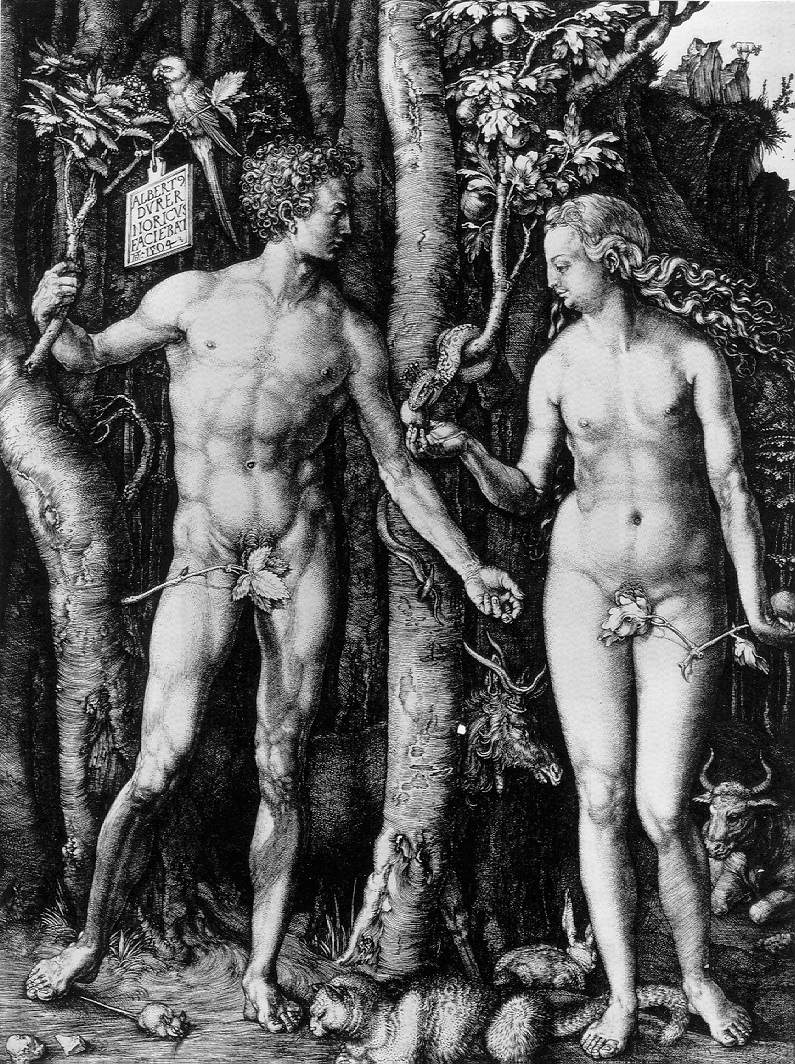
As I’ve been looking into these “Women in Ministry” discussions for this on-going series, they usually follow a similar pattern. Conservatives will point to some Bible verses, Egalitarians will point to the context (as I did in our last post), and then, at some point, the conservatives bring up this simple, yet logical and reasoned argument:

Yes, you can point to the cultural context all you want, but at the end of the day, Paul’s reason for what he says, is not the cultural context, but the very structure of pre-sin creation in which God created Adam first. This is something that’s true no matter the context.

Now, I’ve said repeatedly that my egalitarian beliefs come not from desire to move away from the Bible, but my attempts to be all the more obedient to it. And so, I want to take this argument as seriously as possible. I’ll attempt to do that in these posts.

As I started writing up the problems I had with this “creation-order” argument, it became so long, that I had to break it up into two posts. Today, we’ll focus on the particular Timothy passage in question and other related things that Paul writes. Tomorrow we’ll focus on the Genesis story itself to see what it might say to this.

The Timothy Passage

Continue reading

On Women Leaders in the Church: Timothy’s cultural context


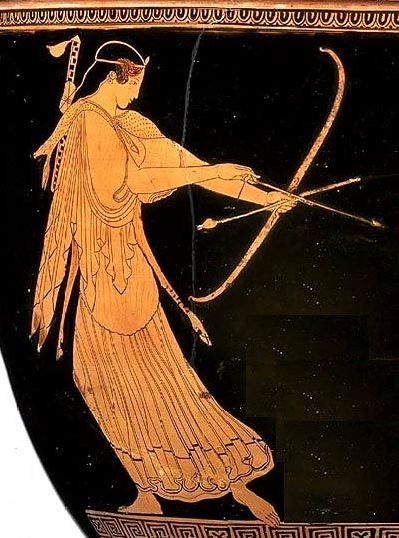
artemis-greek-urnFor many of the Christians that believe women are not to be ordained, authoritatively teach in churches, nor hold formal church leadership offices, 1 Timothy 2:8-14 is the first (and oftentimes the only) Bible text they throw out as a conversation-ending, slam dunk against people they feel are “re-writing” the Bible for their own ends.

When last we left our on-going series on women in the church, we talked about the text and translation of this passage. We talked about its history of mistranslation and how the seemingly best and most consistent translation offers us a different picture than the traditional one. Today, we’re going to pull back from the text itself to look at the culture and context behind the letter.

my thesis

I’ll give my view up front, so you can leave it, take it, or read on for why I land there. This post is a long one.
Continue reading

Epiphany: a great time to talk Magi & biblical errancy


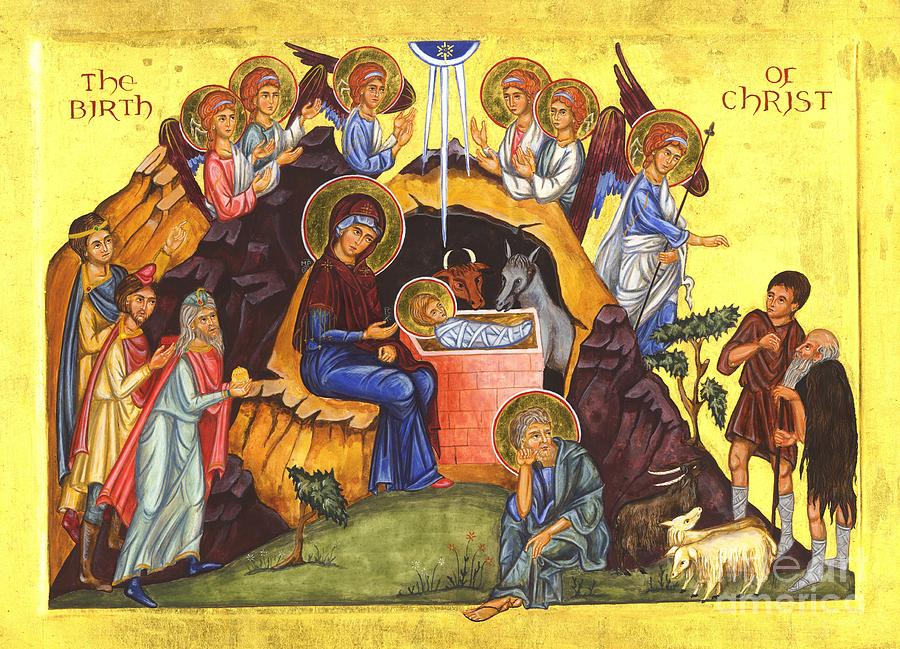
advent-nativity-icon This Church season of Epiphany primarily celebrates the coming of the wise men to see the young Jesus. Now think of the popular conceptions of the “wise men”. I imagine the picture that comes to mind is much like the one above: a quaint manger, farm animals, some shepherds, and the three wise men, presenting their gifts to the newborn Jesus.

I’m not sure how many of us know how wrong this is.

The wise men did not visit Jesus in the manger, their paths did not cross at all with the shepherds (that we know of), and, contrary to some of the most well-engrained church and musical traditions, their number is not given–“three” is just a guess. This guess is probably based on the fact that three gifts were offered (though the 6th-century Armenian Infancy Gospel, the source of the Western tradition of the wise men’s names and ethnicities, lists far more than just three gifts). The Eastern Church tradition even says it was twelve.

And yet, for over a thousand years, on into the present day, these traditions concerning the Wise Men have persisted. We know the sources of these traditions, we know when they became popularized, and we know how they’ve been used in Christian preaching and church life through the centuries. Every Advent season, even the most cursory drive in the suburbs will offer nativity scenes peppered with three wise men adoring the manger-laden Christ.

This reminded me of Jannes and Jambres.
Continue reading

2 amazing hours on the Christian end of the world


A few people have asked about my blogging absence (I have felt honored that they have noticed!) Anyway, I’ve been sick, first with a stomach flu, and now with an upper-respiratory thing. I lost my voice last week and am only now recovering it. It’s weird; I hardly ever get sick.

Anyway, this has kept me from blogging, but it’s given me the chance to watch and read some amazing things (about which I’m sure I’ll write more in the weeks to come). One of the highlights of my time was this video, An Evening of Eschatology, hosted by Bethlehem Baptist Church and moderated by John Piper (here’s some background to this talk):

This is an amazing discussion, and very insightful for those of us Christians that either have passionate views on the end of the world or don’t think about it much (as a friend used to say, “I’m a ‘pan-millennialist’: I believe in the end it’ll all just pan out.”).
Continue reading

PSA: BibleGateway.com now has the NRSV Bible for free


For those that care, the website BibleGateway.com now offers the New Revised Standard Version (NRSV) [Wikipedia] as one of their many English translation options.

If you’re looking for a Bible verse or passage, or if you do lots of web writing about the Bible and need a good online Bible with lots of options, I’ve found BibleGatweay.com to be the best, especially for copying-and-pasting elsewhere.

This is also the most widely-used Bible site that now has access to this translation of the Bible. Before this, I couldn’t find it anywhere free online except at a weird, obscure site or two.

So why have I been eager for this translation (and why should you be)? The NRSV is the most ecumenically-used translation in the English-speaking world. It’s the standard translation used by Catholics, Anglicans, many Eastern Orthodox, and my own church. It’s also the standard translation used in academic Bible study.

And so, even though I still have a soft spot for the ESV, I like feeling like I’m swimming in the same stream as my church leadership (and academia, but that’s not as big a deal). And so, I prefer the ESV or the NRSV for in-depth Bible study, while I’m a lot more flexible in my more casual Bible reading.

So compare some versions and see if you like the NRSV yourself. Hopefully this new availability of this resource makes your continued engagement with the Bible all the more fruitful and exciting.

And so

Herman Bavinck on the Advent Election of Mary [QUOTE]


In a comment on yesterday’s post on Mary, occasional blog contributor Austin Ricketts posted this quote, another gem by Dutch Reformed theologian Herman Bavinck:

[the] entire preparation of the incarnation in the preceding centuries is concentrated, as it were, and completed in the election and favoring of Mary as mother of Jesus. Mary is the blessed one among women. She received an honor bestowed to no other creature. In the undeserved favor granted her, she far exceeds all other people and all other angels. Rome was right in maintaining this; those who deny it are not taking the incarnation of God seriously…Among all Protestants who confess the incarnation of the Word, Mary is held in high esteem. She was chosen and prepared by God to be the mother of his Son. She was the favored one among women. Christ himself desired her to be his mother, who conceived him by the Holy Spirit, who carried him beneath her heart, who nursed him at her breast, who instructed him in the Scriptures, in whom, in a word, the preparation of the incarnation was completed.

Reformed Dogmatics, Vol. 3, pp. 274; 281-282

Advent & Mary: Ordained as Prophetess, Priestess, & Queen


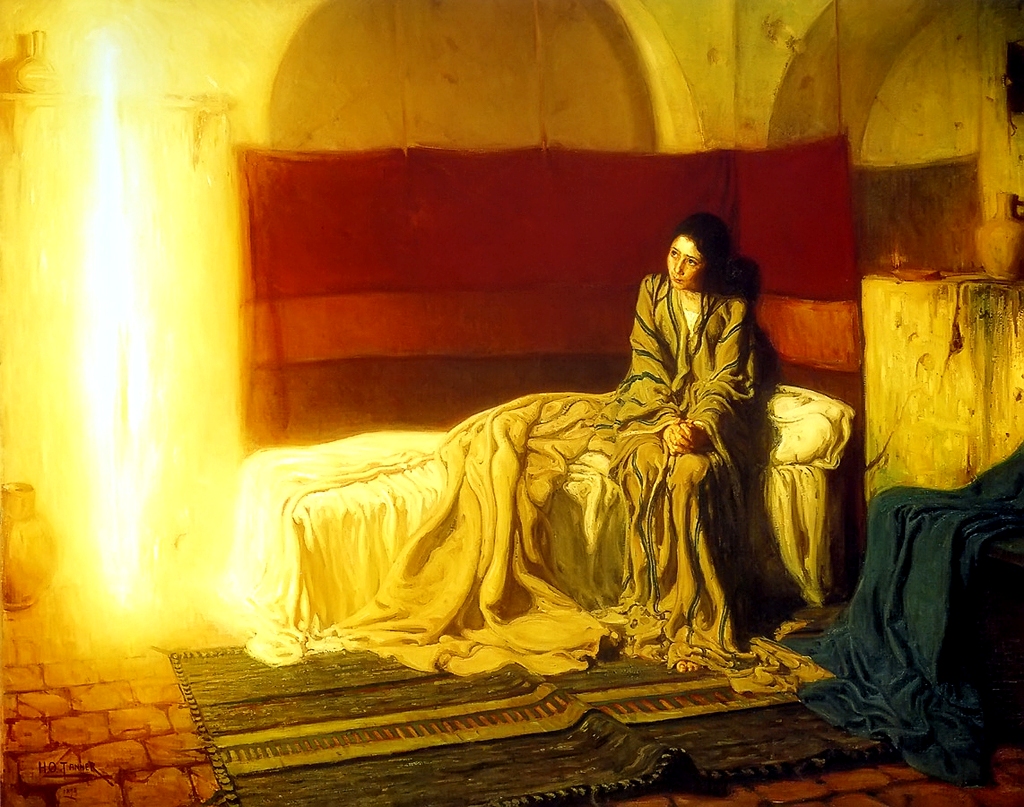
Tanner-the-anunciation-mary

This Advent, we’re seeing how this season affects parts of our lives we usually don’t associate with it. Follow the series here. This post is also filed in the series “Catholics Aren’t Crazy” and “Women Leading Stuff in Churches“.

If a woman is revered by the church for giving the faithful their savior, then surely women are good enough for leadership roles in the church to save it. –Vishwanath Ayengar

I ran across that quote in some letters to the editor of Newsweek a couple of years back in response to a cover story arguing that if women were ordained as priests in the Catholic Church, there wouldn’t have been any sex abuse scandal. I don’t know if that’s true, but the quote is insightful and (hopefully) thought-provoking.

I can hear conservatives now: Well, God used a donkey to speak! He used Caiaphas the high priest to unknowingly prophesy about Jesus before sentencing him to death! He used Judas to bring about Christ’s crucifixion and therefore our salvation! It doesn’t mean that they were fit to be ordained pastors!

Yeah, yeah, I get it. This post isn’t necessarily meant as a “proof” or “defense” of women’s place in ministry (though it’s a part of my on-going series on the topic). I just want to revel a bit in some divine mystery. Can we all just put our swords down and marvel?
Continue reading