Evil & the Essence of God {1}: the discussion


Update: Part 2 is now up.

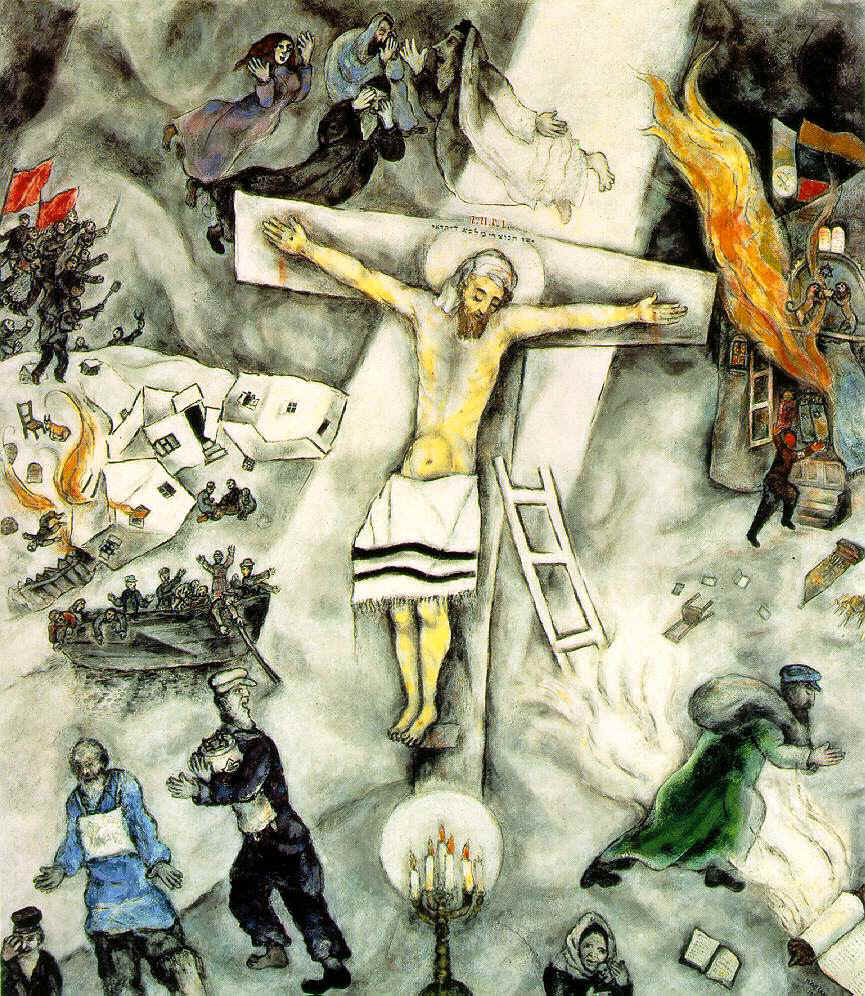
Yesterday, I wrote some meditations on the world’s suffering and evil in light of the incredible Beauty I saw this past weekend on a trip to western Pennsylvania. One of my very best friends, Austin (who’s written for this site before), appreciated the post but had some thoughts on some of the theological implications of my thinking, and talked about where/how he differed. I love his mind (and his heart), and I see where he’s coming from, but it’s a place I can’t go. I want to offer you all his comment, and then my perspective on all of this, hoping to offer all of you some things to think about and a space to discuss anything that strikes you as off.

Continue reading

The Way Out: a modern re-telling of Exodus (a scene) | {story#19}


This is an original fiction piece written for StoryADay September. I’m usually very insistent that a piece should be able to stand on its own with no explanation, but this being a random scene from a play, I’ll tell you what you need to know. This is from an original play called “The Way Out”. It’s a modern re-telling of the biblical Exodus. “Christopher” is the Moses in this story, “Evan” is his brother Aaron, and “Joshua” is Yahweh. Even grew up a slave in the nation and Chris was raised in the King’s house. After killing a man, Chris was exiled and met his wife, before returning to help set these slaves free. Read more about StoryADay & follow here.
________________________________

CHRISTOPHER

You have no idea what sort of state I was in back then! Do you know what it’s like to kill a man? To feel the part of you that awakens after watching the eyes of a man grow dim beneath the weight of your own anger? Your own hands? I was beside myself! I couldn’t look at my own reflection for a month! I had no idea who I was anymore. Heck, I still don’t even know half the time. There is no way you could have any idea what that time was like!

Continue reading

The Best Bible Resource I’ve Ever Read [casual fri]


To do this Bible Class that has consumed the past few months of my life (and this blog–I swear I’ll stop talking about it soon), I had to read a lot of stuff, including these (as well as their New testament counterparts). I checked out stuff from the Philadelphia library, and watched a bunch of lectures from iTunesU (especially these). I looked through commentaries and websites and articles and handbooks and sermons.

In other words, I at least glanced over a lot.

But there was one resource that I found more helpful, clear, and amazing than any other Bible resource I’ve ever found. No exaggeration. No hyperbole. I’m serious.

It’s a pair of textbooks (one on the Old Testament, one on the New, one combined with both) written by a theologian I had never heard of before. his name is John Drane (here’s his painfully poor-designed website as well). Yes, textbooks. And I read most of the Old Testament one and all of the New Testament one.

Continue reading

Class 6: NT Letters, Revelation, & The Bible in Worship (WE’RE DONE!)


This week was the last week in the six-week Bible Survey class I’m been doing at my church.

It’s been an honor to do this class, and I feel like this last one went especially well. Others seemed to find it genuinely helpful.

We ended our time in this class by talking for a little bit about how we can use the Bible–and all the information we just gleaned these past weeks–in our own, personal, spiritual lives.

To conclude the class, this Saturday we will be going to University of Pennsylvania Museum of Archaeology and Anthropology. You really won’t want to miss this. I’ll be putting a post up on this tomorrow.

For those that have followed in class and online, thank you so much for doing so. It was such an honor to be able to do this class, and I can’t believe I was given the time and grace to do it.

I hope that these resources are found to be helpful to those that invest their time into them; and that they draw each of you into a greater knowledge, love, and desire for our God as He meets us in our Scriptures.

And lastly, over the next months, I will be compiling all of these notes, as well as other essays I’ve written on the Bible in the past and self-publishing a book in both print and electronic forms. If you think about it, please pray for me. I’m starting to see that self-publishing is a lot more costly and complicated than I had originally thought.

This Lecture Covers:

  • A chronological survey of the contents and background of Paul’s letters
  • Discussion of the contents and background of the other letters of the  New Testament
  • A talk about that crowd-favorite, Revelation. We talked about how it fits into the greater story of Scripture, how it’s often misread, how to properly read it, and it’s contents and background
  • How one should approach the Bible to build up their spiritual life
  • Practical methods people can employ to know God through the Scriptures

**Side Note: twice in the audio of this lecture, I refer to Galatians and James as books that may each have been the “first book of the Bible written”. I meant to say “New Testament”, not “Bible”. Sorry.**

Download: [Audio] [Notes] Continue reading

How do you use the Bible and Bible knowledge in your spiritual life? [OPEN MIC]


This weekend, I will be teaching the last class in my six-week Bible Survey class at my church. I want to end the class talking about how to use the Bible (and especially the knowledge gleaned from the class) in one’s personal (and corporate) spiritual life. How does the Bible actually function in a believer’s life to cultivate a dynamic, deep, and intimate relationship with Christ and the Holy Spirit? I have my own thoughts on this, but I want to hear from all of you. So here are some questions:

  • Do more Bible “facts” actually have a direct impact on your spiritual engagement with God? In other words, has studying the backgrounds of the Bible ever led to meeting God? How or why not?
  • What practical methods of immersing oneself in Scripture have been most fruitful to you spiritually?
  • How might people use the tools of Biblical Studies (commentaries, etc.) to treat the Bible formationally, rather than merely informationally?
  • For those that are oriented in such a way that they constantly want to know the context, background, history, date, etc. of Scripture, how have you been able to quiet all these questions in order to meet God?
  • Similarly, for those more “intellectually”-oriented, how have you been able to move beyond the intellect to engage other parts of yourself with Scripture?
  • How do we move beyond facts of Scripture to the Person of Scripture?
  • If (as I said in the first class, and other theologians have said) the Bible only “becomes” the Word of God as the Holy Spirit meets us during our engagement with it, what have been the most effective practical ways that you have invited the Holy Spirit into your Bible Study time?
  • In your experience, what have been some of the pitfalls in other approaches that are commonly endorsed by the contemporary church, or what are some of the realities that aren’t talked about often?
  • What would you say if you were me (haha)?

Feel free to respond below, in a Facebook comment, email, text, or phone call. Thanks.

Class 5: Intertestament, pt. 2; NT Intro; Gospels; Acts


This week was the fifth week in the six-week Bible Survey class I’m doing at my church.

And wow, we covered a lot in the class. But still, this class probably had the greatest percentage of material I had prepared that was not actually touched on in the talk. This makes the manuscript that much more full of extra material.

Covering the topics above, I have 35 pages of material below.

You may have noticed that I never actually finished the materials I talked about last week. Well, entering into an entirely new testament of the Bible put me in a mindset that I just couldn’t go back to finish up writing about every one of the Prophets. I’ll do it someday. I promise.

Lastly, mark your calendars for August 25th, where we will be going to University of Pennsylvania Museum of Archaeology and Anthropology. You really won’t want to miss this. Details to come next week.

This Lecture Covers:

  • A discussion of the Political and Religious history between the Old and New Testaments
  • An Introduction to the Background of the New Testament
  • Background and context of Jesus, his upbringing, and his life
  • Survey of the content and background of the Gospels.
  • An extensive and in-depth look at the book of Acts.

Download: [Audio] [Notes] Continue reading

Class 4: Prophets, pt. 2; Wisdom Books; & Intertestamental Period, pt. 1


This week was the fourth week in the six-week Bible Survey class I’m doing at my church.

We didn’t quite get to the Introduction of the New Testament like I had planned. This class was a bit different than other ones. Rather than focusing on a lot fo content of each book, this week was mostly a “tour” of these sections of the Bible and History, with some “highlights” along the way. The main point was to give people a bigger picture of these things to help them read the Bible themselves.

Just like last week, my notes are very incomplete. Most everything I said is in there, but I definitely want to provide a lot more in the notes than I say–and that hasn’t been filled in for most of the books so far. I will be spending the next two weeks filling that in. Once I’m done, I’ll let you all know. Thanks for your patience.

Lastly, I know I did a very poor job at telling the story of the Intertestamental history. I will try this again and condense it more in the next class. I will be much better prepared then.

This Lecture Covers:

  • Principles to keep in mind to help when reading the Prophetic books
  • Highlights from the Prophetic Books
  • Survey of the content and some of the background of the Wisdom Books of the Old Testament, with a special focus on the content of Job
  • Survey of the History between the Old Testament and New

Download: [Audio] [Notes] Continue reading

What do we make of the atrocities of the Old Testament?


This is a slightly edited version of an excursus I wrote in this week’s notes for the Bible Survey Class I’ve been teaching at my church. Follow that link for more information on the class. Also, I’m well-aware that the second half of this is exactly the “angle” talked about in the venerable Pete Enns’ recent blog post. I wrote this before he posted that, but still, I wanted to put it up on the off-chance this articulation might be helpful to others.

In the books of Numbers and Joshua, God commands the Israelites to commit genocide on many different people, including their women and children. He also commands them to forcibly enslave others. And in still another story, he commands Moses to take the remaining virgins of this particular people of which they disobediently did not kill all, and divide them evenly among the soldiers and the “rest of the Israelites”. We can only imagine what for.

A few quick thoughts:

Continue reading

Class 3: The Historical Books & Prophets, pt. 1


This week was the third week in the six-week Bible Survey class I’m doing at my church.

And yes, we actually covered all the books of the Old Testament from Joshua to Nehemiah, did an intro to the Prophets, and had a brief discussion on the ethical problems with the “Old Testament God” in an hour.

You can find a small article I wrote on those atrocities and “ethical dilemmas” of the Old Testament attached to the end of the Notes below.

At the time of this writing, I’m not quite done with the notes, but I wanted to get the lecture audio to everyone. So, below you will find an incomplete version of the notes. I will upload a revised version later today (or tonight) with everything else filled in. I’ll update this post when that happens, as well as the Scribd doc below.

Also, as I posted about earlier today, as part of this class we will be going to the Dead Sea Scrolls exhibit this Saturday in Philadelphia. There are also discounted tickets available. Check the link, and I hope to see you there!

This Lecture Covers:

  • A discussion of the Deuteronomistic and Priestly Histories of the Old Testament
  • Survey of the content and background of the Historical Books of the Old Testament from Joshua to Nehemiah
  • An general introduction to the Prophets
  • A discussion concerning the atrocities committed in God’s name by the Israelites in Joshua and Numbers

Download: [Audio] [Notes] Continue reading

The Gospel Coalition & Sex as Conquest: Jared Wilson, you’re better than this {1}


Update: Part 2 is up, engaging with the issue itself and The Gospel Coalition.

Fine… I’ll throw my two cents in.

A few days ago, Jared Wilson, trying to speak to the appeal of the S&M-tinged book 50 Shades of Grey, posted an excerpt from the book Fidelity (which I have read, so I feel I can speak to this) by the always-good-for-a-sound bite Douglas Wilson. Here’s how I’d summarize his ultimate point:

Modern humans have rebelled against God’s good and correct design of male authority and female submission to that authority. But, as people made in the Image of God, we have deep longings for the way God has structured reality to work best. And so, even when we reject God’s gracious version of gender relations, that desire is still there and will thus be corrupted and express itself in things like rape, pornography, and thinking things like 50 Shades of Grey is appealing.

really don’t think either of them would think I am mischaracterizing them here. Both Wilsons involved in this equation clearly intended in their writing to promote what they believe is a beautiful synchronicity between male and female in which both fluorish.

And yet the blogosphere blew up over this.
Continue reading

Some critical words for the Left on Gay Reparative Therapy (ii)


Update II: I posted some important final words on these posts.

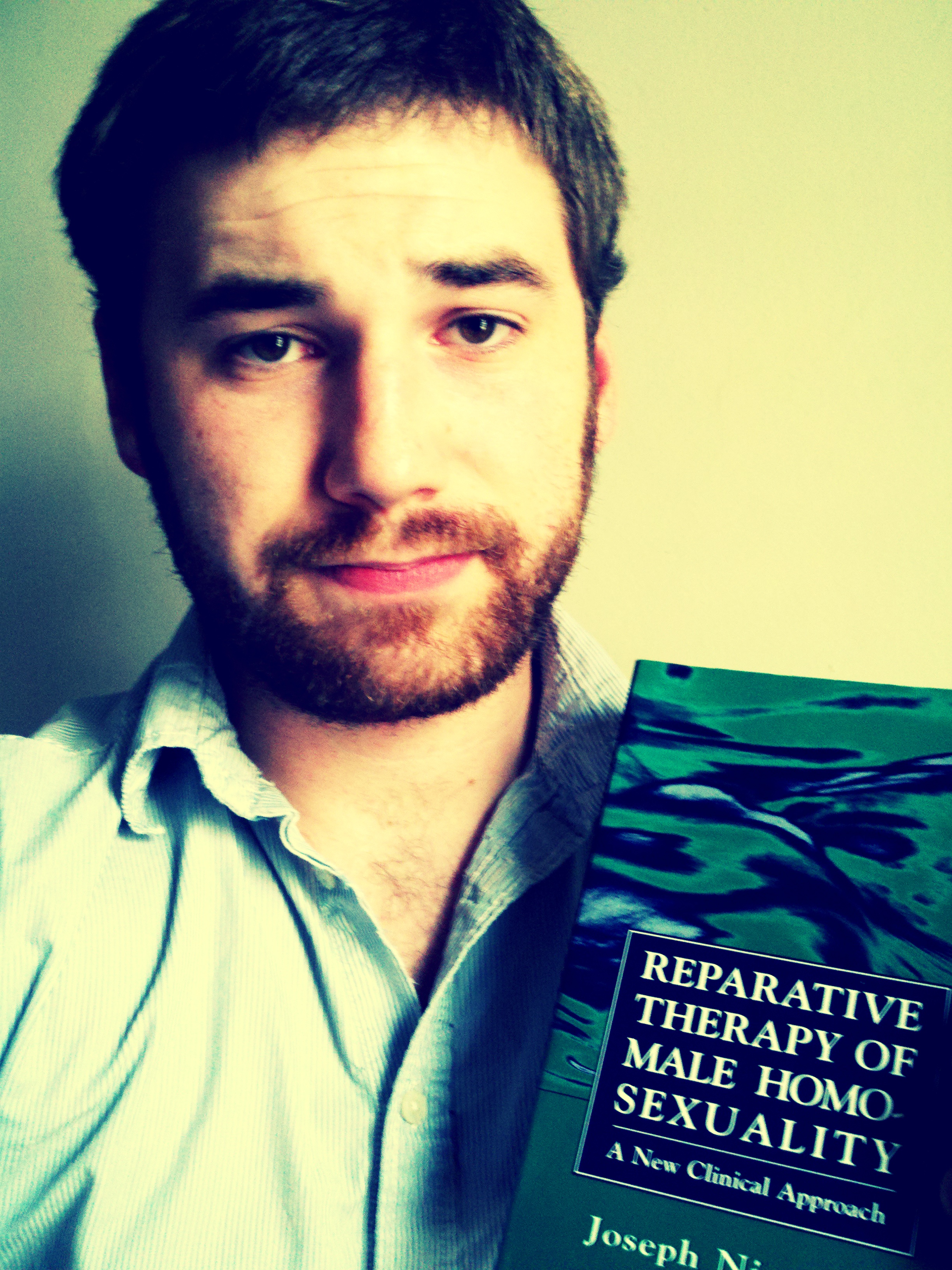
Yesterday I began giving some of my thoughts on Exodus International‘s recent repudiation of gay “Conversion Therapy” that was supposed to have “cured” gays of their homosexuality. I began by talking about my experience reading the primary text on this type of therapy in college, and then I criticized some of the common thinking of those on the more conservative side of the spectrum when it comes to this topic, especially how Evangelicals have reacted to Exodus International’s President, Alan Chambers. I also wrote some further thoughts responding to some questions about “homosexuals ‘persisting’ in their ‘sin'” (Update: I clarified some thoughts on that post).

But today, I’ve got some words for the Left…
Continue reading

some brief thoughts on “willful persistence in sin” & homosexuality


Update III: I posted some final thoughts on these posts.

Update II: In some commenting I did on facebook, I feel I communicated myself more clearly on a couple of issues than I did on this post. So, below, you’ll find those clearer comments, edited for your consideration.

Update: The second and final part of these posts is up.

In response to my post earlier today on Exodus International’s decision to move away from “conversion therapy” of homosexuals, in which I criticized many more conservative reactions (don’t worry, you progressives will get your due tomorrow, haha). A couple of comments, messages, and such have asked me about that classic Evangelical formulation that homosexuals that “persist in their sin” or “walk in deliberate willful disobedience” cannot be “saved”.  (This idea is based on some parts of 1 John, but that application of those verses has too many interpretive issues to go into here, as I type on my phone. Suffice it to say, though, that it’s a bad application and doesn’t naturally flow from the text).

Anyway, back to the question.

Life is much more complicated than those simplistic categories of “willful”, “deliberate”, and “persistent” (and “sin”, frankly). Being in counseling myself, and being a counselor, this whole “willful disobedience” thing is much grayer than that articulation implies.

What do you do with pastors that are irresponsible in their preaching and “pastoring”, and even in light of SO many other believers telling them they are wrong, disobedient, harmful, and sinfully relating to their people, they “wilfully persist” in that? What about all of us Christians that “willfully persist” in driving even 5 mph above the speed limit? What about the person in the church that never stops gossiping, even in spite of sitting in sermon after sermon on the topic? Or all the southern and midwestern christians that “wilfully persist” in their gluttony?
Continue reading

Exodus International is Right on Gay Reparative Therapy (i)


Update III: I wrote some final thoughts on these posts.

Update II: The second part of this post is up.

Update: I wrote some brief thoughts on a frequent reply I’ve received to this post: “what about gays that are wilfully and persistently disobedient in their sin?” Check it out.

Why on earth am I writing such lose-lose posts as these? I have no idea. Well, here we go.

Last week, Exodus International, one of the biggest and most-well-known Evangelical ministries to homosexuals, came out against what’s called “Reparative Therapy” or “Conversion Therapy”. The New York Times had a big write-up on it (as well as NPR) and an interview with Alan Chambers, the President of Exodus International. And now the whole news cycle is all a-flutter over this. Right when I think the story is dead, I see another headline about “rifts” forming in the Evangelical community and such.

Reading these articles has made me so frustrated with both the Right and the Left in their treatment of this discussion. There’s so much to say, I apologize for the lack of flow or organization that follows.

There are some really important things that seem to be getting lost in this discussion–on both sides.

Continue reading

Class 2: The Rest of the Pentateuch (from Exodus to Deuteronomy)


This week was the second week in the six-week Bible Survey class I’m doing at my church. We went through the rest of the Pentateuch, or more specifically, Exodus through Deuteronomy. I was originally hoping to do all the historical books of the Bible, then I was just hoping to get through Joshua. I did neither. We just got to Deuteronomy. But that will be okay.

In the recording, there’s also a brief discussion we ended up having on the importance of historicty and the Old Testament–a topic that’s only going to more of issue as we move forward in this class. Be sure to listen and get in on the discussion! You can follow the class on the class page above.

**Remember, we have next week off, so the next lecture is on 7/22, with our first field trip on 7/28.**

This Lecture Covers:

  • Review of the foundational ideas of the Bible we talked about last week
  • A more refined response on my part on the doctrine of “Revelation”
  • Survey of the content, background, and application of Exodus through Deuteronomy
  • Discussion concerning the historicity of the Old Testament and its importance

Download: [Audio] [Notes] Continue reading

Class 1: The Bible & it’s Story, OT Intro, & Genesis


This past week, I started the Bible Survey Class I mentioned earlier today. It’s a six-week class going through a theology and history of the Bible and its contents, with an emphasis on these facts helping to build up the spiritual life of Christians. It also goes into a lot of the historical development and issues behind the Bible, so it could also be of interest to non-Christians. You can follow the class on the class page above.

This Lecture Covers:

  • What is the Bible?
  • What is Revelation?
  • The History of Israel
  • The History of the Old Testament
  • Genesis: Contents, Background, and relevance to Christians

Download: [Audio] [Notes]

[audio https://prodigalpaul.com/Bible%20Survey/Bible%20Survey%201-Intro-OT-Genesis.mp3]