Bible Survey Class // liberti church center city


Update: I have the first lecture up.

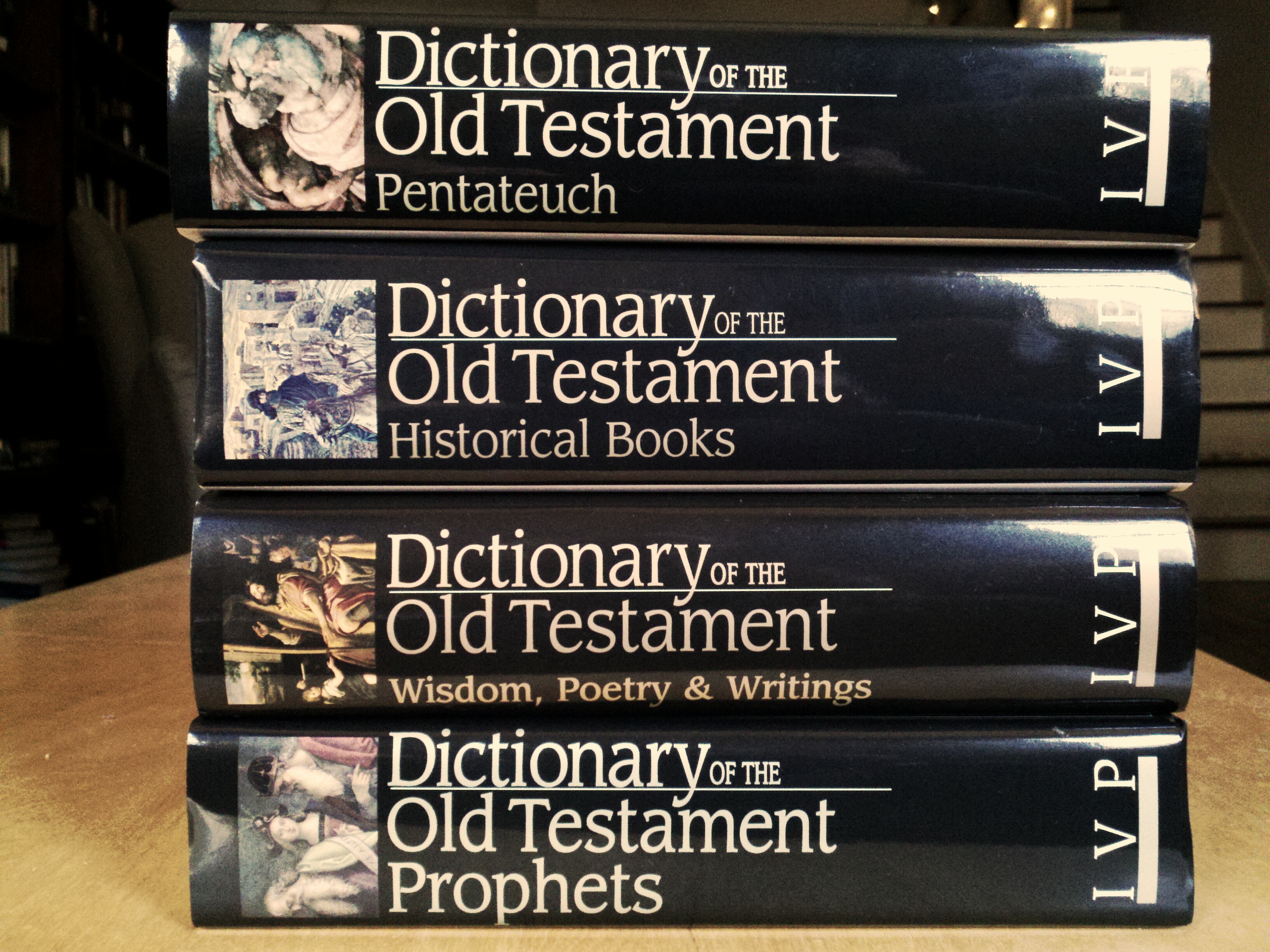
For those interested, I have been given the opportunity to serve at my church this summer by teaching a six-week long Survey of the Bible class. It’s been super fun getting back into all my old seminary books (as well as getting some new ones).

In the class, we’ll go through a theology of the Bible, the history and background of the Bible, as well as go through each of the books of the Bible. In the last class, we’ll talk about how to use this knowledge and the Bible itself to cultivate an actual life of worship and  devotion. We will also taking two “field trips”. One to see the Dead Sea Scrolls at the Franklin Institute, the other to the Penn Museum of Archaeology and Anthropology.

We’ll be recording the lectures, and I’ll post both the audio and my manuscripts on this blog for your edification (hopefully). So feel free to take a look at the official page above for the Bible Survey Class.

Be sure to question, counter, encourage, and ask me on the posts for each of these posts.

Also, if you’re in Philly on Sundays through July and August, please feel free to stop by. We”ll be doing these classes at liberti church: center city from am to pm, after church, at 17th and Sansom in center city Philadelphia.

The first class audio and manuscript will be going up later today so check back!

Uh-oh (a Post-Script to my previous post on Moses)


image

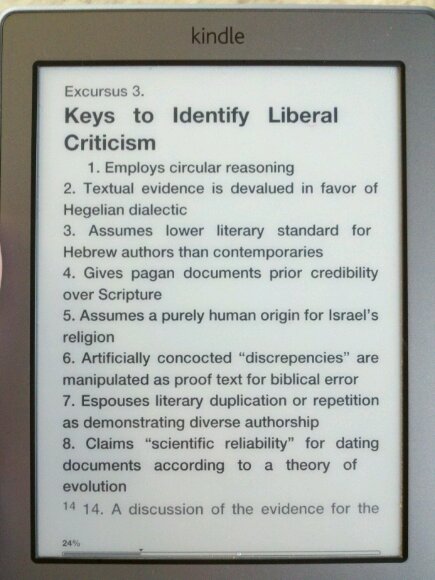
I just reached this part in the book I referenced in my post earlier on Mosaic authorship of the Pentateuch. This book was somewhat challenging the Documentary Hypothesis in my mind. I thought this book, in its recounting of Documentarians, was pretty fair and not too blindly fundamentalistic. But, now that he has turned from documenting the development of the field to laying out his own thoughts, I see I was wrong. Crap.

Posted from WordPress for Android on my Droid X

The Pentateuch: Moses vs. the Documentary Hypothesis [OPEN MIC]


imageUpdate: I realized I was wrong.

Okay, for many of you, this will seem silly and inconsequential; others will find it blasphemous. But bear with me for this quick post.

Starting in a few weeks, I’ll be teaching a survey of the Bible class through the summer at my church (I’m going to try and record it and post it here each week). To prep for this, I’ve been delving back into seminary-land, reading about 12 different OT Surveys, OT intros, and Pentateuchal commentaries to get ready for just the Intro to the Old Testament and Pentateuch parts.

And of course, this brings up the issue of the authorship of the Old Testament. Honestly, I don’t plan on going more than 2 minutes on the topic in this class, but I want that two minutes to be fair, informed, helpful, and above all, edifying to the people in the room. I want people walking away understanding that godly people disagree on this stuff and why they do. I don’t want to caricature and criticize unnecessarily.

The main issue I’m working through is what part Moses (or any other pre-10,000 B.C. ancient authors/editors/redactors) had in writing the Pentateuch.

Continue reading

MUST-READ: “Why I Will Not Divorce the Bible” by Jared Byas


My fellow former-Westminsterian (and co-author of a book I plugged a few weeks ago), Jared Byas, just posted an incredible blog post on his blog, Seeking the Good & Claiming it for the Kingdom. The post is called “Why I Will Not Divorce the Bible” and he articulates in such clear prose and winsome graciousness many of the thoughts and perspectives I have when engaging the Bible and then turning to engage the world around me.

Byas writes about how Evangelicals and theological “progressives” both end up devaluing the Bible and not truly respecting it or being “married” to it. He does a great job of exposing the reductionism of both sides as they use various techniques to keep the Bible at arm’s length so they don’t really have to deal with it as it is. (I’ve written similarly before.)
Continue reading

Pentecost is Coming: on Law & Spirit (p.s. Easter is forever.)


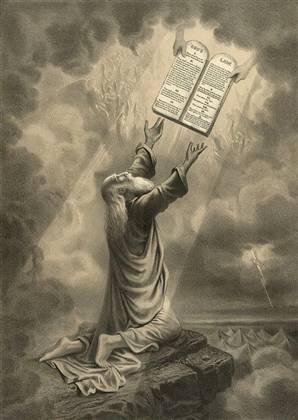
On the night of Passover, a lamb was killed so that God’s people would live. Fifty days later, God offered his law to his people–a picture of who he was, a mark of who his people would be, and the equipping of his people for the purposes God had for them.

And that’s the New Testament version.

Easter officially comes to an end this Sunday. Then comes Pentecost, the season in which we celebrate the Holy Spirit falling on the apostles, fifty days after Jesus’ death (hence the name Penta-cost). This day is celebrated as the “birthday” of the Church. Jesus had told the disciples to go out into the world ministering this Gospel to the world, but first, to wait. What would be so important as to put the brakes on the mission of God in the world?

The Holy Spirit.
Continue reading

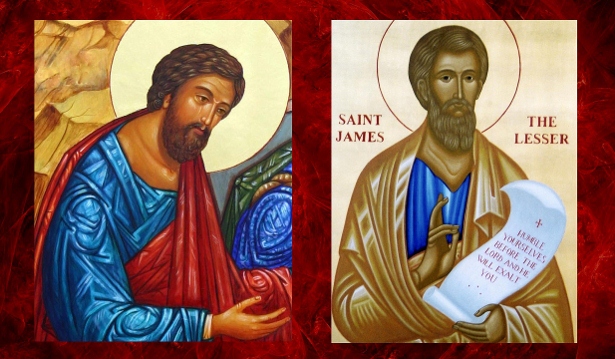
a prayer, a creed, and some history for the Holy Day of Apostles Philip & James


prayer.

Almighty God, who gave to your apostles Philip and James grace and strength to bear witness to the truth: Grant that we, being mindful of their victory of faith, may glorify in life and death the Name of our Lord Jesus Christ; who lives and reigns with you and the Holy Spirit, one God, now and for ever. Amen.
(from the Book of Common Prayer)

apostles’ creed.

I believe in God, the Father almighty, creator of heaven and earth.

I believe in Jesus Christ, his only son, our Lord.
He was conceived by the power of the Holy Spirit and born of the Virgin Mary.
He suffered under Pontius Pilate, was crucified, died, and was buried.
He descended to the dead. On the third day he rose again.
He ascended into heaven, and is seated at the right hand of the Father.
He will come again to judge the living and the dead.

I believe in the Holy Spirit, the holy catholic Church, the communion of saints, the forgiveness of sins, the resurrection of the body, and the life everlasting. Amen.
Continue reading

Yep. Still Easter. (and you’re already Resurrected)


As I wrote a couple of weeks ago, it’s still Easter. Yesterday was only the fourth Sunday of Easter (out of seven).

We’re only half-way through Easter!

The fundamental thing happening at the Resurrection was this: God was ushering in the first part of what would be called the “New Creation”. We usually think of something being “resurrected” as being “brought back”, but what Jesus did was far more than simply moving the clock backwards and rising again. In a sense, he was instead  “brought forward.

As my pastor loves to say, “Jesus is God’s future in our present”. Or, as Eugene Peterson put it in The Message translation, Jesus is “leading the resurrection parade” for the rest of us (I’ve always loved that image).

But how do we personally relate to this Resurrection/New Creation now? When I think of “Resurrection” and “New Creation”, what usually comes to my mind is Jesus, the World being glorified, institutions being made just, a bunch of future stuff that I’ll participate in, and my role in ushering in New Creation; I don’t so much think about my participating in it right now in the present.
Continue reading

READ THIS BOOK: “Genesis For Normal People” by Peter Enns & Jared Byas


A theologian whom I respect and a professor with whom I went to seminary have teamed up to offer a really great book on the first book of the Bible. Genesis for Normal People: A Guide to the Most Controversial, Misunderstood, and Abused Book of the Bible is a walk-through of Genesis following its themes and history. They open with these words:

Genesis is an ancient story. This may sound like an obvious or even patronizing way to begin. Of course it’s an ancient story. But once we look at what this means, that short phrase might be the most important thing to remember about Genesis. It will guide the rest of this book, showing us how to approach Genesis and what we should expect from it.

For many, the opening book of the Bible is a little confusing. It reads strangely, it doesn’t “sound” like any other book of the Bible, and, as Christians, we don’t know why we would even want to read it (except maybe for the first few chapters, but even those have a bunch of problems of their own).

Ever wondered what a sane, intelligent, and faithful understanding of Genesis would be in light of the findings of science or history? Ever pondered what the relationship between Adam and Darwin might look like? Have you ever been confused by a random history channel special that cast doubt on some of the stuff in Genesis? Ever tried to read the darn book only to only to ask yourself why you started to in the first place? Do you want to know how it connects to the rest of the Bible? Would you want all this talked about and explained in everyday terms with little prior biblical or theological knowledge needed?

Well, this is the book for you. (If you’re still skeptical, you can read a wonderfully comprehensive review of the book here.)

A quick note for any atheists or skeptics that find themselves reading this: this book is also for you. As a champion of (what I feel are) “not crazy” ways of reading Genesis, I have received a lot of pushback from atheists over the years who try and argue that the only true and faithful ways to read the book are in those (what I feel are) “crazy” ways. They try and say that if you “accommodate” the difficulties in Genesis away, you no longer have the faith you were trying to defend in the first place, and so you might as well abandon the whole enterprise. I challenge you to read this book and walk away feeling the same way.

_______

As far as obtaining the book, I have good news, and I have bad news:

Good News: it’s only $1.99 (for a limited time, then it will go up to $4.99)

Bad News: at least for now, it’s only available for Kindle E-Readers.

The Good News about the Bad News: you can download free apps on your computer, phone, or tablet to read the book anyway. A recent survey by the Pew Research Center showed that computers were the most popular device to read an ebook on; not a phone, tablet, or even a Kindle. So….you have no excuse.

Philly’s Outdoor Feeding Ban: Good for the City, the Church, & the Gospel (ii)


Yesterday I wrote a post about the Philadelphia ban on outdoor feeding of the homeless. I wrote about how the issue here is not about hunger, it’s about choice. It’s also not a religious freedom issue, as some groups say. These feedings have been one way that Christians have tried to accomplish their call to serve the homeless. Banning these outdoor feedings does not ban our service, just one particular way we’ve done it. Lastly, I talked about how honoring someone’s dignity is more about acting for their greatest good more than it is about creating space for them to choose whatever they want.

Today, I want to talk about how this ban is actually good for the Gospel in this city.
Continue reading

On Masculinity (here’s looking at you, Driscoll & Piper) [QUOTE]


I know it’s a little long for a quote, but I promise, it’s very worth your time.

Within Christianity, the masculine image of God is often defined in these terms of control, power and dominion. Much of the Christian faith, though, requires that men recognize their limitations and depend on God. We accept salvation through his son and sanctification by the power of the Holy Spirit. It is a faith where the last shall be first (Mk 10:31), marked by a life of service to others….

Consider the definition offered by John Piper: “At the heart of mature masculinity is a sense of benevolent responsibility to lead, provide for and protect women in ways appropriate to a man’s differing relationships” ([Recovering Biblical Manhood and Womanhood] Piper and Grudem, 2006, p. 35). It is a definition that emphasizes leading, providing for and protecting women. But it offers no insight on how men relate to one another. Depending on your reading of this definition, it either smacks of male chauvinism or places greater value on women’s needs. No doubt well intentioned, it offers little guidance for men who are already confused, wounded and lost about their masculinity….
Continue reading

Love: The Beginning & End of Divine Suffering | Lent {7b} [GUEST POST]


[Yesterday, my good friend Austin Ricketts kicked off this two-part post, part of my own Lent series, talking about how the “disposition” or “intention” of God is Love, firstly exercised towards God’s own Self in the Trinity. And this Love moves away from the lover toward the loved as it is given. Therefore….]

Update II: In an interesting twist, Austin has since recanted these comments, though I still entirely agree with these original ones. So….I’m going to keep them up, but with this comment.

death & distinction in God

The reason why death is an appropriate notion by which to understand this relation, then, is that death entails separation or distinction between two or more things that otherwise belong together.

Death is not an end of life, necessarily, but rather a limit and transition.  For humans, the Bible points out that there is a limit and transition that occurs at material death.  At that time, humans exist as a bodiless soul, at least until the final resurrection.

Death is a separation or distinction between two or more things that naturally belong together; in the case of humans—a body and a soul.

Considering God again, “separation” can’t really be the right word.  Distinction is more orthodox.  I mentioned earlier that it is incorrect to see a “lessening” of the Father’s being when transitioning to the Son.  That’s because there isn’t a lessening of being at all.  Quite the opposite.
Continue reading

Love: The Beginning & End of Divine Suffering | Lent {7a} [GUEST POST]


[Note: Today, we have another post by my good friend Austin Ricketts. I asked for him to write some of his thoughts on the current Lent series I’m doing and this is what he came up with. He’s written other things for my blogs before, and each time, I end up with my mind blown. This post certainly follows in that tradition. This piece is a bit longer (even after breaking it up into two posts), but I encourage you to read it in its entirety. Really, you will not be disappointed.]

Update: Part 2 of this post is up.

Update II: In an interesting twist, Austin has since recanted these comments, though I still entirely agree with these original ones. So….I’m going to keep them up, but with this comment.

When delving into the mystery of the Trinity, it is inevitable that one approaches Light too bright to see through, a mountain too high to climb, a cave too deep to spelunk.  That this is the case does not mean that one shouldn’t move into any light, climb as highly as she can, spelunk as deeply as he may.  That would be an unbiblical quietism, and unhealthy for the soul.  The soul needs exercise.

Here I attempt to exercise my soul by exorcizing the ancient demons called simplicity and impassiblity.  I pray that I do this while abiding in love.  But I do it nonetheless.
Continue reading

The Slain God of Evolution | Lent {6}


This Lent, we’ve been going through a series meditating on some of the implications of the fact that we worship a God who was “slain before the foundations of the world”–in eternity past–and therefore has some aspect of “slain-ness” to his very nature.

In the last couple of posts, we’ve been focusing on what this means for the many references in which the Bible says that the world was created “through Jesus”. What might it mean that the world came into being through a suffering and slain Lord? What might it mean for our own suffering?

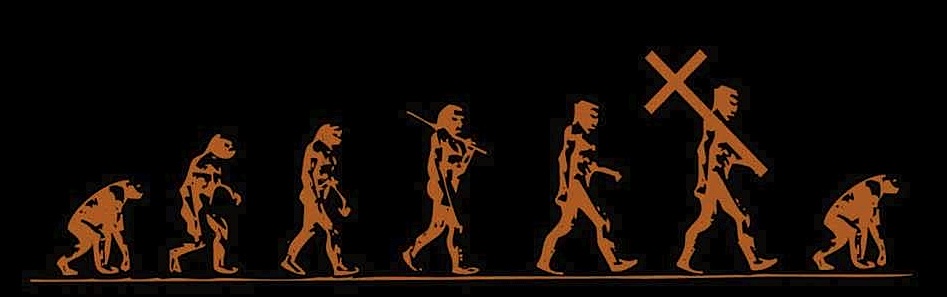
This got me thinking about Evolution.

Obviously, the main vehicle driving Natural Selection is death and dying. This is one of the biggest hindrances that Christians have to the idea of Evolution. If our usual categories are correct of a “good” creation “falling”, and only then ushering “death” into the world, how does the thoughtful Christian deal with the realities of Evolution?

I think this Lenten idea of God’s “slain-ness” can help.
Continue reading

Christ’s Heart Breaking in Us | Lent {5}


Lent is a season in which God’s people meditate on the slaying of Jesus on the Cross and all that is within them (and outside of them) that made that Cross necessary. So to that end, we’ve been doing a series meditating on the fact that Christ is the Lamb who was “slain before the foundations of the world”. We’ve been thinking through what it might mean that Jesus, in some sense, has been suffering for all time.

[suffering]

We’ve said that the Cross was an in-breaking of the suffering essence of God into our world. Think of it as a volcano that emerges after a millennia of quiet tectonic plate shifts. Eternity and infinity–past, present and future–break into the world at the Cross; eternity is the backdrop against which the death of Christ occurs.

We’ve also said that the world has a certain “slain-ness” to it as well, due to being created “through” a slain and suffering Christ.

Today I want to ask: What might that mean for our own suffering and death?
Continue reading