God in Her Glory {1b}: A Good Facebook Debate (for a change)


wwii-woman-we-can-do-it-feminismWow. I’ve actually been surprised at the response to the last post in this little mini-series on using feminine language to talk of God. I thought I was addressing one simple thing in the life of churches, but I misjudged the degree to which people would feel like this touched on everything from their thoughts on the Bible to the nature of Jesus himself. One of the best sets of exchanges was on Facebook in response to yesterday’s post. Below, I’ve reproduced a lightly edited version of the conversation. I hope you find it interesting as well. And let me know what you think!

DEBATER: Your post says, “The model of God as Father may be profound and true; but it is not the only model, and it does not render other models less true or profound.”  It’s Jesus’ own self-disclosure and revelation of God. It’s more important than any other ‘model’ and it isn’t really a model. “Father” is not a metaphor. Its a reality for Jesus. And I’m not talking about Jesus’ physicality like his weight or hair color. Jesus revelation is of God as Father. That’s the particularity. He said pray to God as father. And he’s the Son. That’s ontological. The feminine is redeemed in Jesus, but its redeemed not by Jesus taking on the sign of the feminine, but by taking on the sign of the masculine redeemer of the oppressed and abused feminine.

ME: Your last line especially uses terms and ideas entirely foreign to the Scriptures. I’m actually shocked that you saw no issue in writing that. Women need a male redeemer to be redeemed? Even if you point to the ancient cultural idea of the male kinsman-redeemer, surely you aren’t saying that this (clearly) cultural accommodation is some revelation of the essentially gendered nature of God and redemption? The Old Testament also had lambs being sacrificed, and not people. Does that mean that Jesus in some sense had to partly be an “actual” lamb rather than a metaphorical one?
Continue reading
God & Her Glory {1}: “Our Mother, Who Art in Heaven…”


T78 INT 70

Well, they warned me.

It was my first year at my first seminary. I had the honor of being chosen for an “Inter-Seminary Seminar” course in which people from five very different seminaries got together, were given a topic they all disagreed about, and then spent a semester writings papers to and debating with one another.

One of those seminaries was a liberal Lutheran one. I was told ahead of time that the students (usually women) from this school, every year, always made a big, emotional deal about masculine language being used in the papers. And indeed, at the beginning of every single paper discussion, the first comment was always a tear-filled lament over the use of masculine pronouns throughout the paper.

And so, when it was my turn to write a paper, I tried to be sensitive to this. I changed “mankind” to “humanity”, “brothers” to “brothers and sisters”, etc. And yet, when my paper came up for discussion, they opened up once more with an impassioned complaint against the male-centered language. I told them that I had tried to be sensitive to that. They said, “no, the problem was in your use of the masculine pronouns for God!
Continue reading

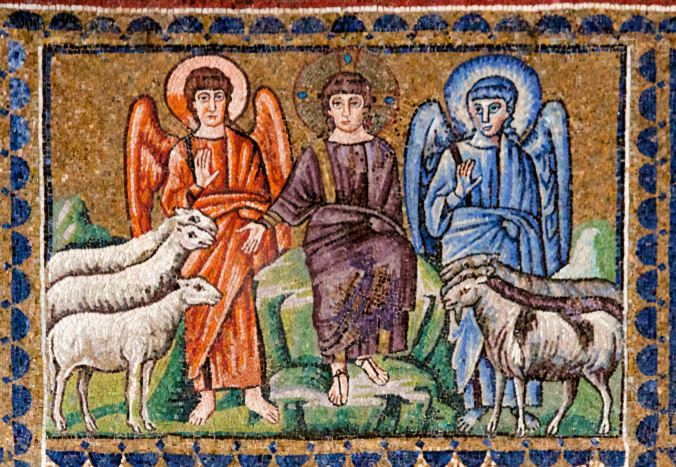
My Sermon on Judgment, Poverty, Sheep, & Goats


Christ-Shepherd-Judgment-Icon

Yesterday, I got to preach the hardest sermon I’ve gotten to preach (so far).

The text is Matthew 25:31-46, what is commonly called “The Parable of the Sheep and the Goats”. It’s also the one where Jesus shows up as a naked and hungry beggar and prisoner. It’s one of the most difficult, confusing, and doubt-inducing texts in the Gospels. Let me know what you think. Sermon cameos include Albert Camus, Samuel Beckett, Martin Luther, and homeless Jesus. Here’s the audio:

You can also download it here, or subscribe to our podcast. If reading is more your style, here is my manuscript for your perusal. Continue reading

On Theology: Choose Your Own (Feminist) Adventure


Delaunay-City-Paris

I recently told some friends about this year’s Lent series on “Male Feminist Theology”. One of them looked at me suspiciously and said, “I know what each of those three English words mean by themselves, but I have no idea what they mean together; it sounds like you’re fitting together things that don’t naturally go together”.

People often hear phrases like “Black Theology”, “Liberation Theology”, or “Feminist Theology”, and feel like there is a profound arrogance at play–isn’t simple “Theology” enough? Why must each group have their own pet theological opinions that belong only to them? But this is to profoundly misunderstand these theologies.
Continue reading

Quick Christian Feminism Quiz: What do you think of this image?


edwina-sandys-christa-edit

From Lynn Japinga’s excellent Feminism & Christianity: An Essential Guide (p.93):

Artist Edwina Sandys created a sculpture of a female form, arms outstretched as if hanging from a cross. The sculpture, entitled Christa, has created controversy wherever she is displayed. Critics say the statue defies the historical fact that Jesus was a man. Some viewers feel that the symbol of the cross is degraded or even blasphemed by a Christ in female form. Others are disturbed by the sexual overtones of the naked woman. Some people are troubled by yet another violent image of female suffering. A few people see in the sculpture the message that the death of Jesus symbolizes the pain of all human suffering.

The response to [this image] reveals various theological assumptions. Some people dismiss…the sculpture because they are literally false. Jesus was a man. End of discussion. Other people consider these images offensive and uncomfortable. It insults Jesus, and them as well, to think of him as a woman. These imaginative reconstructions of important events in the life of Jesus pose an important theological question: What difference does it make that Jesus was male?

Have at it. What do YOU think about this piece? What’s your first gut reaction? Why? What difference does it make that Jesus was male?

Continue reading

No, ISIS has nothing to do with the end of the world. Please stop saying that.


isis-flag-iraq

It’s been a long time since I’ve been immersed in Southern Evangelicalism where a certain brand of interpreting world events looms large. I grew up in the Bible Belt, where Saddam Hussein, Desert Storm, the fall of the USSR, the growing rise of Israeli nationalism, and “slipping societal morals” were all “signs” of the “end times” or “the last days”. I sat through youth group meetings where our senior pastor would talk about how the book of Daniel had coded prophecies about nuclear weapons in space.

(Being in high school, I saw no problem with him making that argument by saying that the book’s “original language” uses the Greek word dynamos from which we get the word “dynamite”; it was only later that it clicked for me that Daniel is written in Hebrew and Aramaic, not Greek.)

Moving to the Northeast, the bastion of mainline Christianity; and attending two different seminaries from traditions very different from this prophecy-interpreting one, I was under the false impression that this whole game of interpreting current events in apocalyptic ways was rightly losing steam.

But then, this past week, the tragedy of ISIS (or the so-called “Islamic State”) beheading 21 Egyptian Coptic Christians happened. I first found out on Facebook, when I saw a procession of ancient Christian articulations of mourning filling my news feed. “Come, Lord, Jesus.” “Lord, have mercy.” “Kyrie Eleison.” I, myself speechless, decided also to lean heavily on old words from our Christian family to find comfort and express lament.

Not everyone went this way, though. After these initial responses, my Facebook and Twitter feeds began to fill with phrases and out-of-context Bible verses that I hadn’t seen in years. People were posting blog posts and verses all of which were trying to say that these deaths amounted to some unique act of “global Christian persecution” that was somehow emblematic of the world’s “last days” or “end times”.

Today I’d like to offer a seven reasons why this is wrong-headed and unhelpful:
Continue reading

Some Hopefully Not-Crazy Musings on Calvinism & Predestination


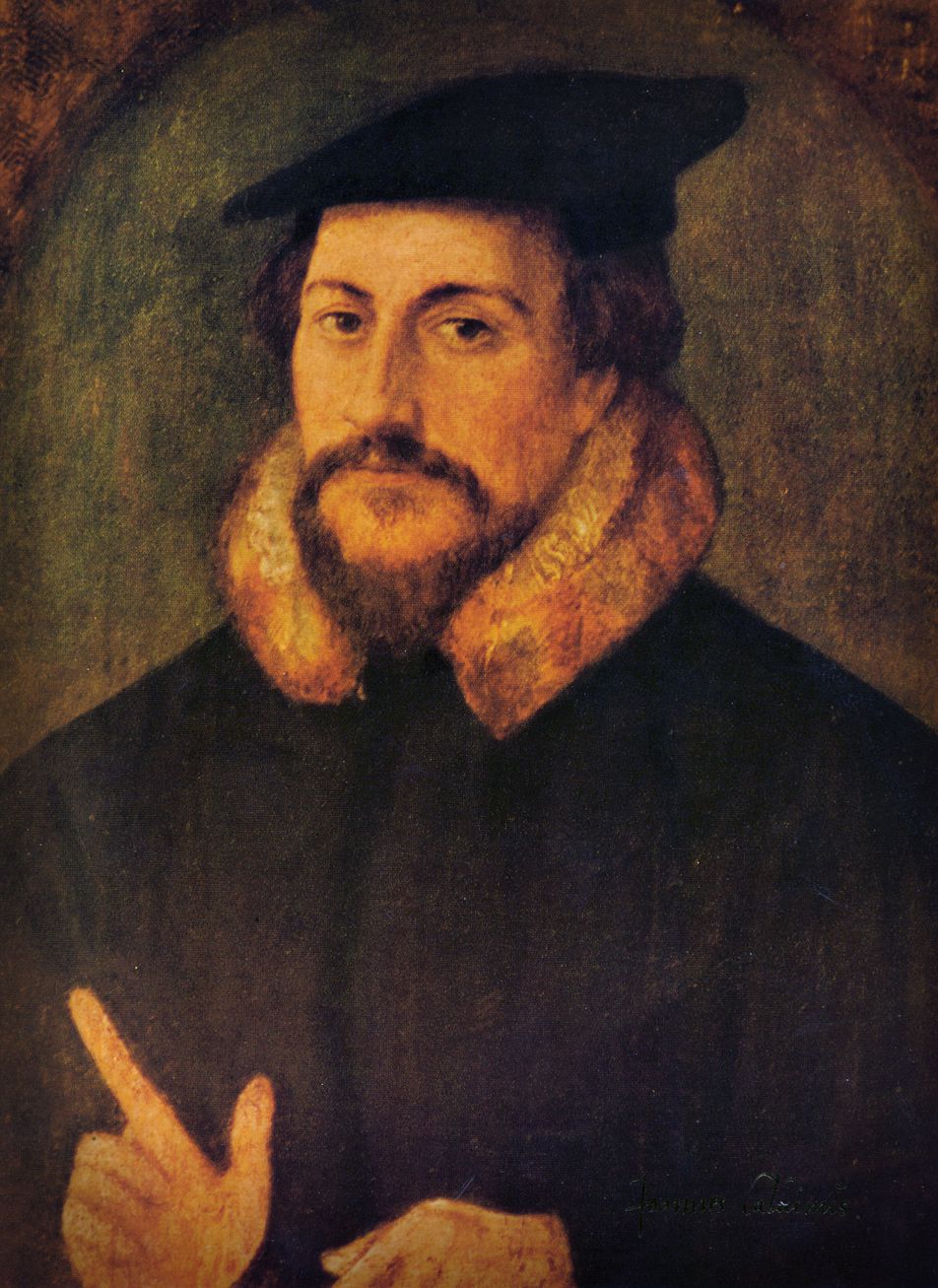
John_Calvin_by_HolbeinThe Christian family is large and diverse. The little corner of that family that I occupy is usually called “Reformed”, meaning they can trace a lot of their distinctive teachings back to John Calvin. Now, if theres one thing Calvin is known for (other than the burning a heretic thing) is a section of his teaching on Predestination–the idea that before everything, God “decreed” that only some people would be “saved”, and others would not be–they didn’t make the choice in that matter, He did.

Now, “Calvinism” wasn’t actually a thing until after Calvin had died, and he had a lot more to say about a lot of things other than Predestination. Nevertheless, having just recently re-read the portion of his magnum opus that deals with this issue, I can say that even the most caricatured, extreme articulations of Calvinism out there have a strong kernel of truth. Calvin was definitely a Calvinist, in all its untactful, harsh, unapologetic glory.

In college, I got super into Calvinism and took it way too far (Exhibit A; Exhibit B). I hurt a lot of people. Then I went to my first seminary and mellowed out on it. Since then, I’ve just been absorbing lots of different strands of thought around this issue, and haven’t really made a concerted effort to synthesize them. I’ve sort of been sitting in the Mystery of it all.

This seminary semester, though, I have to bring together all my thoughts on Predestination and its related doctrine of Election into some coherency. This means I’ve been thinking about this a lot. And today, I want to offer some of my random, contradictory, messy thoughts and get your responses and help. Imagine my brain on this topic as a big ball of yarn, with each strand of thought existing together all at once, not being able to distinguish where one thought ends, where the other begins, and how they can all fit together.

Strand 1

First, there really isn’t any such thing as “Free Will”. I can’t “choose” to have different parents, to fly, to shoot lasers out of my eyes, to breathe underwater, what color hair I naturally have, where I was born, etc. Arguably, the most formative, important, foundational things to who we are as people are unchosen. The point in saying this is to point out that our wills are not “free”, but are bounded by nature. All our choices are limited by our nature.
Continue reading

Are Christian denominations good or bad?


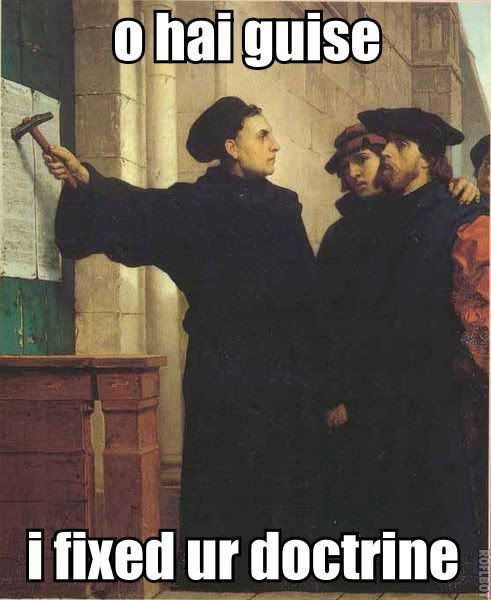
luther-95theses-humor-memeI’m currently in a Church History class going through the Reformation period of Christianity. During the Reformation, Martin Luther’s partner in crime (literally) was Philipp Melanchthon. After Luther’s death, Melanchthon carried the torch as a leader of the movement spreading throughout the Medieval world. In the years following the start of the Reformation, there were several different strains of non-Catholic Christianity that popped up.

To withstand the Catholic majorities at the time, these non-Catholic groups started talking about what it would look like to unify under one banner. Believe it or not, even though all these movements were really young and were reacting to the same problems they saw in Catholicism, these groups had really big differences between them that were hard to overcome.

In these conversations, an aging Melanchthon used an old Greek philosophical phrase to suggest a way forward: Adiaphora. Greek for “indifferent things”, he used it to describe how he felt that some beliefs and practices could be considered adiaphora (non-essentials), and could be compromised on for the same of unity. He argued with his fellow Lutherans that some beliefs were more essential to Christianity than others and didn’t require so much division. The others around him, of course, disagreed.

This got me thinking about the trajectory this set for us today. We now feel perfectly free to think a whole host of different things and still call others Christians. And yet still, much of Christianity’s most bitter judgmentalism and cries of heresy, unfaithfulness, sin, and arrogance are directed towards other who are also trying to follow the God of Jesus best they can. This has caused rifts, schisms, splits, and divisions into a huge number of Church denominations. Is this healthy for us? What does Christian “unity” look like? Do we all need to look the same?
Continue reading

My church let me preach another sermon. Here it is.


Tanner-the-anunciation-mary

Believe it or not, even after preaching my first real sermon ever, my church let me preach again. All jokes aside, I had the honor of preaching this past Sunday as part of our Advent series.

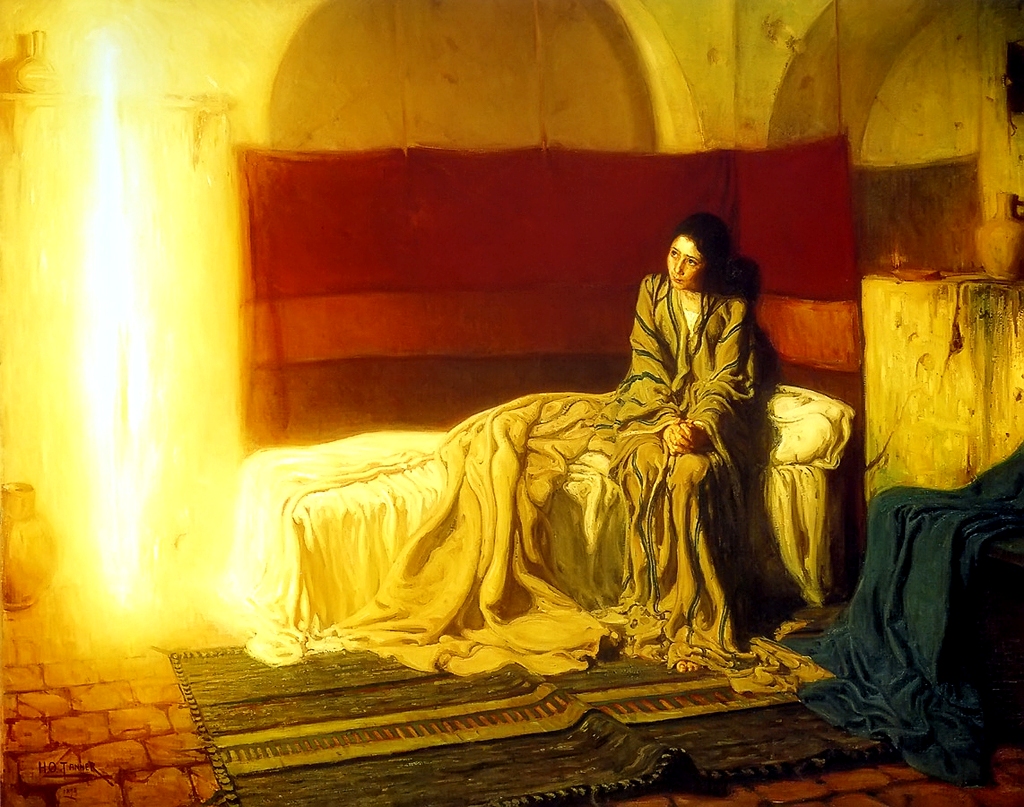
The text is Luke 1:26-38, the moment in the life of Jesus known as The Annunciation, when the angel Gabriel tells Mary that she will give birth to Jesus. Cameos in the sermon include Mary, Friedrich Nietzsche, Karl Barth, the podcast Serial, racism, white privilege, and the story of everything. Here’s the audio:

You can also download it here, or subscribe to our podcast here.
Continue reading

My first Sunday Morning Sermon. I’d like to share it with you.


paul-liberti-sermon-preachingSure, I’ve done some lectures, taught some classes, led a home group, and preached a sermon in a seminary class, but I’ve long believed that there was something truly sacred and “other” about preaching to a church family in a gathered worship service. And it’s something I had never done.

I’ve always been an over-zealous guy, and very wise leaders have pulled the leash on me, telling me to just sit and watch for a while, until the time was right to put me in front. This has continued through my life at my church in Philly, as they’ve slowly discipled me and loosened the leash bit by bit in service to our people.

Well this past week I had the honor of preaching my first Sunday morning sermon to my church family. It felt good and I myself experienced such a grace and blessing in preparing for it and offering it to my brothers and sisters. And so, I’d like to share it with all of you as well.

It’s the final sermon in our series “Finding Freedom” that went through the Ten Commandments. The text is Matthew 7:13-29, the very end of the Sermon on the Mount. Here’s the audio:

You can also download it here, or subscribe to our podcast here.
Continue reading

A Sermon I Got to Preach on Isaiah 61 [VIDEO]


Believe it or not, I don’t really have much experience at all in preaching. Yeah, I’ve spoken and “preached” at some things, but I’ve still never offered the preached proclamation at a Sunday worship service. It’s an area I’ve wanted to grow in for a while.

To that end, I took a preaching class last semester for my seminary program. It was a powerful course that changed my whole relationship to both the Bible and the act of preaching. Each of us wrote and presented a sermon on an assigned text. The sermons were recorded, and I’m offering mine here today. It opens with some brief words on the context I had in mind when preparing this.

I hope it meets you and speaks to you, wherever you are. The video is above, the text and my manuscript are below. You can also download files for both the audio or the manuscript.

Special thanks also to an old friend, J. Chord Barnes of ASERWorks Media, for fixing some audio issues in the original recording and remastering it for me. Check him out at the link above. Continue reading

Faith & Grace Alone: Job & the New Perspective on Paul| Job 9


job-silohetteHow then can I answer him,
choosing my words with him?
Though I am innocent, I cannot answer him;
I must appeal for mercy to my accuser.
Job 9.14-15

Job says he is innocent, but he says he still needs mercy. What does this mean? Perhaps he does see not people in the simplistic way that we often do–or at least as simplistic as we see the ancient Israelites.

Just like in the Christian scheme, I’m starting to think that the ancient Israelites also thought that people were considered righteous only on account of graciously being in covenant with God. All the sacrifices, festivals, laws, etc. were more as signs that they were the people of God; they were not how people became part of that group in the first place. In other words, the sacrifices and laws were outward displays that they were fully righteous before God’s eyes; they weren’t the ways that they “earned” righteousness or forgiveness.
Continue reading

#Marginalia Weekly Round-Up #6


Marginalia is a section of this blog dedicated to (mostly) short reflections, meditations, questions, and difficulties I have while going through my Bible reading plan. I’m still trying to figure out the best pace at which to post these, so be patient with me. To aid in helping people engage with these posts, every weekend I post a round-up of all of Marginalia posts that appeared during that week. This list is in biblical canonical order.

Job

Job, God, & Satan (Can I get some help from the scholar’s out there?)| Job 1.6-7
God, Social Justice, & Social Welfare | Job 5.15-16
Fragments from a speech by Job| Selections of Job 6 & 7
Job’s Friends are Right! Job’s Friends are Wrong.| Job 8.5-7,20-22
In a sense, God CAN’T favor the righteous| Job 9.1-4

Continue reading

The Trinity building the Church! | Acts 20.28


Keep watch over yourselves and over all the flock, of which the Holy Spirit has made you overseers, to shepherd the church of God that he obtained with the blood of his own Son.
Acts 20.28

Wow, here’s the whole Trinity at work in leading God’s church! Would that we give more attention to this Trinitarian nature to the sustaining of our churches. Also, notice how Jesus’ blood “obtained” the Church. He didn’t merely create the space of possibility. He went out and got it. It is is his.

See other Marginalia here. Read more about the series here.

The Sermon’s Essence & Power | 1 Corinthians 2.1-5


When I came to you, brothers and sisters, I did not come proclaiming the mystery of God to you in lofty words or wisdom. For I decided to know nothing among you except Jesus Christ, and him crucified. And I came to you in weakness and in fear and in much trembling. My speech and my proclamation were not with plausible words of wisdom, but with a demonstration of the Spirit and of power, so that your faith might rest not on human wisdom but on the power of God.
1 Corinthians 2.1-5

This encourages me so much in preaching. No matter the exegesis, eloquence, or whatever, we preach Christ and him crucified, and that makes a good sermon. We also live a life in accordance with that outside of the sermon and it supports our preaching as well. Just as in the nature of God Himself, our words and our deeds cannot be separated from one another.

See other Marginalia here. Read more about the series here.