{palm sunday} | prayer & readings for Holy Week (2013)


For Holy Week: reading schedule/reflections.
{More on the why and how of Lent here.}

prayer.

Almighty and everliving God, in your tender love for the human race you sent your Son our Savior Jesus Christ to take upon him our nature, and to suffer death upon the cross, giving us the example of his great humility: Mercifully grant that we may walk in the way of his suffering, and also share in his resurrection; through Jesus Christ our Lord, who lives and reigns with you and the Holy Spirit, one God, for ever and ever. Amen.
(from the liberti Lent & Easter 2013 prayerbook & the Book of Common Prayer)
Continue reading

The Story of Repentance: believing vs. achieving


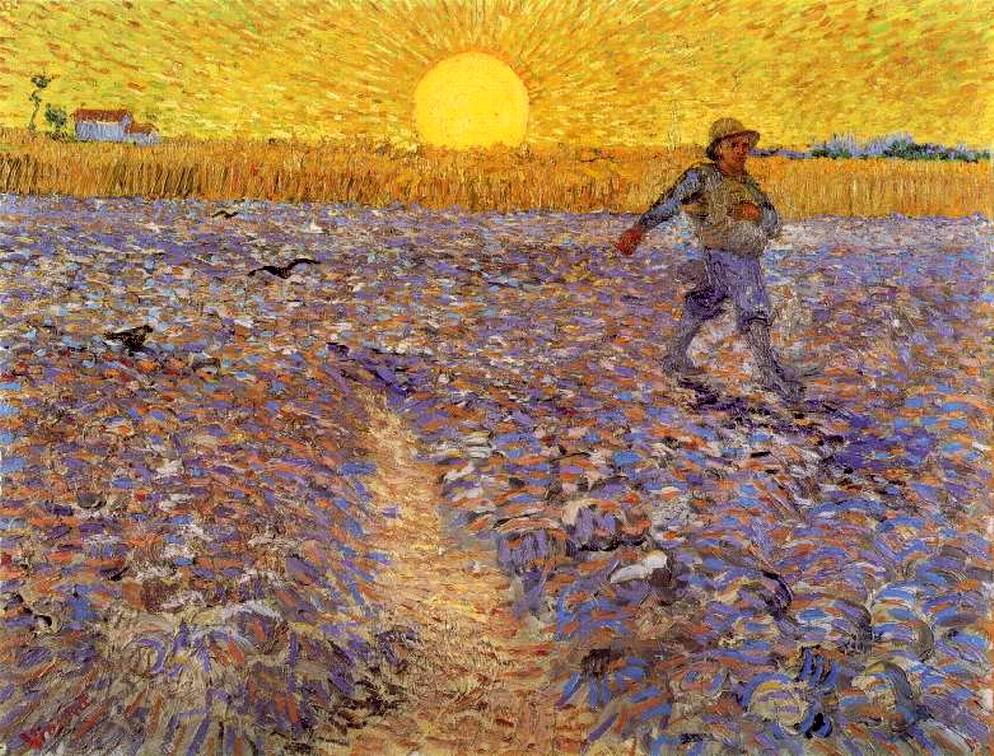
Van Gogh-Sower with Setting SunThis post is part of my 2013 Lent series: Reflections on Repentance.

I almost titled this post “theology in the service of real-life”.

The last time I wrote about repentance, I talked about the difficulties I have with some of the ways people in the Church talk about repentance. I then started researching the topic. And as I did, I found some amazingly helpful realizations about this in the Bible.

So today, I just wanted to take some time and explore this topic throughout the entire story of the scriptures. Hopefully, we can come to some conclusions about what repentance means for us today, and perhaps even some answers to our previous concerns in the last post.
Continue reading

Resurrection Gives Us Joy in Lent & Death


La-Pieta-IYes, as cliché as it is, I’m watching the new Bible mini-series on the History Channel. I’m actually enjoying it. A few things are odd (the ninja angel, for one), and they made some interesting choices on what to leave out (was the extended Sodom sequence really worth cutting out the entire Exodus story, Wilderness wandering, and golden calf rebellion?). But there is still a sense of ownership, that this is our story.

(Side note: for those of us that study the Bible and don’t necessarily think historicity is the highest purpose for which it was written, it’s encouraging to still feel that feeling of identity-formation when encountering our story–even when it’s seen as “just” a story.)

Anyway, a review of the show is not why I’m writing today. I just had a brief thought I wanted to share.

In Episode 1 of the mini-series, we see Pharaoh’s son die at the end of the plague sequence. Watching him carry the pale, lifeless body of his son, it reminded me of Michelangelo’s la Pieta (a version of which you can see above). It was actually quite moving, and I was surprised that I only realized now the sadness of this part of the story. Continue reading

Barth: to Repent & Pray is to Die [QUOTE]


This post is part of my 2013 Lent series: Reflections on Repentance.

In the first book of Karl Barth’s Church Dogmatics, as he is reflecting on God as Creator, Barth begins meditating on the fact that this Creating God is also our Father. He begins talking about what “Fatherly Lordship” might look like, and what impact this “Fatherly” dimension might have on how we look at his “Lord-ly” commands on us–like the command to “repent”. And so, as he is focusing on God’s Fatherhood in the Gospels, he writes these beautiful words on repentance:

Metanoien [the Greek verb for “repent”], to reverse one’s thinking, to think afresh, to think through to God and His kingdom, really means in the rest of the New Testament too, and here in the Gospels especially, to consider the fact that we must die. But it does not just mean this, but whatever else it might mean, it can mean only that if first and decisively it means this.

Further, note that “Thy name”, “Thy kingdom”, and “Thy will” are the objects of the first three petitions of the prayer directed to “our Father, which art in heaven” (Mt. 6:9f), and it is on these that the three which follow rest. In the context of the New Testament, then, the Thy makes these petitions absolutely equivalent to the saying : “Teach us to reflect that we must die.”

The Sex-Slave’s Name is Jesus


sandorfi-le-pardon-wide

In preparation for my upcoming Guatemala blogging trip next month, I’ve been reading the wonderful book Geography of Grace by Kris Rocke and Joel Van Dyke. It opens by talking about the horrific story of Judges 19, where a nameless woman who is no more than a sex-slave, is given to a gang of men who gang rape her all night. She is then dismembered while still alive and the parts of her body are mailed to the twelve tribes of Israel. I found these lines so beautiful and redemptive in the just of such darkness.

When reading Judges 19 with a sanctified imagination, it is as if we become the disciples of Jesus on the road to Emmaus in Luke 24. This passage tells of the disciples’ long walk with the stranger who is suddenly revealed as Jesus when he reenacts that meal on the night that he was betrayed. Just as the stranger is revealed to be Jesus in the breaking of the bread, so too is the unnamed woman revealed to be Jesus in the breaking of her body.

“Just as you have done it to the least of these . . . ”

lf we reflect long enough on the heart of the unnamed Woman [of Judges 19], We will come to know not only her heart, but her name as well. We will dare to give her the dignity of a name that she has been denied for more than three thousand years. We will even dare to name her the name above all others.

As grace flows downhill and pools up in Judges 19, We are confronted with what looks like a cesspool. It is offensive and scandalous beyond words, but if we can hold our gaze long enough and reflect on the Woman, she teaches us a hard but liberating truth-that she was not alone in her abandonment. She was not alone when she was handed over to the mob. She was not alone when she was gang-raped and beaten that night. She alone was not cut into twelve pieces and handed out to Israel. God was with her that night. God too was abused, beaten, raped, and dismembered. Where is God? God is with us, particularly among the least. Immanuel.

Love well for Easter: liberti Easter outreach


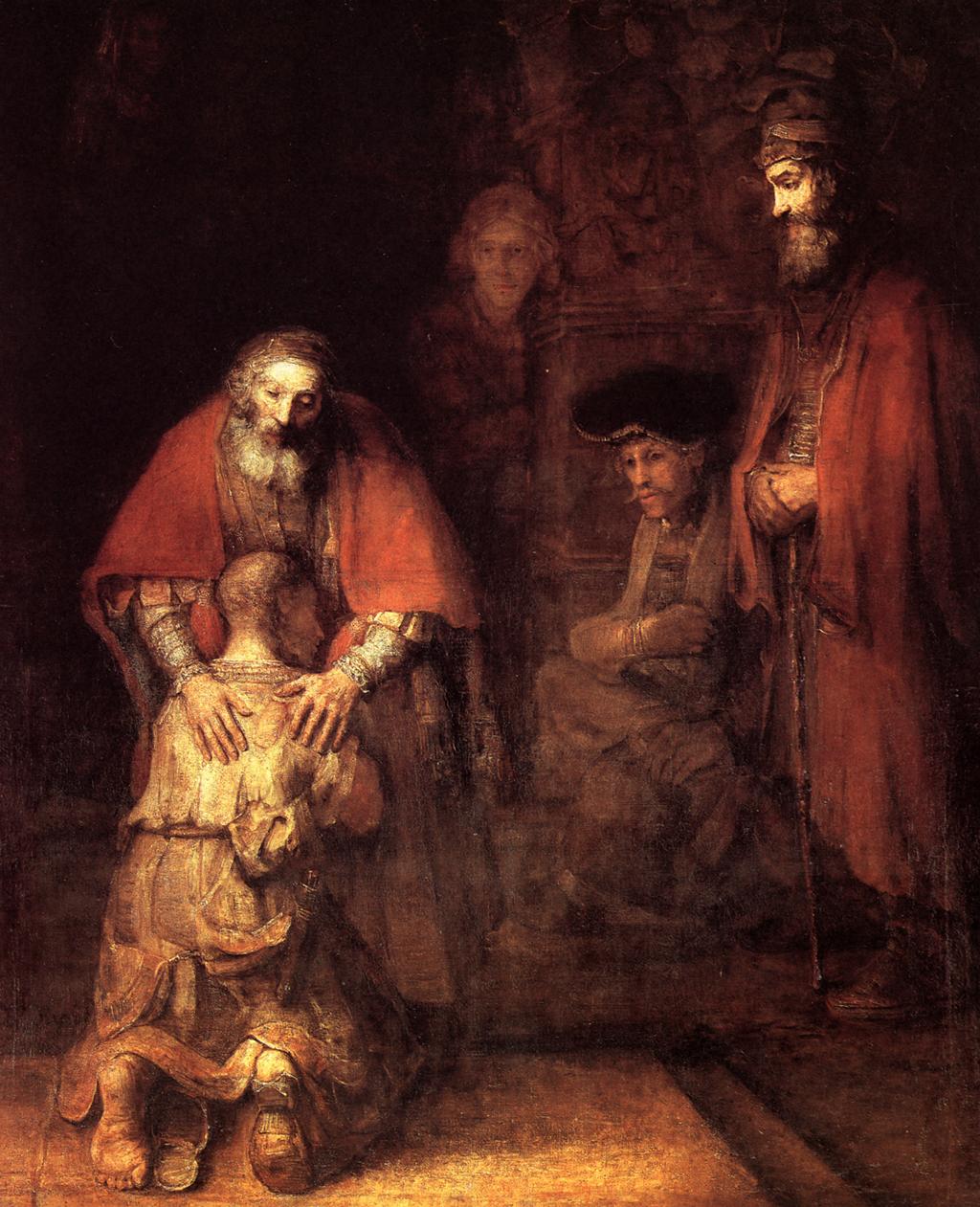
jlwo-Blood-WaterLent has historically been a time where we look at things that we don’t like to look at, and dwell on things that are broken and painful. And when we do, we see that this darkness is to be found both in our hearts and in the wider world around us.


It’s not hard to see pain and injustice woven into the very fabric of our neighborhoods and the nations around the world.

What is hard, though, is figuring out how to respond to this pain and injustice in ways that are proper and truly loving.

Truly Loving

I believe that the most transformative efforts to address pain and injustice have several things in common: Continue reading

I’ve got some problems with repentance (and how you people talk about it)


belle-isle-bridge-long-walk This post is part of my 2013 Lent series: Reflections on Repentance.

Martin Luther famously kicked off the Reformation by saying the whole of the Christian life is one of repentance. In this, he was implying that it was not a singular moment, but rather a lifelong process. Yet, as I’ve lived life in the Church, I have found that this is not quite the way that most Christians talk about repentance, nor does it seem to be the way the Bible itself does.

If you ask your run-of-the-mill Christian convert, or even pastor or theologian, what repentance is, you will usually get some answer that involves the phrase “180 degrees” or talk about a change of your mind or turning away from a sin you do.

Good sermons and books on repentance will usually involve the Luther formula of using the Holy expectations of a Holy God to expose just how sinful we are, and then hitting us with just how radical God’s grace is in light of that. They will show us our need, trying to woo us to a God that forgives us. They try to expose even those sins hidden to ourselves or those that we hide from others or those that have beset us for years, and then invite us to “turn” from those things and instead trust God.

Sermons and books like this have contributed to beautiful moments in my life, drawing my heart to God and convicting me of my sins.

And yet, I have a problem with this. In these articulations of repentance, there seems to be a disconnect. A major, major disconnect.
Continue reading

Intelligent Repentance: Hearing our Hearts


[This is part of my 2013 Lent series: Reflections on Repentance.]

“Is anyone thirsty? Come and drink— even if you have no money!
Come, take your choice of wine or milk— it’s all free!
Why spend your money on food that does not give you strength? Why pay for food that does you no good?
Listen to me, and you will eat what is good. You will enjoy the finest food.

“Come to me with your ears wide open. Listen, and you will find life.
I will make an everlasting covenant with you.
I will give you all the unfailing love I promised to David.
See how I used him to display my power among the peoples.
I made him a leader among the nations.
You also will command nations you do not know, and peoples unknown to you will come running to obey,
because I, the Lord your God, the Holy One of Israel, have made you glorious.”

Seek the Lord while you can find him. Call on him now while he is near.
Let the wicked change their ways and banish the very thought of doing wrong.
Let them turn to the Lord that he may have mercy on them.
Yes, turn to our God, for he will forgive generously.

“My thoughts are nothing like your thoughts,” says the Lord.
“And my ways are far beyond anything you could imagine.
For just as the heavens are higher than the earth,
so my ways are higher than your ways and my thoughts higher than your thoughts.”

The writings of the Prophet Isaiah, Chappter 55, verses 1-9 Continue reading

Lent & Repentance: Come & Mourn with Me Awhile


ash-wednesday-faces-of-the-faithful-photos

This is part of my 2013 Lent series: Reflections on Repentance.]

Last week was Ash Wednesday, which begins the church season of Lent. On that day, hundreds of millions of people (perhaps even as much as a billion) went to quiet services and got ash crosses finger-painted on their foreheads.

It’s a strange act, but perhaps the most striking one in Christian tradition. It’s certainly my favorite.

No matter how widespread Christianity has been in the world, I can’t imagine there was ever a time in which the public mark of ashes on one’s face did not stir some sort of double-take from passers-by. Even to this day, it’s the most counter-cultural and outward thing many American Christians widely do.

Ashen forehead crosses are one of the few Christian traditions that is still ours, and hasn’t been co-opted by the wider culture, and thereby watered-down in its meaning or force.
Continue reading

All new, free Lent vol.2 Mixtape is ready for download!


lent-mixtape-2-coverToday, I’m really proud to make available the all new Lent Mixtape for this year. It’s a completely new batch of songs, none of which have been on any of my past mixtapes. I’ve been working on this one for a while and, as I say on the Mixtape page, it’s already serving me pretty well as a soundtrack for this year’s Lent. I hope it’s able to be the same for you. Just like the past Mixtapes, it’s free to stream, download, and share.

To also serve you in this time, be sure to check out last year’s Lent, Volume 1 Mixtape, my church’s Lent 2013 Prayerbook (pdf), as well as other Lent posts on this site.

Download last year’s Lent Mixtape (new one on Monday!)


oldrich-kulhanek-lent-mixtapeIt’s Lent, which means it’s time for a new Church Season Mixtape. I have a completely new track list I’m working on for this year’s Lent, but it’s not quite done yet. So, for the weekend, I wanted to make available last year’s mixtape. I don’t know if I’ll keep it up after this weekend so get it now! It really is one of my favorite mixtapes I’ve done, and I think it turned out very well. So go to the listen/download page and enjoy. And share it with your friends!

Also, be sure to check out the dedicated tab above for all posts on Lent. I pray these resources help you have a fruitful time in his season.

Ash Wednesday Egalitarianism, or “Why do female preachers suck?”


paul-schrott-ash-wednesday-bwYes, that’s me in that picture. I love that picture. It’s been used in a few posts since it was taken a couple of years ago. This isn’t (just) because of some weird sense of narcissism that loves to see my face on my blog posts. Rather, this picture is a very meaningful reminder of one of the most formative nights in my Christian life.

I said in the beginning of this series on Women in the Church that for most of my life, I had been one of the staunchest defenders of male-led church leadership. I knew all the arguments, I believed the caricatures of the other side, and importantly, I had experienced that women made terrible preachers of sermons.

Now remember: this was “pre-conversion” Paul that was thinking these things. But still, as I had visited friend’s churches, listened to audio, and seen female televangelists, it was hard not to notice that I had never heard a “good” sermon offered by a woman. It seemed clear to me, then, that this unique “anointing” and “gifting” to preach was reserved for men.

Don’t get me wrong. I had received incredible guidance, teaching, and wisdom from women. But these had been in the contexts of schools, lectures, books, blogs, campus ministers, podcasts, and the wider world–not church sermons.

Continue reading

Lent 2013 is on the way. What are you doing?


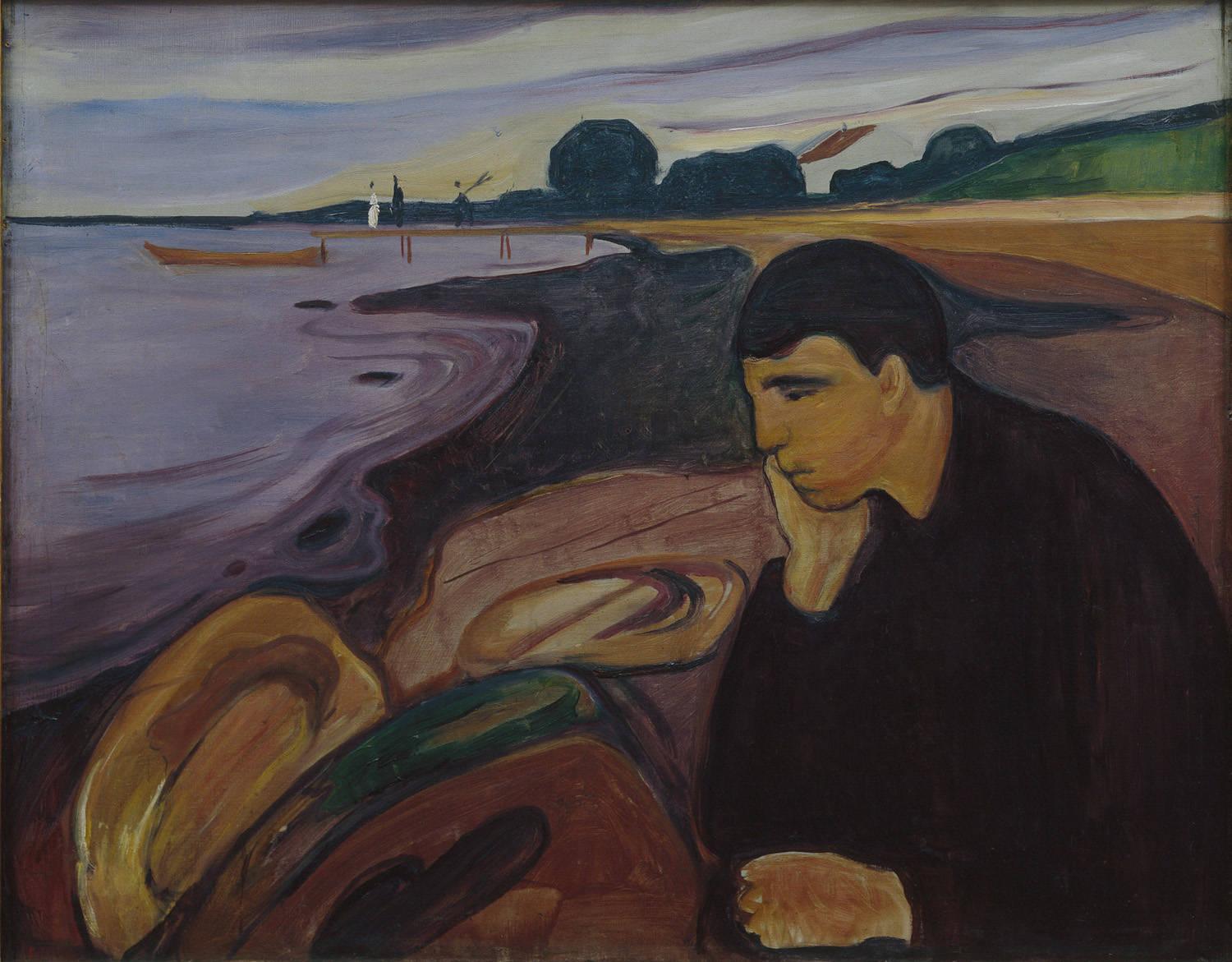
Munch-melancholyNext Wednesday is Ash Wednesday, which kicks off Lent, the time of year in which we our sins and shortcomings weigh on our minds and shoulders a little more than usual, that we might feel their sting, and that might propel us to Christ.

Lent is always a very meaningful time for me spiritually. It is my most fruitful time of blogging and meditating, and I hope that today is similar. This is probably because I’m wired to be extra sensitive to the quieter, subtler movements of my own heart.

I can also be prone to despair over my inability to change or grow, but even in the midst of the difficulty and darkness of this season, there’s always the dawn of Easter ever-more cresting upon the Lenten horizon.

Historically, there have been many ways that the Church had engaged in this time, and so there is great freedom in how we might do that. This is how I’m engaging in Lent this season: Continue reading

Nature shows us the Resurrection


As part of my own personal devotions, I use A Year with the Church Fathers by Mike Aquilina (also a free Android App–Google FTW!). In it, he offers a little introductory summary, followed by some words by a church father, and then ends with a question to meditate upon and a concluding prayer.

This one struck me yesterday, as doubt in the Resurrection is something I struggle with a lot. Thank God we live and grow and struggle in such a long, continual stream of godly men and women having walked before us. We stand on the shoulders of giants, to be sure. I hope this encourages you as well.
Continue reading

Advent & Christmas: they’re not the same thing (Ode to a Christian Calendar)


Munch-melancholyWell, it’s the Eve of Christmas season. Yes, that’s right, Christmas is not only an entire season in the Church calendar, but it’s a season that is distinct from Advent.

I know many in the global church know this fact, but I only learned it a couple of years ago, and each year it seems I have to be reminded. (Hopefully with this post, I can start internalizing it some.)

I find it interesting that we in the West have not only removed the “seasonal” aspects of the holiday, but have reduced this nearly two-month-long Advent/Christmas time into a single day on which we put most of our attention.

So why is the calendar structured like this? And what do we lose when we boil this down to one day?
Continue reading