Back on Track: The How (and Why) of Christian Male Feminism


maleFeminism110314

Remember the beginning of Lent, when I said I wanted to lay out a vision for how Christian men can think about God, the Church, and Theology in a way that takes into account the concerns of feminists? I said that these thinkers had been exposing the very real damage that has been wrought by us treating “White Male Theology” as default, neutral, objective “Theology”.

Well, believe it or not, we never actually got to what I wanted to write about. Full disclosure: that whole series was conceived because I had written a paper on this topic that I was proud of–a paper I wanted to edit down and make into a series of blog posts. And yet, before we could get to what amounted to a term paper, I had to take the reader through a lot of the other ideas that were in the rest of the class.
Continue reading

Orthodox Holy Week, Continued.


I wish everyone I know and love could come to Holy Week. The service of the Twelve Gospel Readings is so rich. It is long and it is rigorous (3 hours) but that is the purpose of liturgy — to re-form us in the spirit of Christ, away from the World, and that takes work. A lot of it. After the reading of the 5th Gospel, the lights go nearly out. The Priest enters carrying the icon of Christ on the Cross (video can be seen here). It is a slow procession and he hymns: Continue reading

Orthodox Holy Week, the Liturgy of the Pre-Sanctified Gifts, Resurrection.


Liturgy of the Pre-Sanctified Gifts

Liturgy of the Pre-Sanctified Gifts

**Disclaimer: the views here may not reflect those of the owner of this blog; Mr Paul Burkhart**

Orthodox Holy Week falls on a different schedule. To the best of my understanding, it is mostly because we never updated our lunar calendar circa the 16th century. Orthodox Pascha can fall as late as early May, I believe. Last year, I was a Catechumen. This year, I’m a full participant. It is vastly different. Lent is a long and arduous spiritual journey of fasting, forgiveness and repentance. Including the Triodion, the march to Pascha lasts 70 days. Lent begins with Forgiveness Vespers. It is one my favorite services of the whole year. At the end of the service, the priests come out and ask each parishoners forgiveness with a prostration and a hug and kiss. Each parishioner does the same to each other. It takes time, but it is worth every second. It is magnificently beautiful and helps show us the absolute need for forgiveness and reconciliation. The Church cannot exist without it. One cannot be saved without it.
Continue reading

{Good Friday} | prayer & readings for Holy Week (2015)


prayers & readings from Liberti Church’s 2015 Lent & Easter Prayerbook
{click for more Lent Posts}

Worship

call to prayer

Be pleased, O God, to deliver us;
O LORD, make haste to help us!
– from Psalm 70:1

the Gloria Patri

Glory be to God the Father, God the Son,
and God the Holy Spirit.
As it was in the beginning, so it is now,
and so it shall ever be, world without end.
Amen!
Continue reading

New Seminary Post: Holy Week Music & Readings on Death


Jesus & The Cross

I have a new post on the site Going to Seminary. I am putting up occasional posts giving different things to read around the interwebs, and this week focuses on Holy Week and its theme of death–Christ’s Death, Our Death, and Death conquered. I also give some classical music suggestions for this week (more Lent music suggestions here). I link to articles about a sister in Christ who recently died well, a New York Times piece about watching family die, and some writings by non-Christians about death. It ends with one of my favorite quotes ever. May these writings help you press into this time and our Savior all the more deeply.

Read the full post:
“Around the Web: Holy Week Edition

Check out the rest of my Going To Seminary posts.

{Maundy thursday} | prayer & readings for Holy Week (2015)


prayers & readings from Liberti Church’s 2015 Lent & Easter Prayerbook
{click for more Lent Posts}

Worship

call to prayer

Be pleased, O God, to deliver us;
O LORD, make haste to help us!
– from Psalm 70:1

the Gloria Patri

Glory be to God the Father, God the Son,
and God the Holy Spirit.
As it was in the beginning, so it is now,
and so it shall ever be, world without end.
Amen!
Continue reading

God & Her Glory: A Table of Contents


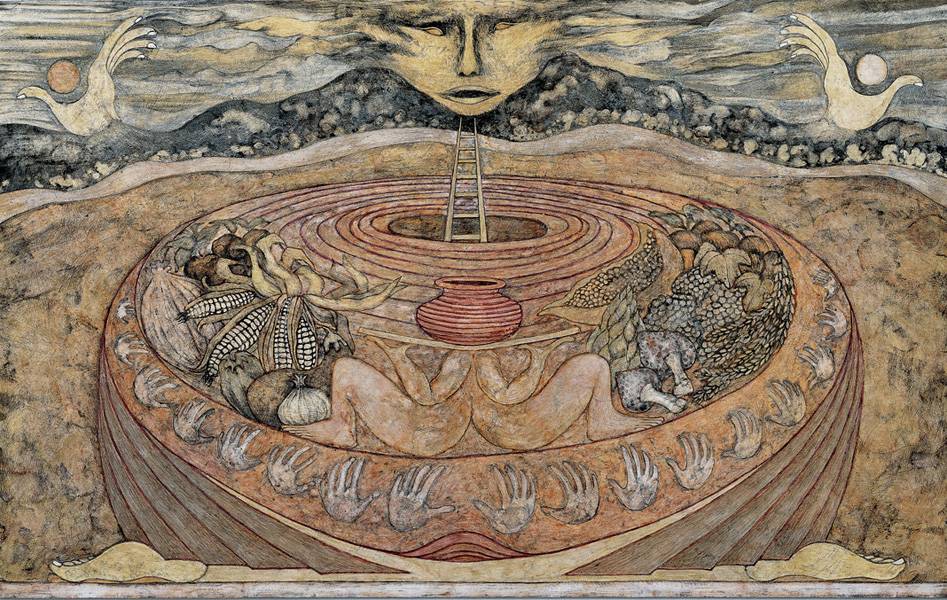
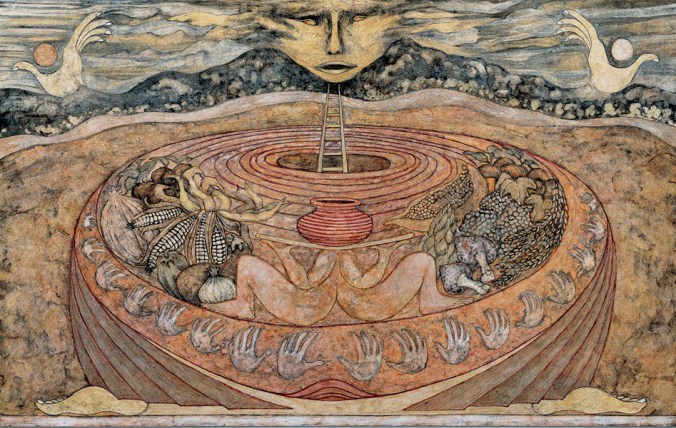
meinradcraighead-vessel

As part of Lent in 2015, I built on my on-going series on Women and the Church, and did a little mini-series on using feminine language and images when speaking to and about God. This caused lots of discussion and disagreement, especially on Facebook. To help organize things, I wanted to put up this post to guide anyone who just now might be taking a look into this. I hope you find it helpful, and don’t forget to add your thoughts below.

{1}: “Our Mother, Who Art in Heaven”

In this opening post, I give some background to my experience with this topic, as well as talk briefly about theological language itself and how it poses problems for us as we move forward in exploring this issue. I also introduce the main sources I used for this series and try to mark a path forward.

{1b}: A Good Facebook Debate (for a change)

After that first post, I started seeing the passion many people had about this topic. The Facebook discussion especially had me thinking about angles and dynamics I hadn’t thought of before. So, because it was helpful to me, I thought it might be helpful to the blog readership.

{2}: How our Words & History Affect Women

Here, I showed the connection between gender and language, trying to bring out how the way we talk about God can subtly, unconsciously even, affect not only women, but how we all think about God. I then tried to go through some history of how this has played out in the Church and the world.

{3}: The Biblical & Historical Evidence

In this post, I simply lay out the best possible comprehensive case I can for the Scriptural and historical references to God in feminine imagery and terms. After going through Scripture and some historical context, we then look at important figures and references throughout the early church through the Middle Ages.

{epilogue}: MORE Faithful, Not Less

In this conclusion to the series, I acknowledge some of the prevailing critiques, and try and cast a vision for how brothers and sisters in the Church can move forward on this, both practically and in disagreement. I make the case that fighting for broader language when talking about the Divine is an attempt to be all the more faithful to Scripture and the Church, not to change things because of the wider cultural discussion.

BONUS: Does it Matter that Jesus was a Male?

This is a relevant post I had done another time. In it, we look at some art that depicts Jesus as a female and explore what theological significance (if any) there is that our Savior was a male. Again, the debate was feisty.

[image credit: “Vessel”, by Meinrad Graighead]

God & Her Glory {epilogue}: MORE Faithful, Not Less


ArtLinguistic Passion

Throughout this series on feminine language for God, I’ve been shocked at how incredibly passionate people have been about all of this. I promise I don’t try to write for controversy’s sake; I genuinely want to serve and help the people of God, not divide them.

But perhaps I was naive not to anticipate it. A friend of mine put it well on Facebook (edited for clarity):

In Postmodern thought, language always encodes how we see reality. One can only perceive reality with words because people always think in words. This…is probably a big reason why the fight over gendered pronouns is so fierce. Mess with the language and you mess with people’s narrative-making apparatus.

It’s true: language is reality. I don’t want to imply that language doesn’t matter, that people are making too big of a deal about it and should just lighten up, or that there should be a free-for-all in our language about God. Rather, my desire to broaden our words for God is precisely because I see the power of our language to shape how we see reality.
Continue reading

{wednesday} | prayer & readings for Holy Week (2015)


prayers & readings from Liberti Church’s 2015 Lent & Easter Prayerbook
{click for more Lent Posts}

Worship

call to prayer

Be pleased, O God, to deliver us;
O LORD, make haste to help us!
– from Psalm 70:1

the Gloria Patri

Glory be to God the Father, God the Son,
and God the Holy Spirit.
As it was in the beginning, so it is now,
and so it shall ever be, world without end.
Amen!
Continue reading

God & Her Glory {3}: The Biblical & Historical Evidence


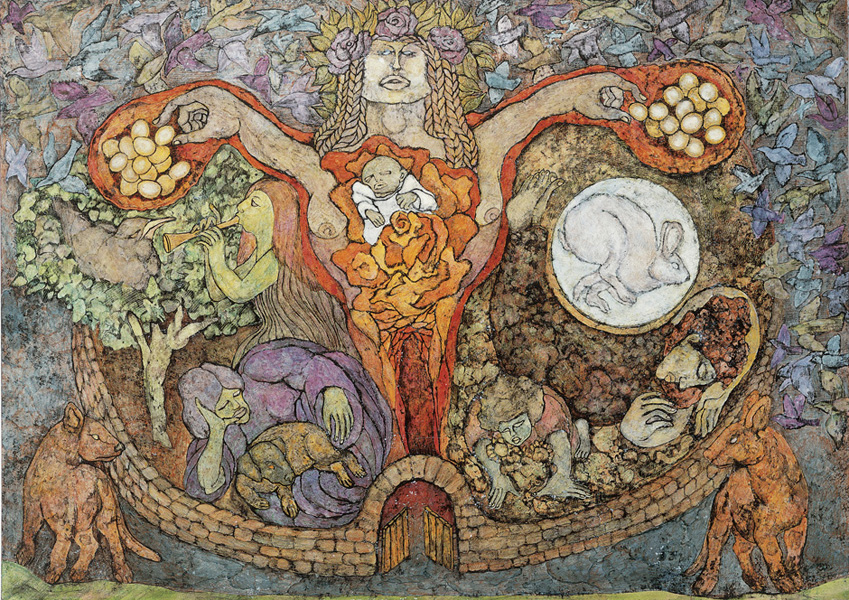
meinradcraighead-enclosedgarden

Having gone through this series on feminine language for God, I realize now I should have started with this post rather than ended with it. Following an almost Lutheran model of Law then Grace, I wanted to impress upon us the depth of the problem first, and then give us the “Good News” that the solution is both available and faithful. This may not have been the most helpful way to do it. My apologies.

Nevertheless, here I’ve tried to provide a comprehensive list of Biblical and historical references to the Feminine Divine. The Biblical texts are mostly in order that they appear in the Bible, the historical quotes are roughly chronological. Some pieces may seem stronger than others. I offer them with little or no commentary. Due to the length of this, significant quotes are in bold. If you have any questions, feel free to ask below and I can provide further sourcing, answers, etc. as needed. I hope this helpful. Continue reading

{tuesday} | prayer & readings for Holy Week (2015)


prayers & readings from Liberti Church’s 2015 Lent & Easter Prayerbook
{click for more Lent Posts}

Worship

call to prayer

Be pleased, O God, to deliver us;
O LORD, make haste to help us!
– from Psalm 70:1

the Gloria Patri

Glory be to God the Father, God the Son,
and God the Holy Spirit.
As it was in the beginning, so it is now,
and so it shall ever be, world without end.
Amen!
Continue reading

God & Her Glory {2}: How our Words & History Affect Women


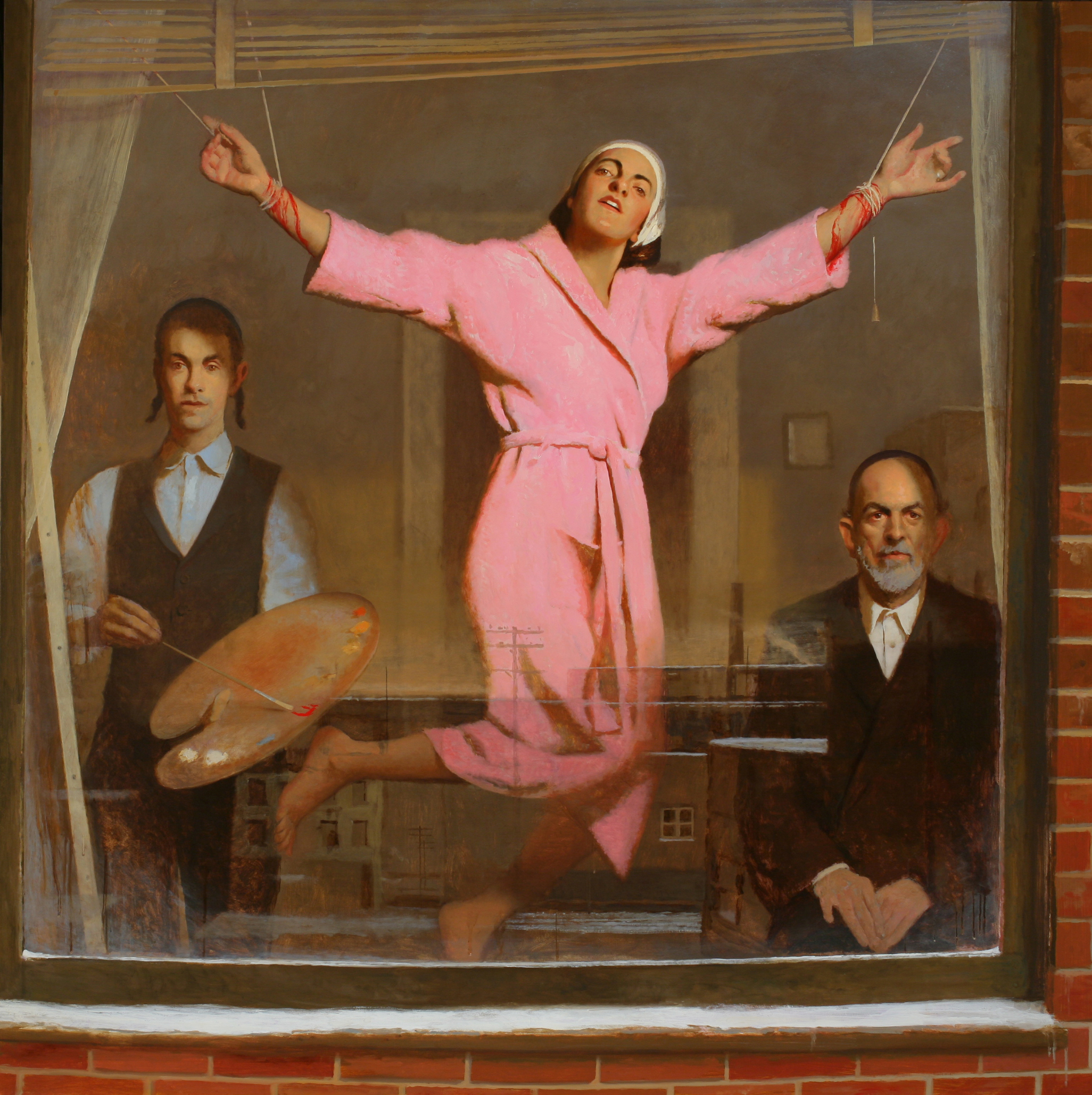
Bartlett-The-Brooklyn-Crucifiction_BoBartlettI have been surprised about how strongly people have responded to this little series on using feminine language to talk about God. I want to make clear the audience I have in mind. I am talking to people that either haven’t really thought about this before, or feel a little weird about it but don’t have a strong opposition to it. If you believe that this is actually wrong, sinful, and deeply unfaithful to the nature of God, then these posts probably aren’t for you. We’d have to go much deeper into a theology of Scripture, Sexuality, Humanity, and Gender. I may do that another time, but not right now. Today, I want to talk about the way our language about God speaks to gender and some history of how we use gendered language.

Theology of Gender Language

For the longest time, the way I would have defended masculine language for God would be with an appeal to the idea of “headship”. This is the idea that different systems and ways of human relating have people that “head” them–like a “head” of State, for example. And as the “head”, this leader stands as the representative for everyone they lead and care for.

Conservatives on this issue (as I used to be) believe that husbands act as the “head” of their family unit, including their wives. Most of these conservatives would be the first to tell you that this does not mean that women in general should see men as their “heads” in general. And yet, there is still this idea that “maleness” serves as the “head” of “femaleness”. In other words, “maleness” serves as the representation of all humanity, whereas “femaleness” does.

Continue reading

{monday} | prayer & readings for Holy Week (2015)


prayers & readings from Liberti Church’s 2015 Lent & Easter Prayerbook
{click for more Lent Posts}

Worship

call to prayer

Be pleased, O God, to deliver us;
O LORD, make haste to help us!
– from Psalm 70:1

the Gloria

Glory be to God the Father, God the Son,
and God the Holy Spirit.
As it was in the beginning, so it is now,
and so it shall ever be, world without end.
Amen!
Continue reading

God in Her Glory {1b}: A Good Facebook Debate (for a change)


wwii-woman-we-can-do-it-feminismWow. I’ve actually been surprised at the response to the last post in this little mini-series on using feminine language to talk of God. I thought I was addressing one simple thing in the life of churches, but I misjudged the degree to which people would feel like this touched on everything from their thoughts on the Bible to the nature of Jesus himself. One of the best sets of exchanges was on Facebook in response to yesterday’s post. Below, I’ve reproduced a lightly edited version of the conversation. I hope you find it interesting as well. And let me know what you think!

DEBATER: Your post says, “The model of God as Father may be profound and true; but it is not the only model, and it does not render other models less true or profound.”  It’s Jesus’ own self-disclosure and revelation of God. It’s more important than any other ‘model’ and it isn’t really a model. “Father” is not a metaphor. Its a reality for Jesus. And I’m not talking about Jesus’ physicality like his weight or hair color. Jesus revelation is of God as Father. That’s the particularity. He said pray to God as father. And he’s the Son. That’s ontological. The feminine is redeemed in Jesus, but its redeemed not by Jesus taking on the sign of the feminine, but by taking on the sign of the masculine redeemer of the oppressed and abused feminine.

ME: Your last line especially uses terms and ideas entirely foreign to the Scriptures. I’m actually shocked that you saw no issue in writing that. Women need a male redeemer to be redeemed? Even if you point to the ancient cultural idea of the male kinsman-redeemer, surely you aren’t saying that this (clearly) cultural accommodation is some revelation of the essentially gendered nature of God and redemption? The Old Testament also had lambs being sacrificed, and not people. Does that mean that Jesus in some sense had to partly be an “actual” lamb rather than a metaphorical one?
Continue reading

God & Her Glory {1}: “Our Mother, Who Art in Heaven…”


T78 INT 70

Well, they warned me.

It was my first year at my first seminary. I had the honor of being chosen for an “Inter-Seminary Seminar” course in which people from five very different seminaries got together, were given a topic they all disagreed about, and then spent a semester writings papers to and debating with one another.

One of those seminaries was a liberal Lutheran one. I was told ahead of time that the students (usually women) from this school, every year, always made a big, emotional deal about masculine language being used in the papers. And indeed, at the beginning of every single paper discussion, the first comment was always a tear-filled lament over the use of masculine pronouns throughout the paper.

And so, when it was my turn to write a paper, I tried to be sensitive to this. I changed “mankind” to “humanity”, “brothers” to “brothers and sisters”, etc. And yet, when my paper came up for discussion, they opened up once more with an impassioned complaint against the male-centered language. I told them that I had tried to be sensitive to that. They said, “no, the problem was in your use of the masculine pronouns for God!
Continue reading