Protestants, Catholics, Communion–oh my! (Happy Corpus Christi!)


Today is a Christian Holy Day called “Corpus Christi” (Latin for “the body of Christ”). Today we meditate on the mystery of Communion/Eucharist/The Lord’s Supper.

I’ve mentioned some of my Communion views before and what I articulated is a synthesis and summary of the ideas of many theologians, both Protestant and Catholic. And so today, I want talk to all my fellow Protestant brothers and sisters out there.

In my opinion, the popular Evangelical idea of the Catholic view on the Eucharist is not really right or helpful (as is the popular conception of most of Catholic doctrine). Today I want to argue that Catholicism’s “Eucharist problem” is more historical and rhetorical than theological.

Some History

In the earliest decades and centuries of church history, people were able to simply maintain the simple doctrine that at Communion, they are receiving the true presence of Christ in the Bread and the Wine (source, albeit biased). In the middle ages, though, people starting asking themselves “Wait, what does that actually mean?” Differing answers started forming and a diversity of opinion about the Eucharist began taking place. The leaders of the Church tried to bring some commonality to this. In fact, the medieval Catholic church made a few “errant” teachers affirm these statements in 1078 and 1079:
Continue reading

Ascension: Our glory & the Bible’s hinge


jesus-christ-ascension-iconYesterday in the Christian church calendar was Ascension Day, the day we celebrate Christ ascending into heaven 40 days after his resurrection and now sits at “the right hand of God the Father.”

The Useless Ascension

The idea of “Ascension” doesn’t seem to get a lot of play nowadays in the Church. This, in spite of the fact that it is an essential part of all the Church’s earliest doctrinal formulations, and the subject of the most-quoted Old Testament verse in the New Testament:

The Lord says to my lord, “Sit at my right hand until I make your enemies your footstool.”

Compared to other, non-creedal things like Hell, homosexuality, and “attacks on biblical authority”, the Ascension isn’t really talked about. Maybe this is because the Ascension isn’t really a “doctrine”–it’s an “event” and a “declaration”.

And we western Christians love our systematic “doctrines” that we can pick apart as nauseam and/or figure out how we can “apply it to our lives” in such a way that we can feel like we’re “good Christians.” But honestly, the Ascension doesn’t have many direct applications for today.
Continue reading

Falling Off the Face of the World


I really debated on writing this post. Those most intimate of place between my soul and my Creator are too often converted in my mind into sermon, blog, or conversational thoughts. I tend to be quite promiscuous with the details of my relating to God.

Yes, for many, it is helpful, valuable, and “authentic” to be let in to the inner sanctum of one’s spiritual processing. But it comes at great cost to my own vibrancy. I recall a critique I heard once of the great mystic monk Thomas Merton that he “never had an unpublished thought or experience”.

I can relate.

So what am I talking about? When you read this, I will be on a bus from Holland, Michigan to Kalamazoo. A monk will meet me there and will take me to St Gregory’s Abbey in Three Rivers for a week-long silent retreat where I will disconnect from all electronics and means of communication. I won’t read anything but prayer books, poetry, and my Bible. No phone, email, texting, kindle, news, podcasts, or anything.
Continue reading

After the Final “No”, There Comes a “Yes” [Good Friday Sermon 2017]


I’m really looking forward to doing a happy sermon sometime soon. But alas, I find myself preaching on both Ash Wednesday and Good Friday this year–not the happiest of Church Holy Days.

And yet there is hope.

It’s fashionable to emphasize the narrative nature of God’s work in the world. And yes, it’s true–there is a progressive nature to Redemption, with a beginning, middle, and end.

But God’s work is also often cyclical, with certain rhythms and movements that return, repeat, and fold within one another.

I had this in mind as I went into this sermon. Yes, we ought to press into the darkness and doubt of the Cross without just quickly comforting ourselves with the Resurrection–we have to sit there for a bit–and yet the Church Calendar gets into our bones and souls to such an extent that it transforms the darkness. We can never sit in the Cross’ forsakenness without feeling the spiritual muscle memory of previous Easters gone by. And in that is hope.

This realization led me to largely do away with my notes (which you can find below) when giving this sermon and largely ad-lib, speaking from the heart as I wrestled with this stuff in real-time. The text selections came from Matthew 26-27, and here’s the sermon audio. Feel free to send me any thoughts, questions or concerns:

You can also download it here, or subscribe to our podcast. If reading is more your style, here are my notes for your perusal. Continue reading

i am not my own (Abide with Me)


…fast falls the eventide; the darkness deepens; Lord with me abide…

Both viruses and people get themselves into us, infect us, surprise us, and change us–both for good and ill. And when they depart we are left with that most complex simplicities of emotions, asking simply: what was that? The story, the episode, that previously seemed to exist with such continuity now seems so disjointed from all others that “the purpose” seems our only thought.

…When other helpers fail, and comforts flee, Help of the helpless, abide with me…

We wonder, we wander, seeking our Home, our Rest, our Selves. We recast our history in the eyes of this present trial, this present pain, this present darkness, and feel the twitch and fear that comes whenever we seriously consider all we’ve done before and all it represents within us–all the trials caused, the pains committed, and the darknesses within us.

Continue reading

“Teach Us to Number Our Days” (Psalm 90) [a Lent sermon]


I had the privilege of preaching the Ash Wednesday service at one of my church’s campuses a few weeks ago. As is appropriate to that Holy Day and this Lenten season itself, we sat with words that drew us into a meditation on our mortality and death.

(I also talk about my grandfather’s death. For more about that, you can read my reflections.)

I help lead a Bible Study and sometimes, when I’m feeling artsy, to help us start a discussion on a certain text from Scripture, I’ll ask my group a question: what color is this text? As in, what’s the emotional tone? When you close your eyes, and let its words sit in you, what color are the images that come to mind? For me, sitting with this Psalm before preaching it, I felt it was a dull, pale blue–or maybe more like a burlap grey. And I have found that “hue” marking much of my time this Lent.

So even now, a few weeks in to season, I find myself returning to the themes of this Scripture text. I hope it might lead you to engage all the more deeply into this Holy Lent. The text is Psalm 90.1-12, and here’s the sermon audio. Feel free to send me any thoughts, questions or concerns:

You can also download it here, or subscribe to our podcast. If reading is more your style, here is my manuscript for your perusal. Continue reading

“Darkest Before the Dawn” [a sermon]


church-philly-bw-cross-market-eastDuring the Advent and Christmas season, my church did a sermon series going through the key texts of Handel’s Messiah.

I got to preach during that series and only recently realized I never posted it here.

I’m beginning to see that light and darkness are constant themes through my preaching, and in this sermon, those themes are explicitly in the text. God’s people have returned from exile to their homeland, but it still hurts. Things aren’t the way they remembered, and they keep encountering difficulties and old temptations at every turn.

And so God acknowledged the darkness, but promises light. Is that enough, though? How do we not just sit back and say, “yeah, yeah yeah–I’ve heard this all before” and then continue on steeped in our cynicism? In this sermon (as with others I’ve preached), I try to press more deeply into the darkness to see what God might say. The text is Isaiah 60.1-3, and here’s the sermon audio. Feel free to send me any thoughts, questions or concerns:

You can also download it here, or subscribe to our podcast. If reading is more your style, here are my notes for your perusal. Continue reading
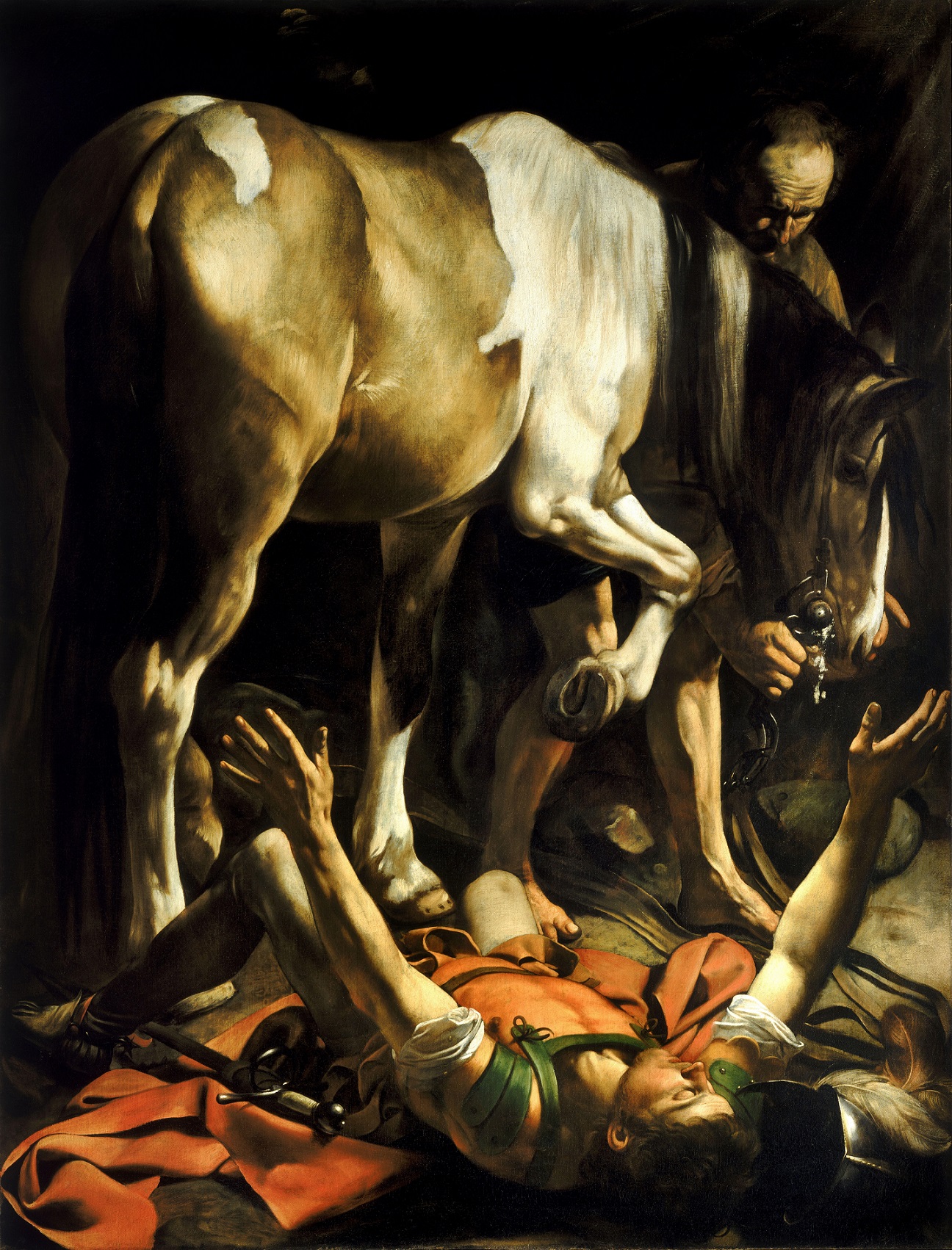
“Damascus” (a poem for the Feast of Paul’s Conversion)


conversion_on_the_way_to_damascus-caravaggio_c-1600-1

A troubled heart troubled still as I walk in the valley of the shadow of death but Im the shadow of that valley as I strike them with one rod while another comforts them why wont they die as I strike them with My Left as your right upholds them all Ill kill them inhale Ill kill them exhale Ill kill them inhale so on and so forth I walk as the dust of My sandals covers their face while Mine is clean Mine is pristine following none but MySelf on this dusty Damascus road and
then—
Continue reading

Demand a Miracle (Merry Christmas) [from W.H. Auden’s “For the Time Being”] 


Flickr-Advent-Candles-rabasz

This is from the Advent portion of W. H. Auden’s Christmas Oratorio, For the Time Being. The full text is under copyright, but it’s in this book, if you’re interested.

From Part I:

[T]ime never moves and nothing can ever happen:
I mean that although there’s a person we know all about
Still bearing our name and loving himself as before,
That person has become a fiction; our true existence
Is decided by no one and has no importance to love.

That is why we despair; that is why we would welcome
The nursery bogey or the winecellar ghost, why even
The violent howling of winter and war has become
Like a juke-box tune that we dare not stop. We are afraid
Of pain but more afraid of silence; for no nightmare
Of hostile objects could be as terrible as this Void.
This is the Abomination. This is the wrath of God.

Part II, Chorus:

Alone, alone, about a dreadful wood
Of conscious evil runs a lost mankind,
Dreading to find its Father lest it find
The Goodness it has dreaded is not good:
Alone, alone, about our dreadful wood.

Where is that Law for which we broke our own,
Where now that Justice for which Flesh resigned
Her hereditary right to passion, Mind
His will to absolute power? Gone. Gone.
Where is that Law for which we broke our own?

The Pilgrim Way has led to the Abyss.
Was it to meet such grinning evidence
We left our richly odoured ignorance?
Was the triumphant answer to be this?
The Pilgrim Way has led to the Abyss.

We who must die demand a miracle.
How could the Eternal do a temporal act,
The Infinite become a finite fact?
Nothing can save us that is possible:
We who must die demand a miracle.

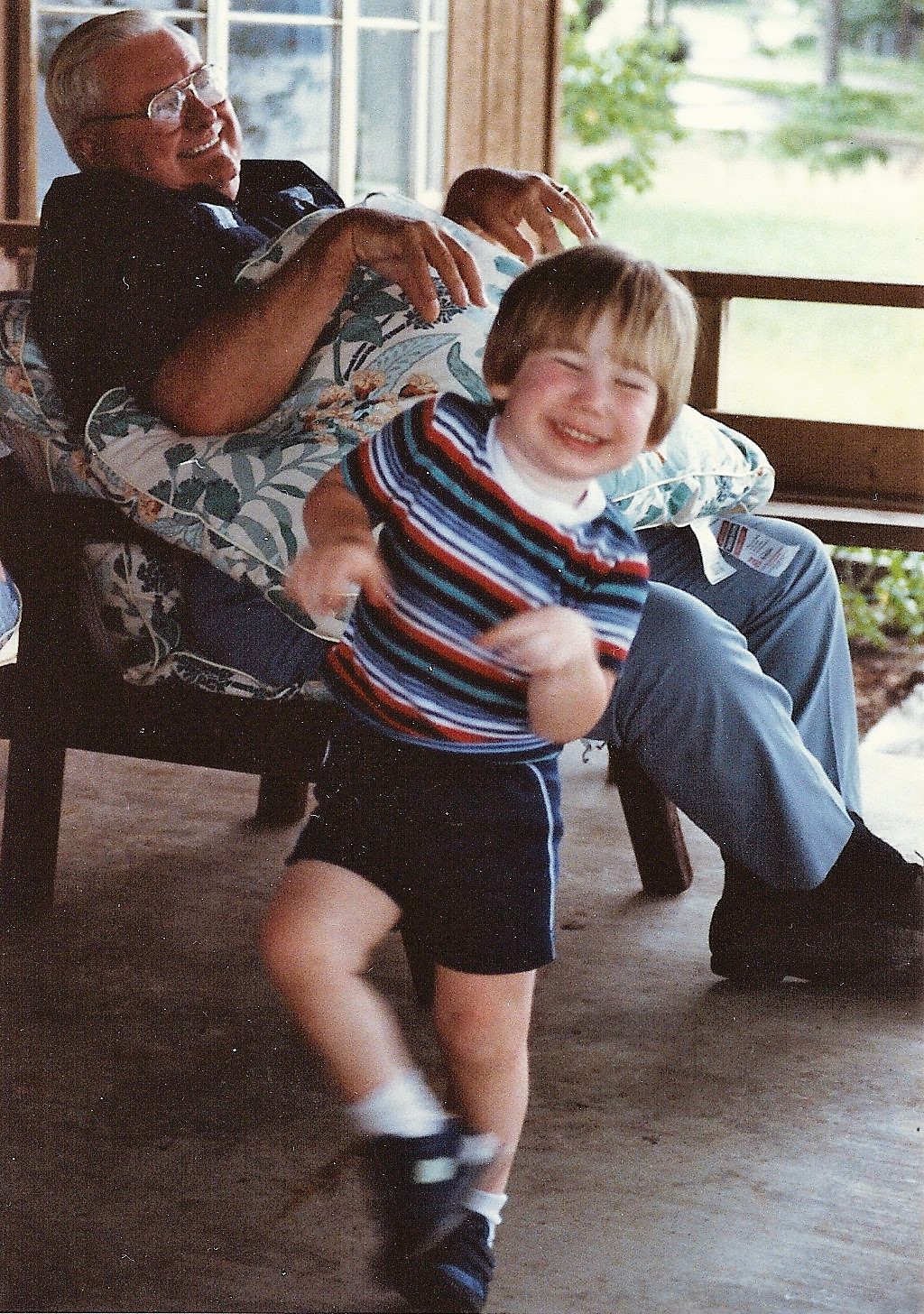
My Grandfather’s Passing (Hope in Death?)


peep-paul-dance-2Today is the sixth anniversary of my Grandfather’s death. I am reposting this reflection I wrote at the time.

This past Sunday, the day after Christmas, I watched my grandfather die. This is the first death I’ve experienced of someone very close to me. I’ve known people who had died, sure, but no one as close as this.

This man walked with me and I with him for my entire life. I sat on his knee and was tickled by his hands. I grew up hearing legends about him, and I walked in a general sense of awe and disbelief when in his presence.

His name was (is?) Lester Travis Williamson, or as I knew him for most my life: Peep (a mispronunciation due to the first grandchild’s toddler lisp).

Peep represented for me a tenacity and determinedness of love that great stories of tragedy and triumph are built upon. As their old pastor said during the funeral, he was a man that if you asked for a crumb would give you the entire loaf and then chase you out the door to give you another loaf for the road.

But this is not to be confused with the contemporary pictures of the sentimental, gratuitously giving man–cheerful, talkative, jocular, and always-optimistic. If Peep was anything, he was the quintessential man of his generation–America’s vision of a “real man”–quiet, determined, and strong. He spoke with intention in every syllable, meaning what he said and saying what he meant.

Continue reading

A Theology of Clean Water, Christmas, & Advent


Tomorrow is my 31st birthday, and instead of any gifts or Facebook Wall well-wishes, I’m asking people to give $31 on my campaign page at Charity: Water to give access to clean water to those in developing country.

But it is also Advent and Christmas season, giving an even deeper and fuller reason to give, especially if you would call yourself a Christian.

Yes, as Christians we ought to care about the pain and suffering of the world no matter what chapter and verse we can cite on a particular issue. But water, however, is uniquely theological and full of meaning.

A Theology of Water & Advent

Water is an essential and mystical part of the Christian story and message, giving us unique motivations and resources for addressing the issue of clean water. The Israel story begins with God creating the world out of the murky depths. The Israelite people are set free from bondage to a prince of death and find their redemption by passing through a Red Sea, which would have held certain death and return to bondage; they enter the Promised Land in a similar fashion. God promises to sprinkle clean his people with the waters of redemption. It is by more than one water well that Patriarchs find their wives and Christ finds a woman in need of redemption. It is in the world to come that the Tree of Life is seen once more, and a River of Life flows from its roots offering life and salvation to all who drink.

Continue reading

Forget Gifts. Give Clean Water for My Birthday


israel-en-gedi-1[TL;DR: Instead of gifts for my birthday, I’m asking for donations to Charity: Water to give clean drinking water to those with none. Give on my Campaign Page.]

The picture on this post is from my trip to Israel earlier this year. It’s from En Gedi, an oasis in the the desert, near the Dead, Masada, and the caves where the Dead Sea Scrolls were found. It is literally a random spring in the middle of the vast Israel wilderness.

I thought of this image as I was listening to a recent episode of The Liturgists podcast on suffering. They offered interviews, art, music, and poetry about the pain and injustice which exist on a global scale.

They lamented that many such programs leave us with no ability to do something in response. But they offered a way. They interviewed the founder of Charity: Water, a non-profit that focuses on delivering sustainable clean water wells in underserved parts of the world.

One of the best ways they have found to raise money is to ask others to donate their birthdays to Charity: Water. Instead of getting gifts, people would encourage others to give that gift-money to Charity: Water.

So that’s what I’m doing for my 31st birthday on December 20th. 

Continue reading

Developing Ancient Creeds & The Trinity


monica-ben-wedding-rings-trinity-tattoo-arm

Yes, I graduated from seminary, and yet I still have a couple more classes I’m finishing up. One of them is going through the documents, Creeds, Confessions that define the theology of my denomination, the Reformed Church in America. I’m having to write a bunch of reflections on differents aspects of these writings, and I offer them here.

Every way of understanding the world involves creeds and confessions. “Creed” comes from the Latin word meaning “I believe”, and a Confession from the Latin for “acknowledge”. A Creed or Confession, then, is simply a distillation of what you acknowledge and believe. There’s nothing weird or particularly “Catholic” about it.

From Creeds to Trinity

If you are a Christian, no matter which part of the family you call home, your beliefs almost certainly fall in line with what have been called the “Ecumenical Creeds”, which are the oldest and simplest articulations of the Christian essentials. They include the Apostle’s, Nicene, and Athanasian Creeds.

Now, if you were going to start writing out the core of what you believe, where would you begin? The interesting thing about these Ecumenical Creeds is that they are built entirely, both in foundation and structure, around the doctrine of the Trinity. Why?
Continue reading

“Rage Against the Dying of the Light”: My Good Friday Sermon


job-silohetteI had the honor of giving the reflection at our Good Friday service this year. For the service, we did a series of extended readings, from Luke 22.39-23.56, from Jesus praying in Gethsemane to his burial.
Preaching on this passage was a unique privilege for me, having recently returned from Israel. I walked these very steps that Jesus takes in our story. I prayed in the shade under the Olive Trees in the Garden of Gethsemane on the Mount of Olives. I walked down the Kidron Valley to the place where it’s actually quite possible Jesus was imprisoned overnight, beaten, and mocked. I walked through Old City Jerusalem to the fortress of Pilate. Our hotel was right outside the old city walls near the place of Crucifixion.

This passage therefore, especially in light of that trip, was so rich with meaning throughout. Nevertheless, the focus of my message was living in the darkness and tension between Good Friday and Easter.

Here’s the audio:

You can also download it here, or subscribe to our podcast. If reading is more your style, here (and below) is my manuscript for your perusal. Also, here is a picture of the cemetery I reference in the sermon:
Continue reading

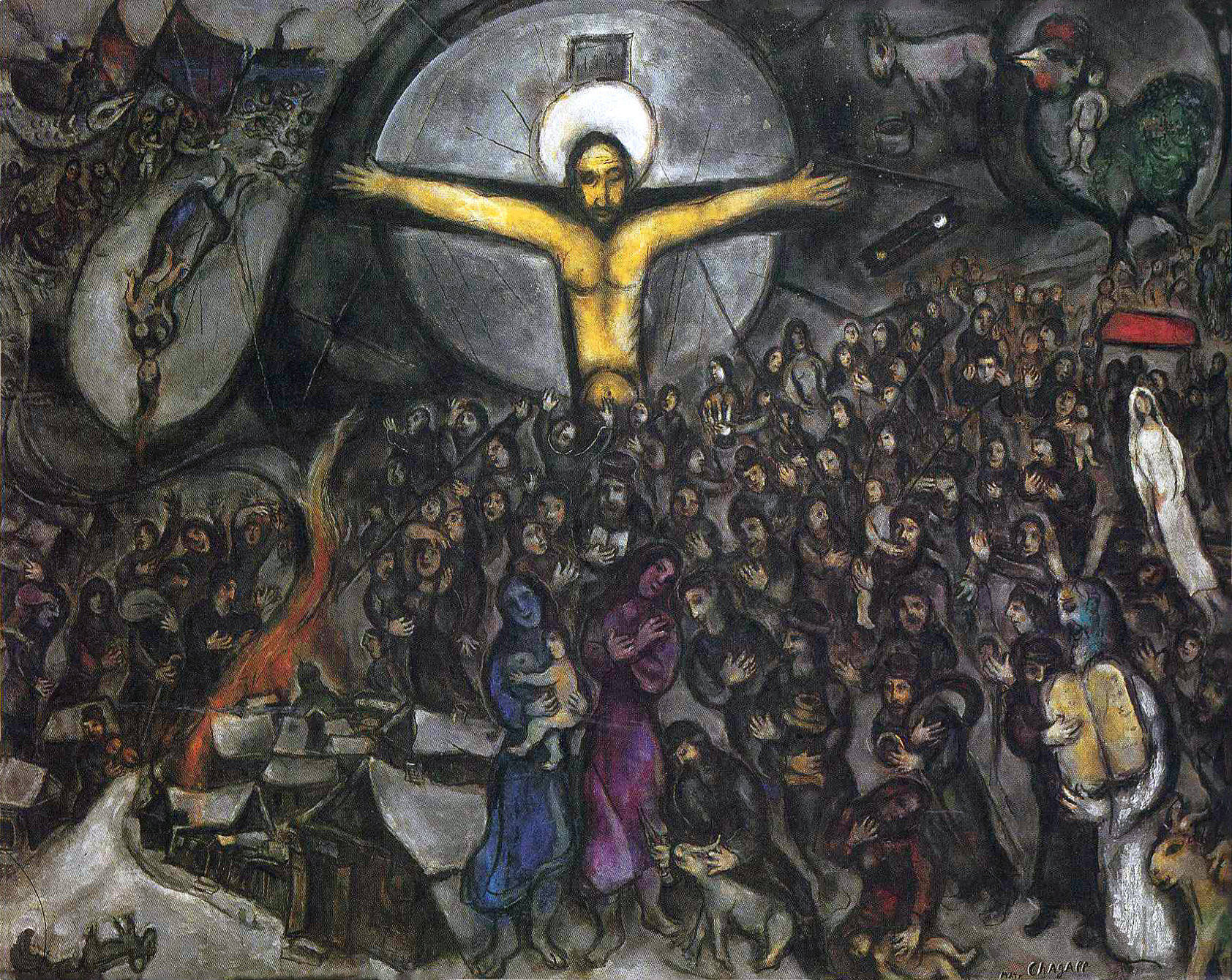
My Sermon on Christ in the Darkness (John 1)


chagall-exodus

During the Advent season, I preached a sermon on John 1.1-5,10-18, the famous Logos. In the sermon, we talk about Jesus revealing himself in the midst of the darkness of this world and our hearts, and so encouraging us to press all the more deeply into darkness rather than running from it. Looking back on it, I think it’s a very “Lent-y” sermon and so I’d like to throw it up here this week during Holy Week. It was my first sermon I preached without a manuscript, so there’s no version to read (sorry). But here it is for listening:

You can also download it here, or subscribe to our podcast here.

[Image credit: “Exodus”, by Marc Chagall]