American Lent in the Season of Trump


One of the smartest and funniest women at my church, Alyssa, has this great blog you should all follow. In it, her observations on life, cities, and spirituality are whip smart and hilarious. Several weeks ago, she put up a post asking “Is Trump America’s Lent?” She writes:

For the purposes of this argument, let’s call Lent an annual wake-up call, a reminder that we aren’t as good as we think we are….Trump’s success so far is a wake-up call in itself, like a large-scale Lent: maybe we aren’t as good as we think we are. Apparently, as a country we’re actually more racist and fearful than we thought we were just a few months ago, when people laughed at the thought of him actually standing a chance. The land of the free might just be okay with building that wall. The home of the brave is actually pretty scared of Muslims.

This is incredibly insightful, and I think it turns our national “Trump-versation” to a helpful place in the Lent season. Rather than trying to understand “the Trump voter” on a micro-individual level–a level full of misunderstanding, prejudice, and judgmentalism on all sides–we might turn our gaze inward to our nation as a whole. Looking at the bigger movements and structures of our society, we can ask the hard questions that you can’t really ask when staring another individual in the face.

Continue reading

Good Friday Creation & Re-Thinking “The Fall”


Bosch-Garden-Earthly-Delights-Outer-Wings-Creation-WorldEach year during Lent, I press all the more deeply into a motif that appears throughout the Bible: that in some mysterious way, the God of the Universe has had a “slain” and “suffering” aspect to his nature for all eternity–even before the world came into being.

When this world did come into being, the Bible says that it came to exist “through” this suffering and slain Jesus. Therefore the rhythms of Christ’s own nature and life are written into the very DNA of the world. All of our history is an echo of Jesus’ life, both from eternity past and while on earth.

I’ve written before about what this means for the world and what this means for us, but what might this mean for the entire history of God’s work in this world?
Continue reading

Lent & Ash Wednesday: A Collision of Life & Death


paul-ash-wednesday-2014

Ash Wednesday is the beginning of Lent, the time in which we turn the volume up on the dark whispers and hauntings in our souls that we spend the rest of the year trying to drown out. It is the season where we feel the gravity of our weakness and finitude. And Ash Wednesday particularly focuses on where we are most weak and most finite: our mortality.

Hundreds of millions (perhaps billions?) of people will gather today to take on one of the most packed symbols of the historic Christian faith: the placement of ashes in the shape of a cross on their forehead. We are called in the ashes to begin this process of mourning our slavery to Sin and Death. In the Ash Wednesday service, we hear the words, “remember from dust you came, and to dust you will return.” Ashes are a symbol of suffering, lament, tragedy, repentance, and mourning.
Continue reading

For Lent: Free Music, Readings, & Devotionals


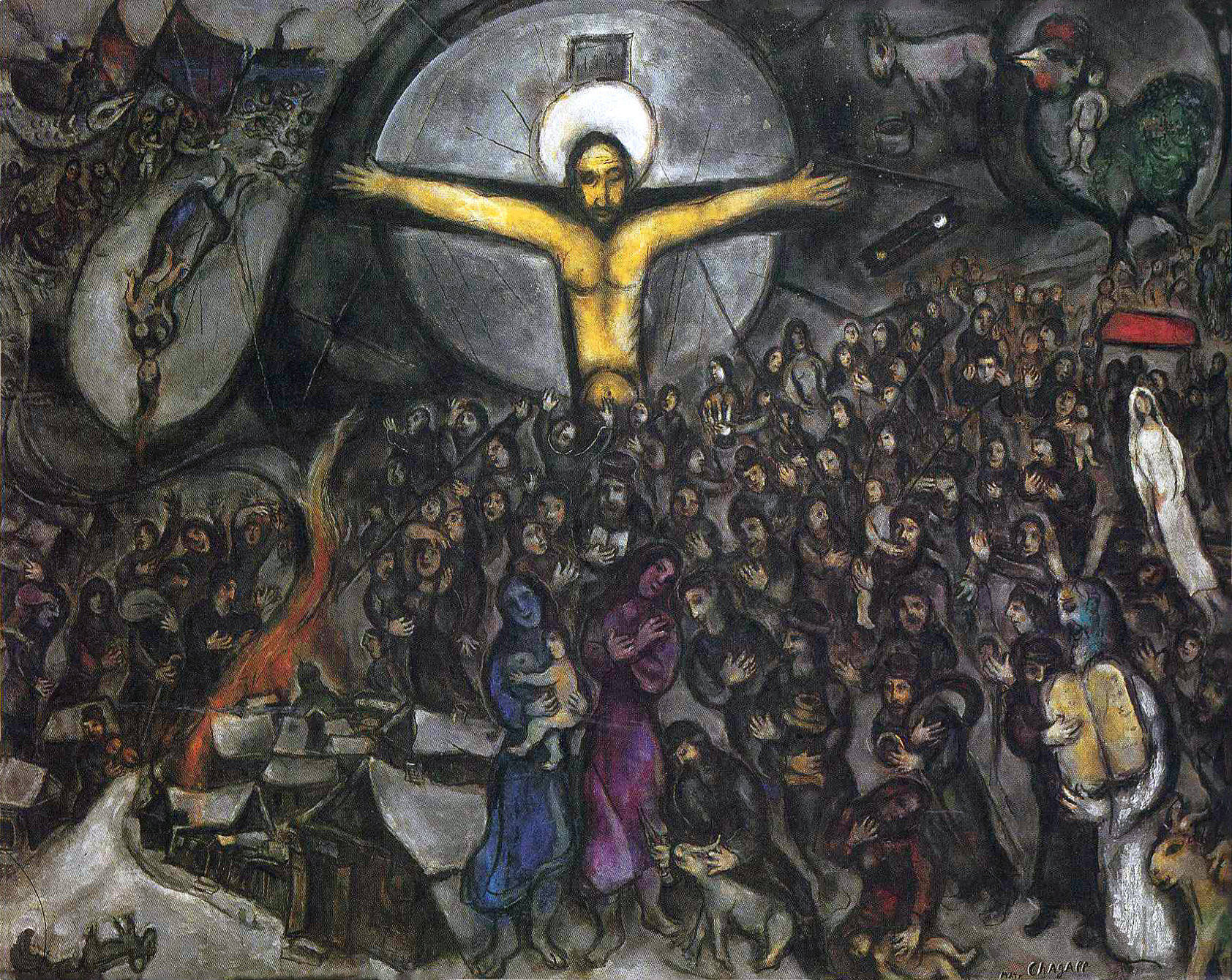
chagall-exodus

I’ll be honest, one of the reasons why I love Lent and the Church Calendar is because it is a helpful corrective for my own personal lack of personal discipline. I’m not especially skilled at putting together my own structure, and so I really flourish when structure and pattern is placed on me from the outside.

This is especially true with spiritual practices. To engage with a Church season like Lent, I often need to give myself a blog series to keep me thinking on a theme for the season (see above, under “Lenten Posts“). I really do well with reading plans, prayerbooks, music albums, etc. If you find yourself in the same boat, here are some resources for this year’s Lent that some of you may find helpful.
Continue reading

My Pilgrimage to Israel & Palestine: Day 1


DSC_2033 (2)

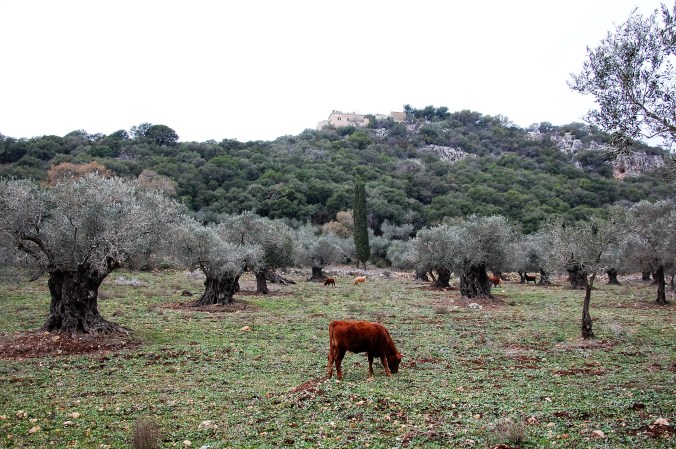
A couple of days ago, I kissed Philadelphia goodbye, boarded a plane, and began the nearly 24-hour process of traveling to the Middle East for a two-week long trip to Israel and Palestine. Today was Day 1 (I’m 7 hours ahead, so while I’m about to go to bed, most of my readers are probably getting this in the afternoon).

I’m part of a team of students in my seminary program who are engaging in this Intercultural Immersion trip, where we will be spending time throughout Israel and the Palestinian territories.

Anyway, I’m sitting here at the end of the first day. I’m exhausted physically, as well as emotionally. I had no idea just how disconnected my religious faith has been to the real world. I love historical things and enjoy walking in others’ footsteps and inhabiting their space once more. And yet, for the most important part of me, I have never had any material interaction with the physical, tangible stuff of my faith’s own story.

I realized today that I have learned to live my Christian life in such a way that I have no mental frameworks for how I’m processing this. I took for granted that I could have a thriving, deep, spiritual existence without having seen and walked the lands and places from which the beliefs were born. And yes, we can have such thriving spiritual lives without visiting this land.

But (to overuse a phrase people use all the time when they come back from this region), I feel like the Bible has transitioned from a silent, black-and-white movie, to a full HD Imax one. It’s crazy. I’m still processing it all. It’s surreal, to say the least.
Continue reading

Terror, Rage, Hope & Christmas Lights


Flickr-Advent-Candles-rabasz

This Advent, we’re meditating on the idea of Hope by looking at quotes from Christians and talking about what they might say about our Advent Hope.

“It is precisely because the Christian hopes for the ultimate and definitive, that she also hopes for the temporal and provisional. Precisely because she hopes with joy for the dawn of the great light, that she hopes with provisional joy for the little lights, which may come and go, but which will not come and go in vain.

These little lights act as temporary illuminations that can help the Christian to look and move more properly towards that which they can only point to, but which in their proper time and place can in fact actually represent to us!

Because the Christian hopes for the Last Day, for the eternal year, he hopes for the next day and the new year, from which, whatever they may bring, he can always expect at least new indications of the coming of Jesus Christ.”

–Karl Barth, Church DogmaticsIV.3.2, p.938 (edited for clarity)

Read those words again. Slowly. We need these words, especially this year. As predators of consumerism, terrorism, pseudo-fascism, jingoism, escapism, and liberal idealism lie in wait to consume our souls, we need a light in the darkness. We need something to hold on to.

Continue reading

Hope in Advent’s Darkness


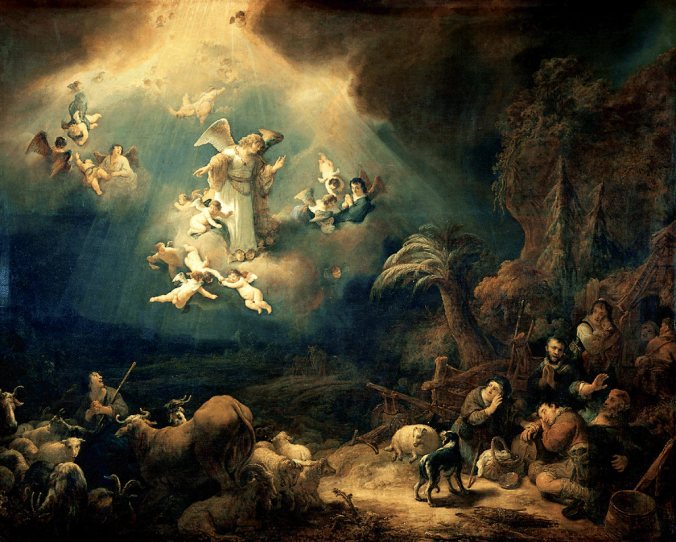
flinks-angels-anouncing-the-birth-of-christ-to-the-shepherds

This Advent, we’ll be meditating on the idea of Hope. It’s a trite word we throw around casually and misunderstand (and underestimate) profoundly. Today’s post is a meditation on Hope I wrote for the Advent Prayerbook my church put together. Get your own copy and engage all the more deeply in this season. 

“Now hope that is seen is not hope. For who hopes for what is seen?”
–The Apostle Paul (Romans 8.24)

Jesus was likely born in Spring, not Winter. And yet, there seems to be such a wisdom and appropriateness to situating this Advent time of year during these Solstice days, when darkness envelopes all and the very air we breathe bites us back. Here, beauty is not seen in life, colors, and light; but in death, darkness, and night. Continue reading

Advent and… (the series)


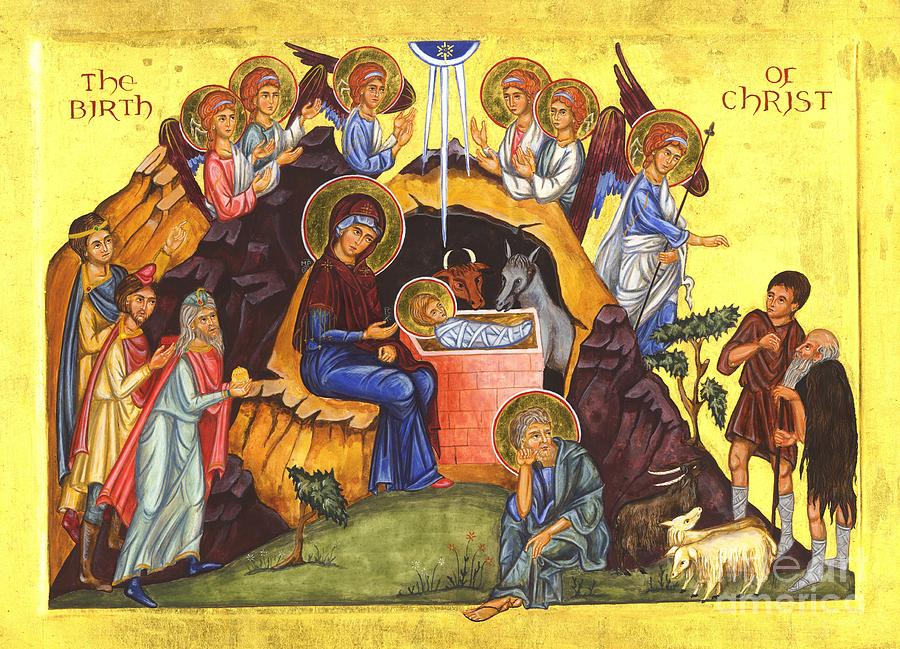
advent-nativity-icon

This is the dedicated post page for the Advent series “Advent and…”. In it, we looked at the various ways Advent connects to seemingly unrelated parts of our life and existence.

Welcome to Advent, 2012.
This was the series introduction. I looked at how Advent speaks to our whole selves, including a whole host of “un-Christmas-y” kinds of things.

Advent & Sex: we are holy ground
When you think of Christmas time, you don’t often think about sex. This post talks about the implication of Christ’s arrival for our sex lives.

Advent & Sex-lessness: here’s to singleness & celibacy!
The Advent story is a notably sex-less affair. What this means for us is huge. This was by far the most widely read post of this series, and in the top five most widely read posts in this blog’s history.  Continue reading

How seminary changes your relationship with your church


Caravaggio-Saint-Jerome-header

I’ve got a new post up at Going To Seminary where I talk about how the difficulty of finding one’s voice in the midst of all the heroes you have going into seminary and the new ones you find. We end up doing a lot of mimicking and daydreaming about other people’s spiritual lives and gifts; it’s hard to find our truest selves in the midst of it. Further, I talk at length of the various ways that seminary changes the way that you, as a developing leader, relate to the leaders at your church. It’s also an interesting post to read on this All Soul’s Day. (On a side note, this post has a lot more to do with my experience years ago moving from one state to another for seminary than my current experience at my current church.) Check it out, and let me know what you think! Here’s an excerpt:

For many of us, attending seminary ends up changing our relationship with those people that have shaped and supported us and led us to that moment. For many, they are leaving supportive church families and leaders and doing school elsewhere. I’ve watched many of classmates have to go through a sort of internal “break-up” with their home churches and those pastors with whom they spent so much time. It hurts. They wonder why their pastors “back home” who were so supportive of seminary training won’t return emails. Can’t get together for coffee on school breaks. Won’t talk about possible job opportunities in the future.

Read the full post:
All My Heroes are Dead

Check out the rest of my Going To Seminary posts.

[image credit: “St. Jerome” by Caravaggio]


CashTag

Enjoy the Post? Leave a tip with Square Cash!

John Calvin on Stupid Eucharist Theology (Happy Corpus Christi)


communionbreadwine-2

Yesterday was the Christian Church Holiday of Corpus Christi, where we celebrate that Jesus actually meets us in the Bread and Wine of Communion. It’s not merely a symbol to make us think of certain doctrinal ideas, but there are very real spiritual things happening in those elements. I’ve written elsewhere about this in detail.

Today, however, I want to offer you a funny little rant John Calvin goes on in his Institutes of the Christian Religion. In it, he is responding to those that accused the Reformed tradition of making the Eucharist way too heady and rationalistic of an idea, sapping all beauty and mystery out of it. Here was Calvin’s response, encouraging us all to embrace the beauty and awe of Communion: Continue reading

What is a Sacrament? (Happy Corpus Christi!)


eucharist-bw-wafer

Today is the Church Holy Day called Corpus Christi (Wiki), Latin for “the Body of Christ”, in which the Church takes a few moments to reflect and meditate upon the gift that is the Lord’s Supper (or Eucharist, or Communion). In honor of this, I thought I’d share a recent essay I wrote articulating what I believe is happening in the Sacraments. Let me know what you think!

A sacrament is any material thing that God uses to communicate himself within Creation. Yes, this is quite the broad definition for “sacrament” (little “s”). Every single way that God has ever revealed himself in this world has always been in a mediated sense. God has never been revealed in his full “Godness”. It is always through a material means, and mostly clearly in Jesus Christ.

In this sense, I can accept things like marriage and confirmation as sacraments; but I can also see a good beer, TV show, conversation, or even suffering (like the Cross) as a sacrament. Any material means by which God communicates any part of who he is a sacrament.  It has also been quite freeing for me to see all of life as inherently sacramental.

In this sense, sacramentalism becomes a primary filter through which to understand and describe reality as it is and the nature of the Creator/Creation distinction. This collapses the old unhelpfully-gnostic “transcendence/imminence” dichotomies.
Continue reading

Ascension: Our glory & the Bible’s hinge


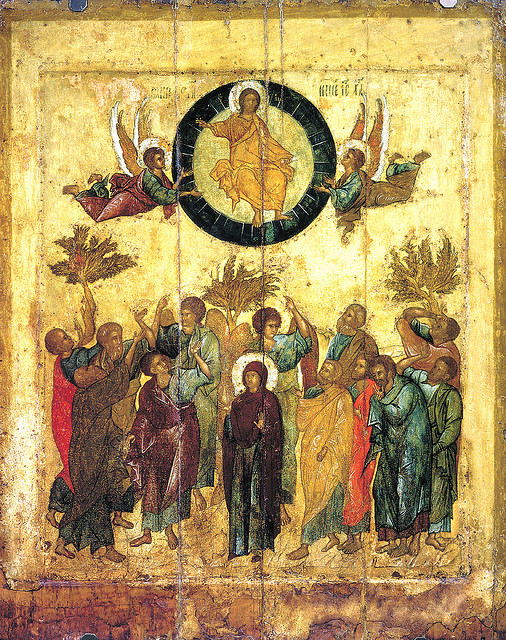
jesus-christ-ascension-iconToday in the Christian church calendar is Ascension Day, the day we celebrate Christ ascending into heaven 40 days after his resurrection and now sits at “the right hand of God the Father.” (You can read a prayer and poem I posted earlier for this Holy Day)

The Useless Ascension

The idea of “Ascension” doesn’t seem to get a lot of play nowadays in the Church. This, in spite of the fact that it is an essential part of all the Church’s earliest doctrinal formulations, and the subject of the most-quoted Old Testament verse in the New Testament:

The Lord says to my lord, “Sit at my right hand until I make your enemies your footstool.”

Compared to other, non-creedal things like Hell, homosexuality, and “attacks on biblical authority”, the Ascension isn’t really talked about. Maybe this is because the Ascension isn’t really a “doctrine”–it’s an “event” and a “declaration”.

And we western Christians love our systematic “doctrines” that we can pick apart as nauseam and/or figure out how we can “apply it to our lives” in such a way that we can feel like we’re “good Christians.” But honestly, the Ascension doesn’t have many direct applications for today.
Continue reading

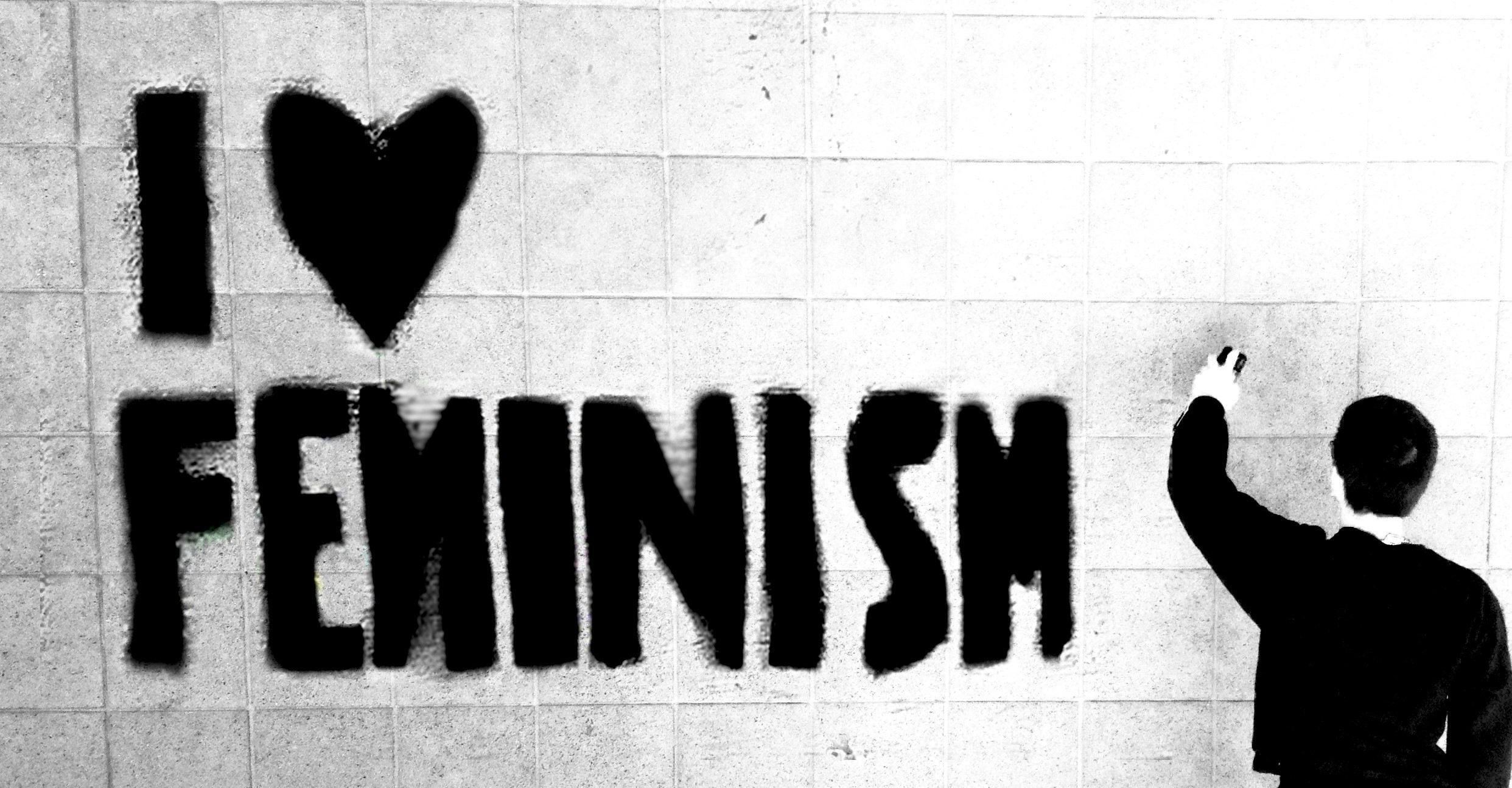
Back on Track: The How (and Why) of Christian Male Feminism


maleFeminism110314

Remember the beginning of Lent, when I said I wanted to lay out a vision for how Christian men can think about God, the Church, and Theology in a way that takes into account the concerns of feminists? I said that these thinkers had been exposing the very real damage that has been wrought by us treating “White Male Theology” as default, neutral, objective “Theology”.

Well, believe it or not, we never actually got to what I wanted to write about. Full disclosure: that whole series was conceived because I had written a paper on this topic that I was proud of–a paper I wanted to edit down and make into a series of blog posts. And yet, before we could get to what amounted to a term paper, I had to take the reader through a lot of the other ideas that were in the rest of the class.
Continue reading

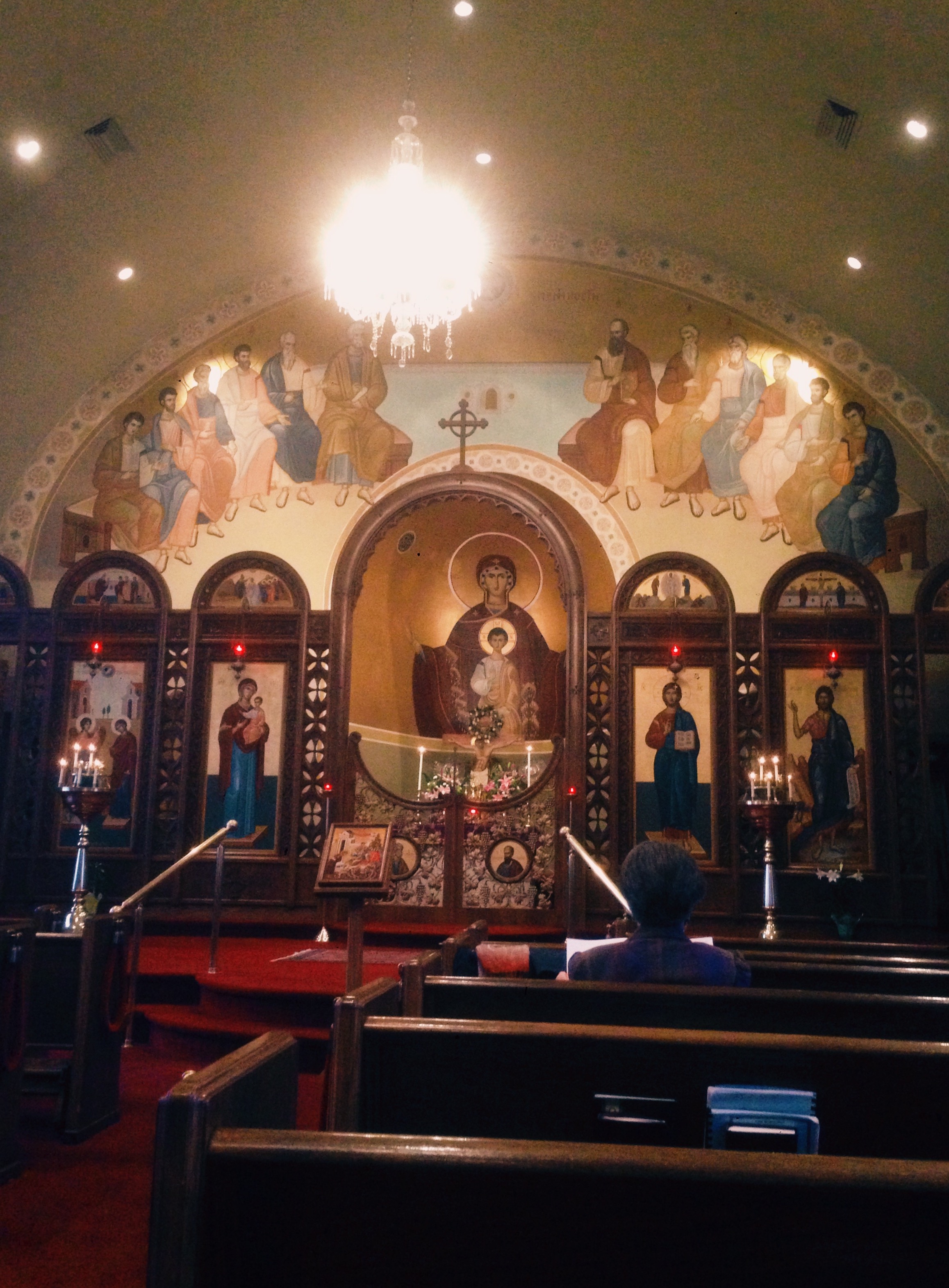
Orthodox Holy Week, Continued.


I wish everyone I know and love could come to Holy Week. The service of the Twelve Gospel Readings is so rich. It is long and it is rigorous (3 hours) but that is the purpose of liturgy — to re-form us in the spirit of Christ, away from the World, and that takes work. A lot of it. After the reading of the 5th Gospel, the lights go nearly out. The Priest enters carrying the icon of Christ on the Cross (video can be seen here). It is a slow procession and he hymns: Continue reading