Quick Christian Feminism Quiz: What do you think of this image?


edwina-sandys-christa-edit

From Lynn Japinga’s excellent Feminism & Christianity: An Essential Guide (p.93):

Artist Edwina Sandys created a sculpture of a female form, arms outstretched as if hanging from a cross. The sculpture, entitled Christa, has created controversy wherever she is displayed. Critics say the statue defies the historical fact that Jesus was a man. Some viewers feel that the symbol of the cross is degraded or even blasphemed by a Christ in female form. Others are disturbed by the sexual overtones of the naked woman. Some people are troubled by yet another violent image of female suffering. A few people see in the sculpture the message that the death of Jesus symbolizes the pain of all human suffering.

The response to [this image] reveals various theological assumptions. Some people dismiss…the sculpture because they are literally false. Jesus was a man. End of discussion. Other people consider these images offensive and uncomfortable. It insults Jesus, and them as well, to think of him as a woman. These imaginative reconstructions of important events in the life of Jesus pose an important theological question: What difference does it make that Jesus was male?

Have at it. What do YOU think about this piece? What’s your first gut reaction? Why? What difference does it make that Jesus was male?

Continue reading

Lent: Poems, Mixtapes, Prayerbooks – Oh My!


chagall-exodusI’ll be honest, one of the reasons why I love Lent and the Church Calendar is because it is a helpful corrective for my own personal lack of personal discipline. I’m not especially skilled at putting together my own structure, and so I really flourish when structure and pattern is placed on me from the outside.

This is especially true with spiritual practices. To engage with a Church season like Lent, I often need to give myself a blog series to keep me thinking on a theme for the season (see above, under “Lent Posts“, and also check out this year’s series). I really do well with reading plans, prayerbooks, music albums, etc. If you find yourself in the same boat, here are some resources for this year’s Lent that some of you may find helpful.
Continue reading

This Ash Wednesday, I can’t do ‘Ashes to Go’ or ‘#Ashtag’


Processed with VSCOcam with hb2 preset

Hmm… I definitely took an Ash Wednesday selfie (see above). After this, though, I don’t know that I will in the future. As for Ashes To Go, I couldn’t agree with this piece more.

The Rev. Erik Parker's avatarThe Millennial Pastor

ashtag-selfie-ashwed-churchmojo-squareThis morning a blogger and writer that I like to read and whom I respect, David R Henson, posted an insightful blog post about the problems with #AshTag.

As I prepare for Ash Wednesday, my own thoughts have been swirling around how to approach and understand this first day of Lent. As David considered the problem of Ash Wednesday selfies posted to social media using the hashtag #AshTag, one line in particular caught my attention.

The systemic push within the church for Ash Wednesday selfies is an exercise in whistling past graveyards.

Needless to say, I won’t be posting an Ash Wednesday selfie (one would think that Shrove Tuesday or Mardi Gras would be the big selfie night).

AshestoGo4But another Ash Wednesday innovation that I have surprised myself by not being terribly interested in is ‘Ashes to Go.’ Ashes to go is where clergy go out…

View original post 642 more words

Lent & Male Feminism: Reflections & Repentance


ash-wednesday-faces-of-the-faithful-photos

Today is Ash Wednesday. It is the beginning of the Lent season of the Christian Church Calendar. It is the time of year in which we turn up the volume on those darker whispers in our hearts to hear what they say. We turn our ears to the cries of the world bear the wounds of a weeping earth in our hearts and hands. And oh, the wounds are deep.

We come to this Lent with the weight of so much on our collective shoulders: so much brokenness, so much injustice, so much pain, heartache, death, and violence in the world. I honestly thought that 2015 would bring relief from 2014. So far, it has not.

But in the midst of the chaos that reigns both within and without, I am determined to turn my thoughts and this blog towards one area in which the Church as a whole needs to repent; an area in which I feel we can make some real progress in this day and age: Women in the Church.

I do have an on-going series on this topic that I’ve been adding to for the past couple of years, but I think it’s important and helpful to turn towards it particularly now. Lent has always had a deep connection to this topic for me.
Continue reading

ISIS, The 21, and Letting The Bible Speak For Itself


Featured Image -- 12968

Yes and amen.

josh's avatarJosh Howerton

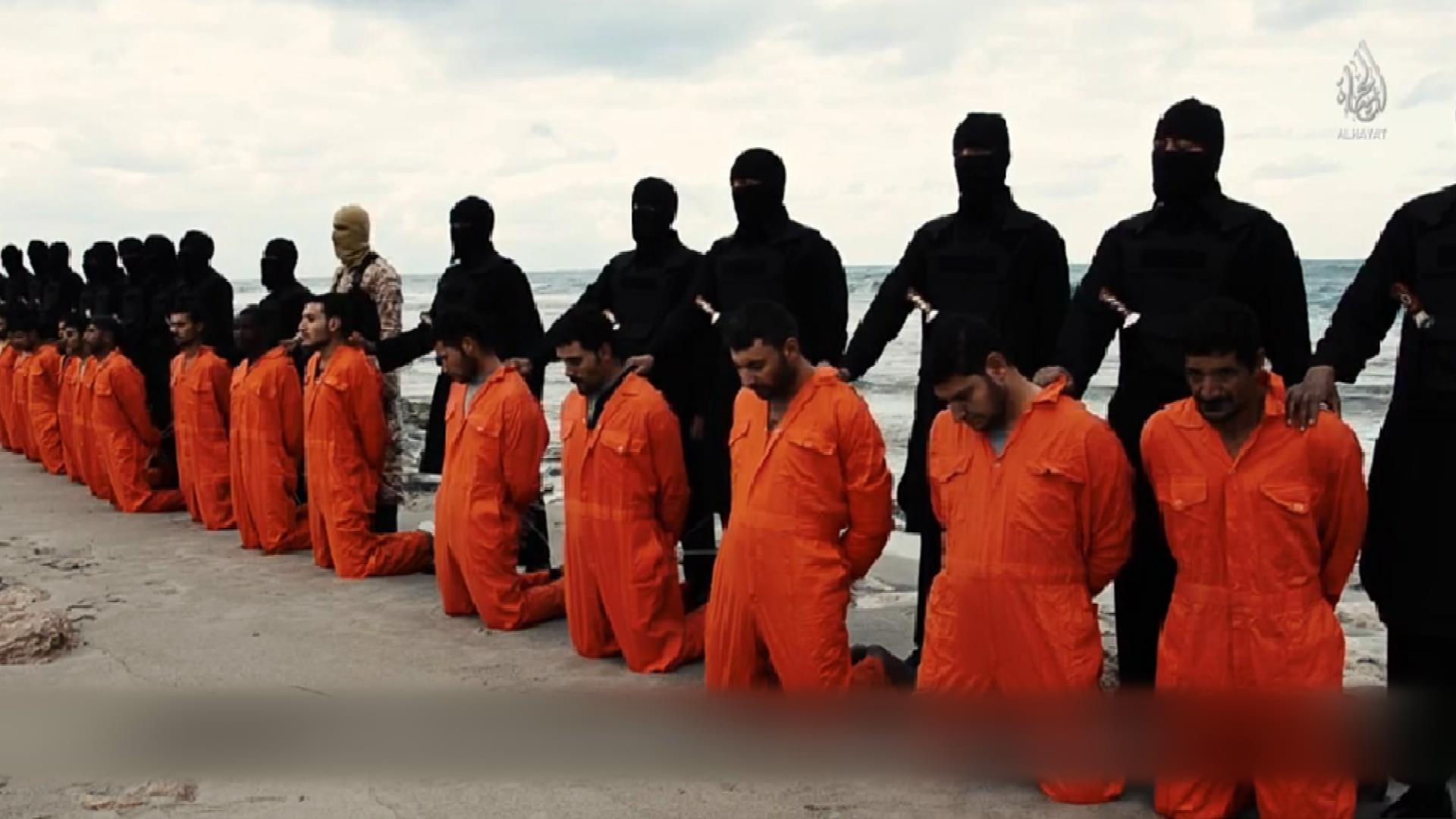
Yesterday, shortly after WG’s ended at The Bridge, news broke of ISIS releasing a video in which 21 Egyptian Christians – scornfully called “the people of the Cross” by the terrorists  – were marched to a secluded beach and savagely beheaded by men in black masks. After huddling our little family around the computer to talk about it, I was going to write a post. But sometimes a horror is so deep it’s best to place your hand over your mouth, unchain the Bible, and let it speak for itself…

Indeed, the hour is coming when whoever kills you will think he is offering service to God.  – John 16:2

Also I saw the souls of those who had been beheaded for the testimony of Jesus and for the word of God… They came to life and reigned with Christ for a thousand years.  – Revelation 20:4

Indeed, all who desire to live a godly life…

View original post 196 more words

For the Dead & Living: Prayers for the Martyrs of ISIS


isis-libya-martyrs

For the Dead

Eternal Lord God, we remember before you today your faithful servants,
the 20 Libyan martyrs; we pray that, having opened to them the gates of larger life,
you will receive them more and more into your joyful service, that, with all
who have faithfully served you in the past, they may share in your eternal victory.

Almighty God, who, in joy and felicity, lives with the spirits who die in the Lord,
and with the souls of the faithful: We give you heartfelt thanks
for the good examples of your servants, who, even in the fear of their final moments
finished their course in faith, and now find rest and refreshment.

Father of all, we pray for those we love, but see no longer:
Grant them your peace; let perpetual light shine upon them;
in your loving wisdom and almighty power, work through their deaths
the good purpose of your perfect will.
Continue reading

My church let me preach another sermon. Here it is.


Tanner-the-anunciation-mary

Believe it or not, even after preaching my first real sermon ever, my church let me preach again. All jokes aside, I had the honor of preaching this past Sunday as part of our Advent series.

The text is Luke 1:26-38, the moment in the life of Jesus known as The Annunciation, when the angel Gabriel tells Mary that she will give birth to Jesus. Cameos in the sermon include Mary, Friedrich Nietzsche, Karl Barth, the podcast Serial, racism, white privilege, and the story of everything. Here’s the audio:

You can also download it here, or subscribe to our podcast here.
Continue reading

Advent, Angst, & Ferguson


Rothko-9-White-Black-Wine-1958
When my phone started blowing up with notifications about the Ferguson grand jury decision, I was in a daze. I grabbed my pipe, poured the biggest single glass of whiskey I’ve ever had, and sat in my backyard in tears, alternating between retweeting others’ comments on the case and just staring at the sky. I watched and heard the helicopters above as they watched the Philadelphia protests below, mere blocks from my house.

I think part of my response was because of where my mind had been in the days leading up to the decision.

I recently pored over Cornel West’s biography and watched 12 Years a Slave. As the weather has gotten colder, the city’s marginalized and homeless have become more noticeable. An organization whose heart is in the right place, and who I otherwise love, put out some promotional materials that unintentionally showcased the degree to which racism and power structures are so ingrained and so unconscious. Last Sunday, I watched as Rudy Giuliani went shockingly racist on Meet The Press (what he said is wrong, by the way). For school, I watched a presentation on the Civil Right’s movement, and also read King’s Letter From a Birmingham Jail. 

And then the grand jury came back. No indictment.
Continue reading

Sins of Our (White) Fathers: We Still Don’t Get It


robert-motherwell-elegy-spanish-republicThis weekend, I finally watched Steve McQueen’s  Twelve Years a Slave. Yes, I’m over-dramatic as a general rule, but I can’t remember the last time I cried like that (actually, it was probably after I saw McQueen’s last movie, Shame).

The brutal reality of the film combined with the knowledge that this wasn’t hypothetical–this was real–broke me. Further, it wasn’t just real for this one man, but for our entire nation. The brokenness, evil, and callousness of it all was staggering.

And we’re still doing it today.

No, I’m not exaggerating. The effects of slavery in this country are still absolutely tangible, apparent, and real. And frankly, too many of us don’t give a damn.

There are still people alive today that knew slaves when they were younger. That’s how recent this whole thing was. And yet, we’ve done to racism what we’ve done to every other thing we should engage with meaningfully but don’t–we’ve privatized and individualized it. We’ve redefined “racism” to mean harboring active, conscious, discriminatory thoughts and feelings towards someone of another race.

Continue reading

#Marginalia Weekly Round-Up #6


Marginalia is a section of this blog dedicated to (mostly) short reflections, meditations, questions, and difficulties I have while going through my Bible reading plan. I’m still trying to figure out the best pace at which to post these, so be patient with me. To aid in helping people engage with these posts, every weekend I post a round-up of all of Marginalia posts that appeared during that week. This list is in biblical canonical order.

Job

Job, God, & Satan (Can I get some help from the scholar’s out there?)| Job 1.6-7
God, Social Justice, & Social Welfare | Job 5.15-16
Fragments from a speech by Job| Selections of Job 6 & 7
Job’s Friends are Right! Job’s Friends are Wrong.| Job 8.5-7,20-22
In a sense, God CAN’T favor the righteous| Job 9.1-4

Continue reading

The Trinity building the Church! | Acts 20.28


Keep watch over yourselves and over all the flock, of which the Holy Spirit has made you overseers, to shepherd the church of God that he obtained with the blood of his own Son.
Acts 20.28

Wow, here’s the whole Trinity at work in leading God’s church! Would that we give more attention to this Trinitarian nature to the sustaining of our churches. Also, notice how Jesus’ blood “obtained” the Church. He didn’t merely create the space of possibility. He went out and got it. It is is his.

See other Marginalia here. Read more about the series here.

Anna, the Prophet of the Lord | Luke 2.36-38


There was also a prophet, Anna the daughter of Phanuel, of the tribe of Asher. She was of a great age, having lived with her husband seven years after her marriage, then as a widow to the age of eighty-four. She never left the temple but worshiped there with fasting and prayer night and day. At that moment she came, and began to praise God and to speak about the child to all who were looking for the redemption of Jerusalem.
Luke 2.36-38

What a powerful testimony. She was only married for seven years before her husband died. She had been a widower for 84 years. What pain and loneliness she must have felt. And yet, how did she spend it? Serving God’s people as a prophet, being especially in tune with those “looking for Israel’s redemption” and then proclaiming Jesus to them. Even before the Cross and Resurrection, Jesus was the answer for the longing of God’s people for redemption.

Also, Luke said he went through all of the accounts and picked and chose what would get “in” and what wouldn’t. Of all the little anecdotes he chooses to keep in and keep out, he chooses this. What a powerful woman she must have been for her to have been seered into the collective consciousness of God’s people retelling this story.

See other Marginalia here. Read more about the series here.

Jesus Getting Snarky Over the Sabbath | Luke 6.1-5


One sabbath while Jesus was going through the grainfields, his disciples plucked some heads of grain, rubbed them in their hands, and ate them. But some of the Pharisees said, “Why are you doing what is not lawful on the sabbath?”

Jesus answered, “Have you not read what David did when he and his companions were hungry? He entered the house of God and took and ate the bread of the Presence, which it is not lawful for any but the priests to eat, and gave some to his companions?” Then he said to them, “The Son of Man is lord of the sabbath.”
Luke 6.1-5

I’ll be honest, I really don’t understand Jesus’ logic here. Yes, I get that Jesus is referencing this David story to simply say that there is precedent for eating food (even holy food) on the Sabbath. But if that’s the case, his logic is this: “You don’t like what I’m doing? Well, based on a very simplistic reading of the Bible, someone else did it, therefore I can do it.”

He does know that David also did the whole adultery and murder thing with Bathsheeba, right? Just because someone else did it, doesn’t explain why you have the right to do it. Secondly, after saying saying all this, he goes ahead and says that it doesn’t even matter anyway because he is “lord of the Sabbath”.

So, in the end, it seems to me like Jesus is just trying to be snarky here.

See other Marginalia here. Read more about the series here.

When your church’s “cultural relevance” fails | Acts 14.11-18


When the crowds saw what Paul had done, they shouted in the Lycaonian language, “The gods have come down to us in human form!” Barnabas they called Zeus, and Paul they called Hermes, because he was the chief speaker. The priest of Zeus, whose temple was just outside the city, brought oxen and garlands to the gates; he and the crowds wanted to offer sacrifice.

When the apostles Barnabas and Paul heard of it, they tore their clothes and rushed out into the crowd, shouting, “Friends, why are you doing this? We are mortals just like you, and we bring you good news, that you should turn from these worthless things to the living God, who made the heaven and the earth and the sea and all that is in them. In past generations he allowed all the nations to follow their own ways; yet he has not left himself without a witness in doing good—giving you rains from heaven and fruitful seasons, and filling you with food and your hearts with joy.”

Even with these words, they scarcely restrained the crowds from offering sacrifice to them.
Acts 14.11-18

This is in contrast to Paul’s later methods at Mars Hill in Chapter 17. Here we see that not every “contextualization” is created equal. Sometimes, your “relevance” could be dragging people to worship yourself or false idols. As preachers, we should always be on the lookout for this, and to constantly speak against it.

On another note, that bold part (v.15) should be the model for every single sermon.

See other Marginalia here. Read more about the series here.

Jesus in His Father’s House: Rebuke, Encouragement, & Promise | Luke 2.46-51


After three days they found him in the temple, sitting among the teachers, listening to them and asking them questions. And all who heard him were amazed at his understanding and his answers. When his parents saw him they were astonished; and his mother said to him, “Child, why have you treated us like this? Look, your father and I have been searching for you in great anxiety.” He said to them, “Why were you searching for me? Did you not know that I must be in my Father’s house?” But they did not understand what he said to them. Then he went down with them and came to Nazareth, and was obedient to them. His mother treasured all these things in her heart.
Luke 2.46-51

These are Jesus’ first words in Luke. I wonder if this is a prophetic word for all of us looking for redemption, salvation, peace, and God’s presence. I wonder if he looks at us, and says “Why were you looking for me? Didn’t you know I’d be in my Father’s house?” In two short and simple questions, Jesus gives us a rebuke (Why have you run yourself ragged looking in all the wrong places?), an encouragement (You have found me nonetheless.), and a promise (And I’ll always be right here for you to find me.).

No wonder this was something for Mary to treasure. We should treasure it as well.

See other Marginalia here. Read more about the series here.