Wolterstorff: the liturgy & worship of lament [quote]


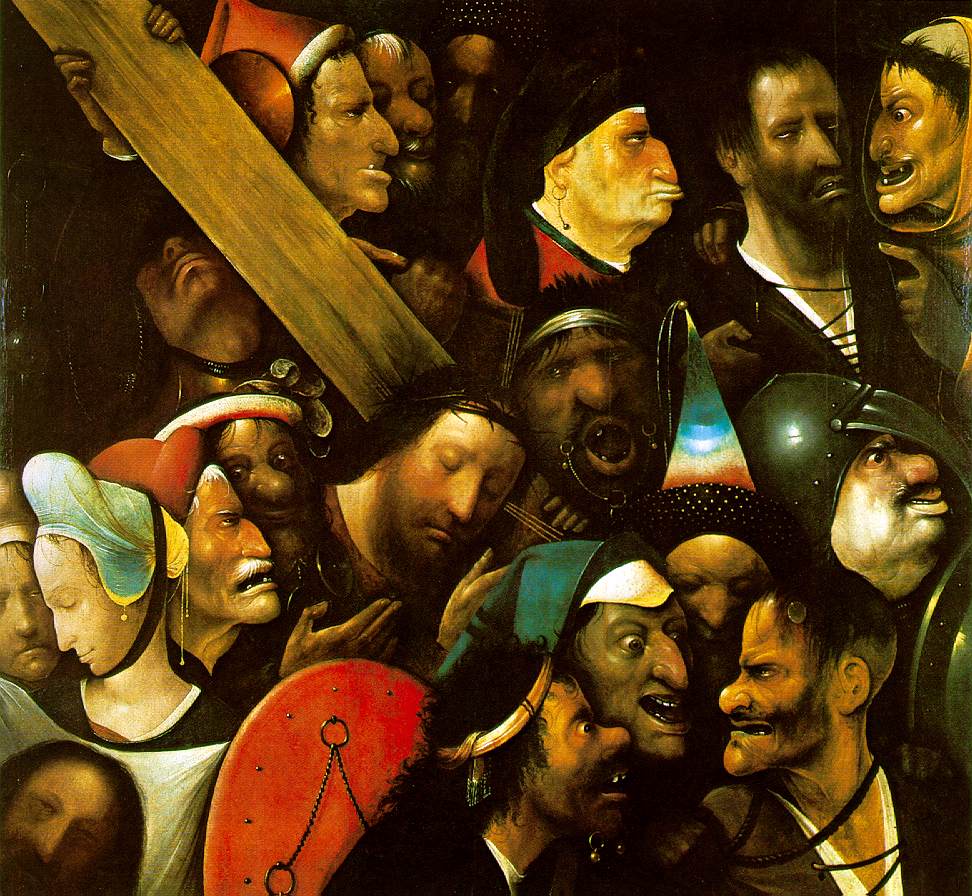
job-silohetteLast week, I was in Michigan again for my seminary program. Tomorrow I will post some reflections on my time there. Today, I want to offer you this amazing post-length excerpt by Nicholas Wolterstorff from an amazing piece of his called, “Trumpets, Ashes, & Tears” (pdf):

I suggest that there is yet one more thing which the believer experiences in his life of dispersion and which he brings with him to the liturgy….

As we human beings travel through life we experience pain and suffering–in part our own, in part that of others. Some of this pain and suffering is non-innocent suffering; it is punishment for, or the consequence of, moral evil. But not all of it is that.

The suffering of the Israelites in the brickyards of Egypt was not the consequence of their sin, nor was the suffering of the Jews in the camps of Auschwitz. Some of the suffering of our world even resists our seeing it as the counterpart of anyone’s sin–the accidental death of a child, for example.

Continue reading

Confirm everything, even the Holy Spirit | Acts 13.2-3


While they were worshiping the Lord and fasting, the Holy Spirit said, “Set apart for me Barnabas and Saul for the work to which I have called them.” Then after fasting and praying they laid their hands on them and sent them off.
Acts 13.2-3

I love this. Because they were so in tune with God and his Spirit, even after the Holy Spirit tells them something, they still feel they need to fast and pray before doing it. Those early Christians weren’t just willy-nilly following whatever spiritual whim and inspiration they got. They were careful and made sure they were hearing God rightly. May we do the same.

See other Marginalia here. Read more about the series here.

John, the Holy Spirit, & Prenatal Worship| Luke 1.12-15, 41-45


When Zechariah saw him, he was terrified; and fear overwhelmed him. But the angel said to him, “Do not be afraid, Zechariah, for your prayer has been heard. Your wife Elizabeth will bear you a son, and you will name him John. You will have joy and gladness, and many will rejoice at his birth, for he will be great in the sight of the Lord. He must never drink wine or strong drink; even before his birth he will be filled with the Holy Spirit.
Luke 1.12-15

When Elizabeth heard Mary’s greeting, the child leaped in her womb. And Elizabeth was filled with the Holy Spirit and exclaimed with a loud cry, “Blessed are you among women, and blessed is the fruit of your womb. And why has this happened to me, that the mother of my Lord comes to me? For as soon as I heard the sound of your greeting, the child in my womb leaped for joy. And blessed is she who believed that there would be a fulfillment of what was spoken to her by the Lord.”
–vv.41-45

The angel’s prophecy might be a foreshadow of John’s leaping in Jesus’ presence before he is born. If that’s the case, then being “filled with the Holy Spirit” being overjoyed in the presence of God. This is surely a theme throughout the Gospel and Acts: who has the Holy spirit and what that causes in those people, namely joy.

Secondly, this is such a beautiful passage and an evidence that children can experience spiritual things before their born. David says elsewhere that he loved God even while in the womb. This should (hopefully) mess with the heads of those that deny the place on infant baptism in God’s Church.

See other Marginalia here. Read more about the series here.

A Holy Saturday kind-of Easter (on doubting the Resurrection)


Rothko-blue-and-gray

The culmination of Lent is Holy Weekend, prefaced by Maundy Thursday and consisting of Good Friday, Holy Saturday, and Easter Sunday. I realized that each year that I have been really intentional about my Lenten engagement, one of those four “Holy Days” seems to overshadow the the others and carry over into this Easter season (yes, it’s a season).

There are some years where the foreshadowing and ever-repeating Presence of Jesus in Communion makes Maundy Thursday the highlight (or lowlight?) of Lent. Some years, the utter darkness, weight, and drama of Good Friday overtake me and linger in my mind well into Easter season. And still others, no matter how I try to reflect and meditate on sinfulness and fallenness, I still can’t escape the lighted joy and horizon-cresting dawn of Easter, whose anticipation overshadows (or over-brightens?) my Lenten experience, making all the doom and gloom seem foreign to me.

For me, this year is a Holy Saturday kind-of Easter.
Continue reading

An Egalitarian Easter Week Meditation [QUOTE]


From Cyprian, 3rd-century bishop of Carthage, to a virgin consecrated by the church:

““I will multiply,” says God to the woman, “thy sorrows and thy groanings, and in sorrow thou shalt bring forth children, and thy desire shall be to thy husband, and he shall rule over thee.” You are free from this sentence. You do not fear the sorrows and the groans of women. You have no fear of child-bearing; nor is your husband lord over you; but your Lord and Head is Christ, after the likeness and in place of man; with that of men your lot and your condition is equal. . . .”

Here’s absolutely everything the Gospels say was happening on Holy Saturday


The next day, that is, after the day of Preparation, the chief priests and the Pharisees gathered before Pilate and said, “Sir, we remember what that impostor said while he was still alive, ‘After three days I will rise again.’ Therefore command the tomb to be made secure until the third day; otherwise his disciples may go and steal him away, and tell the people, ‘He has been raised from the dead,’ and the last deception would be worse than the first.” Pilate said to them, “You have a guard of soldiers; go, make it as secure as you can.” So they went with the guard and made the tomb secure by sealing the stone.
–Matthew 27.62-66

On the sabbath they rested according to the commandment.
–Luke 23:56b

Yep. That’s it.

See other Marginalia here. Read more about the series here.

Sabbath [a Holy Saturday poem]


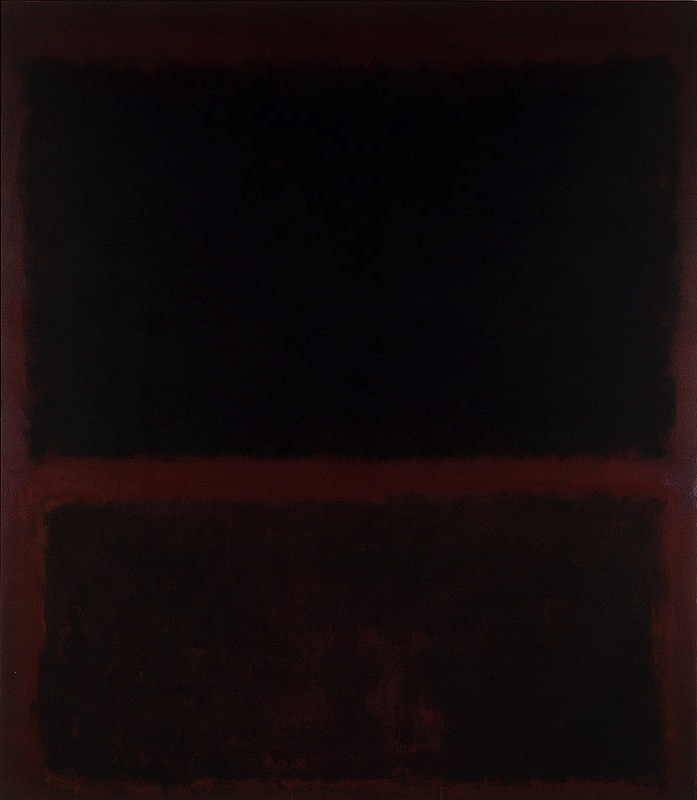
Rothko-Black-RedOn the 1st Day: God created Palm Trees and Donkeys
On the 2nd Day: He created Fig Trees and Temples
On the 3rd Day: He created Scribes and Pharisees
On the 4th Day: He created Silver and Kisses
On the 5th Day: He created Bread, Wine, and Gardens
On the 6th Day: He created a Tree, Nails, and Thorns

And on the 7th Day: God rested from His labor.

And there was evening
And there was mourning…

___________________________

[read my other Holy Day poetry here]
all writings licensed: Creative Commons License

Liturgy & Readings for Holy Saturday (2014)


This is from the Liberti 2014 Lent & Easter Prayerbook. Download the book for free for poetry and extended reflections for this week and next.

WORSHIP

call to prayer.

Be pleased, O God, to deliver us;
O LORD, make haste to help us!
–Psalm 70.1

the Gloria.

Glory be to God the Father, God the Son,
and God the Holy Spirit.
As it was in the beginning, so it is now,
and so it shall ever be, world without end.
Amen!
-the “Gloria Patri” !

the Psalm.
Continue reading

Chesterton on the Atheism of God on Good Friday [QUOTE]


When the world shook and the sun was wiped out of heaven, it was not at the crucifixion, but at the cry from the cross: the cry which confessed that God was forsaken of God. And now let the revolutionists choose a creed from all the creeds and a god from all the gods of the world, carefully weighing all the gods of inevitable recurrence and of unalterable power. They will not find another god who has himself been in revolt. Nay (the matter grows too difficult for human speech), but let the atheists themselves choose a god. They will find only one divinity who ever uttered their isolation; only one religion in which God seemed for an instant to be an atheist.

–from Chesterton’s Orthodoxy, as quoted by philosopher  Slavoj Zisek, in this article on “German Idealism & Christianity, from Hegel to Chesterton”.

The Elements [a Good Friday poem]


death-of-salesman-clothes-hangerWelcome, hello
Come in.

Take your shoes off
Set down your suitcase
And hang your jacket

Enjoy the fire; enjoy the tea
Rock in the chair, back and forth

That’s all you can do right now.
Rest.

Your items will still be there when it’s done.

Your shoes–
the mud will be dry, they’ll feel like new
to aid you on your way

Your suitcase–
is not all that important, frankly
take it or leave it
it doesn’t do much

And your coat–
yes, it just hangs there, dripping from the storm
the rip in its side as apparent as ever

But it will dry out and stiffen once more.
Ready to clothe you and hold you;

To keep what’s within,
within.
To keep what’s without,
without.

To speed you home in health.

But for now

Let us wait.
Let us drink.
Let us rest.
Let us cry.

Let us feel the searing heat of flame lap our feet in the hearth below.

___________________________

[read my other Holy Day poetry here]
all writings licensed: Creative Commons License

Liturgy & Readings for Good Friday (2014)


This is from the Liberti 2014 Lent & Easter Prayerbook. Download the book for free for poetry and extended reflections for this week and next.

WORSHIP

call to prayer.

Be pleased, O God, to deliver us;
O LORD, make haste to help us!
–Psalm 70.1

the Gloria.

Glory be to God the Father, God the Son,
and God the Holy Spirit.
As it was in the beginning, so it is now,
and so it shall ever be, world without end.
Amen!
-the “Gloria Patri” !

the Psalm.
Continue reading

Longing for Liturgy (a Catechumen’s reflection on Holy Week) {by David Schrott}


In recent years, and prior to my Orthodox catechesis, I heard many a Protestant writer or preacher lament that Easter was not of enormous import to most Christians when it was the eminent Christian holiday.  I didn’t share that view. Easter was an after-thought for me – another spring holiday without much real significance. Little did I know that it was the cultural liturgy of the market-place that informed my position towards the holiest of Christian celebrations.

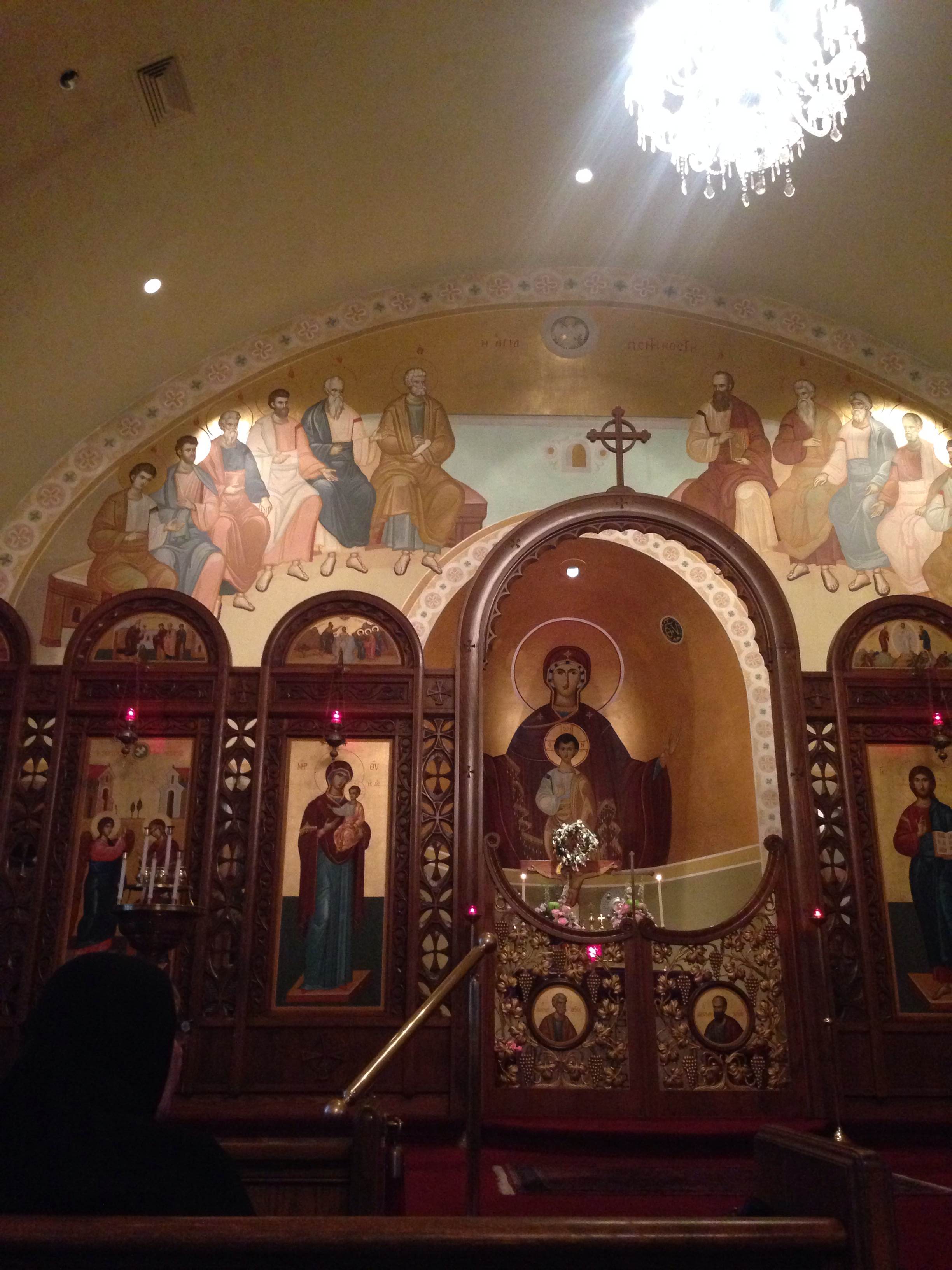
Liturgies form us. Whether they are cultural or religious, we are moved to be formed in the image of something and in the West, the market-place is driven by the most powerful liturgy called Consumerism. Christmas is the most powerful holiday in our culture and not because of what it is or what it means; it is the most powerful because of the 30-something day cultural liturgy from Black Friday til Christmas day that forms our hearts not toward God, but towards pretty much everything else. As James K.A. Smith notes in his book Desiring the Kingdom, the Culture understands liturgical formation better than the modern church does.photo1
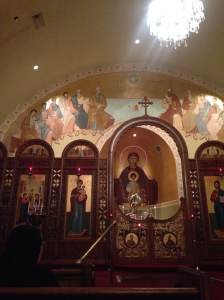
The Holy Orthodox Church is not the modern church.  Before I decided that Orthodoxy was the church of the Apostles, the Fathers and Christ himself, I longed for liturgy without knowing what I was longing for. I think this is the basis of the modern Evangelical root of church innovation. The Western Christian wishes to attach himself or herself to something, but doesn’t know how or have the framework for doing so; so innovation in church methods based on market research emerge. A few years ago, I’d fast all of Good Friday (and accidentally get drunk when breaking fast that night with beer and bread; Lord have mercy!) or round up friends for a Maundy Thursday dinner or try to watch the Passion movie. These were my own personal longings for connectedness to Holy Week and the larger Church; these were longings for liturgy. Little did I know that there was already a place where these connections existed and they existed nearly unchanged for most of 2000 years.
Continue reading

Holy Week Music: Mozart’s “Requiem”


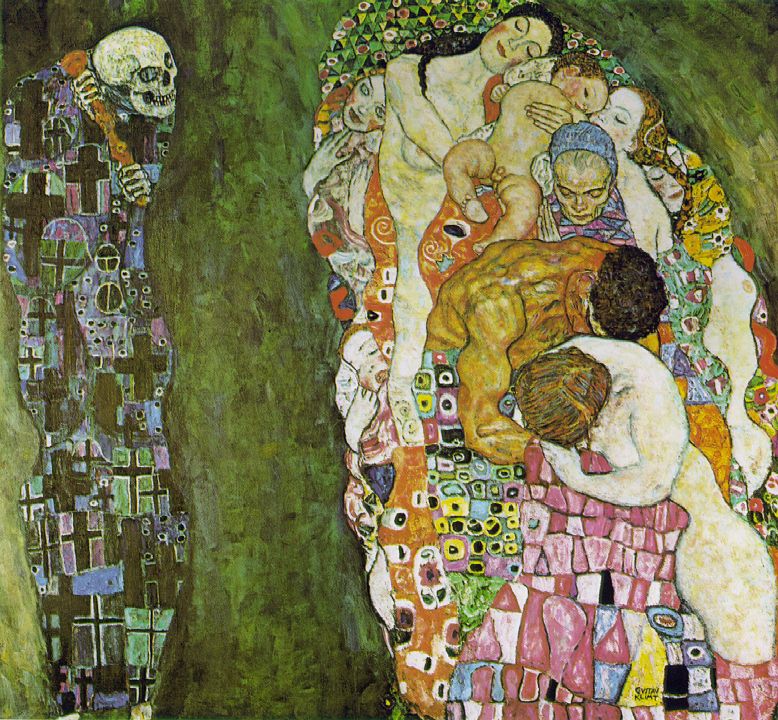
Klimt-Death-LifeOne of the primary ways I relate to the Church Calendar is through music (hence the free Mixtapes I put out each season). Even when I am terrible at engaging at an intellectual or even a practical devotional way, I am really intentional about filling my life with music that will still put my soul in the proper posture for the particular season.

For this Lent, I found myself spending significant time with Mozart’s Requiem, a “Mass for the Dead”. This was his last (and still mysterious) piece–unfinished before he died. Before Holy Week was over, and as we enter into the Holy Weekend, I wanted to offer this to as a way you might be able to engage in these last few days of Lent. Here is the audio, and below that you will find an English translation of the entire Mass. The words are achingly haunting and beautiful and deserve your perusal whether you have time for the music or not. Have a blessed Lent.

W. A. MOZART, REQUIEM
English Translation, from St. Matthew’s choir
Continue reading