Church Year & Holy Days
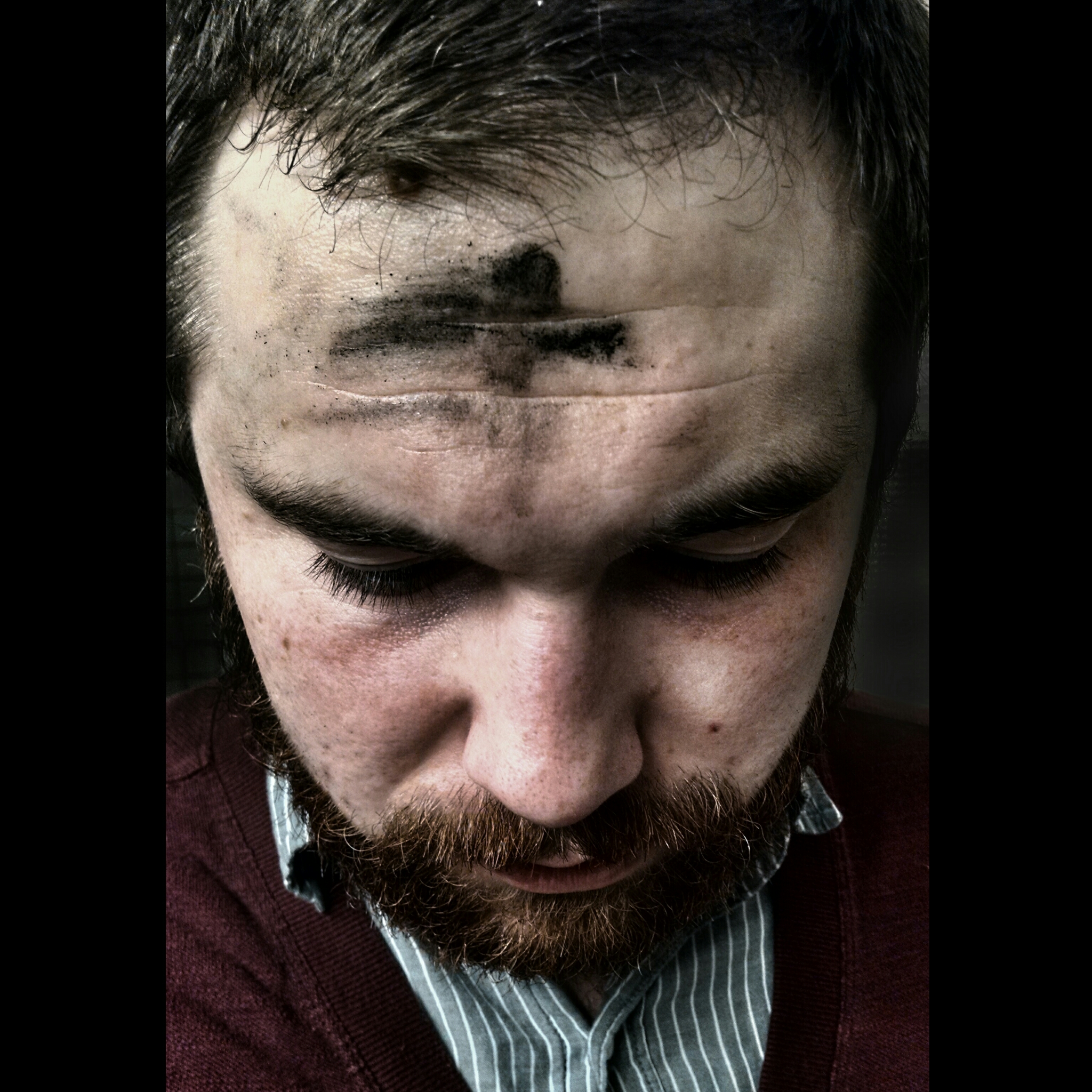
Ash Wednesday Benediction [POEM]

The shape of the promise is death
Say the word, feel the space, build the coffin in your mouth
Climb inside and make it yours
For it is
That tomb washed white, emerges in life,
enslaves in death, watches the end
agape
Expiration exorcism, cast the spirit, cast it low;
Cast your eyes and feel the blow
Cast the lots
Carve the promise into your bones, your forehead
Let your face shine with Moses glory: that of the immortal God
–that suffering, dying, ashen glory-story
May your face shine with Ash
As you wear the world’s judgment embedded in your skin, in your body,
May you feel the world’s death in your face, may you hold it before your eyes
May the flame that licked the palm find its end in you.
Bear the flame the world shall never know, precisely so it never will
Take their judgment and rub it on our faces and cast it to proclaim
Lift up your eyes
Wear it loud
The shape of the promise is death
[read my other Holy Day poetry here]
all writings licensed: 
Welcome to Ash Wednesday. Lent begins.
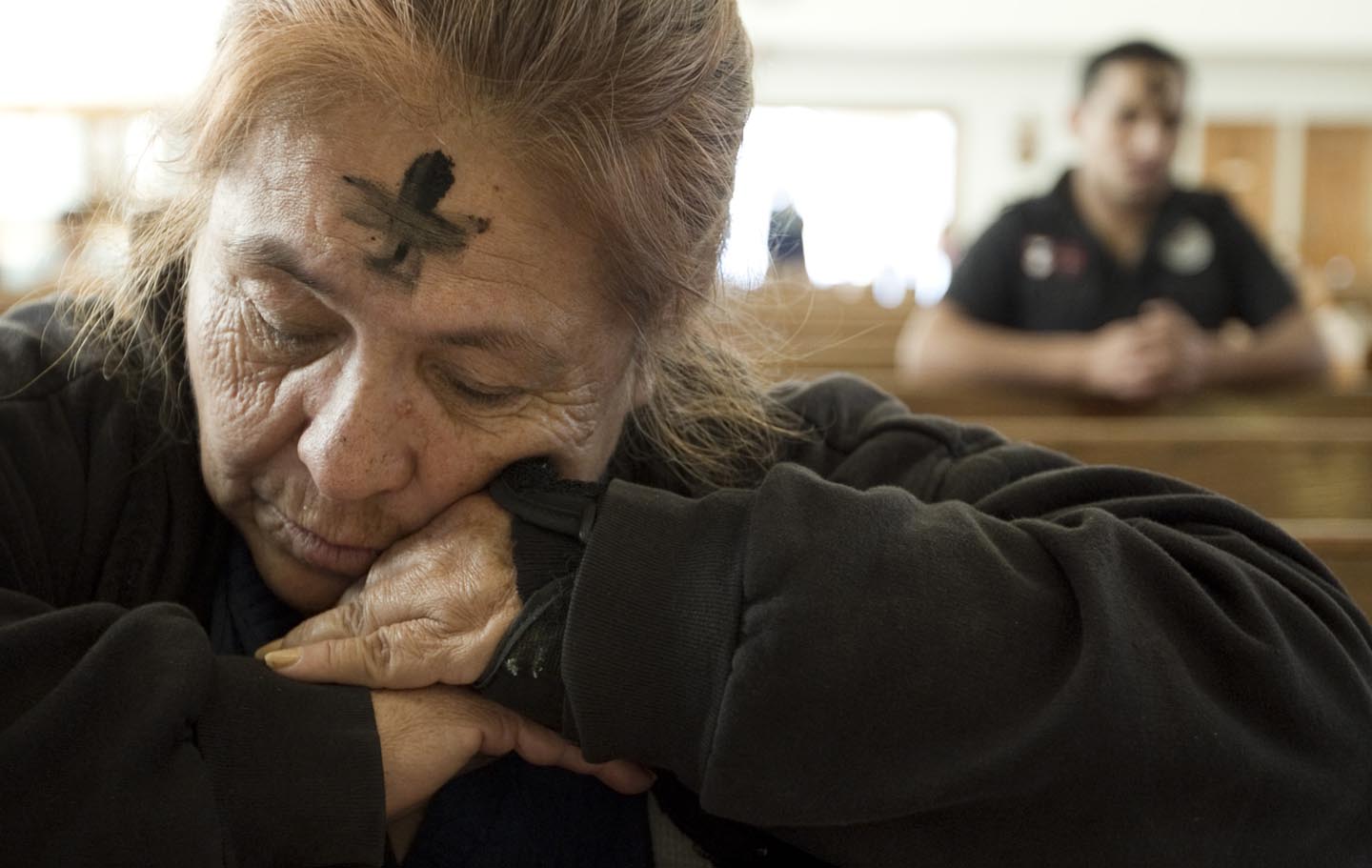 Today is Ash Wednesday. In just under two months from today we’ll come to the highest point in the Christian Church calendar, Easter. That is where we’ll celebrate Christ’s Resurrection and how God’s perfect world broke into the present and our greatest enemies–sin and death–were conquered and shown to have no more dominion over us and the rest of the world. It’s meant to be the most effusive, overflowing, even ridiculous time of joy.
And yet, when we look at Jesus’ Resurrection, we see that before it ever took place, there was Death. And before that, there was an entire lifetime of loneliness, pain, suffering weakness, and isolation. We see that it was a life surrounded by evil forces and whispers that haunt and hurt Jesus and the people he loved.
And so, our early Church Mothers and Father thought it would be wise to have this time before Easter to prepare, so we might end up celebrating during Easter all the more.
Resurrection was itself a statement against our two greatest enemies: Sin and Death. And so to participate in Resurrection, we take the time of Lent to meditate and press into those things to which Resurrection was the response. We do this not out of morbidity, but out of anticipation.
Lent begins tomorrow. (Will you just give it a try?)
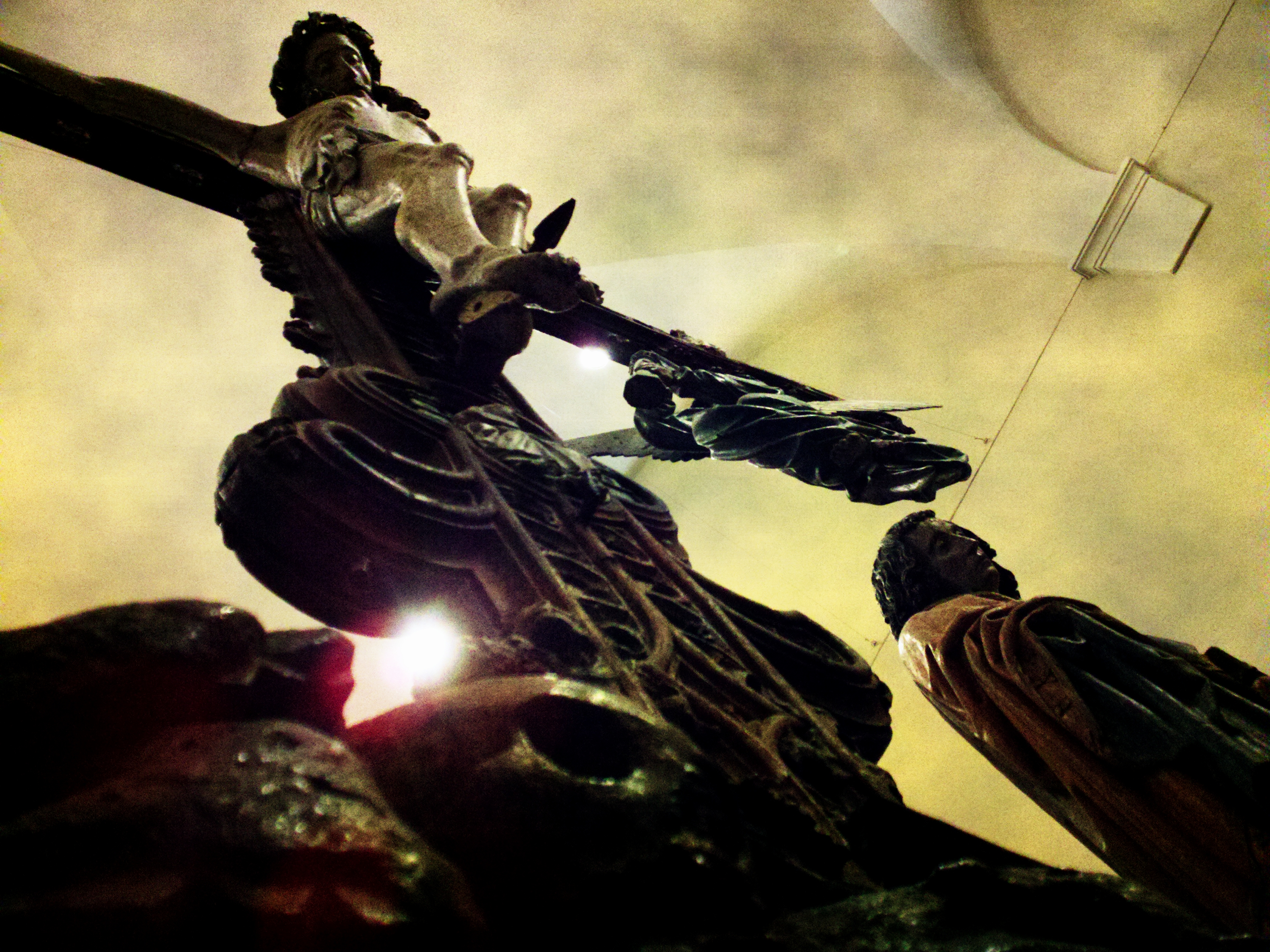
I grew up in a church tradition that did not take seriously the Christian Church Calendar. Even as I went to college and moved into communities that took some level of tradition more seriously (which was usually limited to quoting Puritans and Reformers in sermons), the Church Calendar wasn’t that big of a deal. It was seen as something sort-of cool that could be incorporated into the already established life of the Church; a buffet from which leaders could pick and choose some aspects that might be helpful in organizing some sermon series or songs. But it certainly wasn’t seen as something that a church should actually incorporate itself into, or build it’s own rhythm around.
I’ve had the privilege of having this paradigm rocked the past several years at my church, and have fallen in love with the Church calendar. It influences much of the rhythm and timbre of my everyday life–both ecclesial and otherwise. I find such life in living within a stream of thought that was not simply created within the past generation by baptizing modern Western American cultural ideas.
I love finding myself as embedded within the cloud of witnesses that have gone before me as possible–even those I may disagree with passionately and fundamentally. Because, at the end of the day, they are my family, and families have traditions. Sure, you can be “that guy” that does his own thing and doesn’t participate in the family rhythms, but where’s the life in that?
Insecurity Leads to Fasting? | Ezra 8:21-23
Then I proclaimed a fast there, at the river Ahava, that we might deny ourselves before our God, to seek from him a safe journey for ourselves, our children, and all our possessions. For I was ashamed to ask the king for a band of soldiers and cavalry to protect us against the enemy on our way, since we had told the king that the hand of our God is gracious to all who seek him, but his power and his wrath are against all who forsake him. So we fasted and petitioned our God for this, and he listened to our entreaty.
—Ezra 8:21-23
What an odd and beautifully honest aside. At first I was put off by the logic here. “I proclaimed a fast…For I was ashamed.” I thought “that’s a terrible reason to have a fast!” But the more I thought about it the more I realized that, of course!, that’s the right time to fast! When you are most unsure, most in need, most insecure. This is when “we might deny ourselves before our God.”
Experiencing God in this Holy Present
 At my work, we recently had a training on mindfulness. Now, before you roll your eyes, it was maybe my favorite work training I’ve ever done. It was engaging, practical, and participatory like few trainings are.
Anyway, “mindfulness” is the fancy word used to describe a “non-judgmental awareness of the present”. It’s heightening your senses and calming yourself in order to fully inhabit the present without analyzing it, mulling it, or needing to evaluate it. For those of us with anxiety issues, it really is an amazing way of centering and calming oneself, as well as separating oneself from the internal busyness–at least for a moment.
Another way of putting it is that it is radical present-ness. It is letting this very moment not be merely something you’re passing through as a bridge from the moment that has passed and into the moment that is not yet here. It is to fully inhabit the moment you find yourself in, and let the future come to you rather than anxiously trying to run towards it.
Not gonna lie. It was very spiritual to me. I felt more in tune to God and it got me thinking about how we mystically experience Him in our everyday lives.
When an Atheist talks about this hard-wired human sense to feel the “Numinous”, it often carries with it the sense that it rises from within us. When a lot of Christians talk about meeting the Divine, it often sounds like a presence that comes pointedly at us from outside of us. I’m starting to think that neither of these is right.
Introducing Marginalia: a new part of this blog
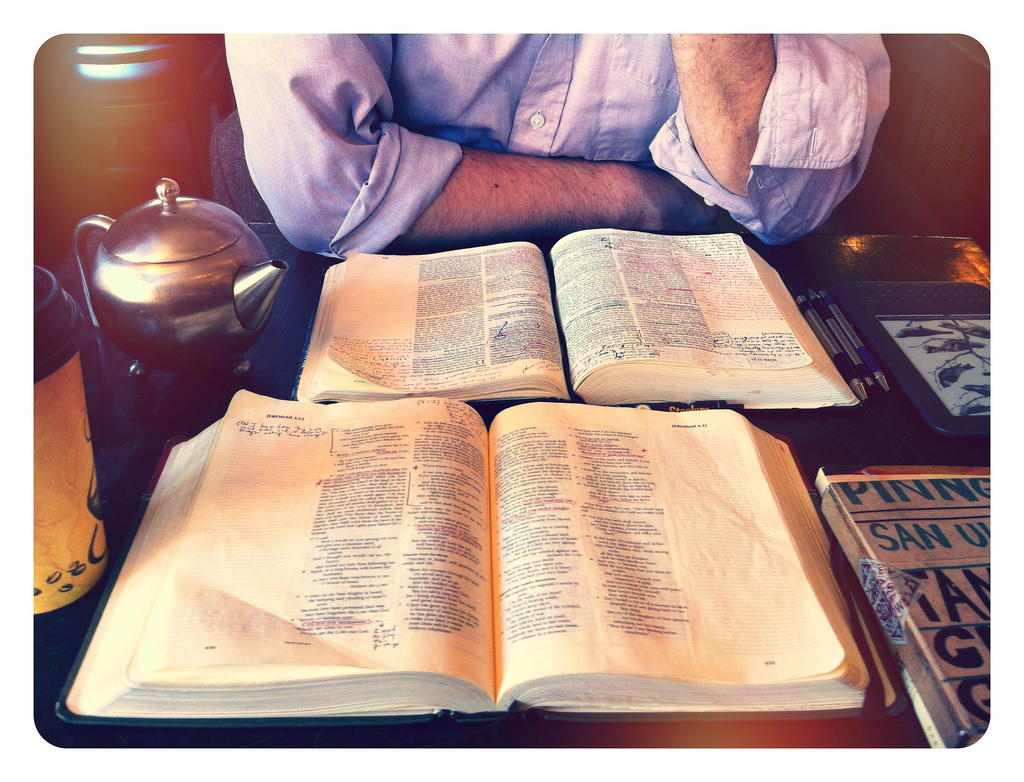
I’ll be honest. It’s been years since I’ve been able to find a way to regularly read the Bible that sticks and works for me. To be frank, readings plans usually don’t work for me because I get bored. Depending on the plan, you’re either stuck in the same book for long stretches of time or you’re jumping around so much that you lose the sense of the whole.
This year, I think I’ve started a regimen that is clicking: the M’Cheyne Bible reading plan. At any given time, I’m going through four completely different part of Scripture and for me, this is keeping me really engaged. As I’ve gone on through the plan these past couple of months, I started highlighting and writing up little notes on random verses here and there. Lots of them. And I’d like to share them with you.
So today, I’m introducing a new little part of this blog called Marginalia, where I’ll be posting these short little meditations on Scripture as I go through this plan.
Continue reading
Death & Life; Names & Vows | Genesis 3.20-21
The man named his wife Eve, because she was the mother of all living. And the Lord God made garments of skins for the man and for his wife, and clothed them.
—Genesis 3.20-21
I don’t know why I’ve never noticed this before. Why does Adam only name Eve after they sin? Further, of all the things to do after receiving the curse from God, he does this covenantal, marital act: he gives her a name.
I know this isn’t in this text, nor was it on the mind of the original writer, but it reminds me of the odd line in Revelation where God promises to give each person a new name that only He and they will know.
It seems that in the whole sweep of redemptive history, the Bride of the first Adam received a new name when he brought death, just as the Bride of the second Adam receives a new name when he brings life.
The Body of Christ, Broken (a guest post for Restoration Living)

Yeah, that’s my family (I’m in the front left). This was one Easter Sunday in the 90’s in Dallas, Texas, at a time and place where (I promise) it was absolutely appropriate to dress like that for Easter (except the glasses, of course). I look at this picture a lot, and not just to chuckle. I find it so oddly and powerfully symbolic of what life in the Bible Belt was like.
You see, my family was deeply wounded by “Church folk” throughout my childhood. Just as in the picture, people in the Church would live their Christian lives dressed up and looking good, all while wearing masks, disguising who they really were. When things were hard at home, people at church had no categories to process it. After all, to be a Christian is to be cleansed by Jesus and walk in new life, right? Failures, sins, and brokenness were seen as signs of some disobedience – some place where you weren’t “okay.”
_______________
And so begins a guest post I wrote for a wonderful site that should be on all of your radars, Restoration Living. Read the rest of the post here.
Donald Miller is just plain wrong about church. But it’s not his fault.
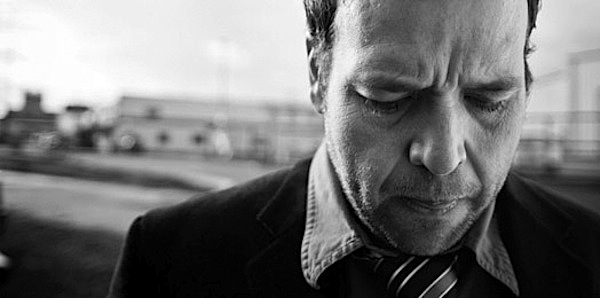
Donald Miller, author of Blue Like Jazz, started a little kerfuffle last week when he wrote about how he doesn’t really go to church any more. He doesn’t learn much about God through sermons, and he doesn’t connect with God through songs. Church just doesn’t connect with him in any way and doesn’t fit within his own learning style, which is far more participatory. He says the Church is all around us and in believers so he feels free to “have church” in the way(s) that most connect him to God and others.
Well, this caused quite the backlash. He wrote again a couple of days ago in response, but it seems that most people still really disagree with him.
But here’s the problem: Donald Miller is absolutely right in everything he says if he still insists on calling himself an “Evangelical”, or at least using that as his frame of reference.
If you consider yourself an Evangelical in any traditional sense, and you’re looking at Donald Miller’s church practices with dismay, well then welcome to your future–the logical conclusion of your theology and how you’ve practiced church for a few generations now.
Continue reading
I just read one of the most powerful pages of any book I’ve ever read.
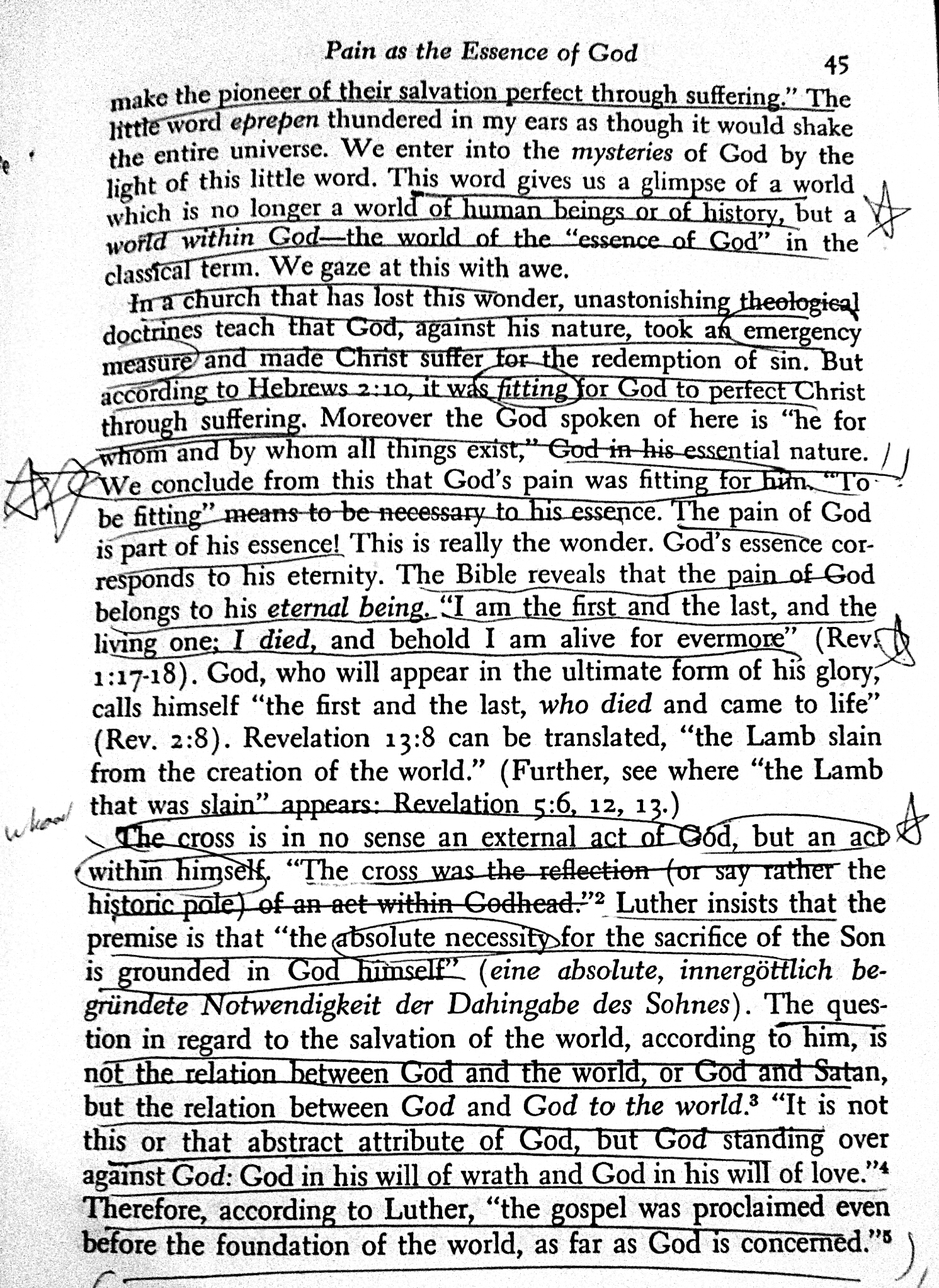
From Kazoh Kitamori’s Theology of the Pain of God.
Get it.
And yeah, those are my markings. Welcome to my brain on a page.
Crazy thought of the day: God Died. [QUOTE]
“The task of witnessing to the gospel is to vitalize the astonishing fact of the gospel. The message “the Son of God has died” is indeed most astonishing…. God has died! If this does not startle us, what will? The church must keep this astonishment alive. The church ceases to exist when she loses this astonishment. Theology, the precise understanding of the gospel, must be seized by this astonishment more than anyone else. It is said that philosophy begins with wonder; so theology begins with wonder. The wonder of philosophy pales before the wonder of theology. The person astonished by the tidings “God has died” can no longer be astonished at anything else.”
Kazoh Kitamori, Theology of the Pain of God
Welcome to Epiphany. (And a free Mixtape to celebrate!)
 If you’re just looking for the mixtape, click here for the official Epiphany Mixtape page.
From now until Lent, the Church Calendar is in the season of Epiphany.
Basically, this season seems like it’s sort of a Church Calendar “junk drawer” to meditate and celebrate on all the other parts of Jesus’ life that happened between his Advent/Birth and his Death.
And don’t misread that. In describing it that way, I hope that doesn’t diminish this season for anyone.
Perhaps the most precious doctrine of the Christian faith for me is that of the Imputation of Christ’s Righteousness. That’s a fancy way of saying that Jesus lived out a righteous life, and his very own righteousness is given to me as my own. And so, with a complete and perfect righteousness in hand, I don’t have to bear the weight of shame or condemnation. This is so beautiful to me.
But this Righteousness in which I am dressed was not created out of thin air, nor was it created by Christ at the Cross, or even at his Resurrection. It was built throughout his life of obedience to His Father, as the light of his character and life grew brighter and brighter in the midst of our darkened world. It’s this part of his life that we celebrate and meditate upon in this season.
And this is amazing. As I’ve written before, if Herod had been successful in killing the infant Jesus, there would be an essential aspect of our salvation that’s missing. This is why Epiphany is so important.
And so, to try and help me spend some time meditating on this season, the best way I knew to think deeply about all this was to re-post Epiphany mixtape I first posted last year.
To read more about the specifics of Epiphany, the mixtape, and to listen/download it yourself, you can either read below or just go to the official Epiphany Mixtape page.
[cover image credit: the photo on the mixtape cover is used with the gracious permission of photographer and friend of the blog, David Schrott]
Advent & Hoping for God to be With Us
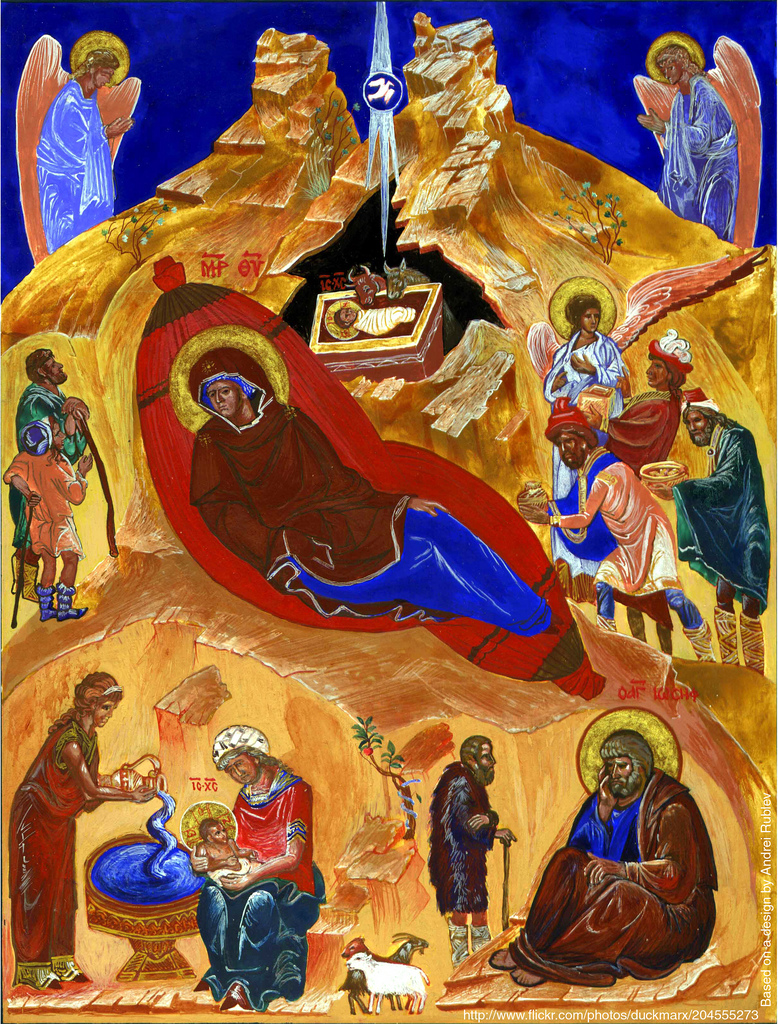 This is the meditation I wrote that appeared in this weekend’s reading and reflection in Liberti Church’s Advent 2013 Prayerbook, which can be downloaded for free.
Again the Lord spoke to Ahaz, saying, Ask a sign of the Lord your God; let it be deep as Sheol or high as heaven. But Ahaz said, I will not ask, and I will not put the Lord to the test. Then Isaiah said: “Hear then, O house of David! Is it too little for you to weary mortals, that you weary my God also? Therefore the Lord himself will give you a sign. Look, the young woman is with child and shall bear a son, and shall name him Immanuel.
If you’ve been keeping up with this Prayerbook (or any Advent guide), then congratulations! I hope it’s spoken to you and you have experienced God in its readings and meditations.
That being said, you might be wondering: why is this Prayerbook continuing after Christmas Day?
It was only a couple of years ago I found out that in the Church Calendar, Christmas is not just a day—it’s an entire season! Advent Season leads into Christmas Season. Why is this? Advent has a similar relationship to Christmas that Lent does to Easter: it’s meant to be the time of reflection, preparation, and repentance that prepares us for the unbridled, no limits, over-the-top celebration and joy of Christmas. Our spiritual ancestors knew that celebration takes time and preparation. That’s what Advent has been.
But now we’re in the Christmas Season—the time of complete unfettered celebration. But why?
Continue reading
A Biblical Critical Advent: Luke’s Cosmic Christmas
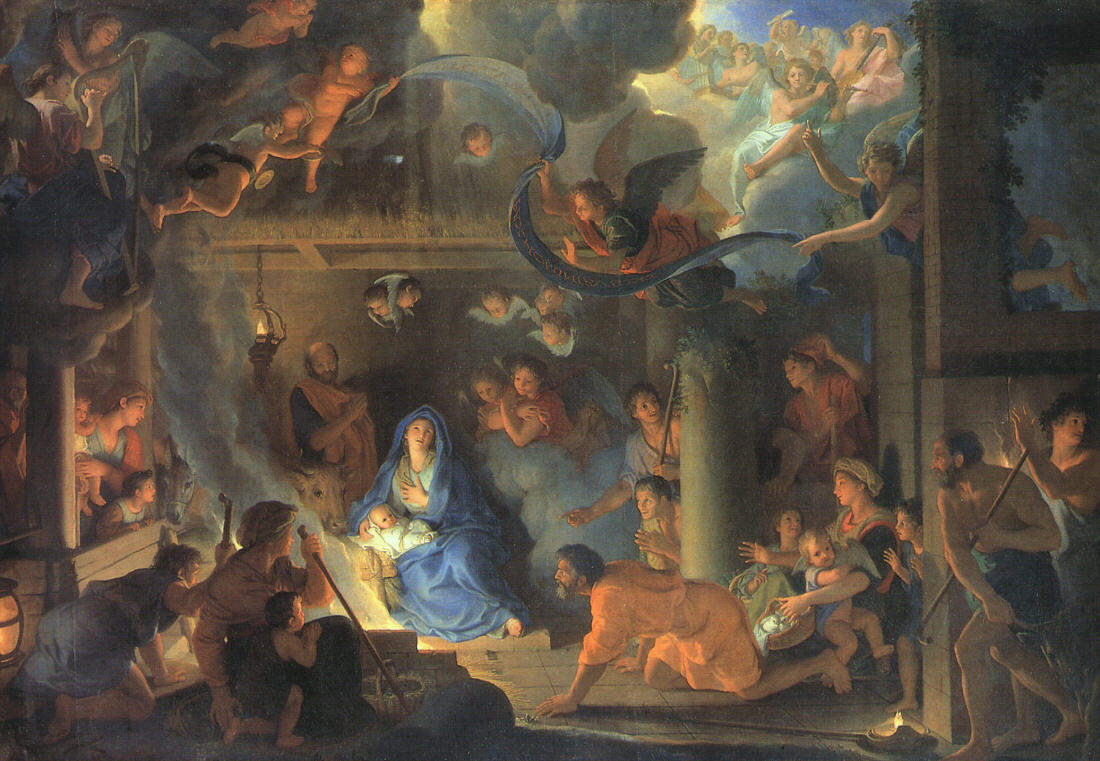 For Advent this year, I wanted to put up a few posts looking at Matthew and Luke’s Nativity stories as they were meant to be read: as two separate stories with their own purposes and themes. We often just mush them together, and I think we lose something in that process. Last week, we sat with Matthew’s Nativity story. Today, we turn to Luke’s Christmas.
Matthew’s Nativity focuses on how Christmas plays right into Israel’s own story; how this is exactly how the Jewish Messiah should be expected to have come into the world. Luke’s Gospel, on the other hand, emphasizes Jesus’ significance to the entire world, all parts of society, and the entire cosmic order.
In other words, Jesus’ mission in Luke is much larger than simply Israel. These and other Lukan themes are brought out quite strongly and explicitly in his Nativity narratives. Today we’ll see how he does this through signs of the universal mission of Jesus, the story’s emphasis on the lowly and powerless, and his stories of Spirit-filled joy.
 the long way home