Crazy thought of the day: God Died. [QUOTE]


“The task of witnessing to the gospel is to vitalize the astonishing fact of the gospel. The message “the Son of God has died” is indeed most astonishing…. God has died! If this does not startle us, what will? The church must keep this astonishment alive. The church ceases to exist when she loses this astonishment. Theology, the precise understanding of the gospel, must be seized by this astonishment more than anyone else. It is said that philosophy begins with wonder; so theology begins with wonder. The wonder of philosophy pales before the wonder of theology. The person astonished by the tidings “God has died” can no longer be astonished at anything else.”

Kazoh Kitamori, Theology of the Pain of God

Welcome to Epiphany. (And a free Mixtape to celebrate!)


epiphany-mixtape-coverIf you’re just looking for the mixtape, click here for the official Epiphany Mixtape page.

From now until Lent, the Church Calendar is in the season of Epiphany.

Basically, this season seems like it’s sort of a Church Calendar “junk drawer” to meditate and celebrate on all the other parts of Jesus’ life that happened between his Advent/Birth and his Death.

And don’t misread that. In describing it that way, I hope that doesn’t diminish this season for anyone.

Perhaps the most precious doctrine of the Christian faith for me is that of the Imputation of Christ’s Righteousness. That’s a fancy way of saying that Jesus lived out a righteous life, and his very own righteousness is given to me as my own. And so, with a complete and perfect righteousness in hand, I don’t have to bear the weight of shame or condemnation. This is so beautiful to me.

But this Righteousness in which I am dressed was not created out of thin air, nor was it created by Christ at the Cross, or even at his Resurrection. It was built throughout his life of obedience to His Father, as the light of his character and life grew brighter and brighter in the midst of our darkened world. It’s this part of his life that we celebrate and meditate upon in this season.

And this is amazing. As I’ve written before, if Herod had been successful in killing the infant Jesus, there would be an essential aspect of our salvation that’s missing. This is why Epiphany is so important.

And so, to try and help me spend some time meditating on this season, the best way I knew to think deeply about all this was to re-post Epiphany mixtape I first posted last year.

To read more about the specifics of Epiphany, the mixtape, and to listen/download it yourself, you can either read below or just go to the official Epiphany Mixtape page.

[cover image credit: the photo on the mixtape cover is used with the gracious permission of photographer and friend of the blog, David Schrott]

Advent & Hoping for God to be With Us


icon-Nativity-christmasThis is the meditation I wrote that appeared in this weekend’s reading and reflection in Liberti Church’s Advent 2013 Prayerbook, which can be downloaded for free.

The Reading:

Again the Lord spoke to Ahaz, saying, Ask a sign of the Lord your God; let it be deep as Sheol or high as heaven. But Ahaz said, I will not ask, and I will not put the Lord to the test. Then Isaiah said: “Hear then, O house of David! Is it too little for you to weary mortals, that you weary my God also? Therefore the Lord himself will give you a sign. Look, the young woman is with child and shall bear a son, and shall name him Immanuel.

If you’ve been keeping up with this Prayerbook (or any Advent guide), then congratulations! I hope it’s spoken to you and you have experienced God in its readings and meditations.

That being said, you might be wondering: why is this Prayerbook continuing after Christmas Day?

It was only a couple of years ago I found out that in the Church Calendar, Christmas is not just a day—it’s an entire season! Advent Season leads into Christmas Season. Why is this? Advent has a similar relationship to Christmas that Lent does to Easter: it’s meant to be the time of reflection, preparation, and repentance that prepares us for the unbridled, no limits, over-the-top celebration and joy of Christmas. Our spiritual ancestors knew that celebration takes time and preparation. That’s what Advent has been.

But now we’re in the Christmas Season—the time of complete unfettered celebration. But why?
Continue reading

A Biblical Critical Advent: Luke’s Cosmic Christmas


Charles-le-Brun-Adoration-of-ShepherdsFor Advent this year, I wanted to put up a few posts looking at Matthew and Luke’s Nativity stories as they were meant to be read: as two separate stories with their own purposes and themes. We often just mush them together, and I think we lose something in that process. Last week, we sat with Matthew’s Nativity story. Today, we turn to Luke’s Christmas.

Matthew’s Nativity focuses on how Christmas plays right into Israel’s own story; how this is exactly how the Jewish Messiah should be expected to have come into the world. Luke’s Gospel, on the other hand, emphasizes Jesus’ significance to the entire world, all parts of society, and the entire cosmic order.

In other words, Jesus’ mission in Luke is much larger than simply Israel. These and other Lukan themes are brought out quite strongly and explicitly in his Nativity narratives. Today we’ll see how he does this through signs of the universal mission of Jesus, the story’s emphasis on the lowly and powerless, and his stories of Spirit-filled joy.

Continue reading

Advent & Longing for Home


Sandorfi-MadeleineThis is the meditation I wrote that appears in a reading and reflection in Liberti Church’s Advent 2013 Prayerbook, which can be downloaded for free.

There is an incredibly profound way in which we don’t feel at Home in our own humanity.

Too often, Christians see their own personal spiritual growth as a loss, a lessening, or an abandoning of their own humanity. This can lead us to subtly use people and things to try and find our soul’s Home. And so we awake to find anxiety, manipulation, doubt, guilt, and self-loathing ruling and reigning so many parts of our lives and relationships. (Am I alone in this?)

We can sometimes think of Christianity as a process of our souls leaving the “Home” of their weakened humanity and finding a “new, spiritual Home” in Jesus. The logic goes that you were originally one way, then Jesus “saved” you, and now you are able (and are commanded) to be something else, now that you are His.

But Advent radically flies in the face of this.
Continue reading

A Biblical Critical Advent: Matthew’s Old Testament Christmas


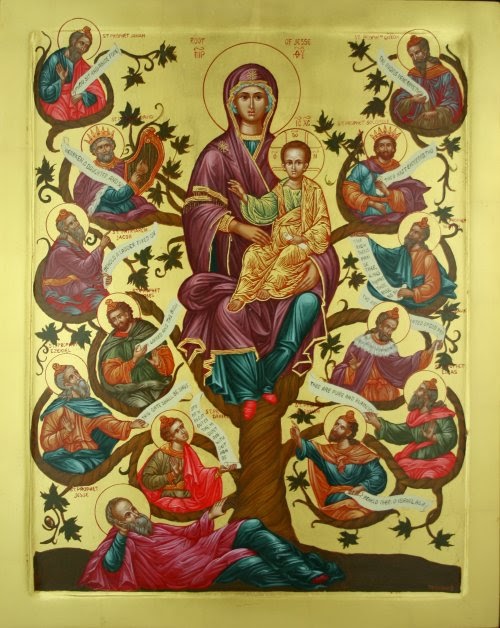
root-jesse-matthew-icon

For Advent this year, I wanted to put up a few posts looking at Matthew and Luke’s Nativity stories as they weren’t meant to be read: as two separate stories with their own purposes and themes. We often just mush them together, and I think we lose something in that process. Today, we look at Matthew’s Christmas Story.

It’s well-known that the Gospel of Matthew portrays Jesus as the fulfillment of Jewish messianic expectations. But the path Matthew takes in doing this moves against the way most messianic expectations played themselves out at time. Matthew recalibrates these expectations to show how even in Jesus’ infancy and birth, his “Messiah-ness” includes a retelling of Israel’s own history, both good and bad.

You can see this especially clearly in the way Matthew crafts his version of the Nativity story. Today, we’ll look at three particular aspects of this story that show his unique thematic and purposeful crafting of the birth story: his use of people and names, geography, and the fulfillment of the Old Testament.
Continue reading

Have yourself a biblical critical Christmas


Nativity-logosSorry, this post isn’t about the pessimism and critical irony that can sometimes mark how we engage in this time of year. When I use the phrase “biblical criticism”, I’m referring to (as Wikipedia says) the  “[scholarly] study and investigation of biblical writings that seeks to make discerning judgments about these writings”.

Last year, I wrote about how the story of the Wise Men can inform our doctrine of the Bible. This Advent, I want to do a brief series where we use the tools of scholarly observation to look at each of the two Nativity compositions (yeah, only two out of four gospels have them) and see each of them on their own terms.

For millennia, the birth narratives of Jesus Christ in the Gospels have captivated readers both within and without the Christian faith. Their reading and meditation form the beginning of the Christian Church calendar, and their theological implications of Incarnation form the foundation of nearly all of the distinctives of the Christian faith.
Continue reading

A night so holy and silent | Carols in Prose


winter-snow-trees-bwFor my Advent series this year, I am going through Christmas Carols and unpacking them, re-writing them in prose, hoping to pull out more of their meaning, theology, significance, and beauty. Here’s today’s source material.

As holy as that night was–as anointed, blessed, prophesied, and sacred as it was–it was just as silent. You know in winter when find yourself in the midst of falling snow, and it almost has a loud silence? It was like that.

Who knew that this utter holiness and cosmic in-breaking would be so quiet? So…uneventful? Yes, there were angels and such, but they were far away with us. There at the manger? Silence.
Continue reading

May God give rest to you weary, happy souls | Carols in Prose


flinks-angels-anouncing-the-birth-of-christ-to-the-shepherds

For my Advent series this year, I am going through Christmas Carols and unpacking them, re-writing them in prose, hoping to pull out more of their meaning, theology, significance, and beauty.  Here’s today’s source material.

I pray that God may give rest to all of you. Those of you that are tired and in need of rest, and yet you doggedly hold on to a soul-merriment and joy that cannot be taken from you. I pray he grants you rest and lets nothing steal your soul’s joy.

Especially in this season, I pray he strengthens that joy as you remember that he has come among us in Christ, our Savior, whose birth we celebrate during this time. We remember that he came as a human–but not just that. We remember he came as the weakest and most frail of human forms: one who is born.

But we don’t jut remember that he came, or even just how he came–but also, why.

This Advent season precedes Christmas as Lent precedes Easter–it’s a time to meditate on the darkness, weight, and tension of this world. The darkness and power that drew us away from God as Home; the darkness from which we were saved. And in this, we are given that rest, comfort and joy.

Oh, that we might experience God’s good news of comfort and joy proclaimed from the rooftops of our lives! Just think of that: Comfort. And Joy.

Continue reading

Advent & Hoping for Justice


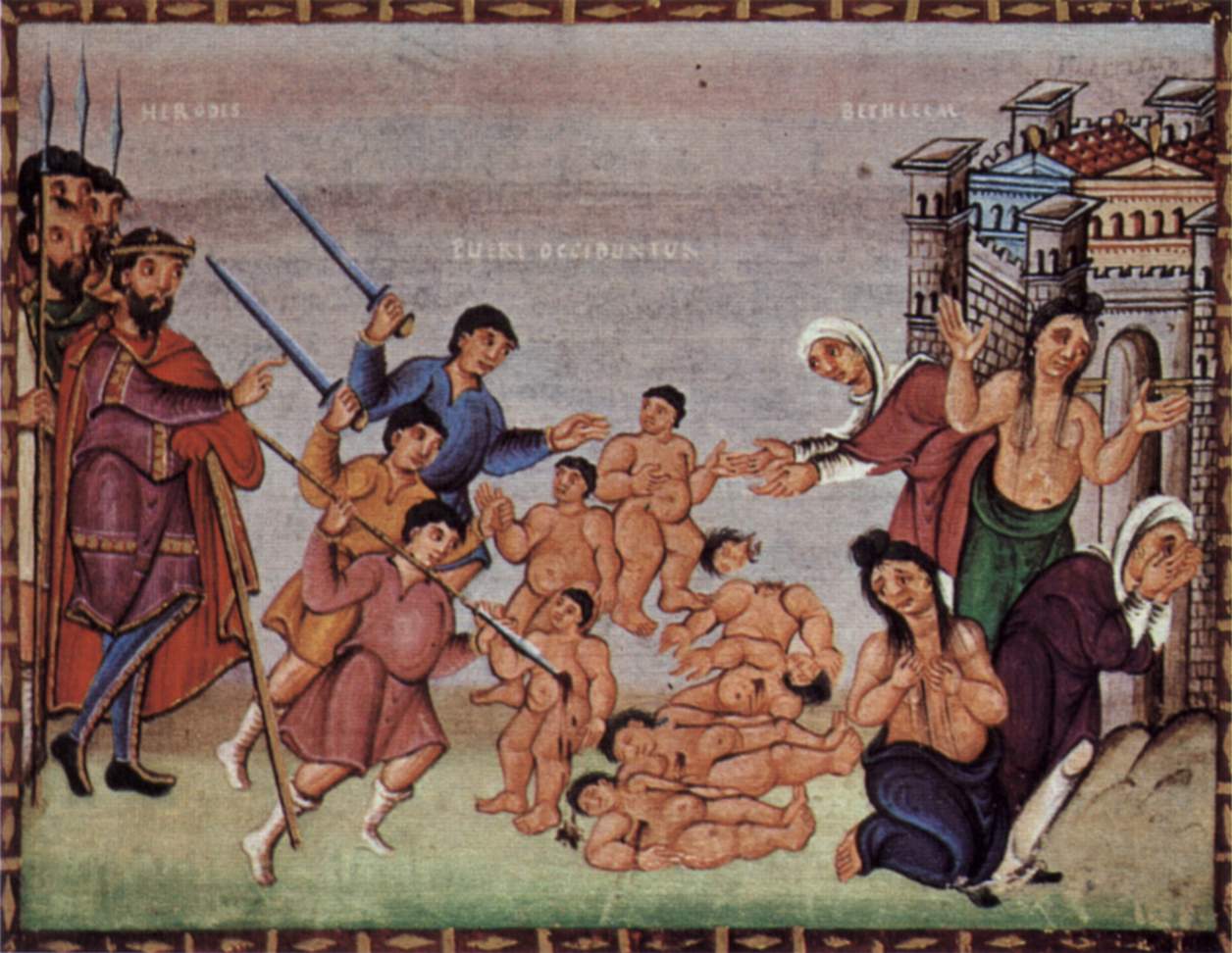
Massacre-of-innocentsThis is the meditation I wrote that appears in today’s reading and reflection in Liberti Church’s Advent 2013 Prayerbook, which can be downloaded for free.
First, a question.

Think back on the Christmas story. After Jesus is born, when he’s about three-years old, King Herod puts out a decree calling for the death of all infants, trying to kill Jesus. An angel comes to Joseph in a dream and tells him to flee to Egypt to prevent Jesus from dying in this slaughter.

Here’s the question: why flee to Egypt?

If they stayed and Herod killed the child Jesus, wouldn’t that still be the Son of God dying unjustly at the hands of a Roman provincial governor? Why go to all that effort to wait 30 years later for the same thing to happen on a cross?
Continue reading

Advent & Hoping for Peace


Rothko-untitled-2This is the meditation I wrote that appears in today’s reading and reflection in Liberti Church’s Advent 2013 Prayerbook, which can be downloaded for free.
This world is anything but peaceable. Humanity is constant in its injustice and wickedness inflicted upon one another across this world. It makes you wonder if “humane” is a misnomer. And we can’t just blame all of this on free will, either. The natural world rages against us with its own violence with staggering regularity. And all of this hits home the most when it’s those closest to us that suffer under this world with little peace on hand.

We look at all of this and ask that oldest of questions: “Why?” But when we open the pages of Scripture, we don’t find answers to this seemingly core thread running through our existence. The God of the Bible seems far more concerned with answering “what” questions than “why” questions–what is the nature of reality? what is the problem with the world? what is the solution?

But there is good news for all of us that struggle against the violence of this world: Advent.

In Advent, God does not merely see our why‘s and disregard them as silly and human; he does not simply leave us to our own to wrestle and struggle and doubt. He doesn’t answer our whys. He simply looks at us and the world with compassion, acknowledges to us the way things are, and rolls up his sleeves to address it.
Continue reading

For Advent 2013: a Free Liberti Prayerbook & Devotional


GiottodiBondone-Adoration-Magi-icon-advent

As of this past Sunday, the Christian Church finds themselves in the season of Advent. I don’t know about you, but this season has snuck up on me (admittedly, I was a little occupied). I’ve been working on a new Advent Mixtape, but it’s not done (you can find last year’s here). I have an idea for an Advent series, but I haven’t fully thought through the concept (see past series here). I’ve had devotionals and reading plans set up on my phone to do, but I haven’t done even one day of them all this week.

But one of the beauties of the Church Calendar is that it doesn’t depend on us. The realities pointed to in these weeks are objective realities that happened (and are happening) in spite of us, and not because of us. Another beauty of the Calendar is that it happens every year, so even if we don’t engage one year like we’d like or hope, there’s always next year.
Continue reading

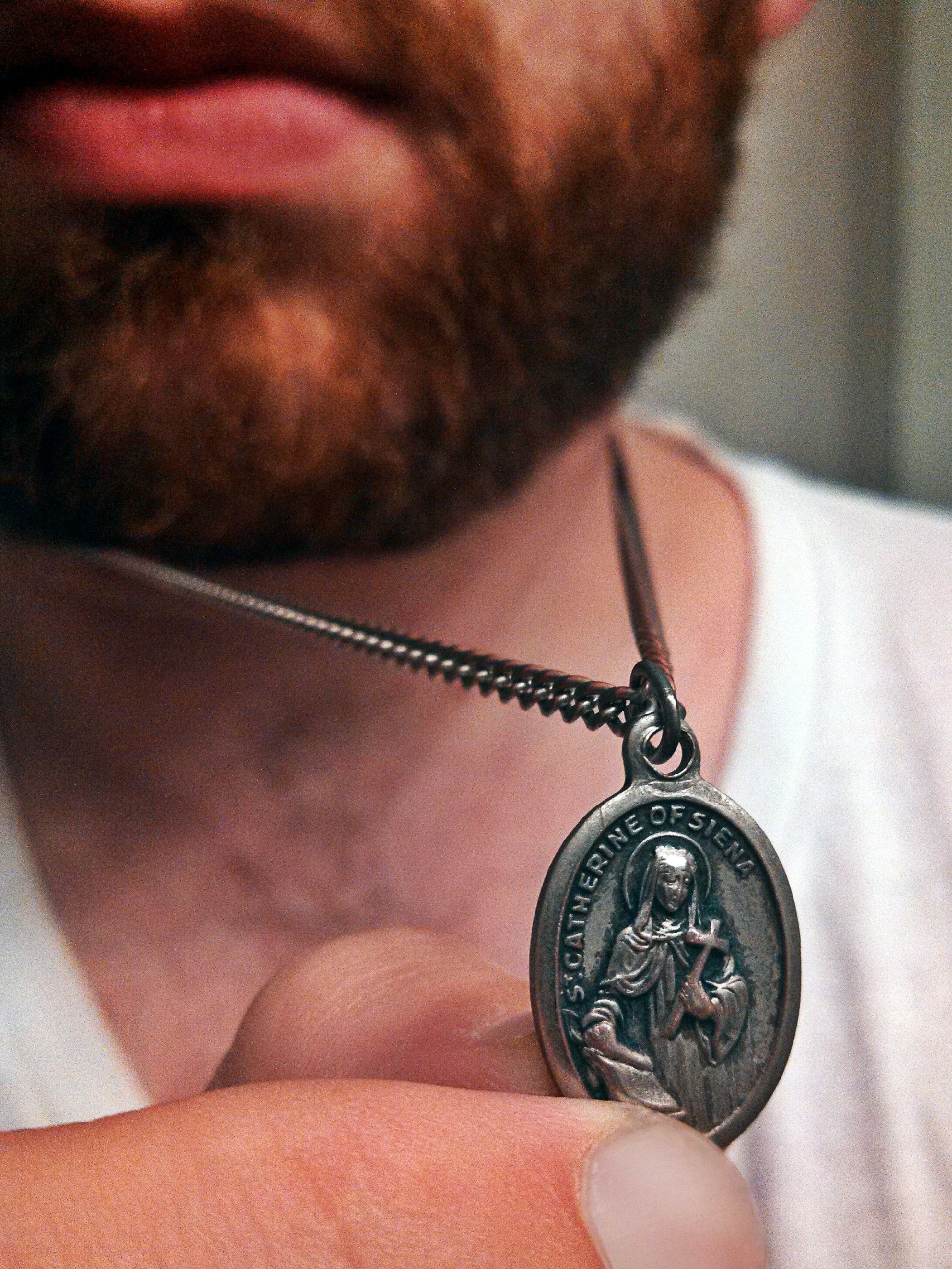
Meet Catherine of Siena, the Saint I Pray To.


st__catherine_of_siena_iconNote: this weekend, I wrote a post collecting all of my responses to people’s Protestant concerns with praying (or “talking”) to saints. Before you express your disagreement to this present post, I’d ask you at least read some of that.

Well, my previous post on praying to saints caused a lot of conversation on my social media. Slightly more than half of people disagreed with it (strongly), and the rest seemed to appreciate it. So before I begin today, I want to make something clear: this blog’s purpose is not to start flame wars or disagreements among friends. I genuinely want to be helpful to people–even when that means challenging and stretching them, and even when they strongly disagree with me. One need not be convinced of a position to be helped by reading about it.

With that being said, let me tell you my experience of finding a saint to pray (or “talk”) to, and then let me tell you a little bit about her.

Throughout history, there have been saints to whom God has given unique grace in certain areas of life. When the Church knew of and could recognize such saints, it declared them “patron saints” of those things they seemed to have special, almost unparalleled grace for.

In times of need in a specific aspect of life, much of the Church throughout history has felt comfortable praying to those earlier saints that seemed especially graced for those kinds of situations.

So…here’s my funny story.

Continue reading

Some Protestant Saint-Praying Clarifications & Responses


Wow. Last week’s post about praying to saints really brought out more passion in people than I thought it would. Both here on the blog and on Facebook, here were some clarifying comments I left. By the way, this was the best comment on that post that challenged my thinking. I hope this helps.

First, here is my final, quick summary clarification of my position and why Evangelicals need not be freaked out about all this. If you read nothing else on this post, let it be this:

I really wish there was a different and better word than “prayer” for this. I agree that what most of us Protestants think of when we think of prayer really should only be directed at God.

Further, I’m simply advocating for this to be one more optional means of grace a Christian can participate in, depending on how they are wired. This shouldn’t take away from anyone’s participation in union with Christ or praying to him anymore than Bible memorization, fasting, listening to sacred music, or reading a devotional book does.

Everything critics have said they think should only be reserved for God, I absolutely agree with. I am certainly not suggesting we turn our affections, praise, adoration, or even our hearts towards those that have died. I just think we can talk to them, and they can intercede for us to God. I don’t think they talk back, that we experience their presence, or that they magically impart any more of God’s favor than asking a friend to pray with us would.

As Paul said, our outer selves are wasting away, while inwardly we’re being renewed day by day. Those that have died are, in a very real sense, just as “alive” as we are now, albeit absent from the body.

Therefore, all I think is (1) they can see and know what’s going on down here, and (2) they talk to God.

If those two things are true, then I don’t see the inherent evil, harm, or soul-destroying error it might be to simply “talk” to those that have gone before–not “commune with”, “worship”, or any of the other dimensions of “Godward prayer”. Just sending up some prayer requests to the part of the Body of Christ that is absent from the body, but present with the Lord.

What’s the harm in that?

Continue reading

Catholics Aren’t Crazy: On Praying to Saints (Happy All Saints’ Day!)


This is a post in an on-going series called Catholic Aren’t Crazy exploring misconceptions Protestants have about Catholicism and lessons we can learn from them.

UPDATE: I responded to some critiques and gave some clarifications.

UPDATE II: Here’s the story of the Saint I pray to, Catherine of Siena.

Yesterday was Halloween. That makes today All Saints’ Day (read more about the history of these holidays in yesterday’s post).

All Saint’s Day has taken on different meanings for different groups of Christians. What seems to stay consistent, though, is that it is a celebration of the victory attained by those faithful Christians who have died. They are no longer pilgrims, as we are, but are the triumphant ones, having finished their race well and been brought into their peace with God. We celebrate Christ’s effectual victory over sin and death and that this has been granted to those that have gone before us.

The hope and encouragement in this holiday is not simply that we “remember” these saints, or meditate on their example. Instead (and this is important), there has been a long-held belief in the Christian Church that we still have a mystical communion and relationship with those saints that have already died. When Christians throughout Church history (and the Bible) have referred to “The Church”, they don’t simply mean those still around today, but all the saints who have ever lived (even in the Old Testament!). We are all the Church.

So we can truly celebrate those that have gone before us because we are truly still connected to them in a very real and vibrant way.
Continue reading