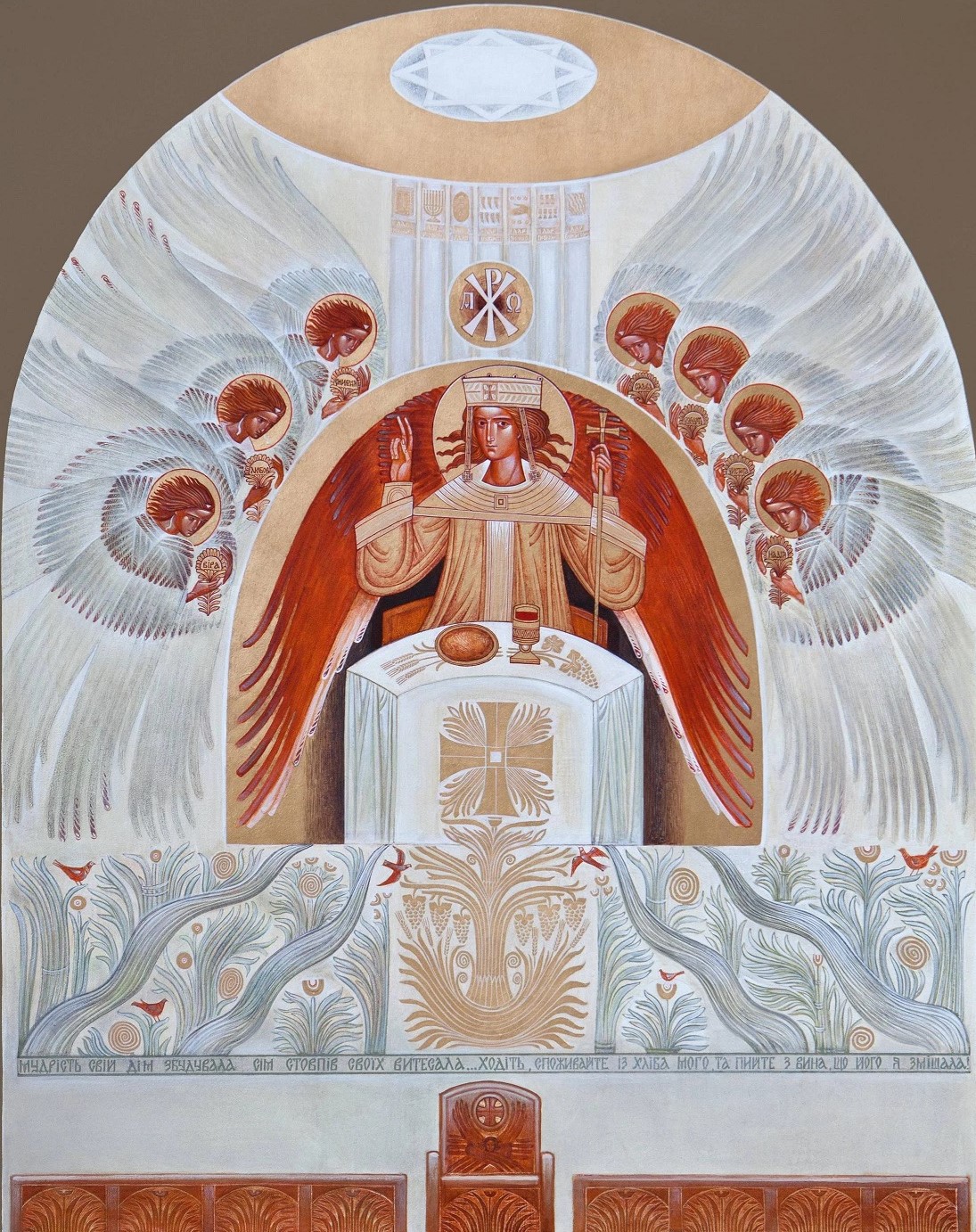
“O Wisdom” | Wise Sage O’Fashioned


For each of the ancient “O Antiphon” prayers in this week preceding Christmas, I will be offering a variation on an Old Fashioned. We begin our “O’Fashioneds” with a pretty basic recipe, but rest assured–we have some fun ones on the way.

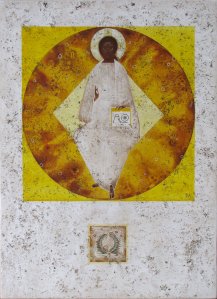
Today’s O Antiphon is “O Wisdom”. We reflect on Jesus as our wisdom and guide towards knowledge and prudence. He shows us the way to a rightly-ordered life, even as he orders all things “mightily and sweetly”–the same way I hope this cocktail strikes your palette.

Today’s Prayer & Scripture

O Wisdom that came forth from the mouth of the Most High, reaching from one end to the other and ordering all things mightily and sweetly: come to teach us the way of prudence.

Today’s text is Isaiah 11:2-3: “The Spirit of the Lord will rest on him—the Spirit of wisdom and of understanding, the Spirit of counsel and of might, the Spirit of the knowledge and fear of the Lord—and he will delight in the fear of the Lord.” For further reflection, I’d encourage you to read and meditate on Proverbs 8, which has long been seen as hearkening towards Jesus.

May we seek to follow our Messiah’s example and receive his wisdom, understanding, and prudence. In the spirit of Advent, may we also feel our lack of that wisdom, and our utter reliance on God for it. End your day with a nightcap and this prayer as we continue our journey toward Christmas.

Continue reading

Welcome to the Advent “O Antiphons” (& My “O’Fashioned” Cocktails)


Last year I learned about a series of prayers and reflection that the Church has historically used in the seven days leading up to Christmas. This is the first year I’m going to try and engage them, and I want to bring you all along. I also want to give you a bunch of cocktails to go along with them.

The “O Antiphons”

Let me introduce you to the O Antiphons, seven short Advent prayers that go back at least to the 6th-century.*

If you’ve been around religious settings during Christmas time, you’ve probably been exposed to the O Antiphons without even knowing it: the hymn “O Come O Come Emmanuel” incorporates all of them into its verses.

The O Antiphons come from the book of Isaiah, and are a series of seven titles attributed to the prophesied Messiah. Each day has a brief prayer focusing on one of these titles as a way focus our Advent longing on the God we need in Jesus. Here they are. As we get to each one, I’ll link to the post and cocktail for that day.

Yeah, there are some titles a lot of us are likely not very familiar with or know what they mean. The idea here is that you meditate on one each day in the week leading to Christmas and you pray the brief antiphon during evening prayers as a way to add focus.

Continue reading

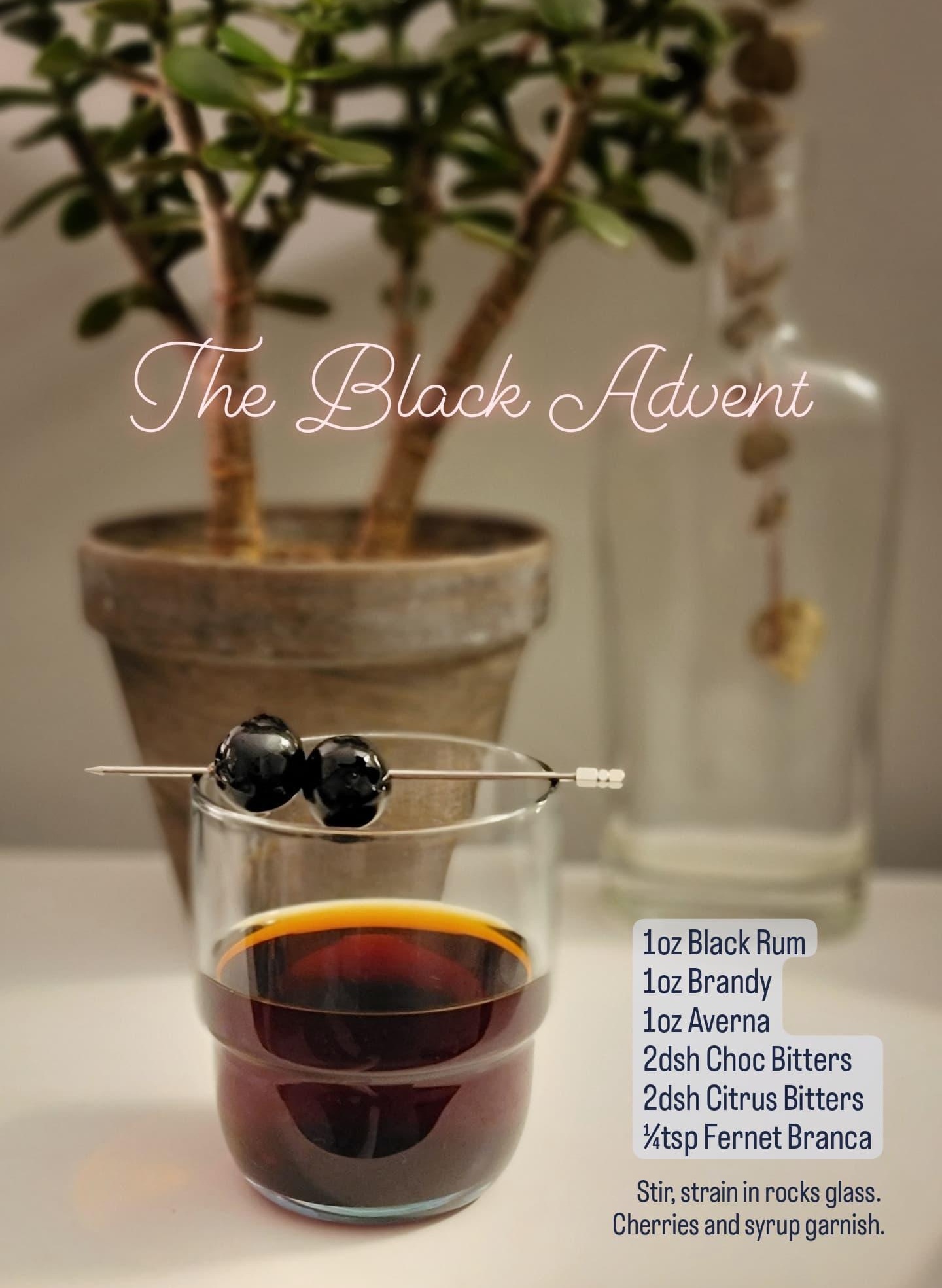
The Black Advent (a Holy Day Cocktail)


Recipe

  • 1oz Black Rum
  • 1oz Brandy
  • 1oz Averna
  • 2 dashes Chocolate Bitters
  • 2 dashes Citrus Bitters
  • 1/4tsp Fernet Branca

Stir with ice, and strain neat into a rocks glass. Garnish with two cherries and add some of the juice into glass as well.

* * * *

I have been crafting cocktails for Holy Days and seasons for a little bit now, inspired by Michael P. Foley’s amazing Drinking with the Saints, and I’m going to start posting them on the blog.

We begin the Church Calendar with this drink, “The Black Advent”. You would think that celebrating the same seasons every year could get old and dry, but I find each year brings out specific themes and emphases.

This year, it has felt like the pastors and theologians have really emphasized the darkness aspect of Advent–the need to really sit in contemplation, grief, and longing before we get to the joy of Christmas.

For that reason, this year’s Advent cocktail is one for the darkness. It’s a stirred drink served neat (no ice), so that you can sip it’s silky texture for a long while. This isn’t a super boozy drink. It is smooth, dark, and a little sweet.You could easily turn down the sweetness and still have a great drink. It has notes of chocolate, orange peel, and mint.

Continue reading

Make Kingdomtide Great Again


I need structure in my life. I need routines. They help me focus on important things I can easily overlook. That’s one of the reasons why I have connected so deeply with the Christian Church Calendar. I wasn’t raised with it, but these seasonal themes and focuses give more shape to my spiritual life where it would otherwise be amorphous.

Today, I want to introduce you all to a lesser-known–but amazing–season of the Church Calendar that I’ve really enjoyed celebrating the past couple of years: Kingdomtide.

It starts November 1st (though in some traditions it starts earlier), and yes, I made a playlist for it.

Continue reading

Two Books for the Feast of St. Catherine of Siena


Nearly a decade ago, I wanted to pick a saint for myself whose life I could study and be inspired by. I ended up (accidentally) choosing Catherine of Siena, the 14th-century mystic, theologian, political activist, and (I’d say) preacher of the faith. She was the perfect choice, and today is the day set aside to meditate on her life and works.

Of all the saints I know, I resonate with Catherine’s energy the most. I really connect with the theology of some (Origen, most the Gregories, Augustine), the social and practical emphasis of others (Francis, Clare, Ignatius, Theresa of Calcutta), and the mysticism of still others (Teresa of Avila, John of the Cross, Julian). But only Catherine embodies for me all of these dimensions and the brashness and angst I carry with me regularly.

Catherine says and does some weird things. She overstates, goes too far, and is counter-productive in a lot of what she does. But she comes by it honestly and is clearly doing the best she can with what she knows and believes. She sharply argued with and called out Popes, rejected the leadership of church hierarchy, and followed her theology to its end, even when many called her a heretic (she has since been canonized as a theological Doctor of the Church).

And yet, with the world and people around her, and in her spirituality, she is so tender, sensitive, and romantic. There is a passion and ecstasy to her spirituality that can seem weird from the outside but so beautiful and inviting from within.

I resonate with all this. Bucking against authority to unhelpful (and often wrong) degrees, feeling misunderstood and unseen even while trying my best, phrasing things in ways that make sense to me while others stare at me in confusion, the tenderness and desire to sit with people in their pain, and the deep desire for ecstatic union and communion with God. These are all my vibe, and Catherine’s.

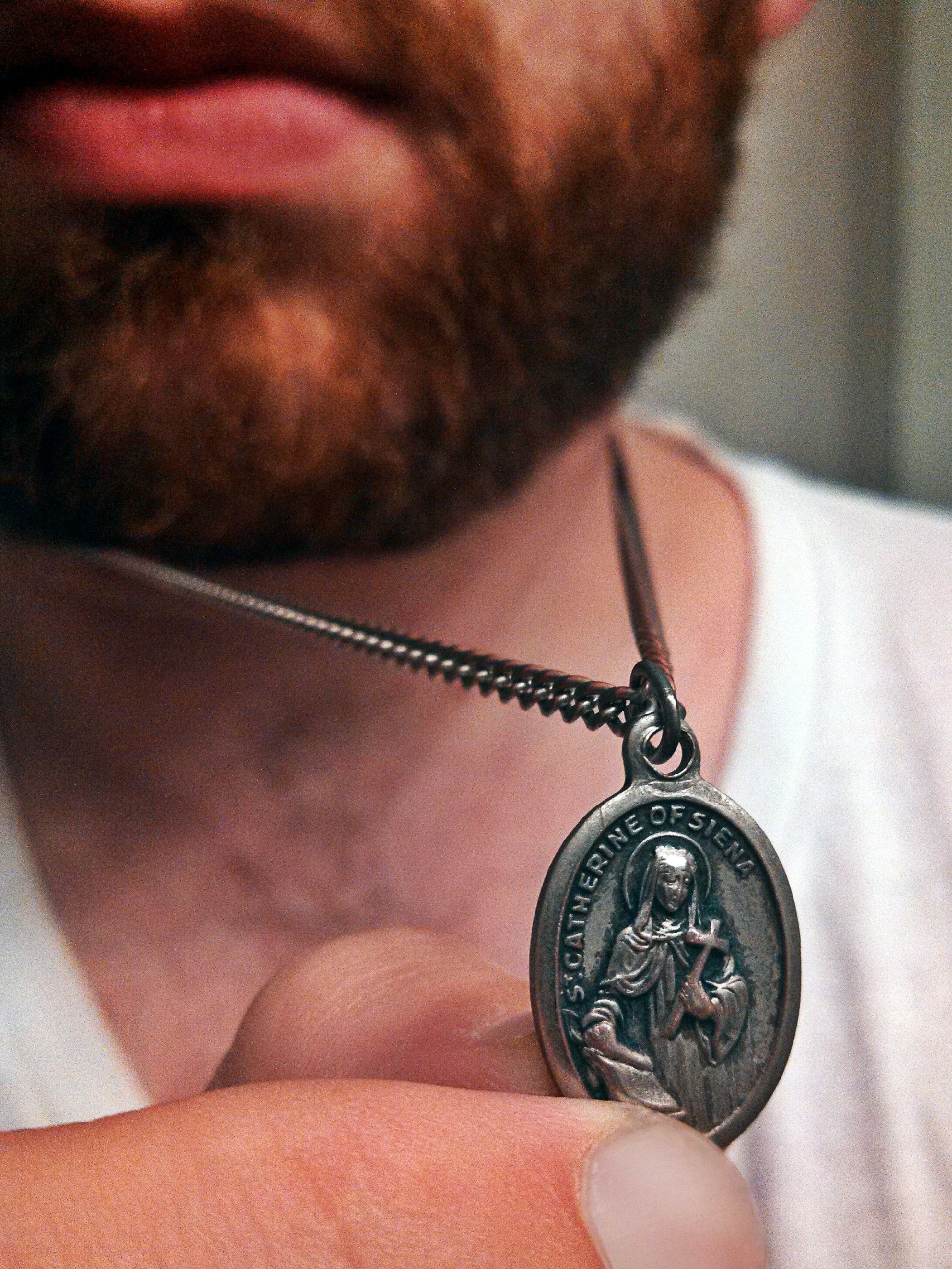
A decade on, I still wear my Catherine pendant daily, in order to carry her with me and keep her close. If you are interested in knowing more about Catherine’s life and spirituality, here were two of the books that helped me get to know and be inspired by her. Continue reading

Mary: Ordained as Prophetess, Priestess, & Queen


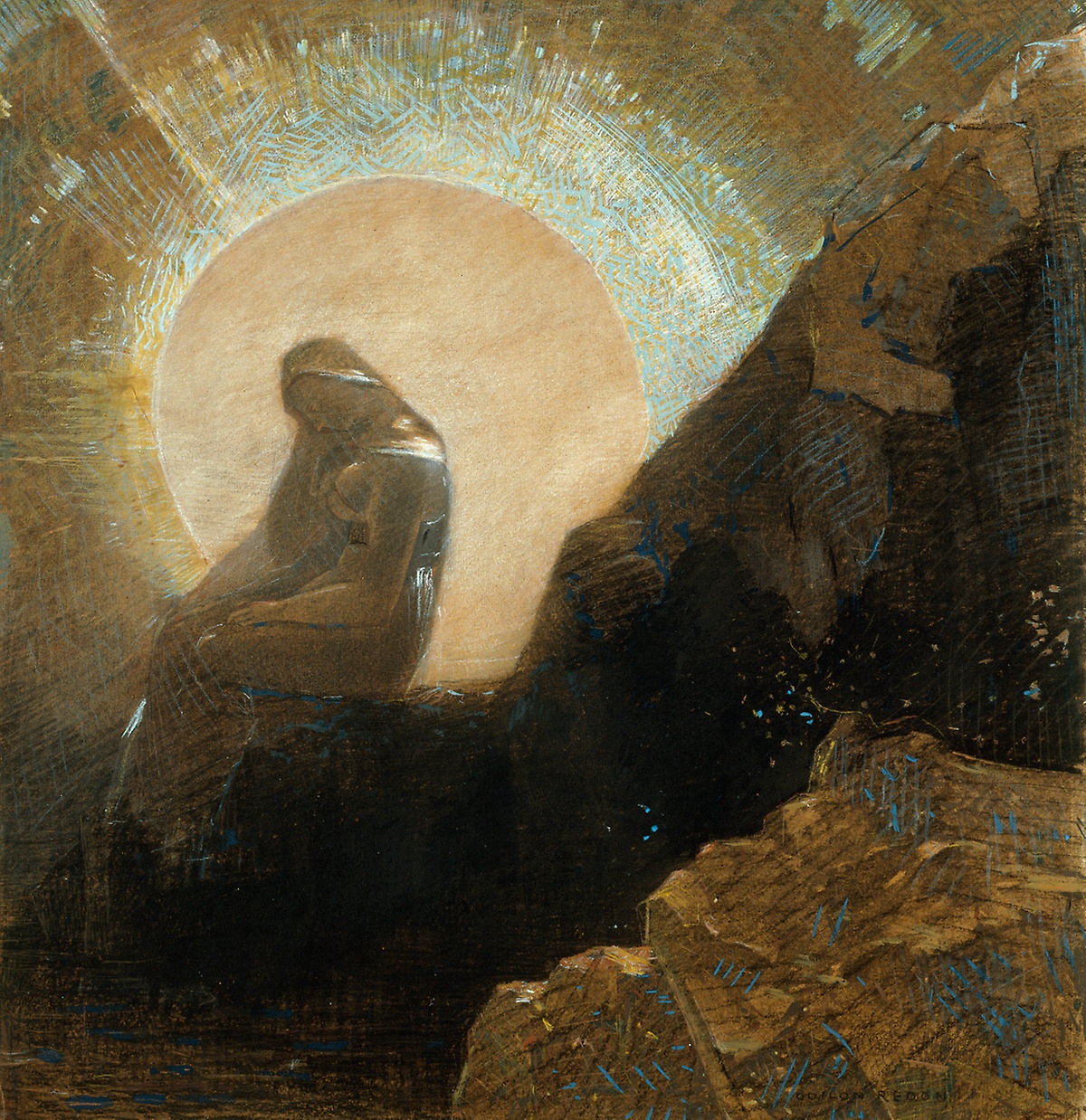
Tanner-the-anunciation-mary

One of the beautiful things about Catholic theology is that it sees story as one of its main interpretive filters. Protestantism, on the other hand, focuses much more on historical context and the text itself.

To modern ears, the Protestant ways sounds great, but there’s one big problem: this is not how most of the biblical writers, Jesus, the apostles, the early church, nor most of church history have ever treated the Bible. They were and have been much “freer” with the text (yes, often to a fault). Catholicism’s rootedness in ancient ways of reading invites them into new dimensions and interpretations.

Take Mary, for example. Catholics see her foretold in the Old Testament just as much as Jesus is. They see her in prophecies and allegorically represented in other women. They see parallels between her and the Ark of the Covenant, the Tabernacle, and the Temple, saying they all carried the Holy of Holies within them, and were revered for it.

There are three biblical offices of authority among God’s people: Prophet, Priest, and King. Christians see Jesus as the fulfillment and highest expression of each of these, but in the Advent event, you can see Mary serving these functions as well. So today, as a Protestant, I want to sit with this and revel in some beauty and divine mystery.

Continue reading

Advent & Restlessness


For an Advent devotional, I’ve been using God is In the Manger, excerpts from Dietrich Bonhoeffer’s sermons and letters. Below is a profound insight I came across. I encourage you to read this slowly and really take it in:

Not everyone can wait: neither the sated nor the satisfied nor those without respect can wait. The only ones who can wait are people who carry restlessness around with them and people who look up with reverence to the greatest in the world.

Thus Advent can be celebrated only by those whose souls give them no peace, who know that they are poor and incomplete, and who sense something of the greatness that is supposed to come, before which they can only bow in humble timidity, waiting until he inclines himself toward us—the Holy One himself, God in the child in the manger. God is coming; the Lord Jesus is coming; Christmas is coming. Rejoice, O Christendom!

Only the restless can truly celebrate Advent. For someone whose brain runs a million miles an hour, whose mental processing and angst run non-stop, who lives with much spiritual, emotional, and existential restlessness, this gives me hope, even for a moment.

Continue reading

Ascension: Our Glory & the Bible’s Hinge


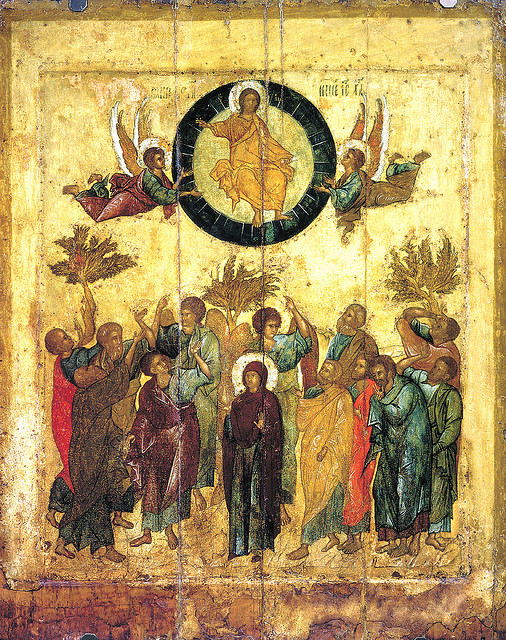
jesus-christ-ascension-icon

Yesterday in the Christian Church Calendar was Ascension Day, where we celebrate Christ ascending into heaven after his resurrection and now sitting at “the right hand of God the Father.”

The Useless Ascension

“Ascension” doesn’t get a lot of attention nowadays in the Church. This, in spite of the fact that it’s an essential part of all the Church’s earliest doctrinal formulations. Additionally, the New Testament sees it as the primary proof of Jesus’ divinity and “lordship” and it’s the subject of the most-quoted Old Testament verse in the New Testament: “The Lord says to my lord, ‘Sit at my right hand until I make your enemies your footstool.'”

Maybe we neglect this because the Ascension isn’t really a “doctrine”–it’s an “event” and a “declaration”; and we western Christians love our systematic “doctrines” that we can pick apart ad nauseam and/or figure out how to “apply it to our lives” so we can feel like “good Christians.”

But honestly, the Ascension isn’t “useful” to us in that way. There’s not much we can “do” with it.

Which is precisely why it’s so valuable. More than many other aspects of the Gospel and Christianity, the Ascension isn’t an “idea” to mull or unpack, but rather “news” to receive and let it act on us.

Continue reading

Systematizing the “Right” Way to Grieve


When I watched my grandfather die, the weirdest thing to me was that I had no idea what to feel or how to respond. Humans have been dealing with death for hundreds of thousands of years and we still are paralyzed by it. We click into any number of different responses ranging from shutting down to explosively acting out.

For my current class on caring for those at the end of their life, we went over some theoretical models for grieving and bereavement. Going through the history, it was fascinating just how desperately humans have wanted a framework for how we respond to death and dying.

Part of the problem is this: how do you define “successful” or “healthy” grief? Moving on with life while living a joyful, grateful existence full of robust social connections? I think most would agree that’s a good picture of it. But the real difficulty when you’re sitting in front of a grieving person (or are going through it yourself) is: how do we get to that place?

I think many of us believe that you really need to feel the sadness, stare it in the face, deal with it, process it, sit in it for a time. But why? My gut thinks that’s the way it should go, but the research says otherwise.

Plenty of people go through a huge loss, feel a twinge of sadness, and then get up the next morning and move on with life, with no discernible negative impact on the rest of their life or relationships. When people aren’t actively in emotional distress, there is little evidence that forcing someone to do “grief work” is actually helpful.

Continue reading

When Death and I have met


I’m currently in a class on caring for those at the End-of-Life. At the beginning of this course, we were given an assignment (which you can do yourself) to give us a baseline as to our feelings and experiences around death and dying, and begin cultivating an awareness of how we cope with it.

I thought I had a good sense of my relation to death in my life, but this really clarified and confronted me in some profound ways. I saw just how unacquainted I am with death, and struggled to recall times it had entered my life.

The first death I knew of was my great-grandmother, with whom I had an oddly strong connection. But I was 10 or 11 at the time and heard about it from my mom, I think, while we sat in the car in our driveway. I remember numbness and confusion, not really knowing how I was supposed to feel. I felt solace in how religious she was, and I felt a responsibility to carry on her “legacy”.

But still, we did not return from Virginia to Texas for her funeral. This meant that my first funeral for a little boy at my church who had drowned. I was maybe 14 at the time. I did not know him, nor his family, and had no connection with them other than we went to the same large church. I went more out of curiosity and was confused at how detached I felt.

My biggest acquaintance with death was that of my grandfather. It was the first dead body I saw, and I was present for the hospice care and process of dying and grief over the course of a couple of weeks or so. But I will have more to say about this death another time.

Continue reading

Lent, Accompanied by Death


I am back in school. After having received my Masters of Divinity several years ago, I am now completing the other half of training for my desired career path: a Masters of Social Work.

I’ve been working in the social work field for over a decade and have known that I’ve wanted to move towards more clinical therapy-type work. All along, I have imagined this would be your run-of-the-mill outpatient counseling with adults dealing with addiction, marital issues, mental health concerns, etc. I have respected those that work in inpatient settings, with kids, with the elderly, and such–but I have not imagined that would be my route. And I still don’t.

However, here in my second semester, just as the Christian Church is in the season of Lent, I am taking a course on End-of-Life Care, and it’s shaping up to be one of those courses that will profoundly affect me in the long run.

I’m taking the class not only because my desire in clinical work is to try and bring some greater sense of wholeness, health, and dignity to the hardest parts of human existence, but because death is an aspect of human life I’ve not had a lot of experience with. I’ve had some family members, a few acquaintances, and plenty of clients die over the years; and I’ve walked with others in their grief over the loss of others. But still, I’ve had relatively little training and direct experience with it.

Also, while religious faith can provide a structure and a sense of resilience, coping, and meaning in the face of death–that’s certainly been true for me–it can also sometimes serve as a distraction from our mortality. It can be used to minimize death, prevent us from taking it seriously, or keep us from really grappling, internalizing, or accepting it.

Continue reading

Ideas for Lent: Fasting, Prayer, & Generosity


Tomorrow, Lent begins. The Lent tradition began in the 3rd-century and is a 40-day season of meditation and repentance in anticipation of Easter celebration. Whether you are just beginning to explore Christianity, or have been a Christian for some time, Lent is a perfect season to allow God to shape your life in fresh ways.

Historically, Christians have used three broad categories of practices to engage in this season: fasting, prayer, and generosity.

These practices are external means and postures for shaping one’s soul and interior life. Fasting removes things to create space in your heart and life, prayer is a way to fill that interior space, and then generosity is giving out of the overflow we trust is there.

Below, you’ll find some brief words helping us think through these categories, followed by some ideas for how you can it in your life. Pick one, or pick several. The important thing is to try and do it consistently, and use times of frustration or skipping as a chance to meditate on your own limitations, and how God meets you in that. Continue reading