Some Hopefully Not-Crazy Musings on Calvinism & Predestination


John_Calvin_by_HolbeinThe Christian family is large and diverse. The little corner of that family that I occupy is usually called “Reformed”, meaning they can trace a lot of their distinctive teachings back to John Calvin. Now, if theres one thing Calvin is known for (other than the burning a heretic thing) is a section of his teaching on Predestination–the idea that before everything, God “decreed” that only some people would be “saved”, and others would not be–they didn’t make the choice in that matter, He did.

Now, “Calvinism” wasn’t actually a thing until after Calvin had died, and he had a lot more to say about a lot of things other than Predestination. Nevertheless, having just recently re-read the portion of his magnum opus that deals with this issue, I can say that even the most caricatured, extreme articulations of Calvinism out there have a strong kernel of truth. Calvin was definitely a Calvinist, in all its untactful, harsh, unapologetic glory.

In college, I got super into Calvinism and took it way too far (Exhibit A; Exhibit B). I hurt a lot of people. Then I went to my first seminary and mellowed out on it. Since then, I’ve just been absorbing lots of different strands of thought around this issue, and haven’t really made a concerted effort to synthesize them. I’ve sort of been sitting in the Mystery of it all.

This seminary semester, though, I have to bring together all my thoughts on Predestination and its related doctrine of Election into some coherency. This means I’ve been thinking about this a lot. And today, I want to offer some of my random, contradictory, messy thoughts and get your responses and help. Imagine my brain on this topic as a big ball of yarn, with each strand of thought existing together all at once, not being able to distinguish where one thought ends, where the other begins, and how they can all fit together.

Strand 1

First, there really isn’t any such thing as “Free Will”. I can’t “choose” to have different parents, to fly, to shoot lasers out of my eyes, to breathe underwater, what color hair I naturally have, where I was born, etc. Arguably, the most formative, important, foundational things to who we are as people are unchosen. The point in saying this is to point out that our wills are not “free”, but are bounded by nature. All our choices are limited by our nature.
Continue reading

About Heretics: Should they be Persecuted? (16th-century guest blog post)


Supplice_des_AmauriciensToday’s “guest post” is by Sebastian Castellio, a 16th-century reformer, pastor, and theologian from France. He was good friends with John Calvin for quite some time, but if there is one big, black, dark stain on the reputation of Calvin, it is his overseeing the burning of the heretic Michael Servetus. The Reformation years were a time of great strife within Christianity and much blood was shed simply because people held different doctrinal convictions. One of the first widely respected people to vehemently fight against this was Castellio. Today, especially in light of last week’s post on denominations, I want to reproduce a small portion of a pamphlet he wrote right after hearing about Servetus’ execution. This event tore apart his and Calvin’s friendship.

Most of the Christian Church doesn’t burn or kill those other Christians with wom we disagree. But still, our modern forms of “persecution” and labeling as “heretic” remains. Blog posts, message boards, tweets, Facebook comments, and passive-aggressive interviews fill the Christian blogosphere. And yet, in a post-Christian America, I find this to be increasingly unnecessary, silly, and shameful. My favorite Castellio quote is this:

To kill a man is not to protect a doctrine, but it is to kill a man.

I think the same can be said about dumb comments, blog posts, and tweets that aim to take down others that are just as sincerely trying to follow God as we are. As you read this, imagine today’s forms of attack in place of the overtly violent ones mentioned by Castellio, and I think you’ll agree this is a important a read today as ever. (This excerpt has been lightly edited for clarity. If you’d like to read the unedited excerpt, you can find it in this preview of Hans Hillerbrand’s The Protestant Reformation.)

_________________

Continue reading

Are Christian denominations good or bad?


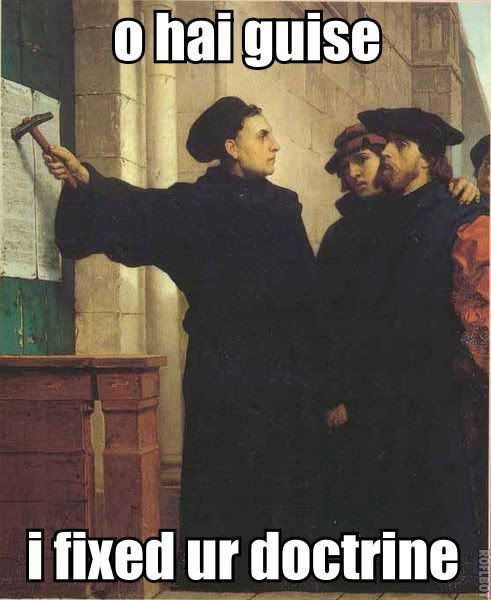
luther-95theses-humor-memeI’m currently in a Church History class going through the Reformation period of Christianity. During the Reformation, Martin Luther’s partner in crime (literally) was Philipp Melanchthon. After Luther’s death, Melanchthon carried the torch as a leader of the movement spreading throughout the Medieval world. In the years following the start of the Reformation, there were several different strains of non-Catholic Christianity that popped up.

To withstand the Catholic majorities at the time, these non-Catholic groups started talking about what it would look like to unify under one banner. Believe it or not, even though all these movements were really young and were reacting to the same problems they saw in Catholicism, these groups had really big differences between them that were hard to overcome.

In these conversations, an aging Melanchthon used an old Greek philosophical phrase to suggest a way forward: Adiaphora. Greek for “indifferent things”, he used it to describe how he felt that some beliefs and practices could be considered adiaphora (non-essentials), and could be compromised on for the same of unity. He argued with his fellow Lutherans that some beliefs were more essential to Christianity than others and didn’t require so much division. The others around him, of course, disagreed.

This got me thinking about the trajectory this set for us today. We now feel perfectly free to think a whole host of different things and still call others Christians. And yet still, much of Christianity’s most bitter judgmentalism and cries of heresy, unfaithfulness, sin, and arrogance are directed towards other who are also trying to follow the God of Jesus best they can. This has caused rifts, schisms, splits, and divisions into a huge number of Church denominations. Is this healthy for us? What does Christian “unity” look like? Do we all need to look the same?
Continue reading

My church let me preach another sermon. Here it is.


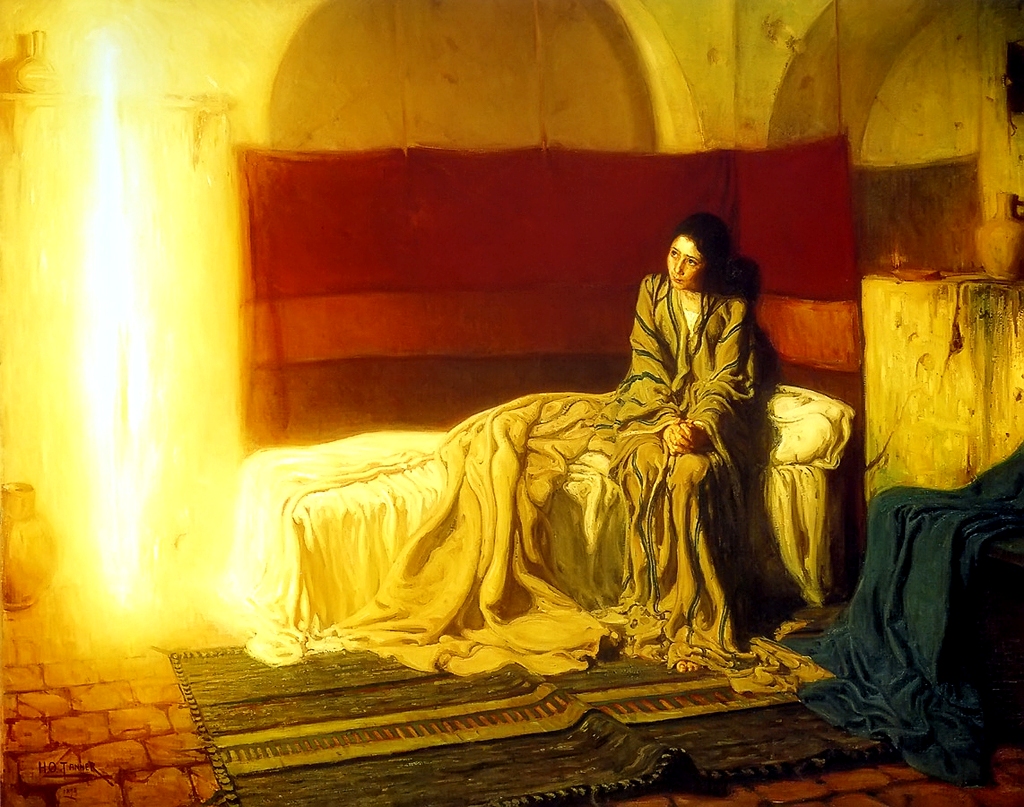
Tanner-the-anunciation-mary

Believe it or not, even after preaching my first real sermon ever, my church let me preach again. All jokes aside, I had the honor of preaching this past Sunday as part of our Advent series.

The text is Luke 1:26-38, the moment in the life of Jesus known as The Annunciation, when the angel Gabriel tells Mary that she will give birth to Jesus. Cameos in the sermon include Mary, Friedrich Nietzsche, Karl Barth, the podcast Serial, racism, white privilege, and the story of everything. Here’s the audio:

You can also download it here, or subscribe to our podcast here.
Continue reading

Advent, Angst, & Ferguson


Rothko-9-White-Black-Wine-1958
When my phone started blowing up with notifications about the Ferguson grand jury decision, I was in a daze. I grabbed my pipe, poured the biggest single glass of whiskey I’ve ever had, and sat in my backyard in tears, alternating between retweeting others’ comments on the case and just staring at the sky. I watched and heard the helicopters above as they watched the Philadelphia protests below, mere blocks from my house.

I think part of my response was because of where my mind had been in the days leading up to the decision.

I recently pored over Cornel West’s biography and watched 12 Years a Slave. As the weather has gotten colder, the city’s marginalized and homeless have become more noticeable. An organization whose heart is in the right place, and who I otherwise love, put out some promotional materials that unintentionally showcased the degree to which racism and power structures are so ingrained and so unconscious. Last Sunday, I watched as Rudy Giuliani went shockingly racist on Meet The Press (what he said is wrong, by the way). For school, I watched a presentation on the Civil Right’s movement, and also read King’s Letter From a Birmingham Jail. 

And then the grand jury came back. No indictment.
Continue reading

Sins of Our (White) Fathers: We Still Don’t Get It


robert-motherwell-elegy-spanish-republicThis weekend, I finally watched Steve McQueen’s  Twelve Years a Slave. Yes, I’m over-dramatic as a general rule, but I can’t remember the last time I cried like that (actually, it was probably after I saw McQueen’s last movie, Shame).

The brutal reality of the film combined with the knowledge that this wasn’t hypothetical–this was real–broke me. Further, it wasn’t just real for this one man, but for our entire nation. The brokenness, evil, and callousness of it all was staggering.

And we’re still doing it today.

No, I’m not exaggerating. The effects of slavery in this country are still absolutely tangible, apparent, and real. And frankly, too many of us don’t give a damn.

There are still people alive today that knew slaves when they were younger. That’s how recent this whole thing was. And yet, we’ve done to racism what we’ve done to every other thing we should engage with meaningfully but don’t–we’ve privatized and individualized it. We’ve redefined “racism” to mean harboring active, conscious, discriminatory thoughts and feelings towards someone of another race.

Continue reading

My Day with Cornel West (or rather, his autobiography)


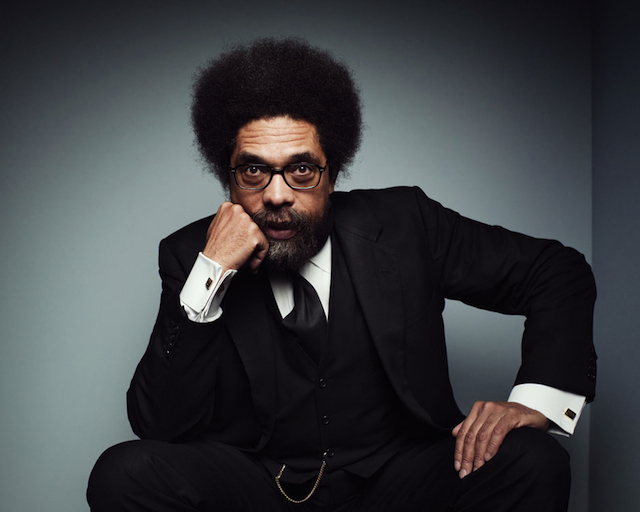
Cornel-WestIf you know who Cornel West is, I’m pretty confident in saying that what you think you know about him is probably wrong, or at best, dramatically incomplete. If you don’t know who he is, then you should.

For my current class on Leadership, I had to pick an autobiography of a leader whose perspective on faith and life is probably dramatically different than my own. The book I chose was Brother West: Living and Loving Out Loud. 

My own anxiety and compulsivity make it difficult for me to read for long stretches of time. I can usually only read one thing for ten or fifteen minutes before having to bounce my mind to something else or change up what I’m reading. But, due to my own procrastination and inefficiency with time, I came to the day before my paper was due not having opened up the nearly-300-page tome.

And so I did what needed to be done. I left my electronics at home and brought nothing but the book to a nearby Starbucks. I got a cup of coffee, turned on a Jazz radio station on my phone, settled into a couch, and read the entire thing.

Continue reading

A message from Philly’s mayor to my church


http://youtu.be/D0mTuV8XvDo

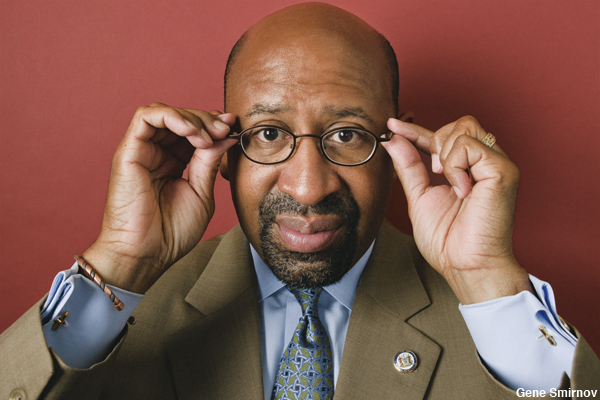
My church recently bought our building in Center City Philadelphia. For the renovations, we just kicked off a campaign encouraging people to Pray, Serve, and Give towards this end. Michael Nutter, the mayor of Philadelphia caught wind of this, looked into our work in the city, and gave us a special message to welcome us into our new permanent home. You can watch the video below and also join us in our efforts to love our city well.
michael-nutter-philly
[image credit: Gene Smirnov for Philly Mag]

My first Sunday Morning Sermon. I’d like to share it with you.


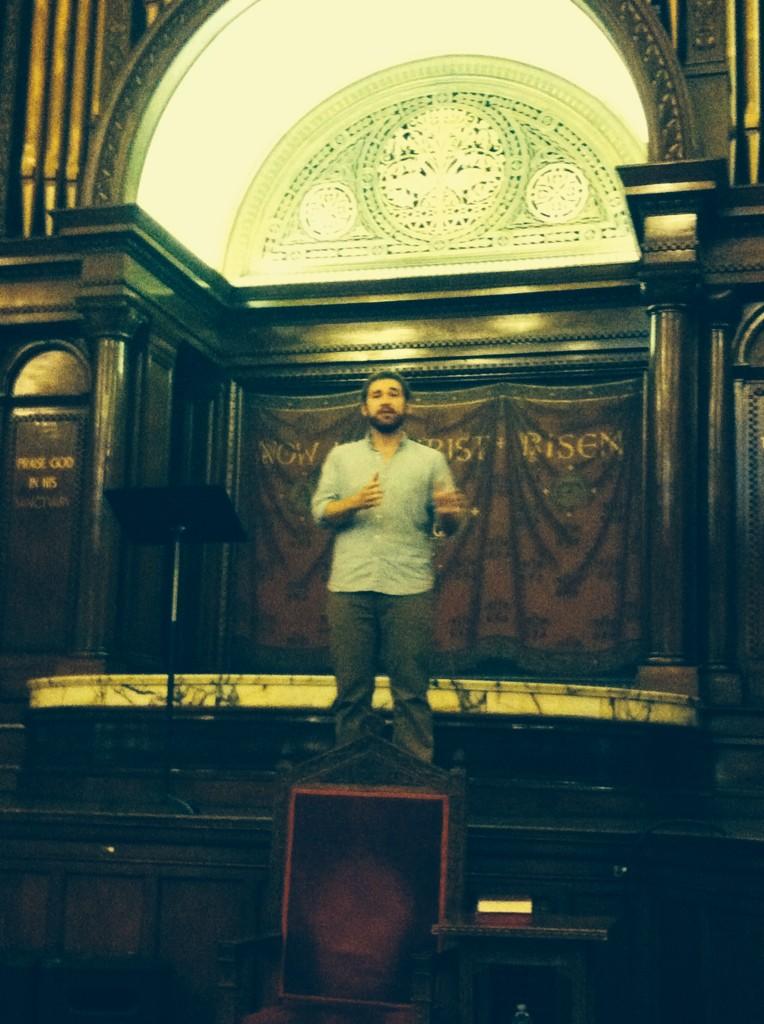
paul-liberti-sermon-preachingSure, I’ve done some lectures, taught some classes, led a home group, and preached a sermon in a seminary class, but I’ve long believed that there was something truly sacred and “other” about preaching to a church family in a gathered worship service. And it’s something I had never done.

I’ve always been an over-zealous guy, and very wise leaders have pulled the leash on me, telling me to just sit and watch for a while, until the time was right to put me in front. This has continued through my life at my church in Philly, as they’ve slowly discipled me and loosened the leash bit by bit in service to our people.

Well this past week I had the honor of preaching my first Sunday morning sermon to my church family. It felt good and I myself experienced such a grace and blessing in preparing for it and offering it to my brothers and sisters. And so, I’d like to share it with all of you as well.

It’s the final sermon in our series “Finding Freedom” that went through the Ten Commandments. The text is Matthew 7:13-29, the very end of the Sermon on the Mount. Here’s the audio:

You can also download it here, or subscribe to our podcast here.
Continue reading

A Baby Step Against My Latent Racism (And Maybe Yours?)


client-coffee-hands-bwI know, I know. One of the worst types of writing there is in the world is a white person writing about their discovery that they are privileged and this is deeply engrained. I know. This post isn’t that, I promise. Just stay with me for a little bit.

Having worked in social work for a little over five years now, I’ve grown in my understanding that racism is about a whole lot more than individuals feeling an active, conscious dislike of someone just because of their race. It’s structural, cultural, political, economic, and systemic.

(Still, I’ve really missed this at times, and old habits and ways of thinking die hard. I’m really, really sorry for that.)

Recently, I had the honor to speak at one of my church’s ministries for those in homelessness. Afterward, I walked around saying hello to the almost-exclusively black crowd there. As I made eye contact with different people, I would offer a smile to them and give them as warm of a look as I could. I did really feel a genuine warmth and love for this group.

And yet, I started feeling this…thing…within me. As I gave my smiles away to the crowd, I realized that this was a problem. I was giving my smiles to them. Something in me felt as if I, as a privileged white male, was “serving” these people by “granting” or “bestowing” upon them affection. Does this make sense? Do you see the problem?
Continue reading

Hey Church Planters! A Quick Question for you.


As part of my seminary program, I’m currently in an Urban Church Planting class. As an assignment, I’m supposed to ask you all:

What are some things you wish you had known before planting, or things you wish you had done differently?

A penny for your thoughts? Please also include your church’s name and your position there.

A Sermon I Got to Preach on Isaiah 61 [VIDEO]


Believe it or not, I don’t really have much experience at all in preaching. Yeah, I’ve spoken and “preached” at some things, but I’ve still never offered the preached proclamation at a Sunday worship service. It’s an area I’ve wanted to grow in for a while.

To that end, I took a preaching class last semester for my seminary program. It was a powerful course that changed my whole relationship to both the Bible and the act of preaching. Each of us wrote and presented a sermon on an assigned text. The sermons were recorded, and I’m offering mine here today. It opens with some brief words on the context I had in mind when preparing this.

I hope it meets you and speaks to you, wherever you are. The video is above, the text and my manuscript are below. You can also download files for both the audio or the manuscript.

Special thanks also to an old friend, J. Chord Barnes of ASERWorks Media, for fixing some audio issues in the original recording and remastering it for me. Check him out at the link above. Continue reading

Spiritual maturity has little to do with doctrine | 1 Corinthians 3.1-3


And so, brothers and sisters, I could not speak to you as spiritual people, but rather as people of the flesh, as infants in Christ. I fed you with milk, not solid food, for you were not ready for solid food. Even now you are still not ready, for you are still of the flesh. For as long as there is jealousy and quarreling among you, are you not of the flesh, and behaving according to human inclinations?
1 Corinthians 3.1-3

Firstly: Oh. Snap. Knowing the issues this church deals with, that’s got to be so insulting to them in the highest degree. “You are not spiritually mature.” But notice what makes them immature: not doctrine. Paul says time and time again throughout this letter: they’ve got wisdom and doctrine. And yet they are “infants”. Why? Jealousy. Wow.

Think: Do we think that we are “spiritually immature” when we’re “simply” jealous? What of other emotional, heart things? Do we use those things to judge our “spiritual maturity”? Or do we look more to doctrinal knowledge, what podcasts we listen to, what books we read, or how good our “quiet times” are?

See other Marginalia here. Read more about the series here.

Tender words for a terrified father | Mark 5.35-36


While he was still speaking, some people came from the leader’s house to say, “Your daughter is dead. Why trouble the teacher any further?” But overhearing what they said, Jesus said to the leader of the synagogue, “Do not fear, only believe.”
Mark 5:35-36

Jesus first offers comforting words to this father. He doesn’t put down his lack of faith, as he does with the disciples on the boat in the previous chapter, nor does he brag of his own authority to raise the dead. Instead, Jesus simply gives him a call not to fear, only to trust. What sensitive, heartfelt, loving words these are.

See other Marginalia here. Read more about the series here.