Lent begins tomorrow. (Will you just give it a try?)


Jesus & The Cross

I grew up in a church tradition that did not take seriously the Christian Church Calendar. Even as I went to college and moved into communities that took some level of tradition more seriously (which was usually limited to quoting Puritans and Reformers in sermons), the Church Calendar wasn’t that big of a deal. It was seen as something sort-of cool that could be incorporated into the already established life of the Church; a buffet from which leaders could pick and choose some aspects that might be helpful in organizing some sermon series or songs. But it certainly wasn’t seen as something that a church should actually incorporate itself into, or build it’s own rhythm around.

I’ve had the privilege of having this paradigm rocked the past several years at my church, and have fallen in love with the Church calendar. It influences much of the rhythm and timbre of my everyday life–both ecclesial and otherwise. I find such life in living within a stream of thought that was not simply created within the past generation by baptizing modern Western American cultural ideas.

I love finding myself as embedded within the cloud of witnesses that have gone before me as possible–even those I may disagree with passionately and fundamentally. Because, at the end of the day, they are my family, and families have traditions. Sure, you can be “that guy” that does his own thing and doesn’t participate in the family rhythms, but where’s the life in that?

Continue reading

Preaching the Gospel to Christians | Romans 1:14-16


I am a debtor both to Greeks and to barbarians, both to the wise and to the foolish—hence my eagerness to proclaim the gospel to you also who are in Rome.

For I am not ashamed of the gospel; it is the power of God for salvation to everyone who has faith, to the Jew first and also to the Greek.

Romans 1:14-16

Notice here that Paul wants to proclaim the gospel to those who are already believers! This Gospel is the whole of the Christian life, not simply our starting place. It not the ABC’s, after which we need theology, doctrine, good works, etc. It is the A-to-Z of the Christian life. When we think our churches, our preaching, and our lives essentially need something more than that, we begin to stray from the Gospel altogether.

See other Marginalia here. Read more about the series here.

Why go to church? Well, why get married? [QUOTE]


If someone asks me what is the use of going to church, what good does it do me, what do I get out of it, how do I answer these questions?

It is as though someone asks me what the use is of getting married, what good does it do me. If I answered such questions by saying, “Well, it is very useful to get married! You have someone to do the housework, the shopping, cook the meals, etc.,” it would clearly be a false view of marriage. No woman wants to be merely a housekeeper, kept because of her utility!

There is only one supreme reason for getting married—for love’s sake, for the other’s sake, for mutual love, self- giving, a longing for intimate communion, and sharing of everything.

So in Christian worship, we worship God for God’s sake; we come to Christ for Christ’s sake, motivated by love. An awareness of God’s holy love for us, revealed in Jesus Christ, awakens in us a longing for intimate communion—to know the love of the Father and to participate in the life and ministry of Christ.

Worship in the Bible is always presented to us as flowing from an awareness of who God is and what he has done: “I am the God of Abraham, Isaac and Jacob . . . I have loved you and redeemed you . . . I will be your God and you will be my people. Therefore, this is how you will worship me.”

As we have seen, worship in the Bible is an ordinance of grace, a covenantal form of response to the God of grace, prescribed by God himself. This is supremely true of the New Testament understanding of worship, as the gift of participating through the Spirit in the incarnate Son’s communion with the Father and his mission from the Father to the world, in a life of wonderful communion.

— from James B. Torrance’s beautiful book Worship, Communion, and the Triune God of Grace (paragraph breaks added for clarity)

Male Headship & Societal Injustice | Esther 1:17-22


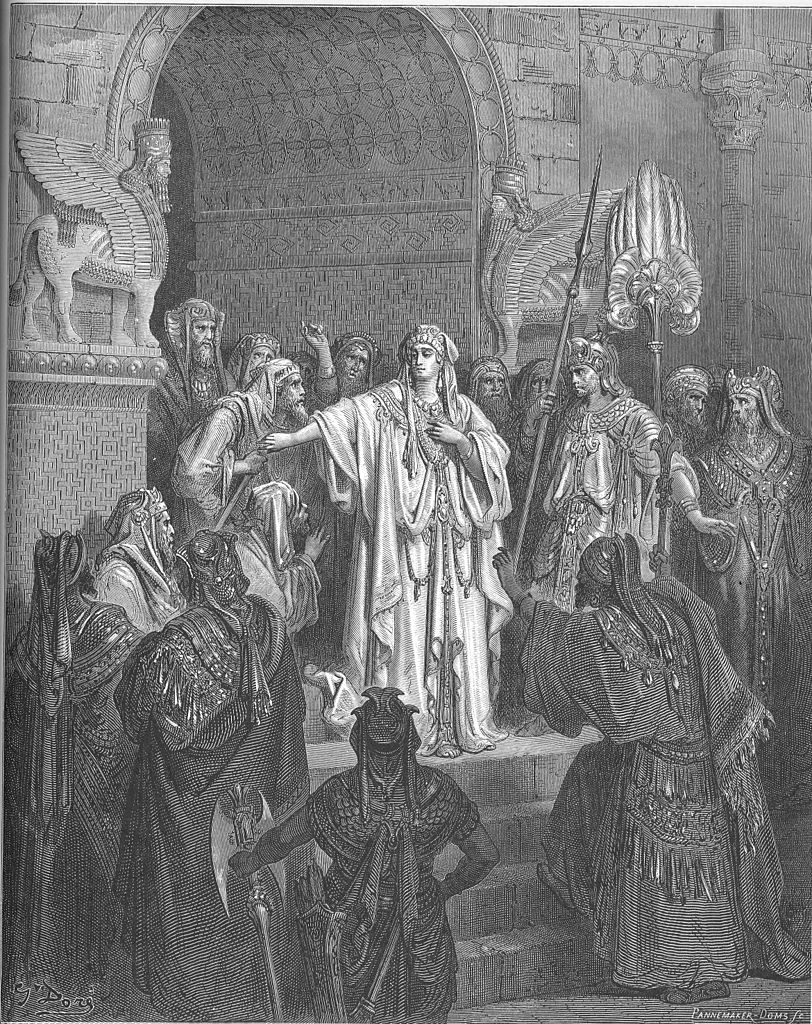
Queen_Vashti_Refuses_to_Obey_Ahasuerus_CommandToday’s post falls into both our new section of the site called Marginalia and our on-going series on Women in the Church.

For this deed of the queen will be made known to all women, causing them to look with contempt on their husbands, since they will say, ‘King Ahasuerus commanded Queen Vashti to be brought before him, and she did not come.’ This very day the noble ladies of Persia and Media who have heard of the queen’s behavior will rebel against the king’s officials, and there will be no end of contempt and wrath! If it pleases the king, let a royal order go out from him, and let it be written among the laws of the Persians and the Medes so that it may not be altered, that Vashti is never again to come before King Ahasuerus; and let the king give her royal position to another who is better than she. So when the decree made by the king is proclaimed throughout all his kingdom, vast as it is, all women will give honor to their husbands, high and low alike.”

This advice pleased the king and the officials, and the king did as Memucan proposed; he sent letters to all the royal provinces, to every province in its own script and to every people in its own language, declaring that every man should be master in his own house.
Esther 1.17–22

I can imagine a conservative evangelical looking at this and saying to themselves, “Now, the king’s court is recognizing a natural order in the way God has made a marital relationship to work, even though they go about reinforcing this biblically-supported picture in the wrong way–through force and not love”. I hope that’s a fair representation.

But either way, (1) they would not want us to pull from this text any lessons about how male headship itself is wrong, just how it’s done badly here, and (2) they would still think the concern of these males is justified (and perhaps even right), as we’ve seen similar dynamics play out in our culture in the aftermath of feminism.


Continue reading

Experiencing God in this Holy Present


flickr-sculpture-worship-kissAt my work, we recently had a training on mindfulness. Now, before you roll your eyes, it was maybe my favorite work training I’ve ever done. It was engaging, practical, and participatory like few trainings are.

Anyway, “mindfulness” is the fancy word used to describe a “non-judgmental awareness of the present”. It’s heightening your senses and calming yourself in order to fully inhabit the present without analyzing it, mulling it, or needing to evaluate it. For those of us with anxiety issues, it really is an amazing way of centering and calming oneself, as well as separating oneself from the internal busyness–at least for a moment.

Another way of putting it is that it is radical present-ness. It is letting this very moment not be merely something you’re passing through as a bridge from the moment that has passed and into the moment that is not yet here. It is to fully inhabit the moment you find yourself in, and let the future come to you rather than anxiously trying to run towards it.

Not gonna lie. It was very spiritual to me. I felt more in tune to God and it got me thinking about how we mystically experience Him in our everyday lives.

When an Atheist talks about this hard-wired human sense to feel the “Numinous”, it often carries with it the sense that it rises from within us. When a lot of Christians talk about meeting the Divine, it often sounds like a presence that comes pointedly at us from outside of us. I’m starting to think that neither of these is right.

Continue reading

The Good News changes, the Good News gifts | Acts 20.32


“And now I commend you to God and to the message of his grace, a message that is able to build you up and to give you the inheritance among all who are sanctified.”
Acts 20.32

Nice. The message of grace itself is enough to sanctify and grow them. Just the message. Further, this message–again, the message itself–gives us the inheritance of the Holy.

See other Marginalia here. Read more about the series here.

Women at the Cross | Matthew 27:55-56


Now when the centurion and those with him, who were keeping watch over Jesus, saw the earthquake and what took place, they were terrified and said, “Truly this man was God’s Son!”

Many women were also there, looking on from a distance; they had followed Jesus from Galilee and had provided for him. Among them were Mary Magdalene, and Mary the mother of James and Joseph, and the mother of the sons of Zebedee.
Matthew 27:55-54

It’s really interesting to me that Matthew adds this little addendum to the end of the account. Why point out the women that were there? Is the assumption that all the men have scattered, and so Matthew had to show his sources for this story?

See other Marginalia here. Read more about the series here.

Introducing Marginalia: a new part of this blog


schrott-bibles-paul-coffee

I’ll be honest. It’s been years since I’ve been able to find a way to regularly read the Bible that sticks and works for me. To be frank, readings plans usually don’t work for me because I get bored. Depending on the plan, you’re either stuck in the same book for long stretches of time or you’re jumping around so much that you lose the sense of the whole.
This year, I think I’ve started a regimen that is clicking: the M’Cheyne Bible reading plan. At any given time, I’m going through four completely different part of Scripture and for me, this is keeping me really engaged. As I’ve gone on through the plan these past couple of months, I started highlighting and writing up little notes on random verses here and there. Lots of themAnd I’d like to share them with you.

So today, I’m introducing a new little part of this blog called Marginalia, where I’ll be posting these short little meditations on Scripture as I go through this plan.
Continue reading

Abraham’s son Ishmael was part of Covenant! | Genesis 17.23-27


This is my covenant, which you shall keep, between me and you and your offspring after you: Every male among you shall be circumcised… and it shall be a sign of the covenant between me and you…. Both the slave born in your house and the one bought with your money must be circumcised. So shall my covenant be in your flesh an everlasting covenant. Any uncircumcised male who is not circumcised in the flesh of his foreskin shall be cut off from his people; he has broken my covenant.”… As for Ishmael, I have heard you; I will bless him and make him fruitful and exceedingly numerous; he shall be the father of twelve princes, and I will make him a great nation. But my covenant I will establish with Isaac, whom Sarah shall bear to you at this season next year.”…. Then Abraham took his son Ishmael and all the slaves born in his house or bought with his money, every male among the men of Abraham’s house, and he circumcised the flesh of their foreskins that very day, as God had said to him…. And his son Ishmael was thirteen years old when he was circumcised in the flesh of his foreskin. That very day Abraham and his son Ishmael were circumcised; and all the men of his house, slaves born in the house and those bought with money from a foreigner, were circumcised with him.
Genesis 17.23-27

Yes, God said that Ishmael would not be the primary bearer and “administrator” of the covenant, but he still bears its marks. Reminds me of a reading from Lesslie Newbigin where he talks about how through our election and Covenantal relationship with God, Salvation is extended to all the nations. “Election” isn’t about blessing; it’s about responsibility to extend the Blessing to others.

Other peoples (even those not in the elect people of God) participate in and receive the full benefits of being part of the Covenant. To be elect is to extend these Covenantal blessings to all nations (as we see here with Abraham). To be marked as God’s is to be placed on mission.

Ishmael was still joined to the covenant! Praise God for his gratuitous grace!

See other Marginalia here. Read more about the series here.

The Privilege of Church-lessness: a Donald Miller post-script


donaldmiller-bw-2Donald Miller put up another post sort of talking more about his church attendance thoughts, this time talking about how the doctrine of the “priesthood of believers” means he does sacraments on his own and whenever he wants because God has given us all “agency” in this world to do that kind of stuff. He longs that pastors would empower their people to feel free to do these sort of things as well.

I made my thoughts clear last week about how wrong I think he is on this stuff (especially so with the sacraments. He even says he does baptisms for other people even though he himself has never been baptized). I won’t rehash that here. I did want to bring up one thing I noticed in his other posts that was more explicit in this last post. He writes:

To be fair, I’m wired a bit differently. I’m creative and I’m a risk taker. I realize a mistake I often make in my writing is assuming people are wired the way I’m wired. They aren’t. Most people are looking to “do it right” and play by the rules. This saves them from the trouble I often find myself in.

I can’t get past the the feeling here that Miller is saying that “most people” (read: “those that go to church”) at least primarily go to church because they want to “do it right” and “play by the rules”; that not going to church is an act of freedom, while those that still go are bound by something Miller thinks he has freed himself from. It’s not that he necessarily thinks he’s “better” than others, but I fear he makes a dangerous division within the Body of Christ between himself and “most people”.
Continue reading

The Body of Christ, Broken (a guest post for Restoration Living)


family-old-moustache

Yeah, that’s my family (I’m in the front left). This was one Easter Sunday in the 90’s in Dallas, Texas, at a time and place where (I promise) it was absolutely appropriate to dress like that for Easter (except the glasses, of course). I look at this picture a lot, and not just to chuckle. I find it so oddly and powerfully symbolic of what life in the Bible Belt was like.

You see, my family was deeply wounded by “Church folk” throughout my childhood. Just as in the picture, people in the Church would live their Christian lives dressed up and looking good, all while wearing masks, disguising who they really were. When things were hard at home, people at church had no categories to process it. After all, to be a Christian is to be cleansed by Jesus and walk in new life, right? Failures, sins, and brokenness were seen as signs of some disobedience – some place where you weren’t “okay.”

_______________

And so begins a guest post I wrote for a wonderful site that should be on all of your radars, Restoration Living. Read the rest of the post here.

Weekly Must-Reads {2.12.14} | Creation, Masturbation, & Communism


guy-newspaper-reading

Well, it’s been a good long while since I’ve posted a Reading List for you all to enjoy–too long, in fact. These were some of my favorite things I read this week. What were some of yours?

__________

In defense of creationists | The Week
Michael Brendan Dougherty

I referenced this at the end of my post yesterday, but this is a stunningly beautiful piece that wrestles with humanizing those that frustrate us the most in the Christian family. A must-read for sure.

Escaping the Prison of the Self: C.S. Lewis on Masturbation | First Things
Wesley Hill

Don’t overlook this piece too quickly. It is an incredibly powerful piece that speaks to how all of us–married, single, gay, straight–engage our sexuality in this world. It showed me how having celibate unmarried people in the world is necessary for healthy marriages, as well as how masturbation ruins even good friendships.

Continue reading

I think we all need a reminder: Ken Ham is on our team.


ken-ham-banner

Okay, this one is a tough one to write.

Most all of us know by now about the Great Debate that happened a couple of weeks ago between Bill Nye and Ken Ham on whether or not Creationism is a viable model for human origins. If you’ve followed this blog for an real period of time, you know it’s no secret that I do not think it’s a viable model, and I’ve been quite vocal about that in this space.

So I felt the frustration when Ken Ham was treated like the stand-in for every Christian that wants to take the Bible seriously. I felt better when smart Christians responded well. I chuckled at those that poked fun of him and other Creationists, debunked their logic, or discredited the historical stream in which he finds himself. I gave into the private mocking.

I was then really encouraged when I read this report in Christianity Today that shows that Americans are not as divided on this issue as some polls make it seem. I was overjoyed with knowing that more Christians than ever were leaving the Ken Hams of the world in the dust of irrelevance, their budgets and voices shrinking in the distance.

As the discourse went on, I began to thinking to myself: I think we’re winning! But then yesterday, I felt like I woke from a fog and thought: Wait. Who are we fighting?
Continue reading

Donald Miller is just plain wrong about church. But it’s not his fault.


donald-miller-bw-1

Donald Miller, author of Blue Like Jazz, started a little kerfuffle last week when he wrote about how he doesn’t really go to church any more. He doesn’t learn much about God through sermons, and he doesn’t connect with God through songs. Church just doesn’t connect with him in any way and doesn’t fit within his own learning style, which is far more participatory. He says the Church is all around us and in believers so he feels free to “have church” in the way(s) that most connect him to God and others.

Well, this caused quite the backlash. He wrote again a couple of days ago in response, but it seems that most people still really disagree with him.

But here’s the problem: Donald Miller is absolutely right in everything he says if he still insists on calling himself an “Evangelical”, or at least using that as his frame of reference.

If you consider yourself an Evangelical in any traditional sense, and you’re looking at Donald Miller’s church practices with dismay, well then welcome to your future–the logical conclusion of your theology and how you’ve practiced church for a few generations now.
Continue reading

This is why Genesis was written (and Ken Ham doesn’t see it)


Bosch-Garden-Earthly-Delights-Outer-Wings-Creation-WorldIf my Facebook feed is representative of the general population at all, then I can confidently say that most of you have heard about the debate between Ken Ham and Bill Nye about creationism and evolution.

On this blog, I try not to get too much into issues of great contention in the church family when I don’t think it’s necessary, especially when I think it would unnecessarily prevent someone from reading this blog with a free conscience, or just mess with their head too much. But this is the one issue that I have felt the freedom to be blunt, bold, consistent, and loud about my opinion. So, I don’t have too much to add to everyone else out there that was more or less lamenting this debate more than celebrating it. Maybe I’ll have some thoughts next week coming at it from a different angle, but we’ll see.

Today, I wanted to share with you a video from the in-person portion of my Hebrew class a couple of weeks ago. To get an A in the class I have to translate, memorize, and recite a section of the Genesis 1 in the Hebrew. To help us with that, my professor made a video of him reciting it and acting out the recitation in front of us.
Continue reading