Christians, Contraceptives, & Civil Disobedience (iii): conclusions


sit-inOver the past couple of posts, we’ve been looking at Acts 4, to see if it has any lessons to teach us about how Christian engage with the political realm when they disagree with what the government is doing.

So far, we’ve talked about three things: (in Part 1) how Christians should engage with a political realm that comes in conflict with their faith; what is worth Christians disobeying the civil authorities over; and (in Part 2) the cultural and societal work we are called to that facilitates our Christian living and possible disobedience.

Today, we’ll finish this up with some principles and applications for moving forward.

Some Personal Contraceptive Conclusions
Continue reading

Christians, Contraceptives, & Civil Disobedience (ii)


Nicolas-Poussin-peter-john-healing-lame-manOkay, I lied. This will be three posts, not just two.

Last week, in light of Catholic institutions moving more towards Civil Disobedience in light of certain provisions in the Affordable Care Act, we looked at Acts 4 to see if there was any guidance we could get in this. We talked about how (1) Civil Disobedience is not warfare against the laws of your geographic home, but simply living in light of your spiritual home–the Kingdom of God. We also pointed out (2) that the State is not around to comply with our every theological preference and whim, and therefore some discretion needs to be used to evaluate what’s “worth” Civil Disobedience.

Today we keep going. I want to offer some summary conclusions, but first let’s point out the last thing the Acts 4 passage helps us see: the work we do in society prior to our Civil Disobedience.
Continue reading

Christians, Contraceptives, & Civil Disobedience (i)


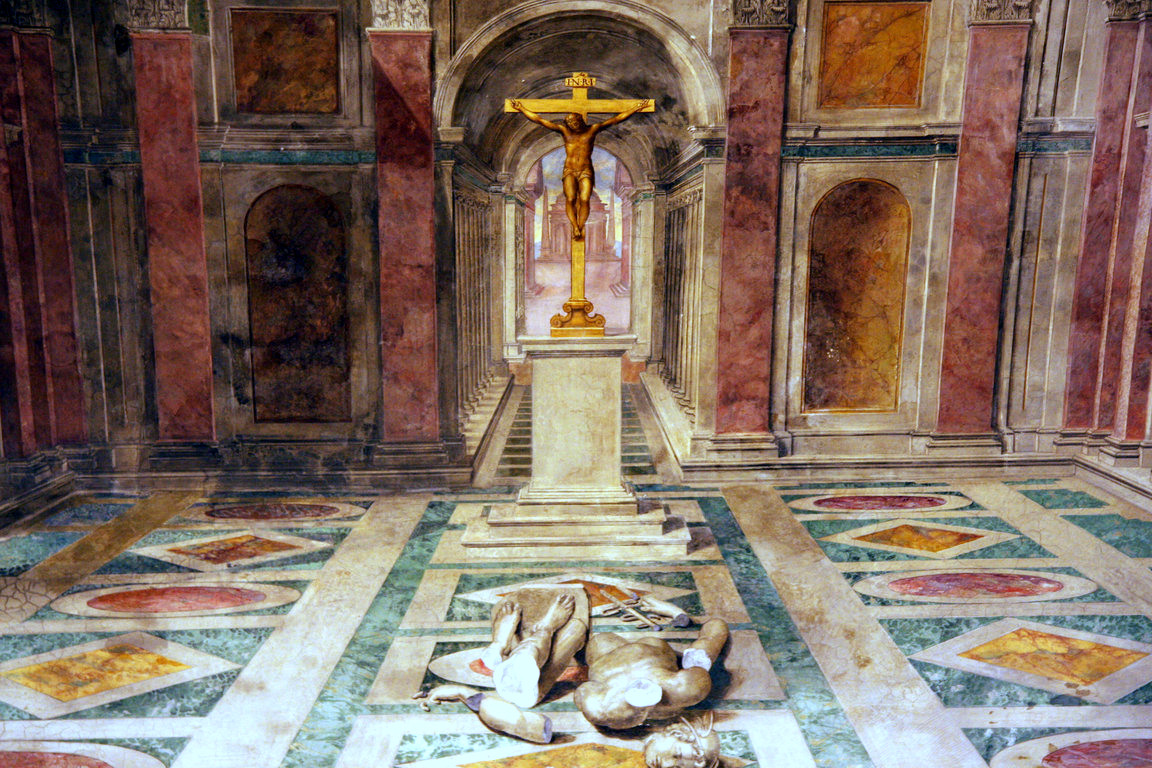
laureti-triumph-christianity-pagan-statueWith the Affordable Care Act kicking in, it has certainly stirred up its fair share of controversies. It’s regulations are pretty far-reaching and have started to encroach on some territory held pretty sacred by some major parts of our Christian family. The biggest friction has been with the ACA’s requirement that non-church and ecclesial organizations still have to cover contraception coverage for their employees. Catholics who run non-ecclesial organizations have not taken too kindly to this. NPR recently had an interesting profile about this intersection of faith and politics.

Catholic leaders have vowed Civil Disobedience in response to these regulations, insisting on a religious exemption, even for private companies. In the past, religious organizations have done similar things in response to abortion regulations as well as gay marriage statutes.

Reading through Acts 4 the other day, I read again the account of Peter and John being arrested in Jerusalem and thought it had some powerful things to say about this and how Christians in America have been acting towards their government recently. So, I thought we’d walk through that passage over a post today and on Monday, and discuss some principles behind when and how Christians should fight their government tooth-and-nail for their convictions.
Continue reading

Why my soul is glad to have feminists around me


wwii-woman-we-can-do-it-feminismThis is a post in our on-going series on Women in the Church.

As I wrote last week, I was at my in-person seminary intensive the past two weeks. While there, I met a woman who is about to be ordained a minister in my denomination. We were all sharing our stories and I told her I was raised a Southern Baptist. Having been raised in area where they have little to no foothold, she had only had one experience with a Southern Baptist.

She was working a table at a conference where an older gentleman carrying a large briefcase approached, telling her how excited he was about the next speaker–a “fellow Southern Baptist”. Not being familiar with the speaker’s work, this woman asked the gentleman what the work was on. He put his briefcase on the table, opened it up and pulled out a large tome, saying “this is his book, and it is wonderful.” He almost began to summarize its contents, but stopped short, instead pulling out a much smaller paperback, saying “but that book may be too hard for you to understand. Here, look at this one. It’s much simpler.”

He then realized he had no idea why a woman would be at this conference in the first place. He asked, “and so what do you do?”

She told him that she was at seminary studying for her Masters of Divinity.

This gentleman quietly put the books back in his suitcase, shut it, locked the clasps, looked at her, and solemnly said, “you know you’re going to burn for that, right?” And he walked away.

Continue reading

Welcome to Epiphany. (And a free Mixtape to celebrate!)


epiphany-mixtape-coverIf you’re just looking for the mixtape, click here for the official Epiphany Mixtape page.

From now until Lent, the Church Calendar is in the season of Epiphany.

Basically, this season seems like it’s sort of a Church Calendar “junk drawer” to meditate and celebrate on all the other parts of Jesus’ life that happened between his Advent/Birth and his Death.

And don’t misread that. In describing it that way, I hope that doesn’t diminish this season for anyone.

Perhaps the most precious doctrine of the Christian faith for me is that of the Imputation of Christ’s Righteousness. That’s a fancy way of saying that Jesus lived out a righteous life, and his very own righteousness is given to me as my own. And so, with a complete and perfect righteousness in hand, I don’t have to bear the weight of shame or condemnation. This is so beautiful to me.

But this Righteousness in which I am dressed was not created out of thin air, nor was it created by Christ at the Cross, or even at his Resurrection. It was built throughout his life of obedience to His Father, as the light of his character and life grew brighter and brighter in the midst of our darkened world. It’s this part of his life that we celebrate and meditate upon in this season.

And this is amazing. As I’ve written before, if Herod had been successful in killing the infant Jesus, there would be an essential aspect of our salvation that’s missing. This is why Epiphany is so important.

And so, to try and help me spend some time meditating on this season, the best way I knew to think deeply about all this was to re-post Epiphany mixtape I first posted last year.

To read more about the specifics of Epiphany, the mixtape, and to listen/download it yourself, you can either read below or just go to the official Epiphany Mixtape page.

[cover image credit: the photo on the mixtape cover is used with the gracious permission of photographer and friend of the blog, David Schrott]

Dispatches from the Snowy Midwest (Seminary Daze)


winternight-bw2For the next week-and-a-half more, I find myself in Holland, Michigan. I’m here for an in-person intensive in my otherwise distance seminary program. It’s two weeks of Hebrew for over 5 hours a day and two other classes in the afternoon and evenings.

I’ve been here since Sunday and it really has been amazing. There was tons of snow here causing travel hiccups for a lot of people, though I came in just before the worst of it. I’m staying with some guys from the program in a house right on Lake Matacawa (see picture above).

I still don’t know how to relate to these sorts of times. Going into it, I expected it to be a time appealing to my introverted self; mainly sitting and staying to myself (and happily so), keeping my nose in books. I wasn’t looking forward to taking this much time off from work, and I wondered why these classes couldn’t continue being online. I didn’t need to know these other people in the program. Why was I being forced to spend time with them in person?

Instead, it’s been hard to get a moment to myself (and–surprisingly–happily so). These guys I’m staying with are all amazing men, and the classes have been learning experiences unlike anything I’ve seen before. I get to have conversations that are so refreshing compared to my previous seminary experiences. Yes, the talks are still all about those things most normal people don’t (and shouldn’t) spend much time in thought over (theories of lapsarianism, the mutability of God, the influence of Western philosophical models on classical theology, etc.).

And yet, these talks have been marked by two big differences from their prior college and seminary iterations. First, few of these talks have stayed there in the ether for their entire duration. Eventually they get to talks about how it affects how we do ministry, serve others, how we communicate these ideas in helpful ways, and how we can peaceably coexist with others that disagree with us on any particular niche issue. It has challenged my pastoral sensibilities and has really connected high theology with the mundane in really beautiful ways.

And that leads to the second thing. In my particular program, there is so much diversity in opinion on even major parts of theology and church life. This school is a denominational school with lots of beliefs about lots of things–and they don’t hide it–they’re anything but wishy-washy on doctrinal issues. And yet, those that are here have such a beautiful sense of what’s essential and not. To see the most theologically conservative members of our group joking around with and living life with those that would be considered some of the most rebellious “liberal” theologians in the Church today truly is a beautiful thing.

So many of our theological conversations have simply been exploring what one another thinks, why they think it, what led them there, and how it affects their lives. It’s not debate or argument. Just sharing and, in a sense, playing in the playground of theology.

And when theology becomes that–not a battle ground with God as our theological General, but a playground with our loving Father watching on, kissing boo-boos, and bandaging scraped knees–theology becomes an exercise in freedom, worship, beauty, and invitation unlike anything the rest of the world has to offer.

Would that all of our brothers and sisters felt the same way.

Advent & Hoping for God to be With Us


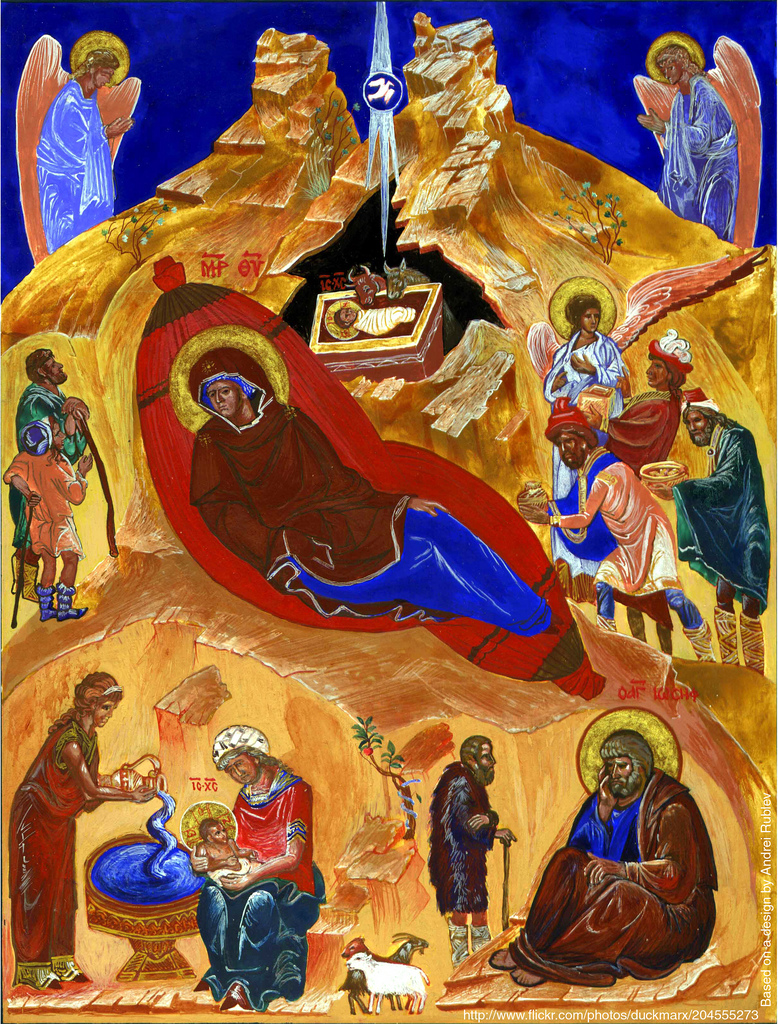
icon-Nativity-christmasThis is the meditation I wrote that appeared in this weekend’s reading and reflection in Liberti Church’s Advent 2013 Prayerbook, which can be downloaded for free.

The Reading:

Again the Lord spoke to Ahaz, saying, Ask a sign of the Lord your God; let it be deep as Sheol or high as heaven. But Ahaz said, I will not ask, and I will not put the Lord to the test. Then Isaiah said: “Hear then, O house of David! Is it too little for you to weary mortals, that you weary my God also? Therefore the Lord himself will give you a sign. Look, the young woman is with child and shall bear a son, and shall name him Immanuel.

If you’ve been keeping up with this Prayerbook (or any Advent guide), then congratulations! I hope it’s spoken to you and you have experienced God in its readings and meditations.

That being said, you might be wondering: why is this Prayerbook continuing after Christmas Day?

It was only a couple of years ago I found out that in the Church Calendar, Christmas is not just a day—it’s an entire season! Advent Season leads into Christmas Season. Why is this? Advent has a similar relationship to Christmas that Lent does to Easter: it’s meant to be the time of reflection, preparation, and repentance that prepares us for the unbridled, no limits, over-the-top celebration and joy of Christmas. Our spiritual ancestors knew that celebration takes time and preparation. That’s what Advent has been.

But now we’re in the Christmas Season—the time of complete unfettered celebration. But why?
Continue reading

A Biblical Critical Advent: Luke’s Cosmic Christmas


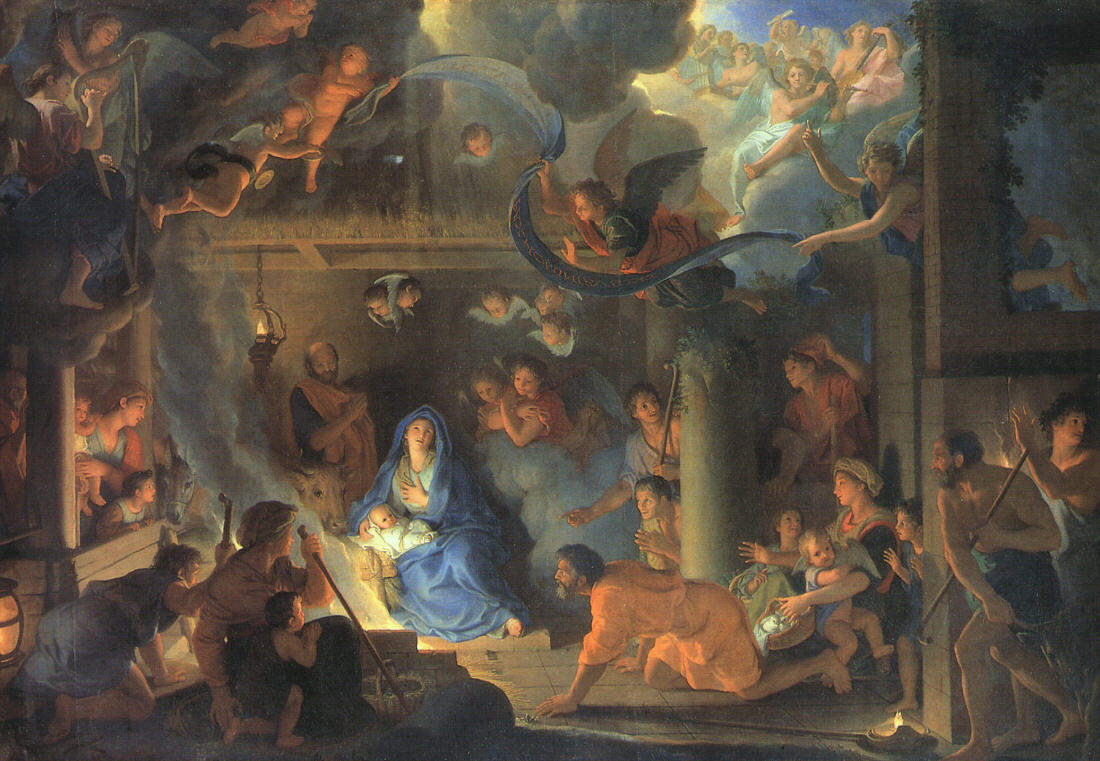
Charles-le-Brun-Adoration-of-ShepherdsFor Advent this year, I wanted to put up a few posts looking at Matthew and Luke’s Nativity stories as they were meant to be read: as two separate stories with their own purposes and themes. We often just mush them together, and I think we lose something in that process. Last week, we sat with Matthew’s Nativity story. Today, we turn to Luke’s Christmas.

Matthew’s Nativity focuses on how Christmas plays right into Israel’s own story; how this is exactly how the Jewish Messiah should be expected to have come into the world. Luke’s Gospel, on the other hand, emphasizes Jesus’ significance to the entire world, all parts of society, and the entire cosmic order.

In other words, Jesus’ mission in Luke is much larger than simply Israel. These and other Lukan themes are brought out quite strongly and explicitly in his Nativity narratives. Today we’ll see how he does this through signs of the universal mission of Jesus, the story’s emphasis on the lowly and powerless, and his stories of Spirit-filled joy.

Continue reading

Advent & Longing for Home


Sandorfi-MadeleineThis is the meditation I wrote that appears in a reading and reflection in Liberti Church’s Advent 2013 Prayerbook, which can be downloaded for free.

There is an incredibly profound way in which we don’t feel at Home in our own humanity.

Too often, Christians see their own personal spiritual growth as a loss, a lessening, or an abandoning of their own humanity. This can lead us to subtly use people and things to try and find our soul’s Home. And so we awake to find anxiety, manipulation, doubt, guilt, and self-loathing ruling and reigning so many parts of our lives and relationships. (Am I alone in this?)

We can sometimes think of Christianity as a process of our souls leaving the “Home” of their weakened humanity and finding a “new, spiritual Home” in Jesus. The logic goes that you were originally one way, then Jesus “saved” you, and now you are able (and are commanded) to be something else, now that you are His.

But Advent radically flies in the face of this.
Continue reading

A Biblical Critical Advent: Matthew’s Old Testament Christmas


root-jesse-matthew-icon

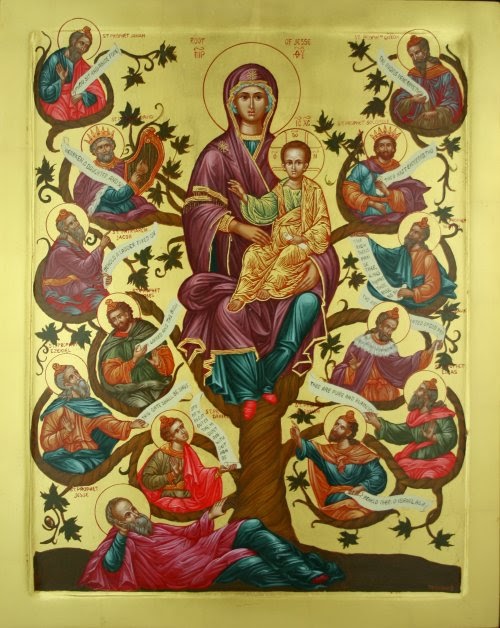
For Advent this year, I wanted to put up a few posts looking at Matthew and Luke’s Nativity stories as they weren’t meant to be read: as two separate stories with their own purposes and themes. We often just mush them together, and I think we lose something in that process. Today, we look at Matthew’s Christmas Story.

It’s well-known that the Gospel of Matthew portrays Jesus as the fulfillment of Jewish messianic expectations. But the path Matthew takes in doing this moves against the way most messianic expectations played themselves out at time. Matthew recalibrates these expectations to show how even in Jesus’ infancy and birth, his “Messiah-ness” includes a retelling of Israel’s own history, both good and bad.

You can see this especially clearly in the way Matthew crafts his version of the Nativity story. Today, we’ll look at three particular aspects of this story that show his unique thematic and purposeful crafting of the birth story: his use of people and names, geography, and the fulfillment of the Old Testament.
Continue reading

Have yourself a biblical critical Christmas


Nativity-logosSorry, this post isn’t about the pessimism and critical irony that can sometimes mark how we engage in this time of year. When I use the phrase “biblical criticism”, I’m referring to (as Wikipedia says) the  “[scholarly] study and investigation of biblical writings that seeks to make discerning judgments about these writings”.

Last year, I wrote about how the story of the Wise Men can inform our doctrine of the Bible. This Advent, I want to do a brief series where we use the tools of scholarly observation to look at each of the two Nativity compositions (yeah, only two out of four gospels have them) and see each of them on their own terms.

For millennia, the birth narratives of Jesus Christ in the Gospels have captivated readers both within and without the Christian faith. Their reading and meditation form the beginning of the Christian Church calendar, and their theological implications of Incarnation form the foundation of nearly all of the distinctives of the Christian faith.
Continue reading

What is the Proclamation of the Word?


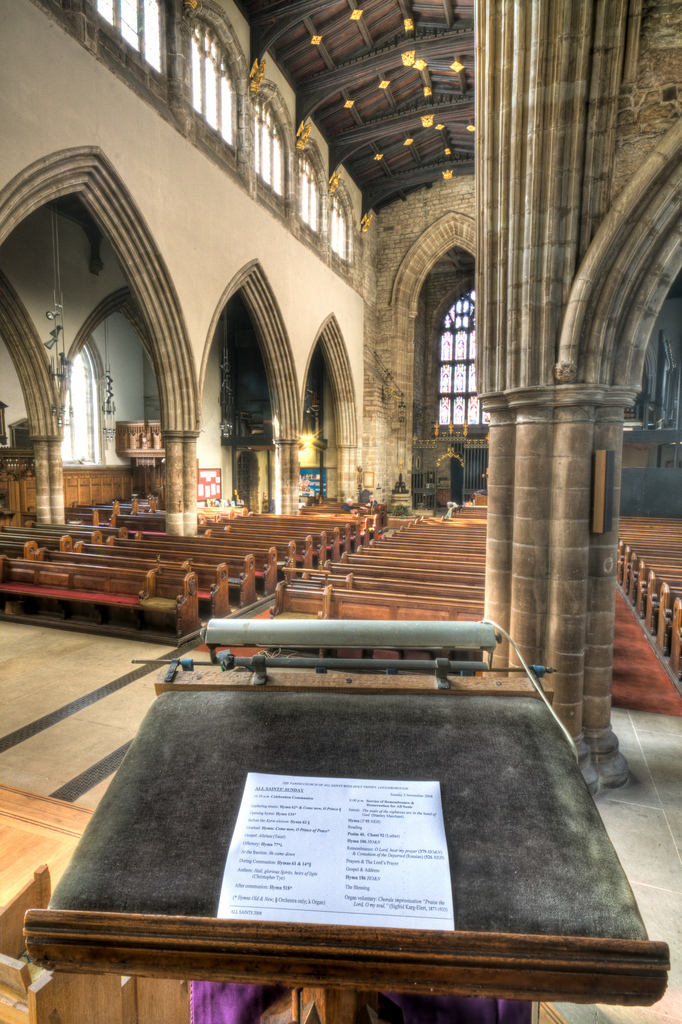
pulpit-church-hdr-bibleFor a class recently, I had to read a bunch of items on the part of a worship service in which the Bible is front and center. This “section” of the service is called “The Proclamation of the Word”, or more generally, the “sermon” or homily”. I ran across this great quote:

The very act of preaching, in fact, sets up questions and problems.  Most people no longer understand the difference between preaching and other types of public speaking…. Many people think of a sermon as an occasion for being entertained, instructed, or inspired in matters of religion — hence the customary comment at the church door, “I enjoyed your sermon.”  Nowadays, it is only congregations who have been engaged in a new way of thinking for a long time who are going to sit expectantly waiting for the Word of God to be spoken — for preaching, properly understood, is the good news that God preaches through human beings.  Astonishingly enough, this is the method of communicating that God has chosen.  This is an offensive idea; there are a hundred complaints to be brought against it.  Most common is the objection, “How can anyone presume to speak the Word of God?”  Or to put it another way, “How can any human being be so arrogant as to think he is a mouthpiece of God?”  How indeed?  It is a very good question.  The validity or invalidity of preaching rests on such issues as these. (Fleming Rutledge, Not Ashamed of the Gospel)

I think Rutledge is right (and not just because she is an incredible preacher–all you complementarians could learn a thing or two from her!): people don’t seem to really see preaching as fundamentally different than any other lecture or other public speaking. Preaching is often (subtly and unspokenly) seen (or at least treated) as “mere” personal edification–similar to a book discussion or philosophical lecture or self-help conference.
Continue reading

Advent & Hoping for Justice


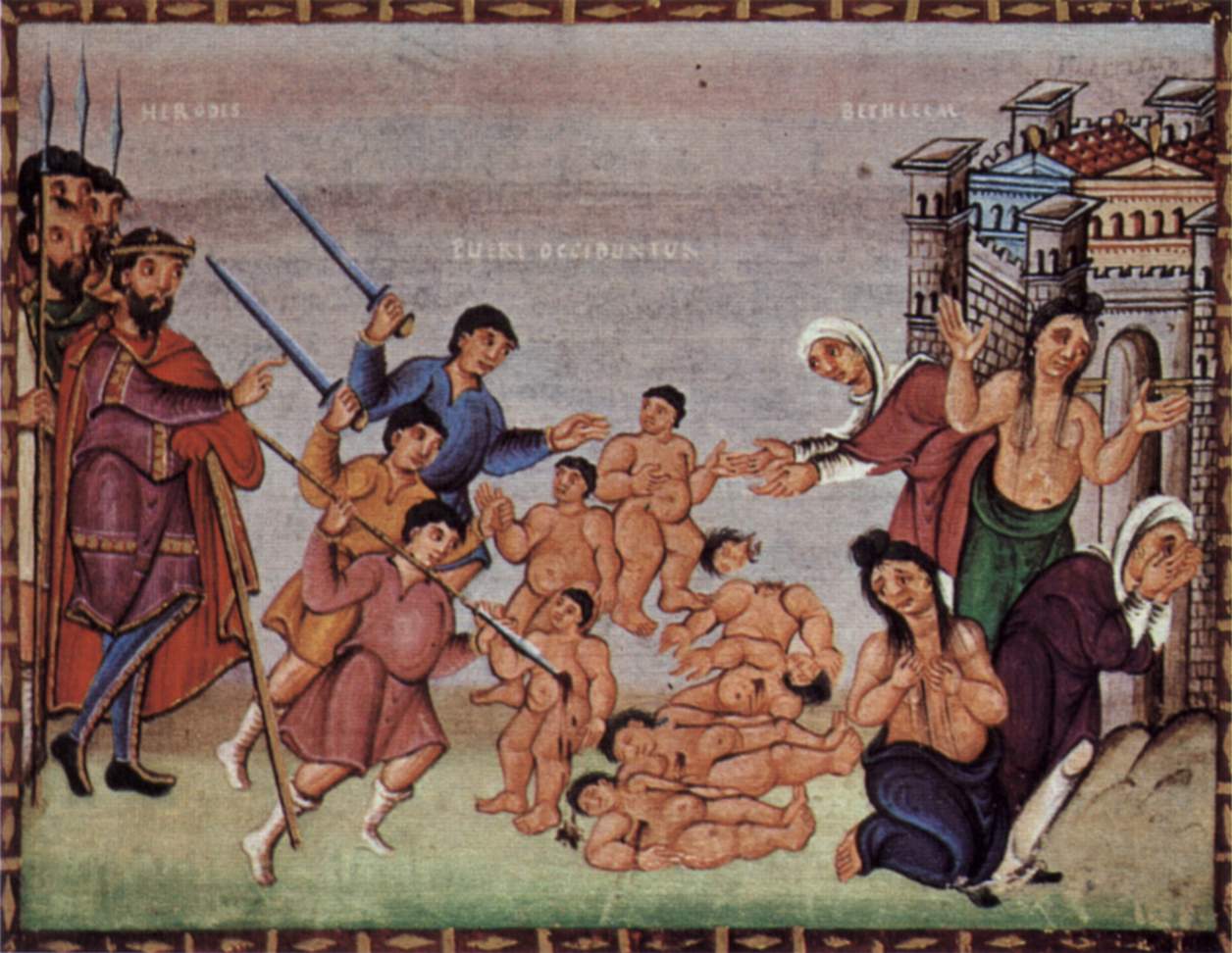
Massacre-of-innocentsThis is the meditation I wrote that appears in today’s reading and reflection in Liberti Church’s Advent 2013 Prayerbook, which can be downloaded for free.

First, a question.

Think back on the Christmas story. After Jesus is born, when he’s about three-years old, King Herod puts out a decree calling for the death of all infants, trying to kill Jesus. An angel comes to Joseph in a dream and tells him to flee to Egypt to prevent Jesus from dying in this slaughter.

Here’s the question: why flee to Egypt?

If they stayed and Herod killed the child Jesus, wouldn’t that still be the Son of God dying unjustly at the hands of a Roman provincial governor? Why go to all that effort to wait 30 years later for the same thing to happen on a cross?
Continue reading

Advent & Hoping for Peace


Rothko-untitled-2This is the meditation I wrote that appears in today’s reading and reflection in Liberti Church’s Advent 2013 Prayerbook, which can be downloaded for free.

This world is anything but peaceable. Humanity is constant in its injustice and wickedness inflicted upon one another across this world. It makes you wonder if “humane” is a misnomer. And we can’t just blame all of this on free will, either. The natural world rages against us with its own violence with staggering regularity. And all of this hits home the most when it’s those closest to us that suffer under this world with little peace on hand.

We look at all of this and ask that oldest of questions: “Why?” But when we open the pages of Scripture, we don’t find answers to this seemingly core thread running through our existence. The God of the Bible seems far more concerned with answering “what” questions than “why” questions–what is the nature of reality? what is the problem with the world? what is the solution?

But there is good news for all of us that struggle against the violence of this world: Advent.

In Advent, God does not merely see our why‘s and disregard them as silly and human; he does not simply leave us to our own to wrestle and struggle and doubt. He doesn’t answer our whys. He simply looks at us and the world with compassion, acknowledges to us the way things are, and rolls up his sleeves to address it.
Continue reading