Just a friendly reminder that “Americanism” is a heresy. Even today. (Happy 4th!)


paul-young-america-flagI’m really not trying to ruin anyone’s party. I promise. But I just wanted to remind everyone that in 1899 Pope Leo XIII declared “Americanism” a heresy in the Catholic Church.

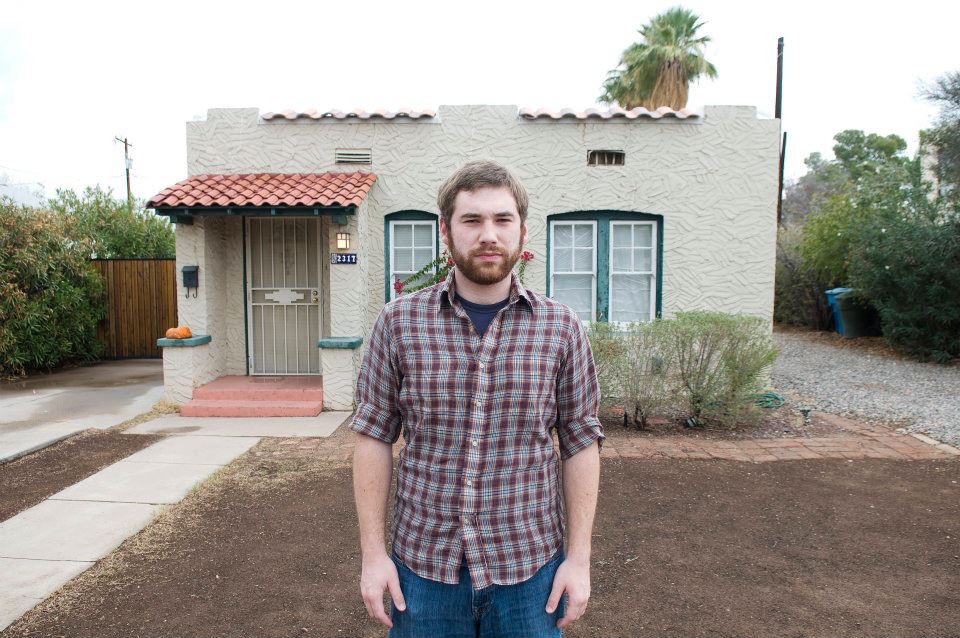
(I have provided this picture of this post’s author in order to help soothe any anger over this reminder.)

Basically, in the middle of the 19th-century, there was a huge influx of Catholics into America from Europe. Being so far away from the “home base” of European Catholicism, these Catholic leaders started “softening” Catholicism in order to make it more palatable to the new context they found themselves in.

Continue reading

The Suffering of The Holy Spirit


Anselm Kiefer-Landscape with a WingIf you’re like me, and were raised in the most previous generation of the American Church, the more painful parts of human existence didn’t really make an appearance in the course of religious conversations. There was talk about doctrine, and piety, and all “those people” that were sinners, but the only real insight that could be given to those that were hurting was that they needed to read their Bible more, trust Jesus more, sin less, so on and so forth.

Suffering was unconsciously assumed to be something outside of the everyday experience of the “victorious” and “justified and sanctified” Christian. People responded to the suffering of others with a cautious distance, thinking something had gone horribly wrong with their life, God’s providence, or their souls.

And then I had the privilege of sitting under amazing teaching in college that really brought suffering to the fore. I was encouraged that suffering was not “supposed” to be an aberration in life, but rather the expectation of how things are. We didn’t pursue it, but we certainly didn’t need to, because it would find us.

Continue reading

Evangelicals on Immigration: finally doing something right.


barbed-liberty-flag-wallLast Thursday, after so much grueling debate and a tough amendments process, the Senate passed a comprehensive Immigration Reform bill. Now the bill moves from the grown-ups to the children in the Legislature, the House of Representatives, where Republicans are already playing politics with the issue, most likely thinking it will just magically “go away” like other reform attempts have.

But, the New York Times published a great article about how the pressures on the House are different this time. It was really encouraging.

The encouragement did not just come from Immigration Reform’s potential, but where Evangelicals have found themselves in the debate. In the article, there were these amazing lines:

Asked why he thought the overhaul had a fighting chance in the House, Ali Noorani, a veteran of many immigration wars, pointed to a big green mobile billboard that had circled Capitol Hill every day this week.

Its flashing message was “Praying for immigrants. Praying for Congress.” Groups of evangelical Christians prayed on the Capitol lawn for the Senate to pass its bill. Mr. Noorani’s group, the National Immigration Forum, has worked with Southern Baptists and other large evangelical denominations to coordinate prayer campaigns and run pro-overhaul spots on Christian radio stations in states where lawmakers might be persuaded to change their views.

“In 2007, we weren’t even on the radar,” said the Rev. Samuel Rodríguez, the president of the National Hispanic Christian Leadership Conference, an evangelical group. Mr. Rodríguez said he had been on the road continuously, addressing primarily non-Hispanic Christian conferences to spread the message on the overhaul.

Now, you may be an Evangelical and may be thinking “hey, I don’t agree with that bill!”. That’s not really my point. Evangelicalism has never been as monolithic or homogenous as many of its leaders have wanted it to be. I am under no illusion that all (or even most) Evangelicals find themselves actually agreeing with the Senate reform plan.

What’s more astonishing to me is that regardless of the nuances and complexities of thought among Evangelicals on this issue, this is the reputation Evangelicals are having in this discussionThis is what the wider world sees. This is what has been noted in America’s paper of record as the primary takeaway that the world needs to have when fitting in the force of Evangelicalism and Christianity into the broader narrative of this story.

Of the many forces this article talks about that push this discussion forward (religious, electoral, business, labour, etc.), I love that American Christians have the pride of place here as the first “force” listed.

For once, Evangelicals are being known for taking the lead in actual cultural change and not stalwart reactiveness to the force around them.

Yes, I know there are other potential factors: many Evangelicals might be more concerned with maintaining Republican dominance by “winning Hispanic votes” through this effort. Some may be reacting to their own demographic changes in the South, instead of their own heart and theological changes.

But still, it’s telling that none of these alternative narratives are offered in this piece.

I am certainly not one of those Christian twentysomethings that think that theological convictions have no place in one’s political beliefs, nor do I think that “laws” are inherently morally-neutral. All politics and legislation reflects one’s morality (just look at a nation’s wallet to see where their heart is) and, ultimately, their theological convictions. For once, I’m proud of American Christians as they interact politically on this issue.

As Christians, we are called to love Neighbor before Nation. Whatever “damage” you think these poor, marginalized people do to America economically, politically, or demographically, we are called to have more concern for their welfare than the welfare of the abstract idea of “our country”.

That’s not to say that illegal immigrants are not “breaking laws”, but as Christians we are not called to primarily relate to others based how obedient they have been to civil authorities or not. The main thing that dictates how we relate to them is the image of God in which they are made. And this has been sorely lacking in the Evangelical presence in this discussion.

There are few–if any–illegal immigrants that come to this nation with any malice in their heart or hostility in their intentions. At the very least, they deserve compassion before condemnation–especially from Christians. Even if you ultimately think they should legally be carted away, should not the first concern of Christians be to love them? Or at least not demonize them?

Illegal immigrants in America are some of the closest we’ll ever get to a single group that fits almost every criteria for those to whom Christian should offer support, deference, protection, and resources: the outcast, foreigner, poor, needy, alien, outsider, downtrodden, despised, and poor in spirit.

Supporting immigration reform is the easiest way that I can think of, in our current political situation, for Christians to follow-through with this oft-neglected dynamic of Christian faith. It’s one of the clearest ways that Christians can act “Christianly” in a direct, political way.

So learn about the bill, contact your representatives, and then pray for our leaders and those who will be most affected by their actions. And then go out and try love your neighbor some.

What do you think about the immigration bill? How does your faith guide this decision? How do you feel about Christians being known for this advocacy?

[image: “Barbed Liberty” by myself]

When easy & simplistic proof-texting trumps the nuance & complexity of wrestling pastorally with the text


On Tumblr, a very, very dear friend posted this earlier, in support of the Doctrine of Double Predestination, which says that in eternity past, God predestined not only who would be saved (apart from their own works), but also those who would not be saved (apart from their own works):

“They stumble because they disobey the word, as they were destined to do.” 1 Peter 2:8

Double predestination

#it’s biblical

In one of the most widely used Bible commentaries in existence, I found these words written about this verse, starting with commenting on the word “also” (which isn’t found in my friend’s translation of the verse). I’ve changed some formatting and some grammar to make it easier to understand. Enjoy:

“also” [as in “as they were also destined to do”;  this is in the Greek, though Revelation 19’s translation doesn’t have this]—[this is] an additional thought; God’s ordination; not that God ordains or appoints them to sin, but they are given up to “the fruit of their own ways” according to the eternal counsel of God. The moral ordering of the world is altogether of God. God appoints the ungodly to be given up unto sin, and a reprobate mind, and its necessary penalty.

The phrase “Were appointed,” (Greek, “set,”) is an answer to the “I lay,” (Greek, “set,”) found in 1Pe 2:6.

God, in the active, is said to appoint Christ and the elect (directly). Unbelievers, in the passive, are said to be appointed (God acting less directly in the appointment of the sinner’s awful course) [Bengel]. God ordains the wicked to punishment, not to crime [J. Cappel].

“Appointed” or “set” (not here “FORE-ordained”) refers, not to the eternal counsel so directly, as to the penal justice of God. Through the same Christ whom sinners rejected, they shall be rejected; unlike believers, they are by God appointed unto wrath as fitted for it.

***The lost shall lay all the blame of their ruin on their own sinful perversity, not on God’s decree; the saved shall ascribe all the merit of their salvation to God’s electing love and grace.***

(from the “Commentary Critical and Explanatory on the Whole Bible)

What are your thoughts on this issue? How important do you think it is in the grand scheme of the Gospel?
a brief Prodigal Paul doctrinal statement


paul-phoenix-1

As I am currently registering for my seminary classes, I thought I’d post this “theological statement” I had to write as part of my application materials. Some friends of mine had thought it would be interesting to read what I wrote, so here it is.

Seeing as I was writing to a seminary staff audience, there might be some references that aren’t commonly understood. I’ll link to times I’ve written about some items, but otherwise, any terminology or ideas that aren’t explained are a simple Wikipedia (or Theopedia–yes, it’s a real thing) search away. Continue reading

Ordinary Time: It’s still Pentecost….but not really (but sort of)


angie-iver-woman-hands-watercolorThe wisdom and beauty of the Church Calendar never ceases to amaze me.

After the Holy Day of Pentecost happened a few Sundays ago, I turned to my favorite daily prayer site, MorningPrayer.isThis site always has a banner along the top displaying the current church calendar season. I was surprised to see, days after Pentecost, the words “Ordinary Time” splayed across the site.

Isn’t it the season of Pentecost?

So, I googled it, and I found out that there’s no such thing as Pentecost Season.

Pentecost is just a single, holy day in the Christian Church Calendar. It’s when we celebrate the falling and indwelling of the Holy Spirit upon Christian believers, 50 days after the Resurrection (Easter). Kind of a big deal, right? Might it deserve a season?

And though it’s not a season, it’s actually far more beautiful than that.
Continue reading

Pentecost: spirituality vs. Spirituality


crazy-clouds

I don’t know about you, but too often I divorce spirituality from the Holy Spirit.

Now don’t get me wrong, I fully understand that “spirituality” is a matter between my spirit and the Holy Spirit. But I too often define spirituality as fundamentally being about my spirit–stirring it up and syncing it up to God. Too often, when contemplating my own spirituality, my thoughts first turn to how I can ” feel the Spirit more”.

If I’m honest, I too often think that a healthy and vibrant spirituality is ultimately defined by intense spiritual experience (emotions, gifts, fruits, and such). And yes, these are definitely products of a vibrant Spirituality, but don’t we too often pursue the product, and ultimately miss the point? Most of the time, I think that if I simply achieve those “experiences”, I have been “successful.”

True “Spirit-uality” is not first and foremost about the state of my spirit. Instead, it is about developing a dynamic vitality with the Holy Spirit. It’s about being swept up in a force greater than myself–a person greater than myself.
Continue reading

See the Official Guatemala Blogger’s Trip Photo Essay


lemonade-international-la-limonada-guatemala-logo

Though I love to take pictures, I didn’t take that many shots when I was in Guatemala with Lemonade International alongside the rest of the team of bloggers there. This was because we had a professional, dedicated photographer with us. I wrote about Scott Bennett and my thoughts on his work before the trip.

Each night as we writers sat down to blog, he’d show us the pictures he took for the day, and we’d fight over which ones we got to use in our posts. He took some amazing pictures, and shared many of the raw, untouched photos with us.

Well, now that he’s had time to dedicate more time and resources to focusing his creative eye on the pictures, he has now released his official photo documentary  from the trip, as part of the site Visual Peacemakers.

This photo essay beautifully captures the essence of our time and the people there as well as (if not better) than the words of us writers. I encourage you to spend some time with these pictures and let their weight and beauty affect you. Then, would you consider joining with Lemonade International in their continuing work in the La Limonada community of Guatemala?
Continue reading

Ascension: Our glory & the Bible’s hinge


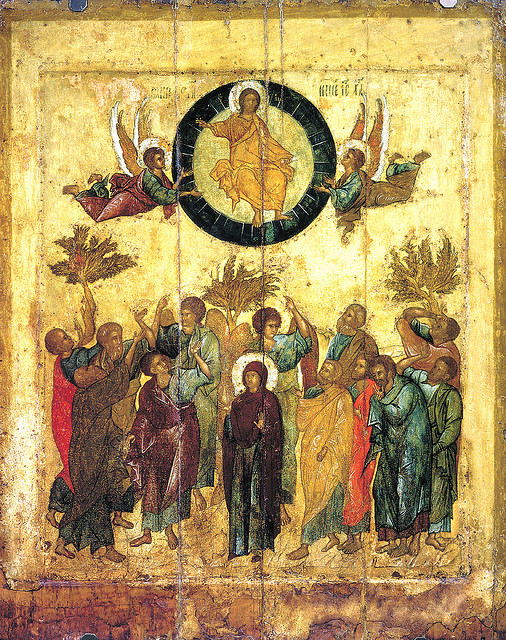
jesus-christ-ascension-iconToday in the Christian church calendar is Ascension Day, the day we celebrate Christ ascending into heaven 40 days after his resurrection and now sits at “the right hand of God the Father.” (You can read a prayer and poem I posted earlier for this Holy Day)

The Useless Ascension

The idea of “Ascension” doesn’t seem to get a lot of play nowadays in the Church. This, in spite of the fact that it is an essential part of all the Church’s earliest doctrinal formulations, and the subject of the most-quoted Old Testament verse in the New Testament:

The Lord says to my lord, “Sit at my right hand until I make your enemies your footstool.”

Compared to other, non-creedal things like Hell, homosexuality, and “attacks on biblical authority”, the Ascension isn’t really talked about. Maybe this is because the Ascension isn’t really a “doctrine”–it’s an “event” and a “declaration”.

And we western Christians love our systematic “doctrines” that we can pick apart as nauseam and/or figure out how we can “apply it to our lives” in such a way that we can feel like we’re “good Christians.” But honestly, the Ascension doesn’t have many direct applications for today.
Continue reading

prayer & meditation for Ascension Day


Grant, we pray, Almighty God, that as we believe your only-begotten Son our Lord Jesus Christ to have ascended into heaven, so we may also in heart and mind there ascend, and with him continually dwell; who lives and reigns with you and the Holy Spirit, one God, for ever and ever. Amen.

(from the the Book of Common Prayer & the site Morning Prayer)

Also read my own meditations on this Holy Day.
Continue reading

Trickle-Up Resurrection (Guatemala Lessons)


Rothko-easterMy church is currently in a series called “Resurrection Stories” in which we’re going through each of the non-Jesus stories of resurrections (or “resuscitations”—whatever) found in the Bible. It is, after all, still Easter.

A few weeks ago, as we were talking about Elisha raising the Shunnamite’s son, our pastor pointed out that most of these resurrection stories seem to center more on the people around the dead person than the dead person themselves. And so, in a sense, these resurrections are more for the people affected by death than the one dead; the ones that “receive” the true resurrection power are mostly those around the resurrected one.

Further, as he pointed out, most all of these people that “receive” the truest benefits of these resurrections are women—the most alienated and disempowered group throughout world history.
Continue reading

So, how was Guatemala? I finally have an answer for you.


la-limonada-hands-guatemalaHow was your trip?”

This has been the question I’ve been receiving more than any other this past week and a half, since returning from my trip to Guamtemala with Lemonade International to see their work in the community of La Limonada.

And yet, I have had no answer.

Nearly every person who’s asked the question has been someone I love, who loves me, and gets me. They know that I can’t even articulate a simple answer to a casual “How ya doin’?” thrown my way. And so I’ve felt grace and understanding as I haven’t been able to answer.

At a wedding this weekend, in an attempt at capturing in one word the seemingly contradictory dimensions of my experience in Guatemala, I blurted out the word “paradoxitous”. Yes, I was trying to be funny.

Continue reading

How the Church Can Win the Culture War [QUOTE]


The church is elected to responsibility, called to be the church to and for the world–not in order to save it or conquer it or even transform it, but to serve it by showing what redeemed human community and culture look like, as modeled by the One whose cultural work led him to the cross. In short, we’re sent out to be martyrs, witnesses of the Crucified One. In that way, we win by losing.

–James K.A. Smith, Desiring the Kingdom: Worship, Worldview, & Cultural Formation

Why I’m in Guatemala: Meet Lemonade International


La-limonada-lemonade-international-guatemala

Yesterday, I touched down to begin my week in Guatemala on a blogger’s trip with Lemonade International, a non-profit development organization doing work in a particular called La Limonada.

This community of La Limonada is the largest slum community in Central America. After the 36-year-long Guatemalan Civil War began (due to an American coup to overthrow their leader), many, many children and women lost their fathers and husbands to fighting, leaving this huge community of hurting people. Many, many of the refugees ended up in La Limonada.

This community is a 1-mile long stretch that is a half-mile wide and straddles a ravine. 60,000 to 100,000 people live there. It is considered a “red zone” by Guatemala, meaning that deliveries, police, and most outsiders in general don’t go in there. In the boundaries of the “zones” of Guatemala City, La Limonada is between two different zones–it doesn’t even have a place in the official boundaries of the city.

It’s literally been abandoned and marginalized by the very nation in which it resides.
Continue reading

Death & Dignity: what’s the point?


philly-life-wall

Next week I head to Guatemala for the Lemonade International Blogger’s Trip. Having been introduced to this organization, I’ve been following their blog closely, trying to get to know them more and more.

A couple of days ago, they posted about a tragic loss. A member of their school, Herber Giovanni Sandoval, died a couple of days ago at the age of 17. In the conclusion of their post, they said this:

“We are especially grateful to the youth group at Lifepointe Church in Raleigh, NC for sponsoring him while he was still attending the Limón Academy.”

I immediately had the image of the youth group kids or sunday school class at that church who probably spent years following the story of Herber. I wondered how they would feel and respond to this news. How would the leaders help them process this? Would it impact the kids at all or would they be too removed from it?
Continue reading