Women & the Church: What’s Adam & Eve got to do with it? [1]


durer-bw-adam-eve

As I’ve been looking into these “Women in Ministry” discussions for this on-going series, they usually follow a similar pattern. Conservatives will point to some Bible verses, Egalitarians will point to the context (as I did in our last post), and then, at some point, the conservatives bring up this simple, yet logical and reasoned argument:

Yes, you can point to the cultural context all you want, but at the end of the day, Paul’s reason for what he says, is not the cultural context, but the very structure of pre-sin creation in which God created Adam first. This is something that’s true no matter the context.

Now, I’ve said repeatedly that my egalitarian beliefs come not from desire to move away from the Bible, but my attempts to be all the more obedient to it. And so, I want to take this argument as seriously as possible. I’ll attempt to do that in these posts.

As I started writing up the problems I had with this “creation-order” argument, it became so long, that I had to break it up into two posts. Today, we’ll focus on the particular Timothy passage in question and other related things that Paul writes. Tomorrow we’ll focus on the Genesis story itself to see what it might say to this.

The Timothy Passage

Continue reading

What’s With All the Instagram Shots of Your Lunch?


“Food is everything”, says my friend Ben, an organic farmer who runs a small vegetable stand at Lancaster’s Central Market. Each generation pushes back on the one that came before it, often a reaction against cultural norms that seem to be inherently evil. One of those such current ideas comes as a blowback in how we produce and consume food. Since WWII, our food supply has been mass-produced and mass-processed, often putting in it more preservatives than nutrition. In recent years, organic farming has blossomed (in part) as a reaction against the greed, industrialization and lack of nutrition of America’s food supply. At Ben’s market stand, a small sign reads something like “out of the ground comes nutrition for our food”.

There’s certainly something deeper to this little sign whether he knows it or not.

“Man is what he eats”, writes Alexander Schmemann. All of life is sacramental, and therefore, Eucharistic. He continues, “Man must eat in order to live. He must take the world into his body and transform it into himself; into flesh and blood.” In the same way, at the celebration of the Eucharist, the very flesh and blood of Christ come to man. Man eats it and in this most revered element of Christian worship, he ascends to heaven with Christ, receives the Kingdom of God, and takes it with him back into the world. Eating is sacred business in the Christian economy and without it, the Kingdom of Heaven does not come to the world. Schmemann even goes so far as to say that all food leads us to Christ.

Meals in community are sacred. They have been for most all peoples for all time.  There is something deep within the heart of humankind that knows this. There is a longing for communion and companionship over any meal we eat. But alas, our culture does not work this way. We are hurried to and fro and are lucky to grab something at a café or in a drive thru or whatever quick meal we can get out of the way to get on with the more important things of life. But, even in our hurried state, we stop and take the time to photograph our food and post it for all to see – our new “social” community – facebook or instagram. What we miss by eating alone so often, we try to reacquire via our mobile technology. Our souls crave the sacred meal together, yet, for whatever reason we make little effort to make this a primary part of our lives. We want others to share in our experience and the best way we can get them to do that is to post our square images  of eggs in a frying pan or the coffee we got on the way to a meeting on our own little online kingdom.

Each Sunday, as we partake of the Eucharist, we ascend with Christ into his Kingdom for the good of his world. In the same way, let us strive to make our daily meals a little more sacramental; a little more Eucharistic, even.

On Women Leaders in the Church: Timothy’s cultural context


artemis-greek-urnFor many of the Christians that believe women are not to be ordained, authoritatively teach in churches, nor hold formal church leadership offices, 1 Timothy 2:8-14 is the first (and oftentimes the only) Bible text they throw out as a conversation-ending, slam dunk against people they feel are “re-writing” the Bible for their own ends.

When last we left our on-going series on women in the church, we talked about the text and translation of this passage. We talked about its history of mistranslation and how the seemingly best and most consistent translation offers us a different picture than the traditional one. Today, we’re going to pull back from the text itself to look at the culture and context behind the letter.

my thesis

I’ll give my view up front, so you can leave it, take it, or read on for why I land there. This post is a long one.
Continue reading

Epiphany: a great time to talk Magi & biblical errancy


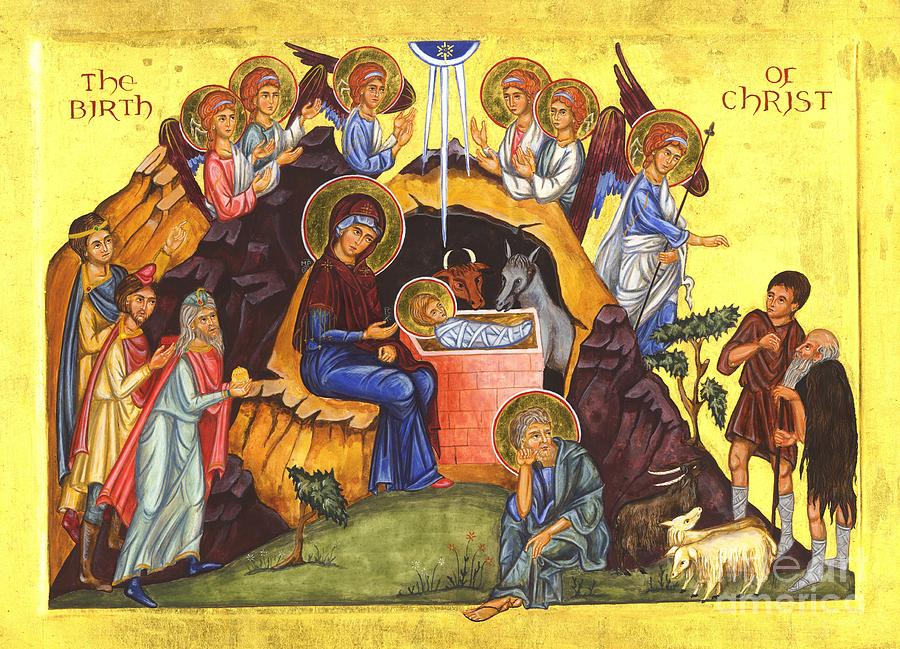
advent-nativity-icon This Church season of Epiphany primarily celebrates the coming of the wise men to see the young Jesus. Now think of the popular conceptions of the “wise men”. I imagine the picture that comes to mind is much like the one above: a quaint manger, farm animals, some shepherds, and the three wise men, presenting their gifts to the newborn Jesus.

I’m not sure how many of us know how wrong this is.

The wise men did not visit Jesus in the manger, their paths did not cross at all with the shepherds (that we know of), and, contrary to some of the most well-engrained church and musical traditions, their number is not given–“three” is just a guess. This guess is probably based on the fact that three gifts were offered (though the 6th-century Armenian Infancy Gospel, the source of the Western tradition of the wise men’s names and ethnicities, lists far more than just three gifts). The Eastern Church tradition even says it was twelve.

And yet, for over a thousand years, on into the present day, these traditions concerning the Wise Men have persisted. We know the sources of these traditions, we know when they became popularized, and we know how they’ve been used in Christian preaching and church life through the centuries. Every Advent season, even the most cursory drive in the suburbs will offer nativity scenes peppered with three wise men adoring the manger-laden Christ.

This reminded me of Jannes and Jambres.
Continue reading

The Door to the Holy of Holies: on Love & Epiphany [QUOTE]


As our country is consumed with politics since last week’s storming of the Capitol and next week’s inauguration of Joe Biden, I ran across these words from Saint Maximus the Confessor, and thought they were an appropriate reflection for all of us, both for the political season we’re in, as well as the Christian season of Epiphany.

Love is therefore a great good, and of goods the first and most excellent good, since through it God and man are drawn together in a single embrace, and the creator of humankind appears as human, through the undeviating likeness of the deified to God in the good so far as is possible to humankind. And the interpretation of love is: to love the Lord God with all the heart and soul and power, and the neighbour as oneself.

Which is, if I might express it in a definition, the inward universal relationship to the first good connected with the universal purpose of our natural kind. Other than this there is nothing that can make the human being who loves God ascend any higher, for all other ways of true religion are subordinate to it. This we know as love and so we call it, not divisively assigning one form of love to God and another to human beings, for it is one and the same and universal: owed to God and attaching human beings one to another. For the activity and clear proof of perfect love towards God is a genuine disposition of voluntary goodwill towards one’s neighbour.

For he who does not love his brother whom he has seen, says the divine Apostle John, cannot love God whom he has not seen (1 John 4:20). This is the way of truth, as the Word of God calls himself, that leads those who walk in it, pure of all passions, to God the Father.

This is the door, through which the one who enters finds himself in the Holy of Holies, and is made worthy to behold the unapproachable beauty of the holy and royal Trinity. This is the true vine, in which he who is firmly rooted is made worthy of becoming a partaker of the divine quality. Through this love, all the teaching of the law and the prophets and the Gospel both is and is proclaimed, so that we who have a desire for ineffable goods may confirm our longing in these ways.

Saint Maximus the Confessor in a letter to John the Cubicularius (from Maximus the Confessor by Andrew Louth)

See other Epiphany thoughts here. Listen to the Epiphany music playlist here.

2 amazing hours on the Christian end of the world


A few people have asked about my blogging absence (I have felt honored that they have noticed!) Anyway, I’ve been sick, first with a stomach flu, and now with an upper-respiratory thing. I lost my voice last week and am only now recovering it. It’s weird; I hardly ever get sick.

Anyway, this has kept me from blogging, but it’s given me the chance to watch and read some amazing things (about which I’m sure I’ll write more in the weeks to come). One of the highlights of my time was this video, An Evening of Eschatology, hosted by Bethlehem Baptist Church and moderated by John Piper (here’s some background to this talk):

This is an amazing discussion, and very insightful for those of us Christians that either have passionate views on the end of the world or don’t think about it much (as a friend used to say, “I’m a ‘pan-millennialist’: I believe in the end it’ll all just pan out.”).
Continue reading

Epiphany is here! So what? (And another free Mixtape!)


epiphany-mixtape-coverIf you’re just looking for the mixtape, click here for the official Epiphany Mixtape page.

From now until Lent, the Church Calendar is in the season of Epiphany. Up until this year, I had never really given much thought or focus to Epiphany. In fact, I hadn’t ever really understood Epiphany until this year. I knew it had something to do with light and with Magi, but beyond that, I didn’t get it.

Basically, this season seems like it’s sort of a Church Calendar “junk drawer” to meditate and celebrate on all the other parts of Jesus’ life that happened between his Advent/Birth and his Death.

And don’t misread that. With me saying that, I hope that doesn’t diminish this season for anyone. Perhaps the most precious doctrine of the Christian faith for me is that of the Imputation of Christ’s Righteousness to me. And this Righteousness in which I am dressed was not created out of thin air, nor was it created by Christ at the Cross, or even his Resurrection. It was built throughout his life of obedience to His Father.

And this is amazing. As I’ve written before, if Herod had been successful in killing the child Jesus, there would be an aspect of our salvation that’s missing.

And so, to try and help me spend some time meditating on this season, the best way I knew to think deeply about all this was to make another Church season mixtape. If I’m being honest, these things are more for me than all of you out there. This one particularly, though, helped me think through Epiphany and try and create something from it. I hope you enjoy it.

To read more about the specifics of Epiphany, the mixtape, and to listen/download it yourself, you can either read below or just go to the official Epiphany Mixtape page. Let me know what you think!

Here’s some more info, from the page:
Continue reading

Merry Christmas Season!!!


wood-jesus-heart-christmas-humor

As of today, it is Christmas season!

Today, we turn our minds from the sin that required God to take human form in Jesus Christ, and we give ourselves the freedom to respond with unfettered joy to this fact. We give gifts in response to the gift that’s been given to us; we sing songs in response to the heavenly angelic song that inaugurated his birth; we eat good food with others in response to the body of Christ–the bread of life–having come among us.

Today begins the culmination of our thinking and meditating these past 4 and half weeks. This Advent, I’ve been trying to connect this time to parts of life that we may not usually associate with it. And so, if you have any time and interest, here are those posts from this year’s Advent series (and by the way, holy crap. I had no idea how much I had written this year until I made this list).

May they help you enter into this next Church season with depth and joy. (You can also check out last year’s series, if you want.) Continue reading

Advent Transition Music: Christmas Eve “Vespers” by Sergei Rachmaninov


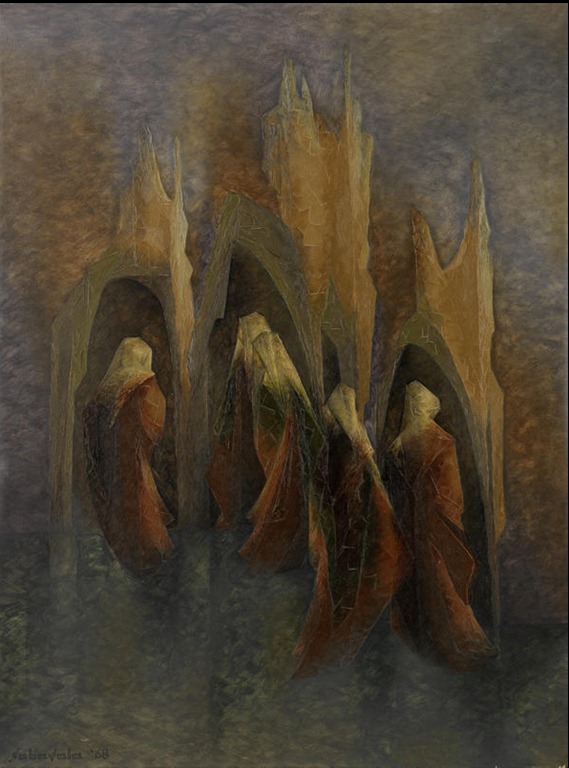
vespers-1-art-sabawala-paintingPerhaps Sergei Rachmaninov’s greatest piece, All-Night Vigil (usually simply called Vespers) is a choral presentation of the texts used during Eastern Orthodox all-night vigils. These vigils are usually done on the Eve of major church festivals, such as…Christmas Eve!

As I said earlier today, Christmas isn’t simply a day; it’s an entire church season. It’s a season where we transition from repentance and meditation to celebration and joy. And to aid in that transition, many traditions have all-night Vespers to help us move from one season to the next.

And so, to encourage us in this transition time, I’d like to offer you my favorite recording of one of my favorite pieces ever, Sergei Rachmaninov’s Vespers, performed by the Swedish Radio Choir. You will need Spotify to play the playlist below (you can purchase the album as well). Have fun:

[image credit: “Vespers 1” by Jehangir Sabavala]

Advent & Christmas: they’re not the same thing (Ode to a Christian Calendar)


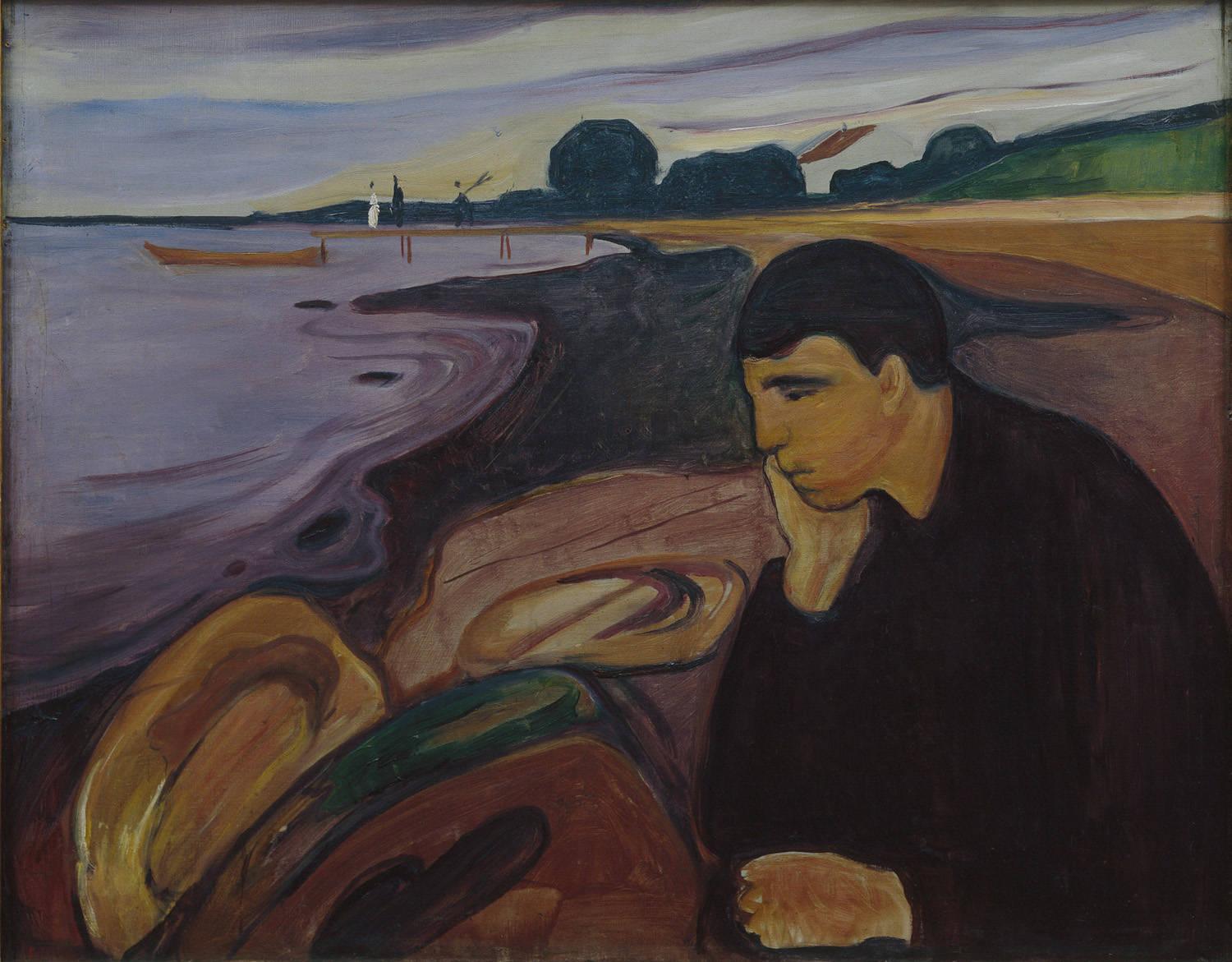
Munch-melancholyWell, it’s the Eve of Christmas season. Yes, that’s right, Christmas is not only an entire season in the Church calendar, but it’s a season that is distinct from Advent.

I know many in the global church know this fact, but I only learned it a couple of years ago, and each year it seems I have to be reminded. (Hopefully with this post, I can start internalizing it some.)

I find it interesting that we in the West have not only removed the “seasonal” aspects of the holiday, but have reduced this nearly two-month-long Advent/Christmas time into a single day on which we put most of our attention.

So why is the calendar structured like this? And what do we lose when we boil this down to one day?
Continue reading

Advent & the Goodness of Worldliness, c/o Dietrich Bonhoeffer [QUOTE]


‎”I remember a conversation that I had in America thirteen years ago with a young French pastor. We were asking ourselves quite simply what we wanted to do with our lives. He said that he would like to become a saint (and I think it’s quite likely that he did become one). At the time I was very impressed, but I disagreed with him, and said, in effect, that I should like to learn to have faith. For a long time I didn’t realize the depth of the contrast. I thought I could acquire faith by trying to live a holy life, or something like it. I suppose I wrote The Cost of Discipleship as the end of that path. Today I can see the dangers of that book, though I still stand by what I wrote.

I discovered later, and I am still discovering right up to this moment, that it is only by living completely in this world that one learns to have faith. One must completely abandon any attempt to make something of oneself, whether it be a saint, or a converted sinner, or a churchman (a so-called priestly type!), a righteous man or an unrighteous one, a sick man or a healthy one. By this-worldliness I mean living unreservedly in life’s duties, problems, successes and failures, experiences and perplexities. In so doing we throw ourselves completely into the arms of God, taking seriously not our own sufferings, but those of God in the world–watching with Christ in Gethsemane. That, I think, is faith: that is metanoia; and that is how one becomes a [human] and a Christian (cf. Jer. 45!). How can success make us arrogant, or failure lead us astray, when we share in God’s sufferings through a life of that kind?”

— Dietrich Bonhoeffer, Letters and Papers from Prison (via Kait Dugan)

PSA: BibleGateway.com now has the NRSV Bible for free


For those that care, the website BibleGateway.com now offers the New Revised Standard Version (NRSV) [Wikipedia] as one of their many English translation options.

If you’re looking for a Bible verse or passage, or if you do lots of web writing about the Bible and need a good online Bible with lots of options, I’ve found BibleGatweay.com to be the best, especially for copying-and-pasting elsewhere.

This is also the most widely-used Bible site that now has access to this translation of the Bible. Before this, I couldn’t find it anywhere free online except at a weird, obscure site or two.

So why have I been eager for this translation (and why should you be)? The NRSV is the most ecumenically-used translation in the English-speaking world. It’s the standard translation used by Catholics, Anglicans, many Eastern Orthodox, and my own church. It’s also the standard translation used in academic Bible study.

And so, even though I still have a soft spot for the ESV, I like feeling like I’m swimming in the same stream as my church leadership (and academia, but that’s not as big a deal). And so, I prefer the ESV or the NRSV for in-depth Bible study, while I’m a lot more flexible in my more casual Bible reading.

So compare some versions and see if you like the NRSV yourself. Hopefully this new availability of this resource makes your continued engagement with the Bible all the more fruitful and exciting.

And so

Advent & the Connecticut Shooting: Ross Douthat’s “The Loss of the Innocents”


winter-snow-trees-bw

In the same spirit as today’s earlier post by Austin Ricketts, I wanted to share with everyone this incredible piece by New York Times columnist Ross Douthat (one of my favorite writers), entitled “The Loss of the Innocents”. It’s a beautiful and haunting reflection on the human condition and the theological senselessness inherent in events like last week’s mass shooting at an elementary school in Newtown Connecticut. He then concludes with these beautiful words of Advent hope in the midst of such darkness:

In the same way, the only thing that my religious tradition has to offer to the bereaved of Newtown today — besides an appropriately respectful witness to their awful sorrow — is a version of that story, and the realism about suffering that it contains.

That realism may be hard to see at Christmastime, when the sentimental side of faith owns the cultural stage. But the Christmas story isn’t just the manger and the shepherds and the baby Jesus, meek and mild.

The rage of Herod is there as well, and the slaughtered innocents of Bethlehem, and the myrrh that prepares bodies for the grave. The cross looms behind the stable — the shadow of violence, agony and death.

In the leafless hills of western Connecticut, this is the only Christmas spirit that could possibly matter now.

Read the full piece here.

Advent & Suffering: silent only for a time [GUEST POST]


richmond-mary-snow

[Here’s another post by my good friend and occasional blog contributor Austin Ricketts. In light of last week’s shooting in Connecticut, it takes on even more meaning.]

“I was mute and silent, I refrained even from good. And my sorrow grew worse…I have become mute, I do not open my mouth, because it is you who have done it. Remove your plague from me; because of the opposition of your hand I am perishing”

These words are painful. They hit the reader with sadness and little hope. The Psalm itself does not end on a happy note:

“Turn your gaze away from me, that I may smile again before I depart and am no more.”

Why all this talk of sorrow during this time of year, a time that should be joyous and celebratory? It’s safe to say that many will not feel the joy that should be felt during this Advent. Many will feel that deep turning feeling in their stomach, the beginning of depression, the weight in the center of their back.

Not all see the light.
Continue reading

Herman Bavinck on the Advent Election of Mary [QUOTE]


In a comment on yesterday’s post on Mary, occasional blog contributor Austin Ricketts posted this quote, another gem by Dutch Reformed theologian Herman Bavinck:

[the] entire preparation of the incarnation in the preceding centuries is concentrated, as it were, and completed in the election and favoring of Mary as mother of Jesus. Mary is the blessed one among women. She received an honor bestowed to no other creature. In the undeserved favor granted her, she far exceeds all other people and all other angels. Rome was right in maintaining this; those who deny it are not taking the incarnation of God seriously…Among all Protestants who confess the incarnation of the Word, Mary is held in high esteem. She was chosen and prepared by God to be the mother of his Son. She was the favored one among women. Christ himself desired her to be his mother, who conceived him by the Holy Spirit, who carried him beneath her heart, who nursed him at her breast, who instructed him in the Scriptures, in whom, in a word, the preparation of the incarnation was completed.

Reformed Dogmatics, Vol. 3, pp. 274; 281-282