Some Protestant Leftovers on Scripture & Inerrancy


The other day I posted an article on how Roman Catholics look at Scripture. When I originally wrote it, it was far too long to post online in its entirety. Therefore, I cut out some chunks, that I’d like to post now. They are mainly on how I believe the current landscape is in typical Evangelicalism in America. I know I’m using broad strokes to talk about these things, but I assure you, this mindset is still very strong, especially in the South. Here it is:

Oh, the Bible. It’s the lifeblood of the Church. It’s our backbone. Why? Well, the logic goes like this: there’s a God who’s so far beyond our understanding that we can know nothing of Him unless He reveals it to us. That’s what Christian believe the Bible is–the revelation of God. This may sound fairly simple–and it is, in one sense–but in some areas, this truth of Scripture sometimes brings more confusion and disagreement than clarity and insight. Because, let’s face it, it’s difficult to grasp that the God that is SOOOO beyond our understanding revealed himself through–of all mediums–a book? And what’s more: this book? It’s tough to read many (most?) parts of the Bible and think “this is the revelation of GOD.”
Continue reading

Catholics on Scripture and Inerrancy


Oh, the Bible. It’s the lifeblood of the Church. It’s our backbone. But there’s so much we don’t get, and the culture both within and without the Protestant Church hasn’t helped. In its response to the Enlightenment, Evangelicals adopted the ground rules and assumptions that undergird modernism, namely, that Truth must be something that has a one-to-one correlation to things in created reality (as opposed to Ultimate Reality–God Himself), therefore making science and history the only vehicles for this Truth. This has caused so many problems with the rest of the world when talking about a little doctrine: Inerrancy which means, at its simplest level, that the Bible contains no “errors”. What does that mean?

Catholics can help us answer this.

I fear that Evangelicalism is becoming increasingly irrelevant to the current discussion on nearly every front because of these improper assumptions about Scripture. Catholics, though, were having these discussions in the Middle Ages! They have largely already dealt with the things that we Protestant are only now encountering issues with. This gave them a foundation that let them maintain intellectual and biblical credibility in light of the Enlightenment and now modernism. Here’s what they say about Scripture in the Catholic Catechism:

Continue reading

Open Mic: John Yoo, Torture, & Christian Ethics


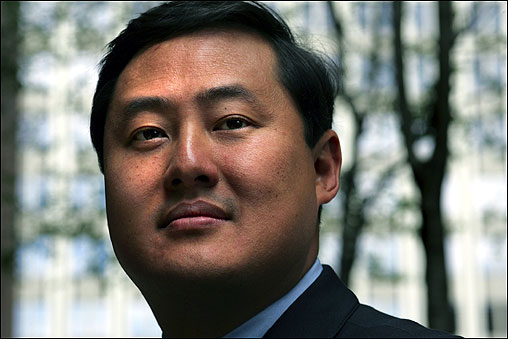
Yesterday I wrote about how Catholicism views the idea of torture and how a possible response to it and it’s socio-political effects can be found in the Eucharist.  That article was written because the idea of Torture has come front and center in the political discourse once more.  For those not keeping track of the current political climate concerning the previous administration, John Yoo is a law professor at the University of California, Berkeley that was given the charge by the Bush administration and the CIA to define the nature and limits of “enhanced interrogation techniques“. He along with Jay Bybee authored the famous “torture memos” which gave legal justification for the use of waterboarding, sleep deprivation, and other techniques in order to get information from suspected terrorists.

Last year, the Office of Professional Responsibility wrote a report finding the two men guilty of professional misconduct and recommended the Justice Department do a full investigation. Ealier this month, both Bybee and Yoo were officially cleared of all wrongdoing in the eyes of the Department of Justice. Further, the DOJ strongly suggested that no further investigation nor disciplinary action from the bar should be sought. Last week the Department officially closed its investigation. Yesterday, the top ethicist of the Department of Justice said that not only did Yoo and Bybee do nothing criminal, but neither did they even act unethically. (Full summary of the metanarrative of all of this can be found here.)

Continue reading

Catholicism on Torture, the State, & the Eucharist


I know, I know — this seems like a weird topic to inaugurate this series. Today, in my ongoing series “Catholics Aren’t Crazy” I wanted to put up a post on a Catholic view of Scripture, inspiration, and inerrancy. They have some amazing things to say on these topics that Evangelicals could do really well to embrace. But alas, current events have changed that plan. Tomorrow I’m posting up a potentially controversial article here on a Christian view of Torture. I’m writing it in light of the recent developments, publications, and interviews concerning the legal and ethical exoneration of the “Torture Memo” authors, John Yoo and Jay Bybee. In my research I stumbled upon the following wonderful article by Andrew Sullivan of The Atlantic, posted on his blog on Ash Wednesday:

“May the Judgment Not Be Too Heavy Upon Us” — The Daily Dish

The article concerns Marc Thiessen, former speech writer for President Bush. Thiessen is on a tour of every news outlet it seems (I’ve seen him on like four different ones just this past week) to promote his brand new book, Courting Disaster, the point of which is pretty much as follows: Our “enhanced interrogation” techniques were moral, effective, and NOT torture; and President Obama has ended them, thereby “inviting the next attack” and putting everyone in America at risk of being slaughtered by Islamic extremists.

Continue reading

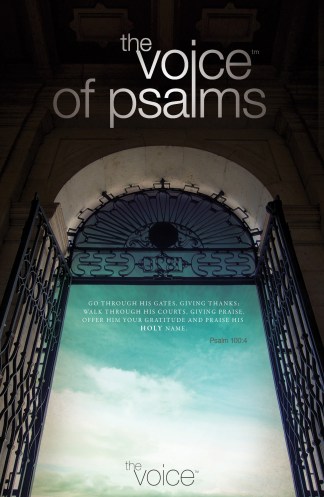
REVIEW: “The Voice of Psalms” by Ecclesia Bible Society


The Voice of Psalms
Ecclesia Bible Society
Thomas Nelson Publishers, 2009
Purchase at Amazon

__________

The Voice of Psalms (Thomas Nelson) is a special collection of the Psalms in the new Voice translation of the Bible. It contains four reading plans (one for Advent, Lent, Praise, and one for comfort and guidance). It has also has 75 “practical and insightful reflections” on various Psalms.

Most Bibles are translated with the assumptions of systematic theology undergirding them, acting as if what makes the Bible divine is that is has this particular combination of these particular words. The Voice, on the other hand takes seriously the assumptions of biblical theology, that the Bible is divine because of the true God and true story of redemption it testifies to. In translating The Voice, biblical scholars and theologians are teamed up with artists, writers, poets, novelists, memoirists, playwrights, lyricists, and other creative minds in order to make the translation both beautiful and unique for each book of the Bible.

Continue reading

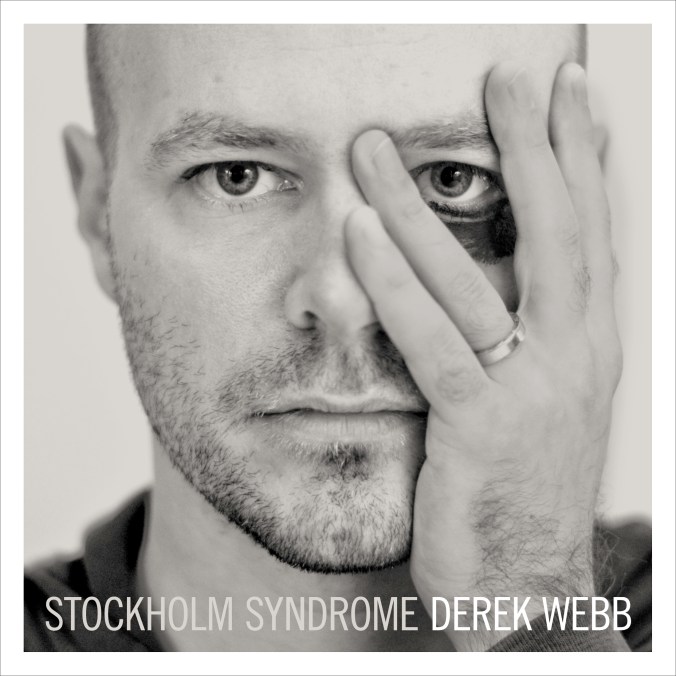
FREE Derek Webb album download for 48 hours only!


UPDATE: The album is no longer up, but clicking the link below will take you to a page where you can download the super-controversial single “What Matters More”  off of the album.

Hey everyone, I just wanted to plug this.  This morning at 9am I got an email from the Derek Webb mailing list saying that on Noise Trade you can download Derek Webb’s newest album, Stockholm Syndrome for free for the next 48 hours.  Which means it should be up until about 9am Friday morning (02/26/2010).  You have nothing to lose, and an amazing album to gain.  Here’s the link:

Download “What Matters More” from Derek Webb’s album Stockholm Syndrome on NoiseTrade.com for free

Also…

Continue reading

Catholics Aren’t Crazy (New Series)


As some of you may have noticed, weekends are pretty quiet here on the blog. In an ideal world, I would post every day during the week and then take weekends off (as I’m not too sure people are surfing much on the weekends. Am I wrong?).  Anyway, I want to try something.  Beginning yesterday, I’m trying to start a little tradition where on Saturdays I’ll post a more personal, meditative post and Sundays I’ll do the series I’m kicking off today.

I was raised in the Bible Belt as a Southern Baptist where there is absolutely no diversity in Christian denominations: there are only Baptists and Catholics — nothing else. This was, at least, my exposure growing up in Dallas, Texas. Throughout my years as a “good ol’ boy” Southern Baptist, I was regularly taught by my Sunday School teachers that Catholics aren’t actually Christians. Let me unpack this briefly.

Continue reading

Open Mic: A Theology of Transgenderism? (pt.iii)


As I said in a previous post in this series (Part 1, Part 2), this problem of how the Church must address Trangenderism will be an increasing problem as time goes on. This is mainly because of how the whole idea of gender identity has changed in the past 100 years.

It is only since Sigmund Freud that we use our sexuality as an “identity”. And it’s only after the Enlightenment that living in light of one’s natural identity is seen as the highest ideal.

Now, Christianity agrees with the Enlightenment on this point, but with a caveat. A very, very important caveat that should shape this entire discussion, especially as it pertains to how we actually counsel and interact with transgendered individuals.

The caveat is this: humanity is the image-bearer of God. We are called to reflect and live in light of that Image. When we don’t do this, we are actually going against how humanity was truly designed to live. We are, in effect, acting less human, not more.

Therefore, as we become Christians and our hearts are (slowly) changed, we live more and more as our fully-human, Resurrection selves. Being joined to Jesus as our representative for true humanity, we find our truest, most truly human identity in him–not in our sexuality, not in our physical sex, not in our gender.

In Christ there is neither slave nor free, Jew nor Gentile, male nor female, gay nor straight. There is only Christ.

Continue reading

Open Mic: A Prolegomena of Transgenderism (pt.ii)


UPDATE: This series is finished. Part 1 can be found here and Part 3 is here.

Yesterday, I started a little miniseries on Transgenderism in response to a question a friend sent me. They were wondering how Christians are supposed to look at this particular issue. I laid out the questions and definitions involved here and asked for feedback (be sure to read all of those comments). Today, I’m talking about a “Prolegomena of Transgenderism”.

Prolegomena” is just a big (but appropriate) word that basically refers to all the things we must keep in mind before trying to answer big questions. For example, in Systematic Theology, Prolegomena is when we lay out the very foundation of our knowledge about the given topics and the presuppositions that will guide us through the rest of the endeavor. That’s what this post is. I want to explore a couple of perspectives that have driven a lot of the answers I’ve seen about this before trying to come to firm conclusions in the next post. So, with all that being said, let’s get started.

Continue reading

Open Mic: The Question of Transgenderism (pt.i)


UPDATE: This series is finished. Part 2 can be found here and Part 3 is here

A couple of days ago, a friend of mine shot me a facebook message asking me for a Christian perspective on, of all things, transgenderism. For many reasons that will be explained later, this will be a topic of increasing pertinence that the Church will have to give a theologically-informed account for at some point. We need to have answers for questions like: “Did God make them that way?”, “Are they just confused?”, “Should we support many people’s desire for surgical alterations?”,”What hope for ‘healing’ can we expect in this life?”,”Is it something that needs to be ‘healed’ in the first place?”, “Is it a sin?”, “What does a Christian with transgender issues look like?”, “Is that even possible?”, among others.

To be honest, I don’t feel like I have a rock solid answer to any of these questions. Every time I feel like I do, I talk to someone and they show me a new dimension I hadn’t seen before. So, I’m very open to ideas, which is why I’m writing this on the blog. I would love everyone’s feedback and opinion as to how one should answer these questions.

Continue reading

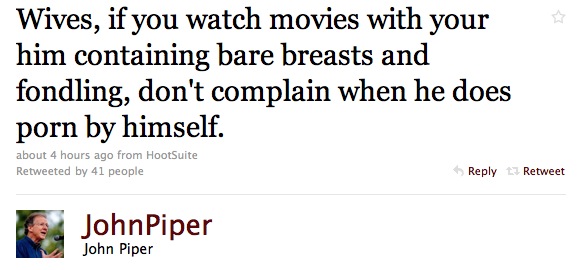
John Piper on Porn, Wives, & Marriage


I try not to bash pastors that I know have good intentions.  Those pastors that have demonstrated a desire to be biblically sound and pastorally sensitive, usually get the benefit of the doubt from me, even when I don’t think they are at the moment being biblically sound and pastorally sensitive.  I also know that well-known pastors probably get far more useless and inane criticism from young twenty-somethings that think they know everything (myself included, far more often than I’d like to admit).  But this went a bit too far.  Tonight, John Piper put up the following tweet:

Really?

Continue reading

The Good Motivations of the Heart: God-merica, pt.IIIb [REPOST]


[This is a repost of the last in a 4-part series of articles I wrote about a year-and-a-half ago (here’s Part 1, Part 2, and Part 3) exploring my struggles with the idea of America as a “Christian Nation” and how my Christian faith should influence my politics. Where I ended up is a very helpful place, I believe, for us Christians struggling with these things.  

In the first post, I show how America has many similarities with Ancient Rome that lend itself to helping us in this discussion.  In the second, I discuss the motivations and limits of imposing a Christian worldview on a post-Christian society.  In the third, I laid out the wrong motives that seem to drive most of Evangelicalism’s attempts to take over the country, and their historical and philosophical roots.  In the post below, I pick up right where the third one ends and give a biblical foundation for a possible framework we can use to discern our political action as Christians.

___________________________________

My exploration of motives for Christian involvement in politics began to shift when I realized that the same Paul and Peter that preached a political worldview of simply obeying the laws were the same Paul and Peter that when told by authorities not to preach, they refused to obey.  What’s going on?  Apparently there’s some other principle at work that creates a depth, complexity, and dynamism within this issue: God and His Nature, Christ and His Glory.  More on this in the next post.

Continue reading

REVIEW: “Simply Christian” by N.T. Wright


Simply Christian
Bishop N.T. Wright
Zondervan, 2006
Buy Now Here
Pre-Order New Ed. Here

__________

As I revealed in a recent tweet, I believe I’m walking into a new obsession with the author/scholar/pastor N.T. Wright. Surprising to many, I’m sure, with me being a seminarian and all, is the fact that I had never read any Wright before this book. Sure, I’ve known of his existence for years, had seen a few of his YouTube clips, and skimmed a few of his articles, but I had never read his books. My housemate during the two months or so before seminary began reading through Wright’s entire Christian Origins and the Question of God series (books 1, 2, 3) constituting over 2,100 pages of reading. He couldn’t stop reading, nor stop telling me about how amazing this man was. I nodded and agreed, sure that I would read something at some point. I had no idea what I was missing.

Continue reading

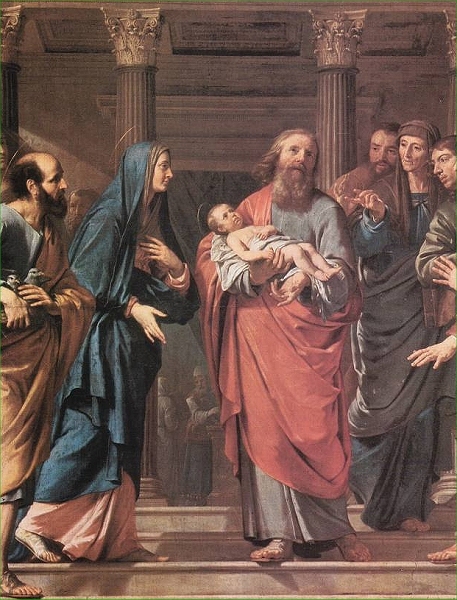
Holy Day Meditations: Jesus Presented at the Temple


The backbone of my morning and evening meditations and prayer has become the Anglican Book of Common Prayer. It has taken me a while to figure out how to use it (with a lot of help from a friend), and I’m still clumsily trying to make my way along, but it is an amazing book. It gives just the right amount of both freedom and structure to give me both guidance and excitement. I’m really enjoying it. Secondly, I am a relatively new member of a church that belongs to the Reformed Church in America. Both of these things has led me to encounter ancient church documents, creeds, and traditions I was never exposed to as a Bible Belt Southern Baptist.

One of those newfound traditions that is really becoming a major part of my life is the Church Calendar. According to the calendar, we are currently in the season of Epiphany, where the church celebrates the travel of the Wise Men to see Jesus, therefore declaring him King and Lord among all the nations, and today is the Church Holy Day on which we celebrate Jesus’ presentation by His parents in the temple (forty days after Christmas) (Luke 2:22-40). As I went through the Daily Lectionary this morning, I found that focusing on this event and meditating on it bore some very real personal fruit that I wished to share.

Continue reading