Ash Wednesday Benediction [POEM]


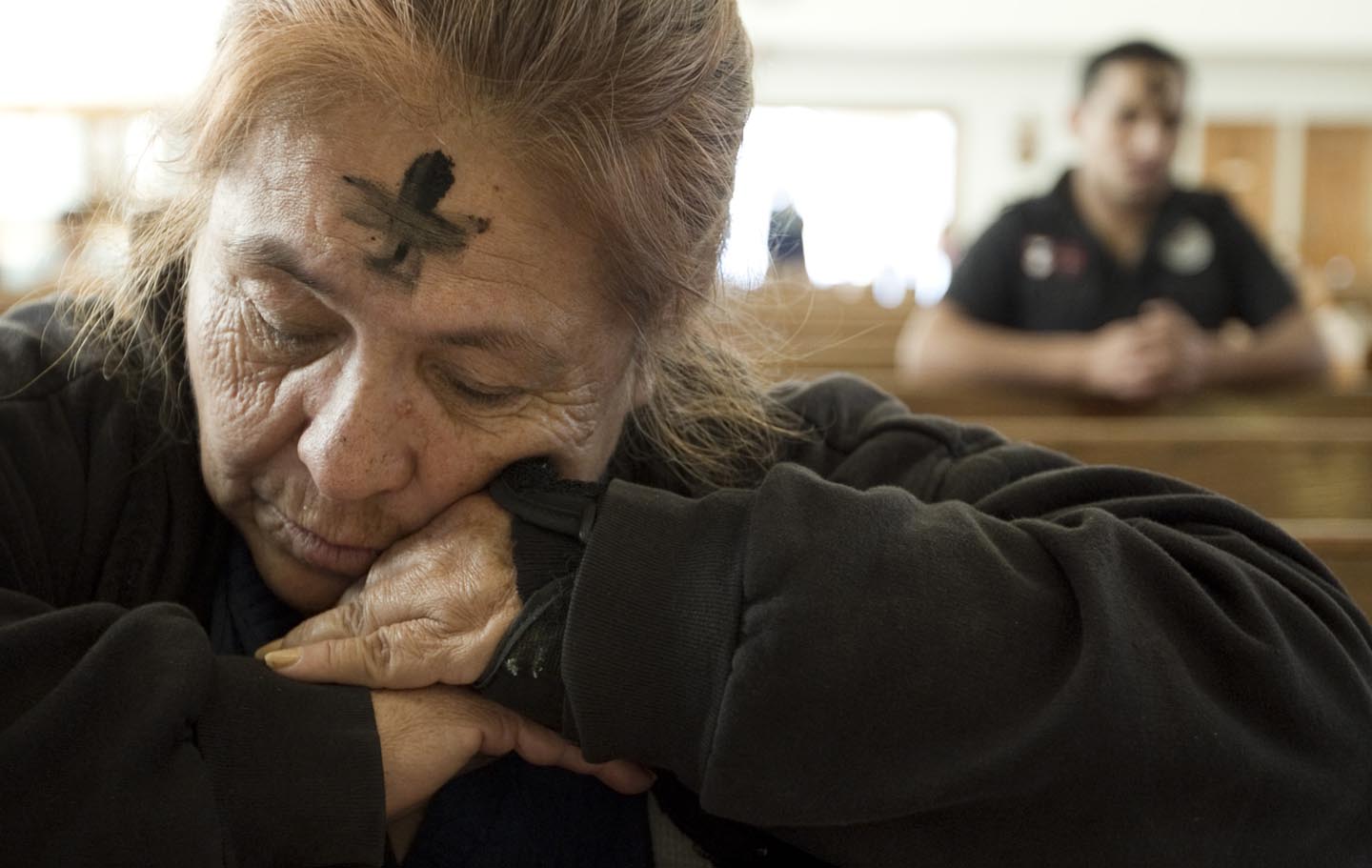
ash-wednesday-faces-of-the-faithful-photos

The shape of the promise is death 
Say the word, feel the space, build the coffin in your mouth
Climb inside and make it yours

For it is

That tomb washed white, emerges in life,
enslaves in death, watches the end

agape

Expiration exorcism, cast the spirit, cast it low;
Cast your eyes and feel the blow
Cast the lots

Carve the promise into your bones, your forehead

Let your face shine with Moses glory: that of the immortal God
–that suffering, dying, ashen glory-story

May your face shine with Ash
As you wear the world’s judgment embedded in your skin, in your body,
May you feel the world’s death in your face, may you hold it before your eyes

May the flame that licked the palm find its end in you.
Bear the flame the world shall never know, precisely so it never will

Take their judgment and rub it on our faces and cast it to proclaim

Lift up your eyes

Wear it loud

The shape of the promise is death

[read my other Holy Day poetry here]
all writings licensed: Creative Commons License

Welcome to Ash Wednesday. Lent begins.


ash-wednesday-pew-lentToday is Ash Wednesday. In just under two months from today we’ll come to the highest point in the Christian Church calendar, Easter. That is where we’ll celebrate Christ’s Resurrection and how God’s perfect world broke into the present and our greatest enemies–sin and death–were conquered and shown to have no more dominion over us and the rest of the world. It’s meant to be the most effusive, overflowing, even ridiculous time of joy.

And yet, when we look at Jesus’ Resurrection, we see that before it ever took place, there was Death. And before that, there was an entire lifetime of loneliness, pain, suffering weakness, and isolation. We see that it was a life surrounded by evil forces and whispers that haunt and hurt Jesus and the people he loved.

And so, our early Church Mothers and Father thought it would be wise to have this time before Easter to prepare, so we might end up celebrating during Easter all the more.

Resurrection was itself a statement against our two greatest enemies: Sin and Death. And so to participate in Resurrection, we take the time of Lent to meditate and press into those things to which Resurrection was the response. We do this not out of morbidity, but out of anticipation.

Continue reading

Haha. Such a great narrative turn. | Genesis 6.5-8


The Lord saw that the wickedness of humankind was great in the earth, and that every inclination of the thoughts of their hearts was only evil continually. And the Lord was sorry that he had made humankind on the earth, and it grieved him to his heart. So the Lord said, “I will blot out from the earth the human beings I have created—people together with animals and creeping things and birds of the air, for I am sorry that I have made them.”

But Noah found favor in the sight of the Lord.
Genesis 6:5-8

Greatest narrative turn ever.

See other Marginalia here. Read more about the series here.

Esther is no Sunday School role-model | Esther 2.8-9


So when the king’s order and his edict were proclaimed, and when many young women were gathered in the citadel of Susa in custody of Hegai, Esther also was taken into the king’s palace and put in custody of Hegai, who had charge of the women. The girl pleased him and won his favor, and he quickly provided her with her cosmetic treatments and her portion of food, and with seven chosen maids from the king’s palace, and advanced her and her maids to the best place in the harem.

Esther 2.8-9

She “pleased him.”  You know what that means, right?

Here and throughout the book are instances where Esther shows herself time and time again to not be faithful to her people or her God in any way. She is selfish, power-hungry, narcissistic, unmerciful, and only helps her people once she is scared she will get killed with the rest of them. She’s kind of a terrible human being. No wonder this book wasn’t accepted as canonical by huge communities of Jews.

See other Marginalia here. Read more about the series here.

The Holy Spirit exorcizes, no matter who you are | Matthew 12:24-28


But when the Pharisees heard it, they said, “It is only by Beelzebul, the ruler of the demons, that this fellow casts out the demons.” He knew what they were thinking and said to them, “Every kingdom divided against itself is laid waste, and no city or house divided against itself will stand. If Satan casts out Satan, he is divided against himself; how then will his kingdom stand? If I cast out demons by Beelzebul, by whom do your own exorcists cast them out? Therefore they will be your judges. But if it is by the Spirit of God that I cast out demons, then the kingdom of God has come to you.

Matthew 12.24-28

Even those that are not the people of God exorcise by the Holy Spirit. Don’t be so quick to discount the healing just because you disagree with the person or even if they’re not Christian! God is the Gospel of healing. However shalom happens, it is the Spirit that brings it.

See other Marginalia here. Read more about the series here.

Lent begins tomorrow. (Will you just give it a try?)


Jesus & The Cross

I grew up in a church tradition that did not take seriously the Christian Church Calendar. Even as I went to college and moved into communities that took some level of tradition more seriously (which was usually limited to quoting Puritans and Reformers in sermons), the Church Calendar wasn’t that big of a deal. It was seen as something sort-of cool that could be incorporated into the already established life of the Church; a buffet from which leaders could pick and choose some aspects that might be helpful in organizing some sermon series or songs. But it certainly wasn’t seen as something that a church should actually incorporate itself into, or build it’s own rhythm around.

I’ve had the privilege of having this paradigm rocked the past several years at my church, and have fallen in love with the Church calendar. It influences much of the rhythm and timbre of my everyday life–both ecclesial and otherwise. I find such life in living within a stream of thought that was not simply created within the past generation by baptizing modern Western American cultural ideas.

I love finding myself as embedded within the cloud of witnesses that have gone before me as possible–even those I may disagree with passionately and fundamentally. Because, at the end of the day, they are my family, and families have traditions. Sure, you can be “that guy” that does his own thing and doesn’t participate in the family rhythms, but where’s the life in that?

Continue reading

Preaching the Gospel to Christians | Romans 1:14-16


I am a debtor both to Greeks and to barbarians, both to the wise and to the foolish—hence my eagerness to proclaim the gospel to you also who are in Rome.

For I am not ashamed of the gospel; it is the power of God for salvation to everyone who has faith, to the Jew first and also to the Greek.

Romans 1:14-16

Notice here that Paul wants to proclaim the gospel to those who are already believers! This Gospel is the whole of the Christian life, not simply our starting place. It not the ABC’s, after which we need theology, doctrine, good works, etc. It is the A-to-Z of the Christian life. When we think our churches, our preaching, and our lives essentially need something more than that, we begin to stray from the Gospel altogether.

See other Marginalia here. Read more about the series here.

Noah, Prophecy, & the Comfort of the Earth | Genesis 5.28-29


When Lamech had lived one hundred eighty-two years, he became the father of a son; he named him Noah, saying, “Out of the ground that the Lord has cursed this one shall bring us relief from our work and from the toil of our hands.”
Genesis 5.28-29

Noah’s name means “comfort” or “rest”. This is an interesting prophetic statement concerning Noah. Hebrew irony at its best. The same Hebrew word for “earth” is used here as “ground”. Same word as in “God created the heavens and the earth”. So, how Noah will bring “relief” from the toil is by playing a part in the undoing of God’s creation of “the heavens and the ground”. In other words, he comes out of the ground to bring comfort to that ground by undoing the ground. Oh, Hebrew.

See other Marginalia here. Read more about the series here.

Male Headship & Societal Injustice | Esther 1:17-22


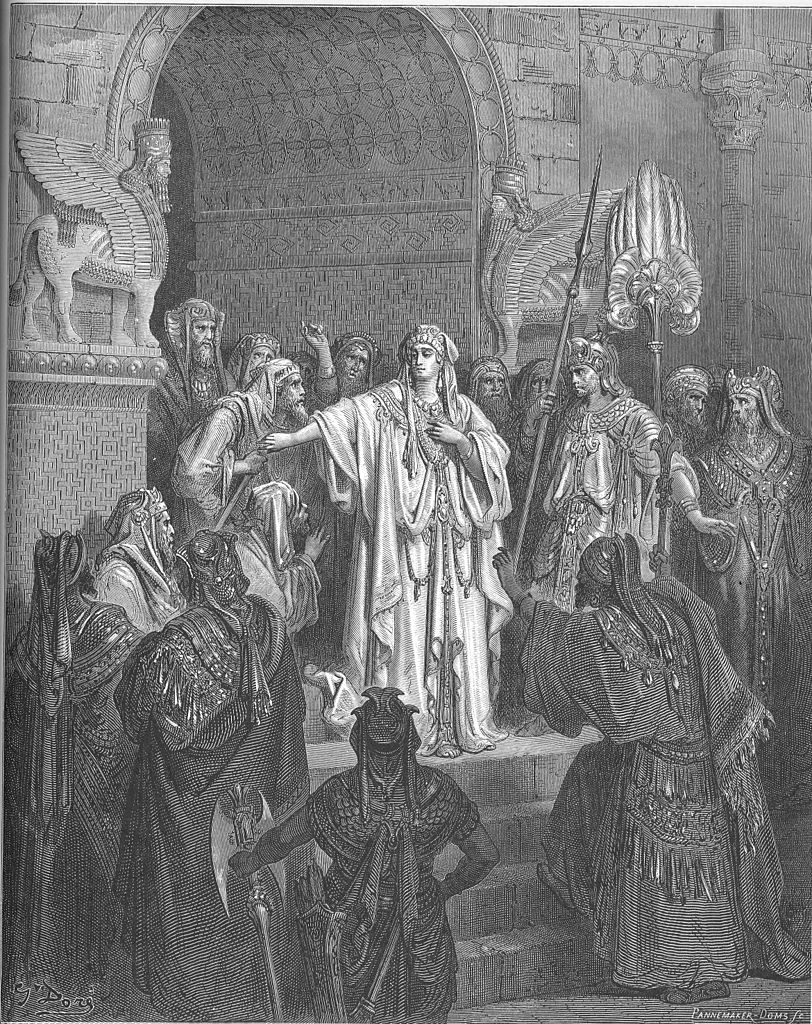
Queen_Vashti_Refuses_to_Obey_Ahasuerus_CommandToday’s post falls into both our new section of the site called Marginalia and our on-going series on Women in the Church.

For this deed of the queen will be made known to all women, causing them to look with contempt on their husbands, since they will say, ‘King Ahasuerus commanded Queen Vashti to be brought before him, and she did not come.’ This very day the noble ladies of Persia and Media who have heard of the queen’s behavior will rebel against the king’s officials, and there will be no end of contempt and wrath! If it pleases the king, let a royal order go out from him, and let it be written among the laws of the Persians and the Medes so that it may not be altered, that Vashti is never again to come before King Ahasuerus; and let the king give her royal position to another who is better than she. So when the decree made by the king is proclaimed throughout all his kingdom, vast as it is, all women will give honor to their husbands, high and low alike.”

This advice pleased the king and the officials, and the king did as Memucan proposed; he sent letters to all the royal provinces, to every province in its own script and to every people in its own language, declaring that every man should be master in his own house.
Esther 1.17–22

I can imagine a conservative evangelical looking at this and saying to themselves, “Now, the king’s court is recognizing a natural order in the way God has made a marital relationship to work, even though they go about reinforcing this biblically-supported picture in the wrong way–through force and not love”. I hope that’s a fair representation.

But either way, (1) they would not want us to pull from this text any lessons about how male headship itself is wrong, just how it’s done badly here, and (2) they would still think the concern of these males is justified (and perhaps even right), as we’ve seen similar dynamics play out in our culture in the aftermath of feminism.

Continue reading

Insecurity Leads to Fasting? | Ezra 8:21-23


Then I proclaimed a fast there, at the river Ahava, that we might deny ourselves before our God, to seek from him a safe journey for ourselves, our children, and all our possessions. For I was ashamed to ask the king for a band of soldiers and cavalry to protect us against the enemy on our way, since we had told the king that the hand of our God is gracious to all who seek him, but his power and his wrath are against all who forsake him. So we fasted and petitioned our God for this, and he listened to our entreaty.
Ezra 8:21-23

What an odd and beautifully honest aside. At first I was put off by the logic here. “I proclaimed a fast…For I was ashamed.” I thought “that’s a terrible reason to have a fast!” But the more I thought about it the more I realized that, of course!, that’s the right time to fast! When you are most unsure, most in need, most insecure. This is when “we might deny ourselves before our God.”

See other Marginalia here. Read more about the series here.

Women at the Cross | Matthew 27:55-56


Now when the centurion and those with him, who were keeping watch over Jesus, saw the earthquake and what took place, they were terrified and said, “Truly this man was God’s Son!”

Many women were also there, looking on from a distance; they had followed Jesus from Galilee and had provided for him. Among them were Mary Magdalene, and Mary the mother of James and Joseph, and the mother of the sons of Zebedee.
Matthew 27:55-54

It’s really interesting to me that Matthew adds this little addendum to the end of the account. Why point out the women that were there? Is the assumption that all the men have scattered, and so Matthew had to show his sources for this story?

See other Marginalia here. Read more about the series here.

Abraham’s son Ishmael was part of Covenant! | Genesis 17.23-27


This is my covenant, which you shall keep, between me and you and your offspring after you: Every male among you shall be circumcised… and it shall be a sign of the covenant between me and you…. Both the slave born in your house and the one bought with your money must be circumcised. So shall my covenant be in your flesh an everlasting covenant. Any uncircumcised male who is not circumcised in the flesh of his foreskin shall be cut off from his people; he has broken my covenant.”… As for Ishmael, I have heard you; I will bless him and make him fruitful and exceedingly numerous; he shall be the father of twelve princes, and I will make him a great nation. But my covenant I will establish with Isaac, whom Sarah shall bear to you at this season next year.”…. Then Abraham took his son Ishmael and all the slaves born in his house or bought with his money, every male among the men of Abraham’s house, and he circumcised the flesh of their foreskins that very day, as God had said to him…. And his son Ishmael was thirteen years old when he was circumcised in the flesh of his foreskin. That very day Abraham and his son Ishmael were circumcised; and all the men of his house, slaves born in the house and those bought with money from a foreigner, were circumcised with him.
Genesis 17.23-27

Yes, God said that Ishmael would not be the primary bearer and “administrator” of the covenant, but he still bears its marks. Reminds me of a reading from Lesslie Newbigin where he talks about how through our election and Covenantal relationship with God, Salvation is extended to all the nations. “Election” isn’t about blessing; it’s about responsibility to extend the Blessing to others.

Other peoples (even those not in the elect people of God) participate in and receive the full benefits of being part of the Covenant. To be elect is to extend these Covenantal blessings to all nations (as we see here with Abraham). To be marked as God’s is to be placed on mission.

Ishmael was still joined to the covenant! Praise God for his gratuitous grace!

See other Marginalia here. Read more about the series here.

Death & Life; Names & Vows | Genesis 3.20-21


The man named his wife Eve, because she was the mother of all living. And the Lord God made garments of skins for the man and for his wife, and clothed them.
Genesis 3.20-21

I don’t know why I’ve never noticed this before. Why does Adam only name Eve after they sin? Further, of all the things to do after receiving the curse from God, he does this covenantal, marital act: he gives her a name.

I know this isn’t in this text, nor was it on the mind of the original writer, but it reminds me of the odd line in Revelation where God promises to give each person a new name that only He and they will know.

It seems that in the whole sweep of redemptive history, the Bride of the first Adam received a new name when he brought death, just as the Bride of the second Adam receives a new name when he brings life.

See other Marginalia here. Read more about the series here.

The Privilege of Church-lessness: a Donald Miller post-script


donaldmiller-bw-2Donald Miller put up another post sort of talking more about his church attendance thoughts, this time talking about how the doctrine of the “priesthood of believers” means he does sacraments on his own and whenever he wants because God has given us all “agency” in this world to do that kind of stuff. He longs that pastors would empower their people to feel free to do these sort of things as well.

I made my thoughts clear last week about how wrong I think he is on this stuff (especially so with the sacraments. He even says he does baptisms for other people even though he himself has never been baptized). I won’t rehash that here. I did want to bring up one thing I noticed in his other posts that was more explicit in this last post. He writes:

To be fair, I’m wired a bit differently. I’m creative and I’m a risk taker. I realize a mistake I often make in my writing is assuming people are wired the way I’m wired. They aren’t. Most people are looking to “do it right” and play by the rules. This saves them from the trouble I often find myself in.

I can’t get past the the feeling here that Miller is saying that “most people” (read: “those that go to church”) at least primarily go to church because they want to “do it right” and “play by the rules”; that not going to church is an act of freedom, while those that still go are bound by something Miller thinks he has freed himself from. It’s not that he necessarily thinks he’s “better” than others, but I fear he makes a dangerous division within the Body of Christ between himself and “most people”.
Continue reading