Car Theft, Domestic Violence, & a Musical: a weird day


Yeah__this_just_happened._Go_Philly.Yeah, that’s my car there in that picture. This afternoon, my car got broken into.

But I’m getting ahead of myself. This was one the oddest days I’ve had in a long time.

Every day this week, mainly for work reasons, I’ve had to get up anywhere from one hour to an hour and 45-minutes earlier than I normally wake up. I’ve also been staying up later than usual all this week. I have been a zombie, for sure.

This morning I had to wake up crazy early (to me, at least) to pick up a client and get them to court for a domestic violence case. They had been the one abused, and they were to testify. This is one of the most difficult things for abuse victims and support was definitely going to be needed.

Continue reading

Simplistic Atheism {2}: Science “versus” Theology


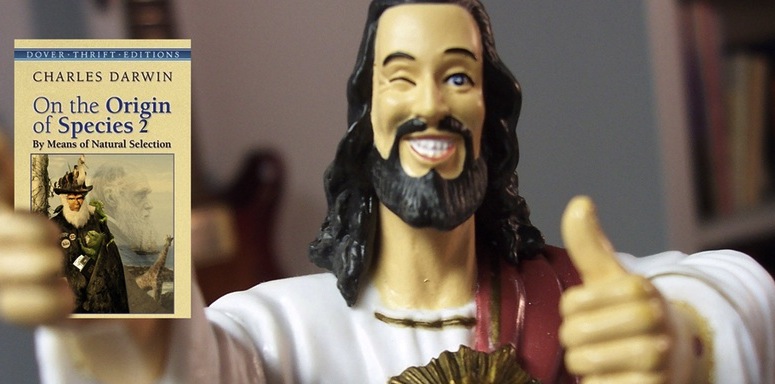
darwin-buddy-jesus-humor

(Note: These exchanges are now complete. There is a Table of Contents to the discussion now available.)

I’m doing a little series this week responding to a Facebook post by a friend of mine named Daniel Bastian. He outlined twenty things that would make him change his mind about Atheism. The piece is well-organized and thought out, I encourage everyone to read it and wrestle through it themselves.

In line with my belief that these sorts of discussions always seem to end up at differences in hermeneutics (interpretive filters) rather than facts, I wrote a post talking about what appeared to be Daniel’s bigger commitments and understandings of the world, human reason, and assumptions about spirituality (also read the Facebook comments).

I was, of course, accused of still not engaging with his specific points, even as I sought to talk about principles behind the points. And so, I’m excited to say that with today and tomorrow, we will be hitting many of Daniel’s specific points
Continue reading

Simplistic Atheism {1}: a Reason & Spirituality that’s too small


de-Goya-Sleep-Reason-produces-monsters

(Note: These exchanges are now complete. There is a Table of Contents to the discussion now available.)

Last week a friend of mine named Daniel Bastian posted a well thought-out catalog of the reasons why he is an Atheist (let me know if the link doesn’t work). This list includes items that don’t usually pop up in similar offerings, and I encourage every Christian to read this list and wrestle through the realities of what he says.

As I thought about it, though, and thought through how I would respond to some of these things, I found a consistent theme to what I would critique to each of his points: over-simplicity. In this series of posts, rather than going through each of the writer’s twenty points, I’d like to go through some broader ideas he touches on, and offer my thoughts.

By the time I was done writing everything up, I had at least four parts to this response. Today, we’ll briefly talk about how Daniel’s post represents an over-simplifying of human reason and spirituality..
Continue reading

Listen to the Hurting {ii}: how now shall we suffer?


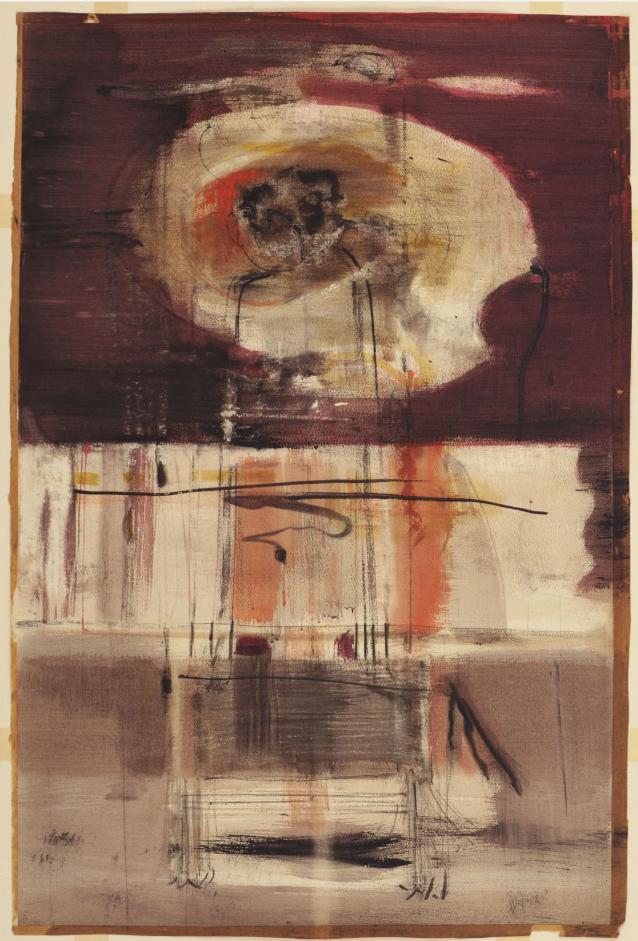
Rothko-untitled-2Yesterday I wrote about how our offense and struggle with evil and suffering in the world is often detached from the feelings and words of those that actually endure much of it. I said that intense Suffering doesn’t seem to produce an extinguishing of faith to those that experience it.

People have often said that the deep suffering and injustice of the world is one thing that led them to Atheism or skepticism, but this seems to be more the case for those that observe and think about the idea of suffering, more than enduring it themselves. Yes, there are stories of those that lose their faith in the midst of their suffering, but they really are so few and far between.

This is one of the main themes of Dostoevsky’s Brothers Karamazov. The most powerful argument for Atheism I’ve ever read is in the famous “Grand Inquisitor” chapter. After reading it, I was so deeply shaken for a few weeks after. And it was written by a Christian.

One of the central themes of the book is that Atheism is an absolutely logical and reasonable system, but not one that can be consistently lived out. When observing the world and its injustice intellectually and from a top-down perspective, Atheism is probably more easily sensible than Christianity. But, as the book goes on to show, no matter the philosophical veracity of Atheism, no one can truly live real, actual human life as a fully-consistent Atheist and flourish as a human, in human relationships, and in human society.

Even if people think about suffering Atheistically, people usually live in the midst of it religiously.
Continue reading

Listen to the Hurting {i}: why Suffering is a silly reason to be an Atheist


Adolph Gottlieb-rolling

Update: Part 2 is up.

In the religious circles I walk in, I hear about injustice and suffering quite a bit. Theology friends constantly muse about how to view these things in light of biblical revelation. Atheist and skeptic friends constantly point to these things as the inherent illogical inconsistencies that undermine religious faith.

And caught in the middle are many, many more friends, who live their lives trying to navigate their jobs, families, and relationships the best they can–all while these questions haunt them in their quieter moments or right before they sleep. Unlike the other two groups above, they don’t feel like they have answers. And this can lead to periods of doubt, insecurity, and frustration.

For every group, though, questions abound in these conversations. Oftentimes, they have a religious flavor. Why does this stuff happen? How does this relate to the goodness of God? What does it mean for the reality of God? How is God just when this stuff is real? Why does God seem absent?

And yet…

These are almost never the questions I hear from the people actually going through the suffering.
Continue reading

The Suffering of The Holy Spirit


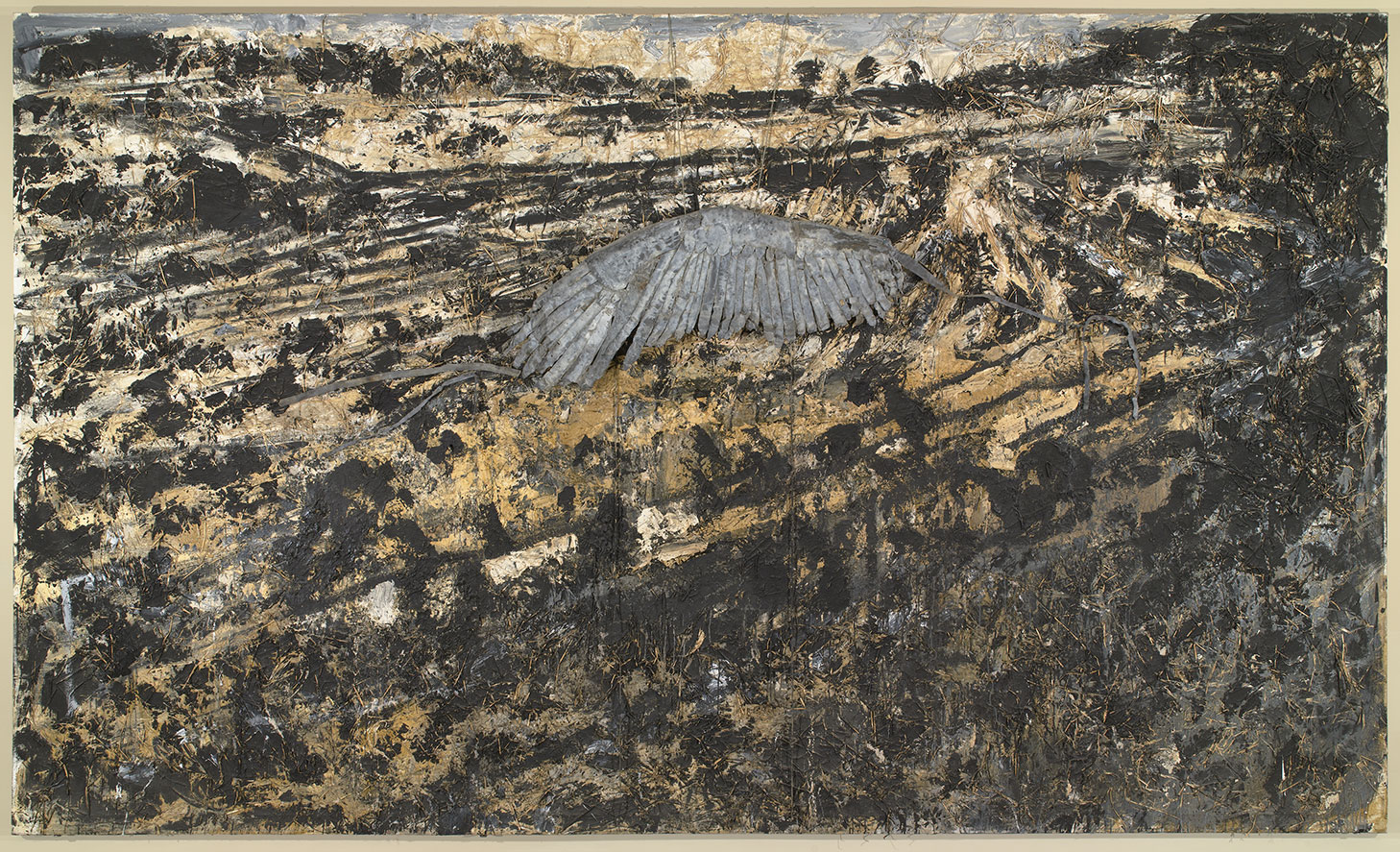
Anselm Kiefer-Landscape with a WingIf you’re like me, and were raised in the most previous generation of the American Church, the more painful parts of human existence didn’t really make an appearance in the course of religious conversations. There was talk about doctrine, and piety, and all “those people” that were sinners, but the only real insight that could be given to those that were hurting was that they needed to read their Bible more, trust Jesus more, sin less, so on and so forth.

Suffering was unconsciously assumed to be something outside of the everyday experience of the “victorious” and “justified and sanctified” Christian. People responded to the suffering of others with a cautious distance, thinking something had gone horribly wrong with their life, God’s providence, or their souls.

And then I had the privilege of sitting under amazing teaching in college that really brought suffering to the fore. I was encouraged that suffering was not “supposed” to be an aberration in life, but rather the expectation of how things are. We didn’t pursue it, but we certainly didn’t need to, because it would find us.

Continue reading

When easy & simplistic proof-texting trumps the nuance & complexity of wrestling pastorally with the text


On Tumblr, a very, very dear friend posted this earlier, in support of the Doctrine of Double Predestination, which says that in eternity past, God predestined not only who would be saved (apart from their own works), but also those who would not be saved (apart from their own works):

“They stumble because they disobey the word, as they were destined to do.” 1 Peter 2:8

Double predestination

#it’s biblical

In one of the most widely used Bible commentaries in existence, I found these words written about this verse, starting with commenting on the word “also” (which isn’t found in my friend’s translation of the verse). I’ve changed some formatting and some grammar to make it easier to understand. Enjoy:

“also” [as in “as they were also destined to do”;  this is in the Greek, though Revelation 19’s translation doesn’t have this]—[this is] an additional thought; God’s ordination; not that God ordains or appoints them to sin, but they are given up to “the fruit of their own ways” according to the eternal counsel of God. The moral ordering of the world is altogether of God. God appoints the ungodly to be given up unto sin, and a reprobate mind, and its necessary penalty.

The phrase “Were appointed,” (Greek, “set,”) is an answer to the “I lay,” (Greek, “set,”) found in 1Pe 2:6.

God, in the active, is said to appoint Christ and the elect (directly). Unbelievers, in the passive, are said to be appointed (God acting less directly in the appointment of the sinner’s awful course) [Bengel]. God ordains the wicked to punishment, not to crime [J. Cappel].

“Appointed” or “set” (not here “FORE-ordained”) refers, not to the eternal counsel so directly, as to the penal justice of God. Through the same Christ whom sinners rejected, they shall be rejected; unlike believers, they are by God appointed unto wrath as fitted for it.

***The lost shall lay all the blame of their ruin on their own sinful perversity, not on God’s decree; the saved shall ascribe all the merit of their salvation to God’s electing love and grace.***

(from the “Commentary Critical and Explanatory on the Whole Bible)

What are your thoughts on this issue? How important do you think it is in the grand scheme of the Gospel?

Crying Over Spilt Rilke [Re-Blog]


Ran across this quote and post. They are both so good. I am all the more persuaded I need to open up the copy of Letters that I have sitting on my shelf right now. It gets cut off in the excerpt above, but here’s the whole Rilke quote:

You are so young, so before all beginning, and I want to beg you, as much as I can, dear sir, to be patient toward all that is unsolved in your heart and to try to love the questions themselves like locked rooms and like books that are written in a very foreign tongue. Do not now seek the answers, which cannot be given you because you would not be able to live them. And the point is, to live everything. Live the questions now. Perhaps you will then gradually, without noticing it, live along some distant day into the answer.

Adam Lauver's avatarThe Narratician

“You are so young, so before all beginning, and I want to beg you, as much as I can, dear sir, to be patient toward all that is unsolved in your heart and to try to love the questions themselves like locked rooms and like books that are written in a very foreign tongue. Do not now seek the answers, which cannot be given you because you would not be able to live them. And the point is, to live everything. Live the questions now. Perhaps you will then gradually, without noticing it, live along some distant day into the answer.” – Rainer Maria Rilke, Letters to a Young Poet

I recently came across a used copy of Letters to a Young Poet, which I’ve been meaning to read for a long time now. As I was leafing through it in the book store, I noticed that there was…

View original post 537 more words

The Lord is Fleeting [photo sermon]


train-knitting-fleeting

For those new to  the blog: each week, I try and write a “photo sermon” based on the themes of WordPress’ Weekly Photo Challenge. This week’s theme is “Fleeting“.

* * * * *

A garden cool. A God at leisure. Lovers conspire. Nectar tasted.

The God is gone.

He appears in visitors and shapes and shadows, and as a voice to an ancient Babylonian:

“I will make you…”

The Babylonian’s faith is counted as righteousness, and deservedly so, for this man doesn’t hear the voice of God in any way for decades. (And I get mad when his voice leaves me for months.)

This God lets his people sit in slavery for hundreds of years. When his Chosen asks to see his Glory, He offers only the briefest glimpse of his back. When His People stray at Sinai, He still offers to give them every benefit that He promised–the land, the victory, and their identity. The only difference: He would send his angels with them and withdraw his own Presence.

They freak out.
Continue reading

Diving into Death


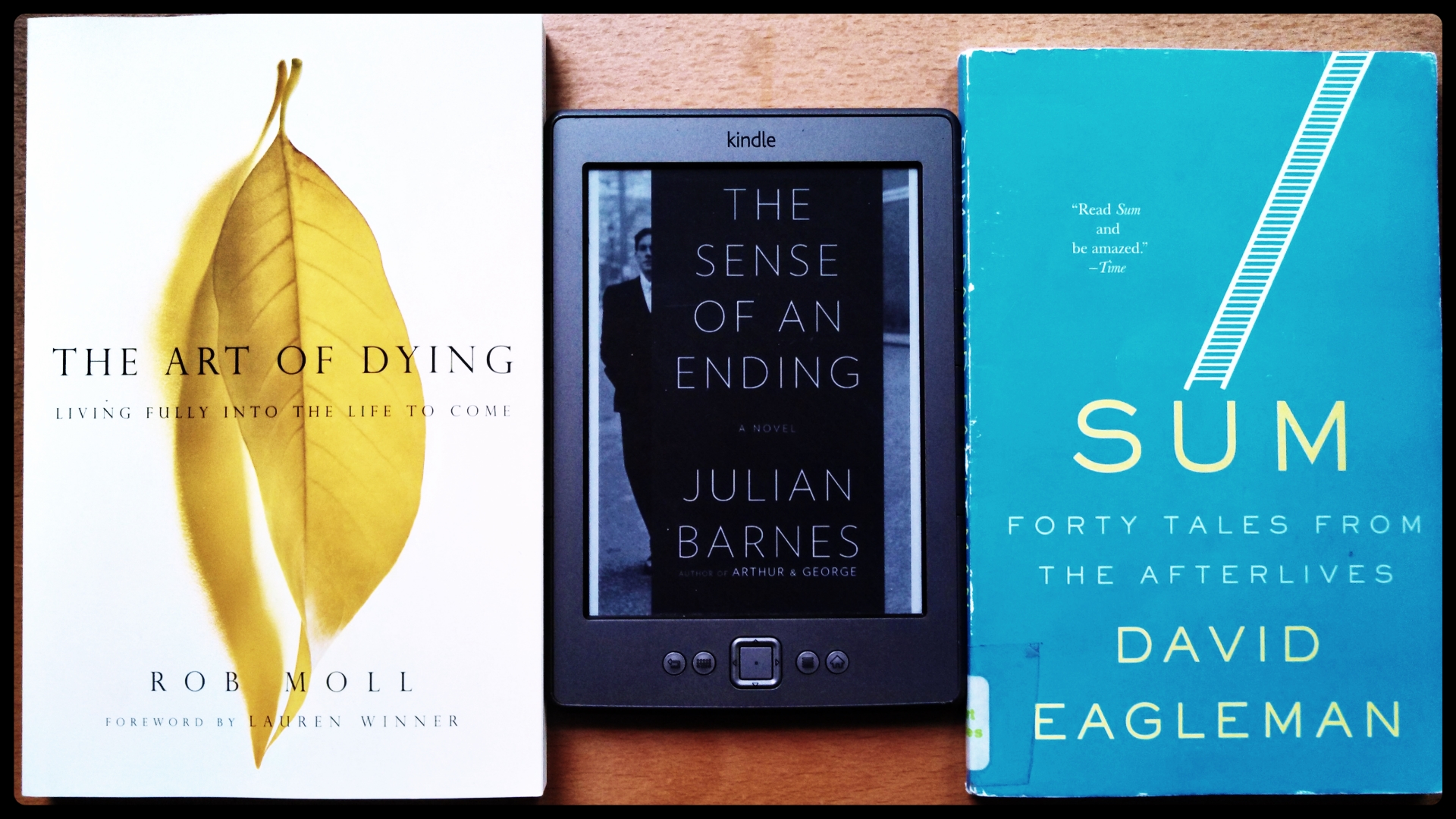
books-death

It’s always difficult to talk about one’s own fear of one’s own death. It usually comes across as a little melodramatic and seems to carry with it the appearance that somehow your fear of your death is somehow felt more deeply, analyzed more fully, or experienced more truly.

In short, when people start whining about their fear of death. It can be annoying. I acknowledge this. And yet, here I am, telling you all that I am really, really scared of death.

When I mention this to people that know me as the guy who writes a lot about faith and seems to believe these things pretty deeply, people are (for some reason) shocked to hear me explain just how deep my fear of death goes. I know it’s not logical, but I somehow find the past works of God more easily believable than the future acts of God. I know you can’t have one without the other, but the human heart is a storm of contradiction and paradox.

And for some reason, Death has occupied my thoughts of late. Sure, I’ve wrestle with it’s reality, thought through it’s theological origin, seen it in the faces of the hurting, wrote about how to live in spite of it, and even engaged it in poetry and in song, but something has really captured me recently. I’ve been sitting in the presence of this fear.
Continue reading

Trickle-Up Resurrection (Guatemala Lessons)


Rothko-easterMy church is currently in a series called “Resurrection Stories” in which we’re going through each of the non-Jesus stories of resurrections (or “resuscitations”—whatever) found in the Bible. It is, after all, still Easter.

A few weeks ago, as we were talking about Elisha raising the Shunnamite’s son, our pastor pointed out that most of these resurrection stories seem to center more on the people around the dead person than the dead person themselves. And so, in a sense, these resurrections are more for the people affected by death than the one dead; the ones that “receive” the true resurrection power are mostly those around the resurrected one.

Further, as he pointed out, most all of these people that “receive” the truest benefits of these resurrections are women—the most alienated and disempowered group throughout world history.
Continue reading

So, how was Guatemala? I finally have an answer for you.


la-limonada-hands-guatemalaHow was your trip?”

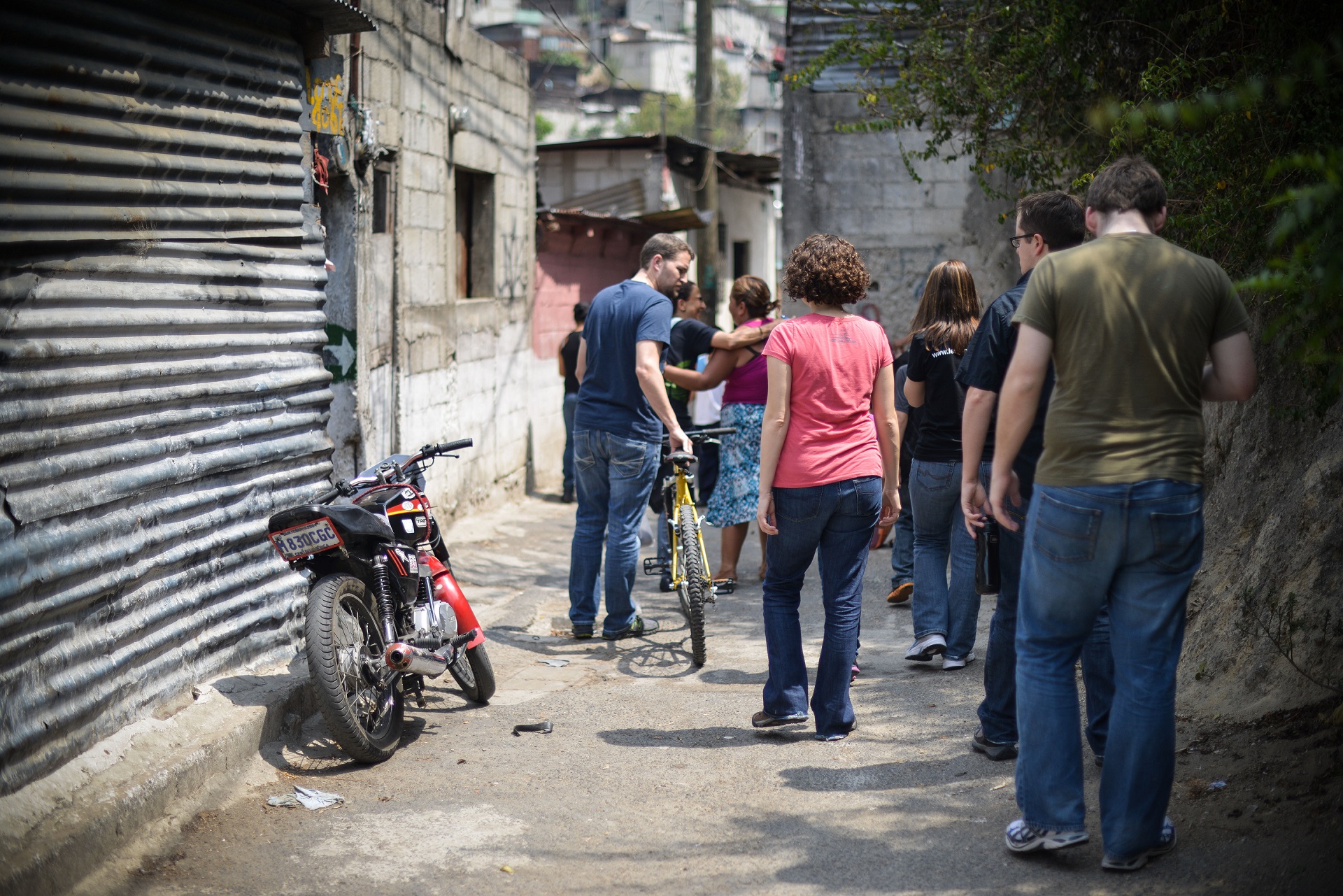
This has been the question I’ve been receiving more than any other this past week and a half, since returning from my trip to Guamtemala with Lemonade International to see their work in the community of La Limonada.

And yet, I have had no answer.

Nearly every person who’s asked the question has been someone I love, who loves me, and gets me. They know that I can’t even articulate a simple answer to a casual “How ya doin’?” thrown my way. And so I’ve felt grace and understanding as I haven’t been able to answer.

At a wedding this weekend, in an attempt at capturing in one word the seemingly contradictory dimensions of my experience in Guatemala, I blurted out the word “paradoxitous”. Yes, I was trying to be funny.

Continue reading

Change: God is Real [Guatemala, Day 4] [photo sermon]


church-philly-bw-cross-market-east

For those new to  the blog: each week, I try and write a “photo sermon” based on the themes of WordPress’ Weekly Photo Challenge. This week’s theme is “Change“. I thought I’d take this chance to begin processing my time in Guatemala with Lemonade International.

* * * * *

I don’t struggle with the plurality of beliefs about God. If there is a God, I am quite confident (as arrogant as it may sound) that Christianity is the proper understanding of Him.

Rather, my struggle is with the sense that God is there at all. Many of the posts on this blog have dealt with my open acknowledgment of my “inner atheist” (as I’ve called him several times), and how I’ve tried to deal with him.

I don’t know that I need to expound on this too much, as I’m confident many of the readers here get this already, but just in case: this doubt is not intellectual; it is existential. I often miss that abstract sense and “feeling” of God’s existence. Continue reading

“Strong like Lemonade….and sweet.” [Guatemala, Day 3]


LemonadeInternationalB-25

Tonight is my last night in Guatemala. By the time this is posted and most of you read this, I will be on a plane (or, more likely, waiting in an airport), on my way back home.

The past couple of posts this week have been a little intense. The way I received and processed those first few days was definitely through the filter of brokenness and pain. And this was definitely appropriate. There were so many stories of poverty, violence, abuse, economic exploitation, injustice, paedophilia, and rape that I simply could not tell.

We have to see the need for hope before we can feel its presence.
Continue reading

As We Lay Dying [Guatemala, Day 2]


guatemala-cemetery-dump-cross

Since God’s children share in flesh and blood, Jesus himself likewise partook of the same things

Today began with a meeting of the microenterprise crew–the staff and several of the women who have benefited from small loans to help start small businesses in the area.

Lemonade International is insistent that this is merely a solution to help some of those that are gifted in this way. Lemonade International partakes of the flesh and blood of these people, weak as they are, and sees how they can serve them as individuals with individuals needs.

I leave encouraged. Continue reading