Last night. She sat in the corner of the bed-couch in the corner of the room. One leg tucked under the other, face still red from the laughter she has both given and received over dinner. In one turn, though, the tone becomes serious as a question rises above the crowd, asking for her story. The story that has brought us here.
A nurse to burn victims, Tita began making home visits to a severely injured gang member, not knowing that her feet were walking upon the holy ground of poverty, violence, and death.
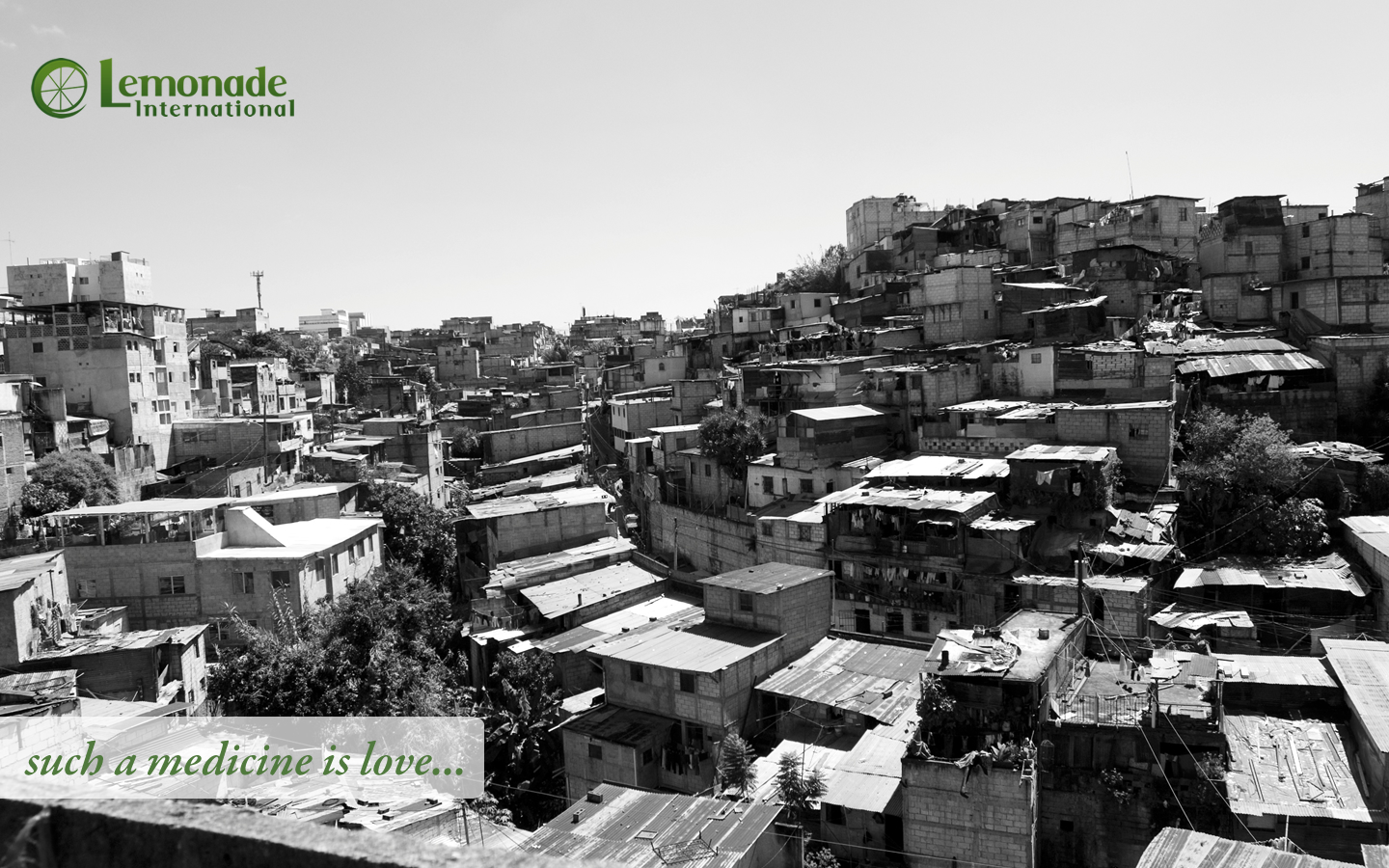
She eventually realized that she was in the neighborhood of La Limonada, nestled in the valley of the shadow of Guatemala City, considered a trash heap by those outside; both the people and the items are considered its waste.
Yesterday, I touched down to begin my week in Guatemala on a blogger’s trip with Lemonade International, a non-profit development organization doing work in a particular called La Limonada.
This community of La Limonada is the largest slum community in Central America. After the 36-year-long Guatemalan Civil War began (due to an American coup to overthrow their leader), many, many children and women lost their fathers and husbands to fighting, leaving this huge community of hurting people. Many, many of the refugees ended up in La Limonada.
This community is a 1-mile long stretch that is a half-mile wide and straddles a ravine. 60,000 to 100,000 people live there. It is considered a “red zone” by Guatemala, meaning that deliveries, police, and most outsiders in general don’t go in there. In the boundaries of the “zones” of Guatemala City, La Limonada is between two different zones–it doesn’t even have a place in the official boundaries of the city.
It’s literally been abandoned and marginalized by the very nation in which it resides. Continue reading →
Next week I head to Guatemala for the Lemonade International Blogger’s Trip. Having been introduced to this organization, I’ve been following their blog closely, trying to get to know them more and more.
A couple of days ago, they posted about a tragic loss. A member of their school, Herber Giovanni Sandoval, died a couple of days ago at the age of 17. In the conclusion of their post, they said this:
“We are especially grateful to the youth group at Lifepointe Church in Raleigh, NC for sponsoring him while he was still attending the Limón Academy.”
I immediately had the image of the youth group kids or sunday school class at that church who probably spent years following the story of Herber. I wondered how they would feel and respond to this news. How would the leaders help them process this? Would it impact the kids at all or would they be too removed from it? Continue reading →
This week’s WordPress Photo theme is “Color“. Rather than simply writing about different pictures I’ve taken, I’m instead trying to write “photo sermons” based on these topics. In these posts, I want to try and use the photo itself as my “text”–trying to see how God reveals himself in his “other” book, in addition to the Bible.
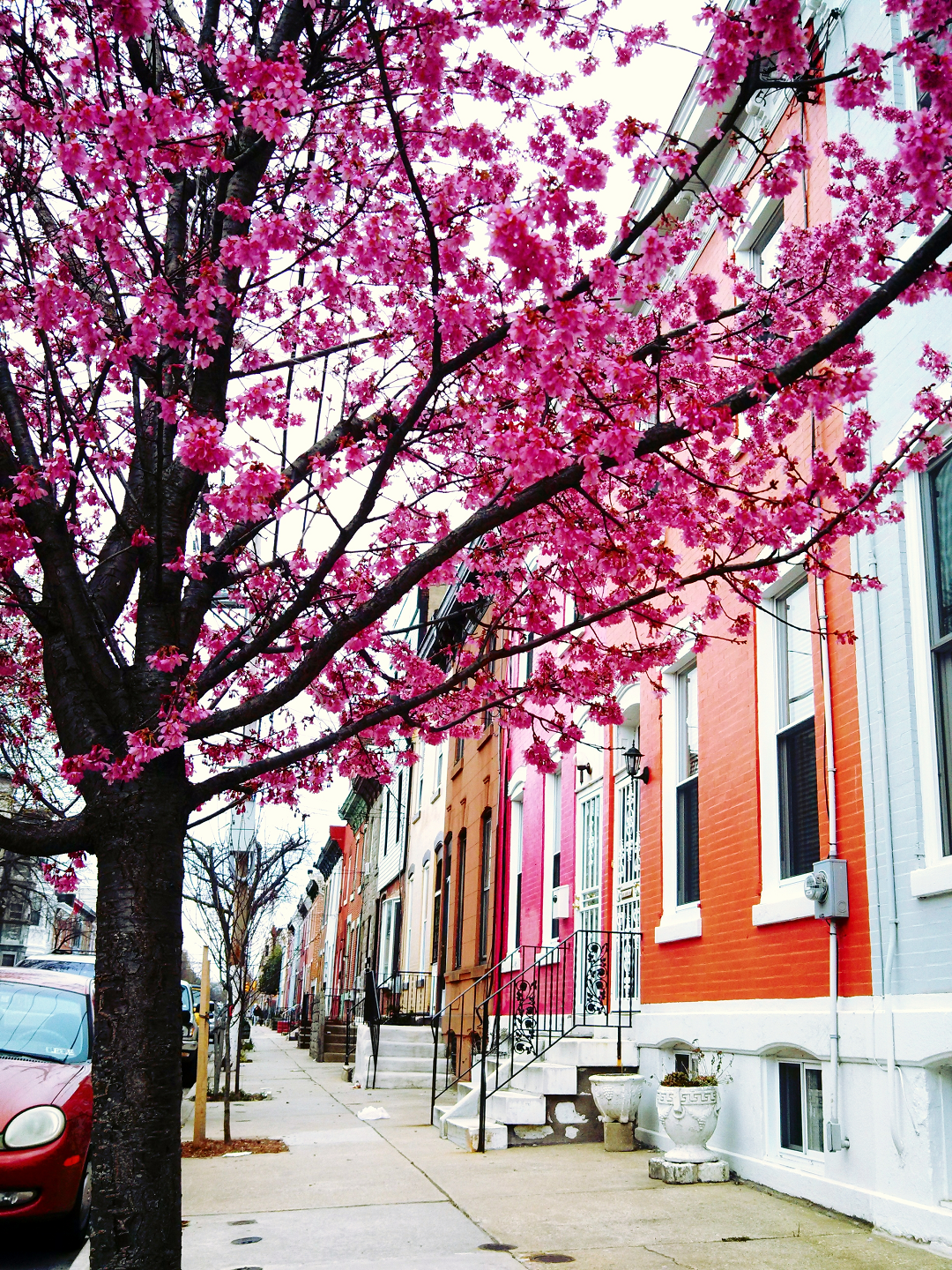
In our last photo sermon, I talked about how I love that Easter comes around Spring time and so the natural world beautifully reflects the spiritual truth being celebrated. Also in line with this truth is the fact that Easter–just like Spring–is not just one day–it’s an entire season in the Church calendar.
It takes time for beauty and truth to get into and blossom within our souls. It takes preparation and anticipation for the roots of our hearts to quicken like the trees around us–to feel life coursing in them once more.
This is beautiful. And it doesn’t need to be this way. Continue reading →
In Christian theology, there is a seemingly small thing that really influences so much of one’s theological outlook and even how they think they should live as a Christian.
Are you “Team Cross” or “Team Resurrection”?
Yeah, yeah, I know that the right answer is “both”, but really, most people tend to emphasize one more than the other.
What got me thinking about this was a Facebook post I saw on Easter evening. The poster said that the Resurrection was not when Jesus conquered sin and death. Instead, Jesus did that on the Cross, and the Resurrection was “simply” the “validation” of what Jesus did.
In other words, all that Jesus came to accomplish was done on Good Friday. God the Father saw it, thought it was awesome, so he went ahead and raised Jesus on Sunday.
In other other words, if the Resurrection never happened, nothing “essential” to salvation would be lost, merely the “proof” that it had been accomplished.
It really stuck with me, and no matter how much I tried to re-articulate it in my mind, give him the benefit of the doubt, or pick apart my own presuppositions, I really couldn’t shake how strongly I disagreed with this statement.
Happy Easter! Let me greet all of you with the same Easter greeting that has been offered by generations upon generations of Christians before:
Alleluia, Christ is risen!
(And you respond with:)
Christ is risen indeed, Alleluia!
Now I don’t know how many of you have grown up saying that or have eventually settled into traditions that do, but I wonder how many of us have noticed the grammar of that statement. Why has it never said, “Alleluia, Christ rose”, or “Alleluia, Christ has risen”?
There is an extremely important and immensely practical aspect of the Resurrection that, as I’ve moved in more and more church circles, I’ve realized has either become de-emphasized, forgotten, or never known in the first place:
Today, I’m really proud to make available the all new Easter Mixtape for this year. It’s a completely new batch of songs, none of which have been on any of my past mixtapes. I’ve been working on this one for a while. I hope it’s able to help you engage in this Easter season. Just like the past Mixtapes, it’s free to stream, download, and share.
To also serve you in this time, be sure to check out last year’s Easter Volume 1 Mixtape, the Easter readings in my church’s Lent 2013 Prayerbook (pdf), as well as other Lent posts on this site.
[I wrote this after my grandfather died in 2010 after a long battle with throat cancer. It really affected me, and I wrote this to redeem this moment for him and me. You’ll find a recording of the song below. It’s simply a piece of cathartic lament in light of pain, and is not meant to be “high art”.]
I here your footsteps coming
The floorboards they scream
I pray to my Father
to wake from this dream
I’m tired, so tired
when will this end?
I’m tired, so tired
Your strength, won’t you lend?
Oh Death, here is your sting Oh Death, I hear your voice ring Through echoes and ages and days gone past
Oh Death, here is your sting
This breath, you can take it
This body, is yours
This voice you have stolen
My eyes are now dim.
Oh this sweetness you’ve taken
I taste life no more
This life, I release now
But this love you can’t have!
But I’ll rise….
But I’ll rise…
I’ll awake from this nightmare as daylight draws nigh
The tension of ages breaks before my eye
This breath I’ll take back. This life will be His.
That body, you can keep; I’ll get a new one from him
Like daybreak it’s new and as strong as fired steel
The demon like dew is gone, ’cause I am healed.
His vict’ry now better: of this conquest we’ll sing
Your vict’ry now bitter:you will taste it’s last sting.
Because…
Oh Death, you’ll taste your last sting Oh Death, I’ll hear your voice scream Through echoes and ages and days gone past
Oh Death, here is your sting.
Oh Death….
taste it and weep,
for oh Death,
I no longer sleep.
Because, Oh Death,
I’m no longer thine;
And, Oh Death,
The vic’try’s now mine.
[read my other Holy Day poetry here] all writings licensed:
Pierced
Not of flesh nor will of man
But of heart by will of Him
Walking weary and steering stares
Casting glances and lots to those who do
Whispers spoken from around
Make silent the shouts cast from within
And above
Because deep within a shot was cast and burrowed in the bow
The fine line of ecstasy and horror homoousion‘d among
And within
For obedience was found on worthy lips, blessing bestowed for ages come
And this joy was found as a bell in the mist
Meaning: it was not
Continuing WordPress’ uncanny timing of photo challenges with the Christian Church calendar, this week’s theme is “Future-Tense“. In essence, they’re wanting pictures that anticipate something to come; something that’s being waited for; some future thing who’s presence is felt in the picture, even in its absence.
This is most appropriate today, as it’s Palm Sunday of 2013.
It takes some real significance for an event from the Bible to find itself as a major Church Holiday. Considering that, it can be odd that Palm Sunday is one of these: there’s nothing really unprecedented or special about it in and of itself.
There are other places in the gospels where Jesus is proclaimed king, proclaimed Messiah, prophecies are fulfilled, large groups believe in him, and even several times he enters Jerusalem. So what’s so special about this moment?
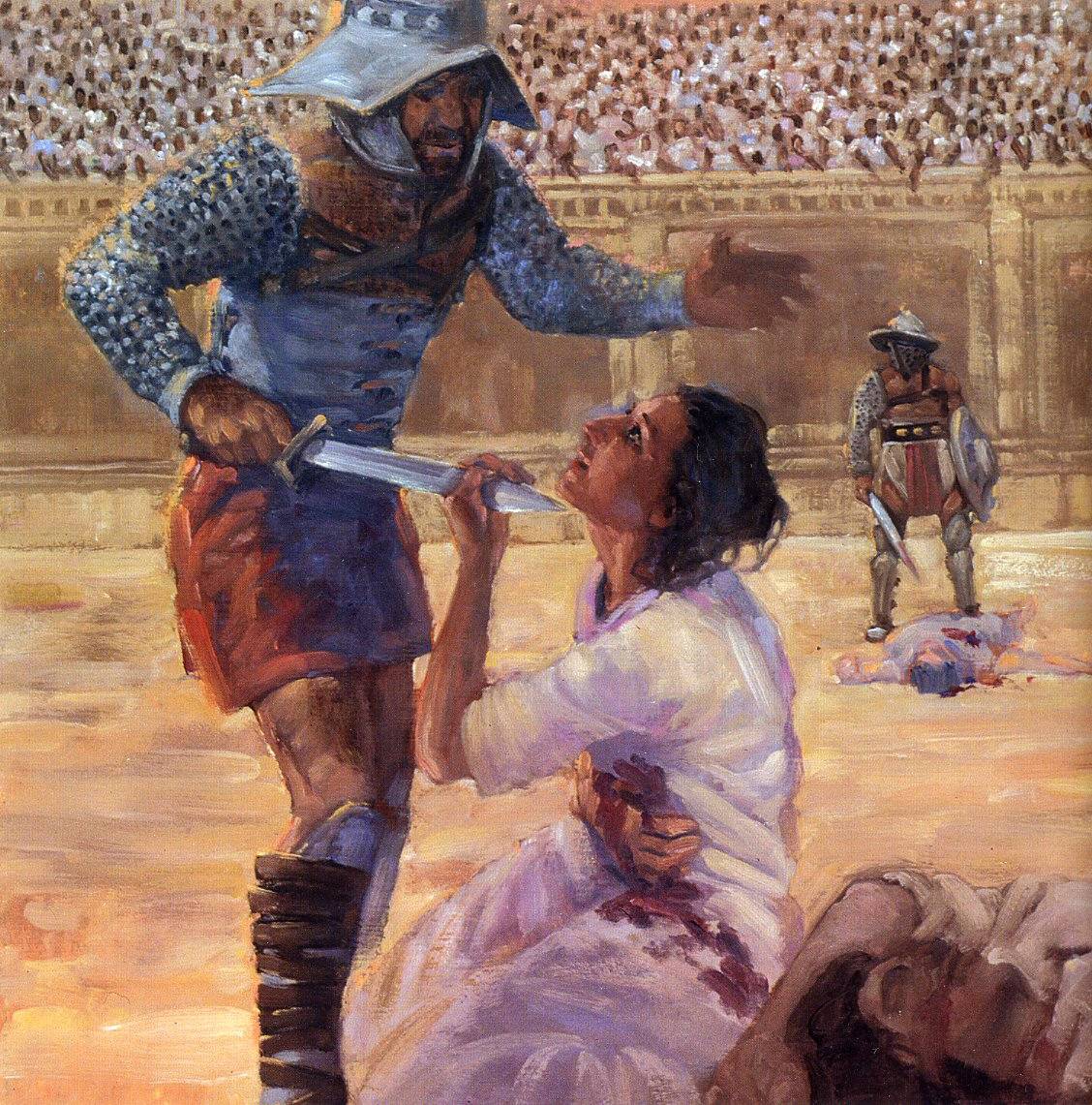
In my last post in our series on Women and the Church, I mentioned a young girl named Perpetua, who was martyred in Carthage in about 202 or 203 CE. Her prison diary, written in the days leading to her public and violent death, is still the earliest known piece of Christian writing we have by a female. She was 22-years old when she died.
And so, as we head into Palm Sunday weekend, I thought I’d share this work of hers with you. It is a stunning, beautiful, and passionate work.
The bulk of her diary consists of her father trying to convince her to abandon Christianity, as well as her visions and dreams she has to encourage the other prisoners around her. As she is sent off to die, she entrusts the diary to an unnamed individual who picks up the story from there and describes her dramatic death. This individual also added a brief introductory paragraph.
I hope and pray that the example and visions of Perpetua will speak deeply to us, in the midst of our own pain, weakness, and sorrow.
When it comes to talking about Repentance, there are few favorite passages to study than Psalm 51. As part of this year’s Lent series on Repentance, I’d like to spend the rest of this series exploring this Psalm verse-by-verse.
So today we begin. But not with verse 1. Instead we begin with that superscription found above it:
To the choirmaster. A Psalm of David, when Nathan the prophet went to him, after he had gone in to Bathsheba.
This is actually an important place to start. Most of the Hebrew writings we have outside of the Old Testament are pieces that were written to fill in gaps left in the biblical account. It seems the people of God have always had difficulties living with what God did not tell them.
The past couple of days, we’ve been talking about the historical development of this whole “Women in Church Leadership” idea. in the first post, we talked about why this is so important, and in the second post, we discussed where this change in ideas concerning ordained female leadership happened. Today, let’s talk Reformation and concluding thoughts.
There has been no leader in the Reformed community who has spoke up for the victims of sexual abuse in SGM. Not one. No Reformed leader has nailed their horror or concern to the door. The heirs of Luther who railed against the abuse of indulgences are silent on the abuse of women and children. Those who would die on the hill of complimentarianism have ceded the moral ground to the ladies of The Wartburg Watch and Julie Ann Smith. Those who decry the power of the Roman church wield its echo.
Is there no man with a ready hammer and nail willing to heave his weight and influence into the silence? All of the gospel-hyphenated books may become millstones before all is said and done.
What if it was you?
Or worse. Your child.
They will not list away from Orthodoxy because of Rob Bell so…