Advent & Politics: The Government is on His Shoulders


laureti-triumph-christianity-pagan-statue

This Advent season, we’re seeing how the Advent event affects parts of our lives that we usually don’t associate with this time. You can follow the series here.

The book of Isaiah is a minefield for biblical studies, mainly because of the development it seems its contents went through to get to its final form. It appears to be a strange stitching together of many writings, perhaps by many people, for several different purposes. But in all of its complexity and mystery, there is one theme that it consistently holds throughout its contents: politics. The political movements of the nation of Israel and the nations around it–and God’s movement in and through all of it–occupy most every chapter of the book.

Interestingly, this is also where many of the most dramatic and explicit messianic prophecies are found–specifically Advent prophecies. When telling the Christmas story, the gospels quote Isaiah (I believe) more than any other Old Testament book. Images of virgins, Emmanuel, Davidic lineage, “roots of Jesse”, and John’s “voice crying in the wilderness” all find their source here.

There seems to be an intimate connection between politics and Advent.
Continue reading

Herman Bavinck on the Advent Incarnation


The doctrine of Christ is not the starting point, but it certainly is the central point of the whole system of dogmatics. All other dogmas either prepare for it or are inferred from it. In it, as the heart of dogmatics, pulses the whole of the religious-ethical life of Christianity. It is ‘the mystery of godliness’ (1 Tim. 3:16). From this mystery all Christology has to proceed. If, however, Christ is the incarnate Word, then the incarnation is the central fact of the entire history of the world; then, too, it must have been prepared from before the ages and have its effects throughout eternity…the incarnation is not an incidental decree that emerged later: it was decided and determined from eternity. There was not time when the Son did not exist; there was also no time when the Son did not know he would assume and when he was not prepared to assume the human nature from the fallen race of Adam. The incarnation was prepared from eternity; it does not rest in the essence of God but in the person. It is not a necessity as in pantheism, but neither is it arbitrary or accidental as in Pelagianism.

Reformed Dogmatics, Vol. 3, pp. 274; 276-277 (found this by way of friend-of-the-blog Austin Ricketts)

Welcome to Advent, 2012.


This Sunday marks the first Sunday of Advent. This is the New Year’s Day of the Christian Church Calendar. It’s the season in which we celebrate and meditate upon the “Advent” (latin for “Coming”) of Jesus into the world in the Incarnation. This season begins this Sunday and lasts until Christmas.

In this time, we stare deeply into the reality that the Creator God of the universe came into human form by way of human birth.

The season is marked (as with every Church season) with a profound tension. We meditate on the darkness into which Christ entered the world, as well as the light he brought in his Coming. Advent is a time that we sit in the tension of past, present, and future, and see how this most-differentiating belief of Christianity has profound implications on these places in time, and indeed, the whole of human life and experience.

This is why, for this year’s Advent, I’ll be doing a series meditating on how Advent affects seemingly unrelated parts of human life: art, politics, sexuality, singlenesswomen’s ordination, social justice, Evolution, suffering, humor, the city, and more.

There are several other ways you can engage in this season:
Continue reading

N.T. Wright: Egalitarianism isn’t “progressive”; it’s biblical. Others object.


The Rt Revd N T (Tom) Wright delivering the Ja...Alas, due to my obsessive commitment to not let blogging get in the way of the relationships in my life, my promised post on the historical context of 1 Timothy will not be coming today (and may have to wait until next week). Instead, as part of this ongoing series, today I’d like to offer to all of you an excellent Op-ed that biblical scholar N.T. Wright posted in The Times of London (copublished here).

Last week, the Church of England voted not to allow any female bishops (though they have, for some time, allowed female priests). Prime Minister David Cameron bemoaned this, telling the Church they needed to “get with the programme” and ordain women bishops because that’s just where the world is right now, apparently. (This issue is also causing other political problems for the Church.)

Wright, who supports female bishops wrote the Op-Ed blasting Cameron for encouraging the Church to “get with the times”, saying that that is never a reason why the Church should do anything. He continues, blasting the idea of naive “progressivism” that has dominated monder thought.

Instead, he says, the Church should ordain female bishops because it’s biblical, not because it’s “cool” or “progressive”. He goes on to say that appealing to the culture does damage to the truth that it is biblical, and reinforces the patently false idea that those that oppose female ordination are the ones reading Scripture “literally” and “faithfully” while egalitarians are only listening to “culture”.

The Op-ed is brief, snarky, and powerful. Needless to say, it garned some thoughts from conservatives on this side of the pond. Doug Wilson did not just one, but two posts on it, and Denny Burke also wrote against it. The Internet Monk then brilliantly deconstructed their responses.

And so, I give you these men (why is it always men!) to read and discuss in the space below. Have fun.

Two quick questions for all you complementarians out there….


I’m still in the process of writing my first post on a specific text (1 Timothy 2:8-15). It’s not done yet (I chose to have an amazing of night full of wings and really good friends instead of writing it).

Because of the impending holiday weekend and the travel days that it entails, I’ll probably be putting that one up on Monday (sorry to get everyone fired up just to drop you for almost a week), but in the meantime, I wanted to solicit some help from my more conservative friends out there (also usually called “complementarians“) on a couple of questions I’ve had during this on-going series on Women in the Church. First:

Under a complementarian view, what would the traits of a failed husband in this respect look like? In other words, what does a “feminine” husband look like? Does that look anything like the way you think women are supposed to act in the home?

What I’m getting at is this: when I think of these answers (on both extremes), I think of terms like “weak, passive, indecisive, silent, not-present, abusive, exploitative, manipulative, and aggressive”.
Continue reading

Weekly Photo Challenge: Renewal


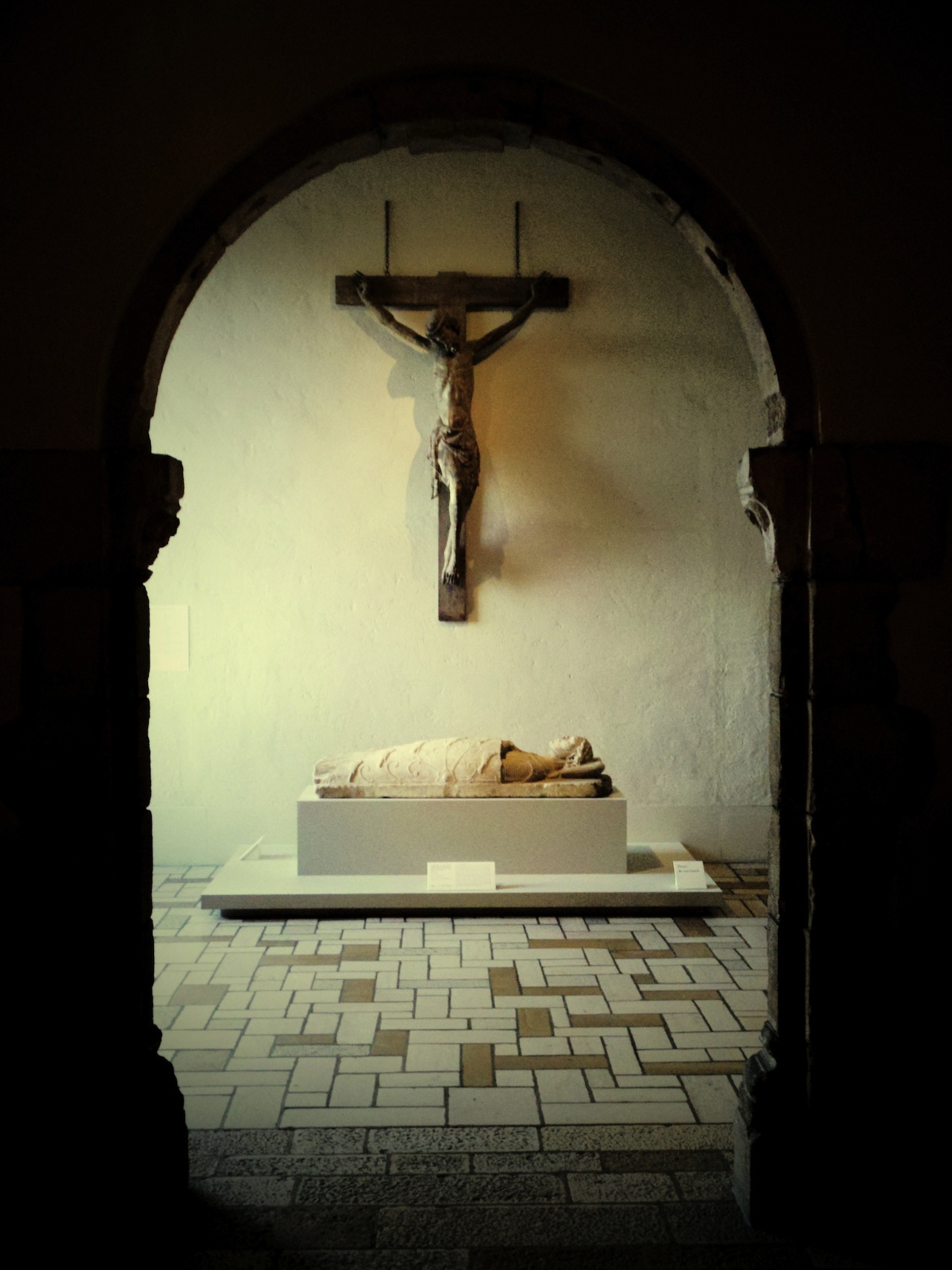
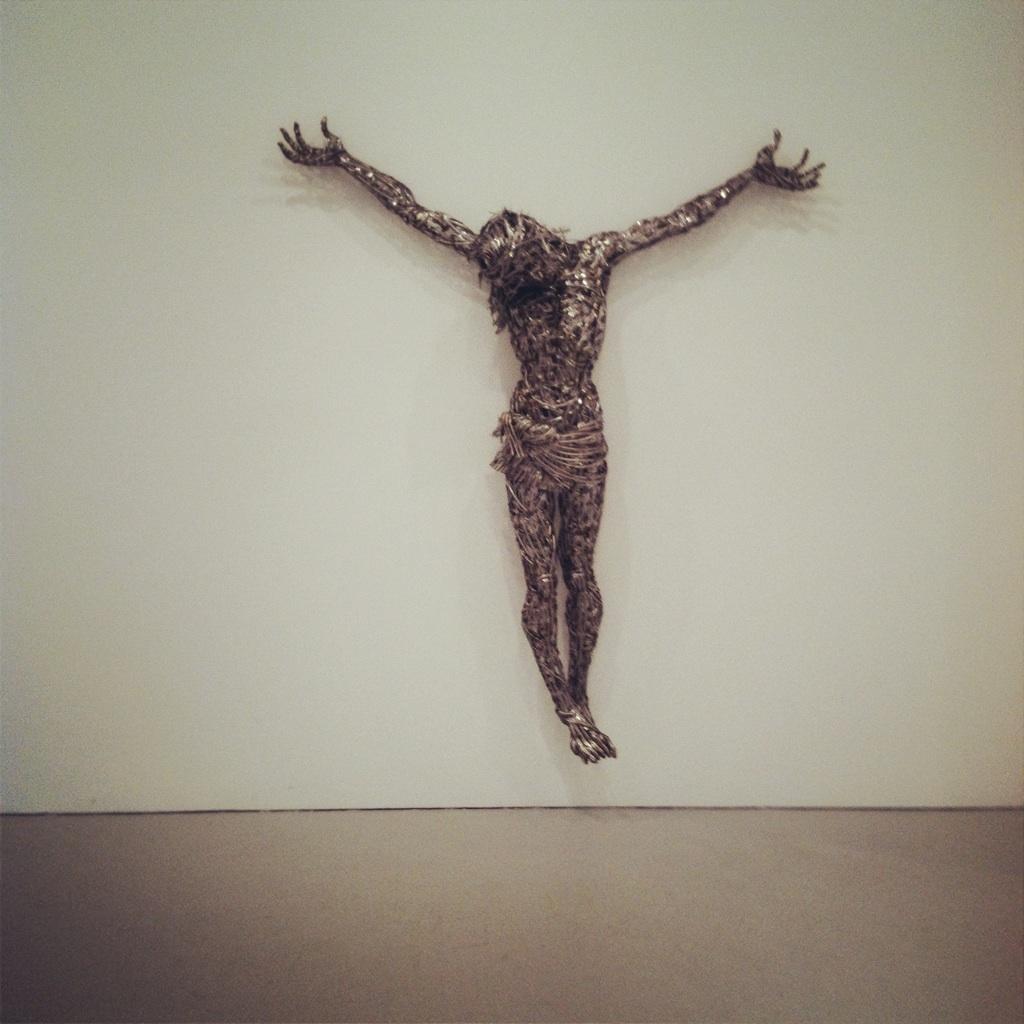
This week’s WordPress Weekly Photo Challenge theme is “Renewal“.  This here is a picture of one of my favorite rooms in the Philadelphia Museum of Art. It’s in the medieval art section (a section which, as I’ve written before, carries much significance to my soul).

I still remember the first time I turned the corner and saw this crucifix on the wall. It’s crude, yet so beautiful. It faces another, dimly-lit room in which there is a medieval-era altar on which there was taken countless pieces of Eucharist.

The last time I was at the museum, though, I noticed a bit of symbolism I’d never noticed (and I have no idea why). This crucifix is positioned above a 13th-century knight’s tomb effigy. After spending some time in reflection near the aforementioned altar, I looked back through the arch and for the first time noticed that the gaze of the dying Christ seemed to be settling not on the museum passer-bys, but on the effigy of the dead knight before him.

The Christ’s gaze of sadness and pity no longer seemed to be for his own sufferings, but for the death and suffering of this one that lay before him. This gaze seemed to carry with it not only sadness, but also a stoic confidence that through this act, he would bring an end to this knight’s sleep.

Through this act of loss and sadness, here is a picture now of rebirth and renewal, made all the more meaningful as I took this picture from the steps of that altar, bathed in darkness, on which was consecrated and served Christ’s body, broken for our renewal and light–then, and today.

See my past Weekly Photo Challenges here.

___________________________

Continue reading

Prodigal, Let’s Go Home {pt.2} [GUEST POST]


Yesterday, I posted Austin’s first part to this final(?) reply to a series of discussions we’ve been having on the place of suffering and Evil in the world and the Nature of God. See that post for more background and links to the previous posts. I’ll have a few disparate thoughts about this whole exchange to share with all of you next week to close us out. Here, in this post, Austin sees right through much of my thinking to get at the root assumptions behind it. He also responds to five premises to my thinking that I laid out in my own last post.

_______________________

In all that I’ve written in all of these posts, it should be obvious that I believe stories to be of the utmost value. But I have to be clear that Story, if it is a metaphor for God, is but one metaphor among many. And I thank Paul for mentioning something along these lines. I’m not quite sure that I understand Paul’s notion of Story in enough detail. There are a few things that I do think need to be critiqued, if I have understood them correctly.
Continue reading

Prodigal, Let’s Go Home {pt.1} [GUEST POST]


This is Austin’s final response to a conversation we’ve been having on the blog concerning the Nature of God and Evil in the world–I know: light stuff, right? Here are the relavant links, if you’re interested: I wrote a post mentioning God taking death onto his own self; Austin took issue with this; I replied with a full-on development of the idea that God’s Nature is like an unfolding narrative–one in which there is Evil and Death; Austin responded by critiquing some of my Bible interpretation; I then wrote two posts, one responding to his response, and one telling of my fears that I’m wrong (where I also quote the James Joyce book Austin references below, as well as list out my 5 main premises for my thoughts he responds to here). This post is Austin’s final words on this (or part 1 of those words, at least). I’ll have a few concluding thoughts next week.

_______________________

Is then the whole of life only a contradiction; can love not explain it, but only make it more difficult? That thought he could not endure; he must seek a way out. There must be something wrong with his love.

—Kierkegaard, The Expectation of Faith

I, like Paul, am one who has been deeply affected by Joyce’s story. That story, A Portrait of the Artist as a Young Man, is really the central struggle of my life: Artist or Theologian? Much in that book, including the scene that Paul elaborated in his response, continues to resonate in the sometimes hollow-feeling caverns of my mind. “I shall never swing the thurible…the oils of ordination shall never touch my head.” Those words wounded me and have stayed with me like a scar, long after their initial cut. I, too, am often much afraid.

Like Jacob, I wrestle with God. Israel indeed.
Continue reading

Why even being open to attacking Iran is stupid & counter-productive [QUOTE]


Iranian dissident Akbar Ganji, imprisoned for six years for writing articles accusing Iran of ordering political assassinations (from an interview quoted in All The Shah’s Men by Stephen Kinzer):

The Iranian state is certainly guilty of violating manv of its citizens’ basic rights…. But a military attack is not a just or effective response…. An attack would be calamitous for the innocent people of Iran and the region…. It would foster the growth of fundamentalism in the region [and] reignite the conviction that the Judeo-Christian West, led by the United States, is assaulting the world of Islam, from Afghanistan and Palestine to Iraq and Iran…. The current U.S. military threat has given the Iranian government a freer hand in repressing Iran’s budding civil society in the name of national security, and so eclipsed democratic discourse that some Iranian reformists see themselves caught between domestic despotism and foreign invasion. Political change in Iran is necessary, but it cannot be achieved by foreign intervention….

Most Iranians, I believe, share a broad outlook on American foreign policy…. They think that Iran is valued only for its vast energy resources and its role in regional politics, and that Iranian culture and economic development, and the peace, welfare and basic rights of Iranian citizens, are largely irrelevant to American policymakers….

Iranians will never forget the 1953 U.S.-supported coup that toppled the nationalist, moderate, democratic government of Dr. Mohammad Mossadegh and ushered in a closed, dictatorial political system. Iranian society lost one of its most important historical opportunities for the establishment of a democracy [because of these past U.S. interventions].

Hope of the Earth: a political eschatology (we can all breathe)


November 7th, we will wake up to front pages declaring with finality the results of the American Presidential Election. Most of us will see these headlines and have some sort of emotional reaction (especially those of us that stayed up as late as we could to know the results early).

Depression? Fear? Anger? Injustice? Sadness? Joy? Elation? Ecstasy? Worship? Peace?

I remember after the 2004 election when Bush beat Kerry. Going to a large, urban University dominated by idealistic and passionate liberal youth, the campus was in mourning for the rest of that week. People walked in silence, hugged one another, and I saw a good number of people crying as they resigned themselves to what they felt would be the end of every good thing they’d ever thought about this country.

This election cycle, I was certainly active–probably more so than ever before (especially on this blog, at least). I’m almost certain that I have been blocked from my fair share of Facebook feeds and removed from some feed readers in the past six months or so. I’ve been quite passionate on those few issues that have guided so much of my writing and reading.

But I haven’t lost a bit of sleep over any of that stuff. I’ve been able to enjoy good books and beers, and pipes and peers, without any discussion of politics or debates or elections.
Continue reading

A “vagina” & minor theological disagreement is going to keep a good book off of a Christian bookstore’s shelves


Just look at that smile. Doesn’t seem like the face of someone that wants to destroy Christianity, does it? Well, some would disagree, and one Christian bookstore wants to protect us from her.

One of the best voices in contemporary Evangelicalism today is Rachel Held Evans. She writes about many things, but a major part of her writing–and the topic of her most recent book A Year of Biblical Womanhood: How a Liberated Woman Found Herself Sitting on Her Roof, Covering Her Head, and Calling Her Husband “Master”–is the place of woman in Christian homes and churches.
Continue reading

Evil & God {2}: I’m a Heretic, I Fear


This is my final post in a discussion I’ve been having with a very good friend of mine, Austin Ricketts, about the relation of Evil to the Nature of God. For more on the background of this discussion, see  Part 1 of this reply, although you should be able to gather a good idea of the conversation from this post. After this, I’ll let Austin have the last word, if he’d like.

Pressing into the Story of God’s Nature

I’ve been saying that God’s Nature is not static, but, just like us humans, it’s like a Story, unfolding in time (click here for more). Further, it’s a Story that includes Evil and Death within in. Hopefully I can clarify some points all the more by drawing out the “Story” metaphor further (because, at the end of the day, that’s all this whole “Narrative” framework is).

When I write a story about redemption and healing, I include evil in that story–evil that ends up being resolved and healed in the end. The thought of that evil (whatever it may be) is borne from my mind and existence. Just because the thought of that evil has “existed” in my mind, does not, however, make me evil.
Continue reading

Evil & God {1}: a refutation’s refute


Update: Part 2 of this post is up.

Last week, I wrote a post about being overwhelmed by God’s beauty in Western Pennsylvania. In it, I talked of the beautiful paradox of a God who would incorporate within his own divine life both Beauty and Suffering. My good friend (and huge theological influence) Austin Ricketts (who’s written on this blog beforetook issue with these statements, saying that he fears that they lead to making God the author of Sin and Evil. I wrote a reply to his comments in which I asked whether the very nature of God might be “narratival” and unfold over the course of history, and perhaps suffering and even Evil itself are “motifs” or “themes” in that “Storied Essence” of God–a story that eventually does away with these things. He wrote a reply in which he countered some of my views on revelation and some biblical texts.

Here, in the two parts of this post, I plan on (1) responding to Austin’s refutation, and (2) writing up some final thoughts (and fears) on my end. I’ll leave the final word to Austin if he so desires. Feel free to also chime in with your own thoughts if you like!
Continue reading

Evil & the Essence of God {2}: a storied solution?


Updates: Austin has replied to this post with his own thoughts. I have also edited this post to correct some of my incorrect Hebrew grammar Austin pointed out.

Earlier, I posted some comments that my good friend (and occasional contributor to this blog) Austin Ricketts wrote on my post yesterday about the relationship between evil, beauty, and the nature of God. Read those words if you would like his beautiful and articulate wrestling with this idea. Here is my response.

At some point in their lives, most people face the question: Can God stop this suffering? If not, is he God? If he can, but doesn’t, what kind of God is he?

Most of the time, attempts to push this question to a solid conclusion lead to unfortunate results. Many have abandoned God altogether over this, and still others, who maintain their faith, end up doing the mental gymnastics only to end up in positions entirely foreign to the Bible or that are even more illogical than when you began.

Here’s my attempt at a response, fully aware of the dangers that come with doing so. Please be gracious. Please reply. Point out my heresies, And please allow me the room to change my mind later on.

Continue reading

Evil & the Essence of God {1}: the discussion


Update: Part 2 is now up.

Yesterday, I wrote some meditations on the world’s suffering and evil in light of the incredible Beauty I saw this past weekend on a trip to western Pennsylvania. One of my very best friends, Austin (who’s written for this site before), appreciated the post but had some thoughts on some of the theological implications of my thinking, and talked about where/how he differed. I love his mind (and his heart), and I see where he’s coming from, but it’s a place I can’t go. I want to offer you all his comment, and then my perspective on all of this, hoping to offer all of you some things to think about and a space to discuss anything that strikes you as off.

Continue reading