Christianity: paradox & Paradise, fall & Fall


I had the privilege of spending a long weekend these past few days in western Pennsylvania under the kindness and hospitality of my girlfriend and her family. It’s a place that is hard to describe without falling into cliches of big sky, clear air, and bright stars. It’s near the area that Johann Jacob Burkhardt, my first ancestor in America, settled in 1754 after sailing from Germany and landing in Philadelphia exactly a week ago today. I made almost the exact same trek as Johann and his family, from the rivers of Philly to the rural countryside of unsettled Pennsylvania.

Strangely, in the rest of Pennsylvania that I have seen, the trees are still mostly green and just starting to turn for the Fall. But here, this weekend marked the peak of that beautiful transition. The pictures above and below should testify to this (click them for larger versions). They were taken only a couple of days ago–with my phone (fun fact: the picture directly above this text was taken from Mt. David, the highest point in Pennsylvania).

I can’t express to you the beauty my eyes and soul were able to behold.
Continue reading

Let’s (TED) talk about porn & Struthers’ “Wired For Intimacy” [REVIEW]


Earlier this year, I read William Struthers’ book Wired For Intimacy: How Pornography Hijacks the Male Brain. It was an amazing book and I learned much from it (and I encourage anyone to read it, male or female).

One justified criticism, however, that I have heard about this book is that it doesn’t quite speak to the questions that many would naturally bring to such a book. It’s separated into two parts: the first is theory, the second is application and implications.

This is all well and fine, except the first part is extremely clinical and tries really hard to be a casual observer to the effects of pornography. This results in a whole lot of the minutiae of various hormones and chemicals in the brain and what happens to them and why. But, there’s no context as to why (or whether) any of these effects are necessarily bad or harmful. It merely describes various chemicals and brain structures and how pornography is received and processed, but in his attempt at neutrality and avoiding value-judgments, he ends up creating at atmosphere in which the reader continually thinks “okay, so what?”.
Continue reading

The Atlantic gets it right on Obama’s civil liberties abuses & the value of your vote


Yesterday, Conor Friedersdorf (Twitter) wrote an amazing piece for The Atlantic in which he explains why–no matter how liberal he is–he is not voting for President Obama. He writes:
Sometimes a policy is so reckless or immoral that supporting its backer as “the lesser of two evils” is unacceptable. If enough people start refusing to support any candidate who needlessly terrorizes innocents, perpetrates radical assaults on civil liberties, goes to war without Congress, or persecutes whistleblowers, among other misdeeds, post-9/11 excesses will be reined in.

I found this link on Facebook through J.R.D. Kirk. I absolutely agree with every word of this post. I shared it to my own Facebook wall, and….wow…I got some major pushback, mainly over my inclination to vote for a third-party candidate. People through around the same phrases I’ve heard the past few weeks about “wasting my vote” and “throwing it away” and “de-valuing it”. I found this odd for a few reasons.
Continue reading

Atheist: A Biography | {story#18}


This is an original fiction piece posted for StoryADay September. It’s a long one, so for your convenience, you can also read this story in PDFKindle, or EPUB formats. Read more about StoryADay & follow here.
________________________________

Luke was born into a moderately religious household. His family spent each Sunday morning rushing around the house amid a flurry of curses and arguments trying to get everyone ready for the Sunday School and service at the large Baptist church down the street. When Luke was older, he also went to the Wednesday night youth group this church had. But outside of that, religion wasn’t any great percentage of his day-to-day life. His parents never prayed before meals, there was no religious paraphernalia around the house, and the most frequent invocation of God was in front of the phrase “damn it”.

There was one time, though, that for some reason, Luke remembered his entire life. During one period when he was about 6 or 7, when his parents were fighting a lot, Luke found himself needing his father for something shortly after a particularly loud argument had concluded. His mother was in the washroom, loudly banging the doors to the washer and dryer as she changed loads. Luke walked into his parent’s bedroom and found his father on his knees beside the bed, knuckles clasped as if he would die should he let go, muttering quiet pleas within breaths taken between violent sobs. Luke stood there wordless for about 30 seconds watching this, until his presence was felt by his father. His father looked up and saw Luke staring at him with wide eyes.
Continue reading

Communion | {story#15}


This is an original fiction piece written for StoryADay September. Read more & follow here.
________________________________

You ever tried to get your cry on, only to move your mouth and stretch you lips and squint your eyes, and squeeze your body, only to have nothing come out? Ever feel the cold concrete ground against your still head, only to imagine how it would feel to come against it with force? To watch the gray grow increasingly red with your own blood? The blood just came out of her in spurts. She wouldn’t die. She wouldn’t die. Possessed by Beelzebub, she worships the wheel, the wheel she worships. She’s a witch, I tell you–a witch. She gave the boy a poisoned orange and snatched it away from him. She wants him to die. I did it for him. I did it for him. I love him. The boy, I love. She says she loves me. She loves me not. She loves me. She loves me not. She loves me. How did she keep walking? Like Jesus on water, except the water was red and all over her she walked and walked. We worship the pig, not the wheel, so Jesus loves us. He loves me. He loves me not. He loves me. He loves me not. The boy, he loves me. He stared at me with wide eyes. I thought he would cry in joy, cry in surprise, cry in freedom, but he just sat. Still. Silent. Mouth-opened. Tears building and building, never breaking the ridge to fall down his cheek. He began shaking. I was trying to cut her mother-fucking head off, but it just wouldn’t go! I told him, I’m doing this for you, buddy! I’m doing this for you! His shaking body told me thank you in response. They kept telling me She wants to kill the boy! She wants to kill the boy! You need to kill her kill her kill her! But the witch inside her kept her alive. Even when I walked to her sister’s house, she followed me–still walking!–like a monster and followed me, the blood falling out of her in sheets–laughing at me, staring at me, touching me and punching me. My hands were slippery and then became sticky, like honey. Sweet honey. I saw a deer outside my window last night. It was beautiful. Through the cut concrete I stared, and stared, for years and years. The deer moved so slowly around the fence. It’s eyes were green. Envy. Jealousy. It wanted to be me, to be inside of me. I won’t let it. It can’t be inside me and fuck me. As I laid on her back bringing down the judgment, I remembered all the times she was on top of me, touching me, breathing in my ear. Killing me. She loves me. She loves me not. She loves me? When I was older I’d punch her. She’d punch back. We’d wrestle and wrestle and I knew she liked it. To feel a touch. To feel something. My cousin was shot last week and is now with Jesus. Jesus loves me, this I know. I worship the pig. She worships the wheel. The boy, I love him. I saved him. I’ll beat this, I will. I’ll go to the Judge and tell him and he will let me free, and give me the boy. And he will be mine. But no, they are corrupt. They know I will conquer them and so they will keep me in here. But I will be freed as on angel’s wings. Jesus wouldn’t do it. I will. I’ve seen the kingdoms of the world, and I can have them all. They’ll give me the boy. And he will be free. He will live. He will prosper. He will love. He will be loved. I love him. I love him not. I love him. I love him not. I love.

________________________________

Creative Commons License
This work by Paul Burkhart is licensed under a Creative Commons Attribution-NonCommercial-NoDerivs 3.0 Unported License.

Awash | {story10}


This is an original fiction piece written for StoryADay September. Read more & follow here.
________________________________

The plates shift in the sink, startling her out of her daydream. Her thoughts had lingered away into thoughts of autumns gone by. She resumes her circular repetition, her hands enjoying the warmth of the water as a cold body enjoys the comfort of bed. The suds feel like velvet across her skin, and as she scratches an itch on her face, it leaves a little tuft of bubbles on her cheek. She feels the pops and tingles, causing her to leave them there for a moment longer than she normally would.

The tomato sauce wipes cleanly from the plate, making this an act of leisure and not a chore. The morning stresses of dressing kids follow the tomato sauce down the drain, leaving only a porcelain plate in porcelain hands. She imagines her heart as porcelain as well.

Porcelain? Yes. Broken? No.
Continue reading

Christians & the Art of Profanities in Art


This post is not a defense of Christians cursing in their everyday lives (I wrote that post a few years ago, though I think at some point I may need to revisit some of what I said there).

This post, rather, is about the merits of Christians creating (or doing) art in which there are profanities (this also has implications on other “worldly” things in art like sex and violence, but they won’t be my main focus today). I’m writing this to prepare some people for the stories I plan on writing for this blog. I talked yesterday about how I’m participating in StoryADay September (Update: I’m done), and hope to post an original, completed fiction story every weekday in September. Concerning that, I wrote:

I will not be doing “Christian art” or “prophetic art” or “evangelistic art” as I write and post here. I will simply be trying to create Beauty in words and character and story in a way that is original, interesting, and stirring.  My stories tend to be rooted in reality as much as possible, and so they will probably include “real” things like sadness, violence, sexuality, cursing, or other things that challenge many Christians’ sensibilities. Know this ahead of time.

Continue reading

Debates with Atheists (And Good News for Them)


Recently, a friend sent me a link inviting me to a debate between a prominent evangelical intellectual and a prominent atheist thinker. It made me remember how I used to eat those sorts of things up when I was in college, and I really appreciated this friend sending it, but at this point in my life, I genuinely had no interest whatsoever.

Eventually, you realize that every debate of this sort goes the exact same way. At some point–without fail– there’s comes a moment when the evangelical says something to which the atheist responds with “well, what proof [or “evidence” or “basis” or “reason”] do you have to make such a claim!”, to which the evangelical responds with something like “well, it’s faith” (or something like that).

And then the debate should end. The fool’s errand of these events has been exposed.

Continue reading

The New Old New Atheism of Simon Critchley & Others


I have noticed, recently, especially with the waning influence (or at least presence) of the “New Atheists” in the public square, that there has been a shift in the tack that Atheists have taken against Christianity in the past year or so.

Philosophical movements generally begin in academia, then find themselves trickling down to the masses as those twenty-something college students that were influenced by these academic discussions now move on into the wider world. Both Atheism and Evangelical Christianity generally find themselves one generation behind in these philosophical developments of the world.

So, for example, when the world was just beginning to move on into “post-modernity” (notwithstanding the functional meaninglessness of such terms at this point), it was the heyday of  Atheistic and Evangelical evidentiary apologetics, representing firm pre-modernist, Enlightenment thought (on both sides). Arguments centered around the very existence of Jesus, fidelity in translation and transmission, Intelligent Design, and the general historical reliability of the Bible.

Continue reading

Visions of Arcadia: the most terrifying art exhibit I’ve ever seen


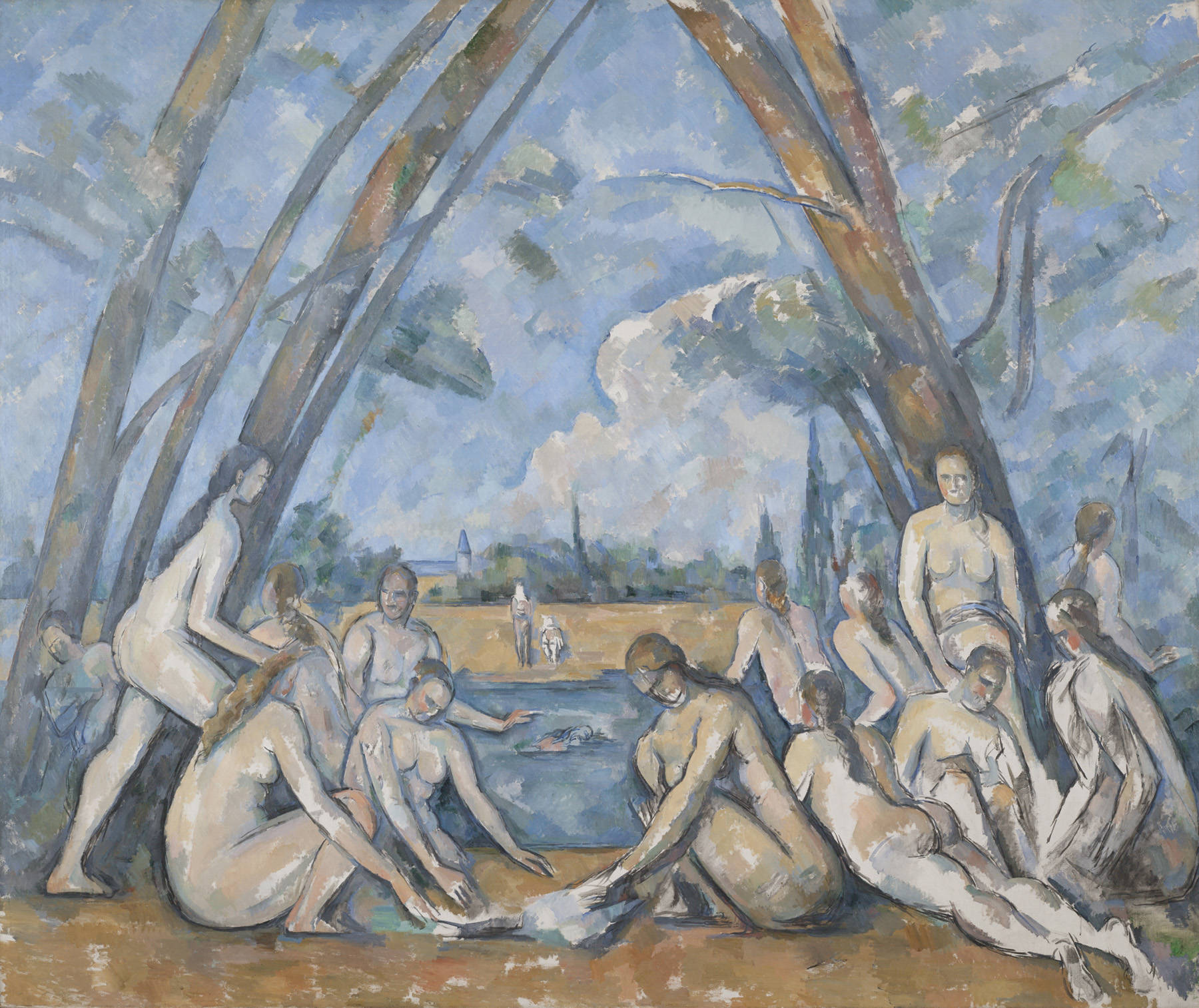
This weekend I had the privilege of seeing the Philadelphia Museum of Art’s new exhibit Gauguin, Cézanne, Matisse: Visions of Arcadia. The exhibit showcases works exploring the idea of “Arcadia“: an idyll pastoral world envisaged in Virgil’s first major poetic work Eclogues where nymphs and fauns dwell alongside Bacchus and Pan; where human dwellers exist in peace, rest, and joy in the natural world.

(To put it simply: you can usually recognize Arcadian themes at work in a piece of art when it has naked people hanging out in nature–usually around rivers.)

This image of Arcadia, having been explored in art epochs in the past, overtook art once more right as modern art was being born, right around the turn of the 20th century. In fact, the exhibit subtly makes the argument that this image of a rural, paradisal ideal is an essential element in modern art’s development. The modernists’ dilemma–the tensions between longing and reality, finding and losing, permanence and transience, human and mythic–all find their embodiment in this Arcadian world.

The exhibit begins with excerpts from Virgil’s poetic treatment of this theme, set beside works that visualized his words. These run along one wall. On the opposing wall of this introductory hallway, there are excerpts from Stéphane Mallarmé’s modernist treatment of Arcadia, L’Apres-midi d’un Faune, accompanied by pen-and-ink drawings from Matisse that visualize his words.

The exhibit is great, but very theoretical. It works subtly and on nuance. It’s not just a bunch of pretty things thrown into a room. Instead it is a thesis–an argument–in visual form. It watches a theme develop from myth to poetry to visual art (and then from Renaissance to modern) and explores how they are all connected and converse with one another. It’s really like no other exhibit to which I’ve ever been. If you get the chance, see it.

But that’s not why I’m writing today.
Continue reading

What do we make of the atrocities of the Old Testament?


This is a slightly edited version of an excursus I wrote in this week’s notes for the Bible Survey Class I’ve been teaching at my church. Follow that link for more information on the class. Also, I’m well-aware that the second half of this is exactly the “angle” talked about in the venerable Pete Enns’ recent blog post. I wrote this before he posted that, but still, I wanted to put it up on the off-chance this articulation might be helpful to others.

In the books of Numbers and Joshua, God commands the Israelites to commit genocide on many different people, including their women and children. He also commands them to forcibly enslave others. And in still another story, he commands Moses to take the remaining virgins of this particular people of which they disobediently did not kill all, and divide them evenly among the soldiers and the “rest of the Israelites”. We can only imagine what for.

A few quick thoughts:

Continue reading

Some critical words for the Left on Gay Reparative Therapy (ii)


Update II: I posted some important final words on these posts.

Yesterday I began giving some of my thoughts on Exodus International‘s recent repudiation of gay “Conversion Therapy” that was supposed to have “cured” gays of their homosexuality. I began by talking about my experience reading the primary text on this type of therapy in college, and then I criticized some of the common thinking of those on the more conservative side of the spectrum when it comes to this topic, especially how Evangelicals have reacted to Exodus International’s President, Alan Chambers. I also wrote some further thoughts responding to some questions about “homosexuals ‘persisting’ in their ‘sin'” (Update: I clarified some thoughts on that post).

But today, I’ve got some words for the Left…
Continue reading

some brief thoughts on “willful persistence in sin” & homosexuality


Update III: I posted some final thoughts on these posts.

Update II: In some commenting I did on facebook, I feel I communicated myself more clearly on a couple of issues than I did on this post. So, below, you’ll find those clearer comments, edited for your consideration.

Update: The second and final part of these posts is up.

In response to my post earlier today on Exodus International’s decision to move away from “conversion therapy” of homosexuals, in which I criticized many more conservative reactions (don’t worry, you progressives will get your due tomorrow, haha). A couple of comments, messages, and such have asked me about that classic Evangelical formulation that homosexuals that “persist in their sin” or “walk in deliberate willful disobedience” cannot be “saved”.  (This idea is based on some parts of 1 John, but that application of those verses has too many interpretive issues to go into here, as I type on my phone. Suffice it to say, though, that it’s a bad application and doesn’t naturally flow from the text).

Anyway, back to the question.

Life is much more complicated than those simplistic categories of “willful”, “deliberate”, and “persistent” (and “sin”, frankly). Being in counseling myself, and being a counselor, this whole “willful disobedience” thing is much grayer than that articulation implies.

What do you do with pastors that are irresponsible in their preaching and “pastoring”, and even in light of SO many other believers telling them they are wrong, disobedient, harmful, and sinfully relating to their people, they “wilfully persist” in that? What about all of us Christians that “willfully persist” in driving even 5 mph above the speed limit? What about the person in the church that never stops gossiping, even in spite of sitting in sermon after sermon on the topic? Or all the southern and midwestern christians that “wilfully persist” in their gluttony?
Continue reading

Exodus International is Right on Gay Reparative Therapy (i)


Update III: I wrote some final thoughts on these posts.

Update II: The second part of this post is up.

Update: I wrote some brief thoughts on a frequent reply I’ve received to this post: “what about gays that are wilfully and persistently disobedient in their sin?” Check it out.

Why on earth am I writing such lose-lose posts as these? I have no idea. Well, here we go.

Last week, Exodus International, one of the biggest and most-well-known Evangelical ministries to homosexuals, came out against what’s called “Reparative Therapy” or “Conversion Therapy”. The New York Times had a big write-up on it (as well as NPR) and an interview with Alan Chambers, the President of Exodus International. And now the whole news cycle is all a-flutter over this. Right when I think the story is dead, I see another headline about “rifts” forming in the Evangelical community and such.

Reading these articles has made me so frustrated with both the Right and the Left in their treatment of this discussion. There’s so much to say, I apologize for the lack of flow or organization that follows.

There are some really important things that seem to be getting lost in this discussion–on both sides.

Continue reading

Girls: my new obsession


The TV show. The TV show. Rest assured, I mean HBO’s new dramedy, produced by Judd Apatow, about four twentysomething girls living in New York City. It just wrapped up its first season, and it was amazing.

Why was it amazing? Well, a few reasons. The writing is wonderful–it’s funny, thought-provoking, real, and profound. The characters are distinct and well-acted.

The show casts outright indictments against many of the marks of current twentysomething culture, revealing our narcissism, obsession with irony, and incessant naval-gazing; our infatuation with “becoming” and “being” more than “doing”; it betrays how our
Facebook culture has reduced our self-identity to the level and substance of a “Profile”, and the way we present ourselves and relate to others appears more like a well-manicured “Wall” (or rather, “Timeline”) rather than real, human interaction and messiness.

Further, the show shows genuinely messy and hard friendships and relationships. Granted, other media does this, but Girls is the best I’ve seen at showing how these difficulties are not “hiccups” or “things to overcome and get past”, but instead are the very things that challenge, shape, grow, and mature the characters and ultimately help them overcome those above-mentioned shortcomings of contemporary culture. It’s only by our messiness colliding and us holding on (as opposed to discarding) one another that we will become who we are trying to be.

Yes, the show takes us into the most intimate moments of characters’ lives–moments that are at times beyond our normal sensibilities of sexuality, relational “health”, and humor–and so many people (especially Christians, the primary readership of this site) will want to think long and consider deeply before embarking on this show.

Girls is indeed unflinching in its voyeurism and dysfunction, but it’s precisely that rawness and nakedness that ultimately turns the accusing finger towards us, exposing the ultimate delusion of our generation: that we’ve made emperors of us all, but emperors, in the end, with no clothes–more naked, awkward, fearful, and in need of covering than anyone that shows up on that screen.

But it’s also a comedy, so in the end, it reminds us not to take ourselves, the show, or even reviews of the show too seriously.

It’s so good.