 Today’s post falls into both our new section of the site called Marginalia and our on-going series on Women in the Church.
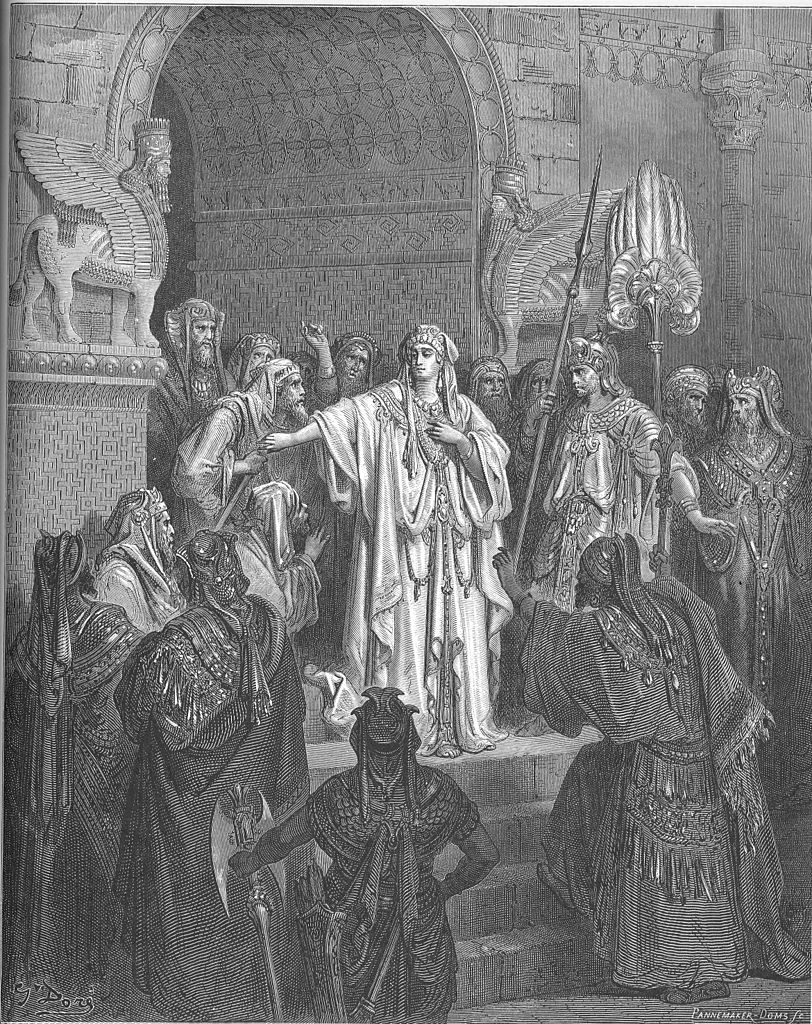
For this deed of the queen will be made known to all women, causing them to look with contempt on their husbands, since they will say, ‘King Ahasuerus commanded Queen Vashti to be brought before him, and she did not come.’ This very day the noble ladies of Persia and Media who have heard of the queen’s behavior will rebel against the king’s officials, and there will be no end of contempt and wrath! If it pleases the king, let a royal order go out from him, and let it be written among the laws of the Persians and the Medes so that it may not be altered, that Vashti is never again to come before King Ahasuerus; and let the king give her royal position to another who is better than she. So when the decree made by the king is proclaimed throughout all his kingdom, vast as it is, all women will give honor to their husbands, high and low alike.”
This advice pleased the king and the officials, and the king did as Memucan proposed; he sent letters to all the royal provinces, to every province in its own script and to every people in its own language, declaring that every man should be master in his own house.
—Esther 1.17–22
I can imagine a conservative evangelical looking at this and saying to themselves, “Now, the king’s court is recognizing a natural order in the way God has made a marital relationship to work, even though they go about reinforcing this biblically-supported picture in the wrong way–through force and not love”. I hope that’s a fair representation.
But either way, (1) they would not want us to pull from this text any lessons about how male headship itself is wrong, just how it’s done badly here, and (2) they would still think the concern of these males is justified (and perhaps even right), as we’ve seen similar dynamics play out in our culture in the aftermath of feminism.
Continue reading →
39.952335
-75.163789
 the long way home