Christianity/Theology
“Darkest Before the Dawn” [a sermon]
During the Advent and Christmas season, my church did a sermon series going through the key texts of Handel’s Messiah.
I got to preach during that series and only recently realized I never posted it here.
I’m beginning to see that light and darkness are constant themes through my preaching, and in this sermon, those themes are explicitly in the text. God’s people have returned from exile to their homeland, but it still hurts. Things aren’t the way they remembered, and they keep encountering difficulties and old temptations at every turn.
And so God acknowledged the darkness, but promises light. Is that enough, though? How do we not just sit back and say, “yeah, yeah yeah–I’ve heard this all before” and then continue on steeped in our cynicism? In this sermon (as with others I’ve preached), I try to press more deeply into the darkness to see what God might say. The text is Isaiah 60.1-3, and here’s the sermon audio. Feel free to send me any thoughts, questions or concerns:
You can also download it here, or subscribe to our podcast. If reading is more your style, here are my notes for your perusal. Continue reading
“Damascus” (a poem for the Feast of Paul’s Conversion)
A troubled heart troubled still as I walk in the valley of the shadow of death but Im the shadow of that valley as I strike them with one rod while another comforts them why wont they die as I strike them with My Left as your right upholds them all Ill kill them inhale Ill kill them exhale Ill kill them inhale so on and so forth I walk as the dust of My sandals covers their face while Mine is clean Mine is pristine following none but MySelf on this dusty Damascus road and
then—
Continue reading
A Beginning, a Middle and an End
A beautiful reflection on the theological and poetical aspects of crafting a sermon.
If you don’t know where that comes from, read Aristotle’s Poetics. Aristotle was a great marine biologist who had an eye for the middle of anything. He was, as we Platonists know, not so great at epistemology, but he was a diligent observer and not altogether misleading in his remarks. He observed that dramatic works need a beginning, a middle and an end. This unilluminating observation turns out to be very necessary. It is good to start with the obvious before proceeding, and you can often count on Aristotle at least for the obvious.
I say it because it was brought to my attention in studying homiletic theory that there are at least three frames of reference for considering a sermon: the theological, the rhetorical and the poetical. In mainline circles, the theological is not always considered. The poetics, in the sense of the drama of your approach, a…
View original post 694 more words
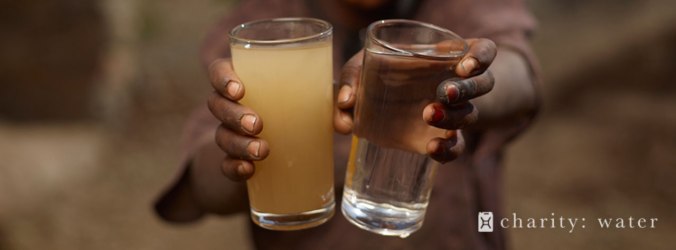
Last Day to Give for Clean Water! Just $400 more to go!
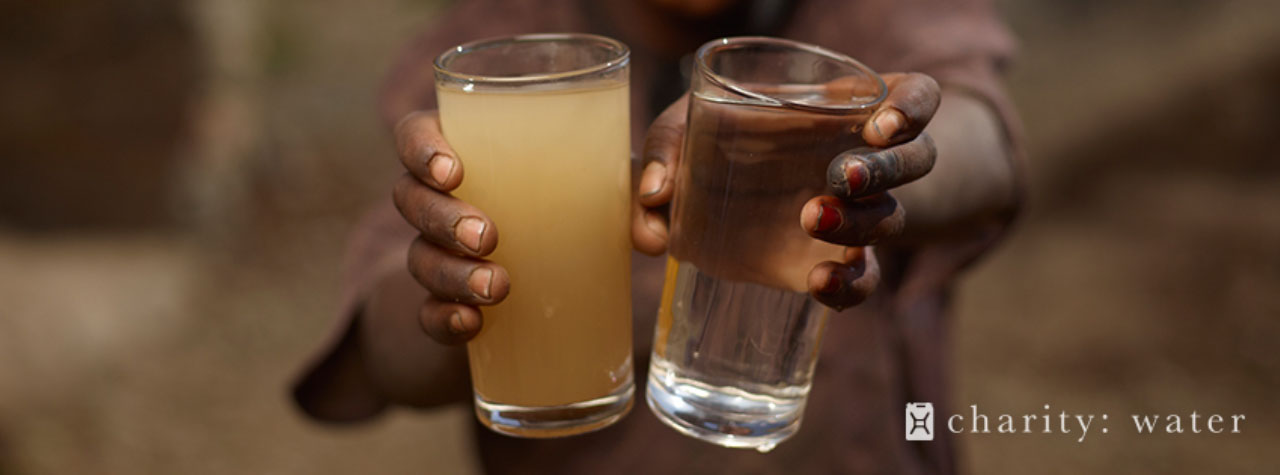
With your help, during my birthday campaign to raise money for clean water in developing countries, we have raised over $550, nearly 60% of my goal. To reach that goal, we’d only need to $400 more dollars. Then, 31 people will get clean water. What a good way to close out 2016. You can give at my camping page:
My Charity: Water Campaign
christianity does not make me (or anyone) more moral.

this is a great struggle for me. i am constantly comparing and elevating myself; most times without even thinking about it. it is the sin of the Pharisee – “I thank you, God, that I am not like he”. the further i walk the Christian path, the worse i get. The more moral I become the less I can be united to Christ. It is only through the shame of the cross and my utter lack of morality, that I can be saved.
without God, there is nothing to restrain my morality. it becomes force against force – my good vs your good.
God, help me.
Demand a Miracle (Merry Christmas) [from W.H. Auden’s “For the Time Being”]
This is from the Advent portion of W. H. Auden’s Christmas Oratorio, For the Time Being. The full text is under copyright, but it’s in this book, if you’re interested.
From Part I:
[T]ime never moves and nothing can ever happen:
I mean that although there’s a person we know all about
Still bearing our name and loving himself as before,
That person has become a fiction; our true existence
Is decided by no one and has no importance to love.
That is why we despair; that is why we would welcome
The nursery bogey or the winecellar ghost, why even
The violent howling of winter and war has become
Like a juke-box tune that we dare not stop. We are afraid
Of pain but more afraid of silence; for no nightmare
Of hostile objects could be as terrible as this Void.
This is the Abomination. This is the wrath of God.
Part II, Chorus:
Alone, alone, about a dreadful wood
Of conscious evil runs a lost mankind,
Dreading to find its Father lest it find
The Goodness it has dreaded is not good:
Alone, alone, about our dreadful wood.
Where is that Law for which we broke our own,
Where now that Justice for which Flesh resigned
Her hereditary right to passion, Mind
His will to absolute power? Gone. Gone.
Where is that Law for which we broke our own?
The Pilgrim Way has led to the Abyss.
Was it to meet such grinning evidence
We left our richly odoured ignorance?
Was the triumphant answer to be this?
The Pilgrim Way has led to the Abyss.
We who must die demand a miracle.
How could the Eternal do a temporal act,
The Infinite become a finite fact?
Nothing can save us that is possible:
We who must die demand a miracle.
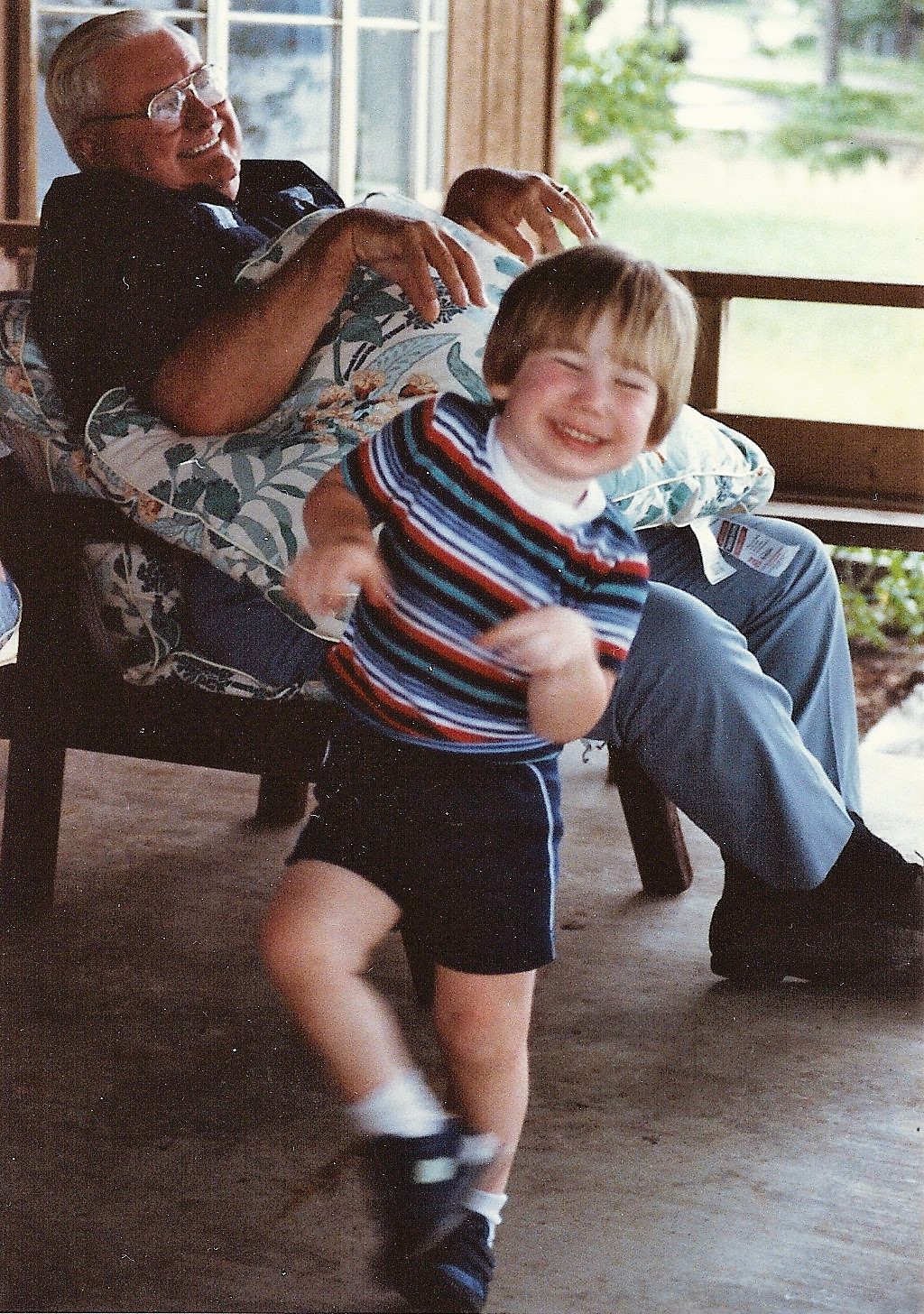
My Grandfather’s Passing (Hope in Death?)
Today is the sixth anniversary of my Grandfather’s death. I am reposting this reflection I wrote at the time.
This past Sunday, the day after Christmas, I watched my grandfather die. This is the first death I’ve experienced of someone very close to me. I’ve known people who had died, sure, but no one as close as this.
This man walked with me and I with him for my entire life. I sat on his knee and was tickled by his hands. I grew up hearing legends about him, and I walked in a general sense of awe and disbelief when in his presence.
His name was (is?) Lester Travis Williamson, or as I knew him for most my life: Peep (a mispronunciation due to the first grandchild’s toddler lisp).
Peep represented for me a tenacity and determinedness of love that great stories of tragedy and triumph are built upon. As their old pastor said during the funeral, he was a man that if you asked for a crumb would give you the entire loaf and then chase you out the door to give you another loaf for the road.
But this is not to be confused with the contemporary pictures of the sentimental, gratuitously giving man–cheerful, talkative, jocular, and always-optimistic. If Peep was anything, he was the quintessential man of his generation–America’s vision of a “real man”–quiet, determined, and strong. He spoke with intention in every syllable, meaning what he said and saying what he meant.
A Theology of Clean Water, Christmas, & Advent
Tomorrow is my 31st birthday, and instead of any gifts or Facebook Wall well-wishes, I’m asking people to give $31 on my campaign page at Charity: Water to give access to clean water to those in developing country.
But it is also Advent and Christmas season, giving an even deeper and fuller reason to give, especially if you would call yourself a Christian.
Yes, as Christians we ought to care about the pain and suffering of the world no matter what chapter and verse we can cite on a particular issue. But water, however, is uniquely theological and full of meaning.
A Theology of Water & Advent
Water is an essential and mystical part of the Christian story and message, giving us unique motivations and resources for addressing the issue of clean water. The Israel story begins with God creating the world out of the murky depths. The Israelite people are set free from bondage to a prince of death and find their redemption by passing through a Red Sea, which would have held certain death and return to bondage; they enter the Promised Land in a similar fashion. God promises to sprinkle clean his people with the waters of redemption. It is by more than one water well that Patriarchs find their wives and Christ finds a woman in need of redemption. It is in the world to come that the Tree of Life is seen once more, and a River of Life flows from its roots offering life and salvation to all who drink.
Creation, Day 4: A Call to Wonder
Another beautiful post from pastor Chelsea. Her Creation series is stellar.
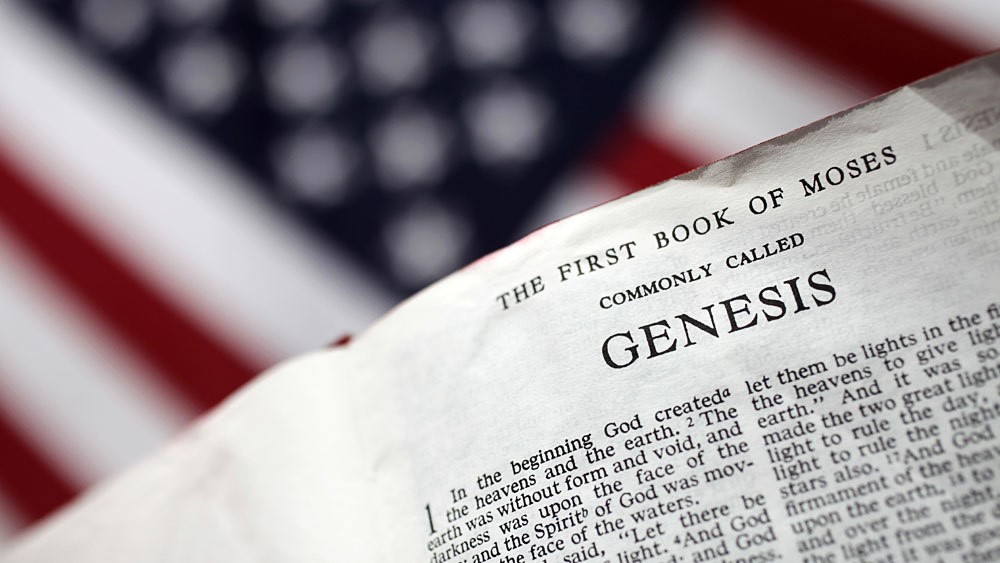
“And God said, “Let there be light in the firmament of heaven to separate between the day and the night. And let them be for signs and for seasons and for days and years. And let those light be in the expanse of the heavens to give light on the earth.” And it was so. And God made the two great lights, the greater to rule the day and the lesser and the stars to rule the night. And God placed them in the firmament of the heavens to shine on the earth, and to rule the day and the night, and to separate between the light and the darkness. And God saw that it was good. There was evening and there was morning, day 4.”
Genesis 1:14-19
…
Day 4 is a little embarrassing, don’t you think? The sequence is all off – how did all of the vegetation…
View original post 445 more words
If 31 people gave $31, 31 others could have clean water
I wrote recently about how, for my 31st Birthday, I’m asking people to give money to Charity: Water to give people clean water in developing countries. I recently did the math, and this is actually quite attainable.
All it would take to accomplish my goal of giving 31 people clean water would be for 31 of you out there to give just $31 through my Campaign Page.
To me, that’s more than reasonable. I’ve even given the first pledge! This is the time of year where we ought to be thinking of others. We will already be spending for more than $31 on people we love. But what of the people whose loved ones don’t have even $31 to their name?
They deserve love also. And not just a sentiment. Not just sympathy or prayer. They deserve tangible expressions of love that actually add to their quality of life. And there is probably no more basic tangible need for such quality than clean water itself.
It’s so fundamental, so elemental. What better symbol may there be for the most essential aspect of what it means to be an embodied human in this world? Giving water is one of the most beautiful was to give ourselves for others. And it’s easy and simple.
Just go to my Campaign Page and give $31 in the next week to give someone the gift of clean, drinkable water. Thank you.
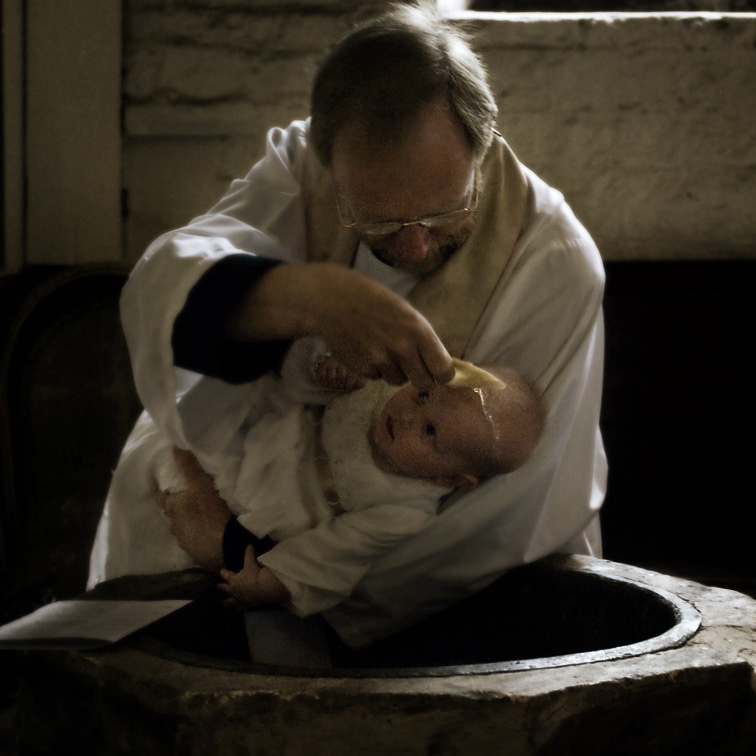
Baptizing Babies: Re-Creation & Changing My Mind
Inspired by last month’s Theology Book Club, I want to spend some time on the blog reflecting on baptism. Today, I want to tell you the story of how I changed my views on baptism to be in favor of baptizing babies.
I was raised a good Bible Belt Southern Baptist. I was so immersed in this language and perspective on the Bible, that even now that I totally buy into the reasoning and Scripture behind infant baptism, it still “feels” more natural to read the Bible with my Southern Baptist eyes. I get why people would absolutely disagree with infant baptism.
Having come from the Baptist perspective (called “Believer’s Baptism”) gives me some added insight (I hope) into this discussion. It also has helped me see how people can get so insulated in the way they are raised that they can get really wrong impressions of the “other side”. I remember all the beliefs I had about those that baptized infants and now, on the other side, I see how wrong I was.
The Fateful Turn
I got all the way through college and entered a Presbyterian seminary, all while still holding to my theological roots. These Presbyterians spoke as if it was soooo obvious that infants should be baptized, and thought any other way of thinking was pretty silly and naive. I couldn’t have disagreed more.
Continue reading
Forget Gifts. Give Clean Water for My Birthday
[TL;DR: Instead of gifts for my birthday, I’m asking for donations to Charity: Water to give clean drinking water to those with none. Give on my Campaign Page.]
The picture on this post is from my trip to Israel earlier this year. It’s from En Gedi, an oasis in the the desert, near the Dead, Masada, and the caves where the Dead Sea Scrolls were found. It is literally a random spring in the middle of the vast Israel wilderness.
I thought of this image as I was listening to a recent episode of The Liturgists podcast on suffering. They offered interviews, art, music, and poetry about the pain and injustice which exist on a global scale.
They lamented that many such programs leave us with no ability to do something in response. But they offered a way. They interviewed the founder of Charity: Water, a non-profit that focuses on delivering sustainable clean water wells in underserved parts of the world.
One of the best ways they have found to raise money is to ask others to donate their birthdays to Charity: Water. Instead of getting gifts, people would encourage others to give that gift-money to Charity: Water.
So that’s what I’m doing for my 31st birthday on December 20th.
Dyeing Tulips: Calvinism, “Free” Will, & Losing Our Religion
Well, this little miniseries on Calvinism has been fun.
We’ve talked through a book on the topic by Richard Mouw, the history of the doctrine, and I offered my own humble reframing of Calvinism’s traditional first three “points”: Total Depravity, Unconditional Election, and Limited Atonement. Today, we will look at the final two emphases of Calvinist belief.
I hope you’ve been challenged to evaluate Calvinism in broader and deeper ways so that, if you already agreed with it, you were challenged in the complexity and nuance of the issues here; and if you did not, that you found Calvinism a bit more inviting and interesting.
For more on just how broad and diverse Calvinist thought it, I can’t more highly reccomend Oliver Crisp’s Deviant Calvinism: Broadening Reformed Theology or the book that initiated this whole discussion, Richard Mouw’s Calvinism in the Las Vegas Airport. Continue reading
Tweaking Calvinism: Universal Limited Atonement
UPDATE: I’ve finished this little blog series. We talked about a book, the history, and T–U–L–I-P. Enjoy!
I recently offered some proposals on some “less intense” (yet still Reformed) articulations of Calvinism (see above). Today, we embark on the most controversial of the “points” of Calvinism: Limited Atonement.
This is the most difficult of Calvinism’s points, but it’s also its most logical. The least charitable way to summarize it is thusly: Jesus only died for Christians and not others. The more charitable way: No drop of Jesus’ blood was shed in vain; God accomplishes what he sets out to do, and Jesus’ death is effectual to save all whom it is intended to save.
Therefore, the belief is that Jesus’ atoning work on the Cross was “limited” to cover only the sins of people that would become Christians. So how do we move forward? Because after all, there seems to be only two options here concerning Jesus’ work on the Cross: Limited or Unlimited? Particular or Universal? “all who will” or “all who may“?
How can we approach this in a more winsome and erudite way while still calling ourselves Calvinists? Or more importantly, how can we balance God’s initiating power and sovereignty with his universal love and longing that all may be saved?
First, Atonement is NOT Salvation
This is really important. In my last post, I pointed out that God’s Election is more about our life here-and-now, and less about our future eternal destiny. The same can be said of Atonement.
Continue reading