A Prayer for America & President-Elect Trump


Ruler and King of all, our nation is now entering into such a delicate time. Many emotions are being felt very deeply after this election. It was a hard-fought fight that many had much invested in. Would you be with us as the immediate emotional aftermath of the election occurs?

Lord, hear our prayer.

O God of peace, you do not desire that we would be filled with anxiety, fear, or gloating, as if our greatest joy or pain would be the result of this one election. You have taught us that in returning and rest we shall be saved, in quietness and confidence shall be our strength: By the might of your Spirit lift us, we pray, into your presence, where we may be still and know that you are the God who is the sustaining Presence in all nations,

Lord, hear our prayer.

Continue reading

A Prayer for Election Day


O Lord our truest Ruler and King, many words have been said these past months leading to this election day. Far too many of these words have been hurtful, fearful, divisive, angry, and anxious. Being able to see our nation’s policies so tangibly, it is far too easy to equate this nation with your Kingdom, and so act as if this election were of supreme eternal importance.

Lord, forgive us, we pray.

Bless the leaders of our land–those currently in office and those elected today–that we may be a people at peace among ourselves and a blessing to other nations of the earth. Let this be the conviction of every leader as they model for us, however imperfectly, political relations amongst both their fellow countrymen and citizens of the world. Continue reading

Christian Diversity & Charity in a Contentious Election Year


us-flag-america-genesis-bible

Regardless of one’s personal political beliefs, it’s hard to deny that this particular election season is one of the most brutal in decades. On both sides of the aisle, a harsher edge has accompanied our political discourse. This has been exacerbated by people retreating further and further to the safety of their own “sides” in these uncertain times, leading to pockets of like-minded people who rarely interact with those with whom they disagree.

And yet, the good news is that there is still one institution in society whose very nature draws people together from a diversity of views, classes, opinions, and income brackets: the Christian Church. Christians do this imperfectly, for sure, and many of our churches are marked by sharp divisions and high uniformity on issues secondary to the essentials of our faith; yet the Christian Church, throughout history, has been able to contain within itself a huge diversity of views, opinions, cultures, and societal structures, all while maintaining its essential integrity.

This puts Christians in a bind, though, when studying Scripture in a diverse community and in a tense political time. As Christians, we want the Bible to inform our political beliefs, but we also want to be in unity with other believers around us. As the Bible shapes us and we come to our own beliefs on political issues, how do we do so in a way that leads to charity and a deeper knowledge of God through the Scriptures?

I think we can chart a way forward by looking at the diversity of ways the Scriptures interact with the politics of God’s people, the politics at the time the Bible was actually written, and by focusing on the central point of Christian teaching: Jesus. Continue reading

November Book Club: All Your Questions on Baptism, Answered


November’s Book book-promise-of-baptism width=

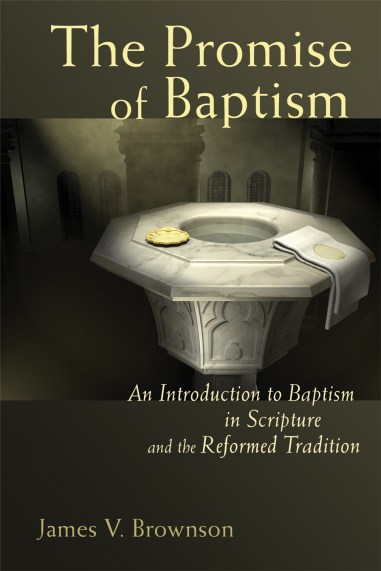
The Promise of Baptism: An Introduction to Baptism in Scripture & the Reformed Tradition
by James Brownson
Our discussion on Calvinism this past Sunday was really great. Our exploration of Reformed Theology continues, however.

For November, in my church‘s monthly Theology Book Club, we’re going to be looking at that significant distinctive of Reformed thought: Baptism. And to wander into this potential minefield, we’re going to follow an amazing guide, Dr. James Brownson in his incredibly helpful book, The Promise of Baptism.

Seriously, this book is amazing.  It covers everything in relation to baptism. It starts with the big picture and starts to zoom in into specific biblical, historical, theological, and practical questions. Every chapter is built around a question. And this book goes through every question you may have had about baptism, and a bunch you may have never had. Some of the chapter topics:

  • Should infants be baptized?
  • Sprinkling or Immersing?
  • Can someone be saved without being baptized? What about baptized without being saved?
  • What happens to baptized infants who die before they can give a profession of faith?
  • What about baptized people that leave the faith?
  • Is “Re-Baptism” allowed?
  • Is “dedication” an appropriate substitute for infant baptism?
  • Does it need to be the parents who offer an infant to baptism, or can grandparents or close family friends?

There are 30 such chapters, so I’m only barely scratching the surface. Really, this is a great book. And it’s very charitable, meaning it doesn’t demonize any side. It clings to Scripture and recognizes there are different legitimate opinions on many of these issues. It does argue for infant baptism, but it’s topics are much bigger than that, so even if you don’t leave convinced on that point, you will have learned so much more about what the Bible and the Church tradition have to say about the essential sacrament of the Christian Church.

NOTE: Because the last Sunday of the month falls right after Thanksgiving, our discussion will be on the first Sunday of December, the 4th, at 5:30pm.

As usual, even if you don’t live in Philadelphia, feel free to join us in reading the book. I’ll try and blog about it through the month. You can use this blog or the Facebook page to offer your thoughts, questions, critiques, and concerns. Happy reading!

So pick up the book, read it, keep up with the discussion, and join us on December 4th at 5:30pm at Liberti Church.


CashTag

Enjoy the Post? Leave a tip with Square Cash!
Philly Peeps: Join us for our Calvinism discussion!


calvinism
This month, as part of my church’s Theology Book Club, we’ve been reading Richard Mouw’s Calvinism in the Las Vegas Airport in order to spur a broader discussion of Calvinism and Reformed Theology. Tomorrow, Sunday 10/30, we’ll be gathering in person in Center City Philadelphia to have a discussion on this controversial topic.  RSVP at the Facebook page.

You do not have to have read the book. Just show up.

We’ll have some wine and some snacks, but feel free to ring whatever you like. Hopefully, I’ll see you tomorrow at Liberti Church, 17th & Sansom in Rittenhouse.


CashTag

Enjoy the Post? Leave a tip with Square Cash!
Tweaking Calvinism: Unconditional Election?


tulips-red

UPDATE: I’ve finished this little blog series. We talked about a book, the history, and TULI-P. Enjoy!

As our book club is going through Richard Mouw’s Calvinism in the Las Vegas Airport, I’m blogging some of my thoughts.

In this little Calvinism mini-series, I’ve talked about some of the things that make Calvinism hard for our modern ears, and I’ve begun articulating a broader view of these ideas, by first looking at the “T” (“Total Depravity) of the usual acronym of Calvinist beliefs: TULIP. Today we’ll look at the “U”: Unconditional Election.

Unconditional (Corporate, Vocational) Election

Traditionally, the “U” of TULIP stands for “Unconditional Election”, which simply means that when God chose us as his people, he made this choice on the basis of no condition outside of his own good pleasure. In short, God didn’t choose you because of anything you are or had done. This is true. And yet, it’s not the whole (or even the main) story.

In the Reformation’s move away from the Institutionalism of the medieval Catholic Church, and Scholasticism’s emphasis on the ability and intellect of the individual in society, much of the foundation of Calvinist doctrine was laid in very individualistic terms.

Think about it: each of the five ideas represented by the letters in TULIP are fundamentally about how individuals are reconnected and reconciled to God. I think this really distorts what the Gospel and Christianity (and Calvinism) are about.
Continue reading

Calvinism: A (Humble) Proposal for Some Tweaks, pt.1


UPDATE: I’ve finished this little blog series. We talked about a book, the history, and TULI-P. Enjoy!

[As our book club is going through Richard Mouw’s Calvinism in the Las Vegas Airport, I’m blogging some of my thoughts.]

If you have any sense about Calvinism, its reputation, and what it believes, you probably know that it is not especially popular. Contemporary Calvinists nearly always fall into one of only two camps: irritating, uncharitable jerks that are unapologetic for their Calvinism; and kind, warm people that too apologetic about it. In other words, you have the “damn right, I’m a Calvinist” crowd, and the “I wish I wasn’t a Calvinist, but it just makes sense to me” people.

Depending on my coffee and/or alcohol intake, I can be either one. But I definitely think (and hope) I lean more towards the latter.

I started out my Calvinistic journey in college as I sat under a sermon miniseries on the topic that utterly convinced me of the truth of the doctrines. I’m going on over a decade now having sat with these beliefs and (in my opinion) truths, and I’ve watched then morph and shift over time in my soul.

I definitely began the journey as the arrogant, tight-fisted, dogmatic Calvinist that generally annoyed anyone that didn’t agree with me. I also hurt a lot of suffering people. I acted in good faith, thinking that changing the doctrinal minds of others would unlock such joy and security in such a big God. Sometimes this happened. A lot of times it didn’t.
Continue reading

Calvinism: What it Is, and Why it’s Crazy


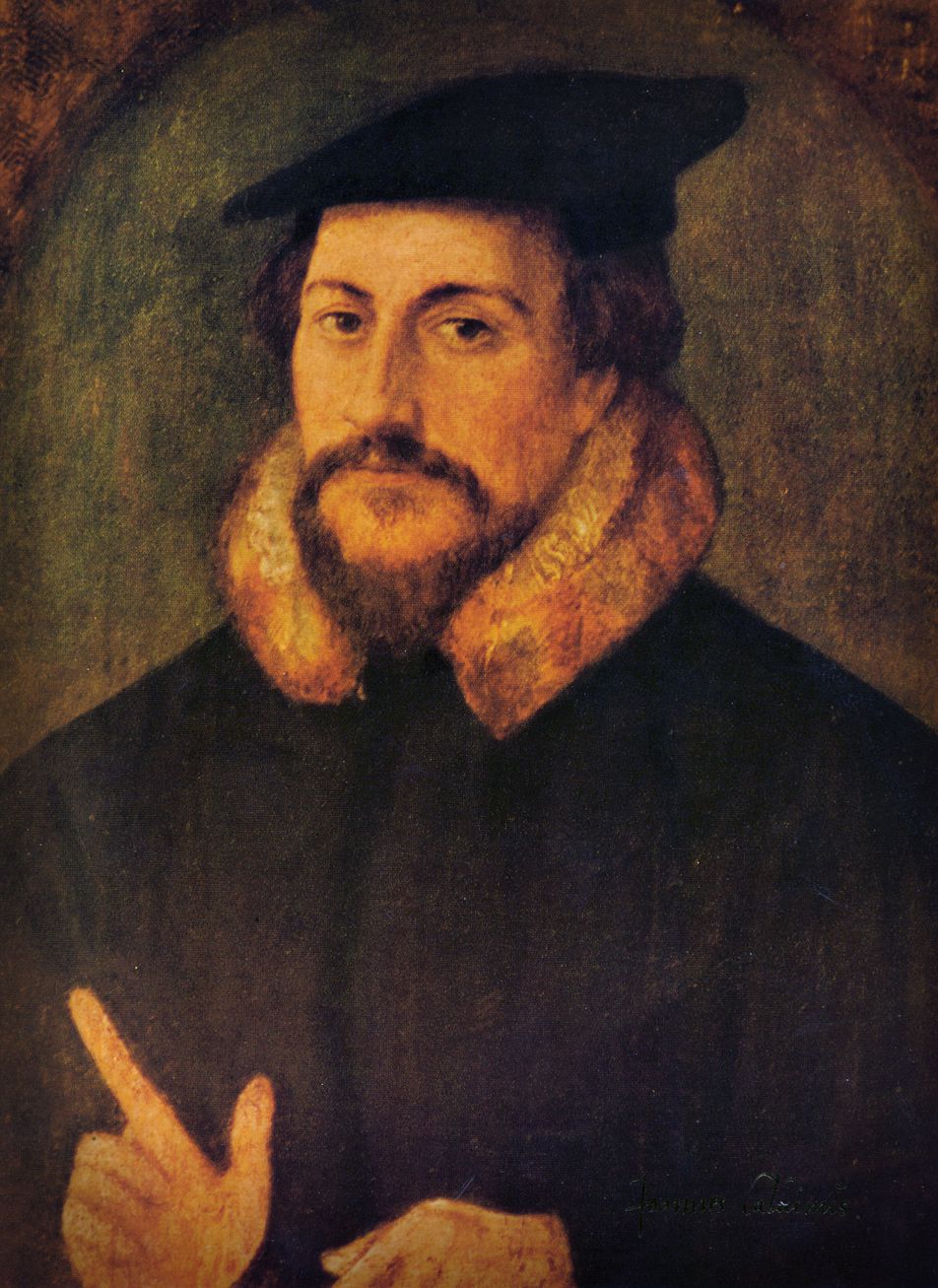
John_Calvin_by_HolbeinUPDATE: I’ve finished this little blog series. We talked about a book, the history, and TULI-P. Enjoy!

This month, our Theology Book Club is going through Richard Mouw’s remarkable book Calvinism in the Las Vegas Airport, in which he articulates a vision for how Calvinists might understand and hold their doctrinal convictions.

But first, what is this “Calvinism” thing I’m talking about?

Every school of thought has some core foundation on top of which they build every thing else–some assumption that guides and shapes the rest. In that sense, Calvinism is a cluster of beliefs that are centered around the idea that Jesus is Lord, or (in more traditional language), that the Triune God is uncompromisingly sovereign and has no competition in this area. That is the center of Calvinism from which everything else fans out. As Mouw summarizes:

“Unlike other traditions, Calvinism rigorously guards this emphasis on divine sovereignty by refusing to allow any other theological point to detract from it. [So] when Calvinists get around to attempting to explain the relationship between God’s sovereignty and human freedom, we are so concerned to protect the former that we are willing to risk sounding like we are waffling on the latter rather than to imply in any way that God’s power is limited.” (p.27)

If you’re only somewhat familiar with Calvinism, you likely think it was some archaic belief mainly held by cranky medieval Christians and Puritans that said God was in absolute control of every little thing and human free will was largely an illusion. Further, you may also have some vague sense that it’s super depressing, focuses almost entirely on how bad and useless humans are, and had some role in creating the American work ethic.

Continue reading

Light and Dark: It’s Pretty Neat


Chelsea's avatarWe Are Creature

And God said, “Let there be light,” and there was light. And God saw the light, that it was good, and God made a distinction between the light and the darkness. God called the light day and the darkness God called night. And it was evening and it was morning, day one.

Genesis 1:3-5

Light and darkness is one of our most enduring false dichotomies. Light and darkness are seen as opposite, opposed to one another, and entirely different from one another. We have even endowed the concepts of light and darkness with the moral dualism of good and evil. Good lives in the light, and evil dwells in the darkness. Or so we insist. This light/dark dichotomy even touches our social construction; dark skin is threatening, light skin is not. To say the very least about it, this construct is deeply problematic. How else might we think about light and…

View original post 654 more words

The Firmament And The Way That Leads To Life


Beautiful, beautiful post from a friend and fellow seminary traveler.

Chelsea's avatarWe Are Creature

CW: Abuse, bodily harm, torture

And God said, “Let there be firmament in the midst of the waters, and let it separate between waters from waters.” God made the firmament and it separated between the waters which were below the firmament from the waters above the firmament, and it was so. And God called the firmament “heavens.” It was evening and and it was morning, day 2.

Genesis 1:6-8

Many, many Hebrew words do not have an adequate single-word english translation. Once you study the word shalom, the word “peace” just doesn’t cut it. Once you look at what’s behind the word rachum, the word “compassionate” needs more explanation. The same is true for the Hebrew word raqia, often translated as “expanse” or “firmament.” Because if it’s “expanse,” is this really saying anything at all? And seriously, what is a firmament?

My Hebrew lexicon doesn’t usually disappoint…

View original post 675 more words

October Book Club: Un-Crazy Calvinism, with Richard Mouw


UPDATE: I also did a little series exploring topics in this book, including Calvinism’s history, and TULI-P. Enjoy!

October’s Book

book-mouw-calvinism width=

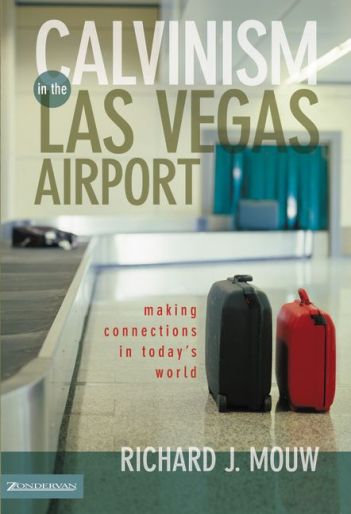
Calvinism in the Las Vegas Airport
by Richard Mouw

For my church‘s monthly Theology Book Club, we’ve been spending the Fall exploring some of the distinctive beliefs of Reformed Theology.

Well, if there’s any set of ideas Reformed Theology is most known for (and controversially so), it is surely that cluster of doctrines known collectively as “Calvinism”. That’s what we’re exploring this month through Richard Mouw’s amazing book, Calvinism in the Las Vegas Airport.

To be clear, “Reformed Theology” is a lot bigger than Calvinism. You can agree with Calvinistic thought and not be Reformed, and you can have a huge range of opinions on Calvinist doctrines while still being Reformed. And yet, it is so connected to the thought of my church’s tradition that it deserves a deep dive.
Continue reading

“One Race, Different Ethnicities” [spoken word]


This is a beautiful piece by a friend of mine, Aisha Monique, from my previous church. She is a wonderful spoken word artist who wrote and performed this a couple of months ago as a way of prophetically processing the deaths of Alton Sterling and Philando Castille, and hwo they fit into the broader narrative of the Black experience in America. I recently found myself watching it again, and I thought I would share.

Like the biblical book of Lamentations, this is a raw cry from the heart wrapped within the rhythm and boundedness of poetry. So grab some coffee and a quiet place and watch this. Let it sink in and sit with it. And most importantly, especially if you are part of the majority culture, just listen.

“The End & The Beginning”: On Houses, Wise & Foolish [sermon]


01111_blacksandbeach_1680x1050

A couple of weeks ago, I got to finish up our church’s series going through the Sermon on the Mount. This sermon was such an experience to prepare and give. For one, this was my first time ever preaching two weeks in a row (if your pastor does this regularly, give him or her a hug for me–it’s hard!)

Second, this was my firs time preaching on a text I previously preached on. This text was the same as my first ever “real” sermon. It was the oddest experience diving back into this text and it feeling so new–as if I’d never read or studied it previously.

And lastly, this is the shortest set of verses I’ve ever been able to preach on–5 verses! This gave me the freedom to slow down, and experiment with how I wanted to structure this and go about writing the sermon.

This sermon tries to serve both as a summary of the entire Sermon on the Mount as well as a conclusion and call to action for those of us who have sat under it all Summer. If that piques your interest, feel free to listen to or read the sermon below. The text is Matthew 7:24-29. Here’s the audio:

You can also download it here, or subscribe to our podcast. If reading is more your style, here is my manuscript for your perusal. Continue reading

Do “Meaty” Churches & Sermons “Feed Us” Where We Hunger?


Paul Burkhart's avatarthe long way home

peter-preaching-statue

During my tenure as a coordinator of Christian education, I heard a lot from people about their hunger to know the Bible, so I hired professors from a nearby seminary and offered regular courses on the Old and New Testaments. People told me the descriptions sounded like just what they needed, but that was usually the last I saw of them. The classes were small and sporadically attended…. Yet every quarter, people asked for more Bible courses. They said they wanted more; they were not getting enough. So I offered more Bible and still no one came.

Finally I got the message. “Bible” was a code word for “God.” People were not hungry for information about the Bible; they were hungry for an experience of God, which the Bible seemed to offer them.

— Barbara Brown Taylor, The Preaching Life

The above quote was so insightful and helpful to me…

View original post 699 more words

September Book Club: What IS Reformed Theology, anyway?


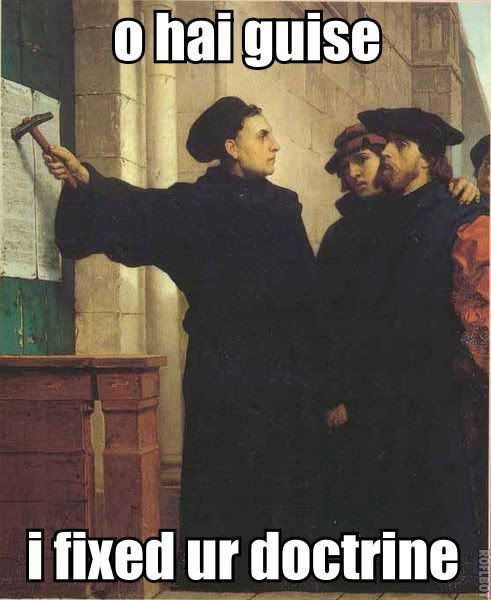
luther-95theses-humor-memeSeptember’s Books
(just pick 1)

Welcome to a Reformed Church: A Guide for Pilgrims by Daniel Hyde

Reformed Theology by R. Michael Allen

One thing I appreciate about my church is that we don’t wear our labels on our sleeve. That does mean, however, that a lot of people can go to our church for quite a while and not know that there is a very real theological ethos woven into everything we do.

We belong to the oldest American denomination–the Reformed Church in America–which ascribes to a theological tradition called “Reformed Theology”. And because many, many people in our church likely have little idea of what that especially means within the broader Christian family, we’ll be spending this Fall exploring these ideas in our monthly Theology Book Club.

So how are we going to do this? Well, I really struggled with this one, because though Reformed Theology has some general contours, there really is quite a bit of diversity and flexibility within that definition of being “Reformed”. In looking for a good book, the problem I kept finding was that most books on this topic tend to define Reformed Theology very narrowly and very dogmatically. I don’t think this is helpful.
Continue reading