Let There Be: Visual Mysticism in “The Tree of Life”


austinricketts4's avatarThe iRON AVIARY

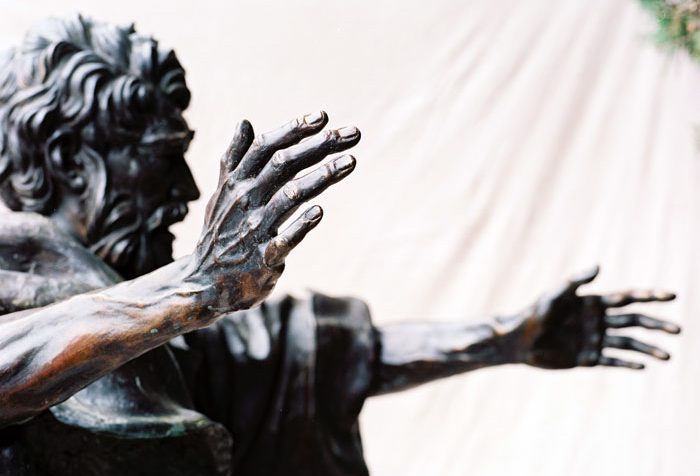
“Where were you when I laid the foundations of the earth?”  And so, director Terrence Malick prophetically joins God in asking us this at the beginning of Malick’s 2011 film, The Tree of Life.  This question from the book of Job sets up a certain amount of distance, a rift between two very different beings—God and people.

It’s the first of a number of dichotomies that Malick gives us: the rift between eternity and time that pervades the film; nature and grace, which resound as a counterpoint; there is life and death; suffering, happiness; darkness and light.  While the film spins on the reel, it becomes obvious that these fissures originate from the initial chasm set up between God and people.  “How does one bridge the gap?” an astute film admirer might ask.  The answer lies shrouded in mysticism.

As Malick is Christian, it is no surprise that he…

View original post 1,056 more words

“Do Unto Others”: The Golden Rule of God’s Kingdom [a sermon]


bw-three-paths-meet-williams-cairns-photography-llc

As part of my church’s series on The Sermon on the Mount, I got to preach this past week on the Golden Rule, as well as Jesus’ call to action at the end of the Sermon.

For many of us, when exploring Christian faith, what we’re really looking for is what makes Christianity distinctive. What does it have to say that any other perspective on existence doesn’t—or can’t? I can imagine many people see Jesus offer the Golden Rule and think that he is acting as just one more ethical teacher repeating this ethical principle that most anyone who wants to be a nice person knows about. And it’s true: much of what Jesus says is, technically, not new in human history.

But here’s the trouble: as a human race, we’ve had a lot of practice with the Golden Rule. It’s in us. It’s in our laws. It’s in our societies. It’s in our intuitions that guide and shape how we move through the world. It shapes our sense of justice and morality. And yet we still fail it every day. We’ve had so much practice legislating it, commanding it, manipulating it, teaching it, and hoping for it. And yet it is not the predominant reality in our world or relationships.

That’s why when Jesus comes on the scene, it’s not enough for him to simply repeat the same old teachings in the same old ways. We need more than that if we have any hope for living his vision out. And in this sermon I argue that what Jesus offers here is an entirely new framing and context of the Golden Rule. What Jesus offers here is so much more than a simple ethical maxim. It’s not even Ethics at all! Further, if we see Jesus as just one more religious authority trying to tell people how to act, then we’ve profoundly missed Jesus’ point and what he’s trying to offer us here.

So feel free to listen to or read the sermon, and let me know what you think. The sermon text is Matthew 7:12-23. Here’s the audio:

You can also download it here, or subscribe to our podcast. If reading is more your style, here is my manuscript for your perusal. Continue reading

Secularity Was Not Built in a Day


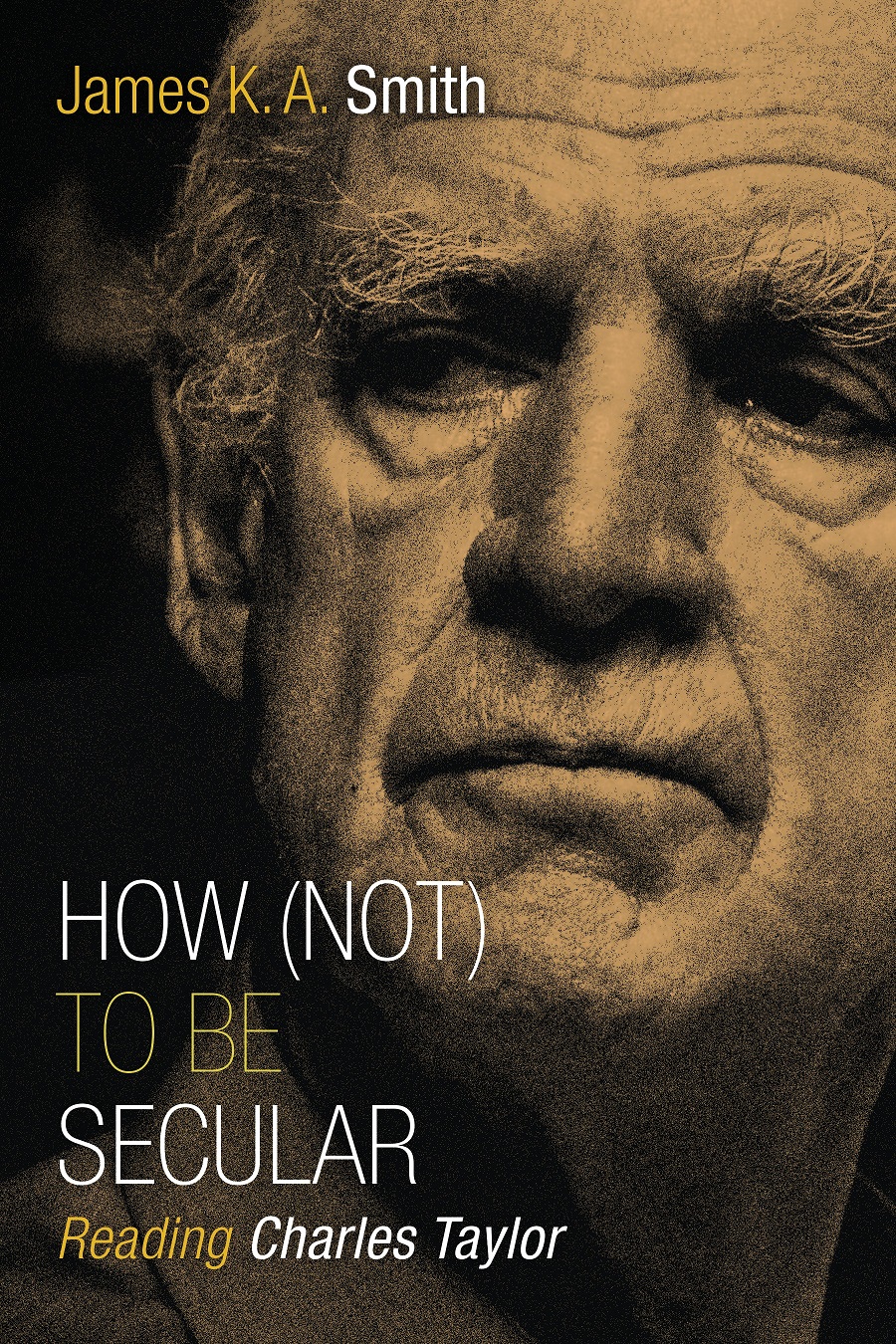
Last month, I led a Book Club through James K.A. Smith’s How (Not) To Be Secular, itself a summary of the much larger book, A Secular Age by Charles Taylor. There were so many lessons culled from those pages–most of which I am still processing and will be in the months and years to come. And yet, the biggest takeaway for me was how Taylor described the “feel” and cause of our current secular existence.

Taylor challenges the story of our cultural and philosophical moment, affirming that we did not stumble or trip into our secular age. Secularity is not the “neutral” space of human existence once all forms of power, influence, control, and superstition are done away with. Rather, secularity is a cultural and philosophical achievement. The gravity of human progress does not necessitate secularity. We’ve had to build it.

Secularity: A Fall or Climb?

We first need to remember that when we talk about “secularity”, we’re not talking about some sort un-religious, “neutral” public space. A society is “secular” (in our sense) when disbelief in God becomes a viable option. We take for granted that the vast majority of humans in history (and even in the non-Western world today!) have no comprehension of such a world. Continue reading

August Book Club on Christianity & Race: “Divided by Faith” by Emerson & Smith


August’s Book book-divided-by-faith-race width=

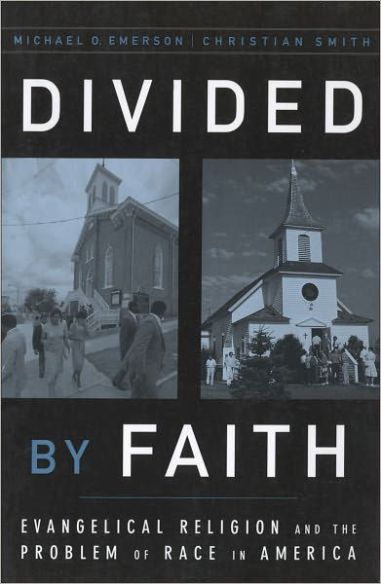
Divided by Faith: Evangelical Religion & the Problem of Race in America
by Michael Emerson & Christian Smith
Last night’s book discussion went really well, and it makes me even more excited for this month’s meeting.

For my church‘s monthly Theology Book Club, I’m excited to have us read an especially timely and important book, Divided by Faith by sociologists Michael Emerson and Christian Smith. The opening lines of the Preface summarize their purpose beautifully:

To learn more about American life, this book examines the role of white evangelicalism in black-white relations. Our argument is that evangelicals desire to end racial division and inequality, and attempt to think and act accordingly. But, in the process, they likely do more to perpetuate the racial divide than they do to tear it down.

In America, we have a problem with race. White Christians, I think, genuinely act in good faith to play a positive role in race relations in America. And yet, they often end up unintentionally exacerbating some of the broader cultural problems that feed into racial injustice.
Continue reading
Philly TONIGHT: Open Sanctuary Time for Reflection & Prayer


liberti-church-ceiling-lights

We live in a time and place that is happy to tell us all the things we need to do to be the kinds of people we want to be. And churches are good at telling us more things to do and occupy our time with in order to live in greater closeness with God.

But there are some parts of being human and knowing God that don’t involve doing more, but rather stopping and doing less.

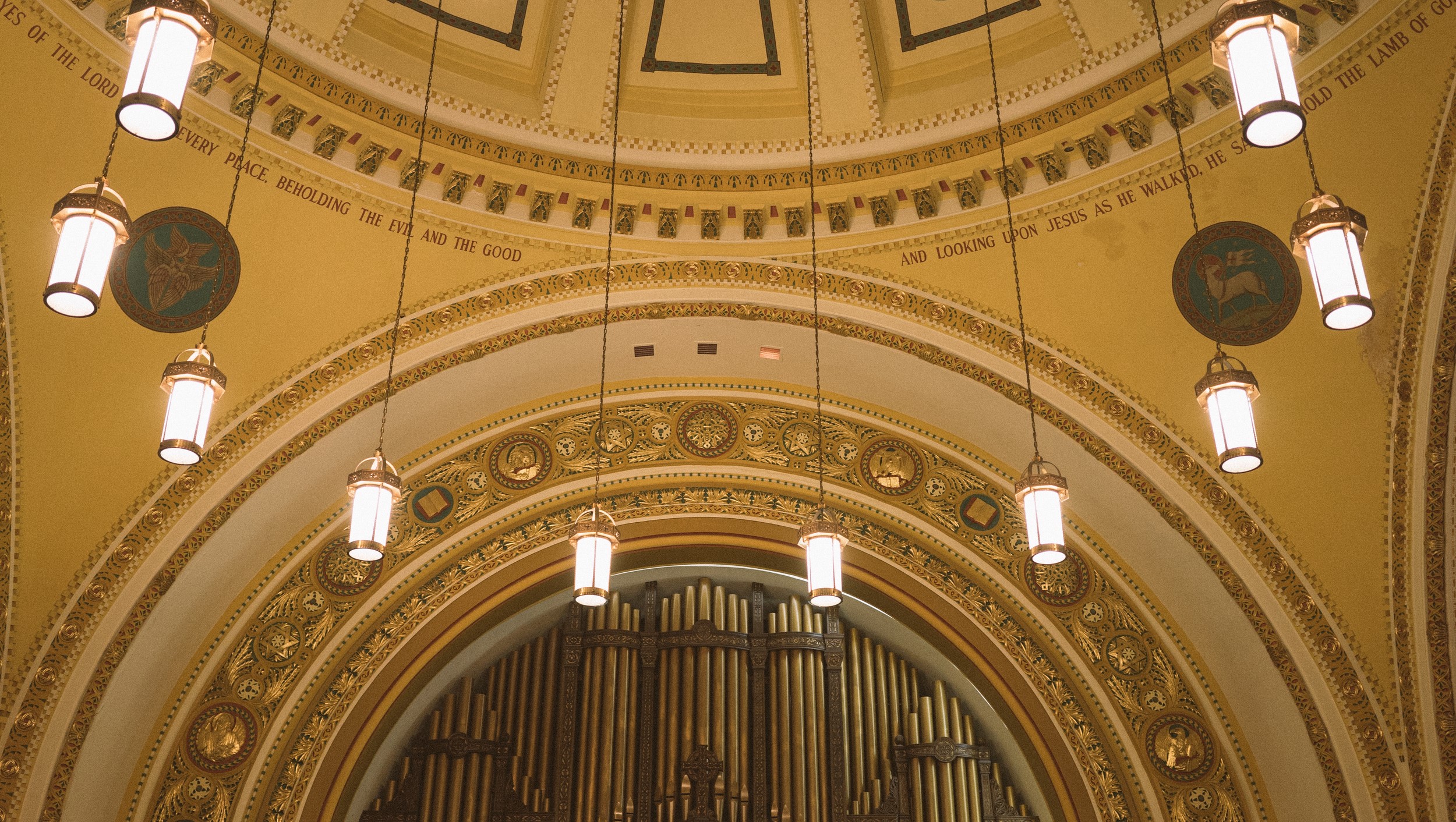
At my church, over the summer, we want to try and create space where people can come and just stop; to experience silence, reflection, prayer, meditation, and a little guidance in those things. This is a spiritual muscle we don’t exercise much, but it’s an essential one to work out if we are to become more human and know God more deeply.

So starting tonight, from 6:30-8pm and every Thursday in July and August, we’ll be having an open, unstructured time for prayer, reflection, contemplation, journaling, and meditation.

A few times I’ll get up and read some Scripture, but outside of that, it’s a space people are free to come and go, lie down, walk around, sit on the floor, or whatever they need to connect with themselves and connect with God. No matter your church home, religious tradition, or lack of belief, feel free to use this space in whatever way you need.

So feel free join us at 17th and Sansom St in Center City Philadelphia between 6:30 and 8, and each subsequent Thursday.

A Prayer Service of Lament for Race & Injustice


job-silohetteLast week I led a prayer service of lament at my church for the racial injustice and violence experienced in our country. I put together the below order for the prayer service and it ended up being a helpful expression for us. I wanted to share this with anyone else interested in using it in their own contexts.

Another benefit of this service is that the contemporary prayers below are not mine or any other white males, but were written by women of color and slightly modified for our context. I hope this acts as a helpful outlet to give voice to our hearts as brothers and sisters.

[Prayer Guide: pdf/docx ; Leader’s Guide: pdf/docx]

Preparation

Encourage other voices that are not typically heard at your church to read the Scripture sections. In the times of silence, encourage open prayer from those sitting in the pews. Allow space for up to 5-10 minutes of silence, and be sure to let people know beforehand to expect such long silence.

Continue reading

Join the Liberti Church Theology Book Club!


July’s Book book-jamessmith-hownottobesecular

How (Not) To Be Secular
by James K.A. Smith
Amazon


Wtsbooks

For those of us that are Christians, we come to church on Sundays to get re-grounded and re-oriented in the rhythms and truths of the Christian life.

Many of us also try and live life in various small groups and Bible Studies throughout the week in order to press these truths all the more deeply in our hearts and communities.

But still, some of us are wired to wrestle with big ideas in a different way. That’s why at my church we’re starting the Liberti Theology Book Club: a way to walk with others through different perspectives and insights on theology, the Bible, and Christian thought.

It’s been designed to take up as little of your time as needed, while also letting us really work through some deeper and harder parts of faith. Also, because of the decentralized nature of it, anyone across the country can join in!

Continue reading

Book Club Blogging: Intro to a Secular Age


de-Goya-The-GiantFor the Book Club I’m leading at my church, we’re reading James K.A. Smith’s How (Not) To Be Secular (a summary of a much bigger, denser book, A Secular Age by Charles Taylor). To begin, we turn to the opening pages to get our bearings and become acquainted with the general contours of the pages to come.

Introduction

Honestly, if the Preface and Introduction were all there was, this would be worth the price of admission. It is such a helpful 50,000-foot view of the ideas unpacked in the rest of the book.

Smith’s account begins with an attempt to narrate some of what our day and age “feels” like. He speaks of the disconnect between typical American Christianity and the way the rest of the world experiences reality. He points out that nonbelievers in the Christian faith are actually able to find meaning, fullness, and significance without appealing to any divine Being. And yet, even those without belief can’t seem to shake a certain “hauntedness” to our world.

In short, neither adherents to religion nor those that don’t find much usefulness for it can construct a way of experiencing reality that takes into account all of what it means to inhabit humanity today. We’re all sort of stuck in this liminal space, this limbo, seeking distraction of reductionism to break the tension.  We’re all “suspended between the malaise of immanence and the memory of transcendence”.
Continue reading

Do “Meaty” Churches & Sermons “Feed Us” Where We Hunger?


During my tenure as a coordinator of Christian education, I heard a lot from people about their hunger to know the Bible, so I hired professors from a nearby seminary and offered regular courses on the Old and New Testaments. People told me the descriptions sounded like just what they needed, but that was usually the last I saw of them. The classes were small and sporadically attended…. Yet every quarter, people asked for more Bible courses. They said they wanted more; they were not getting enough. So I offered more Bible and still no one came.

Finally I got the message. “Bible” was a code word for “God.” People were not hungry for information about the Bible; they were hungry for an experience of God, which the Bible seemed to offer them.

— Barbara Brown Taylor, The Preaching Life

The above quote was so insightful and helpful to me. At my church, we’ve spent years hearing people talk about wanting more “meat” or wanting to be “fed” more. When they say that, they often are thinking they need to feel cognitively challenged and stretched by information about the Bible or Theology.

Continue reading

10 Obstacles to Church Participation for Aging Adults (and How to Overcome Them) [GUEST POST]


old-pew

by Marie Villeza

It is important that aging adults are able to overcome any barriers affecting their ability to participate in church and church activities. The church and its parishioners can help senior members overcome these obstacles. First, however, they need to recognize what obstacles aging members may be facing, and implement strategies to ease their burdens or boost their involvement.

Continue reading

Philly TONIGHT: A Prayer Service of Lament for Race & Injustice


black-and-blue-lament-e1468181738718[1]

The past few weeks (heck, the past several years) have exposed so many fissures in the fabric of American society. It has shown how power, politics, and the invisible structures and systems around us have attempted to paper over real divisions that still remain. Last week, especially, showed us how these divisions can overflow into violence and cut to the core of the American psyche.

And the Christian Church ought to be there to give voice to this pain.

Tonight at 7p at Liberti Church‘s Center City Campus (17th and Sansom St), I will be leading a service of lament for our country, our cities, and our hurting black communities experiencing injustice. There will be time to hear Scripture, reflect, sit in silence, and also offer prayer from those in the pews. We will ask hard questions, sit in the pain, and not settle for easy answers. It is open to the public and all are welcome, no matter your religion, political persuasion, or personal opinion in this national discussion. I hope to see you there.

[image credit: photo from the Intersect Blog]

So you’re about to start Distance Education? Here are some tips.


paul-surface-coffeeHaving just graduated from my own Distance Graduate School program, I felt the desire to collate some of the lessons I’ve learned along the way.

Through the course of my program, I wrote for two websites focused around encouraging students as they looked for and went through seminary programs. Now, though the pieces below focus on seminary, most all of the lessons can be applied to any sort of distance education. I hope these are a help to you, and happy learning! Feel free to add your own tips and tricks below:

The Journey

Tools of the Trade

Keeping Things Organized

Read all my posts on Distance Education, including about health and wellness–mentally, physically, emotionally, and spiritually.


CashTag

Enjoy the Post? Leave a tip with Square Cash!

The Trinity-Subordinationism Debate and the Opportunity Before Us


One of the most well-written and astute pieces written about the broader context of the current Trinitarian debate in Evangelical circles.

Mark A. Garcia's avatar

opportunitiesIn an insightful recent post, Christopher Cleveland explains “Why the Trinitarian Controversy Was Inevitable.” Cleveland’s diagnosis is perceptive, and I would like to extend it somewhat further and also suggest a way forward in terms of the opportunities our situation presents.

Cleveland points to the neglect, and in some quarters the rejection, of properly theological work which lasted decades. This neglect was fueled by distrust of the categories and doctrines of traditional dogmatics, which more and more frequently were run through the filter of modern reconstructive (in fact destructive) criticism. No doctrine emerged from the filter unscathed; everything was reconsidered and the commitments belonging to a new and better “orthodoxy” was up for grabs.

In reaction to these developments within liberalism, conservatives predictably and importantly pushed hard on the doctrine of Scripture itself. Alongside an arguably antinomian and conversion-type model of “salvation by grace,” evangelicalism became, in essence, a position taken on the…

View original post 2,001 more words

The Belgic Confession: Church, State, & Reformation


church-state-puzzle

As I prepare for ordination in the Reformed Church in America, I am wrestling with the documents, Creeds, and Confessions to which I will be committing myself. I invite you to reflect alongside me.

In the Belgic Confession, one of the most foundational documents of the Reformed tradition, there is an incredibly odd Article towards the end–number 36. It is about the Civil Government and it says, among other things:

We believe that because of the depravity of the human race, our good God has ordained kings, princes, and civil officers. God wants the world to be governed by laws and policies so that human lawlessness may be restrained and that everything may be conducted in good order among human beings….

And the government’s task is not limited to caring for and watching over the public domain but extends also to upholding the sacred ministry, with a view to removing and destroying all idolatry and false worship of the Antichrist; to promoting the kingdom of Jesus Christ; and to furthering the preaching of the gospel everywhere; to the end that God may be honored and served by everyone, as he requires in his Word….

The whole of the Confession is worth your time and reading. It is beautiful and ecumenical. Its desire is to bring people together and articulate the Reformed tradition in a charitable and loving way. And yet, this Article–the next to the last one in the whole writing–sticks out like a sore thumb in both tone and content. It’s so confusing. Why is it written this way? What do we make of it today?

Continue reading

Bible Nerds: Help Me Choose NICOT/NICNT Commentaries!


My go-to Bible Study software of Logos. They have some amazing sales every once and a while and right now they are having a great sale on the New International Commentary Series (popularly known as NICOT and NICNT). They are selling each volume at $19.99 a pop, which is amazing. I am really picky about commentaries, but I know a good deal when I see it. So, I’m enlisting your help to help me pick out a few of these for my library.

So…for those of you that have had experience with these, which would you say are really good and why? Which would you say are definitely not worth one’s time?

So you know what I’m looking for: I go to commentaries more for biblical critical scholarship, not systematic theology. Even though I am theologically conservative, I really do not enjoy commentaries by conservative Evangelicals that spend most of their time grinding their conservative axe against all those “big bad liberals”. Those commentaries end up being more about conservative theological apologetics than the text. For that reason, I find it far more helpful to engage with commentaries that have an openness and sympathy to critical (“liberal”) scholarship.

In short, if one of the primary selling points for a commentary is that it is “conservative”, then it’s probably not for me. I can think of so many other adjectives I would prefer came to one’s mind first to describe a good commentary. If a commentary writer is conservative, great! But breathlessly defending that dogma at the expense of the text isn’t helpful to me.

Okay sorry, soapbox done. What do you all think?