
Christianity/Theology
This blog’s got some new digs

If you’ve come to the site in the past week, you probably saw some changes around here. I did indeed change the look here at the blog, but there’s surely still some kinks around. If you come across anything with weird formatting or such, please let me know.
Also, what do you think?
(Oh memories. That picture above? Yeah, that’s what the first iteration of this blog looked like, nearly ten years ago.)
Advent, Angst, & Ferguson

When my phone started blowing up with notifications about the Ferguson grand jury decision, I was in a daze. I grabbed my pipe, poured the biggest single glass of whiskey I’ve ever had, and sat in my backyard in tears, alternating between retweeting others’ comments on the case and just staring at the sky. I watched and heard the helicopters above as they watched the Philadelphia protests below, mere blocks from my house.
I think part of my response was because of where my mind had been in the days leading up to the decision.
I recently pored over Cornel West’s biography and watched 12 Years a Slave. As the weather has gotten colder, the city’s marginalized and homeless have become more noticeable. An organization whose heart is in the right place, and who I otherwise love, put out some promotional materials that unintentionally showcased the degree to which racism and power structures are so ingrained and so unconscious. Last Sunday, I watched as Rudy Giuliani went shockingly racist on Meet The Press (what he said is wrong, by the way). For school, I watched a presentation on the Civil Right’s movement, and also read King’s Letter From a Birmingham Jail.
And then the grand jury came back. No indictment.
Continue reading
Sins of Our (White) Fathers: We Still Don’t Get It
 This weekend, I finally watched Steve McQueen’s Twelve Years a Slave. Yes, I’m over-dramatic as a general rule, but I can’t remember the last time I cried like that (actually, it was probably after I saw McQueen’s last movie, Shame).
The brutal reality of the film combined with the knowledge that this wasn’t hypothetical–this was real–broke me. Further, it wasn’t just real for this one man, but for our entire nation. The brokenness, evil, and callousness of it all was staggering.
And we’re still doing it today.
No, I’m not exaggerating. The effects of slavery in this country are still absolutely tangible, apparent, and real. And frankly, too many of us don’t give a damn.
There are still people alive today that knew slaves when they were younger. That’s how recent this whole thing was. And yet, we’ve done to racism what we’ve done to every other thing we should engage with meaningfully but don’t–we’ve privatized and individualized it. We’ve redefined “racism” to mean harboring active, conscious, discriminatory thoughts and feelings towards someone of another race.
My Day with Cornel West (or rather, his autobiography)
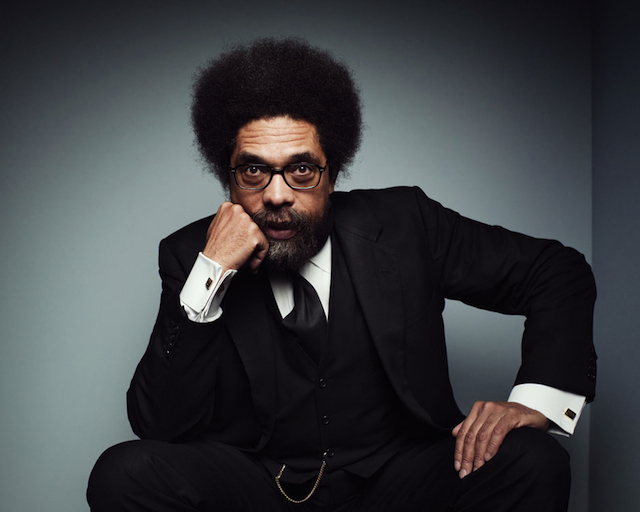 If you know who Cornel West is, I’m pretty confident in saying that what you think you know about him is probably wrong, or at best, dramatically incomplete. If you don’t know who he is, then you should.
For my current class on Leadership, I had to pick an autobiography of a leader whose perspective on faith and life is probably dramatically different than my own. The book I chose was Brother West: Living and Loving Out Loud.
My own anxiety and compulsivity make it difficult for me to read for long stretches of time. I can usually only read one thing for ten or fifteen minutes before having to bounce my mind to something else or change up what I’m reading. But, due to my own procrastination and inefficiency with time, I came to the day before my paper was due not having opened up the nearly-300-page tome.
And so I did what needed to be done. I left my electronics at home and brought nothing but the book to a nearby Starbucks. I got a cup of coffee, turned on a Jazz radio station on my phone, settled into a couch, and read the entire thing.
Rhythms of Faith & Freedom

I’m currently reading through Ruth Haley Barton’s Strengthening the Soul of Your Leadership. Occasionally, I’ll post reflections on my reading.
One big strength of this particular book on cultivating one’s spiritual existence is that it’s focus is entirely on the spiritual life as a response to what God has been doing. Most books focus more on the stuff you’re “supposed” to do. Some slightly betters ones spend their time unpacking and expressing the “beauties of the Gospel” (as they pretty narrowly, individualistically, and Evangelically define it) and then trust that these intellectual ideas and truths woo us and turn our “affections” to God. These are the same people that often see “preaching the Gospel to yourself” as the panacea for everything, be it doubt, fear, confusion, theological questions, or mental health issues.
Barton, however, comes at it from a different angle. She uses the story of Moses as a picture and type for the dance that exists between God and his people. And at each stage of Moses’ life and deepening of his calling and relating to God, she shows how God has actually been at work to, for, and with Moses long before this moment ever came.
So it’s not, “God died for you, so you can live for him!”, or, “See how beautiful God is and all the things he’s done for you! Now doesn’t that make you want to engage with him? (And if it doesn’t, there’s something fundamentally wrong with you.)”
Continue reading
A message from Philly’s mayor to my church
My church recently bought our building in Center City Philadelphia. For the renovations, we just kicked off a campaign encouraging people to Pray, Serve, and Give towards this end. Michael Nutter, the mayor of Philadelphia caught wind of this, looked into our work in the city, and gave us a special message to welcome us into our new permanent home. You can watch the video below and also join us in our efforts to love our city well.
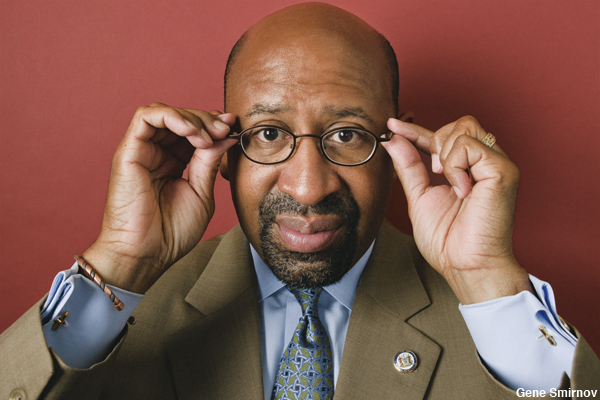
[image credit: Gene Smirnov for Philly Mag]
What the Supreme Court on Gay Marriage can tell us about ISIS

U.S. foreign policy as it pertains to ISIS should reflect the reality of what ISIS is: a social movement for which the best course for absolute defeat is a “bottom-up” approach, rather than just “top-down”.
On Monday, the Supreme Court gave a shocking decision to not rule on gay marriage decisions in five states. Some could see this as a defeat for gay marriage, prolonging the costs and time it takes to move the process forward state-by-state.
On the other hand, though, most commentators and gay marriage proponents saw this as giving tacit approval to gay marriage by the Court. And in fact, this does seem to be the case. Unlike most other Supreme Court decisions, it doesn’t take a majority for the Court to agree to hear a case–it only takes four votes. This means that at least a super-majority of the justices did not feel the need to provide oversight to the decisions.
And this is important to remember. The Supreme Court is not intended to be a court in the usual sense. It is an appeals court. It oversees the federal appeals courts’ decisions and only acts when they think the appeals courts are either contradicting one another or are going in an extremely wrong direction. In other words, they are there to clarify when there’s ambiguity, not create out of thin air.
Continue reading
On #Ferguson: Why Police & Military Should Be Different [QUOTE]
 Ever since the police in Ferguson, Missouri brought out their military gear in response to peaceful protests after the fatal shooting of an unarmed black teenager, there has been a new conversation about the increasingly blurred lines between the police and the military. I have very good friends that cannot seem to understand why there needs to be any distinction. Force is force, right? Well, in my reading recently, I came across this relevant quote I thought I’d share:
The distinction made here between police and war is not simply a matter of the degree to which the appeal to force, goes, the number of persons killed or killing. It is a structural and profound difference in the sociological meaning of the appeal to force.
In the police function, the violence or threat thereof is applied only to the offending party. The use of violence by the agent of the police is subject to review by higher authorities. The police officer applies power within the limits of a state whose legislation even the criminal knows to be applicable to him. In any orderly police system there are serious safeguards to keep the violence of the police from being applied in a wholesale way against the innocent. The police power generally is great enough to overwhelm that of the individual offender so that any resistance on the offender’s part is pointless.In all of these respects, war is structurally different. The doctrine of the “just war” is an effort to extend into the realm of war the logic of the limited violence of police authority–but not a very successful one. There is some logic to the “just war” pattern of thought but very little realism.
–John Howard Yoder, The Politics of Jesus
In short, you shouldn’t appeal to policing tactics to justify military force, and you shouldn’t use military tactics in policing.
[photo credit: Whitney Curtis for the New York Times]
The Refuge of the Embattled Soul
I’m currently reading through Ruth Haley Barton’s Strengthening the Soul of Your Leadership. Occasionally, I’ll post reflections on my reading.
“Reach the campus, reach the world.”
That’s how they got me. With those words, I began an amazing three years in the campus ministry I was a part of throughout college. I was coming out of a fundamentalist evangelical fog, and was desperate for deep, impactful community. I found it in those incredible people.
They had pointed out that our college had students from almost every “closed nation” in the world (countries where missionaries aren’t allowed to go). The campus was a place of such diversity and nationalities; the thought was that this was the most strategic place to have the most global Christian impact. Playing a part in this excited me and stirred me to serve in this mission.
Compared to the few-hundred strong InterVarsity, our little band of 12 or so students were the definite underdogs of campus ministry. We were just starting out and decided to go legitimate and become an official student organization. This would give us access to room and equipment rentals, money, and advertising resources. But we needed “officers” and a board of leaders to do this.
I thus became the President of our campus ministry.
Continue reading
Cultivating Your Soul to Lead
 I’m currently reading through Ruth Haley Barton’s Strengthening the Soul of Your Leadership. Occasionally, I’ll post reflections on my reading.
In my seminary program, there’s a lot of talk about one’s “True Self”. We live so much of our existence living from the place of masks, coping mechanisms, fears, anxieties, etc.–our “False Selves”. Articulating it like this is so helpful in some ways, but in others can be frustrating.
At least for me, this “True Self” seems so deeply inside of me, so elusive, that I’ve very much resigned myself to never actually knowing this self. Like a celebrity or historical figure, I’ve had to learn to live with the reality that I’ll never actually meet this person, no matter how much I may want to. I’ve come to terms with a reality in which I just need to be gracious with myself (just as God is) that most all of my life and existence will be more “False” than “True”, and I just need to make the best out of that.
Continue reading
My first Sunday Morning Sermon. I’d like to share it with you.
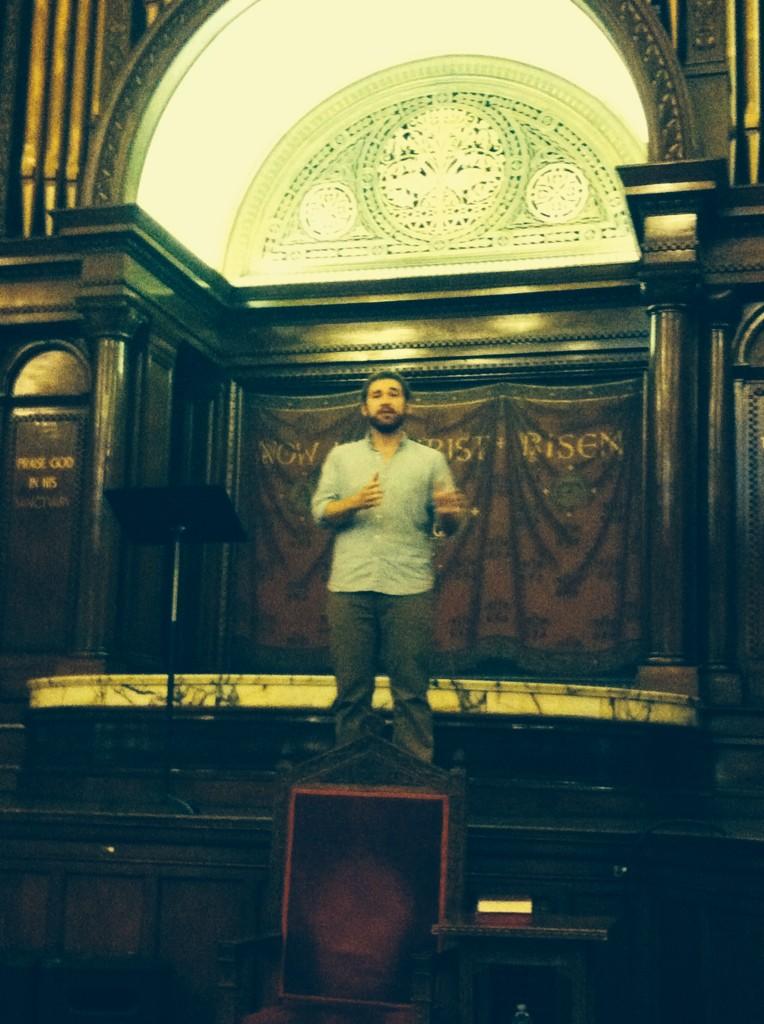 Sure, I’ve done some lectures, taught some classes, led a home group, and preached a sermon in a seminary class, but I’ve long believed that there was something truly sacred and “other” about preaching to a church family in a gathered worship service. And it’s something I had never done.
I’ve always been an over-zealous guy, and very wise leaders have pulled the leash on me, telling me to just sit and watch for a while, until the time was right to put me in front. This has continued through my life at my church in Philly, as they’ve slowly discipled me and loosened the leash bit by bit in service to our people.
Well this past week I had the honor of preaching my first Sunday morning sermon to my church family. It felt good and I myself experienced such a grace and blessing in preparing for it and offering it to my brothers and sisters. And so, I’d like to share it with all of you as well.
It’s the final sermon in our series “Finding Freedom” that went through the Ten Commandments. The text is Matthew 7:13-29, the very end of the Sermon on the Mount. Here’s the audio:
You can also download it here, or subscribe to our podcast here.
Continue reading
A Baby Step Against My Latent Racism (And Maybe Yours?)
 I know, I know. One of the worst types of writing there is in the world is a white person writing about their discovery that they are privileged and this is deeply engrained. I know. This post isn’t that, I promise. Just stay with me for a little bit.
Having worked in social work for a little over five years now, I’ve grown in my understanding that racism is about a whole lot more than individuals feeling an active, conscious dislike of someone just because of their race. It’s structural, cultural, political, economic, and systemic.
(Still, I’ve really missed this at times, and old habits and ways of thinking die hard. I’m really, really sorry for that.)
Recently, I had the honor to speak at one of my church’s ministries for those in homelessness. Afterward, I walked around saying hello to the almost-exclusively black crowd there. As I made eye contact with different people, I would offer a smile to them and give them as warm of a look as I could. I did really feel a genuine warmth and love for this group.
And yet, I started feeling this…thing…within me. As I gave my smiles away to the crowd, I realized that this was a problem. I was giving my smiles to them. Something in me felt as if I, as a privileged white male, was “serving” these people by “granting” or “bestowing” upon them affection. Does this make sense? Do you see the problem?
Continue reading
Hey Church Planters! A Quick Question for you.
As part of my seminary program, I’m currently in an Urban Church Planting class. As an assignment, I’m supposed to ask you all:
What are some things you wish you had known before planting, or things you wish you had done differently?
A penny for your thoughts? Please also include your church’s name and your position there.
A Sermon I Got to Preach on Isaiah 61 [VIDEO]
Believe it or not, I don’t really have much experience at all in preaching. Yeah, I’ve spoken and “preached” at some things, but I’ve still never offered the preached proclamation at a Sunday worship service. It’s an area I’ve wanted to grow in for a while.
To that end, I took a preaching class last semester for my seminary program. It was a powerful course that changed my whole relationship to both the Bible and the act of preaching. Each of us wrote and presented a sermon on an assigned text. The sermons were recorded, and I’m offering mine here today. It opens with some brief words on the context I had in mind when preparing this.
I hope it meets you and speaks to you, wherever you are. The video is above, the text and my manuscript are below. You can also download files for both the audio or the manuscript.
Special thanks also to an old friend, J. Chord Barnes of ASERWorks Media, for fixing some audio issues in the original recording and remastering it for me. Check him out at the link above. Continue reading
 the long way home