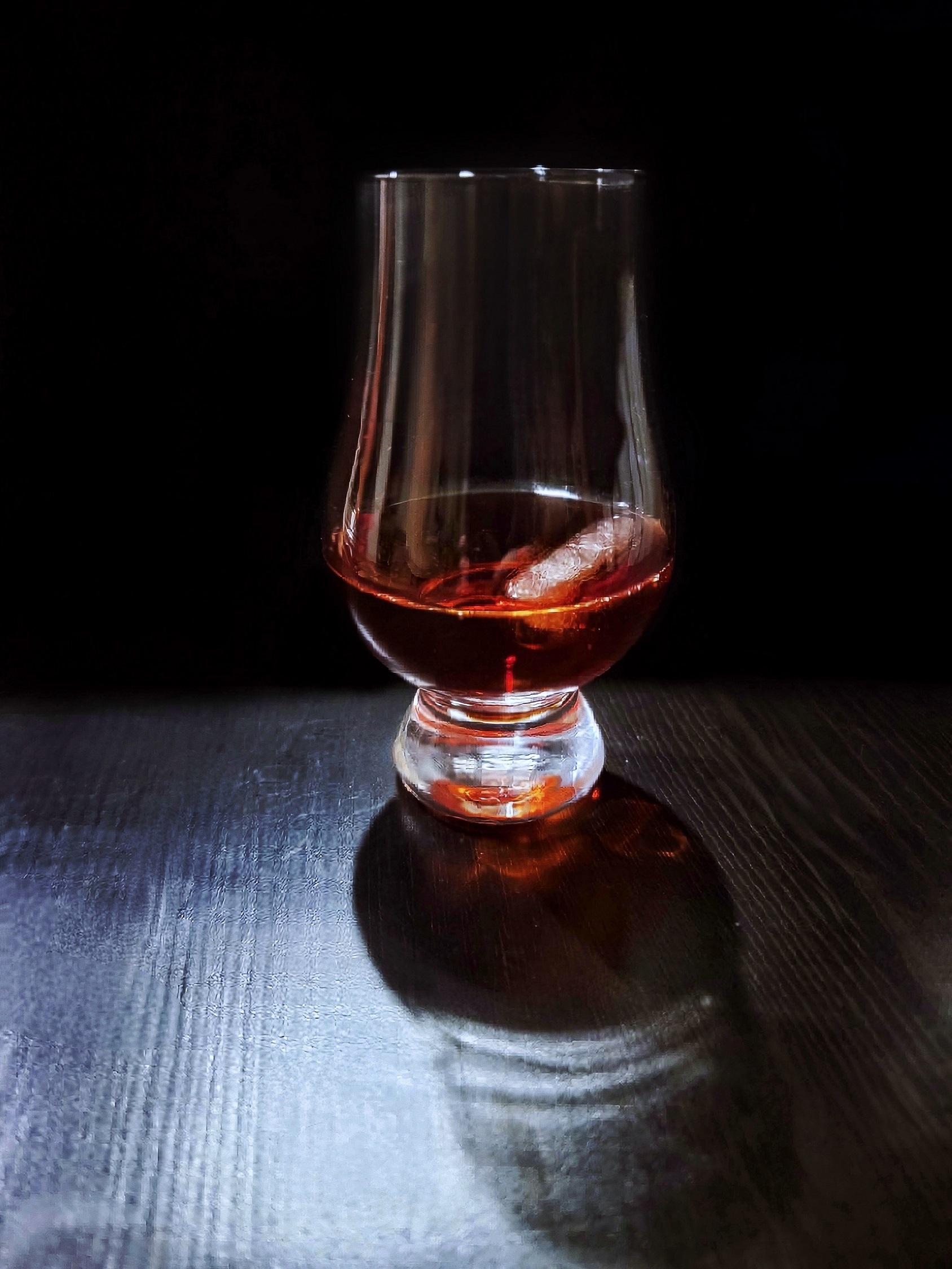
Bitter Betrayal | A Holy Wednesday Cocktail


Recipe

  • 1 oz Campari
  • 1 oz Montenegro Amaro
  • 1 oz Fernet Branca
  • 2 dashes Orange Bitters
  • 1 small ice cube (yes, it’s an ingredient)

Add all spirits into a small glass. Add one small ice cube and swirl until it is mostly melted. Enjoy.

View other Holy Day cocktails.

* * * *

I am doing a cocktail for each day of Holy Week based on the events that happened on those days. Today’s cocktail is really obvious, incredibly straightforward, and very, very good.

Holy Wednesday is the day that Judas betrayed Jesus. It’s a strange event in the gospels, with hardly any details. We don’t know Judas’ motives, why he was paid the amount he was, or the events leading to his betrayal.

The only details we get are that Jesus saw it coming, and the gospel writers saw this as one of the purest acts of evil and betrayal that’s ever been done.

So today’s cocktail tries to capture the bitterness of this betrayal–bitterness so great that it even ate away at Judas himself to the point of suicide.

So for this drink, I simply got the three bitterest ingredients I have, and threw them together with some orange bitters. And I am shocked how well it all came together.

The resulting drink is dark and complex, with both an herbal and fruit bitterness, and a bright pop of citrus and hint of mint. It is brash and subtle, all at once.

You will either love or hate this drink.

Continue reading
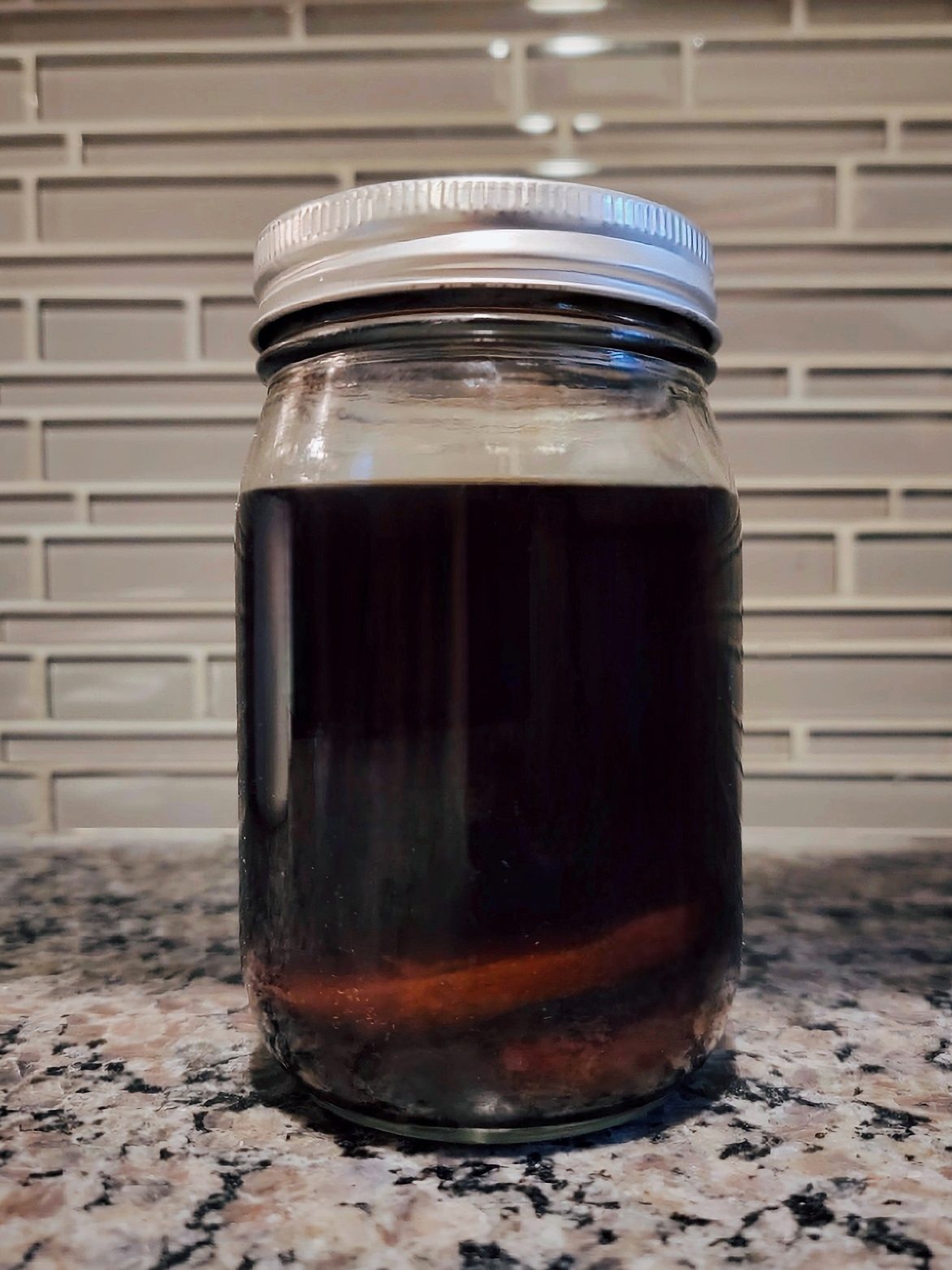

Lent-Infused Bourbon | a Holy Tuesday spirit


Recipe

  • 12 oz (half a bottle) High Proof Bourbon
  • 3 tsp Lapsang Souchong Tea
  • 1 tbsp White sugar
  • .25-.5 tsp Vanilla Extract
  • 1 large Orange Wheel, halved

Add all ingredients to a 16oz airtight mason jar. Shake and let sit in a cool, dry place. Shake it once or twice every day. Start tasting after day 3. Once you like the taste, you can strain the solids if you want. After day 5 or so, the taste won’t change and it’s fine to keep everything in the jar if you want.

View other Holy Day cocktails.

* * * *

We continue our Holy week cocktails with something a little different for Holy Tuesday–a liquor infusion!

This recipe makes a high proof bourbon that is very smoky, with a touch of citrus and sweetness that really gives a lot of complexity, perfect for Lenten reflection whether you drink it straight or in a cocktail (it makes an amazing Old Fashioned).

On Holy Monday, Jesus went into the temple and overturned tables, clearing out money changers. This surely was disruptive and provocative, so what does he do on Tuesday? Return to the temple and spend the day debating the religious leaders on a huge range of topics.

Jesus exposes the priests and teachers as hypocrites before the common people, announces God’s rejection of them, and even prophesies the destruction of the very temple in which they are arguing. And at the end of it all, God in Jesus has been fully and finally rejected by the religious institution and its leaders. The stage is set, and they prepare to kill him.

Continue reading

“Though the Fig Tree Not Blossom…” | A Holy Monday Cocktail


Recipe

  • 2 oz Brandy
  • 1 oz Lemon Juice
  • .75 oz Fig Syrup
  • .5 tsp Rose Water
  • 1 Egg White

Add all ingredients to a shaker without ice. Shake vigorously for 30-45 seconds. Add ice and shake again for 10-15 seconds. Double strain into a chilled coupe and garnish with flower petals.

View other Holy Day cocktails.

* * * *

Thursday through Sunday get all the attention in Holy Week, but significant and symbolic things also happened on the other weekdays. So I’m making a cocktail for each one.

On Monday morning, while on his way to the Jerusalem Temple, Jesus is hungry and sees a fig tree with leaves on it, so it should have fruit he can eat. This one does not. It’s also not the season for the tree to have leaves in the first place.

Jesus sees in the tree a symbol of the Temple itself. It has the outward appearance of bearing fruit but is barren, and it does not know its season. Likewise, the temple has become a place of commerce and routine, not realizing that now is the time of the Messiah.

God in Jesus is rejected by creation itself and his very temple, where the worship and prayer of his people ought to be. So Jesus curses this fig tree and clears out the money-changers in the Temple.

This cocktail tries to capture some of these themes. Its name comes from Habakkuk 3: “Though the fig tree does not blossom and no fruit is on the vines…yet I will rejoice in the Lord; I will exult in the God of my salvation.”

The grape brandy and soft texture hearken to the wine and solemnity of the temple, and the drink’s flavor is like a fig tree in bloom. But all this is–literally–soured by the lemon juice. It’s an unexpected drink that confuses the senses as you discern the flavors and the balance.

Continue reading

Palm Sunday Cocktail


Recipe

  • 2 oz Light Rum
  • 1 oz Lime Juice
  • .75 oz Toasted Coconut Syrup
  • .75 tsp Pandan Extract
  • 2 dashes Grapefruit Bitters
  • 2 dashes Rhubarb Bitters
  • .25 oz Jamaican Rum float (optional)

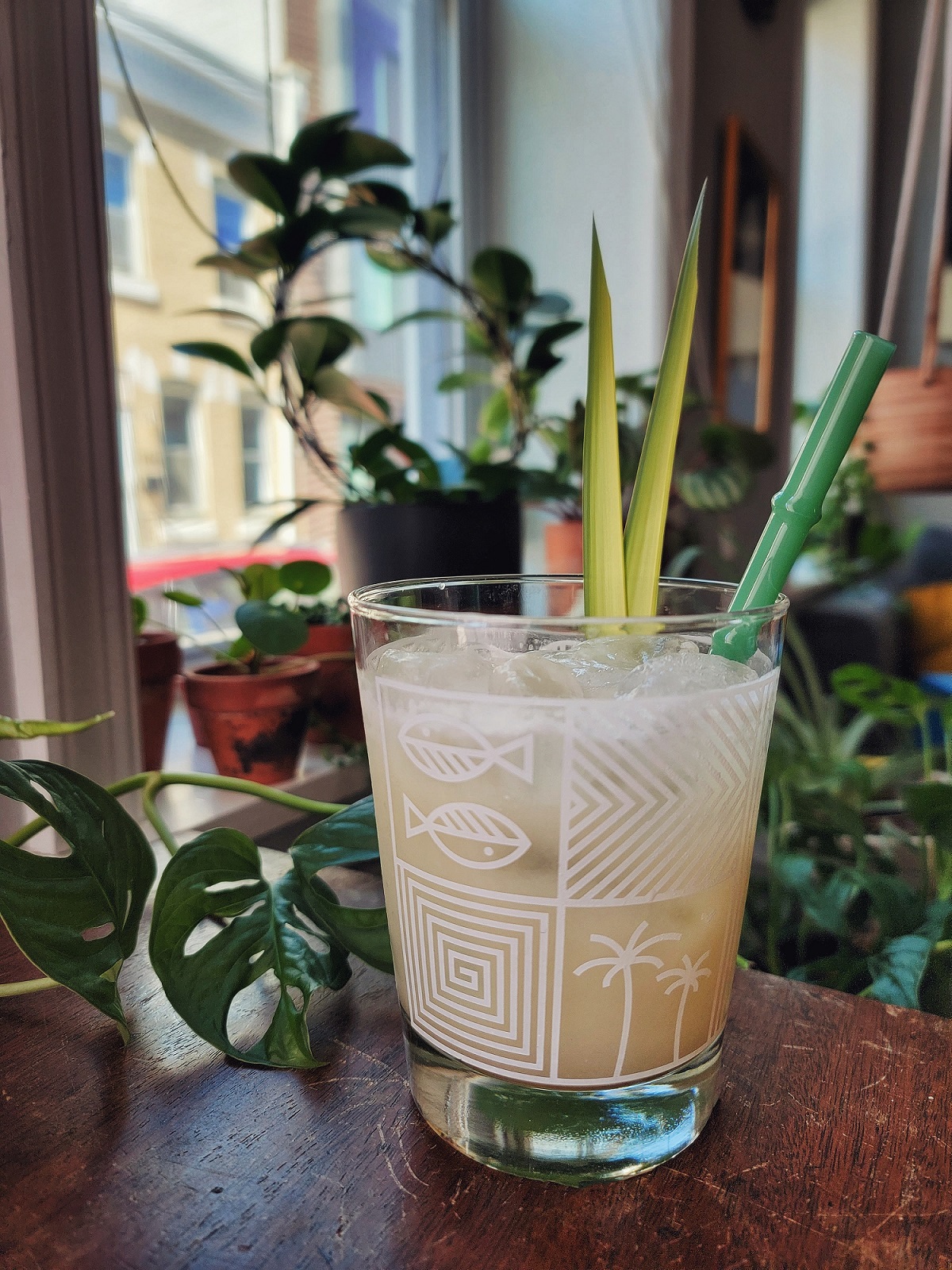
Add all ingredients (except the Jamaican rum) to a shaker. Add ice and shake. Free pour all contents into a glass and top with the remaining rum. Add a straw and garnish with pineapple or palm fronds.

View other Holy Day cocktails.

* * * *

It’s Holy Week, the most important and consequential seven days in all of human history, when Jesus suffered, died, and was raised. Each of these days carries significance, so I’m crafting a cocktail for each one.

But it all begins on Palm Sunday: a strange day full of hope, expectation, worship, and joy (and quite a bit of human misunderstanding). Lent is a season of brooding and fasting, but because Sundays are still feast days (and because of palms, of course) we’re doing a tiki drink!

On Palm Sunday, Jesus entered the city of Jerusalem in a way that symbolized to the Jewish people that he was their long-awaited king coming to rescue them from their exile.

The people come out and lay their coats and palm leaves on the road, ushering Jesus with fevered excitement and joy. However, while they thought he was coming as a violent, political, conquering king, he instead intended to save them from an even deeper spiritual exile.

I tried to capture these contrasts in this drink. It is a riff on a daiquiri, and is bright, refreshing, and tart, with multiple fruit bitters for complexity. However through the middle of it are these deep, heavier notes of toasted coconut and pandan. It’s a fantastic drink.

Blessed is he who drinks in the name of the Lord. Cheers!

Continue reading

Suffering: A Family Affair | James 1.2-3


My brothers and sisters, whenever you face various trials, consider it all joy, because you know that the testing of your faith produces endurance.
James 1.2-3

These verses are so rich, it’s going to take more than one post to mine their treasures. A flattened, cursory reading can sound very callous and insensitive to the lived experience of human suffering. However, I think there is a nuanced, sensitive perspective here that deserves sitting with a bit.

“brothers and sisters…”

James knows he is going to say tough things, so he uses this intimate term on the outset. He doesn’t say “children” holding himself above those going through trials, but uses this familial term for peers under the same authority. This shows that no one–not even an apostle, not even the brother of Jesus–is above suffering and trials.

It also reminds us that this letter is not to individuals, but a community. This is a huge key to these verses (and the whole book). The encouragement to “consider it all joy” when we face trials can seem at least insensitive, if not outright abusive, apart from this context.

Suffering should be a community effort. We ought to be close enough to others that we hurt when our spiritual family members hurt. We share the burden to live this verse out. In suffering, not everyone will have the wherewithal to follow all these encouragements, so others step in and make up for what we lack in a given moment.

Others can keep hope on our behalf when we feel hopeless. They can recognize the resilience and endurance growing within us when we have no more to give. They can maintain faith in God’s goodness while we doubt God is there at all. These words are meant to mark a community at all times, not individuals at all times.

Note here that the brother of Jesus calls us his siblings, showing the unity we have as the singular body of Christ. James knows that spiritual family is deeper and more defining than natural, biological family. Blood may be thicker than water, but spirit is thicker still.

See other Marginalia here. Read more about the series here.

Family Messiahs & Modern Dispersions | James 1.1


James, a servant of God and of the Lord Jesus Christ,
To the twelve tribes in the dispersion:
Greetings.
James 1.1

1. “servant” (or “slave”): This is surprising. Traditionally, James is one of the brothers of Jesus (I’ve tried, but I just can’t follow Catholicism in its beliefs of Mary’s perpetual virginity and these being Jesus’ “cousins”). The Gospels tell us that Jesus’ brothers denied Christ as Messiah. They thought he was crazy. What must have happened to James to change his view to be a “slave” of his brother? How easy would it be for any of us to so quickly start seeing our brother or sister as the Son of God through which all things we were created, by which all things are sustained?

2. “dispersion”: All Jews living outside Judea. We can find ourselves in this. God’s people far from where God has promised us to be, trying to figure out how to do this whole “Christianity” thing. This is what the rest of James is about. This whole earth is ours and we wait expectantly for the enemies to be cleared out so we can receive our inheritance. So what does life look like in the tension of awaiting promises for a new home, knowing it’s not yet time, but it will come? What is the first characteristic of this life that James brings up? What does life here look like? The answer is probably in verses 2-4: a life of suffering for the purposes that God has laid out for us.

See other Marginalia here. Read more about the series here.

1 Corinthians, Chapter-by-Chapter


I wrote another post applying 1 Corinthians to the divisions and differences among Christian groups. I recognize my thesis could be a little controversial, so I wanted to show my work with this survey of the letter to show Paul’s thought on these issues.

The letter is to a church divided, so it’s interesting the Paul begins by grounding them in what unifies them. They are sanctified, exist “in Christ”, are called to be saints, and call on the name of Christ as Lord. (1:1-9). But he pretty quickly gets into the divisions themselves (1:10-17).

He’ll eventually tell us what this gospel is, but first he teaches us how to think about it. Repeatedly, Paul hits hard one main idea: you can’t think about the gospel or Christianity in the same way that you think about other sets of ideas or beliefs. When you do that, Christianity is just going to look like foolishness (1:18-2:16).

But still, Paul never challenges the divisions themselves. He does not seem to think that differing views on even important issues is a challenge to Christianity or “the gospel”, which he puts in a different category than other parts of life and faith. (Ch. 3).

The problem is not what these Christians are believing, but how they are believing it and how that gets translated in their actions and worship.

Continue reading

Christianities: A Roadblock to Faith?


This is part of our youth group Lent and Easter series “Roadblocks and Reasons”, where we discussed Christian belief, the things that make it more difficult, and reasons that can sustain us.

How do we process the diversity of views within Christianity? How can something that claims to be “the” universal truth have so many divisions? What even is Christianity if it changes so frequently?

I think 1 Corinthians has the answer, and here it is:

Different “versions” of Christianity can exist, even with profound disagreements, because there is a “core” to Christianity that is consistent across groups, cultures, language, time, and space. What matters is that we cling to the Resurrection and love each other in spite of those differences.

Let’s see how Paul argues this. (Here’s a deeper dive on the book to show my work.)

1 Corinthians in a nutshell

The letter is written by Paul to a church in chaos, full of deep, substantive divisions around religious teachers, styles, and even different beliefs and practices. (1:10-13).

When Paul lists these group identities, I think we can mentally substitute different Christian denominations, like Catholics, Evangelicals, Pentecostals, or Progressive Christians. It’s not an exact comparison, but it can help us get in the right mindset.

If you were Paul, how would you go about addressing such division? For me, I’d probably tell them which faction is more right or which beliefs are most correct. I may tell them disagreement on these things denies our unity in Christ and embarrasses the faith. Others may even be tempted to propose a more watered-down faith that may be more agreeable, but gives little reason to actually believe it.

But Paul does none of that.

Continue reading

Roadblocks & Reasons: A Life Update & New Series


In 2017, I had finished my Masters of Divinity and was preaching, teaching, and leading things at my church on a path towards ordination in my denomination. Some personal crises hit and I stepped back from ministry work to heal, grow, and (hopefully) mature on a number of fronts.

After years of therapy and spiritual direction, a global pandemic, and a church merger (and getting married!), I am stepping back into some ministry work, albeit in a way I never expected: youth ministry.

After some discernment and consideration, I’m now the Interim Youth Director at my church.

When I was initially asked, I admit: it was out of left field. I had never seen myself as the “youth pastor” type, or at least the usual stereotype of the adult man-child with lingering frat boy partier energy, or middle-aged men cosplaying as such. (I know that’s incredibly unfair and not characteristic of the vast majority of youth leaders out there, but it is a type.)

More substantively, I am not the kind of person that has any interest in making Christian faith more palatable, less complicated, or easier. I love making its complexity more comprehensible, but not simplified or “easier”, as if that makes youth more likely to maintain their faith. In fact, I’ve seen the opposite. The less complex and flexible your faith, the more brittle, anxious, and fragile it becomes.

(You can probably already see where this is going.)

The longer I took this train of thought, I felt more and more excitement about cultivating this in youth, how important that mindset and ministry could be, and how well suited I actually was for it.

Continue reading

Ash Wednesday Cocktail


Recipe

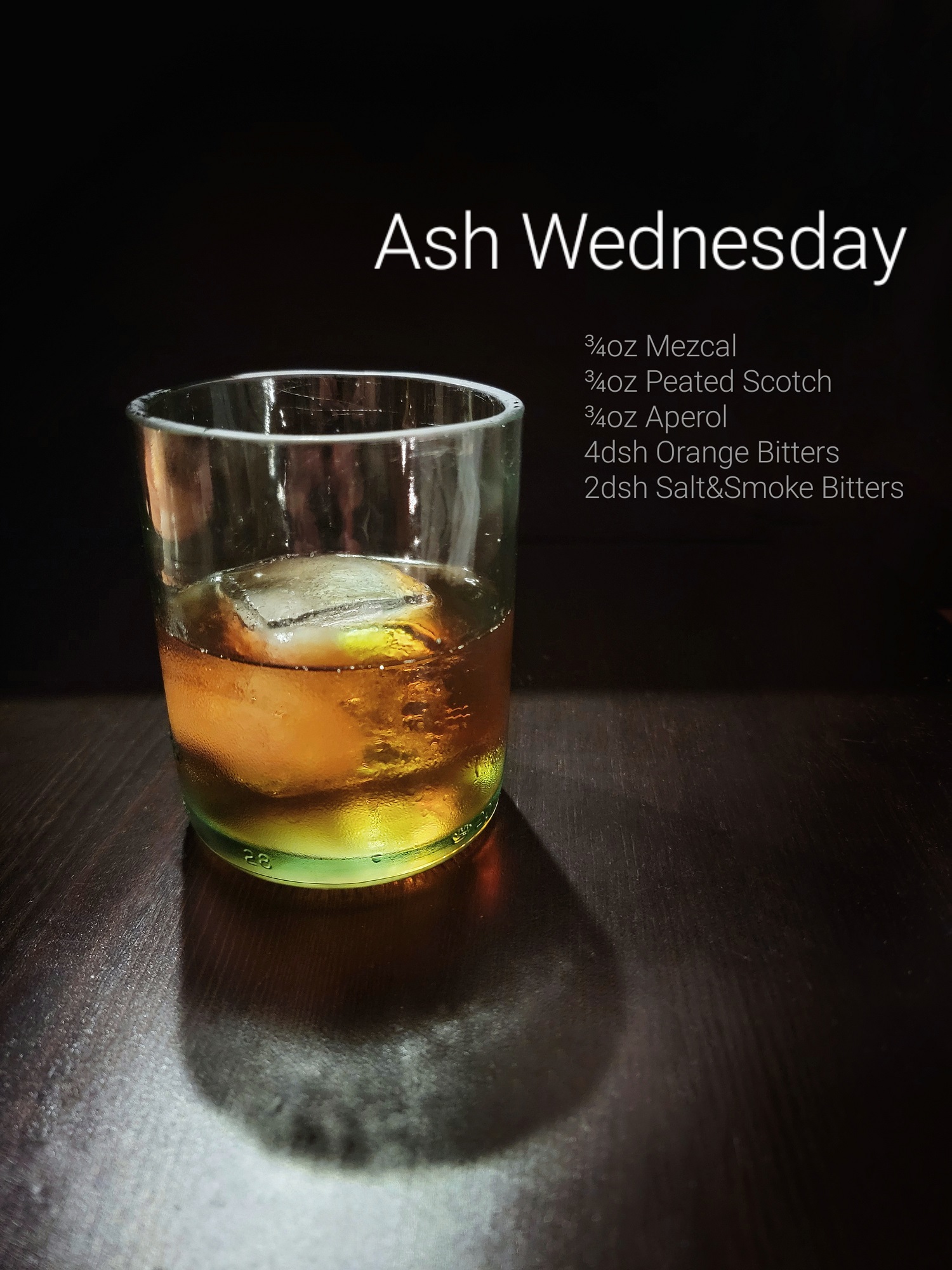
  • .75oz Mezcal
  • .75oz Peated Scotch
  • .75oz Aperol
  • 5 dashes Orange Bitters
  • 2 dashes Smoke and Salt Bitters

Build drink in an old fashioned glass over a large ice cube. Stir all ingredients. No garnish.

* * * *

With a new church season, we have a new cocktail. This one is named after Ash Wednesday, the holy day that begins Lent.

Lent is a season of fasting, reflection, and repentance. We focus on our mortality, our sins, and the darkness in the world that led Jesus to the Cross.

Ash Wednesday specifically is a time that Christians have crosses drawn on their foreheads in ash as an outward sign of their internal awareness of their death and sins. It is reflective, somber, simple, elemental, and dark.

With that in mind, I crafted this cocktail, which is strong, dark, and smoky with a subtle bittersweetness underneath it all. It really is meditative and lovely, while also packing a real punch.

Continue reading

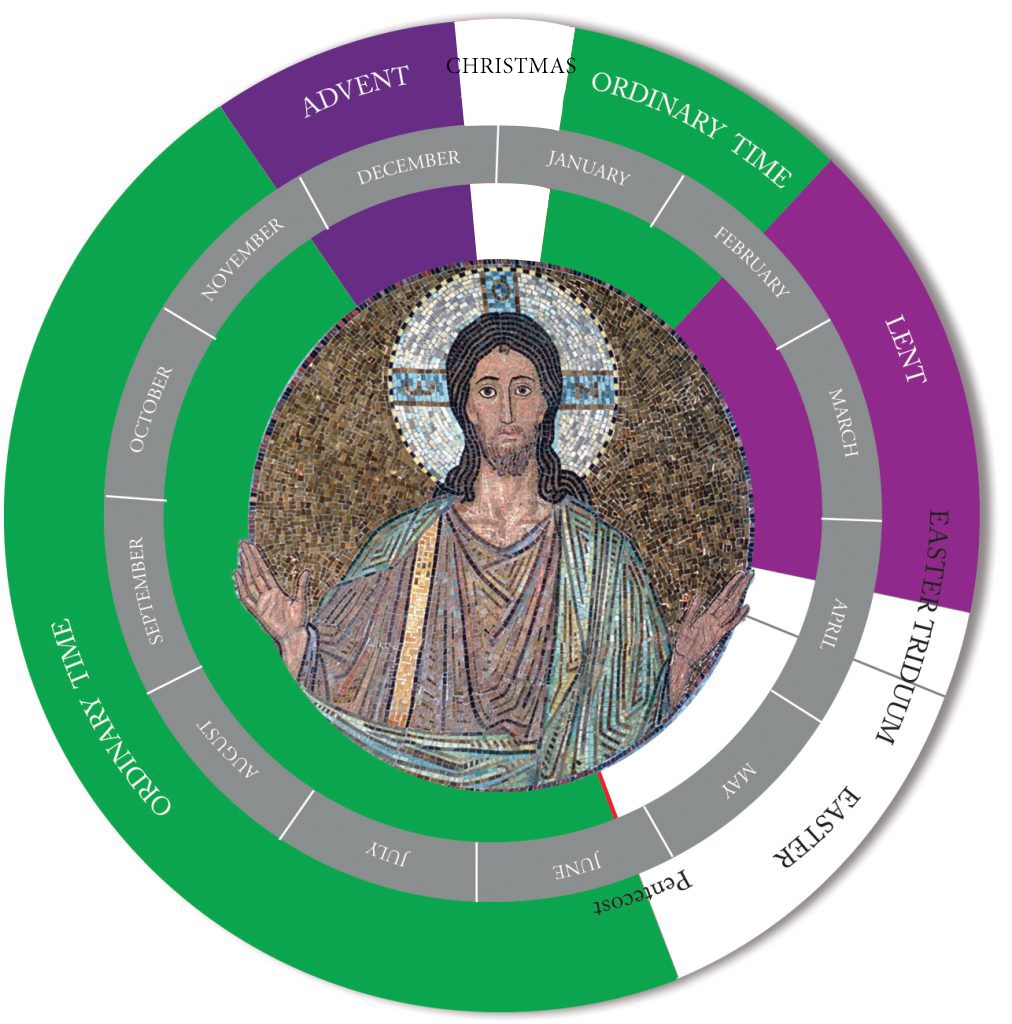
The Church Calendar: Jesus’ Life and Ours


In yesterday’s post, I mentioned that the Church Calendar follows the life of Jesus and tries to cover nearly the full range of human experiences. Today I want to unpack that a little bit.

The Life of Jesus in the Church Calendar

When we say that, we’re not just talking about Jesus’ earthly life. The calendar covers the whole existence of the Son of God all the way from eternity past to his future and eternal rule and reign.

  • We begin the Church Calendar with Advent. We feel the world’s darkness that existed before God ever came among us in Jesus, and we anticipate and cry out for his arrival, preparing for it in hope.
  • In Christmas, we generously celebrate that God did come as a child in Jesus and the time of his work on earth has begun.
  • Epiphany reflects on Jesus’ entire life and ministry and how it revealed the light of God to all people. We meditate on how we might reflect that ministry and light in the world today.
  • Lent focuses on sin and mortality as we follow Jesus to the cross.
  • But in Easter, we feast and sing that Jesus rose and that we live in light of this resurrection today.
  • Pentecost invites us to reflect on the intimacy of Jesus’ own Spirit within us, the gifts in our communities, and the global scope of God’s work in the world through his Spirit in us in the world.
  • That blurs into Ordinary Time, which reminds us that Jesus’ work today is quiet, and how so much of faith is lived in the mundane rhythms of time.
  • And lastly, Kingdomtide has us dwell on Christ’s kingship rule for today and eternity, and its implications for our justice work in this world now.
Continue reading

What’s the Point of the Church Calendar?


Every major faith has a religious calendar of festivals, holy days, and periods of fasting and feasting– even secular humanism. There seems to be some ancient wisdom here about humans, but what might it be?

Religious calendars are a humble admission of human limits. And rather than limiting our engagement with God, I’d argue the Church Calendar expands it by addressing three problems all humans have:

1. We can’t think all the things at all the time.

Christians believe many truths at once: God is transcendent but also imminent. God is three yet one. Jesus was God and man, a servant yet the king of the universe. Humans are sinful and weak, yet are the beloved crowns of creation. Humans die but are eternal. We remember the past, fully exist in the present, and look to the future.

If you’re a Christian, you likely agree with those statements, but I doubt you can hold and reflect on all of them in your mind at the same time.

2. Our thoughts of God are always off in some way.

Continue reading

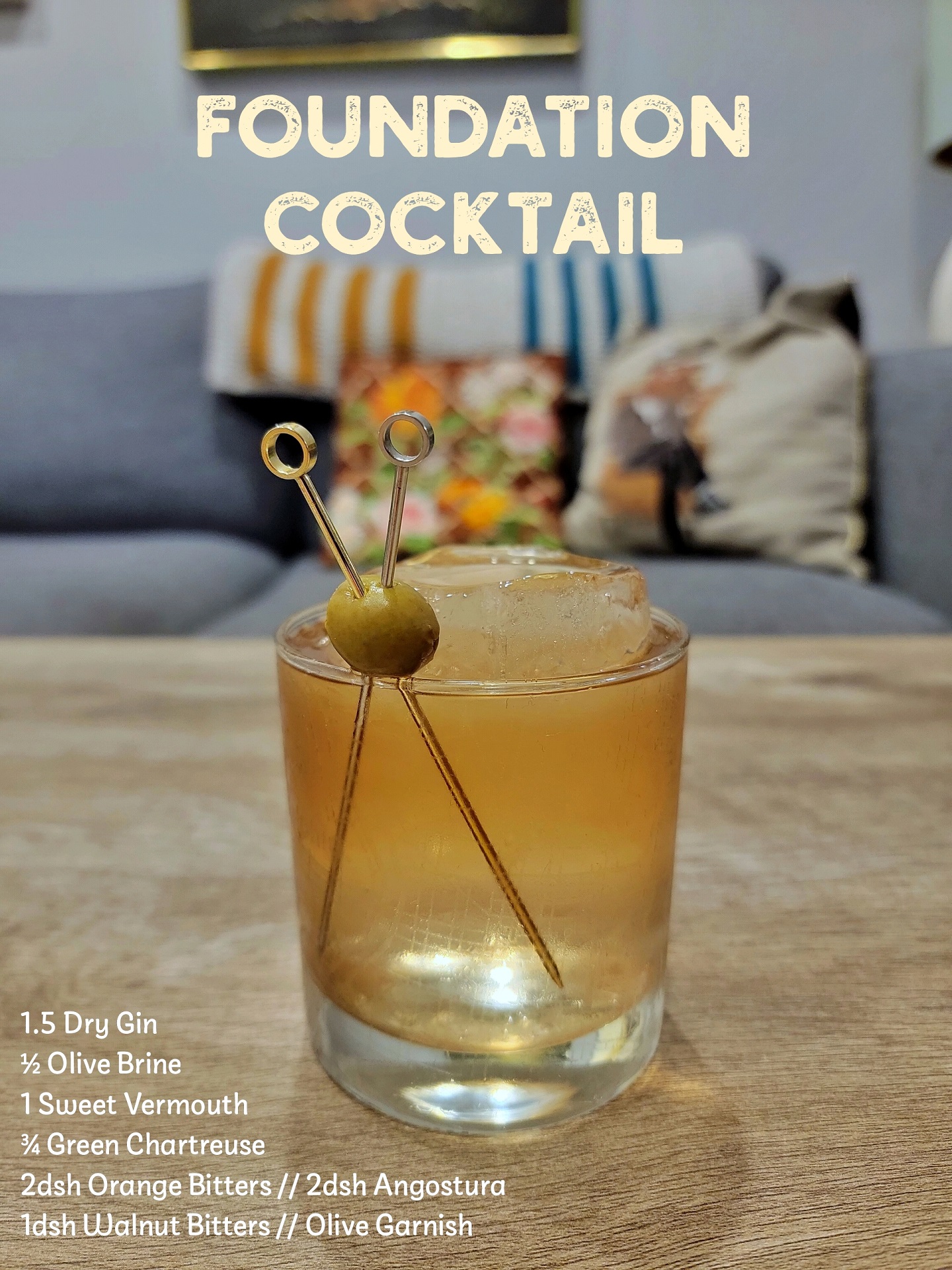
Foundation Cocktail (for the Feast of Peter’s Confession)


Recipe

  • 1.5oz Dry Gin
  • 1oz Sweet Vermouth
  • .75oz Green Chartreuse
  • .5oz Olive Brine
  • 2 dashes Orange Bitters
  • 2 dashes Angostura Bitters
  • 1 dash Walnut Bitters
  • Garnish with Olive

Thematically, you should build the cocktail in the glass with the ice, but this is a lot of liquid. So the other option is to stir all ingredients in a mixing glass and pour over a large ice cube and serve the rest in a sidecar glass on the side. Garnish with an olive speared by two picks.

* * * *

And on this rock, I will build my… cocktail.

January 18 is a multi-layered date in the Christian Church calendar. Primarily, it is a feast day to celebrate the moment when Peter confesses that Jesus is the Messiah. But a lot of other things happen in this same passage that are also included in this day.

Peter gets his name changed from Simon to Peter. Catholics would say that Jesus appoints Peter as the first pope here. Jesus also says the word “church” here for the first time, as he says he will build it on this “rock” of Peter, so this is also considered the honorary birthday of the church.

Lastly, the World Council of Churches chose this feast day as an appropriate kick-off for the annual Week of Prayer for Christian Unity. So like I said, it’s a lot, and so is this cocktail.

The drink is strong and maybe the most subtly complex drink I’ve ever made. It has a lovely progression from light saltiness in the front into a deep, quiet sweetness in the back. It’s an acquired taste, but one I’d proudly feature on a cocktail menu. So enjoy the drink while meditating on the church’s foundational moment and praying a prayer for Christian unity

Continue reading

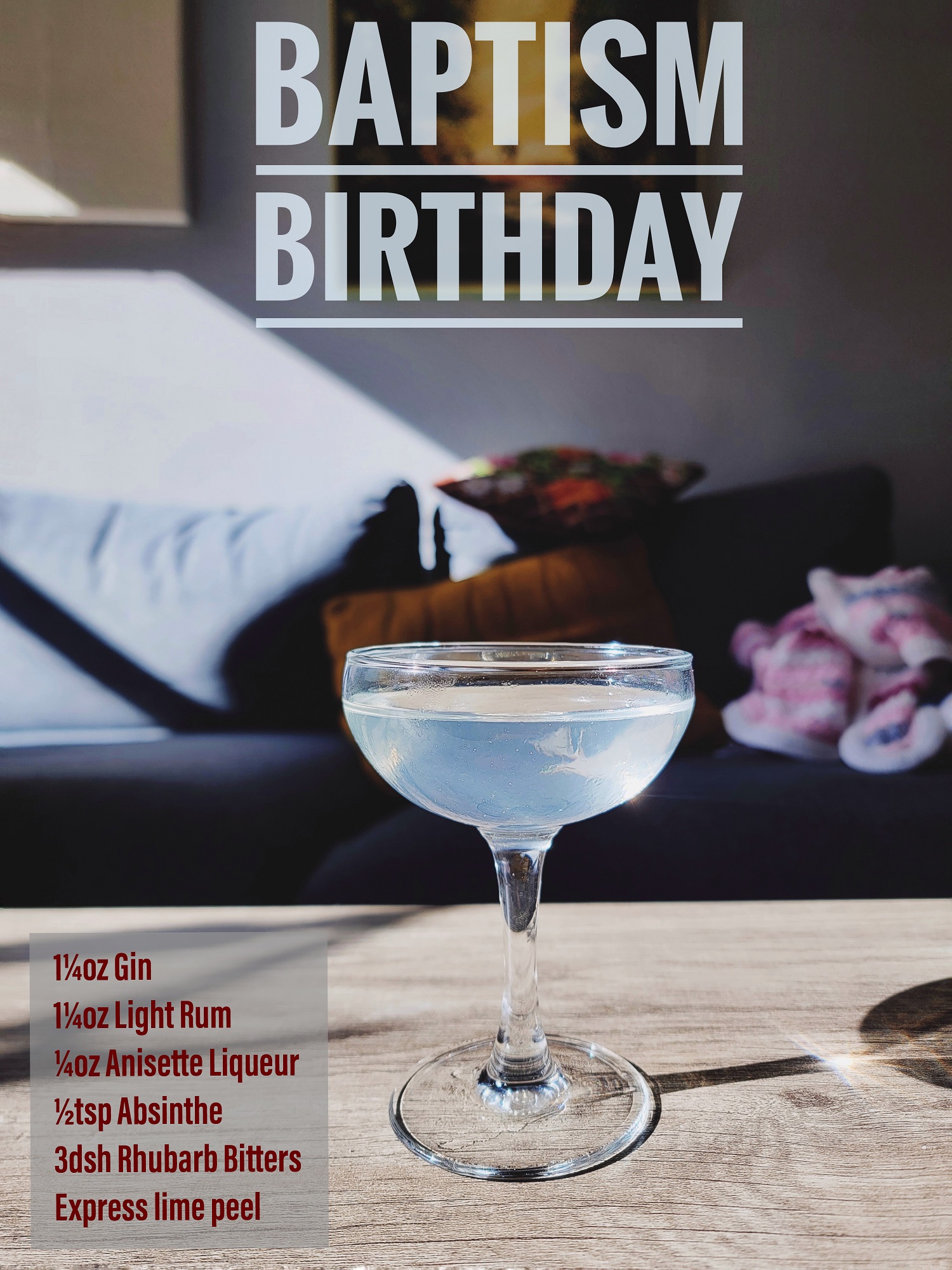
Baptism Birthday (a Holy Day cocktail)


Recipe

  • 1.5oz Gin
  • 1.5oz Light Rum
  • .25 Anisette Liquer
  • .5 barspoon Absinthe
  • 3 dashes Rhubarb Bitters
  • Express a lime peel over the top

Stir all ingredients in mixing glass and strain into a martini glass or coupe. Express the oils of a lime peel over the top. No garnish.

* * * *

For a several years now, I have celebrated my annual “baptism birthday” to reflect on my baptism, my membership in the family of God, and the seal of assurance God has on me.

It’s beautiful and meaningful, and it deserved a cocktail. And, seeing as yesterday was the Feast of the Baptism of our Lord, this seems like a good time to share it with you.

My goal was to make a drink like baptism–it looks like it’s just water but there’s a lot more going on.

Boy, did I succeed.

The drink is a lovely balance of floral and nutty with some herbal spice to it. These flavors really meld well together to create a complex bouquet of flavors that’s really striking (why don’t more drinks mix gin and rum!?).

This drink is a favorite of mine for its meaning, aesthetic, and taste, and I hope it can become that way to you. As you drink it, remember your own baptism and the promise of God to mark you and keep you as his child.

Ingredients

I used a juicy, citrus-forward, and very flavorful gin rather than a dry gin. For the rum, I used Maggie’s Farm White Rum, which is fantastic and has more character than most light rums, but whatever you have should work fine. Absinthe is an acquired taste, but it’s used in such small quantities and there are enough competing strong flavors that Absinthe-haters should not fear. It’s a lovely accent on the drink.

The only somewhat obscure ingredients are the bitters and liqueur. I supposed you could use orange bitters in place of rhubarb, but only if they are a very strong sweet orange flavor. The Fee Brothers Rhubarb Bitters taste almost like sweet tarts, with a unique strong burst of flavor (it’s especially delicious added to plain seltzer). So if you can get your hands on those, they’re worth your time.

Lastly, when most people think of Anise in cocktails, they think absinthe, but the liqueur is a very different beast. Absinthe begins with anise, but adds a lot of bittering agents. Anisette adds sugar, coriander, and other ingredients that make a very sweet, nutty flavor. So much so that you might be able to substitute Amaretto into this drink.

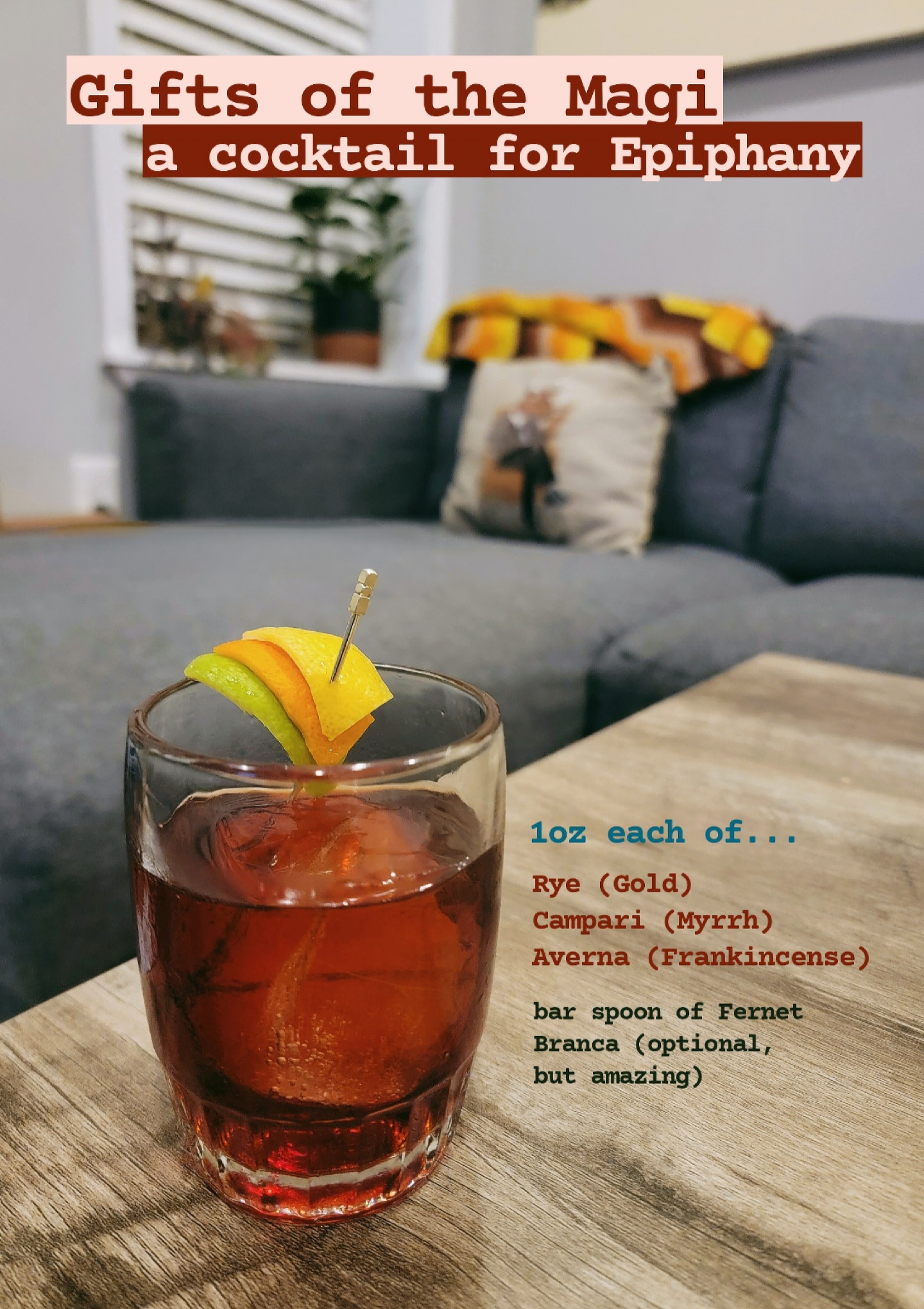
“Gifts of the Magi” (an Epiphany cocktail)


Recipe

  • 1oz Rye (for Gold)
  • 1oz Campari (for Myrrh)
  • 1oz Averna (for Frankincense)
  • .25oz Fernet Branca (optional)
  • Garnish with a trinity of Lemon, Lime, and Orange peels

Stir all ingredients in mixing glass and pour over fresh ice. Garnish with a peel each of lemon, lime, and orange.

* * * *

Tonight begins the season of Epiphany, a season that covers a lot of ground thematically and in the life of Christ. It begins January 6, with a celebration of the Wise Men visiting Jesus when he was three years old–and that’s what tonight’s cocktail is for.

At its core, it’s a riff on a Boulevardier, but wow is it good and different than the original. I think I prefer it. The Averna lends a lot of depth and complexity that vermouth often lacks.

The drink is in honor of the Magi. The Bible does not specify how many their were, but tradition says three. So we have here an equal three parts cocktail for each of the Wise Men’s gifts.

Rye gives its beautiful golden hue. “Myrrh” comes from the Aramaic word for “bitter”, so Campari it is. Lastly, my understanding is that Frankincense has a piney, sweet taste/aroma with a touch of orange, and this sounds a lot like Averna, my favorite amaro.

This drink is fantastic like this, but if you want an extra bit of depth and meaning, throw in a bar spoon of Fernet Branca which, to me, is the most “Epiphany” spirit out there–dark and bitter, with that bright minty note breaking through. I love it, and it complements the drink really well, though I know it’s an acquired taste.

Like this cocktail, I hope this season of Epiphany (and it’s interesting and unexpected melange of holy days) is one full of meaning, depth, and complexity for you. Cheers!