This is my covenant, which you shall keep, between me and you and your offspring after you: Every male among you shall be circumcised.
—Genesis 17:10
This is the Covenant: that his people will be marked and sealed. Baptism, anyone?
This is my covenant, which you shall keep, between me and you and your offspring after you: Every male among you shall be circumcised.
—Genesis 17:10
This is the Covenant: that his people will be marked and sealed. Baptism, anyone?
Yet the Most High does not dwell in houses made with human hands; as the prophet says,
‘Heaven is my throne,
and the earth is my footstool.
What kind of house will you build for me, says the Lord,
or what is the place of my rest?
Did not my hand make all these things?’
“You stiff-necked people, uncircumcised in heart and ears, you are forever opposing the Holy Spirit, just as your ancestors used to do. Which of the prophets did your ancestors not persecute? They killed those who foretold the coming of the Righteous One, and now you have become his betrayers and murderers. You are the ones that received the law as ordained by angels, and yet you have not kept it.”
—Acts 7.48-53
1. He skips the history of Israel that includes the Divided Monarchy, Exile, Return, Intertestamental Victories and and Sorrows, and the establishment of the Jewish state under Roman Rule.
2. He jumps straight from the temple to their Rejection of Jesus. This could be Jesus’ connection as a New Temple among us, it could highlight Israel’s inordinate obsession with the temple, even unto the rejection of their Messiah, or it could be a reference to the charges they brought against Jesus to get him crucified: blasphemy against the temple.
“Blessed are those who hunger and thirst for righteousness, for they will be filled.”
—Matthew 5:6
So encouraging. This gives me hope.
“Blessed are you when people revile you and persecute you and utter all kinds of evil against you falsely on my account. Rejoice and be glad, for your reward is great in heaven, for in the same way they persecuted the prophets who were before you.”
—Matthew 5:6
That’s interesting. He hasn’t mentioned any other Jewish or biblical things. Why root this encouragement in a random reference to the prophets?
After he had said this, he took bread; and giving thanks to God in the presence of all, he broke it and began to eat. Then all of them were encouraged and took food for themselves.
— Acts 27.35-36
Here is an obvious parallel between Jesus and Paul. I don’t know if these features are meant to hearken to the feeding of the 5,000, or the Last Supper. Actually, it’s probably not a parallel of the 5,000, because there is no multiplication or anything miraculous about this meal. But, Paul does the same thing with the bread that Jesus does elsewhere, and others are similarly encouraged by what he does. If I had to vote, I would say that this is a parallel of the Last Supper. Or, it is like the road to Emmaus passage, where Jesus is seen in the breaking of the bread.
Now there was a famine in the land, besides the former famine that had occurred in the days of Abraham. And Isaac went to Gerar, to King Abimelech of the Philistines.
—Genesis 26:1
This reads like a later interpolation because of confusion between the two drought accounts.
The Lord appeared to Isaac and said, “Do not go down to Egypt; settle in the land that I shall show you.
—Genesis 26:2
God’s first word to Abraham: “Go”. God’s first word to his son: “Do not go”. I love that. Not sure why, but I do.
Abimelech said, “What is this you have done to us? One of the people might easily have lain with your wife, and you would have brought guilt upon us.” So Abimelech warned all the people, saying, “Whoever touches this man or his wife shall be put to death.”
—Genesis 26:10-11
Oh the mercy of God, and how he protects the vulnerable here. But how do we understand when he doesn’t act in protection like this?
The Lord dealt with Sarah as he had said, and the Lord did for Sarah as he had promised.
—Genesis 21:1
What a beautiful and weighty verse. So much is concentrated right here. What a picture of our God!
Then certain individuals came down from Judea and were teaching the brothers, “Unless you are circumcised according to the custom of Moses, you cannot be saved.”…
— Acts 15.1
This is a great summary of the argument for the New Perspective on Paul. The key is the line about Moses. It’s not about works righteousness, but ethnic identity.
And God, who knows the human heart, testified to them by giving them the Holy Spirit, just as he did to us; and in cleansing their hearts by faith he has made no distinction between them and us. Now therefore why are you putting God to the test by placing on the neck of the disciples a yoke that neither our ancestors nor we have been able to bear? On the contrary, we believe that we will be saved through the grace of the Lord Jesus, just as they will.”
—Acts 15:8-11
Another quick NPP note. Notice here that Peter is not contrasting salvation by yoke versus salvation by grace, but that grace will also save them just as the Jews believed it saved them.
 Our Lent series this year is “The Weeping Word“, where we’re meditating on key places in the Scriptures where Lament, crying, tears, and weeping happen. Today, we look at the first instance of this in the Bible.
There is a particular rhythm that God’s people have always used in their liturgy. If you pay attention, you’ll see this rhythm pop up in lots of different places throughout the Christian Scriptures. My favorite unexpected place where this shows up is in the story of Cain and Abel.
Worship
The story opens with these two brothers coming to worship, answering an implied Call to Worship that issues from God. This is where the liturgical rhythm begins. God calls us to worship him, and we respond by offering him this worship to him.
But everyone comes to worship from different places, and not everyone’s heart and offering is pure.
And the Lord had regard for Abel and his offering, but for Cain and his offering he had no regard. So Cain was very angry, and his countenance fell. The Lord said to Cain, “Why are you angry, and why has your countenance fallen? If you do well, will you not be accepted? And if you do not do well, sin is lurking at the door; its desire is for you, but you must master it.”
Our worship gets twisted and directed towards the wrong things, and this is what we call sin. Offering worship wrongly and to the wrong things. Wrong worship produces wickedness within us.
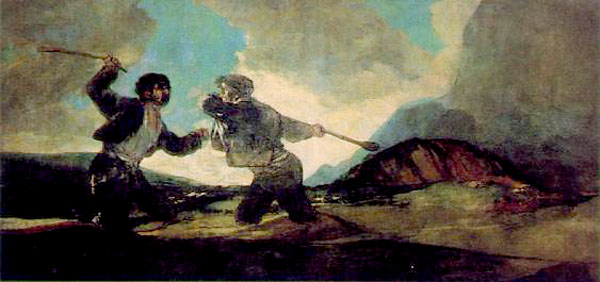
“Cain said to his brother Abel, “Let us go out to the field.” And when they were in the field, Cain rose up against his brother Abel, and killed him.
Marginalia is a section of this blog dedicated to (mostly) short reflections, meditations, questions, and difficulties I have while going through my Bible reading plan. I generally post between 1 to 3 of these per day, which can be difficult to keep up with. To aid in helping people engage with these posts, every weekend I post a round-up of all of Marginalia posts that appeared during that week. This list is in biblical canonical order.
There is an order to pastoring. We’d do well to heed it.
Noah Covenant “versus” Abraham Covenant. Go!
Be who you are.
God gave his people some glorious sloppy seconds.
But Herod the ruler, who had been rebuked by him because of Herodias, his brother’s wife, and because of all the evil things that Herod had done, added to them all by shutting up John in prison.
—Luke 3:19-20
Ohh, that’s a nice literary turn of phrase. “Speaking of all the evil things he had done, he added to them by imprisoning John.”
After the sabbath, as the first day of the week was dawning, Mary Magdalene and the other Mary went to see the tomb. And suddenly there was a great earthquake; for an angel of the Lord, descending from heaven, came and rolled back the stone and sat on it. His appearance was like lightning, and his clothing white as snow. For fear of him the guards shook and became like dead men. But the angel said to the women, “Do not be afraid; I know that you are looking for Jesus who was crucified. He is not here; for he has been raised, as he said. Come, see the place where he lay. Then go quickly and tell his disciples, ‘He has been raised from the dead, and indeed he is going ahead of you to Galilee; there you will see him.’ This is my message for you.” So they left the tomb quickly with fear and great joy, and ran to tell his disciples. Suddenly Jesus met them and said, “Greetings!” And they came to him, took hold of his feet, and worshiped him. Then Jesus said to them, “Do not be afraid; go and tell my brothers to go to Galilee; there they will see me.”
—Matthew 28.1-10
Wow. This here clearly says that they worshiped Jesus. And he does not at all correct them or steer them to worship elsewhere. This is in stark contrast to the angel in Revelation.
After we had reached safety, we then learned that the island was called Malta. The natives showed us unusual kindness. Since it had begun to rain and was cold, they kindled a fire and welcomed all of us around it…. Now in the neighborhood of that place were lands belonging to the leading man of the island, named Publius, who received us and entertained us hospitably for three days…. They bestowed many honors on us, and when we were about to sail, they put on board all the provisions we needed.
Three months later we set sail on a ship that had wintered at the island, an Alexandrian ship with the Twin Brothers as its figurehead.
— Acts 28.1-2,7,10-11
Three months!? That’s a long time! Good lord, what were they doing?
And they blessed Rebekah and said to her,
“May you, our sister, become
thousands of myriads;
may your offspring gain possession
of the gates of their foes.”
—Genesis 24.60
Sounds prophetic of things to come, if you ask me…. Also sounds a whole lot like Abraham and Isaac’s promise from God.
Now Lot went up out of Zoar and settled in the hills with his two daughters, for he was afraid to stay in Zoar; so he lived in a cave with his two daughters. And the firstborn said to the younger, “Our father is old, and there is not a man on earth to come in to us after the manner of all the world. Come, let us make our father drink wine, and we will lie with him, so that we may preserve offspring through our father.” So they made their father drink wine that night; and the firstborn went in, and lay with her father; he did not know when she lay down or when she rose. On the next day, the firstborn said to the younger, “Look, I lay last night with my father; let us make him drink wine tonight also; then you go in and lie with him, so that we may preserve offspring through our father.” So they made their father drink wine that night also; and the younger rose, and lay with him; and he did not know when she lay down or when she rose. Thus both the daughters of Lot became pregnant by their father. The firstborn bore a son, and named him Moab; he is the ancestor of the Moabites to this day. The younger also bore a son and named him Ben-ammi; he is the ancestor of the Ammonites to this day.
—Genesis 19.30.38
Wow, the ancestral origins of Christ are incredibly odd.
But the Lord afflicted Pharaoh and his house with great plagues because of Sarai, Abram’s wife.
—Genesis 12:17
The LORD enacts vengeance for the sake of his daughters. He hates injustice against them, even when the perpetrators are oblivious that they are perpetrating it.
 the long way home