#Marginalia Weekly Round-Up #2 [3/3-7/14]


Marginalia is a section of this blog dedicated to (mostly) short reflections, meditations, questions, and difficulties I have while going through my Bible reading plan. I generally post between 1 to 3 of these per day, which can be difficult to keep up with. To aid in helping people engage with these posts, every weekend I post a round-up of all of Marginalia posts that appeared during that week. This list is in biblical canonical order.

Haha. Such a great narrative turn. | Genesis 6.5-8

Haha.

Weirdest. Love story. Ever. | Genesis 29.10-12

The OT has some great stories to tell great truths. It’s love stories, however…

You marry a family | Genesis 29.13-14

In which the father of the bride says Adam’s marital vows to the future son-in-law.

Politics & Tithe | Ezra 8.35-36

Some interesting church/state arrangements here

The Economics of the Soul | Nehemiah 13:19-21

How capitalism can kill our souls.

Pastoring the Sabbath | Nehemiah 13:22

Here’s one pastoral task we often miss.

Esther is no Sunday School role-model | Esther 2.8-9

Turn on some slow jams and read this. Also be sure to catch the comments.

Esther & Political Advocacy by God’s People| Esther 4.3,8 [DOUBLE-HEADER]

This is why I started this series. Read this, and then read the comments. My mind was blown. Hopefully yours will be as well.

The Holy Spirit exorcizes, no matter who you are | Matthew 12:24-28

It seems the Holy Spirit shows no favoritism.

Love your neighbor…even other denominations | Matthew 22:34-40

Bet you never caught the context of this key verse….

Paul’s ministry thesis & maybe Theophilus’ identity? | Acts 28.23-31

We get a little deep into some reader-response literary criticism and biblical studies.

Preaching the Gospel to Christians | Romans 1:14-16

The Gospel. Is. Everything.

_________________

See other Marginalia here. Read more about the series here.

Esther & Political Advocacy by God’s People| Es4.3,8 [DOUBLE-HEADER]


esther_mordechai-arent-de-gelderUpdate (3/8): This little seemingly inconsequential post caused quite the comment thread on Facebook and represented every reason I’ve started this series. I got challenged and my view of the book of Esther got broadened more than I ever could have imagine. I’ve reproduced those comments below.

In every province, wherever the king’s command and his decree came, there was great mourning among the Jews, with fasting and weeping and lamenting, and most of them lay in sackcloth and ashes. —Esther 4.3

Notice here that when the Jews are faced with political persecution, and an actual existential threat from the political authority, their response is not activism,  nor violence, nor lobbying, it is instead to pray, weep, lament, fast, and cry out to God, their true king and political leader.

Mordecai also gave him a copy of the written decree issued in Susa for their destruction, that he might show it to Esther, explain it to her, and charge her to go to the king to make supplication to him and entreat him for her people. —Esther 4.8

Well…Okay, okay. I see that only a few versus later, Mordecai does try to appeal to Esther, the political insider, to lobby on behalf of her people. So, that sort of goes against what I just said above.

But, notice that they still did not use violence or mass political demonstrations or mobilization. They peacefully engaged those from their community who were specifically equipped to engage politically. They didn’t see themselves as primarily political creatures,  nor their problems primarily as political problems,  nor the answers primarily as political solutions. The political piece was merely one facet in the kaleidoscope of human experience through which God works his will,  and not even the main one.

My not-so-subtle point: the Evangelical obsession with political activism and using politics to accomplish (what they view as) the goals of the Kingdom are anti-biblical and find no basis in Scripture.

See other Marginalia here. Read more about the series here.

[image credit: “Esther and Mordechai write the Second Letter of Purim” by Arent de Gelder]

The most succinct defense of infant baptism I’ve ever read.


“It might be argued that there is not one explicit reference in the New Testament to a child being baptized. Have we any warrant then for doing it? If we require explicit texts for our practice, then there would be no warrant for women to come to the Lord’s Table. There is no single explicit reference to that in the New Testament. Our warrant is not in isolated texts or precedents, but in the Gospel itself. Christ died for men and women, adults and infants, and we acknowledge that in faith in baptism…”

— from James B. Torrance’s beautiful book Worship, Communion, and the Triune God of Grace 

Cool Hand Luke’s “Of Man”: a favorite album is now free (and perfect for Lent)


cool-hand-luke-of-man-coverIf you don’t care about the commentary, and just want the amazing music, you can get it at Noisetrade. If you’d like to listen to the album first, just press play:


Someone’s “favorites” are a weird thing to define.  They are prone to fickleness, are tied so closely with whatever else is subjectively happening in one’s life, and usually bear little resemblance to what that person would consider as the technically “best” of any particular thing. So when you have a “favorite” that sustains that title for years–decades, even–it’s a big deal.

Since high school my favorite band has been Cool Hand Luke. Back then they were a little hardcore screamo band. At that time, to get their CD, you had to mail a check to the lead singer’s house. As time when on, their style changed at the very same time and in the very same way as my own. It felt like we were growing together.

Around my senior year of high school, they came out with an album called Wake Up,  O SleeperAnyone who’s heard of CHL probably knows them from this stunningly powerful work of art. It quickly became the most influential and “favorite” album of mine. And it has been ever since.

Towards the end of college, I became pretty good friends with the lead singer. For a while, every few months, we’d talk for a couple of hours on the phone. He was discerning whether to go to seminary and what to do about the financial mess their shady manager had left the band in. I got to see his heart and the heart behind the beautiful music they made.

Eventually, he got married, I started seminary, and he decided it was time to end the band and begin seminary himself. But there was one last project he felt he had to do.

Of Man.

Continue reading

Politics & Tithe | Ezra 8.35-36


At that time those who had come from captivity, the returned exiles, offered burnt offerings to the God of Israel, twelve bulls for all Israel, ninety-six rams, seventy-seven lambs, and as a sin offering twelve male goats; all this was a burnt offering to the Lord. They also delivered the king’s commissions to the king’s satraps and to the governors of the province Beyond the River; and they supported the people and the house of God.
Ezra 8.36

Interesting line… Is this saying that they had people “on staff” who managed their civil tithe to the secular authority (taxes), and the lay people supported the House of God? Is this like tax accountants “on staff” among the leadership of the temple?

See other Marginalia here. Read more about the series here.

The Economics of the Soul | Nehemiah 13:19-21


When it began to be dark at the gates of Jerusalem before the sabbath, I commanded that the doors should be shut and gave orders that they should not be opened until after the sabbath. And I set some of my servants over the gates, to prevent any burden from being brought in on the sabbath day. Then the merchants and sellers of all kinds of merchandise spent the night outside Jerusalem once or twice. But I warned them and said to them, “Why do you spend the night in front of the wall? If you do so again, I will lay hands on you.” From that time on they did not come on the sabbath.
Nehemiah 13:19-21

Interesting economic implications. There was a real understanding of human nature that understood the power of economics on the human self. If you let the market or commercialism have any real presence among the people of God,  it destroys them, and invites God’s wrath upon them.  The market destroys souls. We cannot “un-economize”  our selves.  Hence Paul’s disruption of the Ephesians market when people are converted. This is essentially what the Pope wrote about recently. We can use the market to serve human flourishing, or we can serve it at the expense of that flourishing. Nehemiah knows the tendency of the human heart to serve economics rather than have it serve us,  so he keeps the merchants away from God’s people on the Sabbath,  when they should be re-syncing themselves with the Living God.

See other Marginalia here. Read more about the series here.

Paul’s ministry thesis & maybe Theophilus’ identity? | Acts 28.23-31


After they had set a day to meet with him, they came to him at his lodgings in great numbers. From morning until evening he explained the matter to them, testifying to the kingdom of God and trying to convince them about Jesus both from the law of Moses and from the prophets. Some were convinced by what he had said, while others refused to believe. So they disagreed with each other; and as they were leaving, Paul made one further statement: “The Holy Spirit was right in saying to your ancestors through the prophet Isaiah,

‘Go to this people and say,
You will indeed listen, but never understand,
and you will indeed look, but never perceive.
For this people’s heart has grown dull,
and their ears are hard of hearing,
and they have shut their eyes;
so that they might not look with their eyes,
and listen with their ears,
and understand with their heart and turn—
and I would heal them.’

Let it be known to you then that this salvation of God has been sent to the Gentiles; they will listen.”

He lived there two whole years at his own expense and welcomed all who came to him,31 proclaiming the kingdom of God and teaching about the Lord Jesus Christ with all boldness and without hindrance.
Acts 28.23-31

What a thesis statement for all of Paul’s ministry and the books of Luke: the hard-heartedness of the Jews and the inclusion of the Gentiles. Perhaps this was a main reason why Luke wrote both of these books to the mysterious Theophilus. Maybe he wrote these to offer assurance to this Gentile man (as evidenced by his Roman name) of his inclusion in the mission and salvation of God.

On a side note, it’s odd that this statement of the Gentile inclusion in the family of God (throughout Paul’s preaching) rests primarily on the a story of the preaching ministry of Paul. It’s well-known that Luke draws literary parallels between Jesus in the Gospel of Luke and Paul in Acts. But since this was being written to Theophilus, and these writings about Paul seem to rest on an implied authority and trust that it seems Theophilus would have had in Paul (if he said it, then it must be true), then could this be a hint that Theophilus met Paul at some point or even that Paul was the one that converted him?

Just a thought. A pure, conjectural thought.

See other Marginalia here. Read more about the series here.

Lent & Ash Wednesday for Kids (….or maybe not)


rabu-abuLast night, my church had their Ash Wednesday service. I had the honor of helping lead the liturgy by offering the greeting and opening introduction/ explanation. Unlike most times we gather, the kids stayed in the service so I was asked to make sure my opening words were at least somewhat comprehensive to children.

This turned out to be one of the most helpful exercises for me. I ended up spending more time thinking through these brief opening words than I normally do and crafting each line as intentionally as possible. And so, for the heck of it, I thought I’d throw this up on the blog for anyone who was struggling with explaining Lent and/or Ash Wednesday to their young ones, and also to get your thoughts on how best to communicate this to kids. Here’s what I said:

(Lent: Two things hold us back)

Tonight kicks off the Church season of Lent. Most all of us live our lives wanting to be better people than we are right now. But if we’re honest, there are two things that can get in the way of that sometimes and make us frustrated as we try and become the people we want to be.
Continue reading

Pastoring the Sabbath | Nehemiah 13:22


And I commanded the Levites that they should purify themselves and come and guard the gates, to keep the sabbath day holy. Remember this also in my favor, O my God, and spare me according to the greatness of your steadfast love.
Nehemiah 13:22

It’s is part of the soul-care of the church leaders to safeguard the Sabbath rest of God’s people.

See other Marginalia here. Read more about the series here.

Weirdest. Love story. Ever. | Genesis 29.10-12


Now when Jacob saw Rachel, the daughter of his mother’s brother Laban, and the sheep of his mother’s brother Laban, Jacob went up and rolled the stone from the well’s mouth, and watered the flock of his mother’s brother Laban. Then Jacob kissed Rachel, and wept aloud. And Jacob told Rachel that he was her father’s kinsman, and that he was Rebekah’s son; and she ran and told her father.

Genesis 29.10-12

Weirdest. Love story. Ever.

Also notice that he kisses her even before they’re betrothed.

See other Marginalia here. Read more about the series here.

Love your neighbor…even other denominations | Matthew 22:34-40


When the Pharisees heard that he had silenced the Sadducees, they gathered together, and one of them, a lawyer, asked him a question to test him. “Teacher, which commandment in the law is the greatest?” He said to him, “‘You shall love the Lord your God with all your heart, and with all your soul, and with all your mind.’ This is the greatest and first commandment. And a second is like it: ‘You shall love your neighbor as yourself.’ On these two commandments hang all the law and the prophets.”

Matthew 22:34:40

I find it fascinating that this opens with the fact that the Pharisees were only respecting Jesus and calling him Teacher because he had smacked down their fellow Jews who happened to be in a different “denomination”. How often do we do this? How often do we latch on to a teacher not because God meets us in their  proclamation, but because they reaffirm our beliefs and/or put down those we disagree with? Fellow family members in the people of God, no less! How dare we?

This is why I find it brilliant that Jesus stresses the vertical in the greatest commandment, but he also throws in the necessity of loving our neighbors as well. Don’t miss this. He essentially adds a human-relational dimension to the Shema, one of the most beloved of Jewish texts! And so he incorporates how we treat others as just as essential as how we love God. When we don’t love those around us-especially the fellow people of God that we disagree with-we break the most important of commandments and fall short in loving our God.

See other Marginalia here. Read more about the series here.

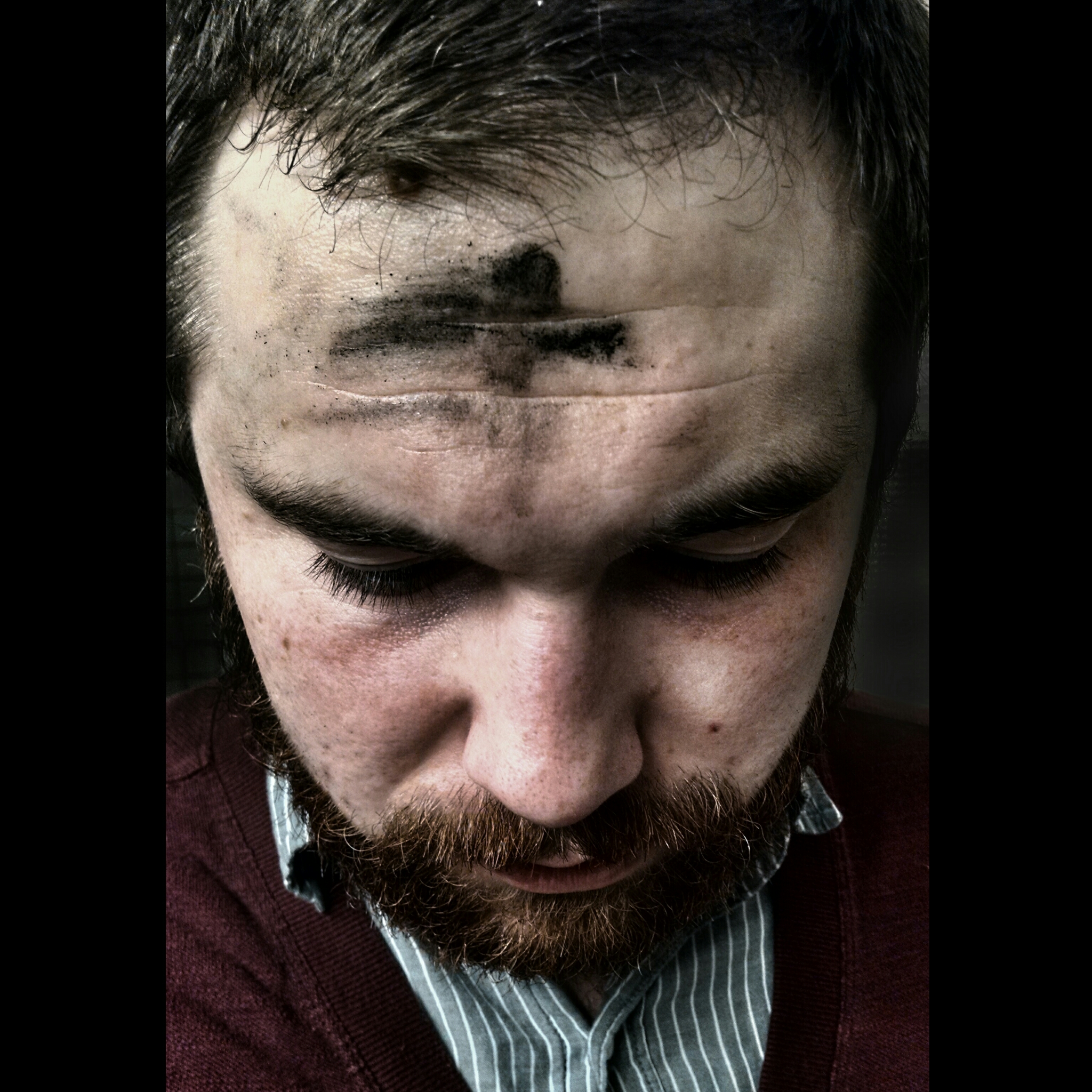
Ash Wednesday Benediction [POEM]


ash-wednesday-faces-of-the-faithful-photos

The shape of the promise is death 
Say the word, feel the space, build the coffin in your mouth
Climb inside and make it yours

For it is

That tomb washed white, emerges in life,
enslaves in death, watches the end

agape

Expiration exorcism, cast the spirit, cast it low;
Cast your eyes and feel the blow
Cast the lots

Carve the promise into your bones, your forehead

Let your face shine with Moses glory: that of the immortal God
–that suffering, dying, ashen glory-story

May your face shine with Ash
As you wear the world’s judgment embedded in your skin, in your body,
May you feel the world’s death in your face, may you hold it before your eyes

May the flame that licked the palm find its end in you.
Bear the flame the world shall never know, precisely so it never will

Take their judgment and rub it on our faces and cast it to proclaim

Lift up your eyes

Wear it loud

The shape of the promise is death

[read my other Holy Day poetry here]
all writings licensed: Creative Commons License

Welcome to Ash Wednesday. Lent begins.


ash-wednesday-pew-lentToday is Ash Wednesday. In just under two months from today we’ll come to the highest point in the Christian Church calendar, Easter. That is where we’ll celebrate Christ’s Resurrection and how God’s perfect world broke into the present and our greatest enemies–sin and death–were conquered and shown to have no more dominion over us and the rest of the world. It’s meant to be the most effusive, overflowing, even ridiculous time of joy.

And yet, when we look at Jesus’ Resurrection, we see that before it ever took place, there was Death. And before that, there was an entire lifetime of loneliness, pain, suffering weakness, and isolation. We see that it was a life surrounded by evil forces and whispers that haunt and hurt Jesus and the people he loved.

And so, our early Church Mothers and Father thought it would be wise to have this time before Easter to prepare, so we might end up celebrating during Easter all the more.

Resurrection was itself a statement against our two greatest enemies: Sin and Death. And so to participate in Resurrection, we take the time of Lent to meditate and press into those things to which Resurrection was the response. We do this not out of morbidity, but out of anticipation.

Continue reading

Haha. Such a great narrative turn. | Genesis 6.5-8


The Lord saw that the wickedness of humankind was great in the earth, and that every inclination of the thoughts of their hearts was only evil continually. And the Lord was sorry that he had made humankind on the earth, and it grieved him to his heart. So the Lord said, “I will blot out from the earth the human beings I have created—people together with animals and creeping things and birds of the air, for I am sorry that I have made them.”

But Noah found favor in the sight of the Lord.
Genesis 6:5-8

Greatest narrative turn ever.

See other Marginalia here. Read more about the series here.