What is the Proclamation of the Word?


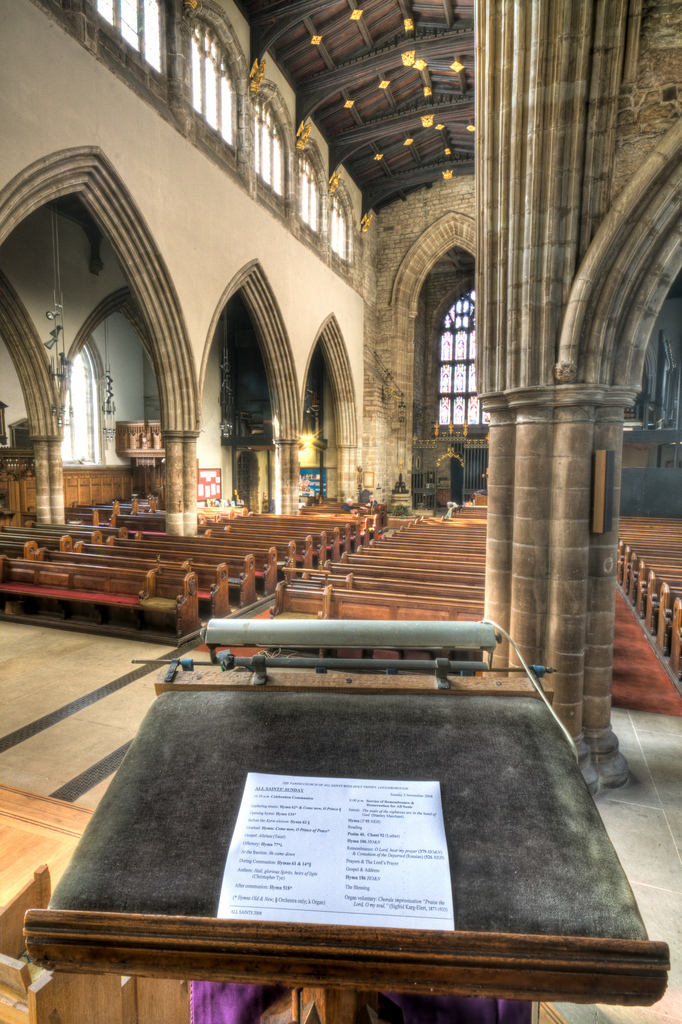
pulpit-church-hdr-bibleFor a class recently, I had to read a bunch of items on the part of a worship service in which the Bible is front and center. This “section” of the service is called “The Proclamation of the Word”, or more generally, the “sermon” or homily”. I ran across this great quote:

The very act of preaching, in fact, sets up questions and problems.  Most people no longer understand the difference between preaching and other types of public speaking…. Many people think of a sermon as an occasion for being entertained, instructed, or inspired in matters of religion — hence the customary comment at the church door, “I enjoyed your sermon.”  Nowadays, it is only congregations who have been engaged in a new way of thinking for a long time who are going to sit expectantly waiting for the Word of God to be spoken — for preaching, properly understood, is the good news that God preaches through human beings.  Astonishingly enough, this is the method of communicating that God has chosen.  This is an offensive idea; there are a hundred complaints to be brought against it.  Most common is the objection, “How can anyone presume to speak the Word of God?”  Or to put it another way, “How can any human being be so arrogant as to think he is a mouthpiece of God?”  How indeed?  It is a very good question.  The validity or invalidity of preaching rests on such issues as these. (Fleming Rutledge, Not Ashamed of the Gospel)

I think Rutledge is right (and not just because she is an incredible preacher–all you complementarians could learn a thing or two from her!): people don’t seem to really see preaching as fundamentally different than any other lecture or other public speaking. Preaching is often (subtly and unspokenly) seen (or at least treated) as “mere” personal edification–similar to a book discussion or philosophical lecture or self-help conference.
Continue reading

A night so holy and silent | Carols in Prose


winter-snow-trees-bwFor my Advent series this year, I am going through Christmas Carols and unpacking them, re-writing them in prose, hoping to pull out more of their meaning, theology, significance, and beauty. Here’s today’s source material.

As holy as that night was–as anointed, blessed, prophesied, and sacred as it was–it was just as silent. You know in winter when find yourself in the midst of falling snow, and it almost has a loud silence? It was like that.

Who knew that this utter holiness and cosmic in-breaking would be so quiet? So…uneventful? Yes, there were angels and such, but they were far away with us. There at the manger? Silence.
Continue reading

May God give rest to you weary, happy souls | Carols in Prose


flinks-angels-anouncing-the-birth-of-christ-to-the-shepherds

For my Advent series this year, I am going through Christmas Carols and unpacking them, re-writing them in prose, hoping to pull out more of their meaning, theology, significance, and beauty.  Here’s today’s source material.

I pray that God may give rest to all of you. Those of you that are tired and in need of rest, and yet you doggedly hold on to a soul-merriment and joy that cannot be taken from you. I pray he grants you rest and lets nothing steal your soul’s joy.

Especially in this season, I pray he strengthens that joy as you remember that he has come among us in Christ, our Savior, whose birth we celebrate during this time. We remember that he came as a human–but not just that. We remember he came as the weakest and most frail of human forms: one who is born.

But we don’t jut remember that he came, or even just how he came–but also, why.

This Advent season precedes Christmas as Lent precedes Easter–it’s a time to meditate on the darkness, weight, and tension of this world. The darkness and power that drew us away from God as Home; the darkness from which we were saved. And in this, we are given that rest, comfort and joy.

Oh, that we might experience God’s good news of comfort and joy proclaimed from the rooftops of our lives! Just think of that: Comfort. And Joy.

Continue reading

Advent & Hoping for Justice


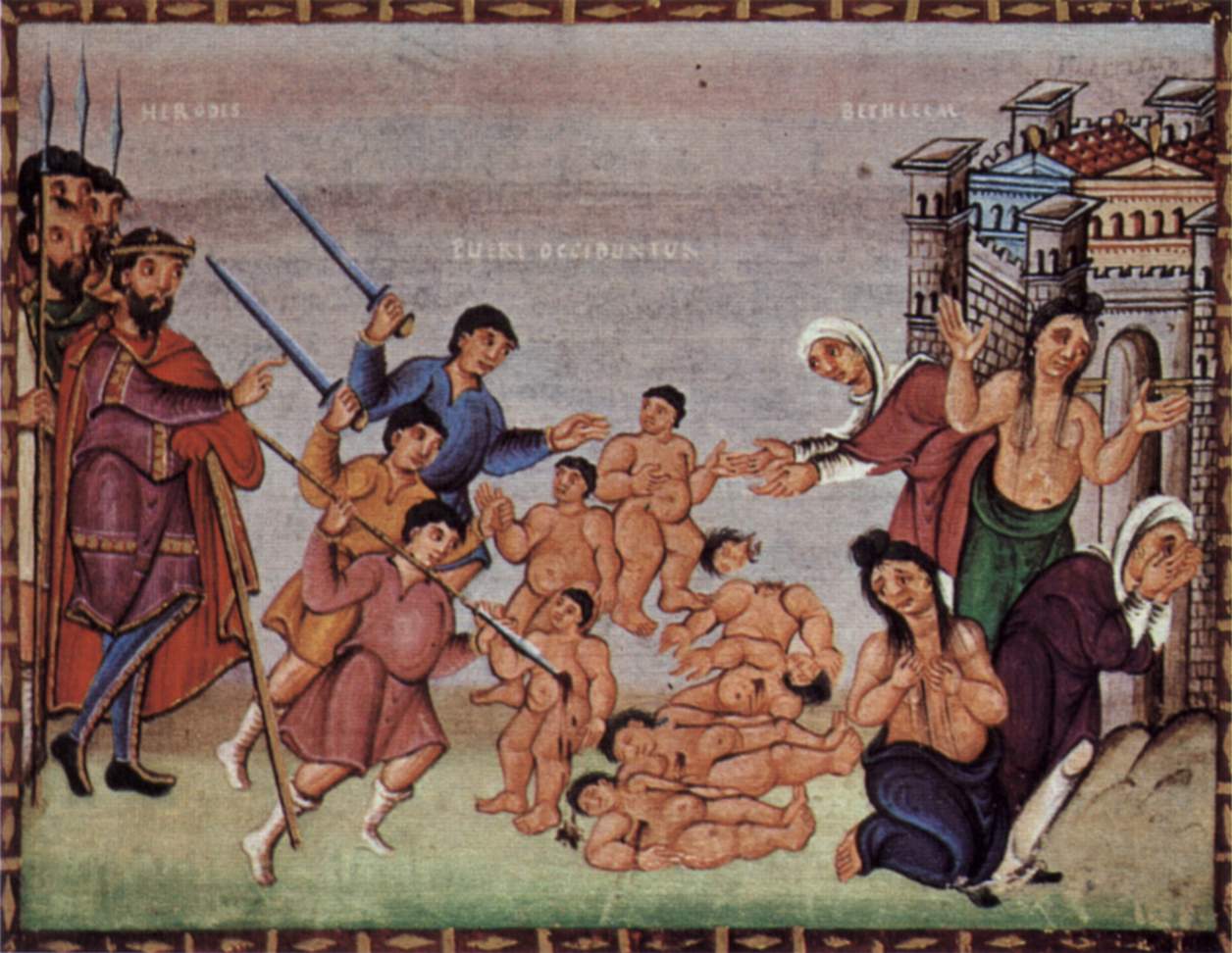
Massacre-of-innocentsThis is the meditation I wrote that appears in today’s reading and reflection in Liberti Church’s Advent 2013 Prayerbook, which can be downloaded for free.

First, a question.

Think back on the Christmas story. After Jesus is born, when he’s about three-years old, King Herod puts out a decree calling for the death of all infants, trying to kill Jesus. An angel comes to Joseph in a dream and tells him to flee to Egypt to prevent Jesus from dying in this slaughter.

Here’s the question: why flee to Egypt?

If they stayed and Herod killed the child Jesus, wouldn’t that still be the Son of God dying unjustly at the hands of a Roman provincial governor? Why go to all that effort to wait 30 years later for the same thing to happen on a cross?
Continue reading

Advent & Hoping for Peace


Rothko-untitled-2This is the meditation I wrote that appears in today’s reading and reflection in Liberti Church’s Advent 2013 Prayerbook, which can be downloaded for free.

This world is anything but peaceable. Humanity is constant in its injustice and wickedness inflicted upon one another across this world. It makes you wonder if “humane” is a misnomer. And we can’t just blame all of this on free will, either. The natural world rages against us with its own violence with staggering regularity. And all of this hits home the most when it’s those closest to us that suffer under this world with little peace on hand.

We look at all of this and ask that oldest of questions: “Why?” But when we open the pages of Scripture, we don’t find answers to this seemingly core thread running through our existence. The God of the Bible seems far more concerned with answering “what” questions than “why” questions–what is the nature of reality? what is the problem with the world? what is the solution?

But there is good news for all of us that struggle against the violence of this world: Advent.

In Advent, God does not merely see our why‘s and disregard them as silly and human; he does not simply leave us to our own to wrestle and struggle and doubt. He doesn’t answer our whys. He simply looks at us and the world with compassion, acknowledges to us the way things are, and rolls up his sleeves to address it.
Continue reading

For Advent 2013: a Free Liberti Prayerbook & Devotional


GiottodiBondone-Adoration-Magi-icon-advent

As of this past Sunday, the Christian Church finds themselves in the season of Advent. I don’t know about you, but this season has snuck up on me (admittedly, I was a little occupied). I’ve been working on a new Advent Mixtape, but it’s not done (you can find last year’s here). I have an idea for an Advent series, but I haven’t fully thought through the concept (see past series here). I’ve had devotionals and reading plans set up on my phone to do, but I haven’t done even one day of them all this week.

But one of the beauties of the Church Calendar is that it doesn’t depend on us. The realities pointed to in these weeks are objective realities that happened (and are happening) in spite of us, and not because of us. Another beauty of the Calendar is that it happens every year, so even if we don’t engage one year like we’d like or hope, there’s always next year.
Continue reading

Lament & Remembrance (Nostalgia Can Hurt)


paul-window-bw-schrott

Lately, I’ve found myself getting very nostalgic, remembering past relationships, friends, places I’ve lived, and people I’ve known. And honestly, I don’t know why my remembering and thinking through all of these things in the past has caused more tears than laughter, especially in the area of relationships.

I have found myself lingering on the Facebook profiles of old roommates whom I’ve completely lost touch with inexplicably. I have been reading through old emails and blog posts that remind me of spiritual fathers and mothers with whom disagreements over the past several years have led to very real divisions..

And yesterday, I heard a song that reminded me of a situation a couple of years ago that was incredibly painful for me. It wasn’t really any one’s particular sin or moral failings that ended up causing all the hurt and pain; just the collision of people’s own baggage and immaturity and struggles. As I thought back on it I remembered the false ideal picture of reality I had blindly painted for myself at that time. I remembered the slow, painful process that was this picture being broken down brick by brick over the course of several weeks. I felt again the shadows of the anxiety and pain from that time.
Continue reading

Father Abraham, had many sons; and many sons, Moses did not.


Rothko-9-White-Black-Wine-1958So…I had my mind blown this past week.

I’m taking this class on the idea of “worship” in all its dimensions, and we read a few pieces that gave me an entirely new framework to understand the Bible, particularly the Old Testament, and how God works in those stories. And no, I’m not exaggerating.

In Genesis 15, God makes a covenant with Abraham, and it’s a little weird, mainly because it’s entirely on God. He promises that he will be Abraham’s God. He promises he will give him many descendants. He promises to make those descendants a blessing to the world. And, most importantly, he takes all of the potential negative consequences of breaking the covenant on Himself. In essence, he makes this covenant with Himself on Abraham’s behalf.

What’s Abraham’s part in this whole thing? “He believed the Lord; and the Lord reckoned it to him as righteousness”, the text says (and he’s supposed to circumcise his kids as a visible mark of his belief). This is one of the earliest and clearest depictions of the unconditional grace-driven nature of God’s relationship to humanity and the world–a relationship that would later be called “The Gospel”. In fact, the Apostle Paul would look at this moment in Genesis and say:

Just as Abraham “believed God, and it was reckoned to him as righteousness,” so, you see, those who believe are the descendants of Abraham. And the scripture, foreseeing that God would justify the Gentiles by faith, declared the gospel beforehand to Abraham, saying, “All the Gentiles shall be blessed in you.” For this reason, those who believe are blessed with Abraham who believed.

Okay….so what?
Continue reading

The Church: Being in Becoming (a Sunday pre-game)


church-philly-bw-cross-market-eastFor my Gospel, Culture, and Church course this past week, we had to read the opening chapter of this book on the Church as mission, rather than seeing the Church as something that does mission. We also had to read some mind-blowing pages from Hans Kung’s epic work The Church. It got me thinking a lot about what precisely the “church” is and how it is that thing. I just wanted to share some disjointed thoughts today.

Throughout the readings, the (perhaps over-used) term “Being in Becoming” kept coming to mind. (For my more philosophically-trained friends, forgive me if I’m simplifying this term too much; My main exposure to this has been cursory, in the context of the Trinitarian theology of Karl Barth and how he describes God).

In others words, the Church’s very Being is in its efforts to more faithfully “Become” what it is. It is not and cannot become a static entity into which we invite people. As we are caught up in the missional plan of the missional God, it propels forward into places where the old notions of Christendom and privilege are not relevant and are shown to be the anemic frameworks they are.
Continue reading

A Brief History of Christian Thoughts on Discernment


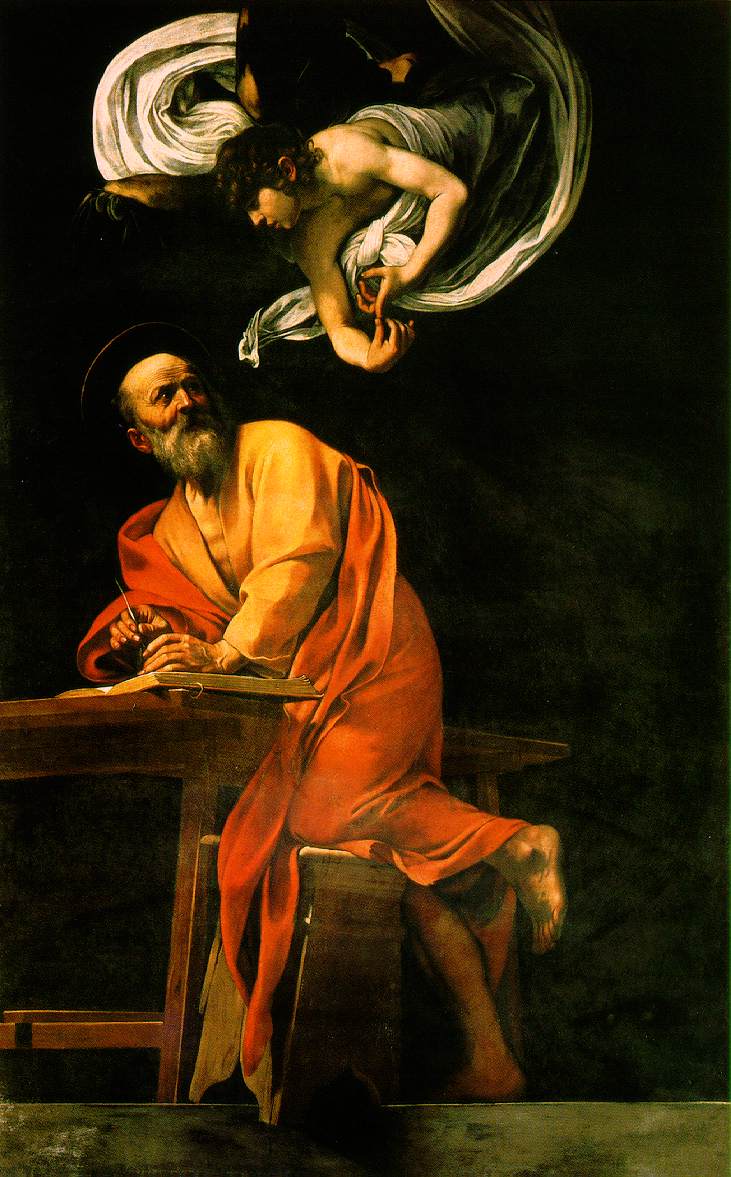
Caravaggio-Inspiration-Saint-MatthewThis is a post in our series exploring the ancient Christian Practice of Discernment.

In the last post of this series, I went through the short history of how decision-making had been done outside of a church context. I said that the main thing that unified all of these approaches was that they were all fairly impersonal. They appealed to abstract “forces”, “principles”, chance, or even technology help make difficult decisions. I concluded by saying that Christianity gives a very different approach to Discernment and decision-making; one that is personal, intense, risky, and terrifying.

Today I want to talk about that. The history of Discernment in the Christian Church has had a very interesting story. Hopefully you’ll see, along the way, the incredibly different ways Christians have approached this; but hopefully, you’ll also see the deep ways in which it has stayed constant throughout our history.
Continue reading

If I’m right about cities, then Republicans are in deep trouble.


philly-city-hall-flagIt’s been too long since we’ve had a political post hasn’t it? Last week, as part of my “Urban Lessons” mini-series, I wrote on how cities are perhaps the fountainheads of everything that ends up in suburban and rural areas. The things that take place in cities, it seems, always ends up flowing outward into the rest of the country, even if it takes decades or generations to do so.

I had that on my mind when watching this segment of The Rachel Maddow Show from Monday night’s episode. The segment is based off an excellent piece by Alexander Burns in Politico called “GOP big-city mayors vanish”. In it, Burns writes:

Largely unnoticed in Washington, urban Republican politicians have emerged over the last year as perhaps the nation’s most severely endangered political species, as the party has either failed to compete for high-profile mayor’s offices or has been soundly rebuffed by voters. It’s a significant setback that some Republicans view as an ominous sign for the GOP in a country growing steadily more urban and diverse.

Continue reading

Prayer: Doubt’s Doorway (on the Philippine typhoon)


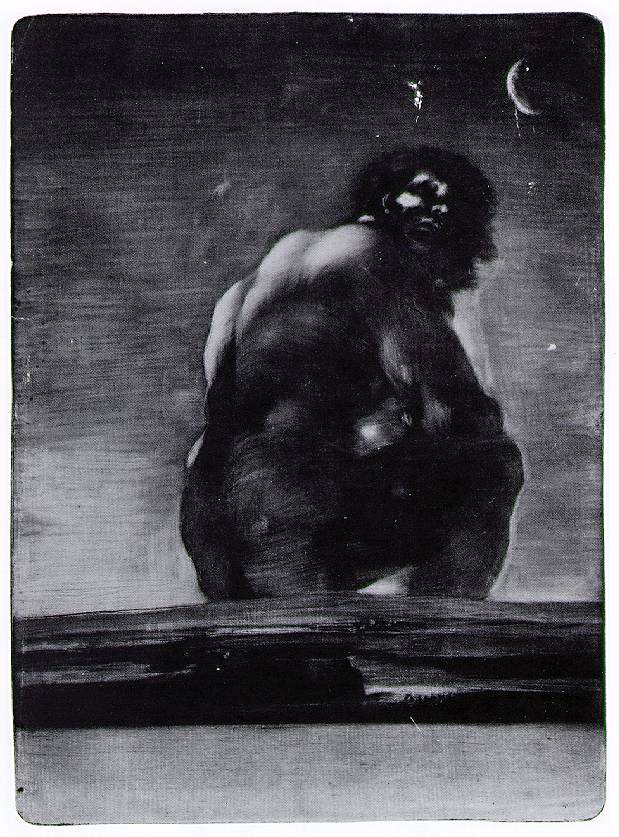
de-Goya-The-Giant“So, like I said, we’re trying something different by spending some time each week praying for something in the world or the city, and not just for our own issues. Does anyone have anything?”

“One of my best friends is in the Philippines and–you know–the huge typhoon is heading their way. I’d like us to pray for my friend and everyone there in danger.”

“Oh yeah, that’s supposed to be the biggest storm ever in history or something.”

I was embarrassed. Anyone that knows me knows that I stay glued (too much) to various news sites throughout the given day. And yet, I hadn’t heard of this storm. While someone in the home group prayed for those in the path of this storm, I snuck a peak at my New York Times app. Yep, the top story was still about the FDA all but banning trans fats.

Why hadn’t I heard about this?
Continue reading

Urban Lessons: Why cities will save our souls. [VIDEO]


Yesterday I started a brief little series going through some lessons I have learned from my first semester back in seminary. I first talked about how (at least in my mind) cities had to be taken off their pedestal. There are desires and needs of the human soul that can’t be met in cities. We need other types of livable environments as well.

And yet, through this semester I was re-grounded in my belief in the essential importance and centrality of urban settings. Above, you’ll find a video reflection I had to make in which I give my perspective on this question: Why should Christians engage in cities? In it, I speak about some of these dynamics that are in greater detail below. (Sorry for the poor video quality.)
Continue reading

Urban Lessons: Why cities will kill your soul.


paul-philly-skyline-2I just completed my first trimester of seminary (round 2). I took a class class on Urban Christianity that, while it may not sound like a difficult and comprehensive graduate course, really was demanding at every level. So much so, in fact, it has really changed a lot of the ways I’ve thought about the city and how humans relate to it (especially Christians).

The class really caught me at just the right time. To a certain extent, even before coming to this class, I “got” it. I had imbibed enough Tim Keller and Church Planting material to understand the centrality of the city in the story of the Bible. Further, my church is now my fourth urban church plant, I go to church and live, literally, in “Center City” Philadelphia, and I work in the midst of the brokenness of the city, seeing the extremes of its beauty and brokenness in ways that few people do in their everyday lives.

And yet, especially due to the rural roots of “certain people” extremely close to me (haha), I felt I needed to engage in this class to develop a far more nuanced view of the city. And I think I got that. Over a few posts over the next couple of weeks, I’d like to share some of the lessons I’ve learned through this time. I think some of these things are lessons that all of us cool urban twentysomethings could do well to internalize.

Continue reading

A Brief History of Secular Discernment & Decision-Making


fall-river-philly-kelly

This is a post in our series on the Christian Practice of Discernment. 

Struggles around decision-making have existed ever since humans first had a sense that their lives had some sort of telos or purpose. Eventually, humans came to an understanding that each decision directly bears on the events and “story” that will come after it. And so they started thinking through principles that could guide this process. Later, Christians would contribute greatly to this discussion.

But before we can start exploring how the Bible and Christianity engages with decision-making and Discernment, we need to see how else it has been engaged throughout history. Today, we’ll look at a “secular”(*) history of decision-making and Discernment. Our next post will look through Church History.
Continue reading