Meet Catherine of Siena, the Saint I Pray To.


st__catherine_of_siena_iconNote: this weekend, I wrote a post collecting all of my responses to people’s Protestant concerns with praying (or “talking”) to saints. Before you express your disagreement to this present post, I’d ask you at least read some of that.

Well, my previous post on praying to saints caused a lot of conversation on my social media. Slightly more than half of people disagreed with it (strongly), and the rest seemed to appreciate it. So before I begin today, I want to make something clear: this blog’s purpose is not to start flame wars or disagreements among friends. I genuinely want to be helpful to people–even when that means challenging and stretching them, and even when they strongly disagree with me. One need not be convinced of a position to be helped by reading about it.

With that being said, let me tell you my experience of finding a saint to pray (or “talk”) to, and then let me tell you a little bit about her.

Throughout history, there have been saints to whom God has given unique grace in certain areas of life. When the Church knew of and could recognize such saints, it declared them “patron saints” of those things they seemed to have special, almost unparalleled grace for.

In times of need in a specific aspect of life, much of the Church throughout history has felt comfortable praying to those earlier saints that seemed especially graced for those kinds of situations.

So…here’s my funny story.

Continue reading

Some Protestant Saint-Praying Clarifications & Responses


Wow. Last week’s post about praying to saints really brought out more passion in people than I thought it would. Both here on the blog and on Facebook, here were some clarifying comments I left. By the way, this was the best comment on that post that challenged my thinking. I hope this helps.

First, here is my final, quick summary clarification of my position and why Evangelicals need not be freaked out about all this. If you read nothing else on this post, let it be this:

I really wish there was a different and better word than “prayer” for this. I agree that what most of us Protestants think of when we think of prayer really should only be directed at God.

Further, I’m simply advocating for this to be one more optional means of grace a Christian can participate in, depending on how they are wired. This shouldn’t take away from anyone’s participation in union with Christ or praying to him anymore than Bible memorization, fasting, listening to sacred music, or reading a devotional book does.

Everything critics have said they think should only be reserved for God, I absolutely agree with. I am certainly not suggesting we turn our affections, praise, adoration, or even our hearts towards those that have died. I just think we can talk to them, and they can intercede for us to God. I don’t think they talk back, that we experience their presence, or that they magically impart any more of God’s favor than asking a friend to pray with us would.

As Paul said, our outer selves are wasting away, while inwardly we’re being renewed day by day. Those that have died are, in a very real sense, just as “alive” as we are now, albeit absent from the body.

Therefore, all I think is (1) they can see and know what’s going on down here, and (2) they talk to God.

If those two things are true, then I don’t see the inherent evil, harm, or soul-destroying error it might be to simply “talk” to those that have gone before–not “commune with”, “worship”, or any of the other dimensions of “Godward prayer”. Just sending up some prayer requests to the part of the Body of Christ that is absent from the body, but present with the Lord.

What’s the harm in that?

Continue reading

Catholics Aren’t Crazy: On Praying to Saints (Happy All Saints’ Day!)


This is a post in an on-going series called Catholic Aren’t Crazy exploring misconceptions Protestants have about Catholicism and lessons we can learn from them.

UPDATE: I responded to some critiques and gave some clarifications.

UPDATE II: Here’s the story of the Saint I pray to, Catherine of Siena.

Yesterday was Halloween. That makes today All Saints’ Day (read more about the history of these holidays in yesterday’s post).

All Saint’s Day has taken on different meanings for different groups of Christians. What seems to stay consistent, though, is that it is a celebration of the victory attained by those faithful Christians who have died. They are no longer pilgrims, as we are, but are the triumphant ones, having finished their race well and been brought into their peace with God. We celebrate Christ’s effectual victory over sin and death and that this has been granted to those that have gone before us.

The hope and encouragement in this holiday is not simply that we “remember” these saints, or meditate on their example. Instead (and this is important), there has been a long-held belief in the Christian Church that we still have a mystical communion and relationship with those saints that have already died. When Christians throughout Church history (and the Bible) have referred to “The Church”, they don’t simply mean those still around today, but all the saints who have ever lived (even in the Old Testament!). We are all the Church.

So we can truly celebrate those that have gone before us because we are truly still connected to them in a very real and vibrant way.
Continue reading

some hopefully not weird Christian thoughts on Halloween.


73497_813635955116_1310185_nA friend emailed me yesterday asking if I had ever written a post on Halloween and how Christians should relate to it. This was my reply to him. Also, in honor of Halloween, I’m posting this picture of the best Halloween costume I ever had. Can’t figure it out? The answer is at the bottom of the post:

Sorry to be anti-climactic, but I don’t really have any strong opinions on the matter either way. I’ll probably stay home Halloween, work on school work, and hand out candy to kids.

I really think it’s up to the individual Christian’s conscience, though there are obvious things that might be “unwise”. For one, don’t get wrapped in the sexuality that seems to have pervaded Halloween. Second, if you do a costume, try not to be exploitative (grown-ups dressing like little kid-sort of things and sexualizing them, acting gay as a joke, mocking others, or I heard of one couple of white friends who went as a dead Trayvon Martin and a George Zimmermamn, with the Trayvon guy wearing black-face).

Importantly, though, I don’t encourage myself or other Christians to be “weird” about it.
Continue reading

Discernment: Making Decisions Christianly & Why It Matters


paul-city-bwMore so than other practices, Discernment is not something we try to do to enrich our lives or draw closer to God. Rather, it is a basic function of our storied existence, driven by our own internal narratives. Because of this, we necessarily find ourselves in positions where decisions great and small need to be made.

Unlike most other practices of the Christian faith, the question here is not whether or not we will practice Discernment, but rather how well we will do it, and how intentionally we will cultivate it. The challenge is not so much to articulate a vision for Discernment so much as to find out what truly Christian Discernment looks like.

series intro

That is why I chose Discernment for a research paper I wrote for my seminary program this semester. It’s essential to human life and being. This is also why I want to share many of the lessons I learned along the way of writing this paper and putting into practice. And so today I’m starting a new blog series exploring this Christian practice of decision-making, also called Discernment.
Continue reading

A letter from & to a friend on the occasion of her Baptism


baptism-foot-waterThis weekend, I received this wonderful note from a good friend, inviting me and others to her Re-Baptism in one of the rivers of Philadelphia. With her permission, I’m posting her letter and my reply to it below. No matter your precise theological views on second baptisms, I hope you find this exchange to be encouraging to your soul.

* * * * * * * *

Hello dear friends,

As many of you know, I grew up in a church for much of my childhood and adolescence, and was even baptized around age ten into the covenant family of the Presbyterian church I attended. While I respect this baptism as a symbol of the faith tradition I was born into and grew up with, at ten, I had never struggled with any doubts or questions that have been such a part of my adult faith journey.

In my life, I have found it so easy to get hung up on theology and technicalities (What does it mean if I don’t believe in penal substitution? What exactly does the divinity of Jesus mean?) and my despair at the state of our world (Why does God let horrible evil things happen?). I’ve spent a long ten years questioning and doubting and not knowing. To be honest, not much has changed. I still despair over the evil I see and I still haven’t figured out how how everything works. But I’ve come to believe that that’s just what it is to be human–to be me. It doesn’t somehow cancel out my faith.
Continue reading

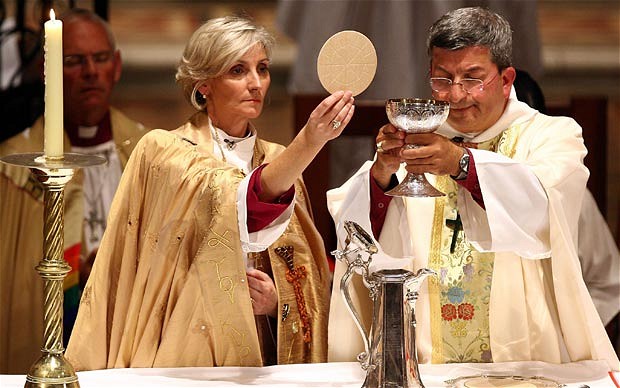
So, some women were ordained last week and…it wasn’t that exciting.


female-woman-bishop-anglican-communion

This is a post in our on-going series on Women in the Church.

The past week of my life was filled pretty heavily with church stuff. First, my church hosted our denominational meeting for those churches in our church family that are in cities. They talked about new developments in my seminary program, gave updates on the health of current church plants, adopted the 2014 budget, and ordained and commissioned new pastors to serve in churches across the country. It was a day and half filled with theology jokes, family talks, overdue introductions, and post-meeting sessions of cocktails and cigars on the front steps of the church.

Second, as I mentioned last week, my church spent yesterday celebrating it’s maturation from a “church plant” (a church that still relies on other churches for most of its support and leadership) to a full-blown self-sustaining, self-leading church. My parents came in town, the music was loud, the sermon was great, and we had a large block party after the service with a moon bounce, chili cook-off, and homebrew contest (the bourbon barrel stout won, by the way. It was called “The Nord’s Wrath”).

It was great, and it will be a block of days I will not soon forget.

Continue reading

This weekend, I’m being ordained as a Deacon. And I can’t wait.


paul-philly-skyline-2

I noticed that I could see the slowly turning fan blades above us in the reflection of his freshly shaven head. His blue eyes and silver goatee turned up to me quickly, recovering from almost choking on his salad.

“What did you say?”

I had just told him that I felt I had a sense of where God wanted my spiritual life to go next. I was a 20 year-old college student, the president of my campus ministry, and I hung out with my pastors all the time. More importantly, though, was the fact that I was crushing really hard on this girl that wouldn’t date me. Only later would I realize that this was a bigger factor in what I said than anything God had said.

“I want to become an elder at our church.”

Continue reading

On Not Following the Christian Blogosphere (a plea)


paul-blog-coffee

I pride myself on thinking that a large percentage of the readers of this blog have no idea of this odd subculture/alternate universe that is the “Christian blogosphere”. So for those that don’t know: there is a very large labyrinth of (largely evangelical) blogs and conferences and podcasts and websites that are dedicated to talking about “the” “Christian view” on any manner of things that (1) really don’t affect much of people’s real lives or (2) seem kind of weird to have a “Christian view” of.

It’s not simply talking about things from a Christian perspective (like this blog), but rather doing so with a particular reactive, evangelical, tribal “flavor”. I’m sure I fall into that at times here, but I’m not proud of it and I try to act against it.

the dangers of the Christian blogosphere

There are two primary things about the nature of these sites that more easily lend themselves to human weakness, I feel.
Continue reading

The Best Communion Prayer my Church has ever had


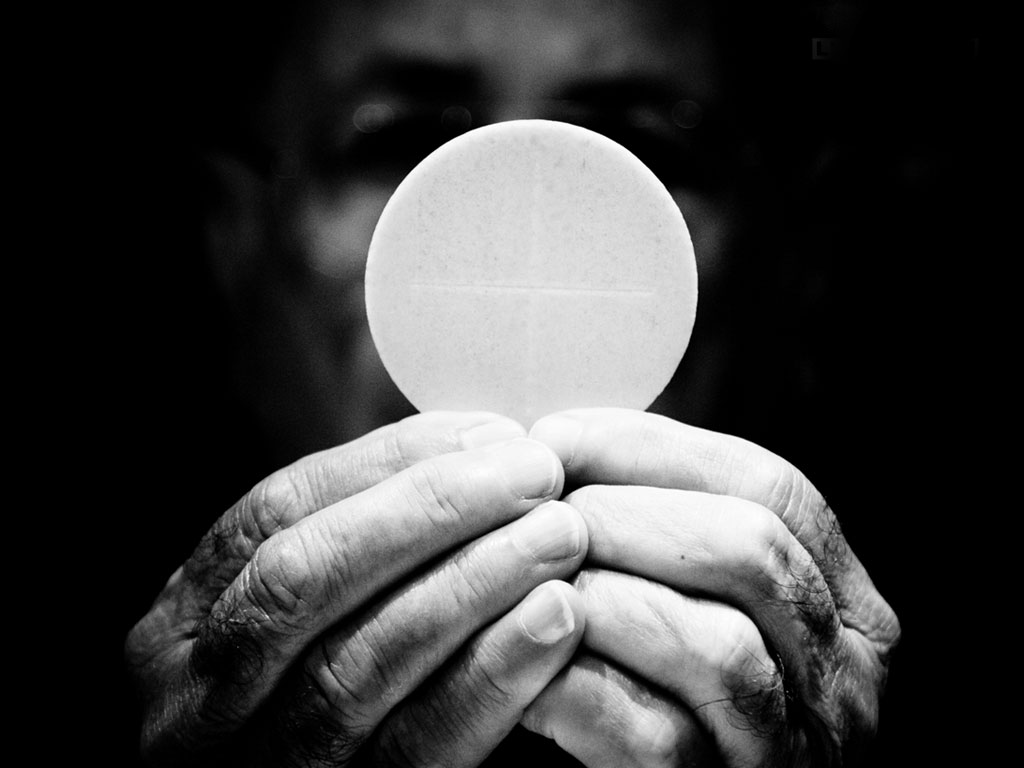
eucharist-bw-waferFather, your table proclaims to us your undying love for us. This table tells us that you do not simply endure our presence. This table tells us that you delight in being with us. You have invited us to feast in your presence.

So we have come to eat and drink deeply of your love for us. May we interpret our lives through this table. May we understand that we are a people with whom you are well pleased. May this reality energize us as we move into our world. May we live out our lives as your deeply loved, anointed children. Fill us with joy as’we labor for you in this world. Amen.

Liberti Church, 10/20/13

The Woman’s Role: What’s Wrong With This Picture? [casual fri]


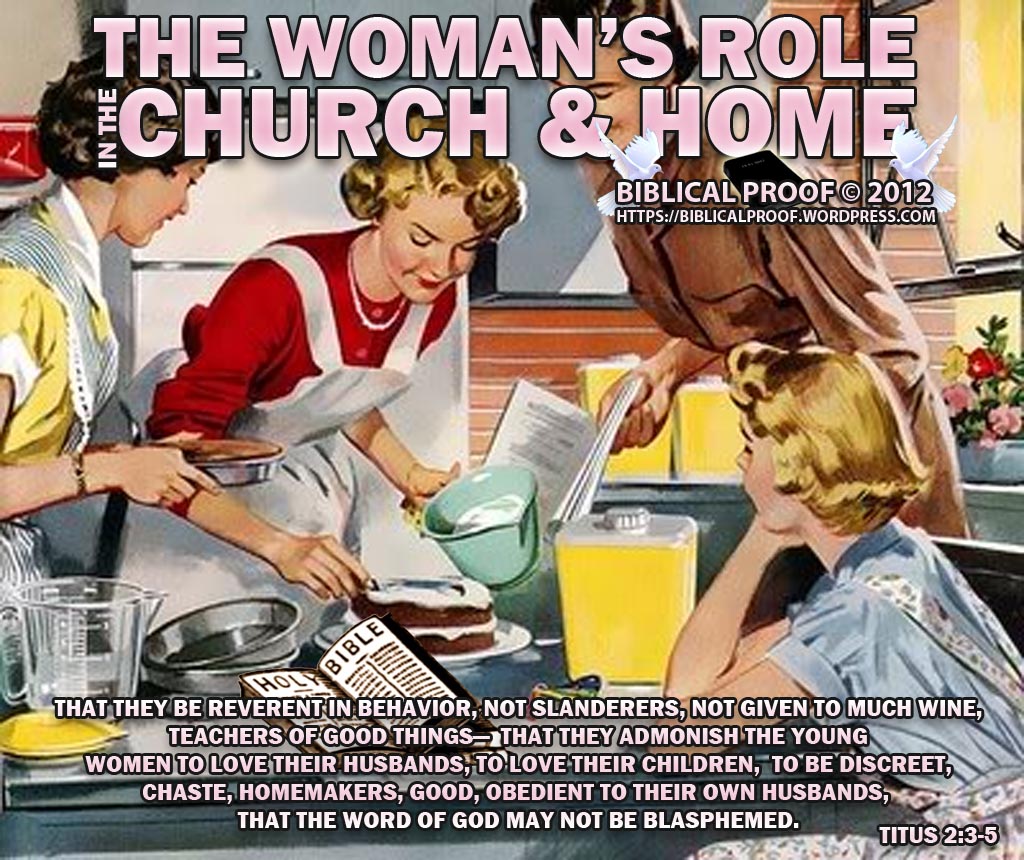
biblicalproof-womansroleinchurchandhome

In my research for this on-going series on Women and the Church, I ran across this picture above. And for this Friday, I wanted to throw it out there to get people’s reactions.

If you agree with the overall point, do you appreciate the representation? Do you think this is a helpful representation? How would you present your perspective differently, in visual form?

If you don’t agree with it, what would you say to the designers of this picture? How would you counter this use of this verse? What bothers you the most about the picture? Is there any core of truth to this picture?

Discuss.

(image source)

Are you cool enough to raise kids in the city?


Halloween-RittenhouseFor my “Urban Christian” class, we’ve been looking into family life in urban areas. I was asked to comment on the challenges and benefits to raising kids in the city. Because it’s almost Halloween, I decided to use this incredibly cute picture as well.

Let’s face it, if you’re not already raising kids in the city (and probably even if you are), the idea of doing so can be terrifying. But, thinking about it, I wonder if this has less to do with the nature of cities themselves, and more to do with the lack of precedent many of us have when thinking through raising kids in the city.

This leads to two dynamics: fear of the unknown, and so concerns about safety, money, education, and child “corruption” by the wider culture arise because of the limited exposure most of us have to anyone that has done this before and come out the other side. This leads us to have to rely on stereotypes and caricatures of the city to inform our fears and concerns.
Continue reading

Karl Barth: Our Freedom, Our Home, & God’s Directing [AMAZING QUOTES]


karl_barth crop

I’m writing this long paper on the ancient Christian Practice of Discernment. In my research, I pulled out some Karl Barth, my favorite theologian (hands down), and got to soak in the beauty of these words, and I wanted to share them. Now, for people that don’t read “real” and “proper” theology, this is it. It’s circular, it repeats itself, and it’s unnecessarily complicated and unclear. I know. I get that. But I promise, if you can spend a few minutes, quiet yourself, and focus, I promise the pay-off is huge. This guy stands as a tower over all of modern theology and deserves more attention than he gets. I’ve done slight edits to some of the wording and paragraph breaks for clarity. Enjoy.

* * * * * * * *

God’s direction is an all-powerful decision, His own divine act of lordship. By this means, too, God vindicates His honor and maintains His glory. By this means, too, He exercises authority….

God’s direction is the directing of humans into the freedom of His children. It is this which has taken place in Jesus Christ no less uniquely than the once-for-all fulfillment of the divine sentence on all humanity. In suffering in our stead the death of the old nature, and bringing in by His resurrection the life of the new, He has made room for the being of all humanity to be at peace with God.

On the basis of what we are and is not by virtue of the divine sentence passed and revealed in Jesus Christ… we have no other place but this—the kingdom in which God can be at peace with us and us at peace with God. Jesus Christ…is the all-powerful direction of God to us to occupy this place, to live in this kingdom. If we are told in Him who we are and are not, we are also told in Him where we belong, where we have to be and live.

Continue reading

Sex & the City: Christianity edition.


Delaunay-City-ParisI’m taking a class on “The Urban Christian”, and this past week we focused on what happens when the Christian sexual ethic collides with the urban, secular one. We had three excellent readings to which we were to respond. I’d encourage you to read them:

* * * * * * *

Good lord, growing up in the Bible Belt, I can honestly say, I heard more breathless, obsessive talk of sex, boundaries, and frustration in singleness in Bible Belt suburbia than I ever have in my current urban setting. This is for a few reasons, I think:

1. Most everyone I encounter is no longer a virgin, and so the mysteriousness and over-idealization of the unknown, for most people, is not…uh….unknown. The magic is gone for many and they don’t spend all their energies trying to get what they can’t have. But, the same contradictory human mind will say that sex isn’t a big enough deal to focus any energy on not doing, but it is a big enough deal that nobody better try to put any limits on that sexuality.
Continue reading

Good Morning (prayer)! [photo sermon]


ultimo-coffee-cortado

Each week, WordPress has a Weekly Photo Challenge, where they give a theme and invite people to highlight photography representing that theme, accompanied by a few meditations on it. OccasionallyI try and write a “photo sermon” or meditation based on those themes, accompanied by a photo of mine . This week’s theme is “Good Morning“.

* * * * *

In one of those oddities of tire human condition, I love sleep, and yet I avoid it like the plague. I have a terrible sleep schedule. My sleep pattern is a microcosm of my lack of discipline in many parts of life, and maybe even an extremely low level of self-harm, where my body and heart wouldn’t really know what to do if it were consistently well-rested. There’s something about a constant weight of tiredness that—maybe—makes one feel “productive”, even as it steals productivity away from you.

This is a lie. I know. I’m working on it in therapy.

In some Christian circles, people claim “life verses” for themselves; bits of the Bible that they feel speak to them so deeply that the words amount to a blanket summary, call, encouragement, guiding principle, or telos to their life. People usually pick a “life verse” that speaks to what they want their life to be or how they want God to work in their lives.

Continue reading