My problem with “quiet times” (some rest for the journey?)


prayer-hands-bible

If you’ve spent any real time in the Church, you probably are well-aware that there are some practical things that “mature Christians” end up doing (or so we hear) to “pursue Christ” and intimacy with God on days other than Sunday. Usually, this is some set of practices, disciplines, and rituals that surround two key things: the Bible and Prayer.

In the Bible Belt, where I’m from, the common term to describe this is the “quiet time”. This can be a devotional that includes a snippet of Bible verses with some meditations and prayers. It could be reading a passage and then journaling about it. It can even be going through an established liturgy of prayer with rotations of Scripture found throughout (here’s my favorite).

Whatever form it takes, it’s usually a subjective engagement (prayer) with the “objective” revealing of God (the Bible). It is usually rooted in the Bible, and even the prayer or journaling is seen as a response to how God reveals Himself in the Scripture. “Quiet times” are, fundamentally speaking, time spent with God in the Bible.

I’m sure the experience is very different in other branches of the Christian family tree, but at least in Evangelicalism (my bread-and-butter), “quiet times” become the go-to litmus test for one’s own spiritual health. If people are going through difficult times, we nudge them towards the Bible more. If we are to feel spiritually vital, healthy and mature, we gain the impression, over time, that it must flow from regular, disciplined quiet times.

But as I have lived through my own pursuit of the elusive “consistent quiet time”, dealt with decades of feelings of spiritual inadequacy, and seemingly had every time of requesting prayer on my behalf be about trying to get the grace to have these quiet times, I have slowly realized there are problems with how we have conceived of the “quiet time”. Come walk with me a little bit.

Continue reading

Foreshadowing the City [a photo sermon]


philly-traffic-skyline-sunset

For those new to  the blog: occasionally, I try and write a “photo sermon” based on the themes of WordPress’ Weekly Photo Challenge. This week’s theme is “Foreshadow“.

* * * * *

Foreshadowing is a huge part of the Christian faith. The opening words of the Bible offer us the problem that the rest of the book will explore a solution to. It says, “In the beginning, God created the heavens and the earth.” From the beginning, “heaven” and “earth” are two different things, in two different “places”. God intends to bring them together and make them one. How will he do it? The book invites us to read on.
Continue reading

Millennials, Media, & Meta-Churching


coffee-client-mugFor those of you out there that keep track of the “Christian blogosphere” (and if you don’t, you’re probably better for it), there’s a very weird discussion happening amongst many different writers and thinkers about “millennials” (those born from the early 80s to early 2000s), and how they relate to the church.

A couple of weeks ago Rachel Held Evans wrote a post for CNN’s religion blog in which she said that millennials are leaving the church because they don’t find substance there; but rather, all they seem to find are hypocritical, judgmental, and bigoted people that want to fight over silly things. She said that this desire for substance is why the millennials that do stay in the church are leaning towards more liturgical traditions. She encouraged church leaders to look at millennials and consider whether their departure might be speaking to systemic issues that are plaguing the American evangelical church.

Continue reading

“Simplistic Atheism: a final response” by Daniel Bastian [GUEST POST]


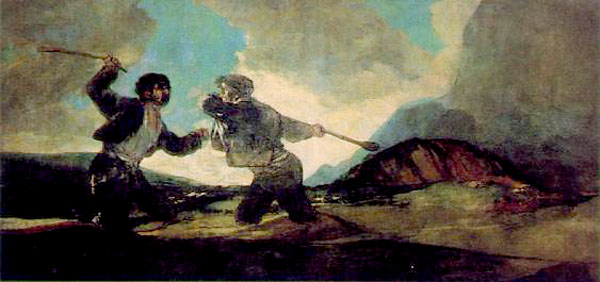
de Goya-fight with cudgels"

(Note: These exchanges are now complete. There is a Table of Contents to the discussion now available.)

Well, it seems that we were not in fact done with this little series. After my final post, Daniel chose to take me up on my offer to have the final word (as I normally try to do in exchanges like this). He has chosen to respond, point-by-point, to my list of what things would lead me to embrace Atheism. If you feel like any of the points still demand a reply from me, or if you have any questions about what Daniel says, feel free to to comment here, on Facebook, or get in touch with me privately. For my part, though, I consider this particular set of exchanges finished. Once again, I thank Daniel for this exchange. I hope you enjoyed it as well.

Paul,

When I initially decided to compile a list of criteria that would convince me my conclusion on the question of theism was wrong, I had sincere hope that a Christian, Muslim or other person of faith would tally up a corresponding register. I am glad to see you rose to the challenge and enrolled in this dialogue. It has been a wonderfully enlightening experience for me, and I do hope that sentiment is mutual.

I read your piece the day it was posted and while at first I found much of it persuasive, the more I reflected the more I realized it was probably the list I would have drafted two years ago, before I renounced my faith. Much of your criteria seems to rest firmly on the aesthetic appeal of the Christian narrative. And this would seem to slot right in line with your epistemological moorings-a concern for the communal connection, compelling force and overall mesmerism of a worldview over against its underlying facticity.

Yet it seems this only holds true up to a certain threshold, given a few of the items on your list. You seem to be OK with affirming the faith given its impact on your life, the power of influence you’ve seen it have on history, and the way it has shaped others with which you’ve crossed paths. But if you were to discover beyond reasonable doubt that this narrative was based on so much myth, that this loosely corroborated Yeshua the gospels are based on was a mere mortal (item #1), you would relinquish the faith forthwith.

Thus it seems to me that our epistemic divergence is one of degree, not of type. With that in mind, I’ll attach some brief notes beside the items in your list. Continue reading

Humbled into Pride (thanks & sorry) {a confession}


paul-pipe-bwLast week was an odd week on the blog. It was one that humbled me in such profound ways. The readers of this blog shocked and amazed me with their kindness, encouragement, and continued support of what I try to do here.

My series of discussions with my Atheist friend concluded on (what I felt was) a high note. The number of readers of that series numbered into the thousands, even though the writings were so long. (I copied and pasted all the posts into a single Word document just for the heck of it, and it was over 100 pages long–single-spaced! So if you read most of those, then congratulations, you finished a book in a week-and-a-half.)

People in all parts of my life were reading (at least some of) these pieces. People at work, church, Facebook, and Twitter all sought me out to encourage me in these conversations. The diversity of people who were keeping track of this stunned me and humbled me. I couldn’t believe how many people would spend their time reading stuff I wrote and listening to my own thoughts and opinions about things.
Continue reading

Ross Douthat on Reza Aslan & the “Historical Jesus” [QUOTE]


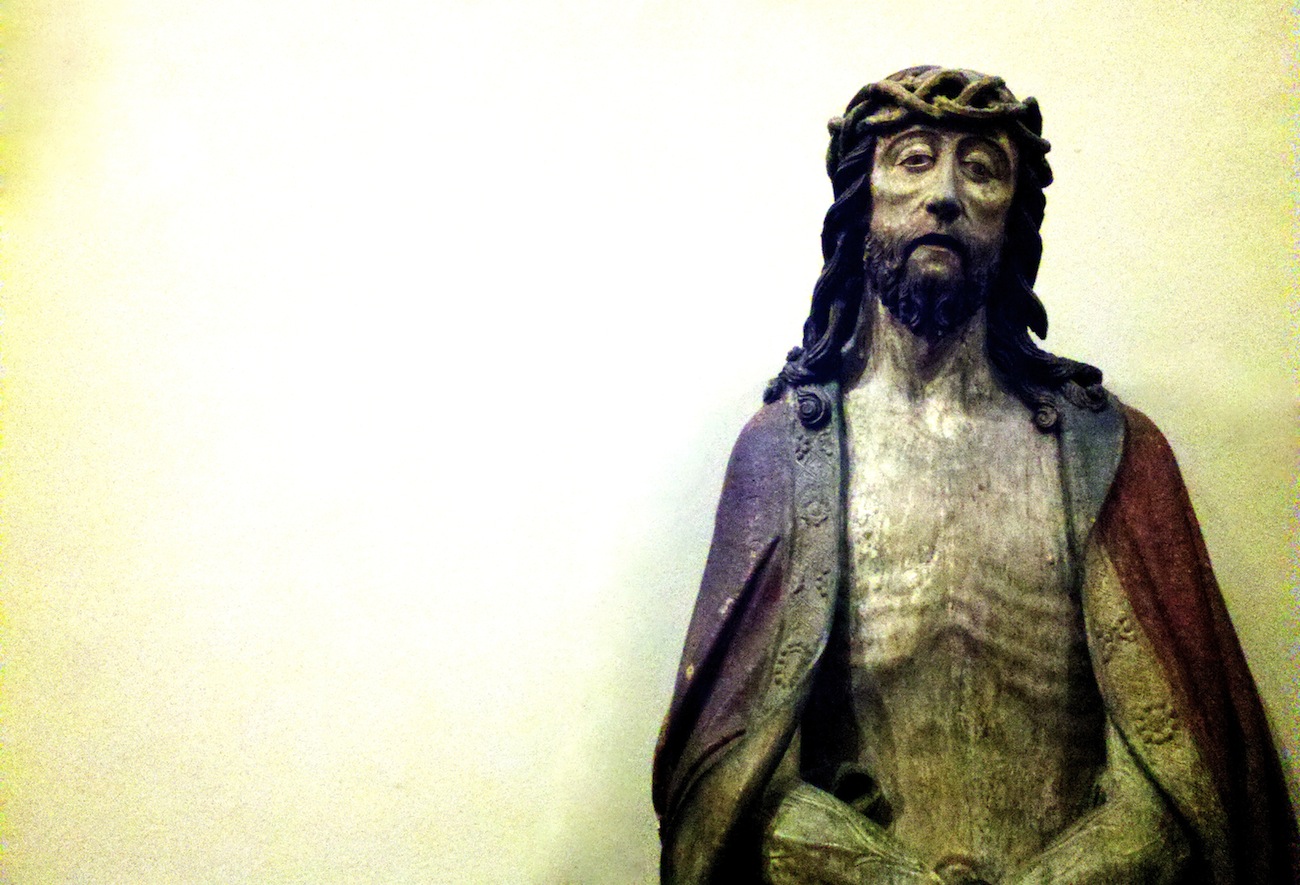
jesus-suffering-pmaHappy Lord’s Day!

Speaking of the Lord, I wanted to point you all to Ross Douthat’s new column in the Sunday edition of the New York Times. I really like Douthat, and this piece is a good example of why. He is responding to Reza Aslan’s new #1 New York Times Bestseller, Zealot: The Life & Times of Jesus of Nazareth.

As Douthat points out, Aslan’s books is just the newest shot in the two-century long war for the “Historical Jesus“, a series of “quests” in which the assumption is that the Jesus of history is entirely different than the Jesus represented of the Bible. (I’ve recently defended some of my own thoughts on this here and here).

Now some have effectively critiqued much of Aslan’s scholarship, and even his academic credentials to write such a book (it doesn’t seem he’s ever written a peer-reviewed piece on anything in the New Testament!). But Douthat, in usual style, zooms out to the 50,000-foot level and speaks to the bigger context in which these sorts of books seem to always be written. It’s fantastic, and you should read it. Here are the money quotes: Continue reading

Last night, I broke bread with Kenny G [a blog classic]


Today, I was reminded of this story, so I thought I’d repost it. I hope it encourages you as you head on into your weekend.

Channeling my inner stereotypical-broken-hearted-teenage girl, I went to WaWa last night to pick up some Ben & Jerry’s (Stephen Colbert’s “Americone Dream”, in case you were wondering.  I’ve written before about the spiritual experiences both  B&J has brought me.). I had just gotten off work and was about to head home, pig out, and catch up on some TV. I pulled in, got some gas, and then pulled up to the side of the actual store to get my ice cream.

I saw the usual poor guy sitting on the pavement on the side of the building asking everyone that passed by for their spare change. The usual little battle happened inside my mind: Oh God, I’m going to get asked for money aren’t I? Okay, what walking path can I take that keeps me just far enough away from him that he doesn’t actually ask me. I’d rather say nothing than have to say no and feel bad later. Ah! What am I thinking! Stop it, Paul! Why are you so heartless? This is not the Gospel. Serve him.

Continue Reading….

The Historical, Political & Theological Roots of Urban Pain


26359563536I’m trying to get an early start on reading my seminary books (which I’m still trying to purchase–thank you so much to all who have helped out!). I’m currently enjoying Mark Gornik’s To Live in Peace: Biblical Faith & the Changing Inner City. I’ve read similar books before, and expected more of the same, but this really is a much higher level-analysis of urban policy than I thought it would be. He is writing from the context of the inner city community of Sandtown, in West Baltimore. I’m really liking it and encourage you to check it out yourself.

I wanted to devote my entire post today to a series of excerpts from his section going through the historical and theological roots of urban and racial difficulties. In light of recent comments–especially by conservatives–demonizing those who live at this level and at these places in the world (or demonizing the government policies that serve them), I found this appropriate in offering us some perspective.

On a side note, for newer readers: I do not ascribe to a particular party and I actively speak out against both of the main ones wherever I see injustice, hypocrisy, and absurdity. This just happens to be an area of policy where Republicans are far more guilty. Here are the excerpts (the bold-faced lines are my emphases). Continue reading

Abstinence is Not Chaste (Exercise Your Celibacy!)


Sandorfi-AngeYeah, I’ll admit it. I belong to that ever-decreasing group that thinks that our human sexuality is a big enough deal that how we exercise it has profound implications for human, societal, and spiritual flourishing. Further, I believe God has woven in the design of the world particular rhythms and ways in which sexuality lends itself to that flourishing. I see it as something so integral to our souls and bodies that there is a type of care and stewardship that we are lovingly called to exercise with it. And sometimes “stewardship” means placing limits on oneself.

I’ve talked about what this stewardship looks like in various other contexts, but for the purpose of this post, I’m focusing on one in particular. My focus today–to put it plainly–is on the idea that people who aren’t married aren’t “supposed” to have sex.

This isn’t a systematic defense of that idea. I know there are lots of differences of opinions and nuances (even among Christians) on this. I know that we talk about this in the abstract in one way, and when we get to particular people and situations, these “clear” ideas break-down quickly. I get that. But just walk with me for a little bit.
Continue reading

Please help me go to seminary! (a request, a plea)


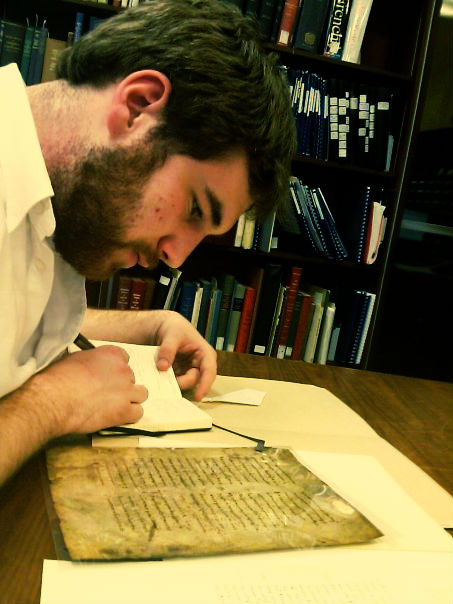
paul-greek-manuscriptIn 2008, I graduated from college and moved to Philadelphia to head to seminary. I ended up not returning to that seminary program when the year was out, primarily for money issues (and some others). Four years later, I’m now going back (to a different seminary). And again, I’m trying to be conscious of money.

I know this is weird, and maybe a little presumptive, but I’m asking blog readers for some help with my seminary textbooks. I have made an Amazon Wishlist with my Fall textbooks, and I’m just throwing it out there to see if anyone could help buy me some of these. They are mainly just “normal” books that are being used as textbooks for classes (nothing over $20), but put altogether, they can add up. I have specifically chosen the Kindle version for some books, and the physical for others, so whatever is on the list is what I need.

I’ve been running this blog for over 8 years, and have written over 800 posts so far. It has been named one of the Top 50 Divinity blogs, has sent me to Guatemala, given me the opportunity to write for several other sites, and has twice been featured on the WordPress homepage. My hope is that if I may have (accidentally, of course) said a thing or two that was helpful, challenging, or enjoyable to you, you might consider coming alongside me to help support and further the work for which this blog has been my primary outlet.

If money is more your preferred way of supporting those in need, you can also make donations through PayPal. And of course, if you can help in neither of those ways, I would appreciate all the prayer you can spare me. So if you read this post, and know you won’t be able to support monetarily, would you take a few moments and offer a brief prayer for me?

I know this is all weird. I’m not expecting much (if anything), but I’m interested to see what happens. So, I would appreciate if you can give as you are able, to show your support for what I do and what I want seminary to help equip me for. Thank you so much for any way you can help. Once more:

P.S. I’ve never used an Amazon Wishlist before, so if there are any problems, please let me know. Thanks again.

A Christian & An Atheist: A Discussion [a table of contents]


Schrott-Cigarettes-Bible-Jeremiah

I had the privilege over the past couple of weeks of engaging in a spirited back-and-forth with a good friend of mine, Daniel Bastian. Unfortunately, in the speed with which this exchange occurred, I know it was hard for people to keep track of the writings, the arguments, and the comments. And so, I’m writing this post in hopes of making it easier for people to follow. Here you will find a “Table of Contents” of sorts for the entire exchange, as it appeared on this blog.

Sadly, much was said over Facebook comments (and even blog comments) that cannot be sorted out and highlighted in their proper place. Comments on each post were scattered among different places and sites and posts, and so to try and consolidate them and make any sense of them for the reader would be nearly impossible. These long-form pieces will have to do, though I’ve provided the link to the Facebook comments when able, in case the interested reader wants to wade in.

____________________
Continue reading

Simplistic Atheism {4}: What could make me an Atheist?


paul-schrott-painting-11-11

(Note: These exchanges are now complete. There is a Table of Contents to the discussion now available.)

In this series of exchanges with my friend Daniel, I’ve tried to argue that his Facebook post on why he is an Atheist expressed an overall view of the world that is too small and too simplistic. I think this is because of his empiricist method and materialist conclusion about reality–that all there is is what we can see, touch, feel, etc.

Some concluding remarks

My whole point has not simply been that Daniel’s facts or even his method is wrong. But rather, it finds its proper place, meaning, fullness, and possibility within the Christian view of reality. I have argued in each of my posts that Christianity does not “refute” reason, science, history, skepticism, textual messiness, historical difficulty, or even doubt. Instead, the Gospel encompasses it all, and each of those things find a greater fulfillment in their use, cohesion in the whole of the world, and reality within that place.

Continue reading

New Testament & History: Christians can be confident [a retort]


bible-schrott-coffee-paul

(Note: These exchanges are now complete. There is a Table of Contents to the discussion now available.)

Update: Daniel has posted a reply below.

When I have these kinds of exchanges on the blog, I really try to let the other person have the last word. After all, I have home field advantage here. I was absolutely ready to move on to my last part of this ongoing exchange with my friend Daniel Bastian in response to his Facebook post about his Atheism.

Last week, I wrote a post trying to give a cursory response to some of his claims about the Bible and miracles. Daniel wrote a response, posted a couple of days ago. I offered a brief response to his critique of my view of miracles. I was really eager to get back to writing about other things.

But it seems I can’t. Not yet.

I’m starting seminary back up this Fall, not simply because I’m interested in all the “knowledge” about the Bible, but because I feel I actually have a (pastoral?) concern for the spiritual well-being of people. I care a lot about what people might see on this blog, and I care that they are able to receive these things in ways that will be ultimately helpful to them.

And I fear that his post, at least for Christians not well-read in these issues, will cloud the waters more than clear them. Don’t get me wrong. Christians should wrestle with what Daniel has written in earlier posts, especially when it comes to the more abstract philosophical concerns of God’s existence and work in this world. These are things that don’t have easy or even clear responses by Christians. I’m not worried about Christians having restless nights or days as they wrestle with legitimate difficulties in the seeming difference between what they believe about God and the way the world seems to be.

But, when it comes to the Bible and the Resurrection, I don’t think we are on as shaky ground as Daniel makes it seem. Let’s discuss.

Continue reading

“New Testament Historicity: A Response” by Daniel Bastian [GUEST POST]


run-down-Bible

(Note: These exchanges are now complete. There is a Table of Contents to the discussion now available.)

Today continues an on-going exchange between myself and a friend of mine, Daniel Bastian. These were inspired by a Facebook post he wrote about why he is Atheist (in this current post, whenever he says “OP”, he means “original post” and is referencing that). Last week, I wrote a post about the trustworthiness of the Scriptures and miracles. Here is his response.

Update: I have some responses posted for his section on miracles in this post. And, honestly, I feel he gets so many things wrong int his post, I’ll have to write another response to this tomorrow. 

More important update: I have a full response to this article now posted.

Paul,

Thank you for the thoughtful post. I think this is your most cohesive piece yet and, better yet, even dives below the surface of a few of my arguments. And allow me to just say up front that it is truly a breath of fresh air to commune with a non-fundamentalist on matters of faith. Rarely do I find a Christian with a sophisticated understanding of the faith’s foundational texts and the underlying nuance operative in these discussions. It is truly refreshing.

In my response I’d like to first address the broader themes of your post and then drill into a few of the more specific items you have noted. Along the way, I will correct some errors, highlight some omitted details, and point out some oversights and oversimplifications that obscure the analysis of New Testament historicity.

At the first, it seems that you still resist recognizing the non-Christian-centric applications of my arguments. Yes, some of my arguments did single out Christianity, as that is the religion I retired from at age 25 and is thus the one in which I am most conversant. However, if you were to step outside the hermetically sealed Christian bubble for just a moment, their broader implications should become apparent. Let’s try again.
Continue reading