How We Prove God (a prayer by Karl Barth)


hands-pray-sepia“Dear heavenly Father, we ask you to give us all your Holy Spirit, and to give it continually, that it may awaken, enlighten, encourage, and enable us to dare to take the small and large steps of moving out of comfort with which we can comfort each other and into hope in you. Turn us away toward you! Do not allow us to hide from you! Do not let us do anything without you! Show us how glorious you are and how glorious it is to trust and obey you!

We would ask the same for all people, that the nations and governments may bow to your Word, and that they will be willing to work for justice and peace on earth, that your Word may be understood and taken to heart by all those who are poor, sick, imprisoned, troubled, oppressed, and unbelieving; that through word and deed it may be made known to them; and that it may be perceived by them as the answer to their sighs and cries; that all Christian churches and confessions may learn to recognize it anew and serve it with renewed faithfulness; that its truth may be and remain bright here and now in all of humanity’s error and confusion, until such a time as it shall ultimately enlighten all people and all things.

You are glorified, you who make us free in Jesus Christ, your Son, by confessing and standing on this: that our hope is in you. Amen.”

— from Karl Barth, “Pentecost” in Fifty Prayers

(Note: This was posted as part of a series of back-and-forths between an Atheist friend and myself. These exchanges are now complete. There is a Table of Contents to the discussion now available.)

Car Theft, Domestic Violence, & a Musical: a weird day


Yeah__this_just_happened._Go_Philly.Yeah, that’s my car there in that picture. This afternoon, my car got broken into.

But I’m getting ahead of myself. This was one the oddest days I’ve had in a long time.

Every day this week, mainly for work reasons, I’ve had to get up anywhere from one hour to an hour and 45-minutes earlier than I normally wake up. I’ve also been staying up later than usual all this week. I have been a zombie, for sure.

This morning I had to wake up crazy early (to me, at least) to pick up a client and get them to court for a domestic violence case. They had been the one abused, and they were to testify. This is one of the most difficult things for abuse victims and support was definitely going to be needed.

Continue reading

Simplistic Atheism {3}: The Bible, Miracles, & History


schrott-bibles-paul-coffee

(Note: These exchanges are now complete. There is a Table of Contents to the discussion now available.)

We continue our response to Daniel Bastian’s blistering critique of religious belief. Part 1 tried to respond to what seems to be Daniel’s basic understanding of the world, reason, and spirituality. Part 2 focused entirely on his use of scientific claims and findings to discredit (at least the need for) religiosity. Yesterday, Daniel responded to Part 2 (here was my response). Today, we narrow in on his views of the Bible, miracles, and history.

A Simplistic Bible

(Disclosure: a lot of this is cut-and-paste from various comments here and on Facebook. Also, I’ve taught a few classes that have a more detailed discussion of a theology of Scripture. Those can be found here, here, and here.)

The points about the Bible in Daniel’s post were especially difficult to read. In fact, they were my inspiration for my post last week talking about how Christianity can shape the types of Atheistic beliefs people come to. My frustration came from the fact that, since Daniel originally wrote this (a while ago), I’ve watched him engage with and express respect for others that offer substantive critiques to what he ended up re-posting last week.

In his points, he expresses a view of the Bible that is mechanical, wooden, systematic, simplistic, and puts expectations on the text that it doesn’t even place on itself. It seems like he is only responding to the modernist, fundamentalist view of the Bible (what I called a “Straw Bible”), and I know his thinking is far more nuanced than that–I couldn’t understand why he still perpetuated this. But nevertheless, he did, so I’ll address it as it’s posted.
Continue reading

“The Cocoon of Unfalsifiability” by Daniel Bastian [GUEST POST]


stone-light-hallway-cave(Note: These exchanges are now complete. There is a Table of Contents to the discussion now available.)

Paul,

I thoroughly enjoyed reading your most recent piece. It’s the best one yet in the series. You actually (finally) lay down some things we can really sink our teeth into. Something tells me you should have started with this one…

However, after the opening paragraphs my hopes were dashed as I found that much of the rhetoric here is beset by the same pitfalls that have been addressed time and again. Most importantly, (and what I will focus on in my response), is that the above piece suffers from what I will call the doctrine of unfalsifiability.

Continue reading

Simplistic Atheism {2}: Science “versus” Theology


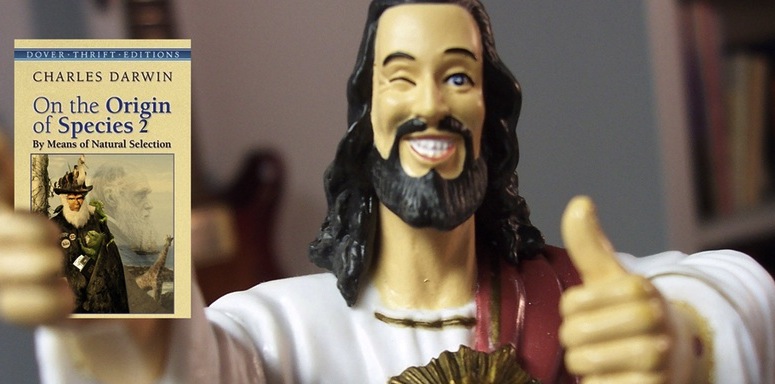
darwin-buddy-jesus-humor

(Note: These exchanges are now complete. There is a Table of Contents to the discussion now available.)

I’m doing a little series this week responding to a Facebook post by a friend of mine named Daniel Bastian. He outlined twenty things that would make him change his mind about Atheism. The piece is well-organized and thought out, I encourage everyone to read it and wrestle through it themselves.

In line with my belief that these sorts of discussions always seem to end up at differences in hermeneutics (interpretive filters) rather than facts, I wrote a post talking about what appeared to be Daniel’s bigger commitments and understandings of the world, human reason, and assumptions about spirituality (also read the Facebook comments).

I was, of course, accused of still not engaging with his specific points, even as I sought to talk about principles behind the points. And so, I’m excited to say that with today and tomorrow, we will be hitting many of Daniel’s specific points
Continue reading

Simplistic Atheism {1}: a Reason & Spirituality that’s too small


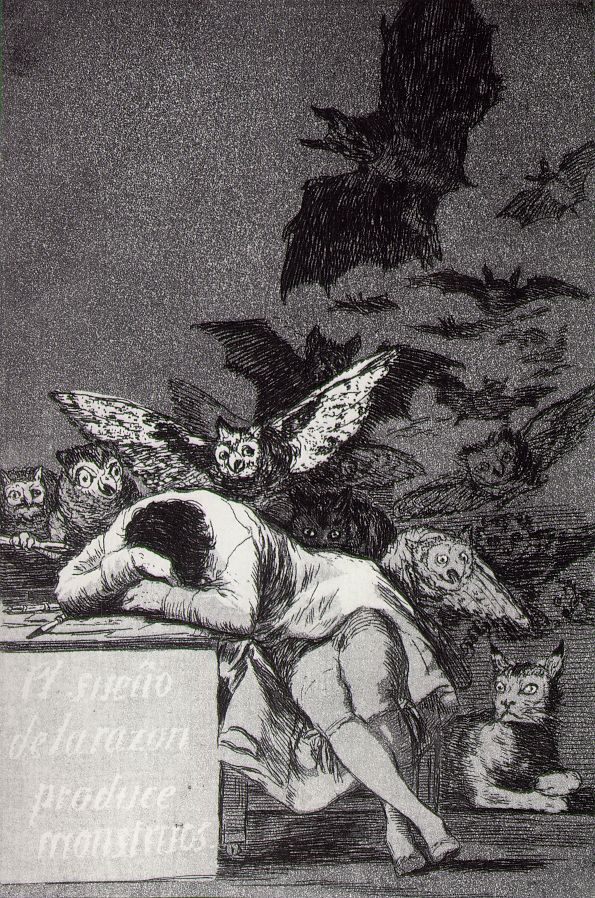
de-Goya-Sleep-Reason-produces-monsters

(Note: These exchanges are now complete. There is a Table of Contents to the discussion now available.)

Last week a friend of mine named Daniel Bastian posted a well thought-out catalog of the reasons why he is an Atheist (let me know if the link doesn’t work). This list includes items that don’t usually pop up in similar offerings, and I encourage every Christian to read this list and wrestle through the realities of what he says.

As I thought about it, though, and thought through how I would respond to some of these things, I found a consistent theme to what I would critique to each of his points: over-simplicity. In this series of posts, rather than going through each of the writer’s twenty points, I’d like to go through some broader ideas he touches on, and offer my thoughts.

By the time I was done writing everything up, I had at least four parts to this response. Today, we’ll briefly talk about how Daniel’s post represents an over-simplifying of human reason and spirituality..
Continue reading

Simplistic Christianity; Simplistic Atheist: a response [GUEST POST]


(Note: These exchanges are now complete. There is a Table of Contents to the discussion now available.)

Earlier today, I posted an introductory post in response to a Facebook note by my friend Daniel. Before I posted it, I had a few friends read the post to see if they thought it would be taken especially personally and shut down, rather than promote, further conversation. They said that it was on the line, but they didn’t think it was too personal. Unfortunately, it seems I (we) were wrong.

Daniel responded in a comment, but I thought it deserved a more prominent place on the blog. I’ve included his response below, and included some brief words of clarification to his points.

__________________________________

Paul,

While I do appreciate your taking the time to respond, I don’t appreciate the flagrant misrepresentation. The religious opinion and intellectual caliber you ascribe to me in this piece in no way reflect my actual disposition and are so off-piste that I quickly lost track of whether you were talking about me or some nondescript internet denizen with which you have passing familiarity.

To set the record straight, you do not know me personally, and you clearly know even less about my views of religion and the serious, contemplative academic respect for and to detail to which I approach the topic. If you have a question about my views on an issue, ask me. Ask me. Don’t implant your own thoughts onto my character and radiate them in a public post. It’s unprofessional and ventures headlong into character intrusion.

To avoid further blatantly misinformed opinion from surfacing, I have tremendous respect for people of any and all religious persuasion, though I may depart from them on the metaphysics of their beliefs. I am under no delusion that theism, and Christian theism, can be dismissively fit into a box rather than a broad spectrum of nuance and theological nicety. Fundamentalism is *not* the truest articulation of Christianity and in fact is the most injurious strain of Christianity in its long history. There *are* legitimate theistic views to be voiced and I can entertain and respect those voices without affirming them for myself. I do so regularly and incorporate many of these voices in both my reading list and my book reviews on various websites.
Continue reading

Simplistic Christianity leads to Simplistic Atheism: it’s our fault


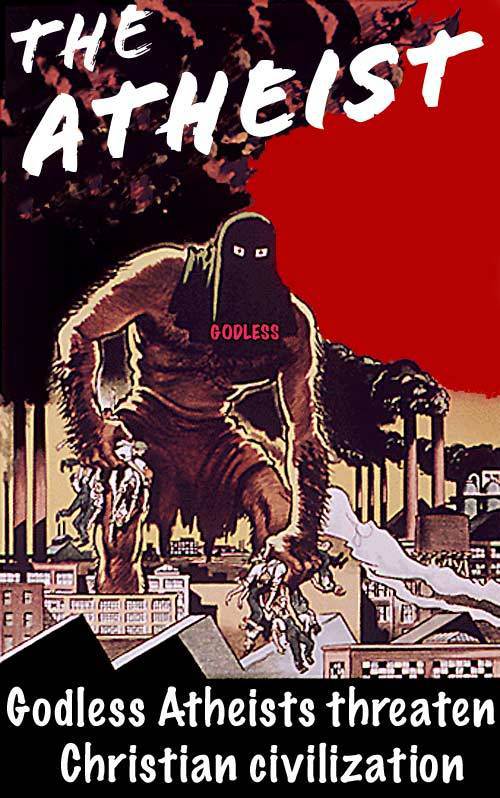
Atheist-monster-poster(Note: These exchanges are now complete. There is a Table of Contents to the discussion now available.)

“I walk outside my house, I look around, and it doesn’t seem apparent to me that there is a God. I just don’t feel it. It doesn’t seem to be the natural conclusion of reality when I live life and look around. I see the world, and the existence of God doesn’t feel like a natural conclusion one could draw.”

I stare down into my coffee, catching the corner of my pastor’s glasses in the dark reflection.

“Well”, he says, “I know it doesn’t fix how you feel, but in the grand scope of human history, and even the global humanity living today, that opinion you just expressed is in the extreme, extreme minority. Most people living in the past and now have found looked at the world and have not been able to come to any conclusion other than their being a God.”

Crap. He was right. What I thought was such an objective engagement with the world around me, was (of course) still the product of the cultural forces from which I drink deeply. History and developmental psychology have shown us that religiousness is the default mode of the human heart.

We are by nature religious. It takes other, external forces to push back against that and move us away from it. And this fact is no apologetic for religion. It’s neither a point “for” or “against” religion. We are also by nature selfish and willing to do whatever it takes to be the fittest and survive. We try not to give into this natural drive and through education and conditioning try to move away from it.

Continue reading

Listen to the Hurting {ii}: how now shall we suffer?


Rothko-untitled-2Yesterday I wrote about how our offense and struggle with evil and suffering in the world is often detached from the feelings and words of those that actually endure much of it. I said that intense Suffering doesn’t seem to produce an extinguishing of faith to those that experience it.

People have often said that the deep suffering and injustice of the world is one thing that led them to Atheism or skepticism, but this seems to be more the case for those that observe and think about the idea of suffering, more than enduring it themselves. Yes, there are stories of those that lose their faith in the midst of their suffering, but they really are so few and far between.

This is one of the main themes of Dostoevsky’s Brothers Karamazov. The most powerful argument for Atheism I’ve ever read is in the famous “Grand Inquisitor” chapter. After reading it, I was so deeply shaken for a few weeks after. And it was written by a Christian.

One of the central themes of the book is that Atheism is an absolutely logical and reasonable system, but not one that can be consistently lived out. When observing the world and its injustice intellectually and from a top-down perspective, Atheism is probably more easily sensible than Christianity. But, as the book goes on to show, no matter the philosophical veracity of Atheism, no one can truly live real, actual human life as a fully-consistent Atheist and flourish as a human, in human relationships, and in human society.

Even if people think about suffering Atheistically, people usually live in the midst of it religiously.
Continue reading

Listen to the Hurting {i}: why Suffering is a silly reason to be an Atheist


Adolph Gottlieb-rolling

Update: Part 2 is up.

In the religious circles I walk in, I hear about injustice and suffering quite a bit. Theology friends constantly muse about how to view these things in light of biblical revelation. Atheist and skeptic friends constantly point to these things as the inherent illogical inconsistencies that undermine religious faith.

And caught in the middle are many, many more friends, who live their lives trying to navigate their jobs, families, and relationships the best they can–all while these questions haunt them in their quieter moments or right before they sleep. Unlike the other two groups above, they don’t feel like they have answers. And this can lead to periods of doubt, insecurity, and frustration.

For every group, though, questions abound in these conversations. Oftentimes, they have a religious flavor. Why does this stuff happen? How does this relate to the goodness of God? What does it mean for the reality of God? How is God just when this stuff is real? Why does God seem absent?

And yet…

These are almost never the questions I hear from the people actually going through the suffering.
Continue reading

How the NSA can impact our souls. [QUOTE]


Persons of faith should be deeply concerned about the current surveillance flap not because privacy is an absolute end in itself but rather because it points to and safeguards something else even more basic and fundamental, namely, human dignity. According to Vatican II’s Declaration on Religious Freedom, Dignitatis Humanae, real dignity requires that human beings “should act on their own judgment, enjoying and making use of a responsible freedom, not driven by coercion but motivated by sense of duty.” Such responsible freedom is the basis for both the establishment of friendships and the maintenance of family [and social] life. Without the possibility of non-coercive self-disclosure, which is vitiated by unfettered intrusion, such relationships are fatuous.

— Timothy George, “American Stasi? What’s Wrong with NSA Surveillance?” via First Things’ On the Square blog

Just a friendly reminder that “Americanism” is a heresy. Even today. (Happy 4th!)


paul-young-america-flagI’m really not trying to ruin anyone’s party. I promise. But I just wanted to remind everyone that in 1899 Pope Leo XIII declared “Americanism” a heresy in the Catholic Church.

(I have provided this picture of this post’s author in order to help soothe any anger over this reminder.)

Basically, in the middle of the 19th-century, there was a huge influx of Catholics into America from Europe. Being so far away from the “home base” of European Catholicism, these Catholic leaders started “softening” Catholicism in order to make it more palatable to the new context they found themselves in.

Continue reading

The Suffering of The Holy Spirit


Anselm Kiefer-Landscape with a WingIf you’re like me, and were raised in the most previous generation of the American Church, the more painful parts of human existence didn’t really make an appearance in the course of religious conversations. There was talk about doctrine, and piety, and all “those people” that were sinners, but the only real insight that could be given to those that were hurting was that they needed to read their Bible more, trust Jesus more, sin less, so on and so forth.

Suffering was unconsciously assumed to be something outside of the everyday experience of the “victorious” and “justified and sanctified” Christian. People responded to the suffering of others with a cautious distance, thinking something had gone horribly wrong with their life, God’s providence, or their souls.

And then I had the privilege of sitting under amazing teaching in college that really brought suffering to the fore. I was encouraged that suffering was not “supposed” to be an aberration in life, but rather the expectation of how things are. We didn’t pursue it, but we certainly didn’t need to, because it would find us.

Continue reading

Evangelicals on Immigration: finally doing something right.


barbed-liberty-flag-wallLast Thursday, after so much grueling debate and a tough amendments process, the Senate passed a comprehensive Immigration Reform bill. Now the bill moves from the grown-ups to the children in the Legislature, the House of Representatives, where Republicans are already playing politics with the issue, most likely thinking it will just magically “go away” like other reform attempts have.

But, the New York Times published a great article about how the pressures on the House are different this time. It was really encouraging.

The encouragement did not just come from Immigration Reform’s potential, but where Evangelicals have found themselves in the debate. In the article, there were these amazing lines:

Asked why he thought the overhaul had a fighting chance in the House, Ali Noorani, a veteran of many immigration wars, pointed to a big green mobile billboard that had circled Capitol Hill every day this week.

Its flashing message was “Praying for immigrants. Praying for Congress.” Groups of evangelical Christians prayed on the Capitol lawn for the Senate to pass its bill. Mr. Noorani’s group, the National Immigration Forum, has worked with Southern Baptists and other large evangelical denominations to coordinate prayer campaigns and run pro-overhaul spots on Christian radio stations in states where lawmakers might be persuaded to change their views.

“In 2007, we weren’t even on the radar,” said the Rev. Samuel Rodríguez, the president of the National Hispanic Christian Leadership Conference, an evangelical group. Mr. Rodríguez said he had been on the road continuously, addressing primarily non-Hispanic Christian conferences to spread the message on the overhaul.

Now, you may be an Evangelical and may be thinking “hey, I don’t agree with that bill!”. That’s not really my point. Evangelicalism has never been as monolithic or homogenous as many of its leaders have wanted it to be. I am under no illusion that all (or even most) Evangelicals find themselves actually agreeing with the Senate reform plan.

What’s more astonishing to me is that regardless of the nuances and complexities of thought among Evangelicals on this issue, this is the reputation Evangelicals are having in this discussionThis is what the wider world sees. This is what has been noted in America’s paper of record as the primary takeaway that the world needs to have when fitting in the force of Evangelicalism and Christianity into the broader narrative of this story.

Of the many forces this article talks about that push this discussion forward (religious, electoral, business, labour, etc.), I love that American Christians have the pride of place here as the first “force” listed.

For once, Evangelicals are being known for taking the lead in actual cultural change and not stalwart reactiveness to the force around them.

Yes, I know there are other potential factors: many Evangelicals might be more concerned with maintaining Republican dominance by “winning Hispanic votes” through this effort. Some may be reacting to their own demographic changes in the South, instead of their own heart and theological changes.

But still, it’s telling that none of these alternative narratives are offered in this piece.

I am certainly not one of those Christian twentysomethings that think that theological convictions have no place in one’s political beliefs, nor do I think that “laws” are inherently morally-neutral. All politics and legislation reflects one’s morality (just look at a nation’s wallet to see where their heart is) and, ultimately, their theological convictions. For once, I’m proud of American Christians as they interact politically on this issue.

As Christians, we are called to love Neighbor before Nation. Whatever “damage” you think these poor, marginalized people do to America economically, politically, or demographically, we are called to have more concern for their welfare than the welfare of the abstract idea of “our country”.

That’s not to say that illegal immigrants are not “breaking laws”, but as Christians we are not called to primarily relate to others based how obedient they have been to civil authorities or not. The main thing that dictates how we relate to them is the image of God in which they are made. And this has been sorely lacking in the Evangelical presence in this discussion.

There are few–if any–illegal immigrants that come to this nation with any malice in their heart or hostility in their intentions. At the very least, they deserve compassion before condemnation–especially from Christians. Even if you ultimately think they should legally be carted away, should not the first concern of Christians be to love them? Or at least not demonize them?

Illegal immigrants in America are some of the closest we’ll ever get to a single group that fits almost every criteria for those to whom Christian should offer support, deference, protection, and resources: the outcast, foreigner, poor, needy, alien, outsider, downtrodden, despised, and poor in spirit.

Supporting immigration reform is the easiest way that I can think of, in our current political situation, for Christians to follow-through with this oft-neglected dynamic of Christian faith. It’s one of the clearest ways that Christians can act “Christianly” in a direct, political way.

So learn about the bill, contact your representatives, and then pray for our leaders and those who will be most affected by their actions. And then go out and try love your neighbor some.

What do you think about the immigration bill? How does your faith guide this decision? How do you feel about Christians being known for this advocacy?

[image: “Barbed Liberty” by myself]

Two of my best friends got engaged this weekend. This is a very good thing.


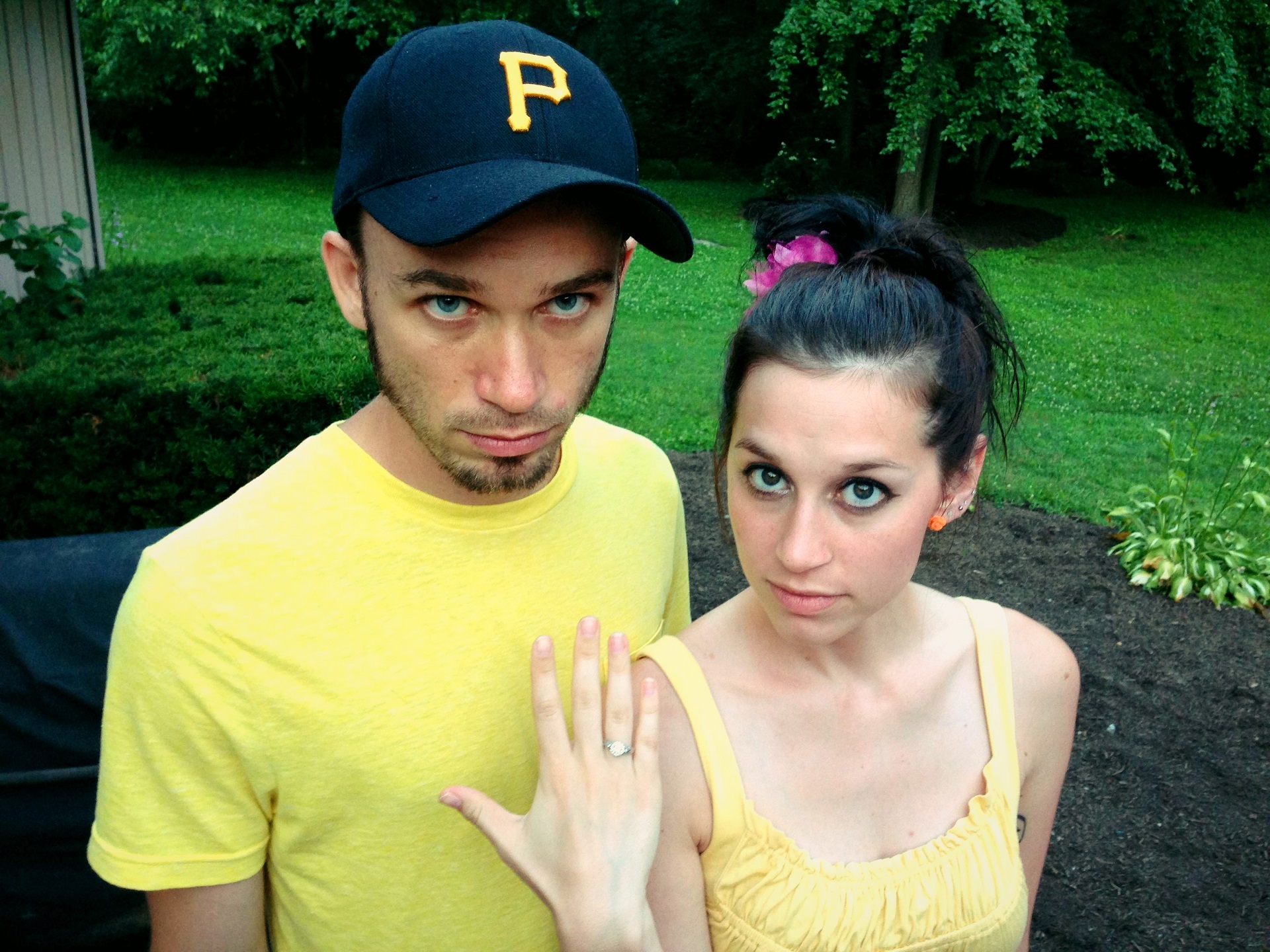
david-ej

[Appropriately, this week’s WordPress Weekly Photo Challenge is the topic “Companionable“. I could think of no better picture to post and story to tell than this.]

That there is a picture of David and Elizabeth Jane. (They’re in the process of converting to the Orthodox family of the Church, where the ring is on the right hand.)

David here is my oldest friend. Being bad at keeping friends that don’t live near me, this means that our friendship is about five-and-a-half years old. Not a crazy long time, I know. But for what we lack on the front-end duration of our friendship, we definitely make up for it in our desire to stay friends for decades to come.

We’ve seen each other through spiritual darkness, relational pain, and dramatic theological changes. He’s an amazing drywaller, photographer, writer, farmer (as of recently), and general human being.

And he got engaged to an incredible woman this weekend.
Continue reading