Nature shows us the Resurrection


As part of my own personal devotions, I use A Year with the Church Fathers by Mike Aquilina (also a free Android App–Google FTW!). In it, he offers a little introductory summary, followed by some words by a church father, and then ends with a question to meditate upon and a concluding prayer.

This one struck me yesterday, as doubt in the Resurrection is something I struggle with a lot. Thank God we live and grow and struggle in such a long, continual stream of godly men and women having walked before us. We stand on the shoulders of giants, to be sure. I hope this encourages you as well.
Continue reading

Women & the Church: What’s Adam & Eve got to do with it? [2]


blake-creation-eveYesterday, in our on-going series on women in leadership roles in the church, we began looking at an argument often given by conservative complementarians when presented with the cultural context behind 1 Timothy, some of the most seemingly clear verses in scripture that limit a woman’s role in the church. Oftentimes, egalitarians offer the cultural context to show that these woman-limiting verses are in fact speaking to specific things going on at the time (as I did), rather than some eternal prohibition for all churches at all times.

The conservative response that we began looking at is when they say that the cultural context is all well and fine, but Paul’s foundation for what he says does not appear to be the immediate context at the time, but rather the very structure of creation itself. We looked at those verses to try and argue that this is not at all what Paul is doing in the text.
Continue reading

Women & the Church: What’s Adam & Eve got to do with it? [1]


durer-bw-adam-eve

As I’ve been looking into these “Women in Ministry” discussions for this on-going series, they usually follow a similar pattern. Conservatives will point to some Bible verses, Egalitarians will point to the context (as I did in our last post), and then, at some point, the conservatives bring up this simple, yet logical and reasoned argument:

Yes, you can point to the cultural context all you want, but at the end of the day, Paul’s reason for what he says, is not the cultural context, but the very structure of pre-sin creation in which God created Adam first. This is something that’s true no matter the context.

Now, I’ve said repeatedly that my egalitarian beliefs come not from desire to move away from the Bible, but my attempts to be all the more obedient to it. And so, I want to take this argument as seriously as possible. I’ll attempt to do that in these posts.

As I started writing up the problems I had with this “creation-order” argument, it became so long, that I had to break it up into two posts. Today, we’ll focus on the particular Timothy passage in question and other related things that Paul writes. Tomorrow we’ll focus on the Genesis story itself to see what it might say to this.

The Timothy Passage

Continue reading

What’s With All the Instagram Shots of Your Lunch?


“Food is everything”, says my friend Ben, an organic farmer who runs a small vegetable stand at Lancaster’s Central Market. Each generation pushes back on the one that came before it, often a reaction against cultural norms that seem to be inherently evil. One of those such current ideas comes as a blowback in how we produce and consume food. Since WWII, our food supply has been mass-produced and mass-processed, often putting in it more preservatives than nutrition. In recent years, organic farming has blossomed (in part) as a reaction against the greed, industrialization and lack of nutrition of America’s food supply. At Ben’s market stand, a small sign reads something like “out of the ground comes nutrition for our food”.

There’s certainly something deeper to this little sign whether he knows it or not.

“Man is what he eats”, writes Alexander Schmemann. All of life is sacramental, and therefore, Eucharistic. He continues, “Man must eat in order to live. He must take the world into his body and transform it into himself; into flesh and blood.” In the same way, at the celebration of the Eucharist, the very flesh and blood of Christ come to man. Man eats it and in this most revered element of Christian worship, he ascends to heaven with Christ, receives the Kingdom of God, and takes it with him back into the world. Eating is sacred business in the Christian economy and without it, the Kingdom of Heaven does not come to the world. Schmemann even goes so far as to say that all food leads us to Christ.

Meals in community are sacred. They have been for most all peoples for all time.  There is something deep within the heart of humankind that knows this. There is a longing for communion and companionship over any meal we eat. But alas, our culture does not work this way. We are hurried to and fro and are lucky to grab something at a café or in a drive thru or whatever quick meal we can get out of the way to get on with the more important things of life. But, even in our hurried state, we stop and take the time to photograph our food and post it for all to see – our new “social” community – facebook or instagram. What we miss by eating alone so often, we try to reacquire via our mobile technology. Our souls crave the sacred meal together, yet, for whatever reason we make little effort to make this a primary part of our lives. We want others to share in our experience and the best way we can get them to do that is to post our square images  of eggs in a frying pan or the coffee we got on the way to a meeting on our own little online kingdom.

Each Sunday, as we partake of the Eucharist, we ascend with Christ into his Kingdom for the good of his world. In the same way, let us strive to make our daily meals a little more sacramental; a little more Eucharistic, even.

On Women Leaders in the Church: Timothy’s cultural context


artemis-greek-urnFor many of the Christians that believe women are not to be ordained, authoritatively teach in churches, nor hold formal church leadership offices, 1 Timothy 2:8-14 is the first (and oftentimes the only) Bible text they throw out as a conversation-ending, slam dunk against people they feel are “re-writing” the Bible for their own ends.

When last we left our on-going series on women in the church, we talked about the text and translation of this passage. We talked about its history of mistranslation and how the seemingly best and most consistent translation offers us a different picture than the traditional one. Today, we’re going to pull back from the text itself to look at the culture and context behind the letter.

my thesis

I’ll give my view up front, so you can leave it, take it, or read on for why I land there. This post is a long one.
Continue reading

Epiphany: a great time to talk Magi & biblical errancy


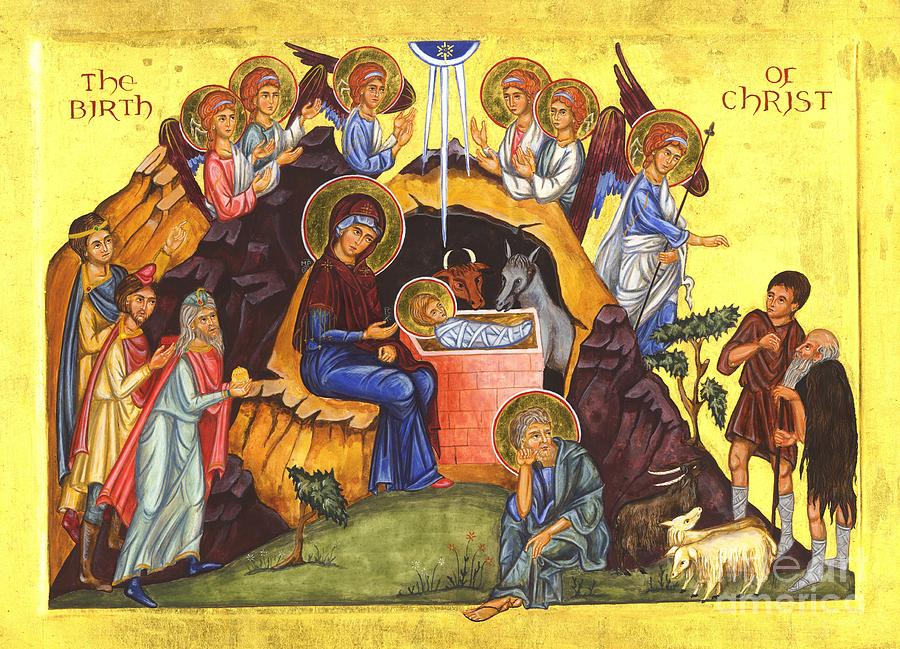
advent-nativity-icon This Church season of Epiphany primarily celebrates the coming of the wise men to see the young Jesus. Now think of the popular conceptions of the “wise men”. I imagine the picture that comes to mind is much like the one above: a quaint manger, farm animals, some shepherds, and the three wise men, presenting their gifts to the newborn Jesus.

I’m not sure how many of us know how wrong this is.

The wise men did not visit Jesus in the manger, their paths did not cross at all with the shepherds (that we know of), and, contrary to some of the most well-engrained church and musical traditions, their number is not given–“three” is just a guess. This guess is probably based on the fact that three gifts were offered (though the 6th-century Armenian Infancy Gospel, the source of the Western tradition of the wise men’s names and ethnicities, lists far more than just three gifts). The Eastern Church tradition even says it was twelve.

And yet, for over a thousand years, on into the present day, these traditions concerning the Wise Men have persisted. We know the sources of these traditions, we know when they became popularized, and we know how they’ve been used in Christian preaching and church life through the centuries. Every Advent season, even the most cursory drive in the suburbs will offer nativity scenes peppered with three wise men adoring the manger-laden Christ.

This reminded me of Jannes and Jambres.
Continue reading

Weekend Photo Challenge: Beyond (beauty beyond love)


scotland-glasgow-hill

This week’s WordPress Weekly Photo Challenge theme is “Beyond“. Basically, the challenge was to find a picture that guides the viewer’s eye beyond the primary subject of the photo. I’ve chosen the above photo.

In the summer of 2006, between the sophomore and junior years of college (when my hair still looked like this), I did a Study Abroad program in writing art, and architecture in Glasgow, Scotland. It was my first time out of the country, and my first time flying by myself. For all my youthful expressions of confidence, I was still scared.

Anyway, after getting on the plane on one of the runways of Richmond International Airport, I noticed a group of older ladies having to talk across the aisle to one another.

They were funny and loud, but in an inviting way, and not annoying, but the most distinctive thing about them was their thick, barely-understandable Scottish accents. I eventually asked them, and discovered that we were all indeed hitting the same connecting flights, and ultimately heading to Glasgow. They told me to stick with them and they’d help me navigate.

We made the flight, survived the trip, and landed in Glasgow.

Continue reading

a prayer for President Obama & America for Inauguration Day [Re-post]


[I posted this prayer after election day. I thought it would also be appropriate for today, as we pray for our President’s second term.]

Ruler and King of all, our nation is now entering into such a delicate time. Many emotions are being felt very deeply after this election. It was a hard-fought fight that many had much invested in. Would you be with us as the immediate emotional aftermath of the election occurs?

Lord, hear our prayer.

O God of peace, you do not desire that we would be filled with anxiety, frustration, or gloating after elections, as if our greatest joy or pain would be the result of this one vote. You have taught us that in returning and rest we shall be saved, in quietness and confidence shall be our strength: By the might of your Spirit lift us, we pray, into your presence, where we may be still and know that you are the God who is the sustaining Presence in all nations,

Lord, hear our prayer.

Continue reading

The Door to the Holy of Holies: on Love & Epiphany [QUOTE]


As our country is consumed with politics since last week’s storming of the Capitol and next week’s inauguration of Joe Biden, I ran across these words from Saint Maximus the Confessor, and thought they were an appropriate reflection for all of us, both for the political season we’re in, as well as the Christian season of Epiphany.

Love is therefore a great good, and of goods the first and most excellent good, since through it God and man are drawn together in a single embrace, and the creator of humankind appears as human, through the undeviating likeness of the deified to God in the good so far as is possible to humankind. And the interpretation of love is: to love the Lord God with all the heart and soul and power, and the neighbour as oneself.

Which is, if I might express it in a definition, the inward universal relationship to the first good connected with the universal purpose of our natural kind. Other than this there is nothing that can make the human being who loves God ascend any higher, for all other ways of true religion are subordinate to it. This we know as love and so we call it, not divisively assigning one form of love to God and another to human beings, for it is one and the same and universal: owed to God and attaching human beings one to another. For the activity and clear proof of perfect love towards God is a genuine disposition of voluntary goodwill towards one’s neighbour.

For he who does not love his brother whom he has seen, says the divine Apostle John, cannot love God whom he has not seen (1 John 4:20). This is the way of truth, as the Word of God calls himself, that leads those who walk in it, pure of all passions, to God the Father.

This is the door, through which the one who enters finds himself in the Holy of Holies, and is made worthy to behold the unapproachable beauty of the holy and royal Trinity. This is the true vine, in which he who is firmly rooted is made worthy of becoming a partaker of the divine quality. Through this love, all the teaching of the law and the prophets and the Gospel both is and is proclaimed, so that we who have a desire for ineffable goods may confirm our longing in these ways.

Saint Maximus the Confessor in a letter to John the Cubicularius (from Maximus the Confessor by Andrew Louth)

See other Epiphany thoughts here. Listen to the Epiphany music playlist here.

2 amazing hours on the Christian end of the world


A few people have asked about my blogging absence (I have felt honored that they have noticed!) Anyway, I’ve been sick, first with a stomach flu, and now with an upper-respiratory thing. I lost my voice last week and am only now recovering it. It’s weird; I hardly ever get sick.

Anyway, this has kept me from blogging, but it’s given me the chance to watch and read some amazing things (about which I’m sure I’ll write more in the weeks to come). One of the highlights of my time was this video, An Evening of Eschatology, hosted by Bethlehem Baptist Church and moderated by John Piper (here’s some background to this talk):

This is an amazing discussion, and very insightful for those of us Christians that either have passionate views on the end of the world or don’t think about it much (as a friend used to say, “I’m a ‘pan-millennialist’: I believe in the end it’ll all just pan out.”).
Continue reading

Weekend Photo Challenge: Illumination (of Richmond & my Soul)


Richmond-GrandIllumination

This week’s WordPress Weekly Photo Challenge theme is “Illumination“. One of the biggest benefits of this weekly photo challenge is the chance to go through some of my old pictures and bring to mind favorite memories from the past.

The picture above was taken in 2006 in Richmond, Virginia while I was in college. It was after one of my favorite Richmond traditions: the Grand Illumination.

Throughout the winter holidays, the skyscrapers in Richmond are all lined with lights, lighting up the skyline in a way that it is not during the rest of the year. These lights are turned on all at once at something called the Grand Illumination, which takes place in early December. Not only are the skyscraper lights turned on, but the annual Christmas display at the Omni Hotel is turned on also. This display has lit-up mechanical reindeer, a giant Christmas tree, and the bell tower plays Christmas music on the hour.

After watching the Grand Illumination lighting from the bridge to Belle Isle, one of my favorite spots in all of Richmond (see picture below), we drove through the streets to see everything up close. The picture above was taken around the Omni Hotel as we passed their display.

But that’s not all this made me think of…

Continue reading

Epiphany is here! So what? (And another free Mixtape!)


epiphany-mixtape-coverIf you’re just looking for the mixtape, click here for the official Epiphany Mixtape page.

From now until Lent, the Church Calendar is in the season of Epiphany. Up until this year, I had never really given much thought or focus to Epiphany. In fact, I hadn’t ever really understood Epiphany until this year. I knew it had something to do with light and with Magi, but beyond that, I didn’t get it.

Basically, this season seems like it’s sort of a Church Calendar “junk drawer” to meditate and celebrate on all the other parts of Jesus’ life that happened between his Advent/Birth and his Death.

And don’t misread that. With me saying that, I hope that doesn’t diminish this season for anyone. Perhaps the most precious doctrine of the Christian faith for me is that of the Imputation of Christ’s Righteousness to me. And this Righteousness in which I am dressed was not created out of thin air, nor was it created by Christ at the Cross, or even his Resurrection. It was built throughout his life of obedience to His Father.

And this is amazing. As I’ve written before, if Herod had been successful in killing the child Jesus, there would be an aspect of our salvation that’s missing.

And so, to try and help me spend some time meditating on this season, the best way I knew to think deeply about all this was to make another Church season mixtape. If I’m being honest, these things are more for me than all of you out there. This one particularly, though, helped me think through Epiphany and try and create something from it. I hope you enjoy it.

To read more about the specifics of Epiphany, the mixtape, and to listen/download it yourself, you can either read below or just go to the official Epiphany Mixtape page. Let me know what you think!

Here’s some more info, from the page:
Continue reading

Merry Christmas Season!!!


wood-jesus-heart-christmas-humor

As of today, it is Christmas season!

Today, we turn our minds from the sin that required God to take human form in Jesus Christ, and we give ourselves the freedom to respond with unfettered joy to this fact. We give gifts in response to the gift that’s been given to us; we sing songs in response to the heavenly angelic song that inaugurated his birth; we eat good food with others in response to the body of Christ–the bread of life–having come among us.

Today begins the culmination of our thinking and meditating these past 4 and half weeks. This Advent, I’ve been trying to connect this time to parts of life that we may not usually associate with it. And so, if you have any time and interest, here are those posts from this year’s Advent series (and by the way, holy crap. I had no idea how much I had written this year until I made this list).

May they help you enter into this next Church season with depth and joy. (You can also check out last year’s series, if you want.) Continue reading

Advent Transition Music: Christmas Eve “Vespers” by Sergei Rachmaninov


vespers-1-art-sabawala-paintingPerhaps Sergei Rachmaninov’s greatest piece, All-Night Vigil (usually simply called Vespers) is a choral presentation of the texts used during Eastern Orthodox all-night vigils. These vigils are usually done on the Eve of major church festivals, such as…Christmas Eve!

As I said earlier today, Christmas isn’t simply a day; it’s an entire church season. It’s a season where we transition from repentance and meditation to celebration and joy. And to aid in that transition, many traditions have all-night Vespers to help us move from one season to the next.

And so, to encourage us in this transition time, I’d like to offer you my favorite recording of one of my favorite pieces ever, Sergei Rachmaninov’s Vespers, performed by the Swedish Radio Choir. You will need Spotify to play the playlist below (you can purchase the album as well). Have fun:

[image credit: “Vespers 1” by Jehangir Sabavala]